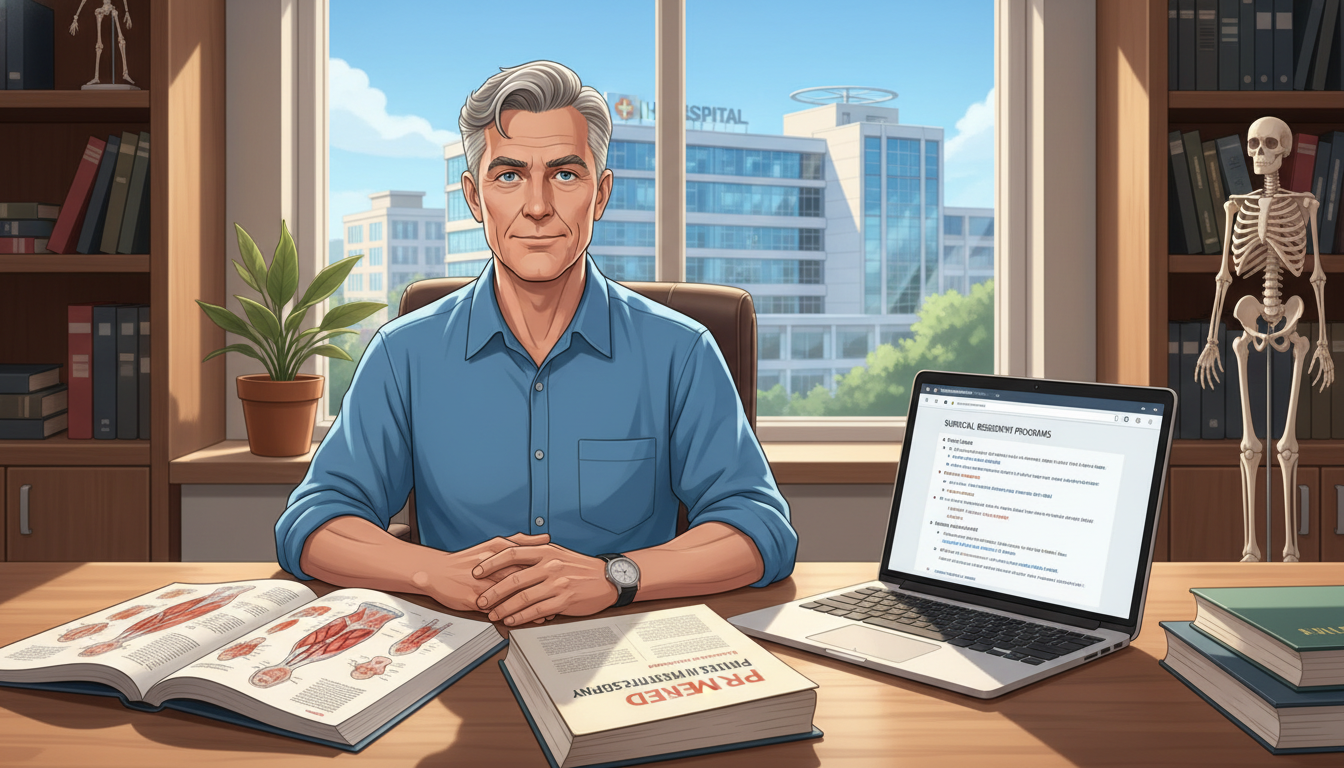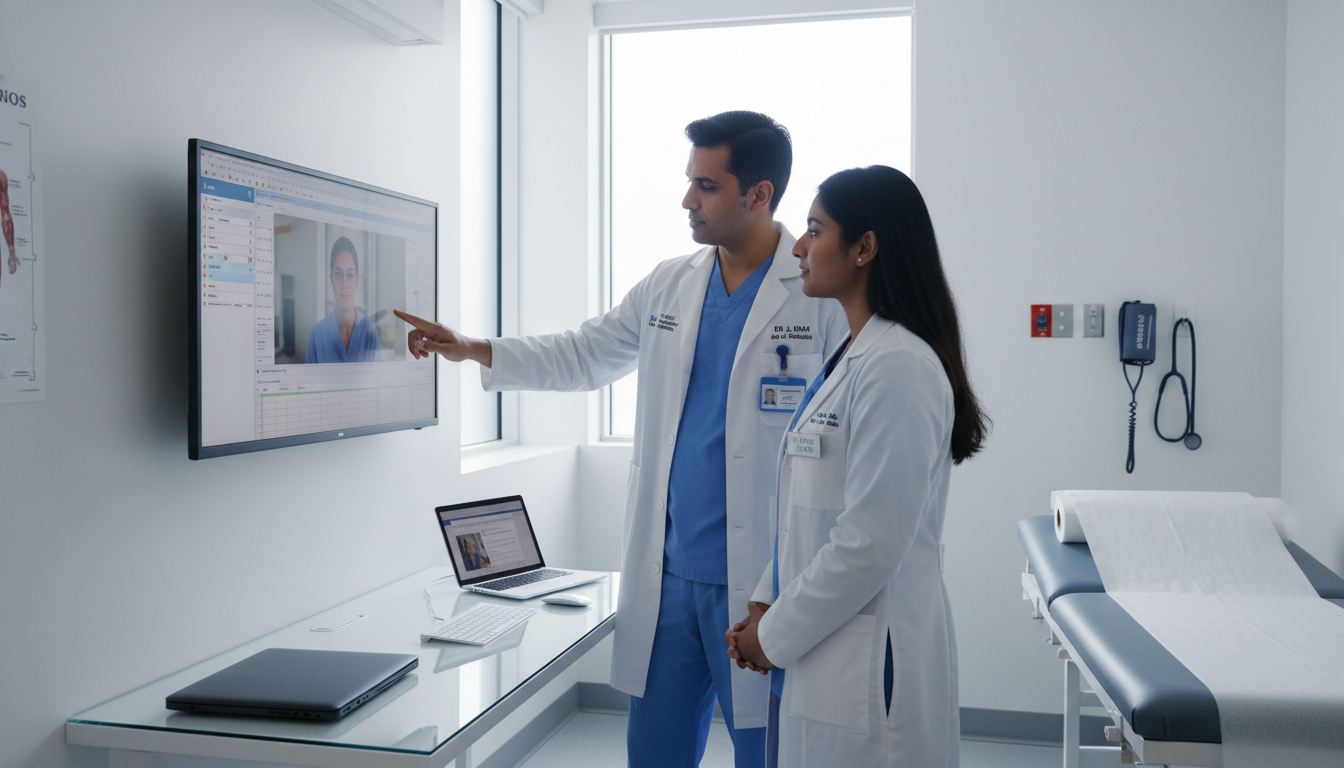
Medical shadowing is one of the most powerful—and often underestimated—experiences you can bring into your residency application. Done well, it sharpens your clinical lens, clarifies your specialty choice, and provides rich material for personal statements and interviews. Done poorly, it can feel like passive seat‑warming that does little for your growth.
This guide walks you through everything you need to know about medical shadowing experience: what it is, how to get it, how many shadowing hours you realistically need, and how to convert simple observation into meaningful professional development that shows up clearly in your residency application.
Understanding Medical Shadowing: What It Is (and Isn’t)
Before you can maximize shadowing, it’s essential to define it precisely—and distinguish it from other types of experiences.
What is medical shadowing?
Medical shadowing is a structured observational experience where you follow a physician (or occasionally another licensed clinician) through their typical workday. Your role is to observe—not to independently examine, diagnose, or treat patients.
In most settings, shadowing involves:
- Sitting in on patient encounters (with explicit patient consent)
- Watching how the physician gathers history and performs a physical exam
- Observing how they think through differential diagnoses
- Listening to discussions with the care team (nurses, residents, consultants)
- Witnessing how they navigate documentation, EMR use, and workflow
- Seeing the “hidden curriculum”: professionalism, communication, and ethics
Shadowing can occur in:
- Outpatient clinics
- Emergency departments
- Inpatient wards
- Operating rooms and procedural suites
- Subspecialty practices (e.g., cardiology, GI, oncology)
What shadowing is not
It’s important to distinguish shadowing from:
Clinical clerkships / rotations
Formal, graded educational experiences with defined learning objectives. You take histories, present patients, and help with notes under supervision.Volunteering
Service-oriented roles (e.g., escorting patients, stocking supplies) that may occur in a hospital but are not primarily observational of physician practice.Research
Participating in clinical or translational research that may involve the clinical environment but has different goals and responsibilities.Unsupervised clinical activity
You must not provide care beyond your level of training and institutional rules. Shadowing is legally and ethically restricted to observation unless you are in a defined role (e.g., medical student on a rotation).
Residency programs understand these distinctions. When you describe experiences on ERAS, be honest about what you did and what you were allowed to do.
Why Medical Shadowing Matters for Residency Applications
Many applicants underestimate how influential a high‑quality shadowing experience can be—especially for specialty choice and your narrative.
1. Clarifies your specialty choice
Shadowing lets you test-drive specialties in a way that’s hard to replicate through brochures or online forums. Because clerkships vary by institution and timing, shadowing can:
- Expose you early to fields you might not rotate in until later (e.g., anesthesiology, radiology, pathology)
- Help you compare environments (clinic vs OR vs ED vs ICU)
- Demonstrate lifestyle realities: call schedules, documentation load, emotional intensity
- Reveal the culture: how attendings and residents interact, how teams function
Examples:
- You may discover that you love the fast-paced decision-making in the ED but dislike constant interruptions.
- Or you might realize that you enjoy the longitudinal relationships in primary care more than episodic inpatient care.
You can then reference these insights explicitly in your personal statement and interviews.
2. Strengthens your specialty “fit” narrative
Residency programs want to see that you understand what you’re signing up for. Meaningful medical shadowing experience signals that you’ve:
- Observed the day-to-day realities of the field
- Reflected on how your skills and values align with the specialty
- Sought out additional exposure beyond required rotations
You can use shadowing stories to:
- Illustrate your understanding of the specialty’s challenges
- Demonstrate your motivation and curiosity
- Show maturity in your career decision-making
3. Builds professional identity and clinical reasoning
Even as an observer, you can:
- Practice formulating differentials in your head before the physician reveals theirs
- Observe how attendings explain complex concepts to patients at different literacy levels
- Learn how clinicians handle uncertainty, time pressure, and conflict
- Absorb documentation strategies and EMR workflows
These experiences often give you language and examples to use in MSPE comments, LOR discussions, and interview questions like “Tell me about a challenging patient encounter.”
4. Provides opportunities for mentorship and letters
Developing longitudinal shadowing relationships can:
- Connect you with mentors who provide career advice
- Lead to research or quality improvement opportunities
- Result in strong specialty-specific letters of recommendation if the physician later supervises you in a more formal setting (e.g., rotation, project)
Shadowing alone usually isn’t sufficient for a robust LOR, but it’s often the doorway to deeper involvement.

How to Find Shadowing: Practical Strategies That Actually Work
Many students struggle with how to find shadowing opportunities, especially in competitive or saturated medical markets. The key is to be proactive, professional, and persistent.
1. Start with your own institution
If you are already in medical school, your home institution is the most logical place to begin.
Clerkship and course directors
Ask if they know attendings who welcome shadows—especially in subspecialties you’re considering.Office of Student Affairs / Career Advising
Many schools maintain informal lists of “student-friendly” physicians.Residency programs at your institution
Program directors or chief residents may connect you with faculty interested in mentorship and early exposure.Interest groups (e.g., EMIG, SURGIG, FMIG)
Student-run specialty groups often have faculty advisors who can facilitate shadowing experiences or structured “shadowing nights.”
2. Tap into your existing network
You likely have more connections than you realize:
- Family friends or relatives who are physicians
- Alumni from your college or medical school now in practice
- Physicians you met during volunteering, research, or scribing
How to approach:
- Send a brief, professional email:
- Introduce yourself (year, school)
- Explain your interest in their specialty or setting
- Request the opportunity to observe for a defined period (e.g., “one half-day per week for a month”)
- Emphasize flexibility and that you understand shadowing is strictly observational
3. Use formal hospital or clinic programs (especially for pre-meds and early learners)
Some hospitals and large health systems have structured shadowing programs:
- Centralized application with proof of vaccination, HIPAA training, background check
- Defined time frames (e.g., 4–8 weeks)
- Assigned physicians in specific departments
Check:
- Hospital websites (often under “Volunteer” or “Education & Training”)
- Academic medical center education offices
- Larger community hospitals with teaching affiliations
4. Cold outreach with strategy (when you don’t have connections)
If you don’t have an obvious network, carefully targeted cold outreach can still work.
Steps:
- Identify physicians whose practice matches your interests (e.g., academic vs community, specific subspecialty).
- Look through:
- Hospital or department websites
- Residency program faculty lists
- Professional society directories (e.g., ACEP, AAFP, ACS)
- Craft a focused, polite email to each physician, not a generic blast.
Include:
- Who you are and your training level
- Why you’re interested in shadowing them specifically
- Your available times and approximate duration
- A line acknowledging that you understand patient privacy and institutional policies
- An easy “out” if they cannot accommodate you
Follow up once after 7–10 days if you haven’t heard back. After that, move on.
5. International and non-traditional applicants
If you’re an international medical graduate (IMG) or a non-traditional student:
Look specifically for:
- Observership programs at academic medical centers
- IMG-friendly “clinical observership” or “externship” programs (some are paid)
- Departments with a history of supporting IMGs in the match
For non-traditional students:
- Professional associations and local medical societies may offer shadowing connections for career-changers.
- Emphasize your maturity and previous professional experience in your outreach.
Shadowing Logistics: Requirements, Etiquette, and Legal Basics
Once you’ve secured a position, you need to handle the practicalities correctly. This not only protects patients and physicians but also protects you.
Institutional requirements you may encounter
Before you start, expect to complete some or all of the following:
HIPAA/privacy training
Often an online module with a completion certificate.Proof of immunizations and health screening
- MMR, Varicella, Hepatitis B
- TB screening (PPD or IGRA)
- COVID and influenza vaccines (depending on current policies)
Background check or drug screen
More common for longitudinal or formal observerships.Confidentiality agreements
You’ll usually sign a form agreeing not to disclose identifiable patient information.Badging and ID
Some institutions provide temporary observer badges; others require you to sign in daily.
Professional appearance and behavior
Even as an observer, you’re part of the clinical environment. Follow these guidelines:
Dress code
- Clean, professional attire: slacks/skirt and button-down or blouse
- White coat if appropriate and allowed (marked “Student” if you’re a med student)
- Closed-toe shoes; comfortable but professional
Punctuality
- Confirm start times in advance
- Arrive early (10–15 minutes) to handle parking, sign-in, and finding the team
Body language
- Observe discreetly—avoid interrupting
- Don’t lean on walls or sit while everyone else is standing during rounds
- Put your phone away; no texting in patient areas unless directly relevant and approved
Patient consent and privacy
Ethical and legal compliance is non-negotiable:
Patient consent
- Your preceptor should always ask patient permission before you observe.
- If a patient declines, respect that without visible frustration or disappointment.
Confidentiality
- Never record identifiable information, names, or MRNs.
- Avoid discussing specific patient details outside the clinical space, especially in public areas.
- When journaling or reflecting, de-identify completely (no initials, dates, or unique details).
Social media
- Do not post photos or stories from the clinical environment, even if you think they’re de-identified.
- Many institutions have strict social media policies—know them.

Making Shadowing Count: From Passive Observation to Deep Learning
The difference between “I shadowed 50 hours” and “My shadowing transformed how I see medicine” lies in how you engage. Here’s how to convert observation into real growth.
Before each shadowing session: Set intentional goals
Don’t just show up and watch. Decide in advance:
- What skill or aspect do you want to focus on?
- Communication with challenging patients?
- Building differential diagnoses?
- Handling time pressure?
- Team leadership and teaching?
Examples:
- “Today I’m going to pay close attention to how my preceptor delivers bad news.”
- “Today I’ll focus on how they explain risks and benefits of procedures.”
Share your goals briefly with your preceptor at the start of the day if appropriate; many attendings will adjust their teaching to match.
During shadowing: Observe actively, think out loud when invited
You are not just a spectator:
Mentally rehearse clinical reasoning
- Before the physician states their plan, ask yourself: What are the most likely diagnoses? What tests would I order and why?
- Afterward, compare your thinking to theirs.
Watch carefully for “soft skills”
- How do they introduce themselves?
- How do they handle disagreements with consultants?
- How do they respond when they don’t know an answer?
Ask thoughtful questions at appropriate times
- Avoid interrupting patient care.
- Jot down questions and ask during a natural break:
- “I noticed you chose X imaging instead of Y—could you share your reasoning?”
- “How do you approach explaining this diagnosis to patients who are very anxious?”
After each session: Reflect and document
Reflection is where learning crystallizes—and where you generate future application material.
Try a simple reflection structure after each shadowing day:
What did I see?
Describe one or two encounters or moments (fully de-identified).What did I learn?
Clinical facts, communication strategies, ethical issues, systems-level insights.How did this change or confirm my view of this specialty or of medicine in general?
How will I act differently as a future physician because of this?
Keep a running document or journal. When it’s time to write your personal statement or prepare for interviews, you’ll have concrete, specific stories ready.
Shadowing Hours Needed, Documentation, and How to Present on ERAS
Residency programs differ in how much they emphasize shadowing, but there are general patterns and reasonable targets.
How many shadowing hours are needed?
There is no universal official requirement, but you can think in ranges and purpose:
For U.S. medical students
Exploration phase (pre-clinical / early clinical)
- 20–40 hours per specialty you are seriously considering is a good starting point.
- This allows you to see multiple clinic days and, if applicable, a mix of clinic/OR/inpatient.
Deep-dive in chosen specialty
- 40–80 hours (or a longitudinal experience over several weeks/months) in the specialty you intend to apply into is ideal.
- Aim for depth with one or two physicians rather than scattered one-off days with many.
For international medical graduates (IMGs)
For IMGs, clinical observerships in the U.S. are often critical:
- Many programs like to see at least 1–3 months of U.S. clinical experience (USCE), which may include:
- Formal observerships
- Externships
- Hands-on electives (for senior students)
- Some programs unofficially prefer 3–6 months of USCE, especially in primary care and internal medicine.
Here, shadowing/observership is part of demonstrating familiarity with the U.S. healthcare system.
Important nuance
Quality beats quantity. Programs are more impressed with:
- A longitudinal 2-month shadowing relationship that led to a project and genuine mentorship
- than
- 200 hours of fragmented, impersonal observation with multiple physicians.
How to document and track your shadowing hours
You should keep a personal record even if no one ever asks to see it:
Include:
- Dates and approximate hours per session
- Physician name and specialty
- Setting (outpatient, inpatient, ED, OR)
- Institution
- Brief notes on what you learned or observed
This helps you:
- Accurately describe the experience on ERAS
- Prepare for questions during interviews
- Avoid inflating or underestimating your hours
How to list shadowing on ERAS
On the ERAS “Experiences” section:
Experience Type
Typically “Extracurricular” or “Clinical Experience” depending on your role and how hands-on it was. Observerships usually fit under “Clinical Experience.”Organization Name / Location
Hospital or clinic and city/state.Position Title
Use clear terms:- “Clinical Observer in Internal Medicine”
- “Shadowing Medical Student – Emergency Medicine”
Dates and Hours
Enter approximate total hours and date range (e.g., May–July 2024, 60 hours total).Description (up to 1020 characters)
Focus on:- What you observed about the specialty’s scope and practice
- Skills and insights gained (especially around professionalism, communication, systems of care)
- Any projects, QI, or scholarly work that evolved from the experience
Avoid:
- Overstating clinical responsibilities beyond your role
- Listing routine observation as if you were independently managing patients
Programs value honesty; misrepresentation can be obvious to seasoned reviewers.
Using shadowing in your personal statement and interviews
Shadowing is fertile ground for compelling stories—if you select and frame them well.
Personal statement
- Use 1–2 specific anecdotes that:
- Show how you developed insight into the specialty
- Illustrate qualities like empathy, curiosity, resilience, or teamwork
- Connect the story to “why this specialty” or “how I see myself in this role.”
- Use 1–2 specific anecdotes that:
Interviews
- Be ready for questions like:
- “What experiences confirmed this was the right specialty for you?”
- “Tell me about a patient encounter that influenced how you think about medicine.”
- Draw on your shadowing journal for concrete examples.
- Be ready for questions like:
FAQs About Medical Shadowing for Residency Applicants
1. Does shadowing really matter if I already did core rotations?
Yes, especially for:
- Clarifying specialty fit beyond what you saw on formal rotations
- Exploring subspecialties or practice settings you didn’t rotate through
- IMGs, where clinical observerships can be a key part of demonstrating U.S. clinical familiarity
While core rotations carry more weight, shadowing adds depth and nuance to your narrative and provides additional evidence of commitment to a field.
2. How many shadowing hours are needed to be “competitive”?
There is no single magic number. For most U.S. MD/DO students:
- 20–40 hours per seriously considered specialty, and
- 40–80 hours of deeper exposure in your chosen specialty
is usually more than sufficient if you can articulate what you learned. For IMGs, longer observerships (1–3 months or more) are often expected as part of USCE.
Programs care far more about your understanding of the specialty and your reflection on the experience than a specific hour count.
3. Can I get a letter of recommendation from shadowing?
Usually, not from shadowing alone. Strong letters come from:
- Direct supervision of your clinical work (electives, sub-internships)
- Research or quality improvement collaborations
- Longitudinal mentorship where the physician has seen you in action over time
However, shadowing often leads to those deeper relationships. Approach it as a first step: impress your preceptor with your curiosity, professionalism, and reliability, then look for opportunities to work with them more substantively.
4. What if I can’t find shadowing in the specialty I want?
Do what you can, and be strategic:
- Try related fields (e.g., if you can’t shadow neurosurgery, shadow neurology or general surgery).
- Focus on generalist exposure (IM, FM, EM) to build core clinical and professional insights.
- Use other experiences—research, electives, sub-internships—in your chosen specialty to demonstrate commitment.
- In your application, be transparent about what you have seen and emphasize the insights you gained from what was available.
Programs understand that access varies. What matters most is that you’ve thoughtfully engaged with the opportunities you had—and can articulate a mature, well-informed career choice.
By approaching medical shadowing as an intentional, reflective, and professionally structured experience, you can transform basic observation into a powerful asset for your residency application. The hours you spend quietly watching at the back of an exam room can become the foundation for clear specialty choice, richer narratives, and a more grounded entry into residency.