
Understanding the Role of Dermatology Rotations in Your Career Path
Clinical rotations in dermatology are often shorter and more competitive than core clerkships, but they can have an outsized impact on your future:
- They shape your understanding of what a dermatology residency really entails.
- They provide one of the strongest signals programs use for the derm match.
- They give faculty concrete examples of your performance for letters of recommendation.
If you’re serious about a dermatology residency, you should treat every dermatology exposure—whether a two-week elective, a sub-internship, or an away rotation—as both a learning experience and a high-stakes audition.
Dermatology rotations usually fall into three categories:
- Home institution dermatology elective (3rd or early 4th year)
- Sub-internship or advanced dermatology elective (4th year)
- Away rotations (visiting student electives) at potential derm match programs
Regardless of the setting, the expectations are similar: quick pattern recognition, strong clinical reasoning, efficient note-writing, professional presentation, and genuine curiosity about the specialty. Your goal is to leave each attending thinking, “I would be happy to work with this person as a resident.”
Preparing Before the Rotation: Set Yourself Up to Excel
Your performance on dermatology rotations is heavily influenced by what you do before Day 1. Unlike some core clerkships, you may not have long to “warm up.” Most dermatology rotations are short; you need to hit the ground running.
1. Clarify Your Goals
Before the rotation begins, write down 3–5 specific goals. For example:
- “Be able to confidently describe and document primary and secondary skin lesions.”
- “Independently formulate differential diagnoses for common rashes (psoriasis, eczema, tinea, drug eruptions).”
- “Obtain at least one strong mentor who is willing to provide honest feedback on my path to a dermatology residency.”
- “Demonstrate reliability and work ethic to position myself for a strong letter.”
Share a brief version of these goals with your resident or attending during your initial check-in. This shows maturity and helps them tailor your experience.
2. Core Knowledge to Review
You don’t need to know everything, but you should be conversant in high-yield topics. Focus on:
- Basic morphology and terminology
- Macule, papule, plaque, vesicle, bulla, pustule, nodule, wheal, scale, crust, erosion, ulcer
- Common diagnoses you will see almost every clinic day:
- Acne vulgaris and rosacea
- Atopic dermatitis and contact dermatitis
- Psoriasis
- Seborrheic dermatitis
- Viral exanthems and drug eruptions
- Urticaria
- Benign nevi, seborrheic keratoses, skin tags
- Basal cell carcinoma, squamous cell carcinoma, melanoma
- Tinea infections and candidiasis
- Common procedures and when they’re used
- Shave biopsy, punch biopsy, excisional biopsy
- Cryotherapy
- Intralesional steroid injection
Practical approach:
- Spend 5–7 hours total reviewing a concise dermatology handbook or online module during the week before the rotation.
- Use derm-specific flashcards or apps to drill lesion morphology and classic disease descriptions.
3. Visual Pattern Training
Dermatology is intensely visual. Build your eye early:
- Flip through atlases (or reputable online image banks) and quiz yourself:
- “What is the dominant morphology?”
- “What’s my top 3 differential?”
- Practice describing lesions out loud or in writing. For example:
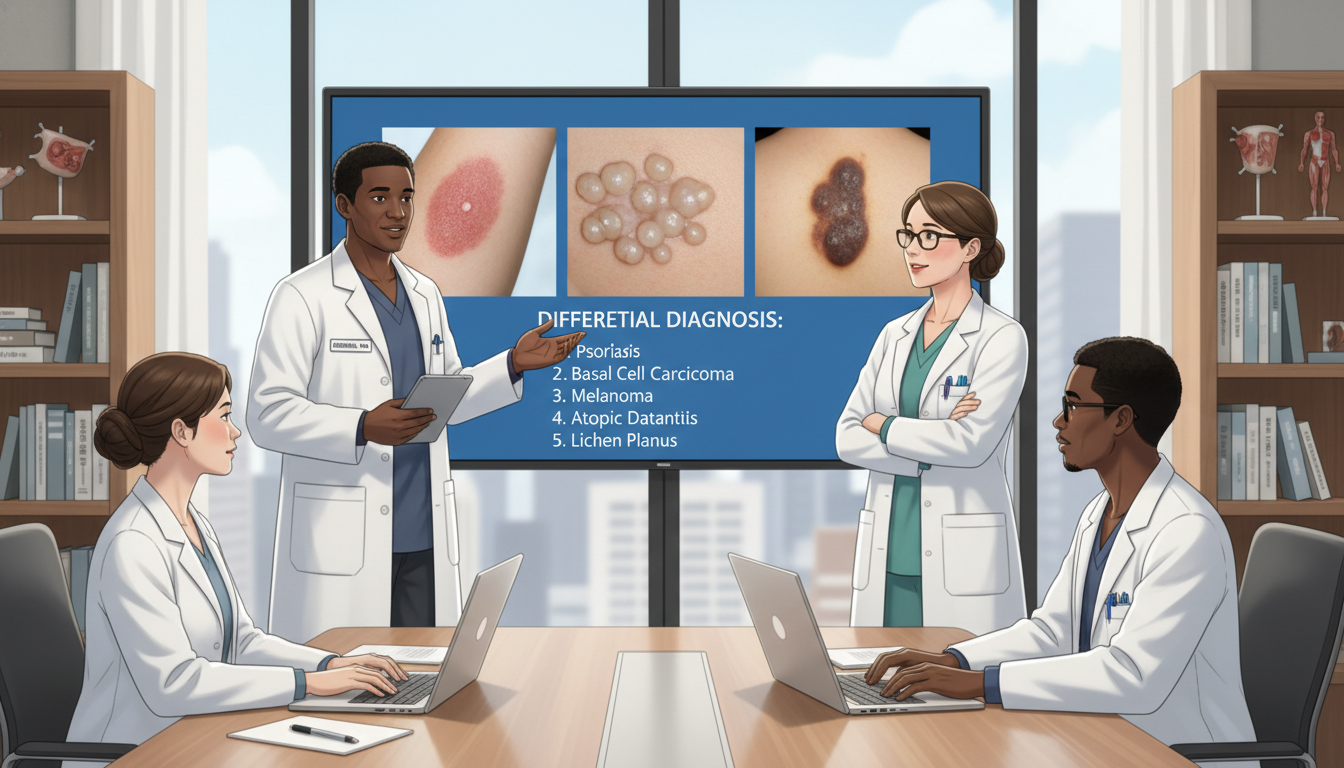
“Multiple well-demarcated, erythematous plaques with overlying silvery scale on the extensor elbows and knees, some with pinpoint bleeding after scale removal.”
The faster and more precisely you can translate what you see into words, the stronger your clinical reasoning will sound on rounds.
4. Logistics and Professional Prep
Before Day 1:
- Confirm clinic locations and start times, including any satellite clinics.
- Ask the coordinator whether you need:
- White coat / scrub color preferences
- Laptop vs. tablet access
- EMR training or login setup ahead of time
- Prepare a neat “derm rotation kit”:
- Small notebook or index cards
- Pen, small ruler, and if allowed, your own dermatoscope (not mandatory but a plus)
- Pocket reference or smartphone (for quick, quiet look-ups only when appropriate)
Showing up on time, prepared, and not confused about basic logistics is the fastest way to make a positive first impression.

Performance in the Clinic: Day-to-Day Strategies for Clerkship Success
Your daily performance in clinic is what faculty and residents will remember when they are ranking students for the derm match or deciding who gets a strong letter.
1. How to Start the Day
- Arrive 10–15 minutes early. Review the schedule, skim patient charts, and note:
- Past dermatologic history
- Biopsy results
- Current treatments and adherence issues
- Ask your resident, “How would you like me to get involved today?” Examples:
- “Can I pre-chart some new patients?”
- “Would it help if I saw follow-up acne and psoriasis patients first and then presented to you?”
Showing initiative without assuming too much responsibility is key.
2. Taking a Focused Dermatologic History
Your history-taking should be targeted and efficient. Use a structured approach:
- Chief concern – “What’s bothering you most today?”
- Onset and course – “When did you first notice it? Has it spread or changed?”
- Symptoms – itch, pain, bleeding, burning, systemic symptoms (fever, weight loss, joint pains).
- Exposures – new medications, skin products, hobbies, occupation, travel, sick contacts.
- Prior treatments – prescription and OTC, response, adherence.
- Personal and family history – atopy, psoriasis, skin cancer, autoimmune disease.
- Impact on life – sleep disturbance, work limitations, social distress.
Keep it efficient; most dermatology clinics are fast-paced. Practice doing this in 3–5 minutes for straightforward cases.
3. Physical Exam: Look, Then Look Again
Even when shadowing, always perform your own mental exam:
- Start with overall impression – skin type, photodamage, general distribution of lesions.
- Use a head-to-toe systematic approach when appropriate: scalp, face, neck, trunk, extremities, nails, mucosa.
- Pay attention to distribution patterns: flexor vs. extensor, photo-exposed vs. protected, dermatomal, acral, intertriginous.
Train yourself to always ask:
- What is the primary lesion? (Papule, plaque, vesicle, etc.)
- What is the distribution? (Symmetric, localized, generalized)
- What is the configuration? (Linear, annular, grouped, reticular)
Practice quietly describing findings to yourself before you present.
4. Presenting Patients Concisely and Clearly
Dermatology attendings appreciate concise, morphology-based presentations. A useful template:
- One-liner:
- “Ms. Smith is a 32-year-old woman here for 3 months of a pruritic rash on her hands and flexural surfaces.”
- Focused history:
- 2–3 sentences max on onset, key exposures, prior treatments, red flags.
- Exam:
- “On exam, there are multiple ill-defined, erythematous, scaly patches and lichenified plaques on the antecubital fossae and flexural wrists, with scattered excoriations; no vesicles, no oozing.”
- Assessment and differential:
- “Findings are most consistent with atopic dermatitis. Less likely contact dermatitis given distribution and chronicity; no signs of infection.”
- Plan (if invited to suggest one):
- “Would consider optimizing emollients and starting a medium-potency topical steroid, plus counseling on trigger avoidance.”
Initially, your differential and plan may be off, and that’s fine. What matters is that you:
- Use morphology correctly
- Show you’re thinking clinically
- Are open to correction and eager to refine your reasoning
5. Professionalism and Work Ethic
Faculty often differentiate excellent students based on “intangibles”:
- Reliability – If you say you’ll follow up on a biopsy result or call a patient, do it.
- Team orientation – Offer to help with small tasks: rooming patients, removing sutures under supervision, printing patient instructions.
- Respect and empathy – Dermatologic disease is visible and often emotionally distressing. Validate patients’ experiences, especially in conditions like acne, psoriasis, vitiligo, and hidradenitis suppurativa.
- Confidentiality and sensitivity – Be especially gentle with photos, genital and breast exams, and pediatric visits.
Example of professional behavior:
A resident is running behind and seems stressed. You quietly say, “I can start histories on the next two patients and let you know when they’re ready,” then do so efficiently and accurately.
6. Handling Procedures
Dermatology rotations often include procedures—an important part of residency.
- Tell your team early: “I’d love to get experience with biopsies and cryotherapy if opportunities arise; I understand patient care comes first.”
- Watch the first few procedures closely. Ask very focused questions:
- “What factors make you choose a punch vs. shave biopsy in this case?”
- “How do you decide on the margin for suspected BCC vs. melanoma?”
- When invited to participate:
- Move deliberately, not slowly.
- Narrate what you’re doing to demonstrate understanding: “I’m orienting the punch along the relaxed skin tension lines, and I’ll aim to include the edge of the lesion.”
Even if you only perform a few simple procedures, your goal is to show teachability and respect for procedural safety and sterility.
Leveraging Rotations for a Future Dermatology Residency
If you’re aiming for a dermatology residency, your rotations are more than just a grade; they are your live audition in the field.
1. Building Relationships and Finding Mentors
Don’t wait until the last day to connect:
- Identify potential mentors early—people who:
- Enjoy teaching
- Have time for students
- Understand the derm match process
- Ask for a brief meeting midway through the rotation:
- “I’m strongly considering dermatology and would value your advice on strengthening my application. Could we talk for 10–15 minutes sometime this week?”
Use this time to discuss:
- Your academic and research background
- Realistic competitiveness for dermatology residency
- Opportunities for ongoing involvement (research, clinic, QI projects)
Mentors who know you beyond “the student in clinic last month” can write stronger, more personalized letters.
2. When and How to Ask for Letters of Recommendation
Well-timed and well-chosen letters are critical for clerkship success translating into a strong derm match application.
Best practices:
- Ask near the end of the rotation while your performance is fresh.
- Always ask:
- “Do you feel you know me and my work well enough to write a strong letter of recommendation for dermatology residency?”
- Provide:
- Your CV
- Brief personal statement draft or a one-page summary of your interests in dermatology
- Any specific achievements during the rotation (cases, presentations, mini-projects)
If you sense hesitation, thank them and seek another letter writer; a lukewarm letter can hurt more than help.
3. Documenting and Showcasing Your Experience
During and after your rotation:
- Keep a secure, de-identified log of:
- Interesting cases and what you learned
- Procedures observed or performed (e.g., “Observed 12 shave biopsies; performed 2 under supervision”)
- Teaching moments that changed your approach
- Use this log to:
- Craft specific, experience-based responses in residency interviews
- Populate the “experiences” section on ERAS
- Demonstrate substantive dermatology exposure beyond a generic elective
Example ERAS entry:
“Actively participated in high-volume academic dermatology clinic; independently evaluated new and follow-up patients with faculty supervision, practiced morphology-based lesion description, and assisted with biopsies and cryotherapy. Gave a 15-minute case-based presentation on treatment escalation in moderate-to-severe psoriasis.”
Excelling During Away Rotations and Sub-Internships
Fourth-year away rotations and advanced electives often matter even more for dermatology residency applicants. They serve as both an extended interview and a stress-test of your fit with a program.
1. Strategic Selection of Away Rotations
- Select programs where:
- You’re realistically competitive (based on Step scores, research, class rank, mentorship advice).
- You’d genuinely be happy to train.
- Students historically have meaningful patient contact, not only shadowing.
Clarify before committing:
- Will students see their own patients?
- Is there structured teaching (lectures, case conferences)?
- Are students evaluated formally, and do faculty commonly write letters?
2. Raising Your Game: Sub-I Level Expectations
On a sub-internship or advanced elective, expectations move closer to intern level:
- Proactively own a subset of patients:
- Follow their labs, pathology results, and interval changes.
- Volunteer to call patients with biopsy results or treatment instructions (with supervision).
- Anticipate next steps:
- Suggest when to escalate therapy for psoriasis, atopic dermatitis, or acne based on guidelines you’ve reviewed.
- Recognize urgent issues (e.g., suspected SJS/TEN, rapidly evolving blistering disease, nodular melanoma) and advocate for prompt attention.
Faculty know you’re still a student, not a resident. They don’t expect perfection, but they will notice:
- Whether you’re improving week to week
- How you respond to feedback
- Whether you show the curiosity and stamina required for dermatology residency
3. Professional Fit and Program Culture
Programs use away rotations to assess “fit”:
- Are you respectful to nurses and staff?
- Do you contribute positively to the teaching and clinic environment?
- Do you handle high patient volumes with calm and organization?
Simple behaviors that stand out:
- Learning staff names and saying thank you regularly
- Asking residents what they wish they’d known before starting derm residency
- Attending all conferences, journal clubs, and resident teaching when allowed
Programs tend to rank highly the students they can imagine as colleagues; your demeanor often matters as much as your knowledge.
Integrating Dermatology Rotations into Your Overall Clerkship Success
Even if you’re not 100% committed to dermatology, your dermatology experience can strengthen your overall third year rotations and clerkship success.
1. Clinical Rotations Tips You Can Generalize
From dermatology, you can carry forward:
- Precise, descriptive communication – helpful on surgery, internal medicine, and pediatrics.
- Pattern recognition – seeing how subtle exam findings change your differential.
- Comfort discussing sensitive, visible conditions – applicable in psychiatry, family medicine, and OB/GYN.
Residency programs in any specialty appreciate applicants who can:
- Distinguish benign from concerning findings
- Communicate clearly with patients about chronic disease management
- Navigate cosmetic/social aspects of visible illness with empathy
2. Using Dermatology to Tell a Coherent Career Story
In your personal statement and interviews (even outside derm), you can frame dermatology rotations as:
- Evidence of visual diagnostic skill and attention to detail
- Training in chronic disease management and patient counseling
- Experience working in high-throughput outpatient environments
This helps residency programs see you as someone who has thought carefully about your path and has transferable skills from varied clerkships.
Frequently Asked Questions (FAQ)
1. How important is a dermatology rotation for matching into a dermatology residency?
A dedicated dermatology rotation—ideally at your home institution and at least one away site—is effectively essential for the derm match. Programs want evidence that you understand the specialty and have been observed performing in a dermatology-specific setting. Strong evaluations and letters from these rotations often carry as much or more weight than isolated test scores, especially in a competitive field like dermatology.
2. What if my school doesn’t have a home dermatology program?
You can still build a competitive application by:
- Completing multiple away rotations at institutions where you might realistically match.
- Seeking derm-related experiences through community dermatologists, teledermatology clinics, or regional academic centers.
- Getting involved in dermatology research, even remotely, with mentors at other programs.
- Demonstrating excellence in your core third year rotations to show overall clinical strength.
Be proactive and transparent about your situation when talking with potential mentors—they may help you find creative opportunities.
3. How much dermatology knowledge do I need before starting the rotation?
You’re not expected to think like a dermatology resident on Day 1, but you should:
- Know basic skin lesion terminology (macule, papule, plaque, etc.).
- Recognize common diseases (acne, eczema, psoriasis, tinea, BCC, SCC, melanoma).
- Understand general treatment categories (topical steroids and their potencies, retinoids, basic systemic agents).
Your attendings will be more impressed by clear improvement over the rotation than by perfect baseline knowledge, but starting with fundamentals will let you progress much faster.
4. How can I stand out in a short 2–4 week dermatology elective?
Focus on three pillars:
- Consistency – Arrive early, be engaged all day, and follow through on tasks.
- Clinical growth – Show you are actively improving: your lesion descriptions get sharper, your differentials more focused, your questions more sophisticated.
- Professionalism and curiosity – Treat every patient and team member with respect; ask thoughtful, patient-centered questions; volunteer for presentations or small projects if offered.
A brief rotation can still yield a very strong impression—and a powerful letter—if you’re intentional from Day 1.
By preparing deliberately, engaging fully in clinic, and using your dermatology rotations strategically, you can both excel in the short term and build a compelling trajectory toward a dermatology residency. Whether your ultimate goal is the derm match or broader clerkship success, these rotations are a prime opportunity to demonstrate the kind of clinician—and colleague—you hope to become.