



Understanding the Landscape: Ophthalmology as an Ultra-Competitive Specialty for DO Graduates
Ophthalmology sits firmly in the “ultra-competitive specialty” category, alongside matching derm and matching ortho. For a DO graduate, the bar can feel even higher due to lingering biases, variable school resources, and limited ophthalmology home programs at many osteopathic schools.
Yet DO graduates successfully match into ophthalmology every year—including highly ranked academic programs. The key difference between a successful and unsuccessful osteopathic residency match strategy in ophthalmology is not just “being strong overall,” but deliberately optimizing your profile around known selection filters and perceptions.
Why Ophthalmology Is So Competitive
A few structural factors make ophthalmology uniquely intense:
- Front-loaded, early match (SF Match) compared to the main NRMP Match.
- Small number of positions nationally relative to applicants.
- High proportion of research-heavy, academic programs at major universities.
- Strong applicant pool often including top students, AOA/MSA, and high Step scores.
- Early, niche interest—many candidates have ophthalmology exposure and research from M1/M2.
For a DO graduate, these realities intersect with:
- Variability in exposure to ophthalmology faculty and research.
- Limited or no home ophthalmology residency program.
- Program-level preferences (some programs have historically taken few or no DOs).
Your job is to build a strategy that neutralizes these disadvantages and highlights your strengths as a DO graduate residency candidate.
Building a Competitive Academic Profile as a DO Applicant
To be taken seriously in the ophtho match, you must first clear academic screens. Programs are flooded with applications; many use hard or soft cutoffs tied to board scores, clinical performance, and demonstrated specialty commitment.
Step/COMLEX Strategy for DO Applicants
Even in 2025, board scores remain one of the fastest ways for programs to screen applicants, especially in competitive specialties like ophthalmology.
Key principles for DO graduates:
Strongly consider taking USMLE Step 1 and Step 2 CK
- Many ophthalmology programs—especially research-heavy, university-based ones—still expect or strongly prefer USMLE scores.
- COMLEX alone is accepted by some programs, but not all. If you apply with only COMLEX, you may be auto-screened out of a large portion of ophtho programs.
- If you are still pre-clinical or early M3, taking USMLE Step exams is usually worth the logistical and financial cost for an ultra-competitive specialty.
Aim for scores above typical program cutoffs
- Competitive ophthalmology applicants often have Step 1 (if reported) and Step 2 CK scores comfortably above the national mean.
- You don’t need a perfect score, but a clearly above-average Step 2 CK helps offset DO bias and limited home resources.
- If Step 1 is pass/fail on your timeline, Step 2 CK becomes the critical differentiator.
If your scores are modest
- Ophthalmology is still possible, but your strategy must be more targeted:
- Focus on programs with a history of interviewing/matching DOs.
- Build a high-impact research portfolio to counterbalance.
- Maximize audition rotations with stellar clinical performance.
- Broaden your list of safety programs, including community-based ophthalmology residencies.
- Ophthalmology is still possible, but your strategy must be more targeted:
Clerkships, Grades, and Class Rank
For ultra-competitive specialties like ophthalmology, program directors look beyond scores:
- Clinical grades (especially medicine, surgery, neurology) show how you function in teams and with patients.
- Honors in core rotations are a substantial positive signal.
- Class rank or quartile (when reported) helps PDs interpret your transcript.
Actionable steps:
- Prioritize strong performance on core rotations—not just ophthalmology.
- Request mid-rotation feedback and actively correct weaknesses.
- Keep a record of strong comments and feedback you can later share with letter writers.
Leveraging Osteopathic Training as a Strength
You are not just “a DO trying to look like an MD.” You bring unique strengths:
- Solid clinical skills, patient-centered communication, and whole-person mindset.
- Often greater early hands-on experience in physical exam and procedures.
- Demonstrated resilience and adaptability, given the resource variability at many DO schools.
In your personal statement, interviews, and even in how you frame research or leadership, articulate how your osteopathic background makes you a better future ophthalmologist—not an exception to a rule.

Research, Mentorship, and Demonstrating Commitment to Ophthalmology
For an ultra-competitive specialty like ophthalmology, research and specialty engagement are more than “nice bonuses”—they are a core part of the evaluation.
Why Research Matters More in Ophthalmology
Compared with some other specialties, ophthalmology is:
- Highly academic and innovation-driven (e.g., imaging, surgical tech, gene therapy).
- Concentrated at major research institutions.
- Flooded with applicants; research is a convenient proxy for interest and productivity.
You don’t need a PhD-level portfolio, but you do need evidence of scholarly engagement—especially if you’re targeting academic programs or comparing yourself to applicants matching derm or matching ortho.
Building a Research Portfolio as a DO Graduate
If your DO program doesn’t have a home ophthalmology residency, you’ll need to be proactive and creative.
Pathways to get involved:
Identify ophthalmology faculty (local or remote)
- Look for:
- Local ophthalmologists with academic ties (adjunct faculty, community partners).
- Regional academic centers within driving distance.
- Ophthalmology researchers or clinician-scientists open to virtual collaboration.
- Look for:
Cold outreach with a professional, focused email
- Share:
- Your year, school, and intent to pursue ophthalmology.
- A brief, honest description of prior research experience.
- A specific offer: “I’m eager to assist with chart reviews, data entry, manuscript editing, or case reports.”
- Share:
Start small, finish completely
- A well-executed case report, retrospective chart review, or systematic review is better than five half-finished projects.
- Prioritize projects with a realistic timeline to completion before application season:
- Case reports/series.
- Retrospective imaging or surgical outcome studies.
- Review articles or book chapters.
Aim for ophthalmology-focused work
- Eye-specific projects carry more weight than non-ophthalmology research, especially if limited in number.
- If you already have strong non-ophtho research, that’s still valuable—frame it around your analytic skills, persistence, and collaboration, then supplement with at least some ophtho-related work.
Mentorship: Your Competitive Edge as a DO
You need at least one committed ophthalmology mentor and ideally several advisors:
Ophthalmologist mentor (MD or DO):
- Helps with specialty-specific guidance.
- Opens doors for research or clinical experiences.
- May ultimately write a powerful letter of recommendation.
School-based advisor (Dean’s office, career advisor, or faculty):
- Helps coordinate away rotations and timelines.
- Ensures you’re realistically assessing your competitiveness.
Peer mentors:
- Recent DO graduates who matched ophtho are invaluable. They know:
- Which programs interviewed DOs.
- Where they felt welcomed vs. marginalized.
- What they would do differently.
- Recent DO graduates who matched ophtho are invaluable. They know:
Build these relationships early (M1–M2) if possible, or as soon as you commit to an ophthalmology track.
Showing Longitudinal Commitment to Ophthalmology
Program directors in ultra-competitive specialties look for coherent narratives. You want your file to say:
“This DO applicant has been steadily building toward an ophthalmology career, not pivoting last-minute because it sounds competitive.”
Ways to demonstrate this:
- Longitudinal research over at least 1–2 years.
- Ophthalmology interest group leadership at your DO school.
- Community eye screenings, vision outreach projects, or health fairs.
- Shadowing that evolves into ongoing mentorship.
- Presentations at ophthalmology or vision science conferences.
Strategic Rotations, Letters, and Application Targeting for the Ophtho Match
For a DO graduate in an ultra-competitive field like ophthalmology, strategy matters as much as raw strength. Your goal is to get your best work seen by the right programs.
Away Rotations: Where and How Many?
In the ophthalmology residency match, away rotations (“auditions”) are often pivotal:
- They can generate high-impact letters of recommendation.
- They allow programs to assess you beyond your DO credential and test scores.
- They let you demonstrate you are a good team member, teachable, and reliable.
How many?
Most applicants do 2–3 ophthalmology away rotations, plus possibly a home rotation if available.
Where should DO applicants rotate?
Prioritize:
- Programs with a history of taking DOs
- Check program websites and current residents.
- Reach out to DOs who matched there—ask about culture and openness to osteopathic graduates.
- Regions where you have strong geographic ties
- Being from the area or having family nearby can help.
- Programs that are a realistic stretch, not moonshots only
- A blend of:
- One more competitive academic program.
- One or two solid mid-tier or community-affiliated programs where you could realistically match.
- A blend of:
Succeeding on Ophthalmology Rotations as a DO
On rotation, you are effectively on a month-long interview.
Focus on:
- Reliability: Early, prepared, and consistent.
- Teachability: Ask thoughtful questions, accept feedback, and improve visibly.
- Work ethic: Willingness to help with small tasks, notes, call, or patient education.
- Professionalism: Respectful interactions with techs, nurses, residents, and faculty.
Practical tips:
- Learn basics before day one: eye exam techniques, common conditions, and typical clinic flow.
- Practice using the slit lamp and indirect ophthalmoscopy if available at your home site.
- Read before clinic and briefly after each day—aim to discuss 1–2 patients the next morning with improved understanding.
Letters of Recommendation: What Ophtho Programs Want to See
Strong letters can significantly elevate a DO graduate in the ophthalmology residency match.
You should aim for:
- At least two letters from ophthalmologists (ideally from away rotations and/or a home mentor).
- One additional letter from a core specialty (medicine, surgery) or a research mentor, depending on your overall application.
Content that separates a strong letter from a generic one:
- Concrete examples of your clinical reasoning and patient care.
- Specific statements comparing you to peers: “top 5% of students I’ve worked with.”
- Comments on work ethic, initiative, and communication.
- Commentary that subtly addresses any DO bias by highlighting your performance relative to MD students.
When you ask for a letter, use a phrasing like:
“Would you feel comfortable writing a strong, supportive letter of recommendation for my ophthalmology residency applications?”
This gives faculty an opening to decline if they can’t write strongly.
Targeting Programs: Where DOs Have the Best Odds
For your osteopathic residency match strategy in ophthalmology, program selection is crucial.
Categories of programs:
Historically DO-friendly programs
- Programs with multiple current DO residents or a track record of DO graduates.
- Often more open-minded regarding COMLEX and DO backgrounds.
Community-based or hybrid programs
- May be less research-intensive but excellent clinically.
- Often more accessible to DOs, especially those with strong clinical skills.
Research-heavy academic programs
- More competitive, but not off-limits if:
- You have substantial ophthalmology research.
- You have a strong mentor advocating for you.
- Your board scores and grades are strongly competitive.
- More competitive, but not off-limits if:
Aim for a broad but thoughtful list, typically:
- 60–80+ programs for a DO applicant, adjusted based on competitiveness.
- A mix of reach, target, and safety programs.
- Strategic selection, not simply applying to all 100+ programs in panic.
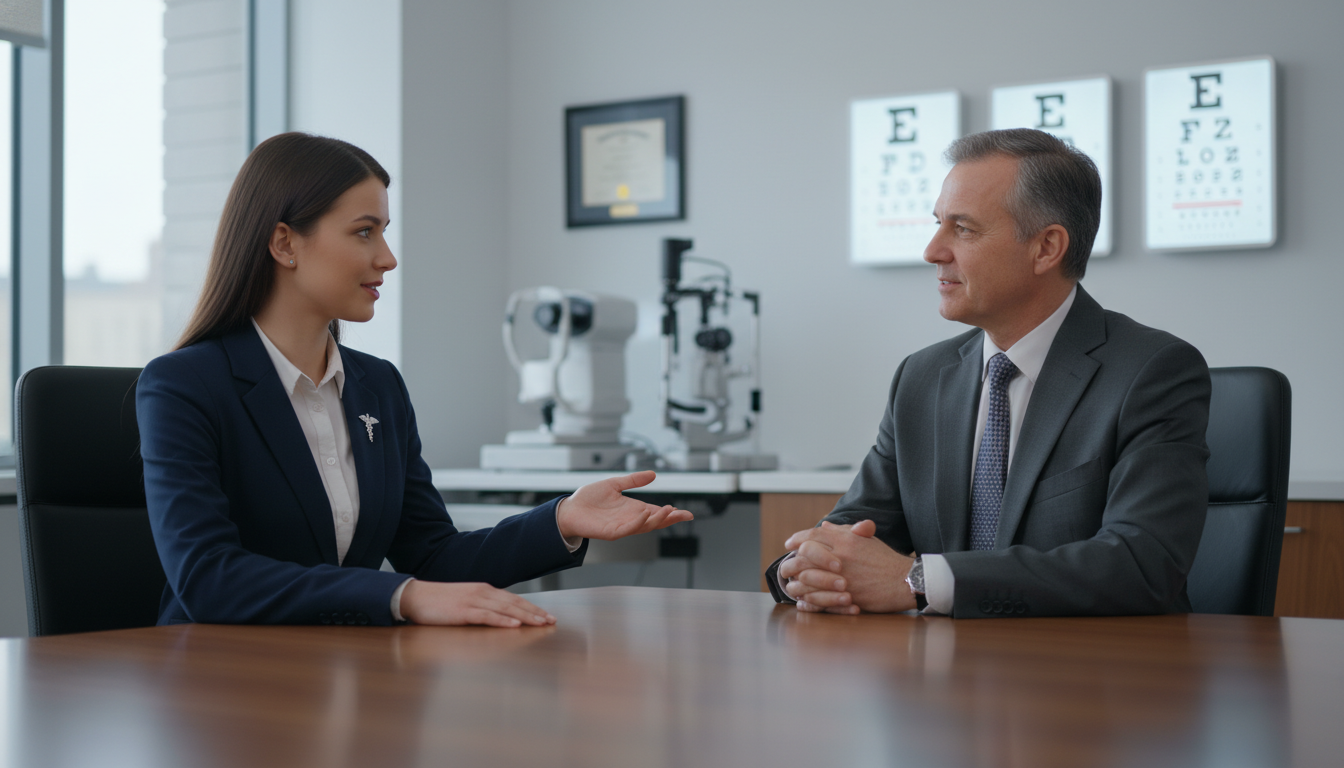
Crafting Your Story and Navigating Interviews as a DO in Ophthalmology
Once you earn interviews, your focus shifts to storytelling, professionalism, and alignment with each program.
Personal Statement: Framing Your DO Journey
Your personal statement for an ultra-competitive specialty like ophthalmology should do three things:
Explain why ophthalmology in a specific, non-generic way:
- A meaningful patient encounter.
- The combination of microsurgery, technology, and longitudinal care.
- Integration of vision with quality of life, public health, or global ophthalmology.
Show longitudinal commitment and growth
- Research, outreach, and leadership that build on each other.
- How your interests evolved from early exposure to deeper involvement.
Integrate your osteopathic identity strategically
- How an osteopathic emphasis on holistic care informs your approach to vision and disability.
- Experiences where your DO training—such as communication or whole-person assessment—improved patient outcomes in eye care settings.
- Avoid defensiveness; instead, project confidence in what your background adds.
Interview Preparation: Anticipating DO-Specific Questions
While overt DO vs. MD questions are less common now, you may encounter subtle prompts:
- “Tell me about your choice to attend a DO school.”
- “How do you think osteopathic training prepares you for ophthalmology?”
- “What challenges have you faced coming from a DO background in a competitive specialty?”
Prepare concise, positive responses that:
- Emphasize deliberate choice, not lack of options.
- Highlight practical strengths: communication, empathy, systems thinking.
- Acknowledge challenges but frame them as motivation that led to growth and initiative.
Also rehearse standard ophtho interview topics:
- Discussions of your research (know your statistics and limitations).
- Ethical dilemmas (e.g., surgical complications, access to eye care).
- Strengths and weaknesses.
- Why this specific program and city.
Signaling Fit with Different Program Types
Tailor your emphasis depending on program characteristics:
- Academic-heavy programs:
- Emphasize research trajectory, interest in clinician-scientist roles, teaching medical students.
- Clinically heavy, community-focused programs:
- Emphasize patient volume, procedural passion, and community engagement.
- Programs with strong global ophthalmology or underserved care:
- Highlight prior service and concrete future plans.
Regardless of type, be prepared to answer:
- “Where do you see yourself in 5–10 years in ophthalmology?”
- “What role do you see osteopathic principles playing in your practice?”
Backup Planning, Risk Management, and Long-Term Vision
An ultra-competitive specialty strategy always includes a realistic backup plan. This is not pessimism—it's risk management.
Dual-Application vs. Single-Specialty Commitment
As a DO graduate, you must decide whether to:
- Apply only to ophthalmology (SF Match), then scramble into a preliminary year if needed.
- Dual-apply in the main Match (e.g., internal medicine, transitional year, preliminary surgery), while still prioritizing ophthalmology.
Factors to consider:
- Board scores and transcript strength.
- Strength of research and letters specifically in ophthalmology.
- Number and quality of ophtho interviews you receive.
- Personal risk tolerance and financial flexibility.
Some DO applicants intentionally match into a strong preliminary or transitional year first, then reapply to the ophtho match with:
- Additional research time.
- Stronger clinical letters.
- Program director advocacy from their intern year.
This pathway is more common than many realize and can still lead to an excellent ophthalmology residency.
If You Don’t Match Ophthalmology the First Time
Not matching does not mean you cannot ever become an ophthalmologist.
Common re-application strategies:
Dedicated research year
- Join an ophthalmology lab or clinical research program.
- Publish and present at meetings.
- Strengthen mentorship ties.
Complete a prelim/transitional year
- Build strong clinical evaluations.
- Continue ophtho engagement part-time (research, shadowing, electives).
- Obtain a program director letter highlighting your professionalism and clinical excellence.
Reassess program list and geographical strategy
- Increase the number of DO-friendly programs.
- Broaden to include more community and mid-tier academic programs.
Throughout this process, stay in contact with ophthalmology mentors who can honestly assess and advocate for you.
FAQs: DO Graduate Strategy for an Ultra-Competitive Ophthalmology Match
1. As a DO graduate, do I really need to take USMLE for ophthalmology?
You are strongly advantaged if you do. Some programs will consider COMLEX only, but many research-heavy and academic ophthalmology residencies screen primarily with USMLE scores. If you skip USMLE, you narrow your options and may be auto-screened out of many programs. If you’re early enough in training and serious about the ophtho match, taking both COMLEX and USMLE is usually the best strategic choice.
2. How much research do I need for a competitive ophthalmology residency as a DO?
There’s no set minimum, but for an ultra-competitive specialty, DO applicants should aim for:
- At least 2–3 meaningful ophthalmology projects, ideally with:
- One or more presentations (poster or oral).
- One or more publications (case report, retrospective study, or review). If you’re targeting top academic programs, more substantial research—such as multiple papers or a research year—can significantly help. Quality, completion, and your ability to discuss the work in depth matter more than sheer volume.
3. Can a DO really match into top ophthalmology programs, or should I focus only on “DO-friendly” sites?
DOs have matched into highly regarded ophthalmology programs, but the path is steeper. For most DO graduates, the best approach is:
- Build a stronger-than-average portfolio (scores, research, letters).
- Apply broadly, including:
- DO-friendly programs.
- Community and hybrid programs.
- A selected set of more competitive academic programs where you have connections or research ties. If you have an exceptional profile (high scores, multiple ophtho publications, strong mentorship), don’t limit yourself—but still ensure you have a solid list of realistic programs.
4. How does pursuing ophthalmology compare to matching derm or matching ortho as a DO?
All three—ophthalmology, dermatology, and orthopedic surgery—are ultra-competitive, with:
- High board score expectations.
- Strong emphasis on research and letters.
- Program-level variability in DO acceptance.
Dermatology and orthopedics traditionally have larger applicant pools and well-known competitiveness, but ophthalmology’s smaller number of positions and early match structure make it uniquely challenging. For all three, DO applicants must be especially deliberate about: - Taking USMLE (in addition to COMLEX).
- Building robust research portfolios.
- Securing high-impact specialty letters.
- Targeting programs with a track record of taking DOs.
If your passion is truly ophthalmology, a focused, strategic approach can absolutely get you there, even as a DO graduate.
By approaching ophthalmology as the ultra-competitive specialty it is—and not underestimating the extra hurdles faced by DO graduates—you can craft an intentional, data-driven strategy. With strong academics, purposeful research, smart rotations, and clear storytelling about your osteopathic identity, you can position yourself as a compelling candidate in the ophthalmology residency match.




















