
Understanding the Terrain: DO Graduate in an Ultra‑Competitive Field
Integrated plastic surgery is one of the most competitive specialties in the match. For a DO graduate, the path is possible—but it is steeper, narrower, and requires excellent strategy.
You must approach this like a multi‑year project, not a last‑minute sprint. Your goal is to become such a strong, de‑risked applicant that programs cannot easily dismiss you based on degree or school name.
Key realities you should accept up front:
- Integrated plastic surgery match is small and selective. Every year, far more applicants than positions. Many applicants have top‑tier research, leadership, and elite home institutions.
- DO bias still exists. Although improving, some programs rarely or never interview DOs. That means you must identify realistic programs and then significantly exceed their typical applicant profile.
- The bar is highest for DOs in ultra‑competitive specialties. This includes plastic surgery, matching derm, and matching ortho—all require similar levels of academic and extracurricular excellence.
The good news: each year, some DO graduates do match into plastic surgery residency. Nearly all of them share core traits:
- They planned early and deliberately
- They assembled a strong mentorship network
- They strategically targeted DO‑friendly programs
- They created a compelling, consistent narrative around their interest in plastic surgery
The rest of this guide outlines how to do the same.
Building a Plastic Surgery‑Ready Portfolio as a DO
Think of your application as four pillars: academics, clinical performance, research, and professional identity. To succeed in the integrated plastics match as a DO graduate, you need to excel in all four.
1. Academic Strength: Board Scores, Class Rank, and More
Even with USMLE Step 1 now pass/fail, numbers still matter. Programs use numeric signals as an early screen—especially for DO applicants.
USMLE vs COMLEX
- If you are serious about a plastic surgery residency, take USMLE Step 1 and Step 2 CK in addition to COMLEX.
- Many integrated plastic surgery programs are less familiar with COMLEX and prefer or even require USMLE.
- Aim for:
- Step 1: strong pass on first attempt; no failures.
- Step 2 CK: as high as possible—ideally > 245–250+ to be competitive once filtered against MD applicants (higher is better for a DO).
If you have already graduated:
- If your Step scores are below typical plastics ranges, you must compensate with extraordinary research, letters, and away rotations.
- If you never took USMLE and are still eligible, consider Step 2 CK at minimum, but weigh this decision carefully with a mentor because a low score can hurt.
Class Rank and Honors
- Honors in surgery and related rotations (anatomy, radiology, ICU) are crucial.
- If your school ranks, a top quartile (or higher) rank helps; if not, ask for a Medical Student Performance Evaluation (MSPE) that explicitly highlights your comparative performance.
Red Flags
Any of the following require a mitigation strategy:
- Failed board exam
- Failed core clerkship
- Remediation or professionalism concerns
In these cases, you must:
- Address briefly and honestly in your personal statement or interviews (own it, show growth).
- Offset with consistent excellence afterward—high Step 2 CK, strong sub‑internship performance, and glowing letters.
2. Clinical Excellence: Third‑Year, Sub‑Is, and Away Rotations
Programs want to know: “Will this DO graduate thrive in our high‑intensity plastic surgery residency?”
Core Surgery Rotation
- Treat your general surgery clerkship like an audition.
- Concrete actions:
- Be first in, last out.
- Know your patients cold—labs, imaging, plan.
- Read about each case the night before.
- Ask for formative feedback early: “What can I do this week to perform at the level of an honors student?”
- Target outcome: Honors and a letter of recommendation from a surgical faculty member (preferably plastic surgery, but general surgery is still valuable).
Sub‑I in Plastic Surgery (Home or Affiliated)
If your school has a plastic surgery department:
- Complete a plastic surgery sub‑internship early in your 4th year.
- Perform like a junior resident—own your patients, anticipate the next step in the OR, and help manage floor issues.
- Seek a detailed letter from a program director, division chief, or well‑known faculty member.
If your school doesn’t:
- Identify regional academic centers that accept DO students for visiting rotations in plastic surgery.
- Prioritize programs known to have matched DOs into their integrated plastics residency.
- Treat every day as an interview—your evaluation may go straight to the rank list.
Away Rotations (Audition Rotations)
For the integrated plastics match, away rotations are essential, especially for DO applicants.
Strategic plan:
- Aim for 2–3 plastic surgery away rotations at institutions:
- That historically interview or match DOs
- Where your metrics are at or above the median
- Apply early (VSLO/VSAS) with:
- Step/COMLEX scores
- Updated CV
- Strong personal statement tailored to plastics
During your away:
- Show humility and work ethic: volunteer for consults, be present on rounds, and stay engaged in the OR.
- Know patients well and follow‑up on details without being asked.
- Ask directly for feedback in week 2–3: “I’m extremely interested in this program. What can I do to make myself the strongest possible sub‑I while I’m here?”
- Before you leave, communicate clearly: “This is my top choice program,” if it’s true, and ask if they’d feel comfortable supporting you.
These rotations are often the single most important factor in overcoming DO bias and securing interview offers.

Research and Scholarly Output: Making Yourself Unignorable
In ultra‑competitive fields—integrated plastics, matching derm, matching ortho—research is often the main differentiator, especially if your school name and degree are not typical for the field.
Why Research Matters More for a DO Graduate
- It signals academic curiosity and ability to contribute to the field.
- It builds relationships with faculty who can advocate for you.
- It helps offset any perceived disadvantage from coming from a DO school without a major plastic surgery department.
What Kind of Research?
Ideal tier, in descending order of impact for plastic surgery residency:
Plastic surgery‑specific research
- Clinical outcomes, reconstructive techniques, aesthetic outcomes, hand surgery, craniofacial, microsurgery, etc.
- Publications in PRS, JPRAS, Annals of Plastic Surgery, or other reputable journals.
- Presentations at ASPS, AAPS, local plastic surgery meetings.
Surgery‑adjacent or procedural research
- Trauma, burn, wound care, surgical oncology, orthopedics, ENT, derm surgery.
- Shows relevant interest and skills if plastic‑specific research is not available.
Any rigorous clinical or translational research
- Quality improvement, epidemiology, basic science—all can still help, especially if you show productivity.
How to Build a Research Track as a DO
Step 1: Find a Committed Mentor
- Look for:
- A plastic surgeon or surgeon with a track record of publishing.
- Someone who has previously mentored students into competitive specialties.
- If your home institution doesn’t have plastics:
- Look at neighboring academic centers.
- Cold‑email faculty with:
- A brief introduction (DO student, year, interest in plastic surgery residency).
- Your CV.
- A clear ask: “I would love to assist with ongoing projects, including data collection, chart review, manuscript editing, or presentations.”
Step 2: Aim for Multiple Projects, Not Just One
- You want a pipeline:
- 1–2 projects nearing submission.
- 2–3 in active data collection.
- 1 or more case reports or reviews.
- Focus on being the workhorse who moves projects forward and earns authorship.
Step 3: Consider a Dedicated Research Year
A formal research year can be transformative for a DO applicant targeting integrated plastic surgery, especially if:
- Your scores are average or slightly below plastics norms.
- Your school has limited plastics exposure.
- You can complete the year in a well‑known plastics program.
Outcomes of a strong research year:
- Multiple publications and presentations.
- Deep, sustained mentorship.
- Internal visibility that can help secure a strong letter and possibly an interview at that institution.
Strategic Targeting: Where a DO Applicant Should Apply, Rotate, and Network
Not all programs are equal in their openness to DO graduates. One of your most powerful tactics is smart targeting.
Identifying DO‑Friendly Integrated Plastic Surgery Programs
To optimize your osteopathic residency match chances in plastic surgery:
Review recent match lists
- Look at public information from programs and student forums (with caution).
- Identify programs where DO graduates have matched in plastic surgery recently.
Ask mentors directly
- Academic plastic surgeons and program directors often know which institutions are receptive to DOs.
- Ask: “Which integrated plastics programs have a history of interviewing or matching DOs?”
Use program websites and social media
- Residency pages may highlight current residents’ educational backgrounds.
- LinkedIn and Twitter (X) can show patterns of previous matches.
Create a tiered list
- Tier 1: Programs with a clear record of DO residents.
- Tier 2: Programs that at least interview DOs / have DOs in related specialties.
- Tier 3: Historically MD‑only, which you might still include if your metrics are very strong or you rotated there.
Away Rotations: Maximize Return on Time
For DO graduates, away rotations in plastic surgery function as extended interviews. Use them to:
- Demonstrate clinical excellence.
- Show cultural fit.
- Collect powerful letters.
Program Selection Tips
Favor programs where:
- Your score profile is competitive.
- DO grads have matched previously.
- There is active research you can join during/after the rotation.
Avoid:
- Over‑concentrating on elite “name‑brand” programs that have never interviewed DOs.
- Choosing programs solely based on geography or prestige over realistic opportunity.
Networking in a Competitive Specialty
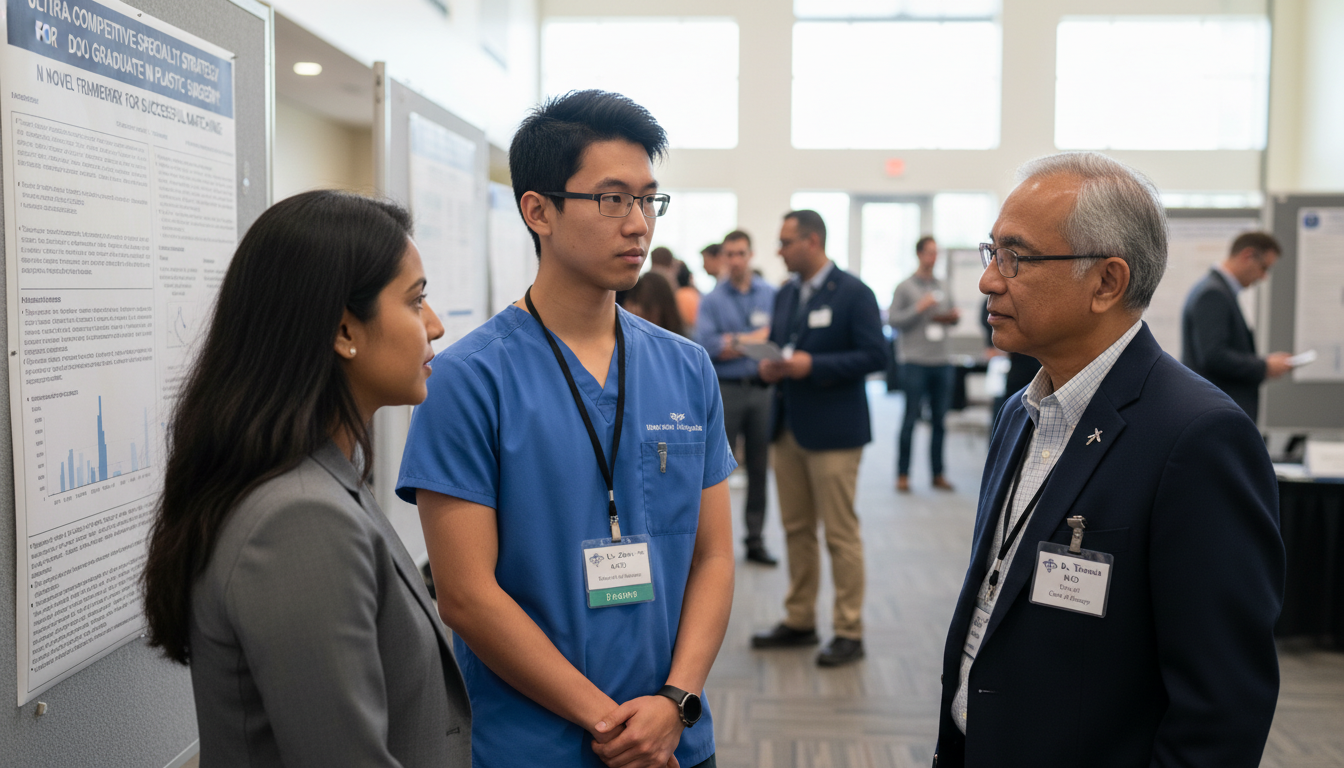
This is not superficial “networking”; it is authentic, professional relationship‑building:
National meetings (ASPS, regional plastic surgery societies)
- Attend as a student/resident member.
- Present posters if possible.
- Introduce yourself to faculty with a specific connection: “I’m a DO graduate interested in integrated plastics; I’ve been working with Dr. X on Y project.”
Virtual events and webinars
- Many plastic surgery residency programs host informational sessions.
- Use these to understand program values and highlight your interest.
Follow‑up emails
- After meeting a faculty member, send a short note:
- Thank them for their time.
- Attach your CV if appropriate.
- Express interest in future collaboration or rotation.
- After meeting a faculty member, send a short note:
Carefully maintained professional relationships can translate into mentors who will speak for you when applications are reviewed.
Telling a Cohesive Story: Application Documents, Interviews, and Rank Strategy
Beyond metrics and CV bullets, ultra‑competitive specialty selection committees look for a coherent story: Why plastic surgery? Why you? Why now? As a DO graduate, that story must also implicitly answer, “Why should we invest in you despite systemic bias?”
Personal Statement: More Than “I Like Surgery and Art”
Common plastic surgery cliches—“blend of art and science,” “restoring form and function”—won’t differentiate you. Your personal statement must:
- Demonstrate deep understanding of the specialty:
- Reconstruction and aesthetics
- Hand, craniofacial, microsurgery
- The longitudinal patient relationships unique to plastics
- Show longitudinal commitment:
- Early exposure or experiences that led you toward an ultraspecialized surgical path.
- Research, shadowing, or volunteer work that connects with plastic surgery principles.
For a DO graduate:
- Subtly highlight strengths of your osteopathic training:
- Holistic patient care
- Communication skills
- Hands‑on procedural comfort
- Avoid sounding defensive; instead, project quiet confidence in the value you bring.
Structure suggestions:
- Hook: A specific, vivid clinical moment that crystallized your interest.
- Development: How you pursued this interest—research, rotations, mentors.
- Osteopathic identity: How your DO background shapes your approach to surgery and patient care.
- Future vision: What kind of plastic surgeon you hope to be (academic, reconstructive, community, etc.).
Letters of Recommendation: The Power of Names and Specificity
You should aim for 3–4 letters, typically:
- Plastic surgery program director, division chief, or senior faculty (ideally from an away rotation).
- Another plastic surgery faculty member (home or away).
- Surgical faculty (general surgery, ortho, ENT, etc.) who can vouch for your OR work ethic.
- Optional: Research mentor if significantly involved in plastics work.
What makes a letter powerful:
- Detailed description of your performance:
- “Functioned at the level of an intern.”
- “Top 5% of students I’ve worked with.”
- Specific anecdotes:
- Your initiative on a complex consult.
- Your reliability in managing floor tasks.
- Explicit advocacy:
- “I strongly support this DO graduate’s candidacy for an integrated plastic surgery residency.”
Do not be afraid to ask:
- “Do you feel you can write me a strong letter of recommendation for plastic surgery?”
Interview Performance: Converting Opportunities
Once you get interviews, your identity shifts from “DO applicant” to “individual candidate.” Now:
- Know your application cold—every project, every line of your CV.
- Be fluent in discussing your research:
- Your hypothesis
- Your role
- Main findings and limitations
- Prepare for plastic surgery‑specific questions:
- “Why plastic surgery over other competitive specialties like derm or ortho?”
- “Tell me about a complication you witnessed and how it impacted you.”
- “How do you see yourself contributing academically as a resident?”
As a DO graduate, anticipate:
- “Tell me about your decision to attend a DO school.”
- “What advantages do you feel your osteopathic training gives you?”
Answer without defensiveness:
- Briefly explain your choice or circumstances.
- Emphasize what you gained: strong primary care foundation, manipulation of complex systems, patient rapport.
- Pivot quickly back to your trajectory in an ultra‑competitive surgical field.
Application Volume and Rank List Strategy
For ultra‑competitive specialties, especially for DO graduates, you must think statistically:
- Apply broadly to nearly all integrated plastic surgery programs, with particular emphasis on DO‑friendly ones.
- Strong DO applicants may still need 50–70+ applications due to screening filters and school bias.
- Consider a parallel plan if necessary:
- Prelim general surgery
- Transitional year
- Or a research fellowship year
- Some DOs match integrated plastics directly; others enter independent plastic surgery later via general surgery.
On your rank list:
- Rank programs based on fit, training quality, and your long‑term goals, not just perceived prestige.
- If you truly feel aligned with a specific program after away rotations and interviews, signal that clearly and professionally.
Planning, Timelines, and Contingencies: Making It Work as a DO Graduate
Ideal Timeline (If You Are Still a Student)
MS1–MS2
- Get strong grades, especially in anatomy and early clinical skills.
- Start shadowing plastic surgeons.
- Begin a plastic surgery research project if possible.
MS2–MS3
- Take USMLE Step 1/COMLEX with strong preparation.
- Excel in core clerkships, particularly surgery.
- Expand research involvement—aim for abstracts and manuscripts.
MS3–Early MS4
- Complete home sub‑I in plastics or general surgery with plastics involvement.
- Apply for plastic surgery away rotations.
- Consider if a dedicated research year is necessary.
MS4
- Do 2–3 away rotations in plastic surgery at DO‑friendly or realistic programs.
- Finalize research output, present at meetings.
- Craft application materials and apply broadly.
If You’re Already a DO Graduate
If you did not match or decided late:
- Consider:
- Preliminary general surgery year with access to plastic surgeons and research.
- Full research fellowship in a plastic surgery department.
- During this time:
- Maximize publications and national presentations.
- Build deep relationships with faculty who can strongly support your re‑application.
- Continue to improve your clinical skills and evaluations.
Be honest with yourself and mentors:
- Some DO graduates ultimately pivot to related competitive fields (matching derm, matching ortho, ENT, general surgery with later independent plastics).
- However, many do successfully pursue integrated plastics with the right multi‑year plan.
FAQs: DO Graduate Strategy for Integrated Plastic Surgery
1. As a DO graduate, is integrated plastic surgery realistically within reach?
Yes, but the bar is high. You will need:
- Very strong board scores (especially Step 2 CK if you took USMLE)
- Excellent clinical evaluations and letters from plastic surgeons
- Significant plastic surgery research and/or a research year
- Strategic away rotations at DO‑friendly programs
If you are willing to commit 1–2 additional years for research or prelim training if necessary, your chances improve substantially.
2. Do I absolutely need to take USMLE as a DO for a plastic surgery residency?
While not technically mandatory everywhere, in practice, USMLE scores are extremely helpful for the osteopathic residency match into plastic surgery. Many integrated programs:
- Prefer USMLE for cross‑comparison with MD applicants
- May not fully understand COMLEX scores
If you are early enough in training and planning an ultra‑competitive specialty strategy, taking at least Step 2 CK is strongly recommended, provided you can prepare adequately to score well.
3. How many away rotations should a DO applicant do for integrated plastics?
Most strong DO applicants target 2–3 plastic surgery away rotations. Priorities:
- Programs with a history of DO friendliness
- Places where your academic metrics are competitive
- Institutions with active plastic surgery research
Two well‑chosen, high‑performing away rotations are often more valuable than four superficial ones.
4. What if I don’t match integrated plastic surgery on my first try as a DO graduate?
You still have options:
- Dedicated plastic surgery research year at an academic center
- Preliminary or categorical general surgery position at an institution with a plastics program
- Continued research, networking, and improved letters with a plan to reapply
- Considering the independent plastic surgery route after general surgery
Many successful plastic surgeons—MD and DO—took non‑linear paths. The key is honest assessment with mentors, a clear plan, and a willingness to invest extra time to align your credentials with such a competitive specialty.
Pursuing integrated plastic surgery as a DO graduate is challenging but achievable. With rigorous planning, powerful mentorship, targeted rotations, and a cohesive story, you can transform from an underestimated applicant into a compelling, high‑impact future plastic surgeon.