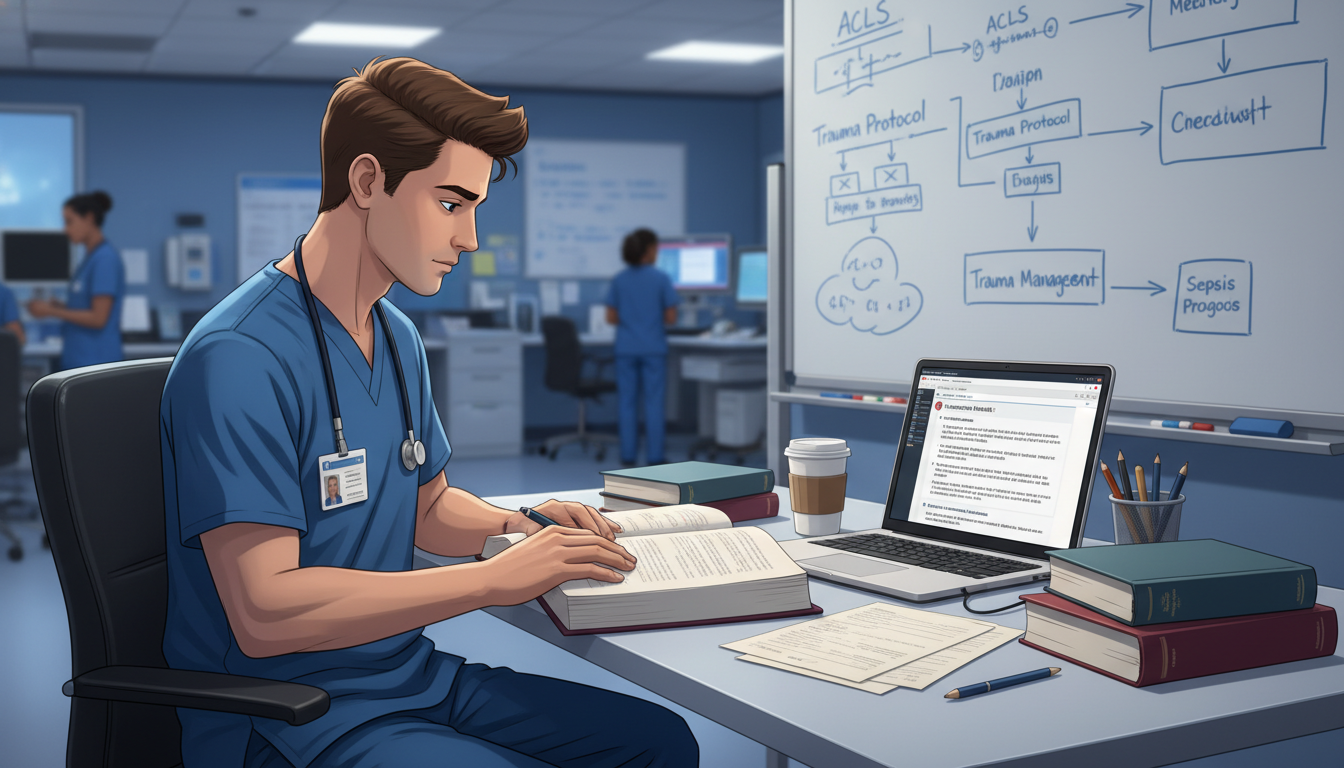
Understanding Emergency Medicine Board Exams
Emergency medicine training is uniquely intense: shift work, variable schedules, and constant cognitive load. Preparing for board exams in this context requires not only the right resources, but also a strategy tailored to the realities of emergency medicine residency.
When people say “board exams” in EM, they may mean several different tests throughout training:
- USMLE/COMLEX (Step/Level 1–3) – Pre-residency and early residency exams that still impact your EM match and future licensure.
- In-Training Exam (ITE) – Annual exam during residency used to benchmark progress.
- ABEM Qualifying Exam (Written Boards) – Primary board certification exam after residency.
- ABEM Oral (Oral Certification Exam) – Case-based oral exam (or the newer virtual oral exam format) to finalize board certification.
- Maintenance of Certification (MyEMCert) – For practicing physicians, modular exams to maintain certification.
This guide focuses on board exam study resources in emergency medicine across the training continuum, with special emphasis on tools that will help you both match into an emergency medicine residency and succeed once you’re there.
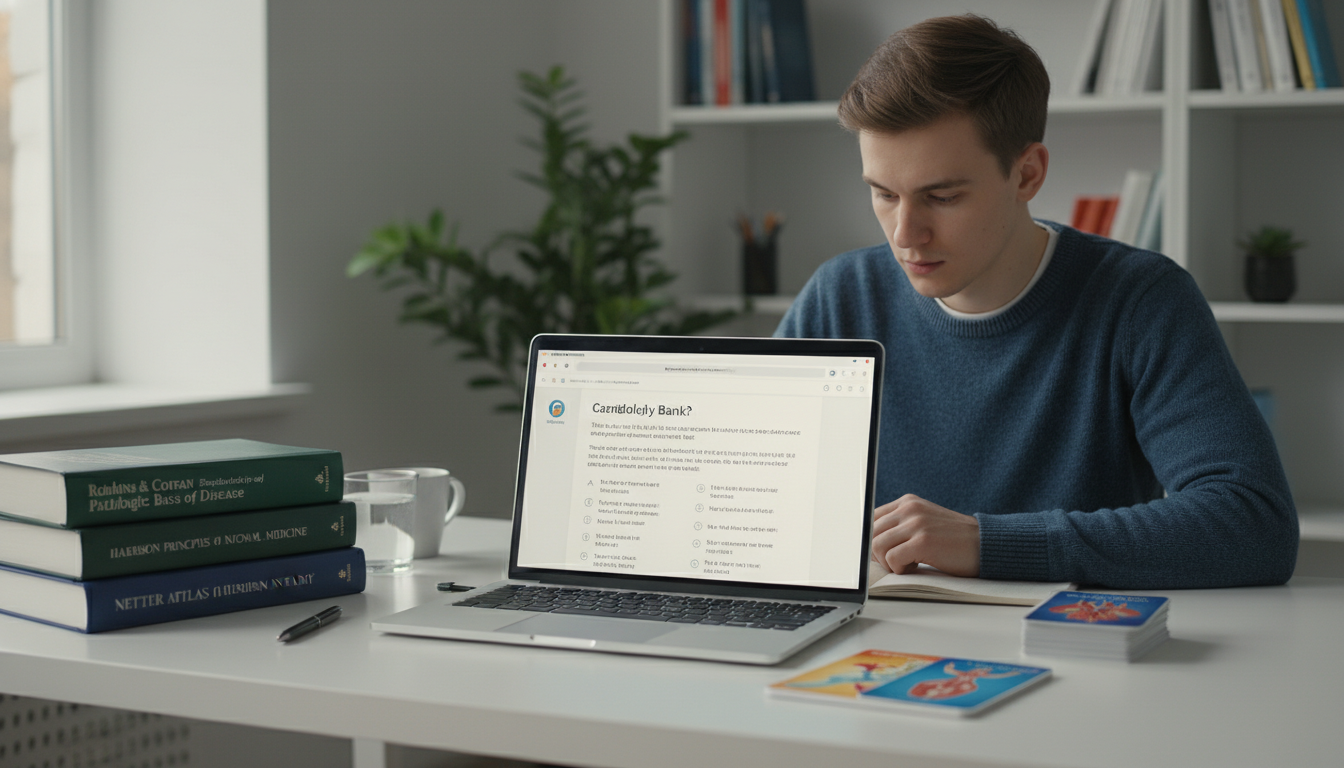
Core Question Banks: Your Primary Study Engine
Question banks are the backbone of board preparation in emergency medicine. They build pattern recognition, test strategy, and clinical reasoning in a way no textbook can match.
1. UWorld: Still the Gold Standard for USMLE
Even though UWorld isn’t EM-specific, its impact on your career begins before residency:
- Why UWorld matters for EM applicants
- Strong USMLE scores still influence your chances in the EM match.
- Solid Step 1/2 performance often correlates with good ITE and board performance later.
- It builds the test-taking foundations that will carry over to ABEM-style questions.
Key UWorld tips (UWorld tips) for EM-focused students:
For Step 2 CK:
- Prioritize emergency presentations: chest pain, dyspnea, trauma, sepsis, shock, altered mental status, pediatric emergencies, OB emergencies.
- Use tutor mode early, then switch to timed, random blocks at least 4–6 weeks pre-exam.
- Tag EM-relevant questions for rapid review during EM rotations.
- Combine with Anki USMLE decks to retain high-yield concepts (e.g., sepsis criteria, stroke management windows, trauma imaging rules).
For EM-bound interns studying Step 3:
- Do UWorld Step 3 CCS cases focusing on acute presentations and ED management.
- Time your Step 3 to align with lighter rotations if possible; don’t prep during your hardest EM block.
2. EM-Specific Question Banks for ABEM and ITE
Once you’re in EM residency, you need question banks aligned with ABEM’s Model of Clinical Practice.
Common EM board-style question banks include:
- Rosh Review (Emergency Medicine)
- EMRAP’s Crunch Time/Boards & Beyond-style EM Qbanks (where available)
- PEER (Physician’s Evaluation and Educational Review in Emergency Medicine)
- BoardVitals EM
- Program-provided ITE prep platforms (varies by institution)
How to evaluate an EM question bank
Look for:
- Alignment with ABEM content outline – Does it cover trauma, toxicology, cardiology, OB/Gyn, pediatrics, procedures, EKGs, and environmental emergencies in proportion to the exam?
- Quality of explanations – Are explanations thorough with supporting images/tables and “why the wrong choices are wrong” details?
- Interface and performance analytics – Can you create custom quizzes, track weak areas, and simulate exam conditions?
Practical usage strategy
PGY-1
- Start with tutor mode on a single EM qbank to build familiarity with question style.
- Aim for 10–20 questions/day on most days of the month (flex during heavy shift weeks).
- After each block, write 3–5 quick Anki cards for concepts you got wrong or guessed.
PGY-2 and PGY-3
- Increase volume: 30–40 questions/day during focused board prep months.
- Alternate between timed, exam-length blocks and shorter targeted sets (e.g., pediatrics, trauma, toxicology).
- Use analytics to identify the bottom three domains and intensify study in those.
Example:
If your ITE report shows weak performance in OB/Gyn, pediatrics, and endocrine, create a 4-week micro-plan:
- Week 1: 200 OB/Gyn questions + 1–2 chapters/lectures
- Week 2: 200 pediatrics questions
- Week 3: 150 endocrine questions + 50 review questions from OB/peds
- Week 4: Mixed blocks emphasizing these areas plus timed practice exams
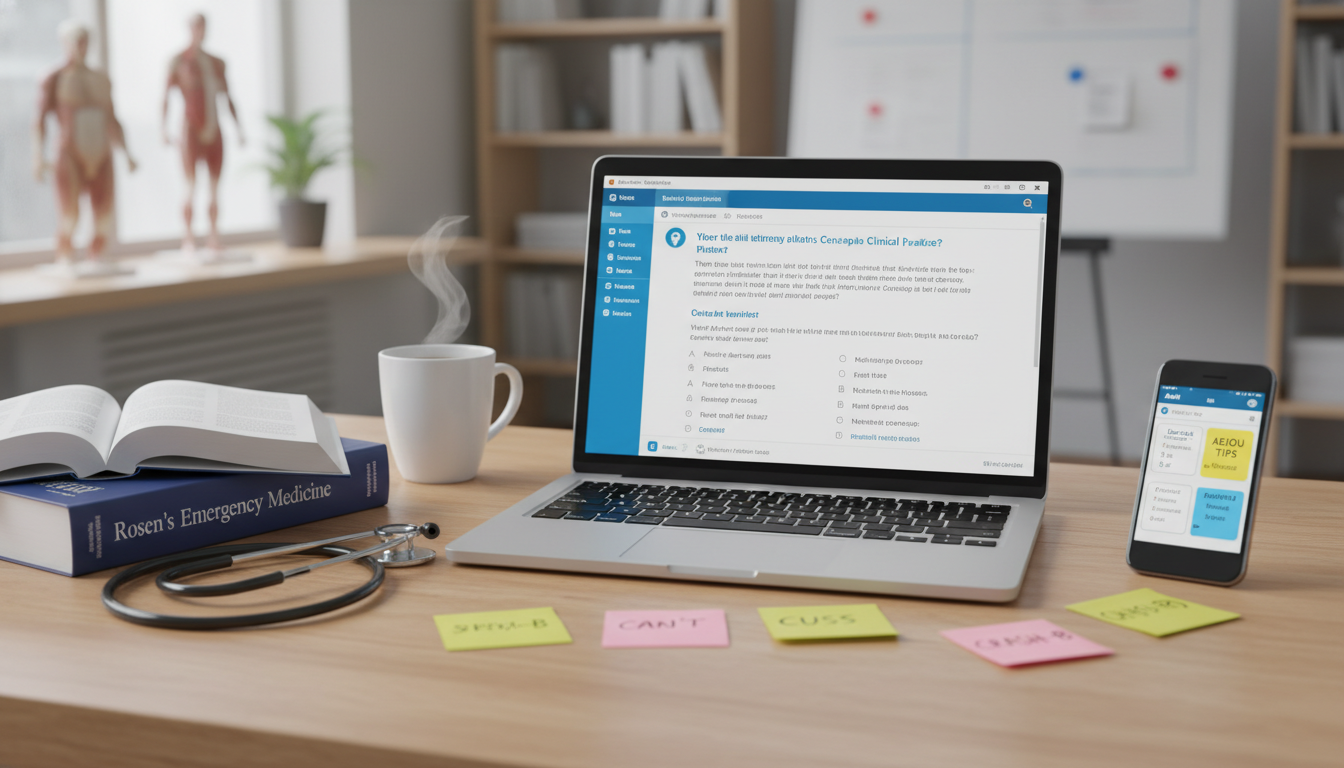
High-Yield Texts and Review Books
While question banks train application of knowledge, review books give you structure and ensure you don’t miss important topics.
1. Core Emergency Medicine Textbooks
These are not “quick reads,” but they form the knowledge base that board questions are built from.
Commonly used references:
- Tintinalli’s Emergency Medicine
- The classic, broad, comprehensive reference.
- Best used as: a deep-dive reference for topics you consistently miss (e.g., ocular emergencies, transplant complications, hematologic emergencies).
- Rosen’s Emergency Medicine
- Slightly different style, often more pathophysiology-driven.
- Useful if you like concept-heavy explanations that reinforce understanding beyond memorization.
You won’t read these cover-to-cover for boards, but you should:
- Use them to clarify complex or recurrent misses from qbanks.
- Read core chapters during residency: airway, shock, trauma, sepsis, toxicology, cardiac arrest, stroke, and OB emergencies.
2. Board-Focused Review Books
These are the workhorses for ABEM Qualifying Exam preparation.
Highly used formats:
- Question-based review books (e.g., Emergency Medicine board review texts with multiple-choice questions)
- Outline or bullet-point review books
- Fast to read and re-read.
- Great for last 6–8 weeks before the exam.
Look for features like:
- Clearly highlighted “Key Facts” or “Exam Tip” boxes.
- Organization by ABEM topic categories.
- Integrated EKGs, imaging, and clinical photos.
- Concise but not oversimplified explanations.
How to integrate review books with qbanks
During early prep (6–12 months out):
- Use the review book to guide your topic-of-the-week approach (e.g., “this week = cardiology + shock”).
- Each day: read 10–15 pages, then do 10–20 related qbank questions.
During late prep (2–3 months out):
- Transition to high-yield re-reads and rapid passes.
- Keep a mini-errata notebook (or Anki deck) of “facts I keep forgetting” (e.g., tPA contraindications, EKG features of hyperkalemia, toxic ingestion antidotes).
3. Pocket Guides and On-Shift References
These don’t replace board resources, but strongly reinforce learning:
- On-shift reference apps (MDCalc, EMRA Antibiotic Guide, EMRA Basics, etc.)
- Procedure handbooks or apps for LP, chest tube, central line, intubation review.
Every shift can be a study session:
- After seeing a case (e.g., DKA), spend 5–10 minutes post-shift briefly reading the board-style summary of that topic.
- Convert that into 2–3 targeted Anki cards:
- E.g., “Diagnostic criteria for DKA,” “Fluids and insulin dosing sequence,” “When to add dextrose.”
Digital Tools: Anki, Podcasts, and Online Platforms
Residents in emergency medicine often have fragmented time. Digital resources let you convert small time blocks into impactful study.
1. Anki for Emergency Medicine and USMLE
Spaced repetition is one of the most powerful learning tools you have.
Anki for USMLE (Anki USMLE)
- If you used Anki for USMLE Step 1/2 (e.g., popular decks like Anking), don’t abandon that foundation:
- Keep core physiology and pharmacology decks alive with low daily card limits.
- Add EM-specific cards as you encounter new board-relevant material.
Creating efficient EM Anki cards
Use short, targeted cards, not entire paragraphs:
- “First-line treatment of anaphylaxis?” → Epinephrine IM 0.3–0.5 mg 1:1000 in the lateral thigh.
- “Classic EKG finding in hyperkalemia?” → Peaked T waves → PR prolongation → QRS widening → sine wave.
- “Most common cause of atraumatic subarachnoid hemorrhage?” → Ruptured berry aneurysm.
Convert qbank mistakes into cards:
- Front: “Imaging study for suspected AAA in unstable vs stable patient?”
- Back: “Unstable: bedside US; Stable: CT angiography.”
Convert clinical pearls from conference/podcasts into cards:
- “Cyanide toxicity suspected after what type of exposure?”
“Smoke inhalation in closed space fires; nitroprusside infusions.”
- “Cyanide toxicity suspected after what type of exposure?”
Set a realistic daily cap (e.g., 30–80 reviews/day) so you don’t burn out during busy rotations.
2. Podcasts and Audio Resources
Emergency medicine is rich in high-quality, evidence-based podcasts. These are exceptional for board reinforcement, especially during commutes.
Commonly used EM podcasts (varies by region and availability):
- EM:RAP (with board-oriented segments)
- Core EM
- EM Basic
- FOAMed content from reputable academic centers
How to use audio resources for board prep:
- Choose episodes that align with your weak areas (e.g., heart failure, OB hemorrhage, pediatric fever).
- Listen actively:
- Pause and predict management before they reveal it.
- Jot down 2–3 key points or immediately create a few Anki cards after listening.
3. Online Question Platforms and FOAMed
Free Open Access Medical Education (FOAMed) provides enormous value, but you must be selective and exam-focused.
- Look for:
- Sites that clearly cite primary literature.
- Topic reviews that explicitly reference ABEM-style content or high-yield exam angles.
- Combine FOAMed with qbanks:
- After missing questions about HINTS exam, stroke mimics, or TCA overdose, read a trusted FOAMed summary and turn that into structured notes.

Exam-Specific Strategies: ITE, ABEM Written, and Oral Boards
Each exam tests similar knowledge, but the format and best study approach differ.
1. Emergency Medicine In-Training Exam (ITE)
The ITE is usually given annually in residency and predicts ABEM performance.
Purpose of the ITE:
- Benchmark your progress relative to national peers.
- Identify knowledge gaps early.
- Guide remediation and structured study plans.
ITE study strategy:
PGY-1:
- Focus on broad exposure to EM questions (Rosh, PEER, others).
- Don’t obsess over the score, but pay attention to weak domains.
- Start building your personal Anki or notebook of high-yield concepts.
PGY-2:
- Treat the ITE as a rehearsal for the ABEM written exam.
- Step up your preparation 4–6 weeks prior:
- 40–60 questions/day (timed, mixed topics).
- Weekly review of missed questions organized by topic.
- After results: meet with your PD/APD to interpret your performance and build a targeted plan.
PGY-3/4 (depending on program length):
- Use ITE data to finalize your board prep timeline.
- Scores trailing your class average may warrant:
- Additional qbanks.
- Structured reading assignments.
- More frequent practice tests under exam conditions.
2. ABEM Qualifying (Written) Examination
This is the major hurdle to board certification in EM.
Timing:
- Typically taken after graduation (summer/fall).
- Plan 6–9 months of gradual prep, ramping up intensity the last 2–3 months.
Core study framework:
Primary Qbank (or two, sequentially)
- Early phase: 10–20 questions/day with detailed review.
- Peak phase (last 2–3 months): 40–80 questions/day, mostly in timed exam blocks.
One main review resource
- A concise board review book or structured review course outline.
- Goal: complete at least one full pass, ideally two before the exam.
Spaced repetition (Anki or equivalent)
- Daily review of high-yield pearls and personal weak spots.
- Emphasize: toxicology, pediatrics, ECGs, imaging, OB/Gyn emergencies.
Practice exams under test conditions
- At least 2–3 full-length simulations:
- Timed
- Quiet environment
- No interruptions
- Afterwards, perform a post-mortem analysis:
- Which topics cost you the most points?
- Were errors due to knowledge gaps, misreading, or time pressure?
- At least 2–3 full-length simulations:
Common high-yield content clusters:
- Cardiology: ACS, arrhythmias, heart failure, aortic emergencies.
- Pulmonary: asthma, COPD exacerbation, PE, pneumothorax, respiratory failure.
- Neuro: stroke, TIA, status epilepticus, spinal cord syndromes, headache red flags.
- Trauma: ATLS principles, imaging decisions, chest/abdominal trauma, TBI.
- Toxicology: common overdoses (acetaminophen, salicylate, TCA, opioids, alcohols), toxidromes, antidotes.
- Pediatrics: fever in neonates, bronchiolitis, croup, meningitis, dehydration, pediatric trauma.
- OB/Gyn: ectopic pregnancy, preeclampsia/eclampsia, postpartum hemorrhage, miscarriages.
3. ABEM Oral/Virtual Oral Exams
These exams test how you think and manage cases in real time.
Key differences from written boards:
- Emphasis on clinical reasoning, communication, and organization, not just recall.
- Scored on your ability to:
- Develop a broad differential.
- Prioritize life threats.
- Reassess and respond to changes.
- Communicate clearly and systematically.
Best resources and strategies:
Practice cases from:
- Dedicated oral board review courses.
- Commercial oral exam prep books.
- Faculty-run mock oral sessions in your program.
Practice with peers and faculty:
- Do simulation-style cases in dyads or small groups.
- Rotate roles: examiner and examinee.
- Use standardized prompts or scenario scripts.
Develop a structured approach:
- Use a consistent mental framework such as:
- Initial: ABCDE, vitals, immediate stabilization.
- Next: focused history and exam tailored to the chief complaint.
- Then: diagnostic plan (labs, imaging, consultation).
- Ongoing: re-evaluation, interpretation, change of management, disposition.
- Practice speaking your thought process out loud:
- “This patient is hypotensive and tachycardic. I’m concerned about septic shock versus hemorrhagic shock. My immediate interventions are…”
- Use a consistent mental framework such as:
Record and review yourself (audio or video):
- Note filler words, disorganization, or missed safety steps.
- Tighten your phrasing: be concise and structured.
Integrating Board Prep With a Busy EM Lifestyle
Even the best resources are useless if you can’t realistically use them. Emergency medicine schedules demand pragmatic planning.
1. Build a Realistic Study Schedule
Consider:
- Shift patterns (nights, swings, weekends).
- Non-clinical duties (research, teaching, administration).
- Personal needs (sleep, family, mental health).
Sample framework for a PGY-2 resident:
On lighter clinical weeks:
- 40–50 qbank questions/day.
- 30–45 minutes of review book reading.
- 20–30 minutes of Anki.
On heavy or night-shift weeks:
- 10–20 questions/day in tutor mode.
- Audio learning (podcasts) during commute.
- 10–15 minutes of Anki at a minimum.
On days off:
- One longer block: 80–120 questions + thorough review.
- One focused content session: 1–2 chapters or topic modules.
2. Use Micro-Study Sessions
Examples of micro-study:
- Between patients during a slower shift:
- Skim a one-page summary of a high-yield topic (e.g., DKA, PE, sepsis).
- After a memorable case:
- Spend 5–10 minutes reviewing the associated guideline or algorithm.
- During commute:
- Listen to 15–20 minutes of an EM board-focused podcast.
3. Monitor and Adjust
Every 4–6 weeks, ask:
- Which domains are still consistently weak (per qbank analytics and ITE results)?
- Is your question volume adequate?
- Are you actually retaining content, or just passively completing questions?
Adjust:
- Increase focus on problem domains.
- Swap or supplement question banks if explanations don’t fit your learning style.
- If you’re burning out, lower the daily load and increase efficiency rather than raw volume.
FAQs: Board Exam Study Resources in Emergency Medicine
1. When should I start dedicated board prep during emergency medicine residency?
Light, consistent preparation should start PGY-1, mainly through question banks and targeted reading after cases. Dedicated, structured board prep for the ABEM written exam usually begins 6–9 months before your test date, with intensity ramping up in the final 2–3 months.
2. How many question banks do I really need for EM boards?
Most residents do well with one primary EM question bank plus possibly a second for additional practice or variety. The key is depth over breadth—completing one bank carefully (with thorough review and notes/Anki) is far more valuable than dabbling in multiple banks superficially.
3. Should I rely mostly on Anki or mostly on question banks?
Use both, but with different roles:
- Question banks: Build clinical reasoning, pattern recognition, and test-taking skills.
- Anki (or other spaced repetition): Cement facts, algorithms, and details you tend to forget.
For most EM residents, qbanks are the primary tool, and Anki is a highly effective support that dramatically improves long-term retention.
4. Are USMLE resources like UWorld still useful once I’m in an emergency medicine residency?
Yes, particularly if you’re preparing for Step 3 or shoring up foundational internal medicine and pediatrics. Many concepts from UWorld carry directly into EM board-style questions. However, for the ABEM exams, you should transition to EM-specific question banks and review books that reflect the Model of the Clinical Practice of Emergency Medicine.
By combining targeted question banks, efficient use of Anki USMLE foundations, smart use of FOAMed and podcasts, and consistent practice under exam-like conditions, you can build a sustainable and effective study plan for every stage of your emergency medicine career—from EM match preparation through ABEM certification and beyond.