


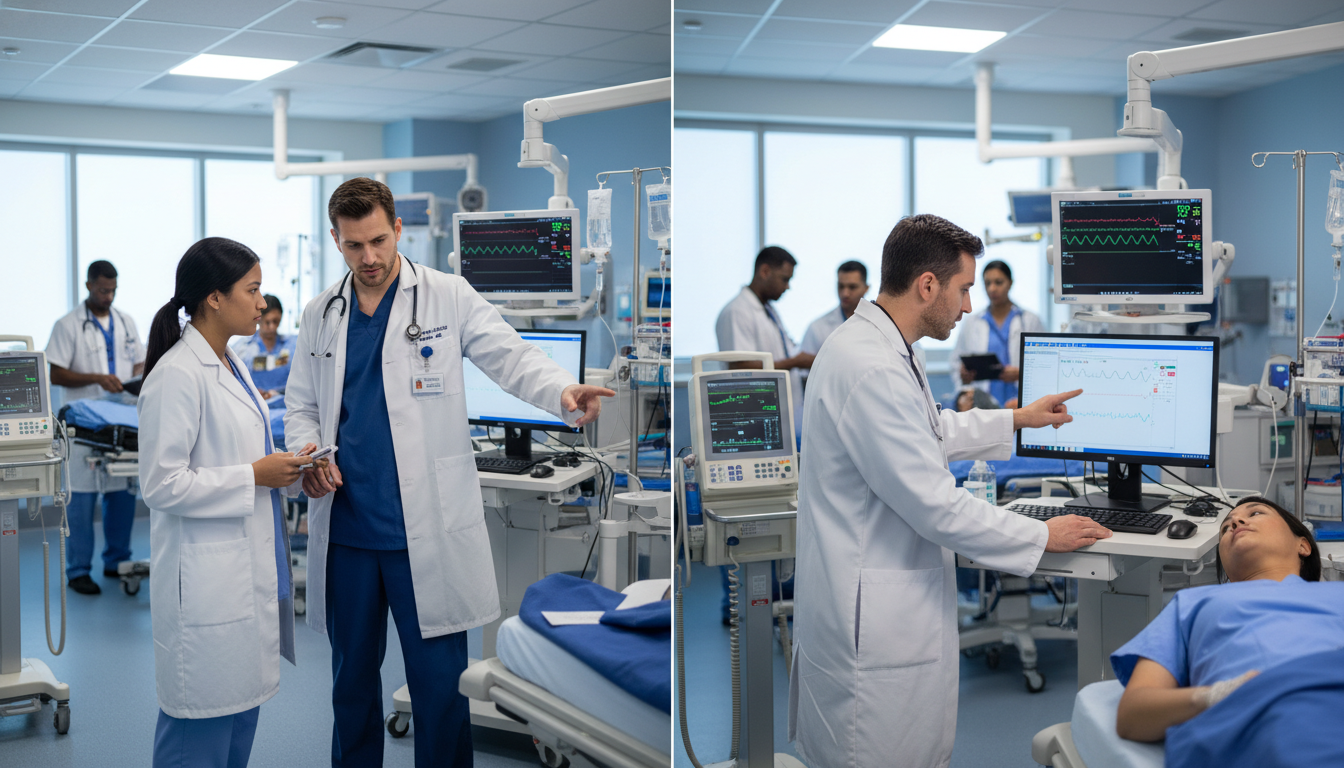
Why Emergency Medicine Shadowing Matters for Your EM Career
Shadowing in the emergency department (ED) is one of the most important early experiences for anyone considering an emergency medicine residency. It gives you a front-row seat to:
- The pace and pressure of real ED workflow
- How attendings juggle multiple sick patients
- Team dynamics with nurses, techs, consultants, EMS
- Breadth of pathology—from minor injuries to full resuscitations
For the EM match, programs expect you to understand what you’re signing up for. A strong medical shadowing experience in emergency medicine can:
- Confirm (or change) your specialty choice
- Generate stories for your personal statement and interviews
- Help you secure mentors, letters, and research opportunities
- Demonstrate commitment to EM on your application
This guide walks through how to find shadowing, what to do before, during, and after your shifts, and how to leverage your shadowing hours toward a successful emergency medicine residency application.
Understanding Emergency Medicine Shadowing
What “shadowing” really means in the ED
Shadowing is observational. You are not there to provide independent patient care. Your primary roles are to:
- Observe patient encounters and procedures
- Learn how emergency physicians think and communicate
- Absorb ED culture, workflow, and systems
Depending on your level (pre-med, early medical student, clerkship student), you may be allowed to:
- Take histories or check vitals under supervision
- Help with basic tasks (stocking, transporting)
- Practice skills on simulation models (e.g., suturing on foam or pig’s feet)
But you should never:
- Present yourself as a clinician if you’re not
- Perform any procedure without explicit permission and supervision
- Access charts or document independently unless approved within your school’s policies
Types of shadowing in emergency medicine
Emergency medicine shadowing can fall into several categories:
Pre-medical shadowing
- Fully observational
- Focused on understanding what an ED physician does
- Commonly restricted in terms of touching patients or accessing records
Early medical school shadowing (M1–M2)
- Still largely observational
- May involve basic participation: histories, physicals, simple procedures
- Often part of an Intro to Clinical Medicine or longitudinal course
Clinical student “shadowing-plus” (M3–M4 outside of EM rotation)
- You might already know some ED staff
- Can ask more in-depth questions about management, disposition, and systems issues
- May be able to assist more meaningfully within institutional policy
Formal EM rotation vs shadowing
- A formal EM clerkship is not “shadowing” but supervised clinical work
- Both experiences matter, but rotations carry much more weight for the EM match
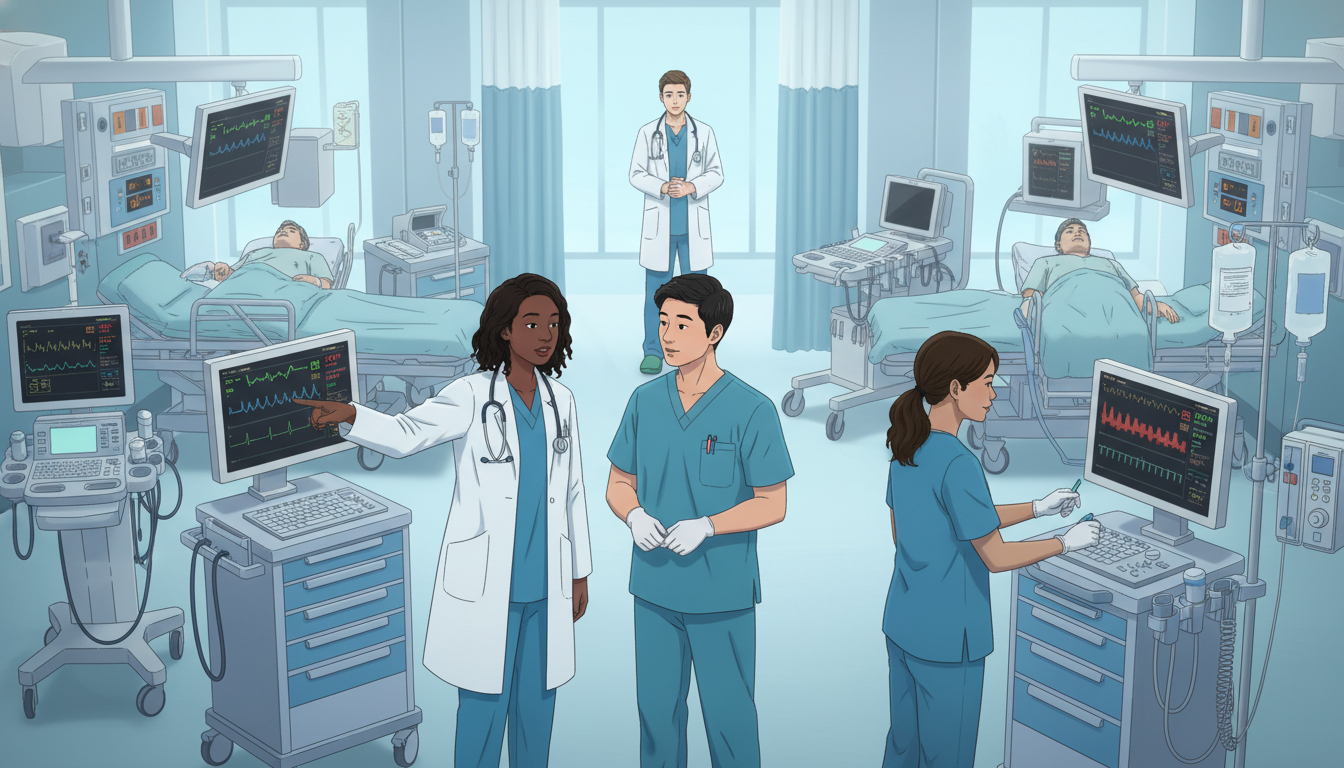
How to Find Emergency Medicine Shadowing Opportunities
Many students are unsure how to find shadowing, especially in high-liability areas like the ED. With a deliberate approach, it’s very achievable.
Step 1: Start with your own institution
If you are a current medical student:
Check your Office of Student Affairs or clinical education office
- Ask if they have an established ED shadowing program.
- Many schools have formal processes that handle credentialing and scheduling.
Contact your EM interest group (EMIG)
- EMIGs often coordinate shadowing nights in the ED.
- Officers may have direct relationships with the ED medical director or education faculty.
Talk to your EM clerkship director or residency program coordinator
- EM leaders often welcome interested students and can help match you with residents or attendings.
- Ask about off-hours opportunities (evenings, nights, weekends) that fit your schedule.
If you’re pre-med or at a school without an EM department:
- Start with hospital volunteer services or clinical experience programs.
- Ask: “Is there a process for pre-medical shadowing in the emergency department?”
- Be prepared that some EDs restrict pre-med shadowing entirely for legal or privacy reasons—but many will allow structured, supervised experiences.
Step 2: Use professional networks and mentors
If you’re wondering how to find shadowing beyond your school:
Ask faculty who know you
- Primary care, surgery, or basic science faculty might have EM contacts.
- A simple email:
- “I’m strongly considering emergency medicine and looking for medical shadowing experience in the ED. Do you know any emergency physicians who might be open to having a student shadow for a few shifts?”
Reach out to residents
- If your institution has an emergency medicine residency, talk to residents after conferences or didactics.
- Many are happy to have a student observe (with program and hospital approval).
Professional organizations
- EMRA, ACEP, SAEM, and CORD sometimes have mentorship or shadowing connections.
- Local or state ACEP chapters may know community docs open to students.
Step 3: Consider community vs academic EDs
Both environments are valuable, and many students do a mix of both.
Academic EDs:
- Often have established student programs and more structured teaching
- Can be crowded with learners (residents, rotators, fellows), which may limit hands-on involvement
- Great place to see complex pathology, trauma, and subspecialized cases
Community EDs:
- May have fewer learners, so the attending can engage with you more
- You can see a more “real-world” emergency medicine practice style
- Good chance to understand patient flow, throughput, and practical constraints
For the EM match, demonstrating both settings can show that you understand different practice environments.
Step 4: Craft an effective outreach email
When you email an emergency physician or administrator:
- Use a clear subject line: “Medical Student Interested in EM – Shadowing Request”
- Introduce yourself briefly: school, year, interest in EM
- State what you’re asking: 2–4 shifts of shadowing, flexible on dates/times
- Emphasize professionalism and that you will comply with all policies (HIPAA, vaccinations, onboarding)
- Be gracious and concise
Sample email snippet:
My name is [Name], and I am a [M2/M3/pre-med] student at [Institution]. I’m strongly considering emergency medicine residency and am seeking medical shadowing experience in the ED to better understand the specialty. If your department allows student observers, I’d be grateful for the opportunity to shadow for a few shifts at your convenience.
Shadowing hours needed: how much is enough?
There is no official number of shadowing hours needed for EM residency. However, some practical benchmarks:
For pre-meds applying to medical school:
- 20–40 hours of EM shadowing can show meaningful exposure
- Aim for at least 1–2 full ED shifts (8–12 hours each) to appreciate the workflow
For medical students considering EM residency:
- Enough time to confidently answer: “Do you know what the lifestyle and day-to-day work of an emergency physician are really like?”
- A common informal target:
- 3–6 ED shadowing shifts (24–60 hours) before your EM rotation
- Plus 1–2 formal EM rotations during clerkship years
Programs don’t track your exact shadowing hours, but they will evaluate how thoughtfully you can discuss your ED experience in your personal statement and interviews.
Preparing for Your Emergency Medicine Shadowing Experience
Administrative and logistical preparation
Before your first shift, clarify with the ED or hospital:
Credentialing requirements:
- HIPAA training
- Proof of vaccinations (Hep B, MMR, Varicella, COVID, Flu)
- TB testing or other occupational health clearance
Dress code:
- Typically: business casual with white coat, or scrubs if allowed
- Closed-toe shoes, minimal jewelry, no fragrances
Where and when to meet:
- Exact entrance, ED desk, or physician workroom
- Name/role of the person you’re meeting
What to bring:
- Hospital ID badge (if you have one)
- Notepad and pen (no patient identifiers in notes)
- Basic reference cards if you’re a med student (e.g., ACLS cheat sheet)—for your learning, not for direct care
Mental and emotional preparation
The ED can be intense. On any given shift, you might see:
- Cardiac arrests and trauma activations
- Child or infant emergencies
- Psychiatric crises, including suicidal patients
- Death notifications to families
To prepare:
- Acknowledge that some scenes may be emotionally challenging.
- Review your school’s policies on exposure to traumatic cases.
- Have a plan for debriefing: a friend, mentor, counselor, or wellness resource.
If you feel faint or overwhelmed, you are not the first or last learner to have that reaction. Tell someone quietly and step away; the team will understand.
Clinical preparation: what to review
You do not need to “know everything” before you shadow, but reviewing fundamentals helps you get more out of the experience:
Common ED chief complaints:
- Chest pain, shortness of breath, abdominal pain, headache, dizziness, fever, trauma, lacerations
Basic ED workflow terms:
- Triage, ESI level, “fast track” vs main ED, resuscitation bay
- Boarding, ED hold, consult, admit vs discharge
Core EM mindset:
- “What is the worst thing this could be?”
- Stabilize first, diagnose second, disposition always in mind
Bring questions, but be strategic: ask them during quieter moments, not during an active resuscitation.
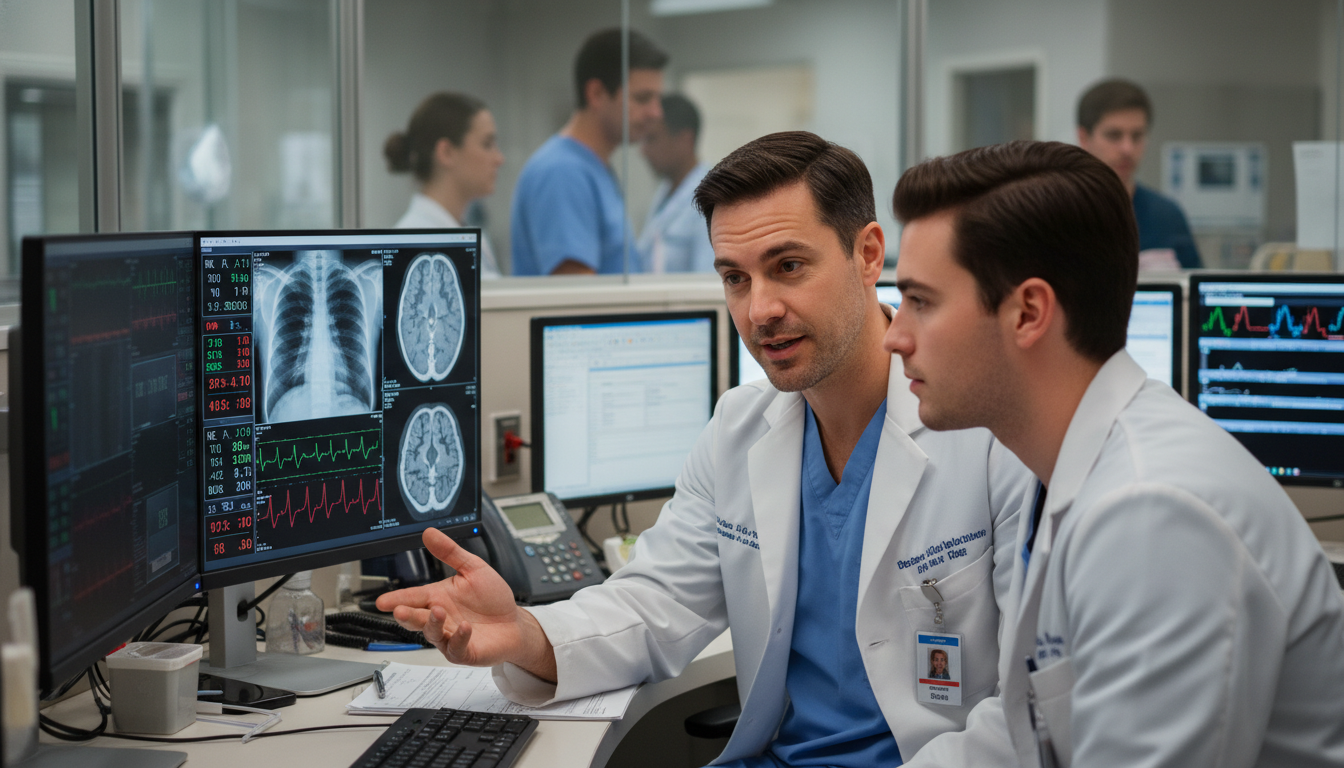
What to Do During Your ED Shadowing Shift
How to introduce yourself
At the start of the shift:
Introduce yourself to the attending (and resident if applicable):
- “Hi, I’m [Name], a [M2 / pre-med] student here to shadow today. Thank you for having me.”
Ask for expectations:
- “Is there anything specific you’d like me to focus on or avoid?”
- “Are you comfortable with me being present for procedures or sensitive exams?”
Get clarity on boundaries:
- Can you enter rooms with them for all patients?
- Are there situations where you should stay outside the room?
In the patient’s room: professionalism and etiquette
As you enter patient rooms with your supervising physician:
Let the physician introduce you as a student observer or medical student.
Maintain appropriate positioning:
- Stand slightly behind and to the side of the physician.
- Avoid blocking monitors, nurses, or equipment.
Nonverbal communication:
- Make eye contact, nod, show engagement.
- Maintain a calm, respectful demeanor even if the situation is chaotic.
Respect for privacy and dignity:
- In sensitive exams (e.g., pelvic, rectal), ask if your presence is appropriate.
- Accept “no” gracefully if the patient or physician prefers privacy.
If the physician offers you a role (e.g., taking a brief history), clarify expectations and keep it concise.
What to observe
To make your shadowing hours truly educational, focus on:
Clinical reasoning
- How does the physician narrow a differential quickly?
- How do they balance “worst-case scenario” against likelihood?
- What tests do they order initially—and why?
Communication skills
- How do they explain uncertainty to patients?
- How do they de-escalate angry or anxious patients?
- How do they deliver bad news?
Workflow management
- How many patients are they managing at once?
- How do they prioritize sickest vs least sick?
- How do they handle interruptions, pages, and new arrivals?
Team interactions
- How do they collaborate with nurses, techs, consultants, EMS?
- How do they delegate tasks?
- How do they handle disagreement or pushback?
Taking mental notes on these aspects will give you rich material for your personal statement and interviews (“Tell me about a time you saw excellent teamwork…”).
When and how to ask questions
You’ll learn more if you ask good questions at the right times:
- Ask between cases, not in the middle of a resuscitation.
- Keep questions focused and open-ended:
- “For that chest pain patient, what were the ‘red flags’ that made you admit instead of discharge?”
- “How did you decide to order a CT instead of a D-dimer in that case?”
If the ED is slammed, jot down your questions and ask them later in a quieter moment or at the end of the shift.
Handling difficult or graphic situations
You may witness:
- Severe trauma with visible injuries
- Intubations, chest tubes, CPR
- Family grief, anger, or shock
If you start to feel lightheaded or emotionally overwhelmed:
- Step back from the bedside, find a chair, and sit down.
- Tell a nurse or the physician: “I’m feeling a little lightheaded—going to sit for a minute.”
- It is not a sign that you “don’t belong in EM.” It’s a very human response, especially early on.
After the event, consider asking the physician for a brief debrief:
“What were the key decision points in that case?” or “How do you personally process events like that after the shift?”
After the Shift: Turning Shadowing into EM Match Value
Immediate post-shift steps
After each shift:
- Thank your supervisor in person and, if appropriate, with a brief follow-up email.
- Write down reflections the same day:
- Memorable patients (no identifiers)
- Interesting diagnoses or management decisions
- Moments of excellent communication or teamwork
- Emotional reactions you had
Later, these notes become:
- Personal statement anecdotes
- Interview stories for behavioral questions
- Talking points in “Why emergency medicine?” essays
Building relationships and mentorship
Shadowing can be the first step toward long-term mentorship in EM:
If you connected well with a physician, ask:
- “Would it be alright if I reached out periodically with questions about emergency medicine and the residency application process?”
Over time, you may ask for:
- Career advice (academic vs community, fellowship options)
- Feedback on your CV or personal statement
- Potential opportunities in research, QI, ultrasound, or teaching
When it’s time for residency applications, mentors who have known you over months (or years) can write stronger letters than someone who just met you on a single rotation.
Integrating shadowing into your application narrative
Programs don’t see a “shadowing hours” figure on ERAS, but they see how you talk about your experiences. Use ED shadowing to:
Articulate why EM (and not another specialty) fits you:
- Pace, variety, teamwork, shift work, procedures, or resuscitation.
Demonstrate self-awareness about EM realities:
- Night shifts, emotional toll, difficult patient interactions.
Provide specific stories, for example:
- A case where rapid team coordination changed an outcome.
- A challenging family interaction you observed that shaped your view of patient communication.
- How you saw an attending manage 15 patients at once while still being kind and present.
When asked in interviews:
“How do you know emergency medicine is right for you?”
- Draw on your shadowing experiences with concrete examples.
“Tell me about a time you observed great leadership.”
- Think of resuscitations, mass casualty drills, or high-volume surges you observed.
From shadowing to clinical rotations and the EM match
Medical shadowing is just one piece of your emergency medicine residency preparation:
Preclinical years:
- Use shadowing to confirm interest and guide involvement in EMIG and early research.
Clinical years (M3–M4):
- Plan at least one EM core rotation at your home institution.
- Strongly consider an away rotation (audition) in EM if your home options are limited.
Application year:
- Your EM letters will come from rotations, not shadowing.
- But your early exposure through shadowing helps you perform more confidently and understand ED culture from day one.
FAQs: Emergency Medicine Shadowing and the EM Match
1. How many shadowing hours do I need for emergency medicine residency?
There is no official minimum number of shadowing hours needed for EM. Programs care more about:
- The depth of your understanding of EM
- How convincingly you can explain your choice of specialty
- Your performance and letters from EM rotations
As a guideline:
- Pre-meds: aim for 20–40 hours of EM shadowing if possible.
- Med students: 3–6 shifts (24–60 hours) before your EM rotation is a solid foundation, but more is fine if your schedule allows.
2. Does shadowing “count” as clinical experience for EM residency applications?
Shadowing alone is not enough as your only clinical experience. For the EM match, you must:
- Complete at least one formal EM rotation (often 2–3 are recommended)
- Obtain SLOEs (Standardized Letters of Evaluation) from EM rotations
Shadowing, however, can:
- Strengthen your narrative of commitment to EM
- Help you perform better on rotations by familiarizing you with ED workflow
- Aid in networking and mentorship development
3. Can pre-med students shadow in the emergency department?
Often yes, but it depends on the hospital’s policies. Many EDs allow pre-medical students to shadow under strict rules:
- You may be limited to observation only (no touching patients or viewing charts).
- You’ll likely need completion of HIPAA training and proof of vaccinations.
- Some pediatric or trauma centers may have stricter restrictions.
If you’re pre-med, start by contacting volunteer services, the ED administrator, or local emergency physicians through your college pre-health office.
4. What if I feel overwhelmed or unsure after shadowing in the ED?
It is completely normal to feel:
- Overwhelmed by the pace
- Emotionally affected by trauma or death
- Uncertain whether EM is the right fit
Use that reaction productively:
- Debrief with the physician you shadowed or with a mentor.
- Reflect: did you feel overwhelmed yet engaged and curious—or just drained and disengaged?
- Consider shadowing again, perhaps in a different ED setting (community vs academic) before making a final decision.
Discomfort doesn’t mean EM is wrong for you; it might just mean you’re still acclimating. But if repeated shadowing consistently feels misaligned with your values, energy, or interests, that’s valuable data for choosing another specialty that better fits you.
Thoughtful, well-planned medical shadowing in emergency medicine can transform from “just hours” into a meaningful foundation for your future EM career. By approaching each shift intentionally—before, during, and after—you’ll gain insight, mentorship, and stories that strengthen your path to a successful emergency medicine residency and a sustainable life in the ED.




















