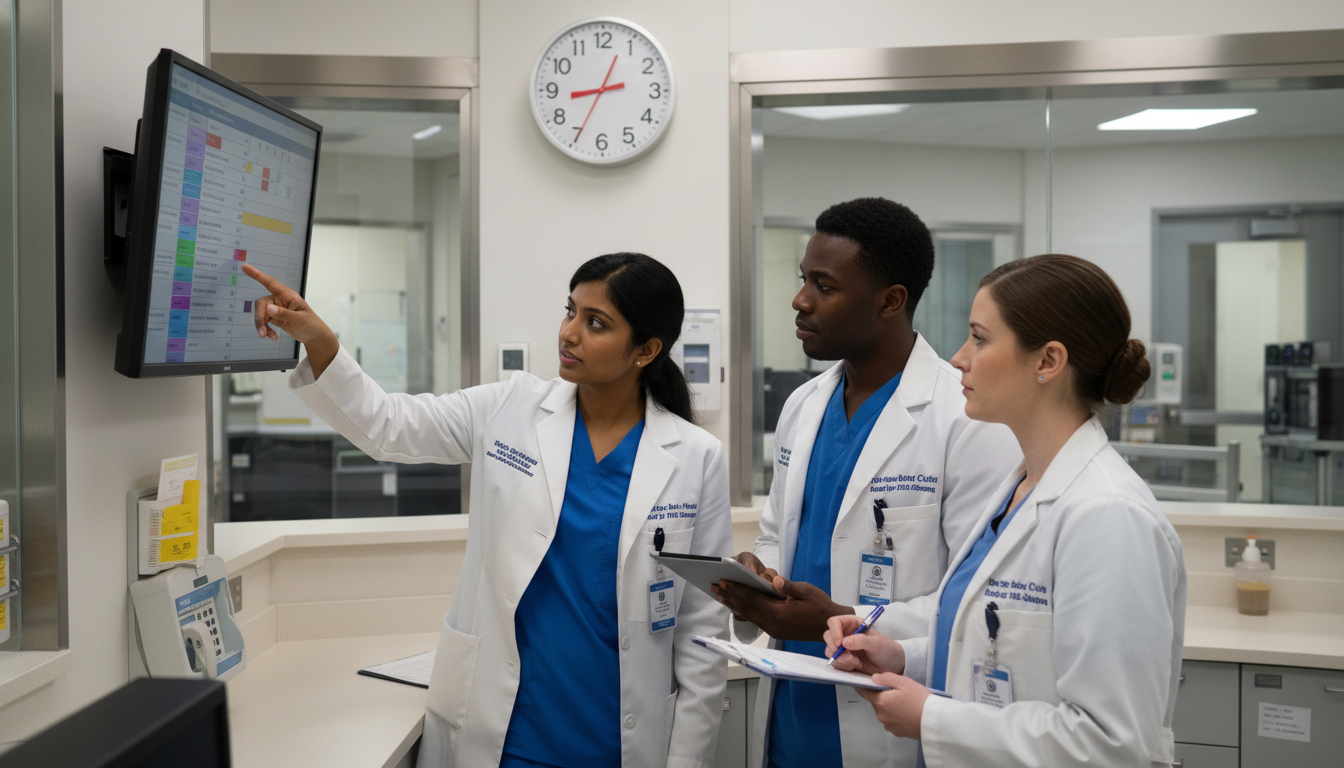
Evaluating operative experience is one of the most critical steps in choosing a general surgery residency. Your future technical skills, confidence in the OR, and fellowship competitiveness will be shaped heavily by how—and how much—you operate during residency. Yet applicants often reduce “operative experience” to a single question: How many cases will I get?
Numbers matter, but they’re only the starting point. This guide unpacks how to critically evaluate operative experience in general surgery residency programs so you can look beyond raw case counts and assess the true quality of surgical training.
Understanding What “Operative Experience” Really Means
When you think about general surgery residency, you may imagine case logs and total numbers. But operative experience is multidimensional. To evaluate it well, break it into several core components:
1. Volume: How Many Cases Will You Actually Do?
Volume is the most visible metric, especially in the context of the surgery residency match. Programs often highlight “average graduating resident with X cases” on their websites. You should understand:
- Total case volume over five years
- PGY-specific volume (especially PGY-3 to PGY-5)
- Distribution across elective, emergent, and trauma cases
The ACGME sets minimum case requirements for graduation in general surgery (e.g., total major cases, specific categories such as endoscopy, laparoscopy, vascular, thoracic, etc.). A strong program doesn’t just meet minimums—it significantly exceeds them while preserving meaningful hands-on training at an appropriate resident level.
Key questions:
- Do residents barely meet ACGME case minimums, or exceed them by a good margin?
- Are juniors (PGY-1/2) getting into the OR early?
- Are chiefs leading complex cases consistently, not just “assisting”?
2. Case Mix: What Kind of Surgery Will You Do?
High volume is meaningless if it’s all the same type of operation. Surgical training quality depends heavily on case diversity:
Bread-and-butter general surgery
Appendectomies, cholecystectomies, hernia repairs, small bowel obstruction, colon resections.Complex and subspecialty exposure
HPB (hepato-pancreato-biliary), foregut, colorectal, surgical oncology, vascular, thoracic, endocrine, minimally invasive/bariatric, trauma, and critical care.Open vs laparoscopic vs robotic exposure
Are you getting trained across techniques that reflect modern practice?Elective vs emergency surgery mix
Emergency cases build judgment and adaptability; elective cases refine technique and planning.
A robust operative experience in general surgery residency should prepare you for either immediate practice as a general surgeon or competitive fellowship placement, depending on your career goals.
3. Autonomy: How Much Will You Actually Operate?
The heart of operative experience evaluation is autonomy. Standing at the bedside while an attending operates is not the same as being the primary surgeon on a case.
Think about:
- Gradual responsibility: Do residents move from assisting to performing major portions of cases, to truly “running” cases as chiefs?
- Attending culture: Are faculty committed to resident education, or do they “take back the case” frequently?
- Senior resident role: Are senior residents actually leading cases, or overshadowed by fellows?
Watch for whether programs emphasize:
- “Residents are first assist on most cases”
- “Chiefs function as junior attendings”
- “Fellows get the big cases” (this may be a red flag, or at least a nuance to explore)
4. Progression: How Operative Experience Grows Over 5 Years
Your operative journey should follow a clear trajectory:
- PGY-1: Primarily floor, ED, ICU time, with exposure to simple cases (e.g., incision & drainage, simple hernias, appendectomies).
- PGY-2 and 3: Substantial jump in time in the OR; more lap choles, hernias, emergent laparotomies as first assist and gradually primary.
- PGY-4 and 5: Chief-level autonomy; running rooms or services, performing complex multi-hour cases under supervision.
A strong general surgery residency doesn’t delay true hands-on training until the end. It consciously builds competency via increasing responsibility year over year.
Core Data Sources: How to Get Objective Information
You need more than marketing lines from program websites to evaluate operative experience. Use these data sources strategically.
1. ACGME Program Case Logs & Public Data
The ACGME publishes national case log statistics that show average operative numbers across accredited general surgery residencies. Some programs also share de-identified aggregate case log data on interviews or pre-interview materials.
Ask programs:
- What is the average total major case count for recent graduates?
- How do your graduates compare to national averages?
- Can you show PGY-specific trends (e.g., average cases by year)?
If a program tolerates residents barely meeting minimums, that’s concerning. You want a culture where case experience is protected and prioritized.
2. Program Websites and Recruitment Materials
Look beyond glossy headlines:
- Do they list operative case numbers clearly?
- Are there breakdowns by category (e.g., endoscopy, vascular, laparoscopy)?
- Is there information on chief resident case volume and operative role?
Be skeptical of vague terms like “tons of OR experience” without data. Honest programs don’t hide numbers.
3. Resident Conversations: Your Most Valuable Source
Current residents provide the most accurate picture of day-to-day surgical training quality.
Ask specific, concrete questions such as:
- “How many cases did you log as a PGY-2 last year?”
- “As a chief, how many colectomies or laparotomies did you do where you felt like the surgeon, not just the assistant?”
- “Are there services where fellows consistently take the best cases?”
- “Do you ever struggle to meet ACGME minimums in any category?”
- “If you had to redo the surgery residency match, would you choose this program again based on OR experience?”
Solicit perspectives from:
- Interns (to check early hands-on training)
- Mid-level residents (to see progression)
- Chiefs (to understand end-of-training autonomy and confidence)
4. Site Visits and Interview Day Observations
Pay attention to what you see and hear:
- Do residents look exhausted and disengaged, or satisfied and proud of their OR experience?
- When they talk about the OR, do they emphasize autonomy or just volume?
- Are there clear educational structures (e.g., skills labs, simulations, protected teaching time) supporting operative learning?

Beyond Numbers: Assessing Quality of Surgical Training
Operative experience is not just about being physically present in the OR. High-quality surgical training integrates teaching, feedback, and reflection with hands-on cases.
1. Structured Teaching in the OR
Ask about:
- Do attendings “walk through” procedures step-by-step, explaining their decisions?
- Is there a culture of questioning and teaching rather than just “get the case done fast”?
- Are junior residents allowed to “slow down” to learn, or rushed constantly?
A program with strong teaching will produce graduates who not only operate, but also understand why they operate the way they do.
2. Simulation and Skills Labs
Modern general surgery programs often supplement real OR experience with simulation:
- Laparoscopic trainers (box trainers, virtual reality)
- Endoscopy simulators
- Technical skills labs (suturing, knot tying, anastomosis practice)
- Simulation-based assessments (e.g., structured skills milestones)
Ask:
- Is there protected time to use simulation?
- Are there progression benchmarks residents must meet?
- Does the simulation curriculum align with operative expectations at each PGY level?
Simulation doesn’t replace operative experience but enhances it, especially in early years.
3. Feedback and Evaluation of Technical Skills
Your growth depends on specific, constructive feedback:
- Are cases debriefed with focused comments on technique, efficiency, and judgment?
- Does the program use structured tools (e.g., OSATS, global rating scales) for technical skills?
- Are there mechanisms to identify residents who need extra support and provide it early?
Programs that prioritize deliberate, feedback-driven improvement often have stronger surgical training quality, even if raw numbers are similar.
4. Balancing Service vs Education
An important red flag: programs where residents feel primarily like “service providers” rather than trainees.
Ask residents:
- “Do you ever feel your OR time is compromised because of floor or administrative work?”
- “Is there pressure to leave the OR to handle non-educational tasks?”
- “How often are cases reassigned or lost due to competing duties?”
A well-designed team structure, advanced practice providers, and thoughtful scheduling help protect your operative experience.
Evaluating Specific Contexts: Academic vs Community, Fellows, and Case Distribution
Not all strong general surgery residencies look the same. Understanding different program types will help you interpret operative experience more accurately.
1. Academic vs Community Programs
Academic Programs
Pros:
- Exposure to complex, high-acuity, and rare pathology
- Opportunities for research and academic careers
- Strong subspecialty services (HPB, surgical oncology, transplant)
Concerns:
- Presence of subspecialty fellows may compete with residents for certain cases
- Emphasis on research may sometimes reduce time in the OR for certain residents
Key questions:
- “In services with fellows, how is resident operative exposure protected?”
- “Do chiefs still get major cases on specialty services?”
- “How often do you feel overshadowed by fellows in the OR?”
Community Programs
Pros:
- Often very high operative volume
- Residents may act as primary surgeons in a wide range of cases
- Less competition with fellows
Concerns:
- Limited exposure to rare or ultra-complex cases
- Less subspecialty depth in some areas (e.g., transplant, advanced HPB)
Key questions:
- “Do graduates feel comfortable handling complex cases in community practice?”
- “If residents want fellowships, how well are they prepared and matched?”
Many strong programs are hybrid models, blending community-strength volume with academic-level complexity.
2. Impact of Fellows on Operative Experience
Fellow-heavy programs are not automatically “bad” for operative experience; some are excellent. The difference lies in how cases are distributed and taught.
Look for:
- Clear role definitions: which cases are primarily fellow cases, which are primarily resident cases?
- Deliberate planning: do chiefs get complex cases on certain rotations?
- Resident advocacy: do faculty ensure residents meet and exceed case requirements, even alongside fellows?
Ask:
- “Do you feel you lose important cases to fellows?”
- “Are there rotations where residents are essentially the primary operators despite fellows being present?”
3. Bread-and-Butter vs Subspecialty Case Mix
For operative experience in general surgery, bread-and-butter cases remain foundational. You want:
- Strong exposure to emergency general surgery (e.g., perforated viscus, small bowel obstruction, incarcerated hernias, trauma laparotomies)
- High volumes of lap choles, hernias, appendectomies, and bowel resections
For fellowship ambitions, you also want:
- A track record of residents operating meaningfully in subspecialty areas
- Case logs reflecting robust experience in your area of interest (e.g., MIS, oncology, colorectal, trauma/critical care)

Practical Strategies: How to Evaluate Operative Experience During the Match
Now that you know what to look for, here’s how to systematically evaluate operative experience as you go through the surgery residency match.
1. Before Interview Season: Research and Shortlisting
Review program websites for:
- Case volume data (if available)
- OR-based curriculum descriptions
- Presence of subspecialty services and fellows
Identify:
- Programs known for robust operative experience
- Programs that emphasize hands-on training and “operating early and often”
Create a simple spreadsheet with columns for:
- Average total major cases
- Notes on autonomy
- Presence of fellows
- Case mix highlights (trauma, HPB, MIS, etc.)
2. During Interviews: Ask Targeted Questions
Instead of generic questions like “How is the operative experience?”, ask:
- “What’s the typical number of operative cases for a PGY-2 here?”
- “Tell me about your chiefs’ level of autonomy in a typical colectomy or laparotomy.”
- “Are there any services where residents struggle to get cases?”
- “How protected is OR time from competing floor responsibilities?”
- “Can you describe a typical OR day for a PGY-3 on acute care surgery?”
When interviewing residents:
- Ask for specific anecdotes: “Can you describe a case where you felt you really grew as a surgeon here?”
- Compare responses from different residents to gauge consistency.
3. On Away Rotations or Subinternships
If you do a sub-I at a program:
- Track how often you’re in the OR vs floor/clinic
- Observe resident-attending dynamics: Are residents truly operating?
- Note how juniors are integrated into the OR
- Gauge the educational culture: Are questions welcomed? Is teaching active?
Your personal experience can be a powerful reality check against a program’s marketing.
4. After Interviews: Compare Programs Objectively
As you build your rank list, consider creating an “Operative Experience Score” for each program using factors like:
- Volume (1–5): How strong are the numbers?
- Autonomy (1–5): Do chiefs truly “run” cases?
- Case mix (1–5): Bread-and-butter plus specialty exposure
- Education quality (1–5): Teaching, feedback, simulation
- Fit with goals (1–5): Community practice vs academic career vs fellowship ambitions
This structured approach can help prevent recency bias or overvaluing prestige at the expense of real hands-on training.
Aligning Operative Experience with Your Career Goals
Different applicants should prioritize different aspects of operative experience, depending on their intended path.
1. Planning Community General Surgery Practice
Prioritize:
- High case volume in bread-and-butter general surgery
- Strong emergency general surgery exposure
- Early and escalating autonomy, especially in common operations
- Programs where chiefs function as independent decision-makers with appropriate supervision
You should aim to graduate feeling comfortable taking call and handling a wide spectrum of acute surgical issues.
2. Aiming for a Competitive Fellowship (e.g., Surg Onc, MIS, Trauma)
Prioritize:
- Balanced experience: robust general surgery plus focused exposure to your area of interest
- Programs with a track record of matching residents into your desired fellowship
- Surgical training quality in complex cases (not just volume)
- Opportunities for research and mentorship in your subspecialty
Ask specifically:
- “How is the operative exposure for residents interested in [your field]?”
- “Can you share examples of recent graduates who went into [your field] and how they were prepared?”
3. Keeping Options Open
If you’re unsure of your long-term plan (which is very common):
- Choose a program with strong overall operative experience and broad case diversity
- Look for both complex academic exposure and solid bread-and-butter volume
- Ensure there is support for both immediate practice and fellowships
Frequently Asked Questions (FAQ)
1. What is a “good” number of cases for a general surgery resident to graduate with?
There is no single magic number, as ACGME requirements and national averages evolve over time. In general, you want a program where:
- Graduates are well above ACGME minimums in total major cases
- Residents comfortably meet requirements in subspecialty categories (endoscopy, laparoscopy, vascular, thoracic, etc.)
During interview season, directly ask programs for their average total major case numbers for recent graduates and how they compare to national data.
2. Should I avoid programs with lots of fellows?
Not necessarily. Some of the best surgical training environments are fellow-heavy but deliberately structured so that residents still get excellent operative experience. Focus on:
- How cases are divided between fellows and residents
- Whether chiefs still get high-complexity cases
- Resident perceptions: do they feel their opportunities are diminished?
If multiple residents independently say, “Fellows take all the good cases,” that’s a red flag.
3. Is higher operative volume always better?
Higher volume is advantageous only if:
- You are actually the primary operator on a meaningful portion of cases
- The volume is accompanied by quality teaching and feedback
- You’re not overwhelmed with service demands that compromise learning
A slightly lower-volume program with excellent autonomy, teaching, and thoughtful case distribution may provide better surgical training quality than a very high-volume, service-heavy environment.
4. How can I tell if I’ll have enough autonomy without actually working there?
You can’t know perfectly, but you can make a strong inference by:
- Asking chiefs and mid-level residents for concrete examples of their role in key operations
- Probing how responsibility progresses from PGY-1 to PGY-5
- Asking about specific rotations: “On acute care surgery or trauma, who typically operates—senior residents or fellows/attendings?”
- Noting whether residents speak with confidence about the cases they have led
When multiple residents across PGY levels consistently describe a culture of graduated autonomy, that’s a promising signal.
Evaluating operative experience in general surgery residency requires more nuance than simply checking case numbers. By systematically examining volume, autonomy, case mix, education quality, and alignment with your goals, you can make a far more informed decision in the surgery residency match—and choose a training environment that will truly make you a capable, confident surgeon.