Why Operative Experience Evaluation Matters in Neurosurgery
Neurosurgery is defined by what happens in the operating room, which makes operative experience one of the most critical dimensions of a neurosurgery residency. For applicants, understanding how to evaluate operative experience—and how programs measure and monitor it—is essential when comparing a neurosurgery residency vs. another brain surgery residency, or even deciding if a program’s surgical training quality matches your goals.
Unlike many other specialties, neurosurgery training is long (typically 7 years), highly procedural, and heavily regulated by the ACGME and ABNS. Within this framework, residents are expected to progress from observer to supervised surgeon to chief resident capable of independently running complex cases. Systematic operative experience evaluation is what ensures that progression actually happens.
This guide explains:
- What “operative experience” really means in neurosurgery
- How it’s tracked, quantified, and assessed
- What good hands-on training looks like in practice
- How to compare programs on operative exposure during the residency application and interview season
- Common pitfalls and red flags to watch for
Defining Operative Experience in Neurosurgery
When applicants think of operative experience, they often think about “case numbers.” While total case volume is important, it is only one piece of a much more complex picture.
Core Components of Operative Experience
Case Volume
- Total number of cases performed during residency
- Distribution across years (early vs. late training)
- Number of index cases required by ACGME and ABNS (e.g., craniotomies, spine procedures, aneurysms, tumor resections)
Case Mix and Complexity
- Breadth of pathology:
- Brain tumors (supratentorial, skull base, intraventricular, posterior fossa)
- Cerebrovascular (aneurysms, AVMs, bypass)
- Spine (degenerative, deformity, trauma, oncologic)
- Functional (DBS, epilepsy surgery)
- Pediatrics (Chiari, craniosynostosis, pediatric tumors)
- Trauma (ED burr holes, decompressive craniectomies)
- Balance of routine elective vs. emergency/trauma cases
- Exposure to high-complexity cases that match modern neurosurgical practice
- Breadth of pathology:
Level of Resident Participation
- Observer / Assistant: Retraction, basic suturing, simple tasks
- Junior Operator: Key portions of simpler cases under close supervision
- Primary Surgeon (with attending present): Leading the entire case, from incision to closure
- Chief-Level Autonomy: Managing case flow, decision-making, and intraoperative strategy with graded independence
Longitudinal Progression
- Clear, stepwise increase in operative responsibility year by year
- Structured milestones that reflect neurosurgical competencies:
- E.g., by PGY-3: safely perform lumbar laminectomy as primary surgeon
- By PGY-5: confidently manage supratentorial tumor resections under supervision
- By chief year: run the cranial or spine service, lead complex emergencies
Integration with Pre- and Post-Operative Care
- Participation in:
- Preoperative planning (imaging review, navigation setup, surgical approach selection)
- Postoperative ICU and floor management
- Complication management and morbidity & mortality (M&M) review
- Operative experience + perioperative decision-making is what produces safe neurosurgeons.
- Participation in:
In short, a high-quality brain surgery residency doesn’t just offer “lots of cases”—it offers the right cases, at the right time, with the right level of hands-on training and supervision.
How Operative Experience Is Measured and Monitored
ACGME and ABNS Requirements
In the U.S., neurosurgery residency is overseen by:
- ACGME (Accreditation Council for Graduate Medical Education)
- ABNS (American Board of Neurological Surgery)
Together, they define:
- Minimum operative case numbers
- Required case categories
- Competency milestones residents must achieve
Though specific numeric thresholds change over time, the framework remains similar: residents must log a substantial number of cases in defined categories (cranial, spine, pediatrics, functional, vascular, trauma, peripheral nerve, etc.) to be eligible for board certification.
Programs are periodically reviewed to ensure:
- Graduates consistently meet or exceed minimum operative volumes
- Case mix is appropriate for comprehensive neurosurgical training
- Residents progress in responsibility and autonomy
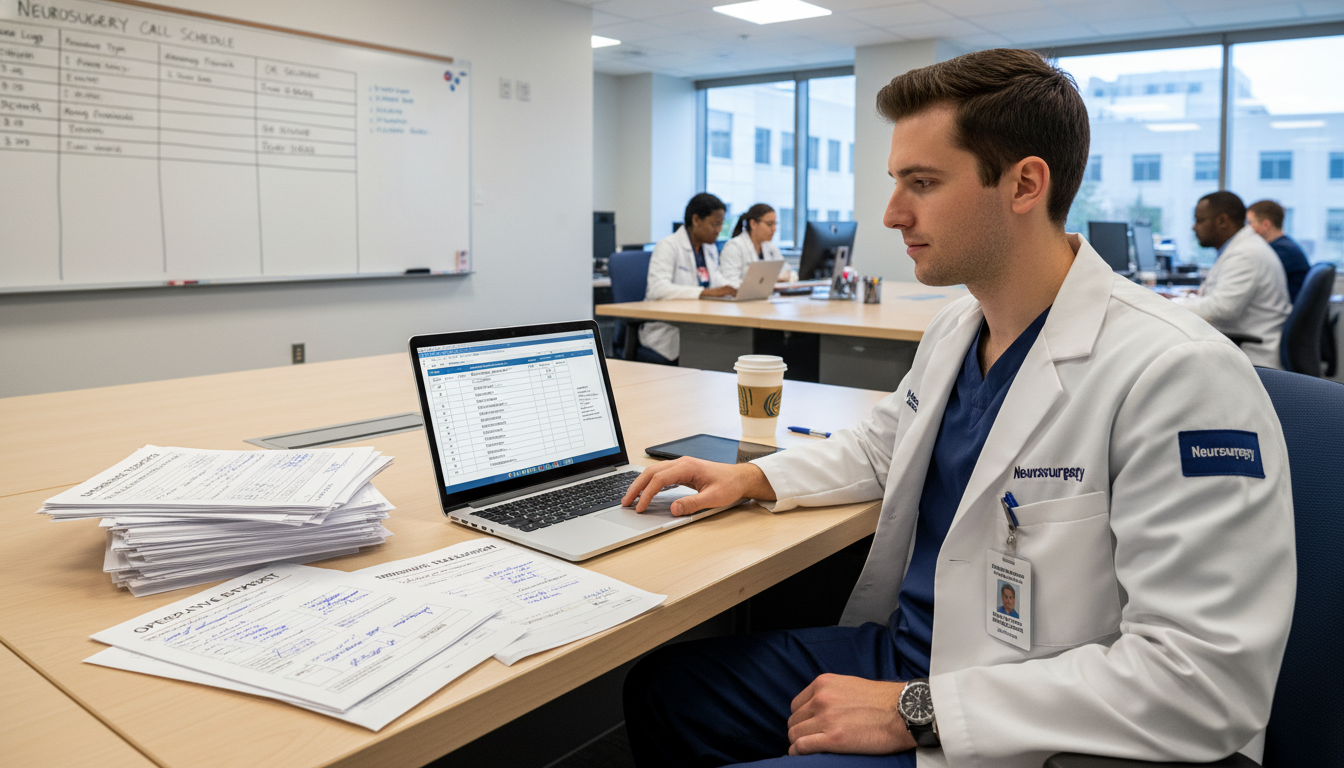
Case Logging Systems
Residents document operative experience using systems like:
- ACGME Case Log System
- Institution-specific electronic OR log platforms
Typical data recorded:
- Date of case
- Attending surgeon
- Procedure type and CPT code(s)
- Diagnosis and primary pathology
- Resident role:
- Observer
- Assistant
- Primary Surgeon / Surgeon Jr.
- Approach and complexity markers (e.g., minimally invasive, endoscopic, skull base)
These logs serve several purposes:
- Verify that residents meet graduation and board requirements
- Allow PDs and CCCs to track operative exposure and progression
- Provide data for program improvement and accreditation
Milestones and Competency-Based Assessment
The Neurosurgery Milestones framework (ACGME) evaluates residents across domains, including:
- Patient care and surgical skills
- Medical knowledge
- Systems-based practice
- Professionalism and communication
For operative experience evaluation, this means:
- Not just counting cases, but assessing:
- Tissue handling
- Microsurgical technique
- Ability to anticipate and manage complications
- Intraoperative judgment and decision-making
- Progressive entrustment:
- Attendings formally or informally decide: “Can I trust this resident to do X part of the case safely?”
Programs may use:
- Direct observation tools (e.g., checklists for specific procedures)
- Structured assessments after key rotations
- 360° feedback from OR staff, anesthesiology, ICU nurses
Program-Level Monitoring and Response
Strong programs routinely review aggregate operative data:
- Are certain residents underexposed to specific case types?
- Is there adequate chief resident autonomy?
- Are there service imbalances (e.g., spine-heavy, cranial-light)?
- Has case volume changed due to institutional shifts, competition, or referral patterns?
Corrective actions might include:
- Adjusting rotation schedules
- Increasing time at affiliated hospitals (peds, VA, county, private partner)
- Recruiting additional faculty in underrepresented subspecialties
- Sending residents for away rotations or fellowships if needed
What High-Quality Operative Experience Looks Like
When you evaluate neurosurgery residency programs, you’re really asking: “What will my day-to-day surgical training look like here—and what kind of neurosurgeon will I be at graduation?”
1. Progressive, Structured Hands-On Training
A robust neurosurgery residency will have a clear pattern:
PGY-1 (Intern Year)
- Heavy emphasis on:
- Neurosurgery floor/ICU management
- Emergency neurosurgery consults
- Basic procedures (e.g., EVD placement, ICP monitors, ventriculostomies, bedside procedures) where permitted
- Limited OR exposure, but:
- Meaningful participation in simpler cases
- Introduction to sterile technique and OR workflow
PGY-2/3 (Junior Resident Years)
- Marked increase in OR time and hands-on training:
- Lumbar discectomies, laminectomies
- Burr holes, simple craniotomies under close supervision
- VP shunts, simple spine instrumentation
- Residents should be primary surgeon on selected straightforward cases under direct attending guidance
PGY-4/5 (Senior Resident Years)
- Increased operative independence and case complexity:
- Complex cranial tumor resections as primary surgeon (with attending in room)
- Multi-level spine fusions, deformity contributions
- Trauma craniotomies and emergent cases with graded autonomy
- May lead subspecialty services (spine, tumor, or functional) at certain sites
PGY-6/7 (Chief Years)
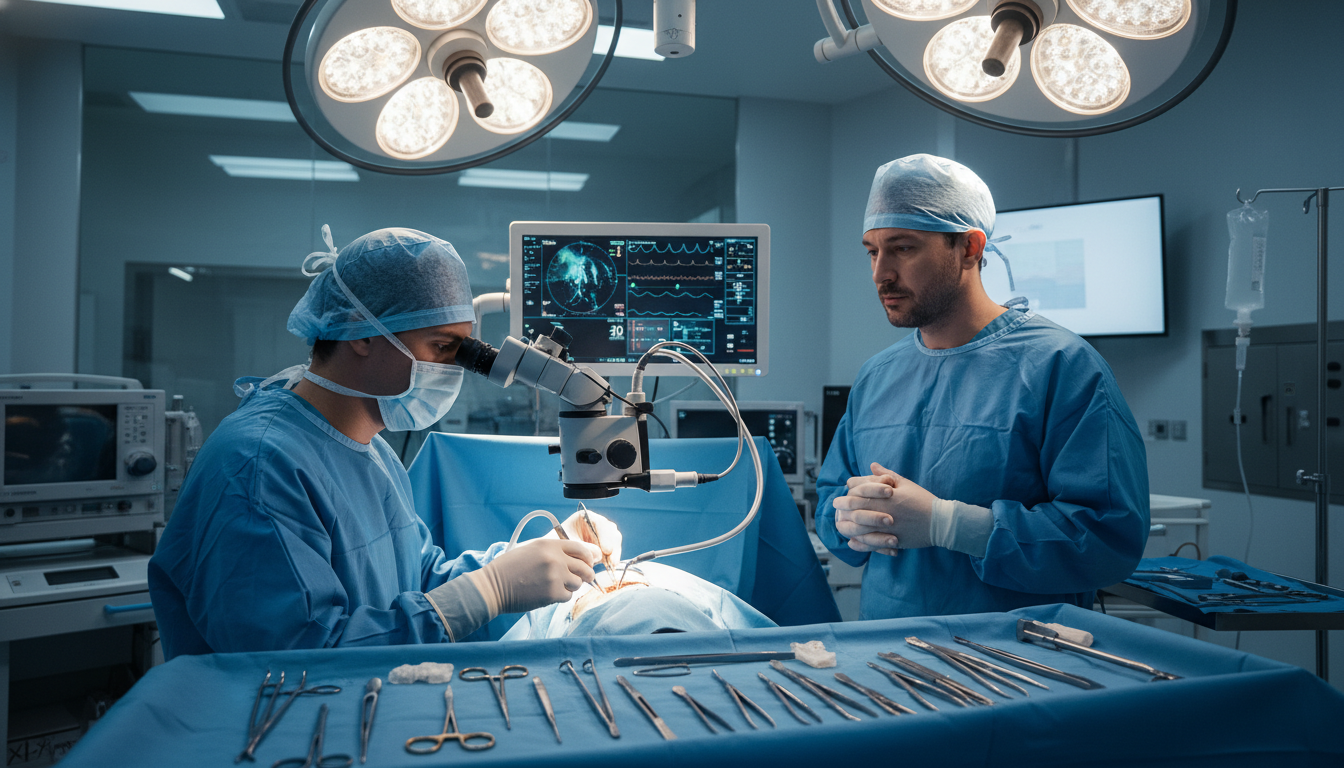
- Chief residents essentially function as junior attendings (with supervision):
- Run the service
- Assign cases
- Lead most cases from incision to closure
- Perform complex cases with high autonomy
- Serve as primary surgeons for major index cases required for the ABNS
2. Diversity of Surgical Exposure
To become a well-rounded neurosurgeon, you need breadth, not just depth. When evaluating surgical training quality, look for:
Cranial Exposure
- Tumors: high-grade gliomas, meningiomas, metastases, skull base lesions
- Vascular: aneurysms (clipping and some coiling exposure), AVMs, carotid disease, bypass cases (if offered)
- Trauma: acute SDH, EDH, decompressive craniectomy
- Functional: DBS, epilepsy resection, laser ablations where applicable
Spine Exposure
- Cervical and lumbar degenerative disease
- Thoracic cases and deformity
- Spinal tumors (intradural and extradural)
- Minimally invasive techniques (tubular approaches, MIS fusions) if part of the program’s practice
Pediatrics
- Hydrocephalus, pediatric tumors, Chiari, craniosynostosis
- Usually provided via a dedicated children’s hospital rotation
Subspecialty Balance
- If one area is extremely dominant (e.g., spine only or tumor only), it can limit your development unless supplemented elsewhere.
3. Culture of Teaching in the OR
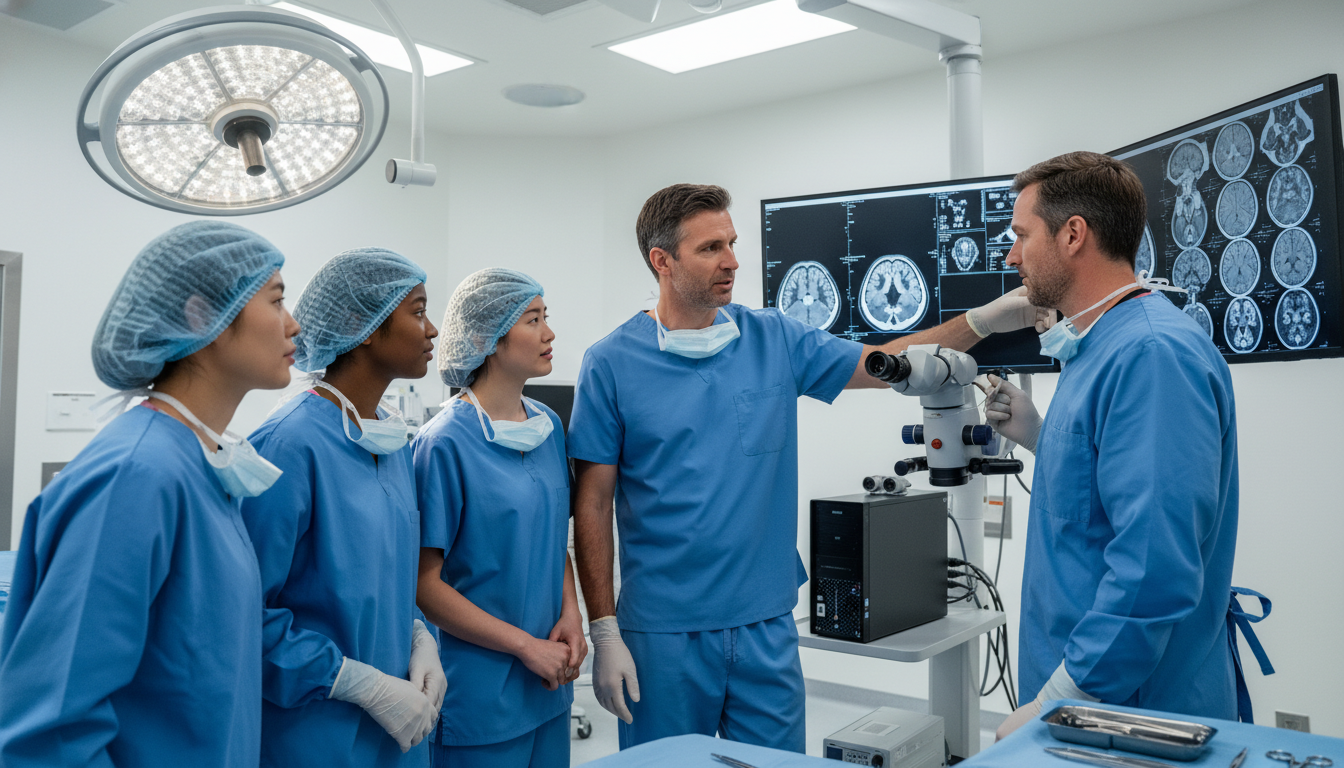
High case numbers mean less if residents are just retractors. Signs of a strong teaching culture:
- Attendings explain:
- Why an approach was chosen
- How they interpret intraoperative anatomy
- Options when the plan must change mid-surgery
- Residents are given:
- Specific parts of the case (e.g., craniotomy flap, dura opening/closure, tumor debulking, instrumentation)
- Constructive feedback during and after the case
- Graded autonomy:
- As residents prove competence, attendings step back more (e.g., supervising from the background, scrubbed but not constantly intervening)
4. Operative Experience Beyond the OR
Operative competence also requires:
Preoperative Planning Conferences
- Tumor board, spine case conferences
- Residents present imaging, propose surgical plans, and discuss risks/benefits
Morbidity & Mortality (M&M)
- Honest, non-punitive discussion of complications
- Emphasis on systems improvement and personal learning
Simulation and Skills Labs
- Microsurgical skills labs with operating microscopes
- Bypass simulations, skull base approaches on cadavers
- Ventriculostomy trainers, spinal instrumentation models
These experiences reinforce hands-on training and deepen operative judgment.
How Programs Evaluate Individual Residents’ Operative Performance
Understanding how your own performance will be evaluated can help you grow—and helps you assess whether a program invests in your development.
Tools for Operative Experience Evaluation
Direct Observation and Attending Feedback
- Informal: Real-time comments in the OR (“Try angling your suction this way…”)
- Formal: End-of-rotation evaluations including:
- Technical skill
- Knowledge of anatomy and pathology
- Preparedness and pre-op planning
- Intraoperative communication and teamwork
Entrustable Professional Activities (EPAs)
- Specific operative tasks or procedures that you must master
- Example EPAs:
- Performing a lumbar laminectomy as primary surgeon
- Managing a traumatic SDH craniotomy
- Leading pre-op consent and risk discussions
Case Log Review with Mentors/PD
- Periodic meetings (often annually or semi-annually) to review:
- Your case numbers vs. peers and vs. graduation requirements
- Case variety and gaps (e.g., too few vascular or functional cases)
- Progression in role (assistant → primary surgeon)
- Periodic meetings (often annually or semi-annually) to review:
Milestone Reviews by Clinical Competency Committee (CCC)
- Faculty committee reviews:
- Evaluations
- Case logs
- Exam performance
- Professionalism and systems-based practice
- Assign milestone levels that reflect your stage in training.
- Faculty committee reviews:
What Residents Should Proactively Do
To get the most out of your hands-on training and operative experience:
Prepare Thoroughly for Each Case
- Study:
- Relevant anatomy and surgical approaches
- Surgical videos if available
- Attending’s preferred techniques
- Review imaging in detail and formulate your own plan.
- Study:
Ask for Specific Roles and Feedback
- Before the case: “I’ve read about this approach and would like to perform the craniotomy and closure if appropriate.”
- After the case: “What’s one thing I could improve technically for next time?”
Track Your Own Progress
- Regularly review your case log:
- Are you getting enough exposure in each category?
- Are you transitioning from assistant to primary surgeon?
- Regularly review your case log:
Seek Additional Opportunities
- Volunteer for:
- Emergencies and trauma call opportunities
- Late add-on cases (when reasonable with duty hours)
- Ask chiefs and PDs about:
- Rotations where you can increase case volume in weak areas
- Simulation labs or microsurgery practice time
- Volunteer for:
How to Evaluate Operative Experience When Applying and Interviewing
As an applicant, your goal is to distinguish between programs that look similar on paper but differ significantly in surgical training quality and hands-on training opportunities. Use a structured approach.
1. Research and Compare Public Data
Start with:
- Program websites and brochures:
- Are there statements about case volumes?
- Do they mention specific strengths (e.g., “high-volume spine center,” “regional trauma referral hub”)?
- ACGME/ABNS or institutional reports (when available)
- Some programs publish average case numbers for graduating chiefs.
- Hospital type and catchment area:
- Level I trauma center?
- Dedicated cancer center?
- Geographically isolated referral center vs. dense competition with multiple neurosurgery groups?
High-volume centers generally offer more robust operative exposure—but always ask how that volume is allocated to residents vs. fellows vs. private groups.
2. Ask Targeted Questions on Interview Day
When you meet residents and faculty, go beyond “Do you get good operative experience?” Ask:
About Volume and Mix
- “What is the approximate case volume for graduating chiefs, and how does it break down across cranial, spine, and subspecialties?”
- “Has your case volume or case mix changed significantly in the last few years?”
About Resident Roles
- “By PGY-3, what are residents typically doing in the OR?”
- “How much autonomy do chiefs have on trauma cases or standard spine cases?”
- “Are there ‘resident cases’ that are routinely run by senior and chief residents as primary surgeons?”
About Competition for Cases
- “Are there spine fellows, endovascular fellows, or other learners who compete for operative opportunities?”
- “How is case allocation managed between fellows and residents?”
About Identified Weaknesses
- “Are there areas of operative exposure that the program is actively working to strengthen? How?”
- “If a resident is underexposed to a certain case type, what options do they have to close that gap?”
Concrete, specific answers are more reassuring than vague, generic statements.
3. Pay Attention to Resident Culture and Satisfaction
When you talk to current residents, look for:
- Do they seem:
- Confident in their surgical skills?
- Proud (but realistic) about their operative autonomy?
- Are chiefs comfortable taking call independently in their final year?
- Do junior residents feel they are progressing in line with their class?
Red flags include:
- Residents frequently saying “You have to fight for every case.”
- Complaints about fellows taking most complex cases without structured sharing.
- Chiefs or seniors expressing uncertainty about their readiness for independent practice.
4. Interpret “High Volume” Claims Carefully
“High volume” can mean very different things:
- Strong positive:
- High surgical volume with a defined resident role on almost every case
- Structured progression of autonomy
- Potential negative:
- Huge service with many attendings who prefer to do most of the case themselves
- Unstructured OR assignments where a few residents dominate the experience
Ask explicitly:
- “What proportion of cases have a resident scrubbed?”
- “How are OR assignments scheduled—by service, by level, or first-come-first-served?”
Common Pitfalls and Red Flags in Operative Experience
Even strong programs can have weaknesses in specific areas. The key is recognizing patterns that may affect your training.
Pitfalls
Too Narrow Subspecialty Focus
- Example: Extremely spine-heavy program with limited cranial exposure
- Impact: You may need additional fellowship training to feel comfortable managing a full spectrum of neurosurgical disease
Heavy Reliance on Fellows
- Vascular, spine, or skull base fellows can enrich the learning environment—but if not managed well, they can displace residents from critical cases.
Unbalanced Early vs. Late Autonomy
- Some programs over-protect juniors and then expect them to “catch up” quickly in senior years.
- Others give early exposure but plateau later, with limited chief autonomy.
Institutional Changes
- Loss of key faculty
- Opening/closing of affiliated hospitals
- Shifts in referral patterns or competition
Strong leadership responds to these challenges transparently and proactively.
Clear Red Flags for Applicants
- Graduating residents regularly failing to meet minimum case requirements (rare but serious).
- Residents reporting persistent difficulty getting time in the OR.
- Minimal exposure to core neurosurgical areas (e.g., essentially no functional or pediatric neurosurgery, without compensatory rotations).
- Lack of honest, data-based answers from leadership when operative experience questions are raised.
FAQs: Operative Experience Evaluation in Neurosurgery Residency
1. What is a “good” number of cases for a neurosurgery resident to graduate with?
There’s no single perfect number, and requirements may change over time. In general, U.S. neurosurgery graduates often log well over the minimum required by the ABNS and ACGME, commonly totaling several thousand cases across all categories. Focus less on the absolute total and more on:
- Adequate numbers in each major category (cranial, spine, pediatrics, trauma, functional, vascular)
- A clear pattern of progression from assistant to primary surgeon
- Chief-level autonomy on a significant share of core procedures
2. How much should I worry about fellows taking cases away from residents?
Fellows can be a double-edged sword:
- Benefit: Bring advanced expertise, teaching, and subspecialty exposure.
- Risk: May compete for complex cases if not well-structured.
Ask residents: - “Do you feel that fellows positively or negatively affect your operative experience?”
- “Are complex cases shared or sequentially structured (resident does part, fellow does part)?”
Healthy programs balance fellow and resident roles deliberately.
3. Can a program with lower overall volume still provide strong operative training?
Yes, if:
- Case mix is broad and representative of modern neurosurgery
- Residents are involved in a high proportion of cases
- Chiefs consistently graduate confident and board-eligible/board-certified
- There is strong one-on-one teaching and a high degree of autonomy on the cases that do exist
A smaller but well-structured program with excellent hands-on training can outperform a massive service where residents only assist.
4. How can I tell, as a medical student, if I will get real “hands-on” training vs. just watching?
Look for:
- Specific examples from residents about what they were doing at each PGY level in the OR
- Clear, detailed answers about autonomy during chief year
- Evidence of simulation, skills labs, and structured feedback
- Chiefs who appear confident, composed, and independent in discussion of their operative experience
If answers are vague, generic, or evasive, probe further—or consider how that might reflect the training environment.
By understanding how operative experience is structured, measured, and evaluated in neurosurgery residency, you can more effectively judge which programs will provide the surgical training quality and hands-on training you need. During your neurosurgery residency search, prioritize programs that not only promise volume, but demonstrate a thoughtful, data-driven commitment to growing you into a safe, skilled, and confident neurosurgeon.