



Evaluating and comparing operative experience in orthopedic surgery residency is one of the most important—and most confusing—parts of planning your training. Programs all claim they offer “strong operative experience” and “excellent hands-on training,” but the reality can vary widely. This guide walks you through how to critically assess operative exposure, what metrics actually matter, and how to use that information to shape your rank list and long-term career.
Why Operative Experience Matters in Orthopedic Surgery
Orthopedic surgery is a technical specialty where your identity as a surgeon will be defined, in large part, by what you can safely do in the operating room. While didactics, research, and mentorship are all crucial, your daily work after graduation depends on your:
- Ability to independently perform common orthopedic procedures
- Judgment in the OR (when to proceed, modify, or abort a plan)
- Fluency with instruments, implants, and technology
- Speed and efficiency without compromising safety
High-quality operative experience in residency strongly influences:
- Board exam performance, particularly ABOS Part II case collection and oral boards
- Fellowship competitiveness in subspecialties like sports, joints, spine, trauma, or hand
- Marketability for jobs, especially in private practice or smaller hospitals where you may be the only orthopedist on call
- Your confidence on day one as an attending
Because of this, evaluating operative experience should be central to how you assess orthopedic surgery residency programs and strategize for the ortho match.
Core Dimensions of Operative Experience
When thinking about “operative experience,” it helps to break it down into several key dimensions. Each one should factor into how you evaluate a program’s surgical training quality.
1. Case Volume: Numbers That Actually Matter
Raw case numbers are tempting but need context. Still, they are a starting point.
What to look at:
Total case volume by graduation
- Many programs report residents logging 2000–2500+ cases over five years.
- Some high-volume programs exceed this, especially with busy trauma or arthroplasty services.
Distribution across subspecialties:
- Trauma (including level I or II center volume)
- Adult reconstruction (total hips, knees; increasing focus on robotic and navigation)
- Sports medicine (arthroscopy—shoulder and knee in particular)
- Spine
- Hand and upper extremity
- Pediatric orthopedics
- Foot & ankle
- Oncology (if available)
Graduated responsibility over time:
- PGY-2: mostly first-assist, focused portions of the case
- PGY-3/4: performing defined steps, sometimes primary for straightforward cases
- PGY-5: acting surgeon for most common procedures, with attending backup
Key point: A program with 2500 logged cases where you mostly retract and close is not better than a program with 2100 cases where you’re consistently the primary surgeon.
2. Case Mix and Complexity
You want both breadth (exposure to all major subspecialties) and depth (enough repetition in core procedures).
Core bread-and-butter orthopedic procedures you should do frequently:
- Trauma:
- Hip fracture fixation (CMN, DHS, hemiarthroplasty)
- Ankle ORIF, distal radius ORIF
- Femur and tibia intramedullary nailing
- Sports:
- ACL reconstruction
- Meniscectomy and meniscal repair
- Rotator cuff repair
- Joints:
- Primary total hip arthroplasty (THA)
- Primary total knee arthroplasty (TKA)
- Hand:
- Carpal tunnel, trigger finger, simple tendon repairs, small joint fusions
- Pediatrics:
- Supracondylar humerus fractures, forearm fractures, SCFE, DDH casting
- Foot & Ankle:
- Bunion corrections, ankle fusions, Achilles repairs
Complexity matters, too:
- Revision arthroplasty (hips and knees)
- Periarticular fracture fixation with plates/locking constructs
- Complex peri-articular trauma (distal humerus, tibial plateau, pilon)
- Spine instrumentation and deformity (even if you ultimately don’t choose spine)
- Tumor biopsy and limb salvage (if your program includes ortho oncology)
A robust operative experience will include a mix of simpler cases done with high independence and more complex cases where you may do portions under close supervision.
3. Hands-On Training vs. Observership
Hands-on training is the real differentiator. Ask:
- Are seniors regularly the primary surgeon, with the attending scrubbed but not doing every step?
- Does the program culture genuinely support graduated autonomy, or are attendings highly controlling in the OR?
- Are PGY-2/3 residents expected to perform key steps (e.g., femoral/tibial cuts in TKA, reaming and nail insertion in IM nailing, tunnel drilling in ACL)?
- Do faculty routinely handover the case after the first few key steps, or vice versa?
You also want to know:
How often are juniors allowed to operate?
Even if they’re doing smaller cases (hardware removals, simple fractures, wound I&D), early hands-on exposure builds skills fast.Are there resident-run services or clinics, where senior residents manage operative lists with attending oversight (common in VA or county settings)?
This is where “operative experience” shifts from numbers to real skill-building.
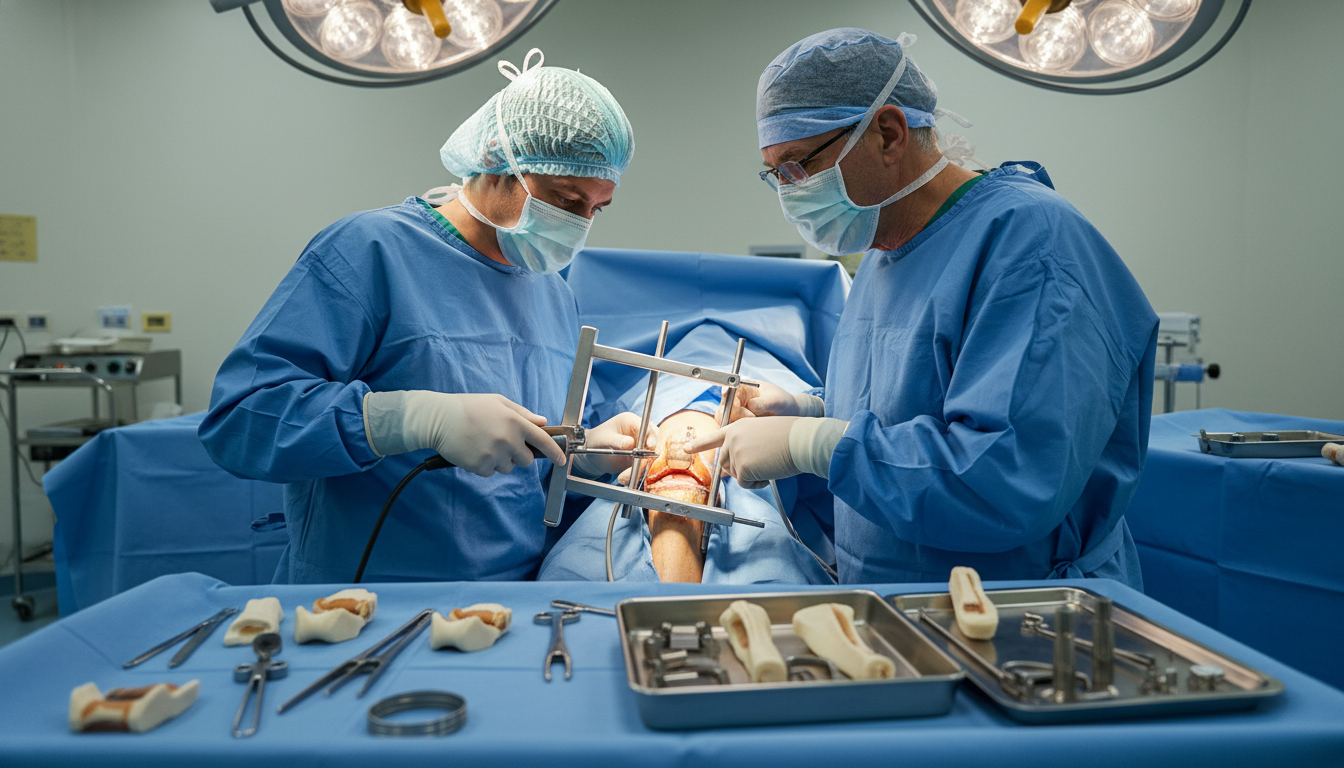
How to Evaluate Operative Experience When Comparing Programs
Data about operative experience can be fuzzy or selectively presented. Here’s how to approach it systematically while planning your ortho match strategy.
1. Use Objective Data Sources First
Start with data that’s standardized or at least less subjective.
A. ACGME Case Logs
All orthopedic surgery residents in ACGME-accredited programs submit detailed operative logs. While you won’t see every program’s raw data, some programs publish:
- Average case numbers by graduating class
- Breakdown by subspecialty
- Comparison to national ACGME minima
When programs mention they’re “well above ACGME minimums,” ask for specifics:
- “Can you share approximate average total case numbers for your last graduating class, and how that breaks down across trauma, sports, arthroplasty, spine, hand, and pediatrics?”
B. Program Websites and Recruitment Materials
Review:
- Sample weekly OR schedules
- Descriptions of “typical operative exposure” on each rotation
- Mentions of “chief resident OR days” or “Chief Resident Service”
Be wary of vague claims like “excellent operative experience” without numbers or examples.
2. Ask Targeted Questions on Interview Day
Interview day is your best chance to clarify what operative experience really looks like. Tailor questions depending on whether you’re speaking with residents or faculty.
Questions for residents:
- “By the end of PGY-3, what types of cases are you typically primary on?”
- “Roughly how many total joint replacements do graduating residents log?”
- “When you’re on trauma, who usually does intramedullary nails or acetabular work—resident or fellow or attending?”
- “Do you feel ready to independently perform a straightforward TKA/THA/ankle ORIF on day one of fellowship or as an attending?”
- “How much does operative autonomy vary by attending?”
Questions for faculty or program leadership:
- “How do you structure graduated autonomy in the OR?”
- “What mechanisms do you use to monitor whether residents are meeting operative milestones?”
- “How do you handle cases that multiple learners want—e.g., fellow vs chief resident?”
Write answers down soon after interviews; by late interview season, details will blur.
3. Evaluate the Impact of Fellows
Fellows can enhance or dilute operative experience, depending on program culture.
Potential advantages of fellows:
- Exposure to more complex tertiary/quaternary-care cases (e.g., complex revisions, deformity, advanced arthroscopy)
- Additional teaching layer (fellows often explain cases in resident-friendly language)
- Filter for very complex procedures, providing high-level observation and learning
Potential drawbacks:
- Fellows may take the most interesting or complex cases
- Resident may be relegated more often to assistance rather than primary surgeon roles
When assessing this balance, ask residents:
- “On subspecialty rotations with fellows, how often are you the primary surgeon on cases?”
- “Do you feel the presence of fellows helps or hurts your hands-on operative experience overall?”
Look for programs where residents describe fellows as “augmenting breadth and complexity” but not monopolizing bread-and-butter cases.
4. Consider Call Structure and Trauma Exposure
Call can be a major source of operative volume and independence, especially for trauma.
Key elements:
- Type of trauma center:
- Level I and busy Level II centers often provide high case volumes, especially at night and on weekends.
- In-house vs at-home call:
- In-house may mean more prompt involvement in emergent cases.
- Who operates at night?
- “Are residents usually leading emergent cases overnight (e.g., hip fractures, open fractures) with attending backup?”
- “Do attendings come in and operate, or do they supervise and let you lead?”
A program with strong trauma and reasonable call can significantly accelerate your technical growth.
Assessing the Quality of Surgical Training Beyond Numbers
Volume is necessary but not sufficient. To truly assess a program’s surgical training quality, look at education structure, feedback, and how the program actively develops you as an operator.
1. Structured Skill Development and Simulation
Many programs are increasingly using simulation to enhance hands-on training:
- Cadaver labs (arthroscopy, arthroplasty, spine, trauma approaches)
- Sawbone labs and synthetic models for fracture fixation, osteotomies
- Arthroscopy simulators for hand–eye coordination, portal work, and triangulation
- Basic surgical skills curriculum (suturing, knot-tying, saw and drill safety, fluoroscopy use)
Ask:
- “Do you have a formal skills lab or simulation curriculum?”
- “How often do residents participate in cadaver labs, and who leads them?”
- “Are there protected times for hands-on training outside of clinical duties?”
Programs that invest in simulation and lab time usually care deeply about operative education, not just service.
2. Quality of Intraoperative Teaching
The way you’re taught in the OR shapes your long-term growth.
Signs of strong OR teaching:
- Attendings explain surgical decision-making, not just what to do next
- You’re allowed to struggle within safe boundaries, rather than having the case taken away at the first slow step
- Residents are expected to know the case (indications, approach, steps, potential pitfalls) before scrubbing
- Clear feedback after cases: what went well, what to improve, and how
Ask residents:
- “Which attendings are particularly strong at intraoperative teaching, and what do they do differently?”
- “Are there any attendings you consistently don’t get to operate with, versus primarily observing?”
3. Evaluation, Feedback, and Remediation
Good programs have systems to ensure each resident is progressing appropriately.
Look for:
- Regular milestone-based evaluations (e.g., semiannual reviews)
- Feedback tied to specific skills (e.g., positioning, exposure, implant selection, handling complications)
- Early identification and support for residents who need more time or targeted practice
Ask:
- “If a resident is struggling technically, how does the program respond?”
- “Do you feel the feedback you receive in the OR is specific and useful for improving your performance?”
4. Transition to Independent Practice
One of the clearest markers of surgical training quality is how graduates do after residency.
Data points to consider:
- Where do graduates go?
- Highly competitive fellowships? Strong community jobs? Both can be positive.
- How do graduates describe their readiness?
- “Did you feel technically prepared for fellowship or independent practice?”
- Reputation among fellowship directors:
- Some residencies are known for “strong operators,” others more for research. Neither is inherently better, but be honest about what you need.

How to Build Your Own Operative Experience During Residency
No matter where you match, you can actively shape the quality of your operative exposure. Your own approach will significantly affect your hands-on training and operative readiness.
1. Be Proactive About Case Selection
Especially as you move into senior years, be intentional about which cases you choose to scrub.
Practical strategies:
Review the OR schedule daily or weekly.
Identify:- Cases you haven’t done before
- Bread-and-butter procedures where you still need repetition
- Complex cases that match your future interests
Communicate with co-residents.
- Trade or alternate cases to ensure everyone gets fair, diverse operative experience.
- For example, you might agree: “You take this revision TKA; I’ll take the next acetabular fracture.”
Talk to attendings early.
- “I’m hoping to go into adult reconstruction. Could I take lead on the next few primary TKAs so I can refine my technique?”
2. Prepare Intensively Before Cases
Preparation increases both your autonomy and the trust attendings place in you.
Before important cases, you should:
- Review patient imaging and plan the operation:
- Choose approach, implants, and possible backup plans.
- Visualize steps, from incision to closure.
- Read a chapter or technique article:
- Focus on key steps, common errors, and “bailout” strategies.
- Ask the attending how they like to do the case:
- Every surgeon has preferences; knowing them in advance allows smoother performance.
The more clearly you demonstrate that you’re prepared, the more likely you’ll be allowed to lead the case, especially at the PGY-4/5 level.
3. Log Cases Accurately and Reflectively
Case logs are not just a requirement; they’re a tool for self-assessment.
- Log every case promptly, including your role:
- Primary surgeon, assistant, or observer
- Periodically review your own logs:
- Are there subspecialties you’re short on?
- Are you getting sufficient primary surgeon experience in key areas?
- Bring this data to your semiannual meeting with your program director:
- “I’ve noticed my exposure to hand cases is low—how can we adjust my schedule or focus to address this?”
4. Seek Feedback and Embrace Deliberate Practice
The fastest way to grow technically is through specific, honest feedback and targeted practice.
Approaches:
- After cases, ask direct questions:
- “What’s one thing I did well today?”
- “What’s one thing I should do differently next time?”
- Use that information to:
- Modify how you hold instruments
- Adjust where you stand
- Change how you plan your incision or approach
- Return to the same attending and show improvement:
- This builds trust and often leads to more autonomy.
5. Align Operative Experience with Career Goals
As you approach PGY-4 and PGY-5, curate your operative portfolio toward your next step.
- Planning for fellowship:
- If you’re interested in sports: prioritize arthroscopy, ligament reconstruction, and shoulder instability.
- If joints: seek high-volume primary hip and knee exposure, plus some revisions.
- If trauma: maximize long-bone fractures, peri-articular fractures, pelvic/acetabular cases.
- Planning for community/general practice:
- Broaden your case mix:
- Trauma, joints, basic sports, hand, and pediatric fractures
- Aim to be comfortable with the majority of common cases you’ll see in a general ortho practice.
- Broaden your case mix:
Common Pitfalls and Red Flags in Operative Experience
When evaluating operative exposure—either at a program you’re applying to, or during your own training—watch out for these issues.
1. High Volume but Low Autonomy
Signs:
- Residents report “lots of cases” but say they:
- Rarely perform full procedures
- Mainly hold retractors or close
- Only get major autonomy on a narrow set of procedures
Result: You graduate well-exposed but not truly ready to operate independently.
2. Over-Reliance on Fellows for Key Cases
If fellows consistently lead most complex or even moderately complex cases, residents may:
- Miss exposure to advanced operative decision-making
- Be underprepared for high-acuity cases as attendings or in trauma-heavy practices
You want programs where fellows complement resident learning, not overshadow it.
3. Unequal Operative Experience Among Residents
Red flags:
- Big differences in operative numbers or competence within the same class
- Operative access depending heavily on personality, favoritism, or informal networks
Ask residents privately if they perceive any serious inequities and how the program addresses them.
4. Minimal Feedback or No Clear Progression
If residents can’t clearly articulate:
- “What does a PGY-5 at this program look like in the OR?”
- “How do you know if you’re on track or behind technically?”
…then progression may be more time-based than competency-based, which can be risky.
Putting It All Together for Your Ortho Match Strategy
When ranking programs or reflecting on your training, think about operative experience as a combination of:
- Volume: Are you meeting or surpassing national norms in total cases and key subspecialties?
- Case Mix: Are you getting balanced exposure across trauma, joints, sports, spine, hand, pediatrics, and foot & ankle?
- Autonomy: Are you actually operating, especially in your senior years?
- Teaching Quality: Are attendings invested in developing your judgment and technique?
- Structure and Culture: Does the program have processes that ensure every resident attains strong hands-on experience?
You’re not just trying to match into any orthopedic surgery residency—you’re choosing where you’ll become the surgeon you will be for the rest of your career. Prioritizing operative experience evaluation thoughtfully will help you select a program that delivers the surgical training quality and hands-on training you need to thrive.
FAQ: Operative Experience in Orthopedic Surgery Residency
1. What is a “good” number of cases for an orthopedic surgery resident to graduate with?
There’s no universal cutoff, but many strong programs report residents graduating with 2000–2500+ logged cases across five years, with solid representation in trauma, joints, and sports. More important than raw totals is whether residents are primary surgeon on many bread-and-butter cases and comfortable performing common procedures independently by graduation.
2. How much should the presence of fellows influence my choice of program?
Fellows can be a net positive if they bring additional complex cases, teach residents, and share operative opportunities. Problems arise when fellows consistently take the “good cases” and residents function mainly as assistants. On interview day, ask residents directly how fellowships affect their operative autonomy and whether they’d choose the same program again knowing that dynamic.
3. Can I compensate for weaker operative experience with a strong fellowship?
A strong fellowship can help, but it’s not a complete substitute for poor residency operative exposure. Fellowship lasts only a year; residency gives you five years of progressive hands-on experience. Ideally, you want both: a residency with robust operative training and a fellowship that refines subspecialty skills. If you suspect operative exposure is limited at your program, be proactive early—seek cases, ask for feedback, and use external courses and labs.
4. How do I know if I’m on track during residency in terms of operative competency?
Use three main sources:
- Case logs: Compare your totals and case mix to classmates and national ACGME benchmarks.
- Faculty feedback: Ask supervisors directly whether your skills are appropriate for your level and what you need to improve.
- Self-assessment: Can you safely plan and execute common cases with minimal prompting? Do you feel your skills and confidence are steadily rising each year? If any of these seem off, discuss it early with your program director to adjust your training strategy.
By approaching operative experience evaluation systematically—both when selecting a program and throughout your training—you can maximize your growth as a surgeon and ensure you enter independent practice with the skill, judgment, and confidence your patients deserve.




















