Understanding Operative Experience in Plastic Surgery Residency
For plastic surgery residency applicants, the phrase “operative experience” is everywhere: on program websites, in interview day slides, and in alumni testimonials. Yet it’s often poorly defined and inconsistently measured. If you’re targeting an integrated plastics match, understanding how to evaluate operative experience is crucial to choosing programs that will actually make you safe, confident, and competitive surgeons.
This guide breaks down what operative experience truly means in plastic surgery residency, how it differs from mere case volume, how to interpret data and ask the right questions on interview day, and how to align a program’s surgical training quality with your career goals.
We’ll focus on:
- How operative experience is measured and reported
- What “good” hands-on training really looks like in plastic surgery
- Red flags and green flags when evaluating programs
- How to ask high-yield questions on interview day and during away rotations
- How to think about subspecialty exposure relative to your future plans
1. What “Operative Experience” Really Means in Plastic Surgery
When programs talk about “excellent operative exposure,” they usually mean some combination of:
- Case volume (total number of cases logged)
- Case diversity (breadth of subspecialties and complexity)
- Resident role in the OR (observer vs assistant vs primary surgeon)
- Autonomy and decision-making (indications, planning, intraoperative choices)
- Continuity of care (seeing the same patients through pre-op, OR, and post-op)
Understanding these dimensions will help you look beyond flashy numbers and promotional language.
1.1. Case Volume vs Case Value
Plastic surgery is procedurally rich but also highly nuanced. It’s possible to graduate with high case numbers yet feel unprepared, or with fewer cases but strong technical and judgment skills.
Case volume matters for:
- Developing core technical skills (suturing, dissection, flap elevation, osteotomies)
- Comfort in the OR environment and workflow
- Meeting ACGME minimums (e.g., hand, craniofacial, microsurgery, aesthetic)
Case value reflects:
- Your level of involvement (skin closure vs key steps)
- Complexity (straightforward wound closure vs free flap with anastomosis)
- Educational context (supervised teaching vs service-driven, rushed cases)
For plastic surgery, where fine motor skills and three-dimensional thinking are central, how you operate often matters more than how often. You want programs that convert operative exposure into deliberate, progressive skill-building.
1.2. Core Domains of Plastic Surgery Operative Training
A balanced plastic surgery residency will provide operative experience across several domains:
- Reconstructive microsurgery
- Free flaps for breast, head and neck, extremity
- Microsurgical techniques (arterial/venous anastomoses, nerve repair)
- Hand and upper extremity
- Fractures, tendon injuries, nerve compression, replantation
- Craniofacial and pediatric
- Craniosynostosis, cleft lip/palate, orthognathic, syndromic reconstruction
- General reconstruction
- Trauma reconstruction, oncologic defects, pressure sores
- Aesthetic surgery
- Breast, body contouring, facial aesthetics, non-surgical aesthetics
- Burns and wound care
- Acute burns, scar reconstruction, complex wounds
When evaluating operative experience, consider not just whether each domain exists, but how much residents actually operate in each one and at what level of autonomy.
2. How Operative Experience Is Measured and Reported
Programs vary widely in how transparently they present operative data. Understanding common metrics will help you interpret what you see on websites, virtual open houses, or program PDFs.
2.1. ACGME Case Logs: Minimums vs Reality
All integrated plastic surgery residents log cases in the ACGME case log system, categorized by:
- Type of procedure (e.g., reconstruction, hand, craniofacial, aesthetic)
- Level of responsibility (assistant vs surgeon)
- Patient demographics (pediatric vs adult)
A few key points:
- Minimums are not targets. Meeting ACGME minimums is the floor, not the goal. Strong programs often far exceed them.
- Resident role matters. A case logged as “surgeon” is very different from one logged as “assistant.” Ask how often senior residents are primary surgeon on core procedures.
- Distribution matters. A program with great microsurgery volume but poor hand exposure may not prepare you for the breadth of plastic surgery practice, depending on your goals.
On interviews, it’s reasonable to ask programs for anonymized aggregate case log data for recent graduating classes, especially by category (hand, microsurgery, craniofacial, aesthetics).
2.2. Index Cases and Benchmarks
Many programs informally track “index cases” that represent critical learning opportunities, such as:
- Free DIEP flap breast reconstruction
- Mandibular reconstruction with free fibula flap
- Replantation of an amputated digit
- Complex hand trauma or tendon reconstruction
- Le Fort and mandibular osteotomies
- Primary cleft lip and palate repairs
- Abdominoplasty with rectus plication
- Primary rhinoplasty
Ask:
- How many of each index case does a typical graduate complete?
- At what PGY level do residents typically perform key parts of these operations?
- Do chiefs regularly act as primary surgeon on major cases, or are these dominated by fellows?
2.3. Objective vs Subjective Measures
Besides raw case numbers, residents and graduates can provide qualitative assessments of operative experience:
Useful questions:
- “Do you feel technically prepared to practice independently?”
- “What cases do you still feel least comfortable with as a senior/chief?”
- “Is there anything you wish you had seen or done more of?”
- “Do you feel there’s a stepwise increase in autonomy each year?”
When residents consistently report feeling confident entering fellowship or practice, that usually reflects solid surgical training quality and hands-on training structure.
3. Key Components of High-Quality Operative Training in Plastics
Not all operative experiences are created equal. Beyond volume and variety, the structure of operative training determines how much you learn from each case.
3.1. Progressive Autonomy and Responsibility
High-quality programs deliberately build operative independence:
Early years (PGY1–2):
- Emphasis on fundamentals: tissue handling, basic closures, debridement, local flaps
- Exposure to different clinical services (general surgery, orthopedics, ENT, neurosurgery) that complement plastics
- More assistant roles but with targeted teaching
Middle years (PGY3–4):
- Increased involvement in major cases
- Performing larger portions of free flaps, hand trauma, craniofacial procedures
- Beginning to plan cases and present operative strategies
Senior/chief years (PGY5–6):
- Primary surgeon for many core procedures
- Running their own clinic and “owning” operative decisions
- Teaching juniors during cases
When evaluating programs, look for explicit descriptions of this progression, not just vague promises of “increasing autonomy.”
3.2. Resident-Driven vs Fellow-Driven Operative Experience
Plastic surgery is increasingly subspecialized, and many academic centers have:
- Microsurgery fellowships
- Hand fellowships
- Craniofacial fellowships
- Aesthetic fellowships
Fellows can be an asset or a competition point for cases.
Questions to clarify the dynamic:
- “For free flap cases, who typically does the anastomoses: fellows or residents?”
- “Are there fellow-free services or sites where residents are the primary surgeons?”
- “Do chief residents routinely perform primary aesthetic cases, or are those dominated by fellows/faculty?”
A strong program ensures resident priority for key training cases and uses fellows to enhance, not replace, resident operative learning.
3.3. Structure of Hands-On Training and Technical Skill Development
Beyond live OR cases, top programs use:
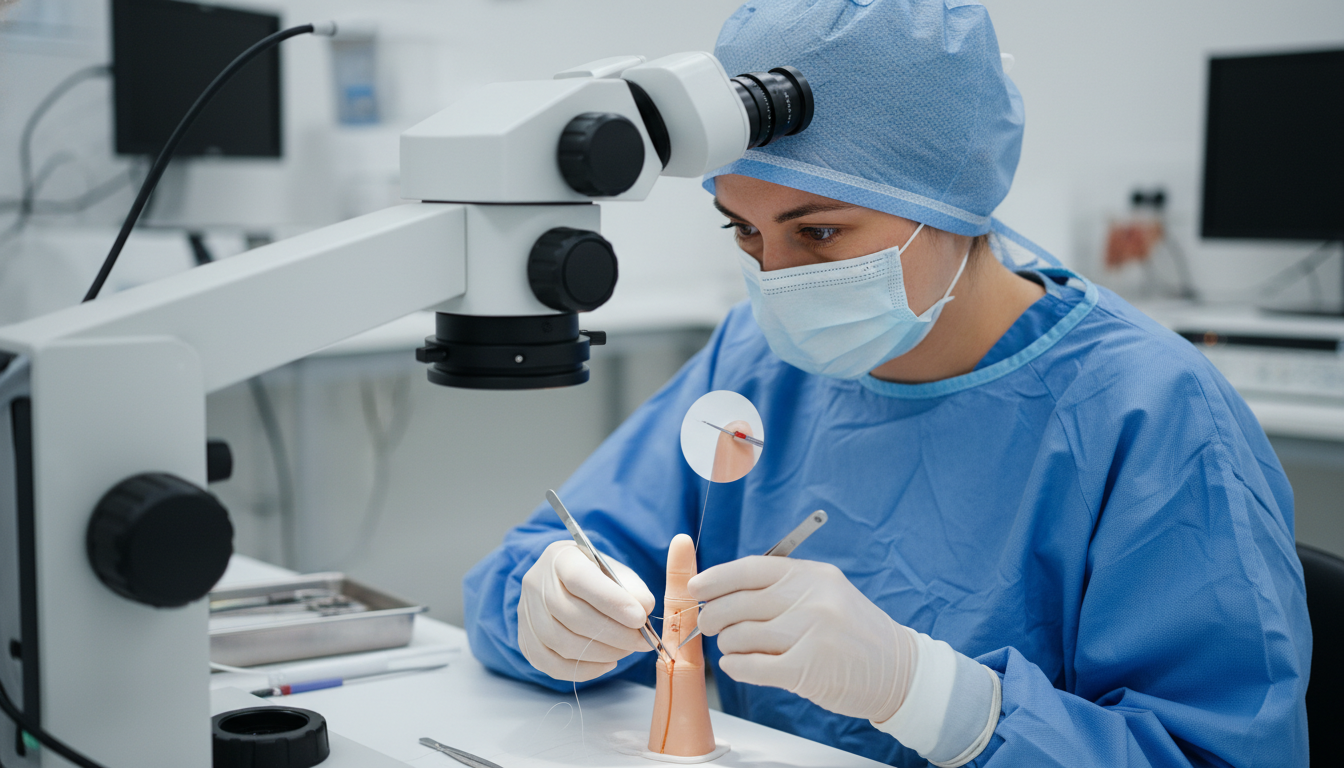
- Microsurgery labs (living or non-living models)
- Regular protected time for micro practice
- Assessment of performance and feedback
- Simulation labs
- Flap design and elevation on cadavers or synthetic models
- External fixator/splinting practice, tendon repair simulations
- Skills boot camps
- Intensive early PGY-1 and annual refreshers
- Focus on suturing, knot-tying, basic hand and facial trauma
When you hear the phrase “robust hands-on training,” dig deeper:
- How often are skills labs held?
- Are they mandatory and protected from clinical duty?
- Are there objective assessments or only informal teaching?
3.4. OR Culture and Teaching Style
Even with good volume, a non-teaching OR culture can limit growth. Signs of a strong educational environment:
- Attendings routinely ask residents to verbalize steps, anatomy, and rationale
- Residents are allowed to lead portions of the case, even if imperfectly, with constructive correction
- Chiefs are supported in “running the room” under supervision
- Near-miss or complication cases are discussed openly and non-punitively in M&M
You want a program where operative experience is not just “do the case,” but “learn the case, own the decision-making, and understand the why.”

4. Evaluating Operative Experience Across Different Program Types
Plastic surgery residency programs vary significantly by size, location, and institutional structure. Each profile has implications for your operative experience.
4.1. Large Academic Programs
Strengths:
- High volume and complexity of reconstructive cases (oncologic, trauma, craniofacial)
- Broad subspecialty exposure
- Strong microsurgery programs
- Often excellent research infrastructure
Potential challenges:
- More fellows competing for complex cases
- Less aesthetic volume in-house; may rely on resident cosmetic clinics
- OR time can be constrained due to tertiary-care demands
How to evaluate:
- “How are cases distributed between fellows and residents?”
- “What proportion of cosmetic cases are done in the resident cosmetic clinic vs with attendings?”
- “How many independent cosmetic cases does a typical chief graduate with?”
4.2. Smaller or “Hybrid” Academic–Community Programs
Strengths:
- Potential for greater autonomy and earlier hands-on training
- Less competition from fellows
- Often strong general reconstruction and bread-and-butter hand experience
Potential challenges:
- Less exposure to ultra-complex microsurgery or craniofacial cases
- Limited on-site subspecialty faculty in niche areas
- Aesthetic experience may depend heavily on individual faculty practices
How to evaluate:
- “What kinds of cases do residents go ‘elsewhere’ to get exposure to, if any?”
- “Are there experiences or rotations with private-practice surgeons?”
- “How many free flaps does a graduating resident typically log?”
4.3. Programs With Strong Private-Practice or Aesthetic Ties
Strengths:
- Robust aesthetic exposure, both clinic and OR
- Seeing how real-world practice runs (overhead, marketing, patient selection)
- Potential for resident-run cosmetic clinics
Potential challenges:
- Variability in case volume depending on local economy and referral patterns
- Less academic-style case mix in craniofacial or complex oncologic recon
- Less emphasis on research, depending on program culture
How to evaluate:
- “How many cosmetic cases does a typical graduate perform as primary surgeon?”
- “What’s the structure of the resident cosmetic clinic?”
- “Do you feel equally prepared for reconstructive and aesthetic practice?”
5. Practical Strategies to Assess Operative Experience During the Application Process
You can’t scrub into a case at every program you’re applying to, but you can collect meaningful data to compare operative experiences.
5.1. Website and Program Materials: What to Look For
On websites and program booklets, focus on:
- Sample rotation schedules, showing:
- Dedicated plastics time per year
- Mix of services (hand, craniofacial, micro, burn, aesthetics)
- Case volume claims:
- Look for actual numbers instead of vague phrases
- Check for breakdown by category (hand, micro, craniofacial, cosmetic)
- Resident clinics:
- Is there a dedicated resident cosmetic clinic?
- Are there continuity clinics where residents follow their own operative patients?
If information feels sparse or generic, flag that program as one to probe more deeply during interviews.
5.2. High-Yield Questions to Ask Residents
During pre-interview socials or interview day resident panels, consider questions like:
- “Can you walk me through a typical operative day for a PGY-3 and a PGY-6?”
- “By the time you’re a chief, what are the operations you feel most comfortable doing independently?”
- “Are there any areas where you wish there was more operative volume or autonomy?”
- “What’s the balance between assisting and being the primary surgeon at the senior level?”
- “How often do you feel like you are ‘running the room’ versus observing?”
Listen for specificity. Vague or heavily qualified answers can reveal limitations in hands-on training or surgical training quality.
5.3. Questions for Program Leadership
To program directors and faculty, you can target structural issues:
- “How do you ensure progressive autonomy for residents, especially with fellows on service?”
- “Do you track operative experience outcomes, and how do you respond if residents fall short in a domain?”
- “Looking at your last few graduating classes, are there any gaps you identified in operative exposure, and how did you address them?”
This not only shows you’re serious about your surgical development but also reveals how self-aware and responsive the program is.
5.4. Away Rotations: Observing Operative Culture in Real Time
If you complete an away rotation at a program, focus less on a single case and more on consistent patterns:
- Do residents regularly get to perform portions of cases?
- Are chiefs allowed real autonomy under appropriate supervision?
- How do attendings handle mistakes or learning moments?
- Is there a difference between how attendings treat home vs away rotators?
Take notes daily on:
- How many cases you saw and who did what
- How residents talked about their operative experiences offline
- Whether juniors were appropriately involved or just retracting and closing
These impressions are often more important than any single spectacular case you might witness.
6. Aligning Operative Experience With Your Career Goals
Not every program will optimize every aspect of plastic surgery training. You need to think deliberately about your goals and how a given program’s operative experience will support them.
6.1. If You’re Aiming for Microsurgery or Academic Reconstruction
Look for:
- High microsurgical volume (breast, extremity, head and neck)
- Clear role for residents in anastomoses and flap design
- Regular microsurgery labs and simulation
- Presence of micro-focused faculty mentors
Ask:
- “How many free flaps does a typical graduate log?”
- “Are residents routinely doing anastomoses by their chief year?”
- “Do residents pursuing micro fellowships feel technically ready when they graduate?”
6.2. If You’re Drawn to Hand and Upper Extremity
Look for:
- Strong hand call and trauma exposure
- Rotations with orthopedic or hand fellowships where residents still operate
- A balance of trauma, elective nerve and compression work, and tendon reconstruction
Ask:
- “Do plastics residents scrub on all or most hand trauma cases?”
- “How is hand call structured, and who covers it?”
- “What proportion of hand cases are done by plastics vs ortho?”
6.3. If You’re Focused on Aesthetic or Private Practice
Look for:
- Resident cosmetic clinic with significant chief-level responsibility
- Consistent aesthetic OR days for senior residents
- Exposure to practice management and patient selection
Ask:
- “How many cosmetic cases does a typical chief perform as primary surgeon?”
- “What’s the payer mix and volume of your resident cosmetic clinic?”
- “Do graduates going into private practice feel comfortable building a cosmetic practice?”
6.4. If You Want a Broad Generalist Plastic Surgery Practice
You’ll want:
- Balanced exposure across reconstruction, hand, craniofacial, and aesthetics
- Strong community-focused and bread-and-butter cases
- Adequate but not necessarily ultra-subspecialized micro and craniofacial volume
Ask:
- “If I wanted to go directly into practice after residency, how well would I be prepared for a mixed reconstructive and aesthetic caseload?”
- “What types of cases your graduates in community settings perform most frequently, and were they well trained for them?”
FAQs: Operative Experience in Plastic Surgery Residency
1. How many cases should a plastic surgery resident have by graduation?
There is no single “magic number,” and programs vary. Most strong programs will significantly exceed ACGME minimums, often graduating residents with well over a thousand cases logged across all categories. More important than raw totals is distribution (adequate hand, micro, craniofacial, aesthetic experience) and your level of involvement as primary surgeon in key procedures by the chief year.
2. Does more case volume always mean better training?
Not necessarily. Extremely high volume can sometimes reflect a service-heavy environment where residents are overextended and under-taught. Conversely, slightly lower volume but highly structured, progressive, and resident-centered operative experiences can produce excellent surgeons. Look for balance: sufficient numbers plus clear evidence of hands-on training, autonomy, and thoughtful teaching.
3. How can I tell if fellows will hurt or help my operative experience?
Fellows can enhance learning by taking on ultra-complex components and teaching residents, or they can crowd residents out of key cases. Ask directly who does the main parts of bread-and-butter plastic surgery procedures (e.g., anastomoses, osteotomies, cleft repairs, common aesthetic operations). Strong programs have explicit policies and cultures that prioritize resident education while still supporting fellow training.
4. What if a program is weak in an area I’m interested in, like aesthetics or micro?
First, determine how “weak” it truly is by asking for data (case numbers, chief experience). Some gaps can be mitigated by elective rotations, visiting rotations, or strong fellowships after residency. However, if your career goals are strongly focused (e.g., you’re certain you want to be a cosmetic-heavy surgeon) and a program offers limited relevant operative exposure, it may not be the best fit for your integrated plastics match.
Evaluating operative experience is more than comparing case counts on a slide. For plastic surgery residency, it means understanding how programs build your skills, judgment, and autonomy from PGY-1 through chief year. By asking targeted questions, analyzing structure and culture, and aligning program strengths with your goals, you can choose a training environment that maximizes your growth in the operating room and beyond.