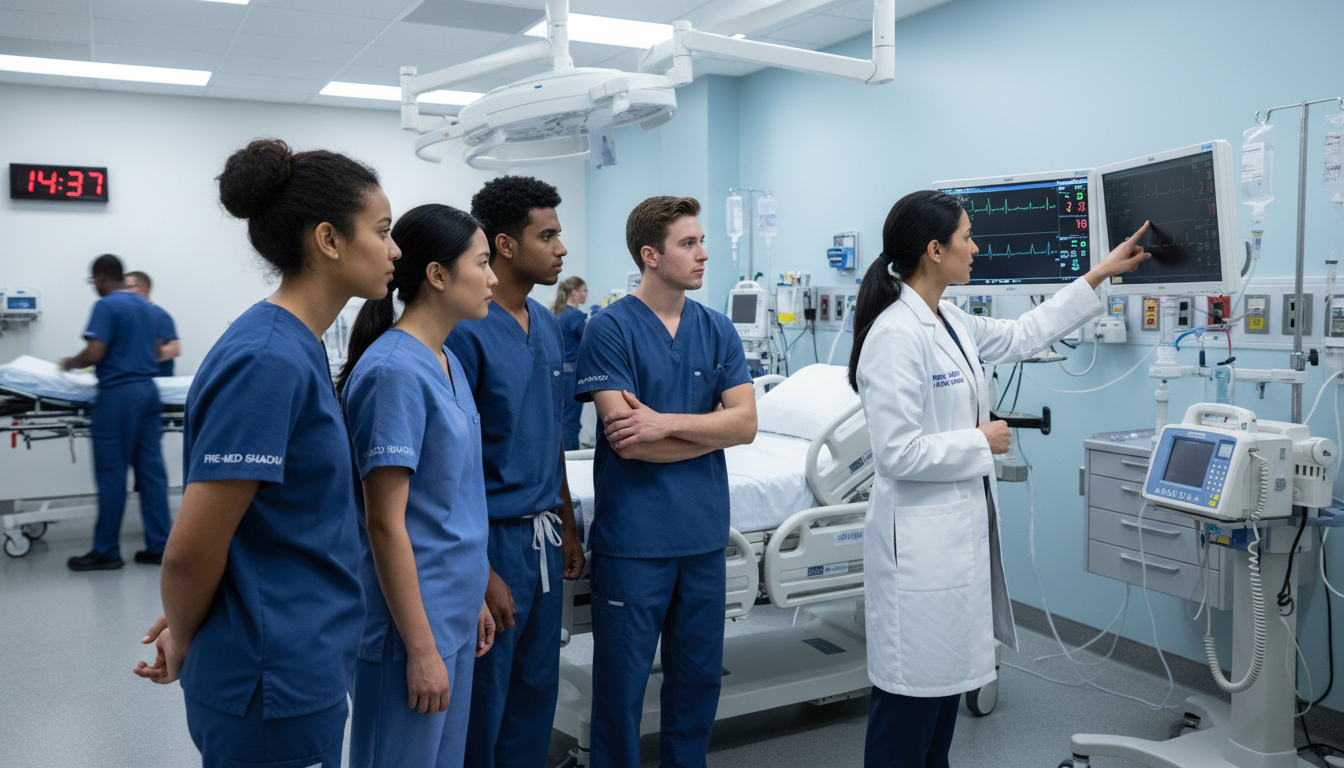
Operative experience is the backbone of surgical training, and in vascular surgery it is especially critical. Residents and fellows must become safe, technically skilled, and clinically sound in both open and endovascular procedures. Evaluating your operative experience—both quantitatively and qualitatively—is essential to choosing a vascular surgery residency, advocating for your own education, and ensuring you graduate ready for independent practice.
This guide will walk you through how operative experience is defined, measured, and evaluated within vascular surgery training, with a focus on practical strategies for residency applicants and current trainees.
Understanding Operative Experience in Vascular Surgery
Vascular surgery has evolved dramatically over the past two decades. Training now spans:
- Open vascular surgery (e.g., open AAA repair, carotid endarterectomy, lower extremity bypass, mesenteric revascularization)
- Endovascular procedures (e.g., EVAR/TEVAR, peripheral interventions, carotid stenting, complex endovascular aneurysm repair)
- Hybrid operations that combine open exposure with endovascular techniques
Components of Operative Experience
Operative experience in a vascular surgery residency or integrated vascular program includes:
- Case volume: How many procedures you perform and in what roles (assistant vs. primary surgeon).
- Case mix: The variety and complexity of cases (open vs. endovascular, elective vs. emergency, complex vs. routine).
- Progressive autonomy: How your operative responsibility increases over time.
- Technical skill acquisition: Fine motor skills, instrument handling, wire/catheter skills, suturing, anastomosis construction.
- Clinical decision-making: Indications, procedure selection (open vs. endovascular), perioperative management, and recognition of complications.
Why Evaluation Matters
Evaluating operative experience is critical for:
- Accreditation bodies (ACGME, RRC): To ensure programs meet minimum training standards.
- Residency and fellowship programs: To monitor training quality, identify gaps, and guide curriculum changes.
- Residents and fellows: To track progress, prepare for boards, and identify areas needing targeted improvement.
- Residency applicants: To compare programs and choose where they will receive the best surgical training quality and hands-on training.
When you hear residents talk about a “strong operative program,” they’re usually referring to this combination of case volume, case mix, and responsibility with appropriate supervision.
Quantitative Measures: Case Logs, Numbers, and Benchmarks
The foundation of operative experience evaluation in vascular surgery is the case log. Understanding how this system works will help you assess training programs intelligently and monitor your own growth.
How Case Logging Works
Residents and fellows log procedures in an ACGME-approved system, usually including:
- Procedure type (e.g., infrainguinal bypass, EVAR, carotid endarterectomy)
- Approach (open vs. endovascular)
- Role:
- Surgeon Junior / Assistant
- Surgeon Chief / Primary surgeon
- Complexity (routine vs. complex, emergency vs. elective)
- Patient factors (sometimes coded via diagnosis or modifiers)
These data are aggregated into reports that show total operative experience across the training years.
Minimum Requirements vs. Optimal Training
The ACGME sets minimum case requirements for vascular surgery trainees. While exact numbers may change over time, categories typically include:
- Aortic aneurysm repair (open and endovascular)
- Carotid and supra-aortic procedures
- Peripheral arterial disease interventions (open bypass, endovascular interventions)
- Dialysis access procedures
- Mesenteric and renal interventions
- Amputations
- Venous procedures
Two key principles for applicants:
Minimums are not targets.
Meeting minimum numbers indicates basic adequacy, not excellence. Strong programs substantially exceed these numbers.Distribution matters more than raw totals.
A resident with 1,000+ cases, but highly concentrated in a few low-complexity categories, may be less well trained than one with slightly fewer cases but a broad, balanced case mix.
Interpreting Case Volume Claims on Interview Day
When programs describe their operative experience, ask for concrete, objective numbers:
- Average total vascular cases per graduate (open + endovascular)
- Median number of:
- Open aneurysm repairs
- EVAR/TEVAR
- Carotid endarterectomies and carotid stenting
- Infrainguinal bypasses and endovascular lower extremity interventions
- Dialysis access procedures
- Proportion of cases logged as primary surgeon in senior years
Red flags to recognize:
- Programs that speak vaguely (“We get plenty of cases”) but cannot provide numbers.
- Cases heavily skewed toward endovascular only with minimal open exposure, or vice versa.
- Large differences in operative experience between residents in the same class (suggesting competition or uneven case distribution).
Qualitative Measures: Beyond Case Numbers
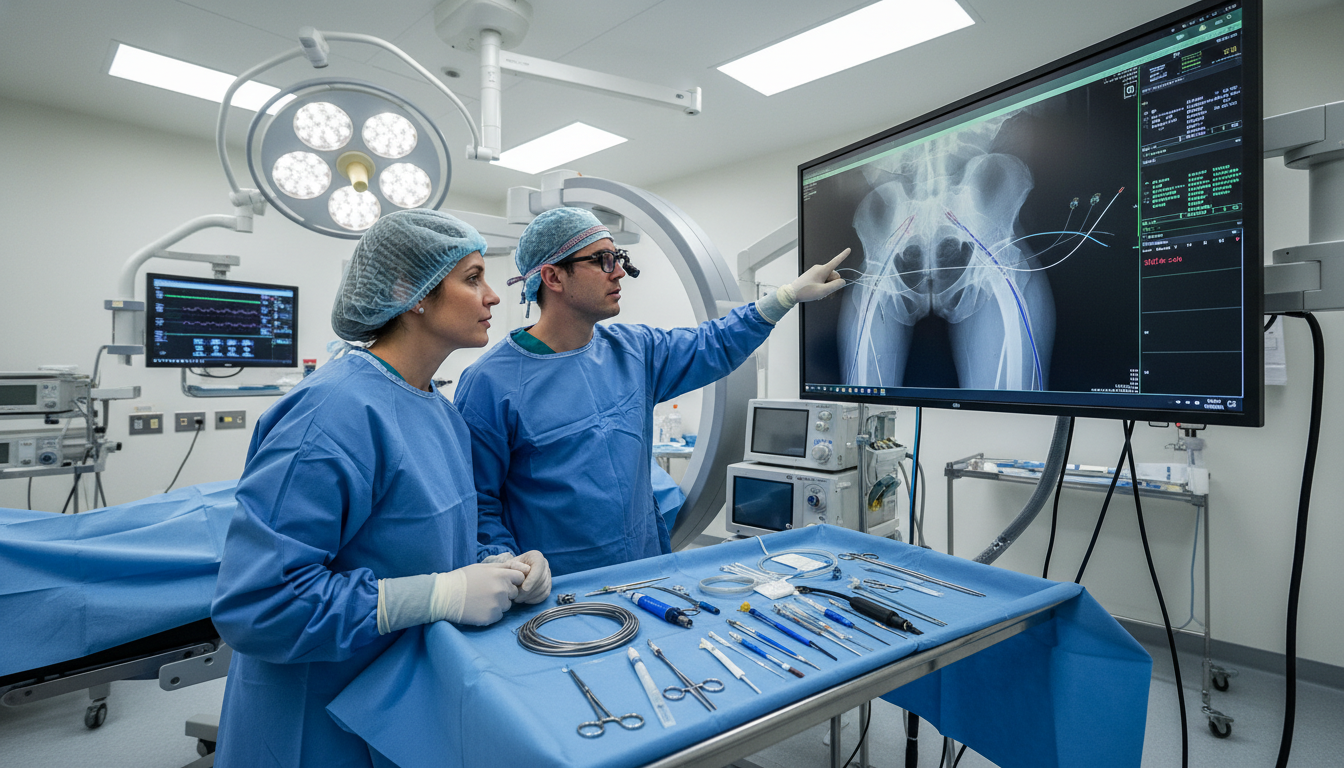
Operative experience evaluation is not just about quantity. Two residents can graduate with similar case logs but very different readiness for independent practice. The difference often lies in the quality of the operative experience.
Evaluating Surgical Training Quality
Several qualitative factors shape surgical training quality:
Attending engagement and teaching style
- Do attendings explain indications, approach, and alternatives?
- Is there a structured pre-op plan review and post-op debrief?
- Are you allowed to make decisions (under supervision), or only to execute instructions?
Progressive autonomy
- PGY-1/2 (or early integrated years): More assisting, stepwise involvement (e.g., skin closure, basic vessel exposure, simple anastomoses).
- Mid-level: Lead portions of cases (e.g., full distal anastomosis or one limb of a bypass; cannulation and wire work for endovascular cases).
- Senior: Function as primary surgeon on standard cases (e.g., CEA, AV fistula, below-knee bypass), with the attending guiding from the background.
Complexity and risk tolerance for training
- Are residents involved in complex or redo cases (e.g., redo groin, infected graft, complex limb salvage, fenestrated EVAR) with graduated responsibility?
- Is the culture too risk-averse to allow trainees meaningful roles in challenging cases?
Integration with perioperative care
- Are you involved in patient selection, pre-op optimization, and post-op management?
- Do you manage complications and participate in decisions about re-intervention?
A strong integrated vascular program will ensure that residents are not only in the operating room but also actively making clinical decisions before and after the procedure.
Resident Autonomy: How to Recognize It
On interviews, ask current residents:
- “By your final year, which operations do you typically perform skin-to-skin as primary surgeon?”
- “In an average CEA or AV fistula case, which parts do juniors vs. seniors perform?”
- “How often do seniors run the case with attending supervision rather than the attending operating?”
Quality indicators:
- Seniors commonly doing full CEAs, AVFs, amputations, and standard bypasses as surgeon.
- Juniors routinely performing meaningful components (e.g., femoral exposure, distal anastomosis, full balloon angioplasty under guidance).
- Structured opportunities for residents to teach junior residents and students in the OR.
Red flags:
- Attending always performing the key steps or taking over critical portions without explanation.
- Residents describing themselves as “first assistant, not surgeon” even late in training.
- A culture where operative speed is prioritized to the point that trainees rarely get full-case responsibility.
Key Domains of Operative Experience in Vascular Surgery
To evaluate operative experience meaningfully—whether as an applicant, resident, or program director—it helps to break vascular surgery into core domains.
1. Open Aortic Surgery
Open aortic exposure and reconstruction remain a cornerstone of vascular training, even in the endovascular era.
Key procedures:
- Open infrarenal AAA repair
- Suprarenal and thoracoabdominal aneurysm repair (depending on program scope)
- Aorto-iliac occlusive disease reconstruction (e.g., aortobifemoral bypass)
What to look for in training:
- Adequate volume of open aortic cases (not just “one or two” per trainee).
- Stepwise exposure to:
- Midline laparotomy or retroperitoneal exposure
- Aortic control and proximal/distal clamp placement
- Sewing proximal/distal anastomoses
- Exposure to emergency ruptured aneurysm management.
Questions to ask:
- “How many open AAA repairs does a typical resident graduate with?”
- “Do residents perform the key anastomoses in open aortic surgery, or mostly assist?”
2. Carotid and Supra-Aortic Procedures
Carotid endarterectomy (CEA) is both a technical and decision-making landmark in vascular training.
Essential experiences:
- Carotid endarterectomy: full case experience, including:
- Exposure of carotid bifurcation
- Shunt placement (if used)
- Endarterectomy and patch angioplasty
- Carotid artery stenting in appropriate programs.
- Rare supra-aortic reconstructions (e.g., subclavian-carotid bypass, arch branch bypass).
Strong training indicators:
- Senior residents performing CEAs skin-to-skin under supervision by graduation.
- Involvement in pre-op stroke/TIA work-up and discussions with neurology/medicine.
3. Peripheral Arterial Disease and Limb Salvage
This domain provides both broad surgical exposure and an understanding of chronic disease management.
Key components:
- Open procedures:
- Femoral endarterectomy
- Fem-pop and fem-tibial bypass (vein and prosthetic)
- Endarterectomy, patch angioplasty
- Major and minor amputations
- Endovascular interventions:
- Iliac and femoropopliteal angioplasty/stenting
- Tibial and pedal interventions
- Use of atherectomy and drug-coated technologies where appropriate
Evaluation points:
- Balance between open and endovascular experience—both are essential.
- Cases across the spectrum of anatomy, complexity, and urgency (critical limb ischemia, acute limb ischemia).
- Early involvement in limb salvage clinics and multidisciplinary wound care.
4. Endovascular Aortic and Complex Endovascular Procedures
Endovascular skills are a defining focus in modern vascular surgery.
Core experiences:
- Standard EVAR and TEVAR (thoracic endovascular aortic repair)
- Access techniques: percutaneous (pre-closure devices) and open femoral/iliac exposure
- Wire and catheter skills, branch selection, and device deployment
- Management of endoleaks and re-interventions
At more advanced centers:
- Fenestrated and branched EVAR (FEVAR/BEVAR)
- Chimney and snorkel techniques
- Complex infra-renal and visceral segment reconstructions
Assessing training quality:
- Resident involvement in planning, including CT angiogram review and device sizing.
- Graduated responsibility for:
- Gaining access
- Navigating wires and catheters
- Deploying stent grafts
- Exposure to endovascular troubleshooting and bail-out strategies.
5. Dialysis Access and Venous Surgery
Although sometimes seen as “bread and butter,” these cases are fundamental to technical mastery.
Dialysis access:
- AV fistula creation (radiocephalic, brachiocephalic, brachiobasilic)
- AV graft placement and revision
- Endovascular interventions (fistulograms, angioplasty, thrombectomy)
Venous work:
- IVC filter placement and retrieval
- Endovenous ablation for varicose veins
- Open venous reconstruction in select programs
Indicators of solid training:
- Juniors frequently performing AVFs with supervision.
- Seniors independently handling routine access creation and revisions.
How Applicants and Trainees Can Evaluate Operative Experience
Evaluating operative experience as an outsider (residency applicant or visiting student) is challenging but achievable with a structured approach.

For Medical Students and Residency Applicants
When comparing vascular surgery residency or integrated vascular program options, focus on three broad categories: numbers, distribution, and culture.
1. Ask Data-Driven Questions
During interviews and pre-interview socials, consider asking:
- “What is the average total case volume (open and endovascular) for recent graduates?”
- “How many open aortic cases and EVAR/TEVAR does the typical resident complete?”
- “What proportion of your program’s cases are logged as primary surgeon for graduating seniors?”
- “Does the program track case distribution to ensure equity among residents?”
Look for programs that readily share recent, de-identified case log summaries.
2. Probe the Culture of Hands-On Training
Numbers won’t tell you how often the resident actually holds the knife or controls the wire.
Ask:
- “How early are interns and junior residents allowed to scrub into vascular cases?”
- “Do juniors get meaningful operative steps, or mostly retraction and suction?”
- “By the final year, what cases are seniors expected to perform independently?”
- “How do attendings balance efficiency with resident autonomy?”
Listen for residents describing progressive independence, structured feedback, and a culture that values teaching over speed alone.
3. Understand Setting and Volume Sources
Case mix is heavily influenced by the hospital environment:
- High-volume academic/quaternary centers often provide:
- More complex cases (open thoracoabdominal aneurysm, complex endovascular).
- A broad referral base.
- Exposure to cutting-edge techniques.
- Community or hybrid programs may provide:
- Very high volumes of bread-and-butter procedures.
- More consistent hands-on exposure early in training.
Ideal training often includes a mix of academic and community rotations—ask how cases are distributed across sites and between trainees.
For Current Residents and Fellows
If you are already in a vascular surgery training program, systematize your own operative experience evaluation.
1. Audit Your Case Logs Regularly
At least twice a year:
- Review your total numbers against ACGME minimums and program benchmarks.
- Identify weak areas (e.g., few open bypasses, limited TEVAR experience, minimal carotid stenting).
- Compare your experience with co-residents (collaboratively, not competitively) to ensure equitable distribution.
If you detect gaps, discuss:
- Targeted assignment to key cases.
- Rotations at higher-volume affiliated sites.
- Opportunities to scrub additional cases during elective or research time.
2. Seek Structured Feedback on Technical Skills
Numbers alone don’t tell you how well you operate. Use structured tools where available:
- OSATS (Objective Structured Assessment of Technical Skills)
- Procedure-specific evaluation forms (e.g., for CEA, EVAR, AV fistula)
- Video review of selected operations when possible
Ask attendings explicitly:
- “What one or two technical elements should I focus on improving in my next similar case?”
- “Do you feel I am on track technically for my level of training?”
3. Advocate for Your Own Autonomy
As you progress:
- Communicate with attendings before cases: “I’d like to lead this case as primary surgeon with your oversight; does that sound appropriate?”
- Be honest about your readiness; never overstate skills.
- After the case, request specific feedback on both technical performance and intraoperative decision-making.
Common Pitfalls and How to Avoid Them
Even in strong programs, there are recurring issues that can limit operative experience if not recognized early.
1. Over-Reliance on One Domain (e.g., Endovascular-Only Training)
In some centers, a large proportion of aneurysms and peripheral disease is treated endovascularly, reducing open exposure.
Solutions:
- Ensure scheduled rotations at sites with more open volume.
- Seek elective rotations at partner institutions with stronger open case volume if needed.
- Use simulation labs and cadaver labs to strengthen open skills in parallel.
2. Inequitable Case Distribution
Competition between residents, service-specific silos, or poorly structured schedules can result in uneven operative experiences.
Solutions:
- Advocate for transparent case assignment policies.
- Encourage your program to use regular case log reviews to detect and correct disparities.
- Collaborate with co-residents—trade cases equitably rather than hoarding “good” cases.
3. Passive Learning in the OR
Simply standing in the OR does not equal operative experience.
Avoid passivity by:
- Reviewing imaging and anatomy before every case.
- Arriving with a mental plan: incision, exposure, key steps, potential pitfalls, and bail-out strategies.
- Asking focused questions that demonstrate preparation rather than basic textbook knowledge.
Putting It All Together: What “Excellent Operative Experience” Looks Like
By graduation from a high-quality vascular surgery residency or integrated vascular program, a well-trained vascular surgeon should:
- Have case logs that exceed ACGME minimums across major domains, with a balanced mix of open and endovascular procedures.
- Have performed:
- Multiple open AAA repairs with significant responsibility.
- Numerous CEAs and infrainguinal bypasses as primary surgeon.
- High-volume endovascular interventions, including EVAR and peripheral interventions, with independent wire and device skills.
- Demonstrate confidence and competence in:
- Technical execution of standard vascular procedures.
- Selection of open vs. endovascular strategies.
- Management of common complications and re-interventions.
- Have a track record of progressive autonomy, observed and supported by faculty evaluations and, ideally, objective assessment tools.
For applicants, aim to match at a program where both the numbers and the culture support this trajectory. For current trainees, regularly evaluate your operative experience and actively shape it through communication, preparation, and self-advocacy.
FAQs: Operative Experience in Vascular Surgery Residency
1. How many cases should I look for in a “strong” vascular surgery residency program?
Exact numbers vary by institution and year, but most robust programs will graduate residents with significantly more than the ACGME minimums, often in the high hundreds to over a thousand total vascular cases. Focus less on a single “magic number” and more on:
- Balanced exposure to open and endovascular work.
- Adequate volumes of open aortic, CEA, infrainguinal bypass, and EVAR.
- High proportions of cases logged as primary surgeon in the final years.
2. Is it a problem if a program is heavily endovascular-focused?
Not necessarily—but it can be if open experience is inadequate. Modern vascular surgeons must be comfortable across the full spectrum of treatment options. If endovascular volume is very high, verify that:
- You will still get substantial open aortic and infrainguinal bypass experience.
- The program recognizes the need to protect open training opportunities. If open exposure is limited, you may graduate less prepared for complex cases or practice settings where open skills are essential.
3. How can I tell if residents really operate or just assist?
Ask targeted questions:
- “Which cases do seniors perform skin-to-skin by graduation?”
- “What parts of a typical CEA or fem-pop bypass do residents do by level?”
- “How often do attendings scrub but allow residents to lead the case?” Then compare what residents say across different levels and sites. Consistent descriptions of progressive independence are a strong positive sign.
4. If I discover gaps in my operative experience during training, is it too late to fix them?
Usually, no. The key is early recognition and proactive planning:
- Review your case logs at least annually, ideally every 6 months.
- Identify domains where you are behind (e.g., open aortic, TEVAR, dialysis access).
- Discuss these with your program director and rotation chiefs. Many programs can adjust schedules, provide targeted OR assignments, or arrange away rotations or visiting experiences to fill specific gaps—especially if you address them well before your final year.
By understanding how operative experience is evaluated—and by actively engaging with that process—you can make smarter choices about where to train and how to develop into a confident, competent vascular surgeon.