Understanding Clinical Informatics Rotations: What Makes Them Different
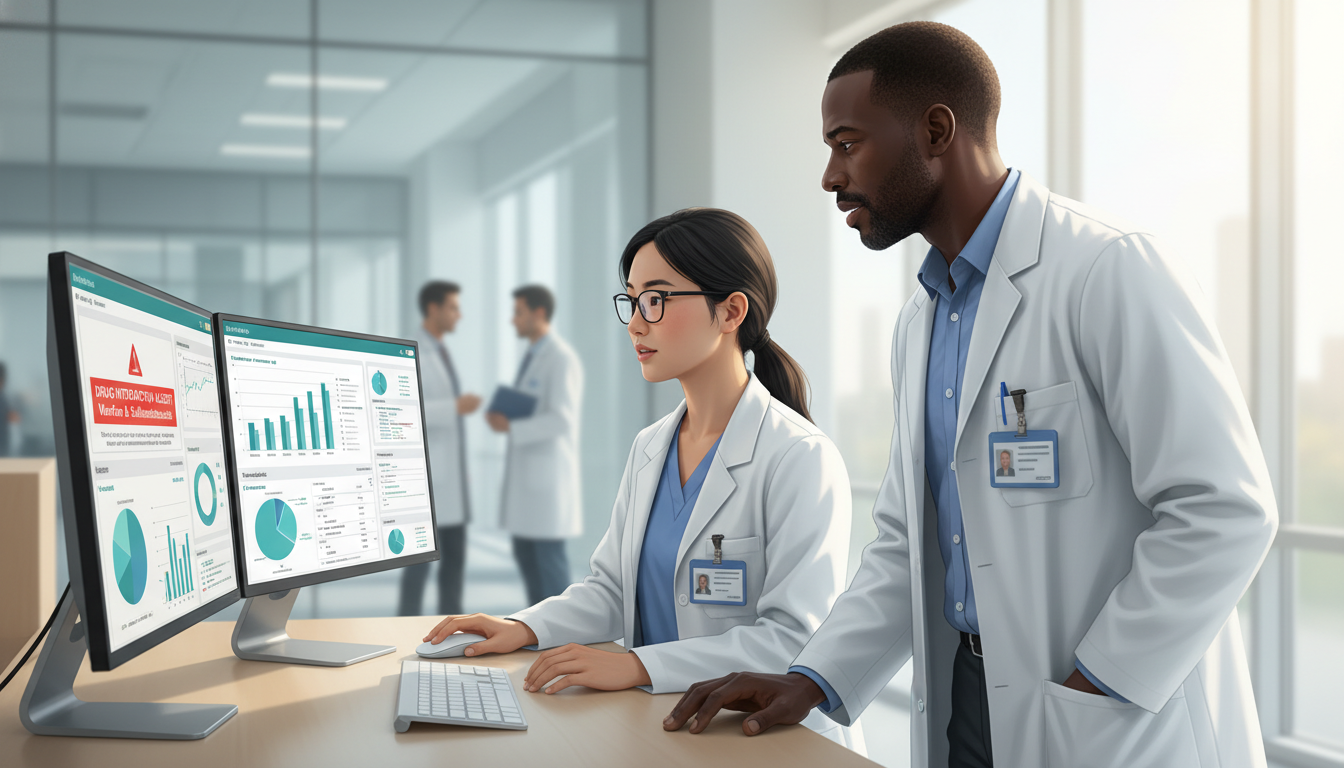
Clinical rotations in clinical informatics sit at the intersection of medicine, technology, and systems improvement. Unlike traditional third year rotations that focus primarily on direct patient care, informatics rotations involve:
- Less time at the bedside and more time at the workstation
- Fewer physical exams and more workflow analysis
- Less focus on “What medication should we prescribe?” and more on “How does our EHR help or hinder safe prescribing?”
To excel, you must approach these experiences with a dual identity: you are both a clinician-in-training and a systems thinker.
What Is a Clinical Informatics Rotation?
In most institutions, a clinical informatics rotation is an elective for third year rotations or early fourth year students that exposes you to:
- Electronic Health Record (EHR) design, customization, and optimization
- Clinical decision support (CDS) tools (alerts, order sets, care pathways)
- Quality improvement (QI) and patient safety initiatives
- Data analytics, dashboards, and reporting
- Health IT training for clinicians and staff
- Governance structures (informatics committees, change control boards)
- Regulatory and privacy considerations (HIPAA, security, data governance)
You may work with:
- Board-certified clinical informaticians
- CMIOs (Chief Medical Information Officers)
- Clinical analysts and builders
- Data scientists or data engineers
- Implementation specialists and super-users
- Nursing informatics and pharmacy informatics teams
Why These Rotations Matter for Residency and Beyond
For residency applicants—whether or not you pursue a clinical informatics fellowship later—strong performance in this environment signals:
- Systems-level thinking
- Capacity to lead change and improvement
- Comfort with technology and data
- Ability to communicate across clinical and technical teams
Residency program directors increasingly value applicants who understand health IT, can navigate the EHR efficiently, and can participate in QI and safety work. A standout clinical informatics rotation can:
- Strengthen your application narrative (“Why this specialty?”)
- Provide concrete QI or IT projects to discuss in interviews
- Yield strong, distinctive letters of recommendation
- Prepare you for core residency milestones related to systems-based practice and practice-based learning
Preparing Before the Rotation: Setting Yourself Up for Success
Excelling in a clinical informatics rotation starts well before day one. The more intentional your preparation, the more you’ll get out of every meeting, project, and clinical observation.
Clarify Your Goals in Advance
Before the rotation begins, reflect on your priorities. Consider writing down 3–5 specific goals such as:
- “Understand how clinical decision support is designed, tested, and implemented.”
- “Participate in at least one quality improvement or EHR optimization project.”
- “Gain confidence presenting informatics work to a multidisciplinary audience.”
- “Learn clinical rotations tips that transfer to my other clerkships, especially for efficient EHR use.”
Email your rotation director 1–2 weeks before the start date:
- Introduce yourself (year in training, career interests).
- Share your goals and background (e.g., prior coding, QI work, or none).
- Ask if there are any recommended readings or orientation materials.
This signals initiative and allows them to align your experience with your interests.
Build Core Knowledge Efficiently
You don’t need a computer science degree to shine, but you do need basic informatics literacy. In the week prior, aim for a focused “boot camp”:
Key domains to review:
EHR basics
- Common vendors (Epic, Cerner, Meditech, etc.)
- Core components: orders, notes, results, flowsheets, dashboards, in-basket/messaging
Clinical decision support
- Types: alerts, reminders, order sets, care pathways, documentation templates
- Concepts: sensitivity vs specificity of alerts, alert fatigue, human factors
Data and interoperability (at a high level)
- Structured vs unstructured data
- Common standards: HL7, FHIR, LOINC, SNOMED CT (just basic recognition)
- What a data warehouse or registry is used for
Quality improvement frameworks
- PDSA cycles, root cause analysis, process mapping
- Common metrics: length of stay, readmissions, medication error rates, throughput
Even 4–6 focused hours on these topics (via online modules, recorded lectures, or institutional materials) will dramatically increase your confidence in early meetings.
Technical Comfort: Enough, Not Everything
You’re not expected to be a programmer, but comfort with:
- Spreadsheets (filters, pivot tables, basic charts)
- Reading simple SQL-like queries (if they come up; you don’t need to write them)
- Thinking in terms of inputs → processes → outputs in systems
If you have prior experience (coding, data science, spreadsheets), mention it early; it may shape your projects. If you do not, be honest and emphasize your willingness to learn.

Excelling Day-to-Day: Behaviors That Make You Stand Out
Unlike traditional clerkship success, where physical exam and differential skills dominate, success here is about intellectual curiosity, systems thinking, and follow-through.
Be an Active, Not Passive, Observer
Clinical informatics involves many meetings, design sessions, and workflow observations. These can feel abstract unless you engage deliberately.
During meetings and huddles:
Prepare beforehand
- Know the purpose of the meeting (e.g., “CDS governance,” “EHR optimization for ED throughput,” “order set review”).
- Look up any project or tool names you receive in agendas.
Participate thoughtfully
- Ask clarifying questions when something is unclear (“Can you walk me through how that alert appears to the ordering provider?”).
- Relate discussions back to clinical care (“How has this change affected time to antibiotics in sepsis cases?”).
Take structured notes
- Organize by: problem, current state, proposed solution, implications for clinicians or patients.
- Flag terms or acronyms to look up later.
This level of engagement turns “another meeting” into a live case-based tutorial.
Learn to Translate Between Clinicians and IT
One of the most valuable skills in clinical informatics is the ability to “speak both languages.” As a student with fresh clinical rotations tips and a user’s-eye view, you can add real value by:
Rephrasing technical explanations in clinical terms:
“So if I understand, that dashboard pulls any patient with an eGFR < 30 and an active contrast order, so we can pre-emptively adjust imaging.”Highlighting frontline implications:
“On my medicine clerkship, the interns were overwhelmed with non-urgent lab alerts. Could this new notification rule add to that burden?”Suggesting realistic workflows:
“If that alert fires after we’ve already signed the order, most residents will just override it. Could we surface it at order entry instead?”
Your clinical context—especially fresh from third year rotations—helps keep projects grounded in reality.
Treat Workflow Observations Like Bedside Rounds
You may shadow in clinics, EDs, or inpatient units, but with an informatics lens. Approach this as you would a high-yield bedside experience:
- Map the full process: patient check-in → triage → clinician visit → orders → discharge.
- Document each handoff, screen, and click where key decisions are made.
- Note pain points: duplicated documentation, confusing screens, frequent workarounds.
- Ask frontline staff:
- “What’s the most frustrating part of your documentation?”
- “If you could change one thing in this EHR screen, what would it be?”
Then, in debriefs with your informatics preceptor, connect observations to:
- Design principles (e.g., cognitive load, minimizing clicks)
- Safety and quality (e.g., missed test results, delays in orders)
- Data capture (e.g., structured fields vs free text)
Show Reliability and Ownership
You may not be writing orders, but you can still be the most reliable person on the team:
- Confirm your schedule clearly; arrive early to every session or meeting.
- Follow through on tasks (literature search, mock-up, small data pull) by the agreed deadline.
- Send concise email summaries when appropriate:
- What you did
- What you found
- Next steps or questions
Faculty often remember informatics students for their work ethic and “project ownership” more than anything else. These impressions drive strong letters and support for future applications, including for a clinical informatics fellowship.
Making the Most of Projects: From Observer to Contributor
Most high-quality informatics rotations include at least one project. This is your best opportunity to create something that you can:
- List on your CV
- Present at a local or national meeting
- Discuss concretely in residency interviews
Identifying a High-Impact Project
During your first week, talk with your preceptor about potential projects. Ideal features:
- Well-scoped – achievable in 2–4 weeks with a clear deliverable
- Clinically meaningful – relates to patient safety, quality, workflow, or experience
- Measurable – has a before/after or baseline metric you can describe
- Documentable – something you can turn into a poster, abstract, or short written report
Examples:
- Review and propose revisions to a high-override CDS alert (e.g., duplicate lab alert).
- Map the workflow and pain points for discharge medication reconciliation and propose improvements.
- Build (or help design) a resident-friendly rounding dashboard or note template.
- Assist in creating or evaluating a new order set (e.g., for sepsis, DKA, or anticoagulation).
- Analyze EHR use metrics for interns (after-hours charting, inbox load) and help design interventions.
Applying QI Principles to Your Project
Students sometimes overlook that informatics work is often QI by another name. Use classic QI tools:
Aim statement:
“To reduce unnecessary overrides of the duplicate imaging alert by 30% within six months.”Process mapping:
Draw the current workflow and identify where the tool appears and why users react as they do.Root cause analysis:
Is the alert firing on low-risk scenarios? Poor timing? Confusing language? Misaligned thresholds?Plan-Do-Study-Act (PDSA):
Even if you can’t complete a full cycle, outline a plan for iterative testing.
Describing your project in this structured way impresses both informatics mentors and residency interviewers.
Communicating Your Work Effectively
At some point, you may present to:
- Your informatics team
- A department or QI committee
- Peers or faculty at a student forum
To excel:
Start with the clinical problem, not the technology.
“Residents frequently miss critical lab results that return after sign-out.”Use visuals whenever possible:
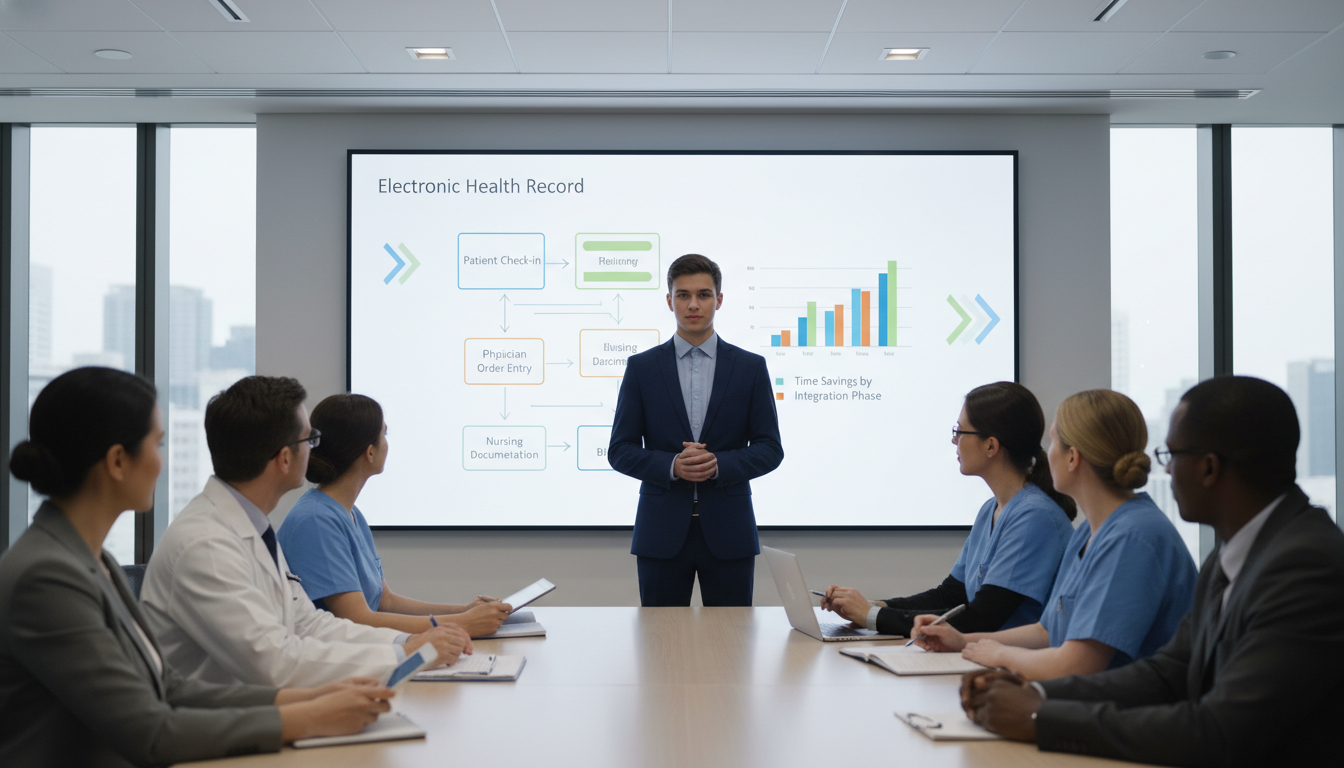
- Simple workflow diagrams
- Before-and-after screenshots (appropriately de-identified)
- Simple charts or run charts for metrics
Emphasize usability and clinician experience as much as data.
Be honest about limitations and next steps.
These are the same communication skills you’ll use repeatedly as a resident leader in any specialty.
Integrating Informatics Skills Into Your Clinical Rotations and Residency Plans
One of the most powerful aspects of a clinical informatics rotation is how transferable its lessons are. You can use what you learn to improve your own performance in clerkships and residency, even if you never hold an IT title.
Clerkship Success: Informatics as a Force Multiplier
On your other clinical rotations, especially core third year rotations, you can:
Use the EHR more efficiently:
- Learn keyboard shortcuts and smart phrases from your informatics mentors.
- Create personal templates that support thorough yet efficient documentation.
- Build “favorites” lists for common orders.
Improve patient safety at the point of care:
- Understand why alerts fire and which ones matter most.
- Recognize when the system might be missing something (e.g., an overdue result that never generated a notification).
Contribute to ongoing QI efforts:
- Volunteer to help track data for a unit’s project.
- Offer a student’s perspective on EHR workflows during team discussions.
These are concrete ways to convert a technology-focused elective into daily clerkship success.
Framing Your Experience for Residency Applications
As you move toward residency match and applications, think carefully about how you’ll narrate this rotation:
In your CV:
- “Clinical Informatics Elective – Participated in the evaluation and redesign of a high-frequency CDS alert, including workflow mapping, stakeholder interviews, and data analysis to inform proposed changes.”
In your personal statement:
Describe a moment when:
- You realized how a poorly designed system impaired care, or
- You helped clinicians solve a problem through an informatics tool.
Connect this to your specialty:
- For Internal Medicine: chronic disease registries, population health dashboards.
- For Emergency Medicine: triage tools, throughput dashboards.
- For Pediatrics: vaccine tracking, growth charts, parental portal engagement.
In interviews:
When asked about research, leadership, or QI:
- Highlight your informatics project as:
- A QI initiative that used health IT
- Evidence of your ability to think at a systems level
- Proof that you can collaborate with diverse teams
Residency programs increasingly appreciate applicants who understand that medicine is practiced within complex digital systems and who can help improve those systems.
Considering a Future Clinical Informatics Fellowship
If you find this rotation exciting, you may be interested in a formal clinical informatics fellowship later. Steps you can take now:
Ask your mentors about:
- The pathway to board eligibility (usually via an ACGME-accredited fellowship after primary residency).
- What kinds of projects and experiences are valued during residency.
Look for residency programs with:
- Strong informatics departments or a CMIO closely involved with training
- Optional health IT training curricula
- Opportunities to participate in EHR optimization or data analytics
Continue building your portfolio:
- QI and informatics-related projects
- Abstracts, posters, or presentations at meetings (e.g., AMIA, specialty societies)
- Ongoing collaboration with your medical school’s IT or QI teams
Your rotation can be the first step in a long-term informatics trajectory—or simply a powerful enhancement to any clinical career.
Common Pitfalls and How to Avoid Them
Even strong students can stumble in clinical informatics rotations. Being aware of common mistakes will help you avoid them.
Pitfall 1: Treating It as “Light” or Non-Clinical
Because you may not be writing notes or carrying a pager, it can be tempting to treat the rotation as less serious than service-heavy clerkships.
Avoid this by:
- Maintaining the same professionalism, attendance, and work ethic as on core rotations.
- Preparing for each day (reviewing agendas, planned topics, or tools).
- Taking initiative to ask for more responsibility or complexity once you’re comfortable.
Pitfall 2: Getting Lost in Technology and Forgetting Patients
Some students become fascinated by the tools and lose sight of why they exist.
Counter this by regularly asking:
- How does this change impact:
- Safety?
- Efficiency?
- Patient experience?
- Equity?
Always bring discussions back to clinical outcomes and human impact.
Pitfall 3: Over- or Under-Stating Your Technical Skills
If you overstate your technical background, expectations may be misaligned and you may feel overwhelmed. If you understate it, you might miss opportunities.
Be precise:
- “I’m comfortable with Excel and basic data analysis but haven’t written SQL before.”
- “I can code in Python, but I’ve never worked with healthcare data or EHRs.”
This helps mentors tailor your experience appropriately.
Pitfall 4: Failing to Capture Your Work
In busy rotations, it’s easy to finish and realize you have no documentation of your contributions.
Prevent this by:
Keeping versions of any:
- Project proposals
- Workflow diagrams
- Presentations or posters
- Reflective write-ups
Near the end of the rotation, explicitly ask:
- “Would you be comfortable if I listed this project on my CV?”
- “Could I share a de-identified version of our slides or workflow diagram?”
This documentation becomes invaluable during residency applications and future informatics opportunities.
FAQs: Clinical Informatics Rotations and Residency Applications
1. Do I need a technical or computer science background to excel in a clinical informatics rotation?
No. Most successful students have standard medical training with little or no prior technical background. What matters more is:
- Curiosity about how systems work
- Willingness to learn new terminology and workflows
- Ability to think about processes and people, not just individual patients
If you do have a technical background, that can enhance your contributions—but it’s not a prerequisite for clerkship success in this area.
2. How can I talk about my informatics rotation in residency interviews, even if I’m not applying for a clinical informatics fellowship?
Frame the experience around residency-relevant competencies:
- Systems-based practice: understanding how EHR tools, workflows, and policies influence care.
- Practice-based learning: using data and feedback to drive improvement.
- Interprofessional collaboration: working with IT, nursing, pharmacy, and administration.
Describe a specific project or challenge, your role, and what you learned about improving care through systems change.
3. Will a clinical informatics rotation count as “clinical” experience in the eyes of residency programs?
Yes, when framed correctly. Although you may have fewer direct patient encounters, programs recognize that:
- Health IT and EHR use are central to modern clinical practice.
- Informatics work directly affects patient care, safety, and workflow.
- You’re still applying clinical reasoning, but at the system level.
Ensure you also complete strong, traditional clinical rotations, but don’t hesitate to highlight this experience as an integral part of your training.
4. What if my school doesn’t offer a formal clinical informatics rotation?
You can still gain informatics exposure by:
- Seeking out a CMIO or informatics-minded faculty member to shadow.
- Joining a QI or EHR optimization committee as a student representative.
- Participating in health IT training projects for new residents or staff.
- Doing a scholarly project related to EHR design, CDS, or clinical data analysis.
These experiences can approximate a formal rotation and still support your interest in informatics and systems-based practice.
By approaching your clinical informatics rotation with intentional preparation, active engagement, and a focus on clinically meaningful projects, you can turn this experience into a cornerstone of your professional development—sharpening your clinical rotations tips, elevating your clerkship success, and opening doors to future opportunities in health IT training, residency leadership, and potentially a clinical informatics fellowship.