
Understanding Neurology Clinical Rotations and Why They Matter
Clinical rotations in neurology are often a turning point in medical school. Even if you’re unsure about pursuing a neurology residency, your neurology clerkship shapes how faculty view you as a future colleague, influences your letters of recommendation, and strengthens your performance in other specialties (ICU, psychiatry, internal medicine, neurosurgery).
For students targeting the neuro match, the neurology rotation is high stakes: it is your audition. Faculty are subconsciously asking themselves:
- Would I want this student as my resident?
- Do they think like a neurologist?
- Can they work well on a neurology team under pressure?
This guide walks you through practical, step‑by‑step strategies to excel during third year rotations in neurology (or later sub‑internships), from mastering the neurologic exam to becoming the student everyone wants on their service.
We’ll cover:
- Core expectations on neurology rotations
- A structured approach to histories and exams
- How to shine on inpatient and outpatient services
- Professionalism, communication, and team integration
- How to turn a strong rotation into a successful neurology residency application and neuro match advantage
Core Expectations: What Makes a Strong Neurology Clerkship Student?
Before optimizing performance, you need to know what attendings and residents actually care about. Across programs, strong students consistently demonstrate:
Curiosity and initiative
- Ask focused questions that show you are thinking (“Could this be a small‑vessel stroke given the pure motor deficit and risk factors?”)
- Look things up immediately after rounds and apply what you learned the next day.
Solid clinical fundamentals
- Clear, organized presentations
- Accurate vital signs, medication lists, and timelines
- Reliable, reproducible neurologic exams
Respect for patients and the team
- Communicate clearly, avoid jargon, and check for understanding
- Help with work that makes others’ lives easier—calling family, tracking labs, updating the list
Growth mindset
- Respond to feedback non‑defensively
- Show visible improvement over the rotation
Faculty do not expect you to know everything about neuroimmunology or rare neuromuscular diseases. They do expect:
- Strong general medicine foundation
- Willingness to read about your patients
- Ability to think logically through localization and differential diagnosis
Practical Goal for Yourself
Enter your neurology rotation with three concrete goals:
- Become comfortable with a full brief neurologic exam in under 7 minutes
- Learn to present a focused neuro SOAP note efficiently
- Be able to localize at least at the level of “cortex vs brainstem vs spinal cord vs peripheral nerve vs muscle/neuromuscular junction”
These three skills alone will put you ahead of many peers on third year rotations.
Mastering the Neurologic History and Exam
The neurologic exam can seem intimidating, but it is one of the most teachable, reproducible skills in medicine. Clerkship success in neurology heavily depends on how well you perform and interpret the exam.
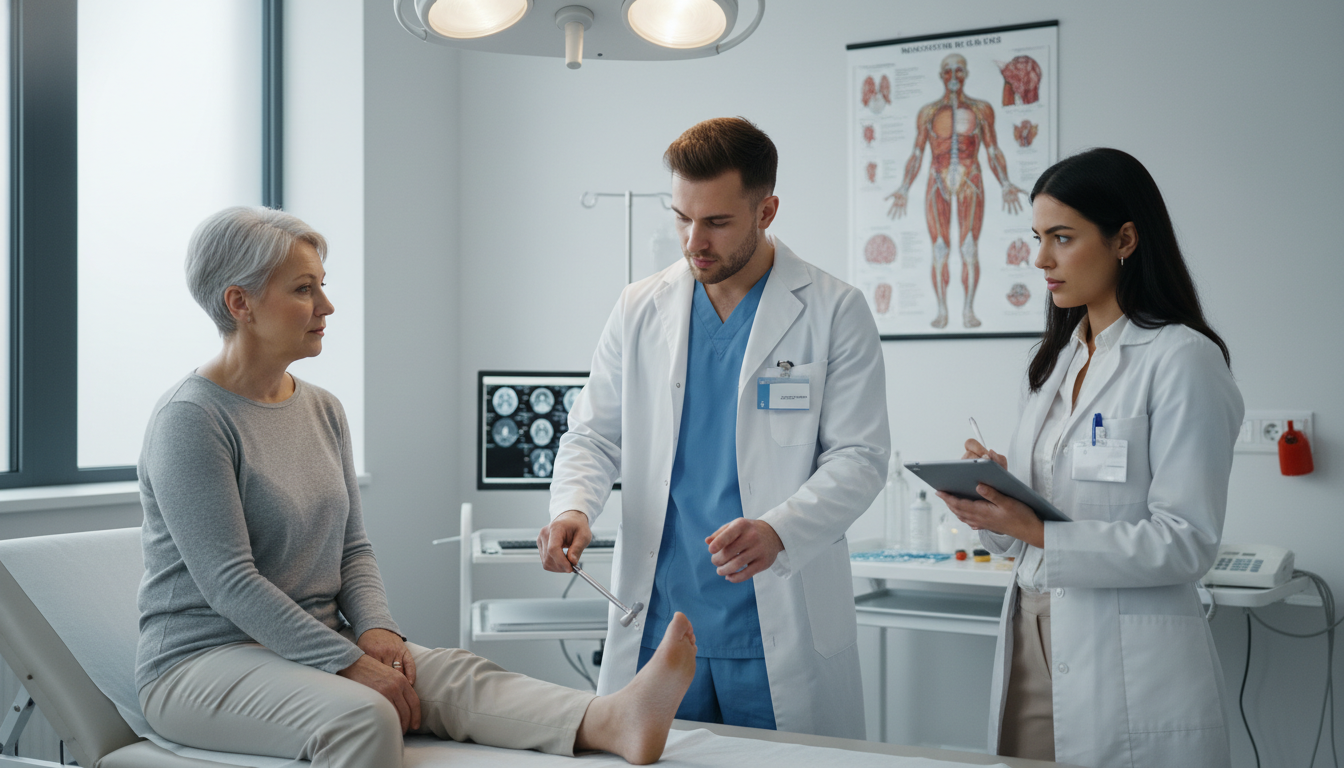
A Structured Neurologic History
Most neurology problems can be approached with a few core frameworks. For every chief complaint, ensure you cover:
Onset and time course
- Sudden vs gradual, episodic vs progressive
- Exact “last known well” in possible stroke
- For headaches: thunderclap vs slowly building, worst headache of life?
Symptom quality and distribution
- Weakness: which limbs? Proximal vs distal? Face involvement?
- Sensory symptoms: numbness, tingling, burning, stocking‑glove vs dermatomal distribution
- Dizziness vs vertigo vs imbalance—clarify what the patient means
Associated neurologic features
- Vision changes, diplopia, dysarthria, dysphagia
- Bowel/bladder changes
- Cognitive or behavioral changes
- Seizure semiology (aura, automatisms, awareness, post‑ictal state)
Risk factors and relevant history
- Vascular: HTN, DM, AFib, smoking, hyperlipidemia (for stroke/TIA)
- Migraine history, prior similar episodes
- Autoimmune disease, malignancy, infections, travel
- Family history of neurologic or genetic disorders
- Medications, toxins, substance use (e.g., isoniazid and neuropathy, alcohol and cerebellar issues)
Example:
A patient with “numbness in the legs” could have:
- Diabetic peripheral neuropathy (stocking‑glove, distal > proximal)
- Spinal cord lesion (sensory level with band‑like sensation)
- B12 deficiency (posterior column signs, ataxia)
- Multiple sclerosis (patchy, often asymmetric, with other neuro deficits)
Your history should collect data that helps you distinguish these.
Performing a Time‑Efficient Neurologic Exam
Aim to practice a systematic approach until it becomes automatic. A commonly used structure:
Mental status
- Level of consciousness, orientation (person, place, time, situation)
- Basic attention (serial 7s or WORLD backwards)
- Language: fluency, comprehension, repetition, naming
Cranial nerves
- II: visual fields, pupils
- III, IV, VI: extraocular movements, nystagmus
- V: facial sensation, masseter tone
- VII: facial symmetry (upper vs lower face)
- VIII: hearing (finger rub/whisper)
- IX, X: palate elevation, dysarthria
- XI: shoulder shrug, head turn
- XII: tongue midline
Motor
- Bulk, tone, involuntary movements
- Strength grading (0–5) in key muscle groups
- Pronator drift for subtle weakness
Reflexes
- Biceps, triceps, brachioradialis, patellar, Achilles
- Plantar response (Babinski) when indicated
- Compare side‑to‑side
Sensation
- Light touch, pinprick, vibration
- Compare distal vs proximal; note patterns (length‑dependent vs dermatomal vs hemisensory)
Coordination and gait
- Finger‑to‑nose, heel‑to‑shin
- Rapid alternating movements
- Gait: normal, tandem, heel and toe walk; Romberg test
Neurologic Localization: Think Like a Neurologist
Localization is the core of neurology. Faculty are impressed when a student can attempt localization—even if not perfect.
Simple mental framework:
- Cortex: aphasia, neglect, visual field cuts, cortical sensory deficits
- Subcortical (internal capsule, basal ganglia): pure motor or pure sensory deficits without cortical signs
- Brainstem: “crossed” findings (cranial nerve deficit on one side, weakness on the other), diplopia, dysphagia
- Spinal cord: sensory level, bilateral deficits below a certain point, bowel/bladder issues
- Peripheral nerve: dermatomal or nerve‑specific patterns, asymmetric
- Peripheral neuropathy: length‑dependent “stocking‑glove” pattern
- Neuromuscular junction/muscle: proximal weakness, fatigability, often normal reflexes
You don’t need to be perfect—saying “This pattern suggests a right subcortical lesion rather than cortical because there’s no aphasia or neglect” shows sophisticated reasoning.
Thriving on Inpatient Neurology and Stroke Services
Inpatient neurology—particularly stroke—is where many students either shine or fade into the background. The work is fast‑paced, consult‑heavy, and rich in learning opportunities.

Understanding Team Structure and Roles
Typical inpatient neurology team:
- Attending neurologist (stroke or general neuro)
- Senior resident (PGY‑3/PGY‑4)
- Junior resident (PGY‑2) or intern
- Medical students, sometimes PA/NP students
- Nurses, therapists (PT/OT/SLP), case managers
Your role as a student:
- Pre‑round on assigned patients
- Perform and document focused histories and exams
- Present patients on rounds
- Follow up on labs, imaging, and consult recommendations
- Communicate updates to residents and patients/families
How to Pre‑Round Effectively
Arrive early and prepared
- Review overnight events, vitals, new imaging, labs, and notes
- Skim nursing notes and any code stroke activations or PRN meds
See your patients before rounds
- Quick focused history: new symptoms, headaches, vision changes, weakness
- Focused exam: note any changes from prior day
- Check that orders, meds, and DVT prophylaxis align with the plan
Update a one‑liner and daily assessment
- “Mr. X is a 67‑year‑old man with HTN and AFib admitted day 2 for left MCA ischemic stroke, now stable with improving right arm strength, awaiting TEE.”
Presenting Neurology Patients Clearly
On rounds, concise and organized presentations are key. Use a template:
- Opening one‑liner
- Overnight events
- Subjective: new complaints, changes in neurologic symptoms
- Objective:
- Vitals, exam (focusing on neuro)
- Pertinent labs/imaging
- Assessment:
- Brief localization and differential
- Where we are in the work‑up/management
- Plan (by problem):
- Stroke care: blood pressure goals, antithrombotic therapy, statin, rehab, secondary prevention
- Seizure management: meds, EEG, driving restrictions, triggers
- Disposition planning: rehab vs SNF vs home
Example Stroke Assessment Snippet:
“Given his sudden onset right face, arm, and leg weakness with dysarthria and CT showing a left internal capsule infarct, this is most consistent with a lacunar stroke likely due to small vessel disease from longstanding hypertension and diabetes.”
How to Be Indispensable on Inpatient Neuro
- Learn stroke protocols: tPA/tenecteplase windows, thrombectomy criteria, blood pressure targets
- Offer to help with stroke codes: time of onset, past meds, contraindications
- Volunteer for procedures within your scope (e.g., assisting with lumbar puncture)
- Keep a running list of questions to look up after rounds
Clinical rotations tips for inpatient neurology:
- Carry a small neurology handbook or digital equivalent (e.g., apps/guidelines)
- Create personal checklists (e.g., stroke admission checklist)
- Debrief complicated cases with residents: “Can we quickly run through why we chose not to give thrombolytics?”
Succeeding in Outpatient Neurology and Subspecialty Clinics
Outpatient neurology clinics are where you’ll see longitudinal care: migraine management, epilepsy follow‑up, movement disorders, MS, neuromuscular disease, cognitive disorders, and more.
These rotations are often quieter but equally important for clerkship success and letters of recommendation.
How Outpatient Neurology Differs
- More time for detailed history and counseling
- Fewer emergencies, more pattern recognition
- Emphasis on chronic disease management and quality of life
Preparing for Clinic
- Review the schedule in advance if possible
- Read one short article or section for each clinic type (e.g., approach to migraine, evaluation of first seizure)
- Prepare patient‑friendly explanations for common diagnoses (“What is a migraine?” “What does MS mean long‑term?”)
Conducting a Focused Outpatient Neurologic Visit
Refine the chief complaint
- “Headache” → onset, frequency, triggers, associated symptoms, red flags
- “Memory issues” → onset, progression, ADLs, safety concerns
Use clinic‑specific tools
- Headache diary patterns
- Seizure description from witnesses
- Cognitive screening (MOCA/MMSE) if appropriate
- Tremor characterization (resting vs action, distribution)
Present concisely
- In clinic, time is tight; your presentation should be laser‑focused
- Emphasize timeline, prior work‑ups, response to prior treatments
Making a Strong Impression in Clinic
- Offer to draft patient instructions or educational handouts
- Think ahead: “Should we screen for depression or sleep apnea in this chronic headache patient?”
- Demonstrate empathy; chronic neurologic conditions can be disabling, frustrating, and stigmatizing
This is also an excellent setting to ask thoughtful questions that don’t slow the workflow:
“I noticed we changed from topiramate to CGRP therapy—could you share how you decide between them for migraine prevention?”
Professionalism, Communication, and Building Your Neurology Career Narrative
Your behavior on neurology rotations influences not just evaluations but also letters of recommendation, research opportunities, and your overall neuro match competitiveness.
Communication with Patients and Families
Many neurology diagnoses are life‑altering. Your ability to communicate clearly and compassionately is critical.
- Avoid jargon: say “mini‑stroke” or “warning stroke” before “transient ischemic attack”
- Check understanding: “Can you tell me in your own words what you understand about what’s happening in your brain?”
- Be present in hard conversations; sometimes your role is simply to sit quietly and listen
Working with the Team
- Be reliable: if you say you will follow up on imaging, do it and report back
- Anticipate needs: print or pull up imaging before rounds, have prior notes ready
- Respect nurses and therapists—they often know functional details you won’t get from a brief exam
Handling Feedback and Mistakes
Everyone makes mistakes during clerkships. What matters:
- Acknowledge clearly: “I missed that subtle pronator drift. I’ll focus on strengthening my exam technique.”
- Develop a mini‑plan: “I’m going to practice neuro exams on 2–3 patients per day and read a chapter on motor exams tonight.”
- Demonstrate improvement over days—not just words but performance
Using Your Rotation to Prepare for the Neurology Residency Application
If you’re considering a neurology residency, treat your neurology clinical rotation as the foundation of your application story:
Identify mentors and letter writers
- Work consistently with one or two attendings if possible
- Let them see your growth, work ethic, and curiosity
- Near the end, ask directly: “Do you feel you know me well enough to write a strong letter for my neurology application?”
Link experiences to your personal statement
- Was there a stroke patient that changed how you view disability and recovery?
- Did a complex localization case spark your love of neurologic reasoning?
Ask about next steps
- “What clinical or research experiences would you recommend before applying to neurology?”
- “How can I make my neuro match application stronger from your perspective?”
Aligning your third year rotations and later electives with this narrative will make your residency application coherent and compelling.
Strategic Study and Reflection During the Rotation
Your learning on rotation should be active and oriented toward clerkship success and long‑term retention.
Daily Micro‑Study Plan (20–40 Minutes)
Case‑based reading
- Pick one of your patients and read 1–2 UpToDate sections or textbook chapters about their condition
- Focus on presentation, diagnosis, treatment, and prognosis
Exam and localization practice
- After seeing patients, mentally review: “Where is the lesion? What patterns support this?”
- Draw quick neuroanatomy sketches if helpful (e.g., homunculus, vascular territories)
Shelf and question banks (if applicable)
- Do 5–10 neurology‑focused questions per day from your chosen resource
- Review explanations, even for questions you got right
Building a Personal “Neurology Playbook”
During your rotation, maintain a small document (digital or notebook) with:
- Your own templates for neuro H&P and SOAP notes
- Localization pearls (e.g., “bilateral leg weakness with preserved arms → consider spinal cord or bilateral ACA territory”)
- Treatment algorithms (e.g., first‑line agents for focal vs generalized seizures)
- Common consult questions and your attending’s approaches
This “playbook” becomes invaluable during sub‑internships, Step/COMLEX studying, and neurology residency.
Frequently Asked Questions (FAQ)
1. How can I stand out on neurology rotations if I’m not planning a neurology residency?
Focus on transferable skills:
- Clear presentations and documentation
- Reliable patient follow‑up and communication
- Strong physical exam technique and diagnostic reasoning
Make it clear you’re there to learn, not just to impress. Ask questions that connect neurology to your intended field (“How would this stroke impact management if the patient needed cardiac surgery?”). Faculty respect students who take neurology seriously regardless of career plans.
2. What are the most important topics to know before starting a neurology clinical rotation?
Prioritize:
- Stroke: types, risk factors, acute management, secondary prevention
- Seizures and status epilepticus: initial work‑up, emergency management principles
- Common outpatient issues: migraine, tension headache, neuropathy, low back pain with radiculopathy
- Basic neuroanatomy and localization principles
You don’t need to master everything; aim to be comfortable enough not to be lost during discussions.
3. How can I improve my neurologic exam quickly during third year rotations?
- Watch residents and attendings closely and mimic their sequence
- Practice on as many patients as possible, including those on other services
- Ask directly for feedback: “Could you watch my cranial nerve exam and point out what I can tighten up?”
- Use 5‑minute videos or institutional teaching modules to reinforce technique
Within 1–2 weeks of deliberate practice, most students see a dramatic improvement.
4. How does my neurology clerkship affect my chances in the neuro match?
For students applying to neurology residency, your neurology clinical rotation:
- Often provides at least one key letter of recommendation
- Demonstrates your interest and fit for the specialty
- Shows program directors you can think like a neurologist and work well on a neurology team
A strong evaluation and letter from a neurology rotation can substantially strengthen your application, especially when paired with thoughtful reflection in your personal statement and solid performance on related third year rotations.
Excelling on neurology clinical rotations isn’t about knowing every rare syndrome—it’s about mastering the fundamentals, showing consistent curiosity, and becoming a reliable, thoughtful member of the team. If you approach your clerkship with intention, humility, and discipline, you’ll not only set yourself up for neurology residency success but become a stronger physician in any specialty.