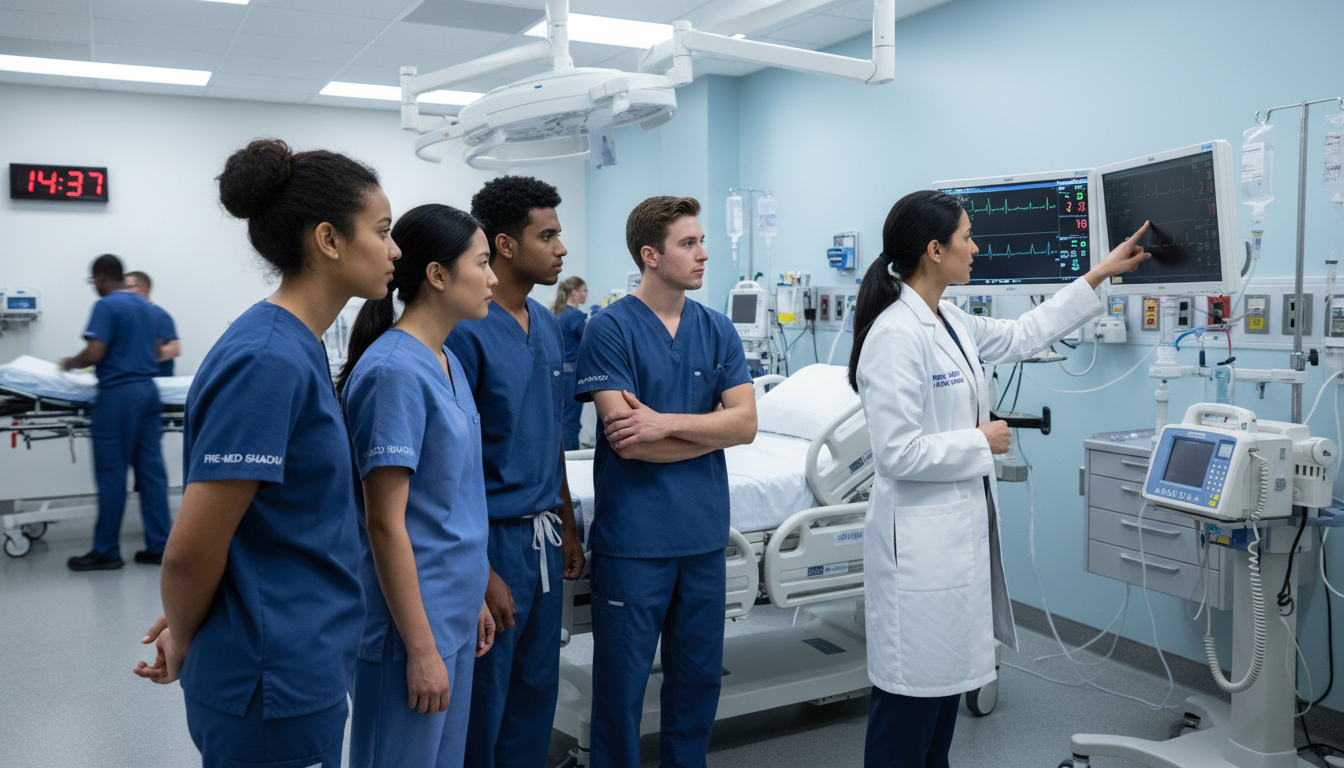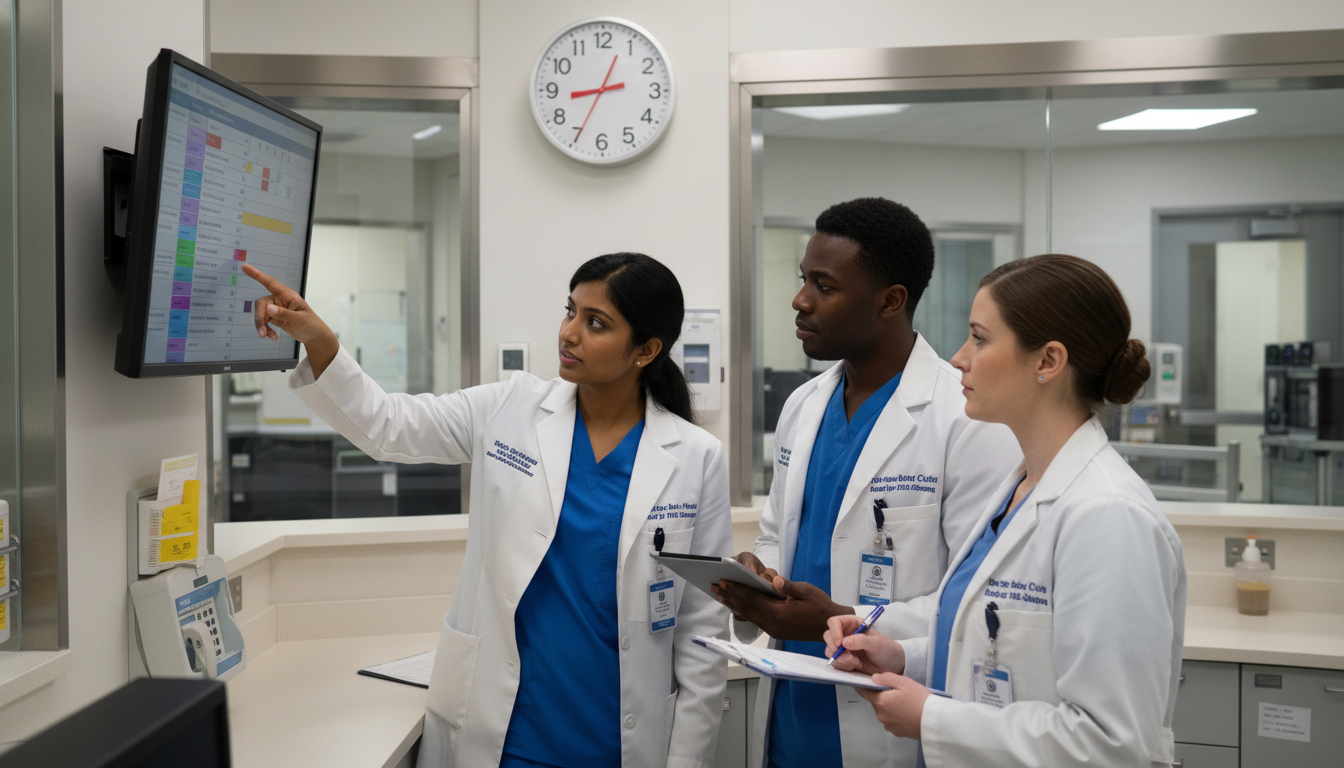
Radiation oncology is one of the most structured, team-based, and technology-driven fields in medicine. A well-executed clinical rotation can clarify your interest in the specialty, significantly strengthen your rad onc match application, and earn you strong letters of recommendation. This guide walks you through how to excel—from preparation before you arrive to daily performance on service and after-rotation follow-up.
Understanding the Radiation Oncology Rotation
Radiation oncology rotations differ from many other third year rotations or sub-internships. The workflow, patient volume, and learning curve are unique, and understanding that structure is the first step toward clerkship success.
What Radiation Oncologists Actually Do
Radiation oncology is more than “pressing a button” on a linear accelerator. As a rotating student, you’ll see that attendings and residents:
- Evaluate new consults (often complex cancer cases)
- Determine whether radiation is appropriate and in what context (definitive, adjuvant, palliative)
- Define the target volumes and organs at risk (OARs) on imaging
- Design and review treatment plans using specialized software
- Follow patients during treatment (on-treatment visits, or OTVs)
- See patients in follow-up clinics long after treatment
You’ll be exposed to multiple practice settings during a typical radiation oncology residency rotation:
- Consult clinic: New patient evaluations and multidisciplinary decision-making
- Simulation (“sim”): CT simulation for positioning and immobilization before treatment planning
- Contour and planning sessions: Defining target and normal tissue, reviewing dosimetry plans
- On-treatment visits: Weekly assessments and management of acute toxicity
- Follow-up clinic: Long-term surveillance and late toxicity management
- Multidisciplinary tumor boards: Collaborative case discussions with surgeons, medical oncologists, radiologists, and pathologists
Structure of a Typical Day
While schedules vary by program, many rotations follow a similar pattern:
Morning
- Brief prep on patients
- New consults or follow-ups
- Occasionally tumor board or teaching sessions
Midday
- Simulation sessions
- Contouring and plan review
- Didactic lectures or case conferences
Afternoon
- Additional consults or OTVs
- Treatment machine visits (especially for palliative cases)
- Independent reading or case review
Once you know the structure, you can anticipate where you can add value—by being prepared for consults, reading about ongoing cases, and proactively asking to join sims, planning sessions, and tumor boards.
Preparing Before the Rotation Starts
The best way to stand out in a radiation oncology residency rotation is to start strong. You don’t need to be an expert, but you should arrive with a working vocabulary and conceptual framework.
Core Knowledge to Review
In the weeks before your rotation, focus your reading on:
1. Cancer Basics
- Principles of staging (TNM system, stage groupings)
- Performance status scales (ECOG, Karnofsky)
- Broad management strategies for common cancers:
- Breast
- Prostate
- Lung (NSCLC and SCLC)
- Head and neck
- CNS (gliomas, brain metastases)
- GI malignancies (rectal, anal)
- Gynecologic cancers
- Hematologic malignancies (particularly lymphomas)
- Key curative vs palliative scenarios
2. Radiobiology Fundamentals
- The 4 Rs (or 5 Rs) of radiobiology (repair, reassortment, repopulation, reoxygenation, radiosensitivity)
- Concepts of fractionation (conventional vs hypofractionation, SBRT/SRS)
- Acute vs late radiation toxicity and typical time courses
3. Physics at the Medical Student Level
- Basic mechanism of linear accelerators
- Photon vs electron beams; high vs low energy
- Concepts of dose (Gray), dose constraints for normal organs
- General understanding of IMRT, VMAT, 3D-CRT, SRS, SBRT
You don’t need equations or board-level depth; your goal is to recognize terminology and ask informed questions.
Suggested Resources
Introductory textbooks/chapters
- Short medical student-specific handouts or chapters from standard rad onc texts (many departments provide these)
- “Radiation Oncology: A Question-Based Review” (selected chapters for clinical orientation)
Guidelines
- NCCN guidelines (free with registration): skim the algorithms for common cancers
- ASTRO and ASCO guidelines for select disease sites (e.g., breast, prostate, rectal, palliative care)
Online materials
- ASTRO medical student and resident sections
- Institutional rad onc rotation syllabi or student guides if available
You will not master everything before starting, but showing that you’ve read even a modest amount signals seriousness and helps you engage in conversations meaningfully.
Administrative and Professional Preparation
Clarify expectations
- Email the medical student coordinator or chief resident 1–2 weeks before the rotation:
- Ask about dress code (usually business casual + white coat)
- Ask for your schedule, clinic sites, and any reading or modules they recommend
- Ask about EMR training and mandatory orientations
- Email the medical student coordinator or chief resident 1–2 weeks before the rotation:
Logistical prep
- Arrange transportation and parking
- Confirm computer and badge access start date
- Make note of key contact numbers
Demonstrating that you are organized and proactive before day one often translates into strong first impressions, which can impact your rad onc match outcomes.
Thriving Day-to-Day: How to Excel on Service
Once the rotation starts, your daily habits matter more than your baseline knowledge. Clinical rotations tips that consistently set students apart in radiation oncology revolve around preparation, initiative, and communication.
Be Early, Prepared, and Present
Arrive early
Aim to arrive 10–15 minutes before your supervising resident or attending. Use that time to:
- Review the clinic schedule and patient list
- Read recent notes and imaging for the day’s new consults
- Identify relevant guidelines or key issues for complex cases
Be mentally present
Radiation oncology has a slower pace than some other third year rotations, but that doesn’t mean less work. Avoid looking disengaged during downtime. Instead:
- Read about active cases (e.g., skim NCCN or an UpToDate summary)
- Ask residents to show you contours or planning software
- Offer to help with clinic notes or patient instructions within the scope allowed
Owning Your Patients (Appropriately)
Even though you’re not a sub-intern, adopting a structured role helps you learn and allows the team to see your commitment.
New Consults
Ask your resident or attending if you can:
- Pre-chart: Review past oncology notes, pathology, imaging, and staging
- See the patient first for a focused history and physical (when appropriate)
- Present succinctly using a problem-focused structure
A clear presentation might look like:
“Mr. X is a 68-year-old with cT2N1M0 HPV-positive oropharyngeal squamous cell carcinoma. He’s being seen for definitive chemoradiation. He has good performance status (ECOG 1), few comorbidities, and no significant baseline dysphagia. I’d like to discuss the balance between toxicity and expected cure rate with standard fractionation versus any consideration of altered fractionation.”
Even if your knowledge is incomplete, framing the key issues shows maturity and supports your clerkship success.
Follow-ups and OTVs
Before these visits:
- Review the treatment course (total dose, fractionation, technique)
- Note any prior toxicities or current medications (e.g., pain control, antiemetics)
- Be ready to ask targeted questions during the visit (e.g., for head and neck cancer: swallowing, weight loss, mucositis symptoms)
When allowed, write brief notes (even if they are unofficial) and ask your resident to review and give feedback.
Maximizing Learning Opportunities
Radiation oncology is rich in visual and conceptual learning. Seek out a balance of activities:
- Clinic – Understand the clinical decision-making around radiation.
- Simulation – Watch patient positioning, immobilization devices, and CT acquisition.
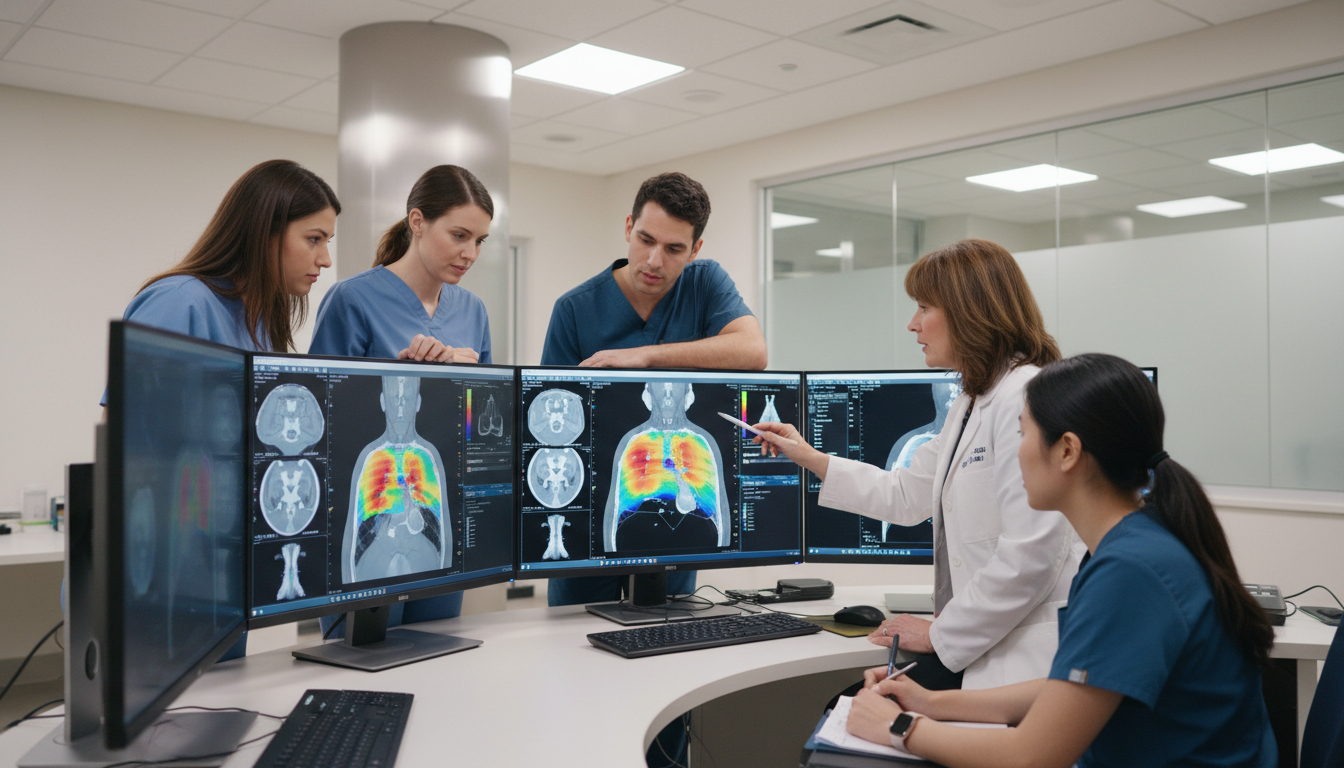
- Contouring and Planning – Ask residents to walk you through:
- GTV, CTV, PTV definitions
- Organs at risk in each disease site
- Trade-offs in plan optimization
- Machine Time – For interesting or urgent palliative cases (e.g., cord compression, SVC syndrome), observe how treatment is delivered.
- Conferences/Tumor Boards – Take quick notes on how surgeons, medical oncologists, and radiation oncologists collaborate.
When there are parallel activities, ask politely where your presence would be most valuable:
“There’s a new lung cancer consult and also a sim for a spinal metastasis—where would you prefer I go to learn the most today?”
Communication and Professionalism
Radiation oncology is highly team-oriented. Show professionalism with everyone:
- Residents – They are your primary teachers; ask for feedback and guidance.
- Attending physicians – Be concise, attentive, and prepared with at least one thoughtful question per day (e.g., “How do you decide between SBRT and conventional fractionation in this setting?”).
- Nurses, radiation therapists, dosimetrists, physicists – Learn what they do and treat them with the same respect as physicians.
Traits that attendings often comment on in letters of recommendation:
- Punctuality and reliability
- Empathy and patient-centered communication
- Genuine curiosity about radiation oncology
- Ability to integrate feedback quickly
- Respectful interaction with all team members
Showing Commitment to Radiation Oncology (Without Overdoing It)
If you’re considering a radiation oncology residency, your rotation is often viewed as an audition. You’ll want to show enthusiasm and interest without appearing performative or unfocused.
Demonstrating Serious Interest
1. Ask about the specialty and training pathway
Good questions might include:
- “What do you think differentiates great residents in radiation oncology?”
- “How has the field changed in the past 5–10 years, and where do you see it going?”
- “What skills should I focus on developing now if I’m serious about applying in the rad onc match?”
2. Attend resident and departmental educational events
- Noon conferences
- Journal clubs
- Morbidity and mortality (M&M) meetings
- Physics or radiobiology lectures, if open to students
Simply showing up consistently, prepared to listen and occasionally contribute, sends a strong signal of interest.
3. Consider a small scholarly or quality project
If you’re on a longer rotation (4+ weeks), you might ask:
“If there are any small projects or chart reviews that could be helpful to the department and feasible for me to contribute to during my time here, I’d be interested.”
Examples include:
- Retrospective chart review data extraction
- Helping with a patient education handout
- Assisting on a case report or small case series
Even if the project continues after you leave, your initiative can be mentioned in letters and on your application.
Balancing Enthusiasm with Realism
Avoid:
- Overstating your knowledge or experience
- Interrupting clinic flow to ask too many questions at once
- Pushing for procedures or responsibilities beyond your skills
A professional balance is:
- Participate actively in discussions
- Ask for feedback at natural breaks (end of clinic, after tumor board)
- Offer help, but accept “no” gracefully if the team is too busy

Building Knowledge, Skills, and Relationships That Last
A strong rotation is not just a four-week performance; it’s a foundation for your future, whether or not you pursue radiation oncology residency.
Clinical Skills to Focus On
Cancer-focused history and physical exam
- Tailor questions to site-specific concerns (e.g., dysphagia, hoarseness, weight loss for head and neck)
- Assess performance status and baseline function clearly
- Document prior treatments (surgery, systemic therapy, previous radiation)
Discussing treatment and side effects at a student level
- Ask residents how they explain:
- Short-term vs long-term toxicities
- Expected timeline of response (e.g., palliation of bone pain)
- Need for follow-up imaging and visits
- Practice explaining these, then ask for feedback on clarity and accuracy
- Ask residents how they explain:
Basic interpretation of imaging related to radiation
- Recognize gross tumor and key organs at risk on CT
- Understand why certain margins are used for PTV
- Identify common post-radiation imaging changes vs recurrence (conceptually, not as an expert)
Study Strategy During the Rotation
To consolidate learning:
- Keep a rotation notebook or digital document
- One page per disease site: breast, prostate, lung, etc.
- For each, note:
- Typical indications for radiation
- Standard dose and fractionation patterns (just ballpark ranges)
- Key organs at risk and salient toxicities
- End-of-day review
- Spend 20–30 minutes reading about 1–2 patients you saw
- Look up guidelines and brief treatment rationales
- Prepare for next-day consults
- Identify key questions:
- Is radiation used definitively, adjuvantly, or palliatively here?
- Any contraindications or special considerations?
- Identify key questions:
This systematic approach turns a month-long experience into a durable foundation for your rad onc match application and interviews, where you’ll often be asked to describe your rotation experiences.
Relationship-Building and Mentorship
Radiation oncology is a small specialty; mentorship and networking are crucial.
- Identify 1–2 attendings and 1–2 residents you “click” with.
- Ask if they’d be willing to:
- Provide feedback on your performance
- Talk about career paths and the job market
- Review your CV or personal statement later, if appropriate
Near the end of the rotation, you might say:
“I’ve really appreciated working with you and learning from you. I’m seriously considering applying in radiation oncology. Would you be comfortable if I reached out later for advice on applications and maybe to request a letter if you feel you know my work well enough?”
This direct and respectful approach is usually well received and lays the groundwork for strong support in the rad onc match.
After the Rotation: Leveraging Your Experience for the Rad Onc Match
What you do in the weeks after the rotation can be just as important as what you did while on service, especially if you decide to pursue a radiation oncology residency.
Requesting Letters of Recommendation
- Ask for letters within 1–3 weeks of finishing, while details are fresh.
- Provide:
- Your CV and any updated academic information
- A brief paragraph summarizing what you learned and your career goals
- Specific experiences you shared that might be worth mentioning (e.g., presenting at tumor board, helping with a project, managing a complex patient under supervision)
You want at least one strong letter from a radiation oncology attending who observed you clinically and can speak to your patient care, work ethic, and communication skills.
Reflecting Honestly on Fit
Use your experience to assess whether rad onc is right for you:
Ask yourself:
- Did I enjoy the blend of clinic, imaging, and physics?
- How did I feel about the pace—too slow, too fast, or just right?
- Was I energized by the long-term relationships with cancer patients and the complexity of their care?
- Am I comfortable with a technology-heavy specialty that also demands strong communication and empathy?
These reflections help ensure that pursuing rad onc is an intentional choice, not just the byproduct of a successful rotation.
Staying Involved
If you’re serious about the specialty:
- Continue any scholarly projects you started.
- Attend departmental or virtual tumor boards if your medical school permits.
- Reach out to mentors periodically with updates and questions.
When application season approaches, your mentors can:
- Help you target programs that fit your interests
- Provide honest feedback about your competitiveness
- Conduct mock interviews, including discussion of your clinical rotations tips and lessons learned
FAQs: Excelling in Radiation Oncology Clinical Rotations
1. How can I stand out as a medical student on a radiation oncology rotation?
You’ll stand out by combining preparation, reliability, and curiosity:
- Arrive early and review the day’s patients.
- Ask to see new consults and present succinctly.
- Engage in simulation, contouring, and planning sessions, not just clinic.
- Ask thoughtful, focused questions.
- Show respect for every member of the team.
- Follow up on reading about cases you saw that day.
Faculty often remember students who integrate feedback quickly and demonstrate genuine, sustained interest in the field.
2. Do I need prior radiation oncology experience before rotating?
No prior experience is required, but a bit of preparation helps immensely:
- Review basic oncology, staging, and the role of radiation in common cancers.
- Learn simple radiobiology and physics concepts at a conceptual level.
- Familiarize yourself with common terms like GTV, CTV, PTV, OAR, IMRT, SBRT.
Many programs expect this to be your first exposure, so they focus on foundational teaching. Initiative and curiosity often matter more than prior knowledge.
3. How many radiation oncology rotations should I do if I plan to apply?
For applicants to the rad onc match, many advisors recommend:
- At least one home or early rotation to confirm your interest and secure a letter.
- One to two away rotations at programs you might strongly consider ranking highly, if feasible.
Quality often matters more than quantity. Excelling on 1–2 well-chosen rotations, with strong relationships and letters, usually beats doing many superficial ones.
4. What if I realize during the rotation that radiation oncology isn’t for me?
That’s still a successful rotation. You’ve:
- Gained a deeper understanding of cancer care and multidisciplinary thinking.
- Improved your skills in patient communication, imaging interpretation, and chronic toxicity management.
- Learned how radiation interacts with surgery and systemic therapy—knowledge valuable in many fields.
Be honest with yourself and your mentors. They can help you pivot to other specialties while still writing strong letters about your professionalism and clinical performance during third year rotations and beyond.
By preparing thoughtfully, participating actively, and reflecting honestly, you can transform a radiation oncology rotation into a powerful learning experience and, if you choose, a springboard into a successful radiation oncology residency and rad onc match.