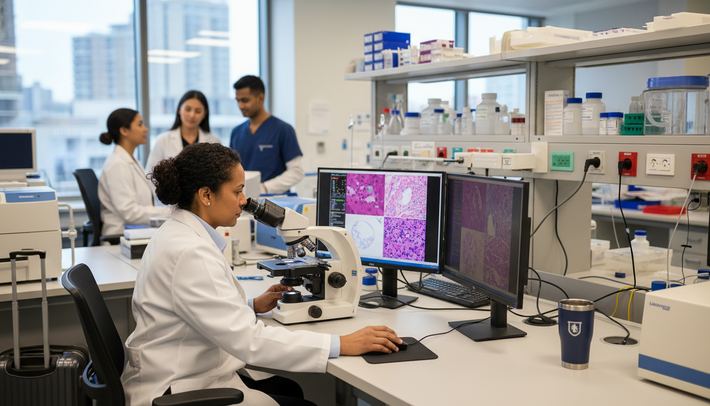
Understanding the Landscape of Radiology Fellowships
If you are approaching the end of your radiology residency, you’re likely thinking about the next step: fellowship. In diagnostic radiology, fellowship training has become the norm rather than the exception. Competitive subspecialties can feel as intense as the diagnostic radiology match itself, and a thoughtful fellowship application strategy will significantly influence both where you train and how you start your career.
This guide focuses on the fellowship application strategy in diagnostic radiology, with a particular emphasis on:
- Understanding the fellowship ecosystem and timing
- Building a targeted application strategy
- Optimizing your ERAS fellowship application
- Navigating interviews and ranking
- Planning for your career beyond the fellowship match
Though some subspecialties now participate in a formal fellowship match (often coordinated by NRMP) and use ERAS fellowship for applications, others may rely on direct applications or institution-specific portals. The principles below apply across formats and subspecialties, with notes where processes differ.
Common Diagnostic Radiology Fellowships
Most trainees pursue at least one of the following:
- Body Imaging / Abdominal Imaging
- Neuroradiology
- Musculoskeletal (MSK) Radiology
- Breast Imaging / Women’s Imaging
- Cardiothoracic Imaging
- Interventional Radiology (ESIR pathway or independent IR)
- Nuclear Medicine / Molecular Imaging
- Pediatric Radiology
- Emergency Radiology
- Hybrid fellowships (e.g., Body + MSK, Neuro + Spine, etc., at some institutions)
Each of these has subtly different market demands, job prospects, and training cultures. Your application strategy should consider not just what you enjoy, but also where and how you want to practice after training.
Step 1: Clarify Your Goals and Pick the Right Fellowship
Before you open ERAS or polish your CV, invest time in clarifying what you actually want from fellowship.
Define Your Career Targets
Ask yourself:
Practice Setting
- Academic center vs. private practice vs. hybrid model
- Urban tertiary center vs. community hospital vs. teleradiology
Lifestyle and Call
- How much call are you comfortable with?
- Are you okay with nights/weekends or seeking a more daytime-focused subspecialty?
- Is shift work (e.g., in emergency radiology) attractive or unappealing?
Procedural vs. Non-Procedural
- Do you enjoy being in procedural suites (e.g., biopsies, arthrograms, drainages) or prefer purely interpretive work?
- This will heavily push you toward/away from IR, MSK (for interventions), some Body programs, etc.
Breadth vs. Depth
- Do you want to be a broad generalist with one or two areas of emphasis?
- Or do you want deep subspecialty expertise and an academic niche?
Geographic Priorities
- Are there regions or cities you strongly prefer (for family, partner’s career, lifestyle)?
- This can narrow your target programs but also increase competition for certain locations.
Map Fellowship to Future Practice
Your radiology residency experience provides the best clues:
- Rotations where you lost track of time because you were so engaged
- Attendings whose jobs you could genuinely see yourself doing
- Procedural vs. non-procedural days that you looked forward to or dreaded
Some general patterns:
- Neuroradiology – excellent for academic careers, neuro-focused practices, and tertiary centers. High demand in many markets.
- MSK Radiology – strong private practice value, significant procedural component (joint injections, arthrograms, MSK biopsies).
- Body/Abdominal Imaging – versatile, aligns well with both academic and private practice roles; heavy MRI/CT focus.
- Breast Imaging – strong job market, attractive for those comfortable with patient interaction and procedural work (biopsies, localizations).
- Cardiothoracic Imaging – niche but increasingly valuable in large centers; aligns well with academic careers and large health systems.
- Nuclear Medicine / Molecular Imaging – more specialized; often pairs well with oncologic imaging careers.
- Pediatric Radiology – essential in children’s hospitals, often academically oriented but also valued in large multi-specialty groups.
Actionable step:
Create a simple table with three columns—Subspecialty, Pros (for you), Cons (for you). Fill it out honestly based on your own experiences, not your co-residents’. This becomes the foundation of your fellowship application strategy.

Step 2: Build a Competitive Profile During Residency
Once you’ve chosen one or two target subspecialties, you can shape your residency to strengthen your fellowship application.
Clinical Performance and Letters of Recommendation
Programs weigh clinical performance and reputation heavily. In many ways, your fellowship application mirrors your diagnostic radiology match—but with more focus on your radiology-specific abilities.
Excel on key rotations in your chosen field.
- Be proactively prepared: preview cases, read up on common pathologies, and show consistent improvement.
- Seek feedback from faculty early, not weeks before asking for a letter.
Prioritize strong, detailed letters over titles.
- A detailed letter from a mid-career subspecialist who knows you well often outweighs a generic letter from a famous department chair who barely interacted with you.
- Ask: “Do you feel you know my work well enough to write a strong letter in support of my fellowship applications?” This gives them an out and gives you honesty.
Align letters with your subspecialty.
- For a neuroradiology fellowship, aim for at least two letters from neuroradiologists.
- For more generalist fellowships (e.g., Body), a mix of Body, IR, and general faculty can be appropriate.
Scholarship and Academic Productivity
Not all fellowship tracks require research, but scholarship can be decisive for competitive subspecialties, especially in academic centers:
Aim for at least one or two tangible scholarly products in your area of interest:
- Case reports or educational exhibits at RSNA, ASNR, ARRS, or subspecialty meetings
- Retrospective chart reviews, imaging-pathology correlation studies, or quality improvement projects
- Educational resources (e.g., teaching files, resident lectures, online case series) that faculty recognize and may mention in letters
Link your research to your subspecialty narrative.
- If applying to a cardiothoracic imaging fellowship, even a small QI project on pulmonary embolism CT protocol optimization helps reinforce your commitment.
Networking and Mentorship
Strategic mentorship often matters as much as raw productivity.
Identify a subspecialty mentor by early PGY-4 (R2) if possible.
Ask for guidance on:
- Which programs match your goals
- Who they know at those institutions and whether they can introduce you
- How to frame your experiences in your personal statement and interviews
Attend targeted conferences if possible.
- Presenting at a national meeting in your subspecialty exposes you to fellowship directors and future colleagues.
- A short email after meeting them—referencing a talk or interaction—can help your name stand out when your application appears.
Example:
A resident interested in MSK radiology presents a poster at the Society of Skeletal Radiology meeting. During the poster session, they briefly meet the fellowship director of a program they plan to apply to. Months later, when that director reviews the ERAS fellowship application, the resident is no longer just a name—they’re “the resident who presented that interesting sports ultrasound project.”
Step 3: Understand the Timeline and Application Mechanics
The fellowship timeline has historically been chaotic in radiology, but there is now more standardization—though it varies by subspecialty and year. Always confirm specific dates with:
- Society websites (e.g., ASNR for Neuro, SSR for MSK, SBI for Breast, etc.)
- ERAS Fellowship and NRMP match calendars
- Your department’s fellowship coordinator
General Timeline (Subject to Change by Subspecialty)
For many diagnostic radiology fellowships:
PGY-3 (R2) to early PGY-4 (R3):
- Explore subspecialties, identify mentors, start or continue research.
Mid PGY-4 (R3):
- Finalize subspecialty choice and target list.
- Request letters of recommendation and update your CV.
- Begin drafting your personal statement.
Late PGY-4 to early PGY-5 (R3–R4):
- Submit your ERAS fellowship applications (or program-specific applications for non-ERAS specialties).
- Respond promptly to interview invitations; schedule interviews.
PGY-5 (R4):
- Complete interviews, submit rank lists if in a match, or finalize offers if outside a formal match.
- Plan for licensing, credentialing, and, if applicable, visas.
ERAS Fellowship vs. Direct Applications
ERAS Fellowship:
- Centralized application system; you upload documents once and designate programs.
- Many radiology fellowships (e.g., some neuroradiology, body, MSK, breast) use ERAS, often in conjunction with an NRMP-organized fellowship match.
Non-ERAS / Direct Applications:
- Some subspecialties or individual programs still use direct institutional applications.
- You may submit PDF applications, CVs, and letters directly to program coordinators.
Regardless of the platform, the core content is similar: CV, personal statement, letters, USMLE/COMLEX scores, transcript, and sometimes a photo.
Actionable step:
By early PGY-4, create a master checklist of all programs you’re interested in, indicating:
- ERAS vs. direct application
- Deadlines and required documents
- Whether they participate in a formal fellowship match or offer positions first-come, first-served
This prevents last-minute panic and helps you sequence your applications strategically.

Step 4: Craft a Strong Fellowship Application
Optimizing Your ERAS Fellowship Application
Think of your ERAS fellowship profile as a curated narrative, not just a data dump.
CV and Experiences
- Keep entries concise and impact-focused:
- “Led QI initiative to reduce CT pulmonary angiogram contrast dose by 20%, implemented across 3 hospitals.”
- Highlight leadership (chief resident, committee roles, teaching roles) and subspecialty-relevant activities.
- Keep entries concise and impact-focused:
Personal Statement
This is where you connect the dots between:
- Your training and experiences
- Your subspecialty interest
- Your future career goals
- Why a particular type of fellowship environment suits you
Structure suggestion (1 page, ~600–800 words):
- Opening: A specific clinical or educational moment that captures why you’re drawn to the subspecialty.
- Middle paragraphs:
- Relevant rotations and cases
- Research or scholarship that shaped your thinking
- Teaching or leadership roles that show your maturity as a near-attending
- Closing:
- Clear, forward-looking statement of your career goals (e.g., academic neuro, community MSK with sports focus, women’s imaging leadership).
- How fellowship training will bridge the gap from resident to the role you envision.
Be honest and specific. Avoid generic lines like “I find neuroradiology fascinating” unless you immediately back them up with a concrete example.
- Letters of Recommendation
Provide your letter writers with:
- An updated CV
- A short paragraph summarizing your subspecialty interest and career goals
- Specific projects or cases you worked on together
- Your target programs and deadlines
This allows them to write more vivid, detailed letters that align with your narrative.
- USMLE/COMLEX and Transcript
By fellowship application time, these are less critical than they were in your diagnostic radiology match, but:
- Very low or failed scores may still come up.
- Strong clinical evaluations and progression during residency can offset earlier test performance.
Tailoring to Different Program Types
Your application strategy should distinguish between:
- Top-tier academic programs – often emphasize research, scholarly potential, letters from known faculty, and alignment with a specific niche.
- Strong hybrid/large health system programs – focus on clinical competence, independence, and readiness to function as a near-attending.
- Community-focused or regional programs – often value reliability, broad-based skills, and long-term regional commitment.
Adjust emphasis in your personal statement and interviews:
- For academic programs: Highlight research, teaching, and long-term academic interests.
- For community-oriented programs: Emphasize efficient, high-quality clinical work and interest in serving local healthcare needs.
Step 5: Fellowship Interviews and Ranking Strategy
Once your applications are out, the focus shifts to interviews, then to a deliberate ranking or offer-acceptance strategy.
Preparing for Interviews
You should be ready for discussions around:
- Why this subspecialty?
- Why our program? (know key features, strengths, and faculty interests)
- What are your career goals?
- Tell me about a challenging case or situation from residency.
- How do you handle high-volume, high-stress reading days?
Preparation checklist:
Review your own application in detail; anything listed (research, teaching, projects) is fair game.
Look up each program’s:
- Fellowship curriculum and elective options
- Call schedule and moonlighting opportunities
- Major faculty and their interests
- Prior fellows’ career paths (if available)
Prepare a few substantive questions, such as:
- “How do fellows transition to independent call and what support is available early on?”
- “What kind of mentorship is available for fellows interested in academic careers vs. private practice?”
- “How are fellows involved in resident teaching and conferences?”
Evaluating Programs Beyond Name and Rank
When you evaluate programs, think in terms of:
Clinical Volume and Case Mix
- High volume in key modalities relevant to your subspecialty (e.g., MRI for MSK/Neuro, mammography and procedures for Breast).
- Exposure to both bread-and-butter and complex tertiary cases.
Autonomy and Graduated Responsibility
- Are fellows given meaningful independence (with oversight) that prepares them for real-world practice?
- Is there direct involvement in consultations with referring clinicians?
Teaching Culture
- Are fellows primarily service workhorses, or are there structured educational conferences and faculty committed to teaching?
Fellowship Class Size and Culture
- Will you have peers to share learning and call responsibilities?
- Is the atmosphere collegial? Ask current fellows candidly.
Outcomes and Job Placement
- Where do fellows typically go after graduation?
- Do graduates successfully enter the types of jobs you envision for yourself (academic vs. private, geographic areas, etc.)?
Navigating the Fellowship Match vs. Non-Match Offers
Some radiology fellowships are in a formal fellowship match (often with rank lists and a match day), while others still operate on “offer and accept” timelines.
In a formal match (NRMP):
- Rank programs based on true preference, not game theory.
- Remember the algorithm favors applicants who rank their genuine top choices first.
Outside a formal match:
- You may receive early offers with deadlines.
- Avoid accepting an offer you’re not prepared to honor; backing out can damage your reputation and your home program’s relationships.
- If you receive an offer from a “good but not dream” program, communicate with other programs where you’re strongly interested:
- Politely let them know you have an offer with a deadline and that they are a top choice; ask if your status is clarifiable in time. Never pressure; just inform.
Ethical principle:
Operate with integrity. The radiology world is small, and program directors talk. Protect your reputation for honesty and professionalism.
Step 6: Planning Beyond Fellowship – Strategizing for Your Career
Your fellowship application strategy should always be aligned with your post-fellowship goals.
Link Fellowship to Your Early Career
Consider:
If you want academia:
- Favor programs with robust research infrastructure, protected time, and mentors who publish actively.
- Seek fellowships that offer teaching opportunities and a pathway to junior faculty positions.
If you want private practice:
- Programs with high-volume clinical exposure and strong ties to regional practices can be very valuable.
- Ask about moonlighting; this can help you transition to independent reading and build speed and confidence.
Dual Fellowships and Additional Training
Some radiologists choose two fellowships (e.g., Neuro + Body, MSK + Sports, Breast + Body). Consider this if:
- You are aiming for a highly competitive academic position with a niche combination.
- You want to be maximally marketable in private practice (e.g., MSK + Body for a generalist position with subspecialty leadership).
Balance is key: more training can open doors, but it also delays peak-earning years and prolongs training. Make sure the additional year meaningfully advances your long-term goals.
Visa, Licensing, and Practical Considerations
If you’re an international medical graduate (IMG) or on a visa:
- Clarify visa sponsorship early (J-1 vs. H-1B).
- Ask program coordinators explicitly about their ability and history in sponsoring fellows.
- Align fellowship location with states where you might want to work; licensure portability varies, and some states have specific training requirements.
Even as a US graduate:
- Ensure you can obtain a state license in the fellowship state in time. Programs will typically assist, but some states have longer processing times.
Frequently Asked Questions (FAQ)
1. Do I really need a fellowship after a diagnostic radiology residency?
In modern practice, yes, in most cases. Many private and academic jobs strongly prefer or even require subspecialty fellowship training, especially in neuroradiology, MSK, breast, and body imaging. Fellowship gives you:
- Deeper expertise and confidence in a focused area
- A competitive edge in the job market
- Mentorship and networking that often lead directly to job opportunities
There are exceptions (e.g., some small community groups hiring straight out of residency), but a fellowship is now considered the standard path.
2. How many programs should I apply to for radiology fellowship?
It depends on subspecialty competitiveness, your application strength, and geographic flexibility:
- Less competitive fields or broad geographic openness: 8–12 programs may be sufficient.
- More competitive subspecialties (neuro, MSK, breast in certain cities) or restricted geography: 12–20 programs can be reasonable.
Discuss with your mentors, who can gauge how your profile compares to typical applicants in that subspecialty. Apply broadly enough to secure interviews, then narrow based on fit.
3. How important is research for fellowship applications?
Research can be very important for academic-oriented fellowships and “top-tier” programs, but is not mandatory everywhere:
- For programs emphasizing clinical training and private-practice preparation, solid clinical performance and strong letters can outweigh limited research.
- For academic programs, at least some scholarly activity (posters, presentations, papers) helps demonstrate academic potential.
If you have minimal research, emphasize:
- Teaching activities
- Quality improvement projects
- Clinical reliability and strong evaluations
And discuss any barriers to research (e.g., limited opportunities early in residency) honestly if asked.
4. How different is the fellowship match from the diagnostic radiology match?
Mechanically, the fellowship match (if your subspecialty participates) is similar: rank lists, an NRMP match day, and an algorithm designed to favor applicant preferences. Key differences:
- The pool is smaller and more specialized.
- Everyone has already completed at least part of a radiology residency, so the evaluation focuses more on radiology skills, letters from radiologists, and subspecialty commitment.
- Some fellowships still operate outside of a formal match, relying on early offers and rolling acceptances, which can create more timing pressure.
Your strategic mindset, however, should be the same: prioritize programs that best fit your goals and values—not just prestige.
A well-planned fellowship application strategy in diagnostic radiology connects your residency experiences, subspecialty interests, and career aspirations into a coherent path. By understanding the fellowship landscape, optimizing your ERAS fellowship application, preparing thoughtfully for interviews, and navigating the fellowship match (or non-match offers) with integrity, you position yourself to start your career with the training, mentorship, and opportunities you need to thrive.