Understanding Medical Shadowing in Global Health
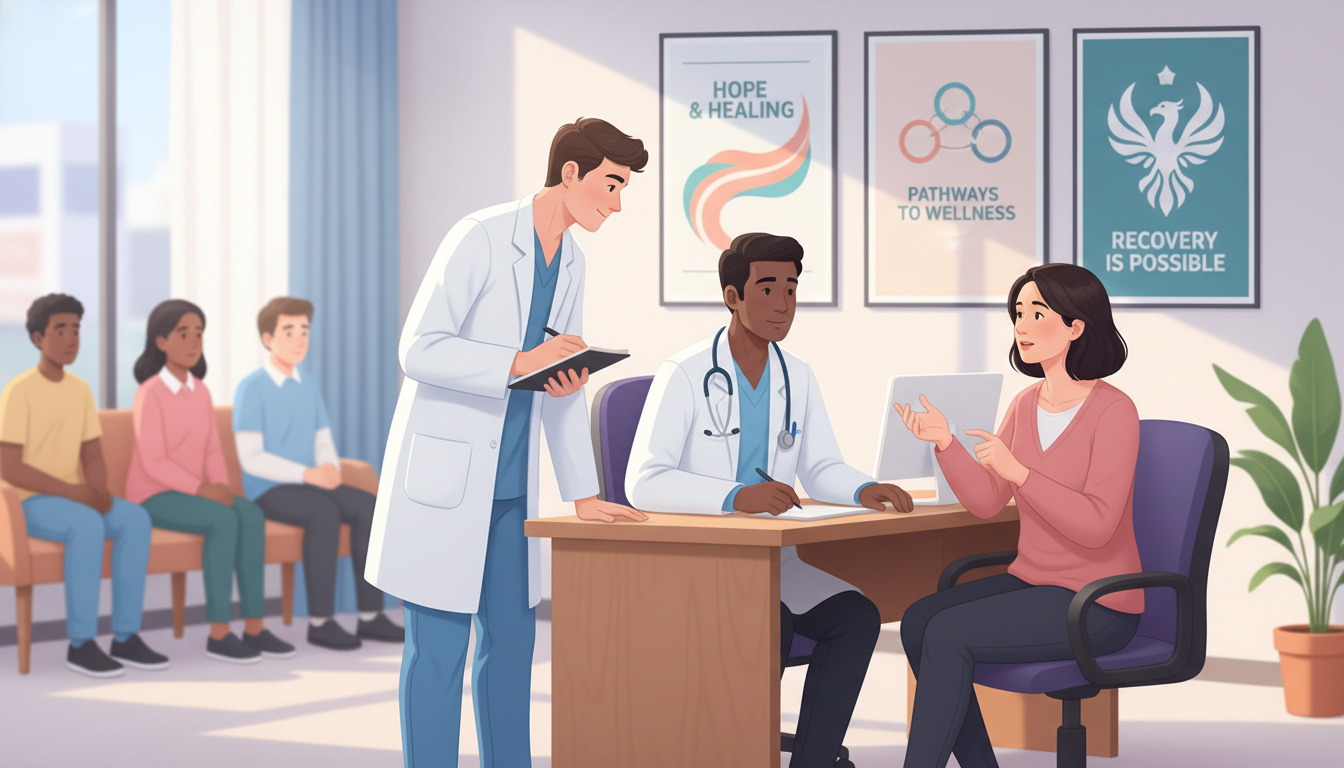
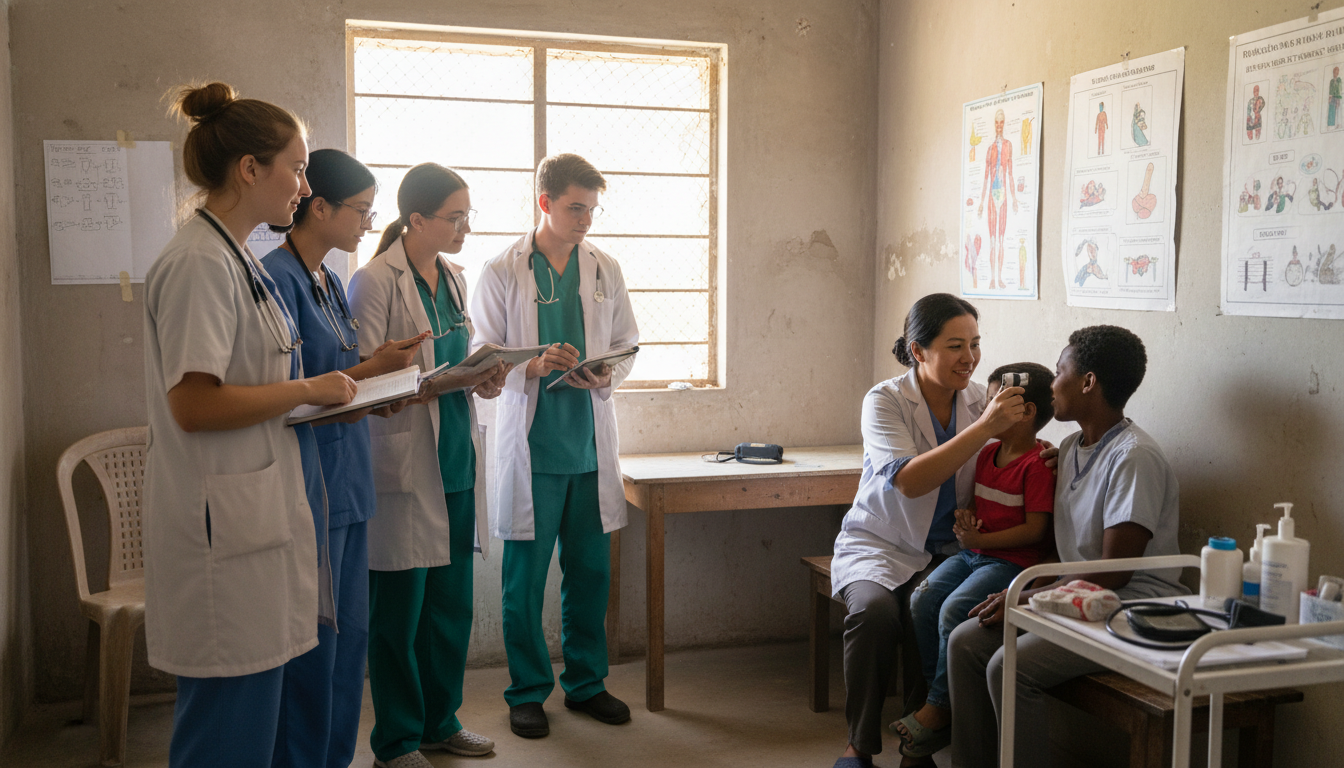
Medical shadowing in global health combines traditional clinical observation with immersion in international medicine, public health systems, and cross-cultural care. Instead of simply standing in the corner of a U.S. clinic watching patient encounters, you might be:
- Observing ward rounds in a district hospital in rural Kenya
- Joining mobile outreach clinics in the Peruvian Andes
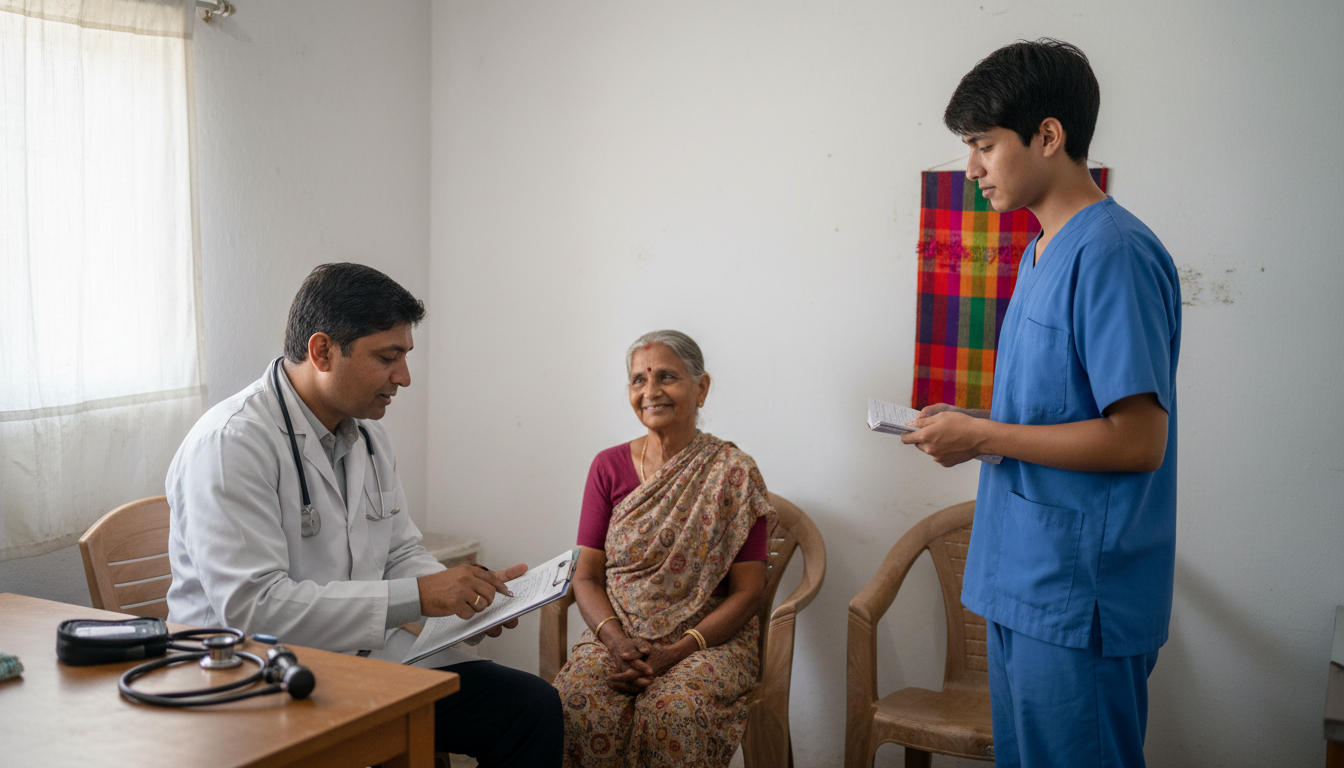
- Sitting in on tuberculosis case conferences in India
- Watching community health workers deliver vaccines in a refugee camp
For residency applicants—especially those interested in a global health residency track—this kind of shadowing can be transformational. It builds your clinical perspective, refines your career goals, and provides rich material for your personal statement and interviews.
However, global health shadowing is also ethically complex and logistically challenging. This guide walks through how to decide if it’s right for you, how to find shadowing opportunities responsibly, how many shadowing hours are needed, and how to translate these experiences into a compelling residency application.
Why Global Health Shadowing Matters for Residency
Residency programs increasingly value applicants with meaningful exposure to global and underserved care. Well-designed global health shadowing experiences can signal several things to selection committees:
1. Genuine Commitment to Underserved Care
Global health–relevant programs (e.g., family medicine, internal medicine, pediatrics, EM, OB/GYN) often ask: “Does this applicant care about health equity beyond a one-week mission trip?”
Thoughtful shadowing in international medicine settings provides evidence that you:
- Proactively sought out cross-cultural experiences
- Invested time in understanding health disparities
- Thought critically about resource limitations and social determinants of health
Residency programs with a global health residency track especially look for this sustained, thoughtful engagement.
2. Insight Into System-Level Medicine
Global health is never just about individual patients; it’s about systems. Shadowing abroad exposes you to:
- Different models of primary care (e.g., community health workers, task-shifting)
- Public health interventions integrated into clinical care
- How policy, economics, and infrastructure shape treatment options
In interviews, residents and faculty often ask: “What did you learn about health systems?” Rich examples from your shadowing will help you answer convincingly.
3. Maturity, Adaptability, and Cultural Humility
Functioning in another health system tests your flexibility:
- Working with language barriers
- Navigating unfamiliar clinical workflows
- Respecting different approaches to patient autonomy, family involvement, and traditional medicine
Programs see these qualities as proxies for how well you’ll adapt to new rotations, teams, and patient populations in residency.
4. Stronger Application Materials
Thoughtful global health shadowing can enhance:
- Personal statement: Clear, specific stories about patients or systems that shaped your path
- ERAS Experiences section: Quantified hours with meaningful, reflective descriptions
- Letters of recommendation: From faculty who observed you engaged in international medicine settings (or related global health work at home)
However, it’s not the mere fact that you traveled abroad that matters—it’s how you understand and present the experience.
Types of Global Health Shadowing Experiences
Not all “global health” shadowing is equal. To residency committees, structure, supervision, and ethics matter. Below are common formats, with pros, cons, and how they relate to your application.
1. Classic Clinical Shadowing Abroad
What it looks like
- You observe local physicians in hospital wards or clinics abroad
- You do not make independent decisions, prescribe, or perform procedures
- You may take vitals or assist with non-invasive tasks only under supervision and within your training level
Pros
- Direct view of international medicine practice
- Opportunity to compare resource-rich vs. resource-limited settings
- Often provides rich qualitative experiences for essays and interviews
Potential concerns
- Risk of “voluntourism” if poorly organized
- Ethical issues if you’re pushed into doing tasks beyond your training
- Language barriers may limit depth of clinical learning
Residency relevance
- Strongest when carefully supervised, structured, and clearly described as observational in nature
- Consider pairing it with pre-departure training and post-trip reflection to show maturity
2. Shadowing in Domestic Global Health Settings
You don’t need a passport to gain global health experience. Many settings in your own country reflect the same themes as international medicine:
- Federally qualified health centers (FQHCs)
- Refugee and immigrant clinics
- Native/Indigenous health services
- Free clinics serving migrant farmworkers or undocumented populations
- Urban safety-net hospitals with international patient populations
Pros
- No major travel cost or visa issues
- Easier to sustain over time (e.g., weekly shadowing for months)
- Often easier to get strong letters from longitudinal involvement
- Highly relevant to residency programs focused on health equity
Residency relevance
- Programs value this just as highly—often more—than short international trips
- Demonstrates commitment to caring for diverse and vulnerable populations in your own community
3. Structured Global Health Programs (Short- and Long-Term)
These are organized experiences—often by universities, NGOs, or medical schools—with:
- Pre-departure orientation and cultural training
- Clearly defined learning objectives
- On-site supervision and safety plans
- Often an academic deliverable (reflection paper, project, presentation)
Pros
- Higher likelihood of ethical, supervised experiences
- Built-in mentors and potential letter writers
- Easy to describe on ERAS as a structured activity with clear outcomes
Residency relevance
- Particularly attractive to programs with a global health residency track
- Signals that you understand best practices in international medicine education
4. Research-Oriented Shadowing in Global Health
Instead of purely clinical observation, some opportunities combine:
- Shadowing physicians and public health professionals
- Participation in data collection, quality improvement, or implementation projects
- Attendance at multidisciplinary meetings (epidemiology, policy, social work)
Pros
- Shows scholarly engagement with global health questions
- May yield abstracts, posters, or manuscripts to list on your CV
- Demonstrates ability to think beyond the bedside
Residency relevance
- Especially valuable for competitive programs or academic tracks
- Aligns well with programs that expect scholarly output in global health
How to Find Global Health Shadowing Opportunities
Understanding how to find shadowing in global health—and doing it responsibly—is crucial. Below is a step-by-step approach.
Step 1: Clarify Your Goals
Before contacting anyone, define:
- What do you want to learn?
- Clinical exposure? Public health systems? Refugee care? Maternal health?
- What is your realistic time frame?
- A few days per week over months vs. one concentrated month
- What resources do you have?
- Budget, language skills, institutional support
Having clear goals will help you evaluate options and make a strong case when you request placements.
Step 2: Start With Your Home Institution
If you are at a medical school or university:
Global Health Office / International Programs Office
- Ask about existing partnerships with hospitals or clinics abroad
- Many institutions have standing MOUs that streamline placements
Faculty With Global Health Portfolios
- Look for: “Director of Global Health,” “International Medicine,” “Global Surgery,” or “Refugee Health” in department listings
- Ask to meet briefly to discuss your interests and request guidance
Resident and Student Global Health Groups
- Join global health interest groups; ask senior students or residents where they shadowed
- Alumni networks can also be valuable
These routes often yield supervised, vetted opportunities that look credible to residency programs.
Step 3: Identify Reputable External Programs
If your institution lacks options, consider external organizations. Prioritize those with:
- Long-term local partnerships rather than “drop-in” mission trips
- Clear roles for trainees (emphasizing observation over direct care if you are pre-clinical or pre-licensure)
- Pre-departure training in ethics, culture, and safety
- Documented supervision by licensed local or visiting physicians
Avoid any program that:
- Encourages or allows you to perform clinical tasks beyond your training or licensure
- Markets itself as “come do surgeries as a student” or “treat patients independently”
- Has minimal integration with local health systems
Residency committees are increasingly attuned to the ethics of global health. Being able to explain why your program was responsible and collaborative will reflect positively on you.
Step 4: Explore Domestic Global Health Shadowing
If international travel is not feasible or feels premature:
- Approach FQHCs, refugee resettlement agencies, or community clinics
- Ask if they host medical students or pre-medical students for shadowing or volunteer roles
- Emphasize your interest in global health and long-term underserved care
Sample email language:
“I am a [premed/medical student/year] with a strong interest in global and cross-cultural health. I’m hoping to gain observational experience in clinics serving diverse or immigrant populations. Would your clinic be open to a discussion about shadowing or volunteer opportunities under appropriate supervision?”
Domestic experiences can be as powerful—and often more sustained—than brief international trips.
Step 5: Secure Approvals and Documentation
Once you find a potential placement:
- Confirm institutional approvals (IRB, legal, or risk management if abroad)
- Clarify whether you need:
- Immunizations and prophylaxis (e.g., hepatitis B, influenza, COVID, malaria)
- Background checks or health clearance
- Travel insurance and evacuation coverage (for international sites)
Document:
- Dates and expected hours
- Supervising physician’s name and contact information
- Nature of your role (explicitly “shadowing/observational”)
This will help you accurately report shadowing hours needed later on your CV and ERAS.
How Many Shadowing Hours Are Needed—and How to Use Them
There is no universal requirement for “shadowing hours” for residency, especially within global health. Programs care more about depth and reflection than raw numbers. Still, planning some benchmarks can help.
Reasonable Hour Benchmarks
For a strong narrative around global health shadowing, consider aiming for:
Pre-medical stage (if applicable)
- 40–100+ hours total shadowing (domestic + global health relevant)
- Within that, even 20–40 hours in clearly global or cross-cultural settings can be influential
Medical school
- 1–4 weeks equivalent of global health shadowing (40–160 hours), domestic or international
- Longitudinal experiences (e.g., half-day clinic per week for 6–12 months) are especially compelling
Some applicants do far more, but more hours alone will not compensate for shallow or ethically problematic experiences.
Quality Over Quantity: What Programs Look For
Residency programs are more impressed by:
- Longitudinal engagement (repeated or ongoing shadowing)
- Clear learning objectives and structured reflection
- Evidence you understand limitations of short-term global health work
You’ll want to be able to answer in interviews:
- “How did your understanding of global health change from this experience?”
- “What ethical challenges did you notice and how did you think about them?”
- “How has this shaped your career goals or your interest in a global health residency track?”
Documenting Shadowing Hours Effectively
Keep a simple log including:
- Date
- Location and setting (clinic, hospital, outreach, refugee clinic, etc.)
- Hours spent
- Supervising physician
- Brief notes on what you observed and learned
This helps when it’s time to:
- Complete ERAS experiences
- Answer questions about shadowing hours needed or completed
- Request letters of recommendation (you can share this log with letter writers)

Ethical, Professional, and Practical Considerations
Global health shadowing carries responsibilities beyond typical domestic shadowing. Programs will implicitly assess how thoughtfully you navigated them.
1. Scope of Practice: Do Not Practice Medicine
The most important principle: Observe, don’t practice, unless you are a licensed provider acting within your credentialed role.
Do not:
- Perform procedures (IVs, sutures, deliveries) unsupervised or beyond your training
- Prescribe medications or make independent diagnostic decisions
- Represent yourself as a physician or licensed clinician if you are not
If pressured by a site or well-meaning host to “just do it, we need help,” remember that:
- It can harm patients
- It can harm your future licensing and career
- It reflects poorly in residency applications if discovered or described insensitively
You can say, “I’m not trained/licensed to do this; I’m here to observe and learn.”
2. Cultural Humility and Respect
Preparation is critical:
- Learn basics about local culture, language, and health beliefs
- Familiarize yourself with common conditions and local health system structure
- Approach differences with curiosity rather than judgment
During your experience:
- Ask permission to enter exam rooms and participate in encounters
- Let local clinicians lead; follow their norms around patient privacy & family involvement
- Recognize that “standard care” is context-dependent—what’s possible at home may not be feasible abroad
3. Patient Privacy and Consent
Regardless of location, respect confidentiality:
- Do not photograph patients or facilities without explicit permission and adherence to local/institutional policies
- Avoid sharing identifiable details in personal statements, social media, or presentations
- When in doubt, anonymize heavily or use composite descriptions in your later reflections
Ethical sensitivity here is closely scrutinized by global health faculty and residency program directors.
4. Safety, Logistics, and Well-Being
Practical considerations include:
- Vaccinations and prophylaxis per travel medicine guidelines
- Travel and health insurance covering medical evacuation if abroad
- Awareness of political instability, natural disasters, or outbreaks
- Backup communication plans (e.g., local SIM, emergency contacts)
Residency programs will not “reward” risk-taking for its own sake. Responsible planning and self-care reflect good judgment.
5. Reflection: Turning Experience Into Insight
To convert shadowing into meaningful growth:
Keep a reflection journal (not just a log) focusing on:
- Ethical dilemmas you observed
- Surprising systems-level differences
- Emotional responses to suffering, inequity, or resource constraints
Discuss your reflections with:
- Supervising physicians
- Global health mentors back home
- Peers in debriefing sessions
This reflective process is what turns a trip into a foundation for a thoughtful commitment to international medicine.
Showcasing Global Health Shadowing in Your Residency Application
You’ve done the work; now you need to present it effectively and honestly.
1. ERAS Experiences Section
When listing your shadowing:
Use clear titles, e.g.,
- “Clinical Observer, District Hospital – Rural Kenya”
- “Shadowing in Refugee Primary Care Clinic”
Indicate:
- Type: Global health, clinical shadowing, or underserved care
- Hours: Conservative, well-documented estimates
- Description (2–4 lines) emphasizing:
- What you learned about systems, communication, and ethics
- Any structured components (teachings, case conferences, reflection sessions)
Avoid description lines that oversell your role; focus on observation and learning, not “providing care” if you were not credentialed to do so.
2. Personal Statement and Secondary Essays
When writing about shadowing:
- Choose 1–2 specific stories, rather than listing all your trips
- Focus on:
- A moment that changed how you think about medicine
- A conflict between ideals and realities (e.g., limited resources)
- What you learned about yourself and about global health
Connect your experience to:
- Your specialty choice (e.g., pediatrics, family medicine, internal medicine, EM)
- Your intention to pursue a global health residency track or underserved/community-focused training
- How you plan to contribute to your future program’s global health or international medicine initiatives
Avoid:
- “Savior” narratives
- Overly dramatic claims that you “fixed” a system during a short stay
- Stereotyping or pitying depictions of patients or communities
3. Letters of Recommendation
Shadowing alone rarely yields the strongest letters, but it can if:
- You were part of a structured program with teaching, discussions, and projects
- You demonstrated reliability, insight, and professionalism over time
Consider asking for letters from:
- Global health faculty who supervised your shadowing, especially if they also know your work at home
- Domestic preceptors in clinics serving global populations (refugee, immigrant, Indigenous)
Provide your letter writers with:
- CV and draft personal statement
- Your shadowing log and brief reflection summary
- Clarification of which programs or tracks you’re targeting (e.g., “global health residency track in internal medicine”)
4. Interview Conversations
Be prepared for questions like:
- “Tell me about a memorable patient from your global health experience.”
- “What did you learn about resource limitations?”
- “How do you reconcile short-term global health trips with long-term impact?”
- “How will this shape your practice after residency?”
Strong responses:
- Acknowledge complexities and limitations of short-term involvement
- Emphasize humility and ongoing learning
- Connect your experience to realistic, sustainable future goals (e.g., working in a safety-net hospital, participating in structured global health electives, collaborating with NGOs)
Frequently Asked Questions (FAQ)
1. Is international travel required to show interest in global health for residency?
No. Many applicants build strong global health profiles based on domestic experiences: refugee clinics, immigrant health centers, FQHCs, Indigenous health services, and safety-net hospitals. Residency programs recognize that meaningful global health often starts at home, and that not everyone has the resources or timing to travel abroad. Depth, reflection, and ethical engagement matter more than geography.
2. How many shadowing hours are needed to be competitive for a global health residency track?
There is no fixed minimum. Programs look for a pattern of sustained engagement, not a particular number. For many applicants, 40–160 hours of global health–relevant shadowing (domestic or international), combined with related service, coursework, or research, is sufficient to demonstrate genuine interest. Focus on quality, longitudinal involvement, and clear reflection rather than trying to hit a specific target.
3. Can I perform clinical procedures during global health shadowing if the local staff encourages it?
If you are not licensed and credentialed to perform a procedure in your home setting, you should not do it abroad. Ethical global health practice requires that trainees do not exceed their scope of training, even when local needs are significant. You can explain to residency programs that you intentionally limited your role to observation and appropriately supervised tasks—this demonstrates integrity and professionalism.
4. How can I talk about my global health shadowing without sounding like “voluntourism”?
Frame your experience around learning and partnership, not heroism. Acknowledge that your time was short, that you were primarily an observer, and that sustainable change depends on local leadership and long-term collaboration. Focus on what you learned about systems, culture, and ethics—and how you’re applying those lessons to ongoing work in underserved or cross-cultural settings, including at home. This kind of humility and critical reflection is exactly what global health residency track directors hope to see.
Thoughtful, well-structured medical shadowing in global health—whether abroad or in your own community—can become a cornerstone of your professional identity. When pursued ethically and reflected upon deeply, it not only enriches your understanding of international medicine but also strengthens your residency application and prepares you to serve diverse populations with skill and humility.