
Medical shadowing is one of the most powerful ways to determine if anesthesiology is the right specialty for you—and to build a strong profile for the anesthesia match. Because anesthesiologists do most of their work in the operating room (OR) and procedural areas, it can be difficult to understand their role from lectures alone. Shadowing opens that world.
This guide will walk you through exactly how to approach a medical shadowing experience in anesthesiology: how to find opportunities, what to expect day‑to‑day, how many shadowing hours are useful, how to stand out professionally, and how to translate everything into a compelling residency application.
Why Anesthesiology Shadowing Matters for the Anesthesia Match
Anesthesiology is often under‑represented in the preclinical curriculum, and many students only get a brief exposure during third‑year rotations—if at all. Targeted medical shadowing fills that gap and gives you:
1. Real insight into the specialty’s daily practice
Shadowing lets you see:
- The pre‑operative assessment and risk stratification process
- Airway management and induction of anesthesia
- Intraoperative monitoring and crisis management
- Post‑anesthesia care and pain management
- Anesthesiologist interaction with surgeons, nurses, CRNAs, and patients
This exposure helps you answer the core question: “Can I see myself doing this for 30 years?”
2. Stronger commitment and “fit” for program directors
Residency programs want applicants who:
- Understand what anesthesiology actually entails
- Have realistic expectations about lifestyle, acuity, and team dynamics
- Demonstrate genuine, sustained interest—not a last‑minute choice
Shadowing hours—especially longitudinal experiences—signal commitment. In your personal statement and interviews, specific stories from your shadowing will make your interest in anesthesiology feel authentic and grounded.
3. Mentorship, networking, and letters of recommendation
Many residents and attendings first met their future mentors while shadowing. Benefits include:
- Getting advice on which anesthesia residency programs to target
- Hearing honest perspectives on fellowships, job markets, and subspecialties
- Sometimes earning a letter of recommendation if your shadowing evolves into research or a formal elective
You are not likely to get a letter from a couple of half‑days of passive observation, but shadowing can be the first step toward deeper involvement.
How to Find Anesthesiology Shadowing Opportunities
For many students, the hardest part is simply figuring out how to find shadowing—especially in a high‑risk environment like the OR. With anesthesiology, hospitals must strictly control who can be present, so you’ll need to be strategic and persistent.
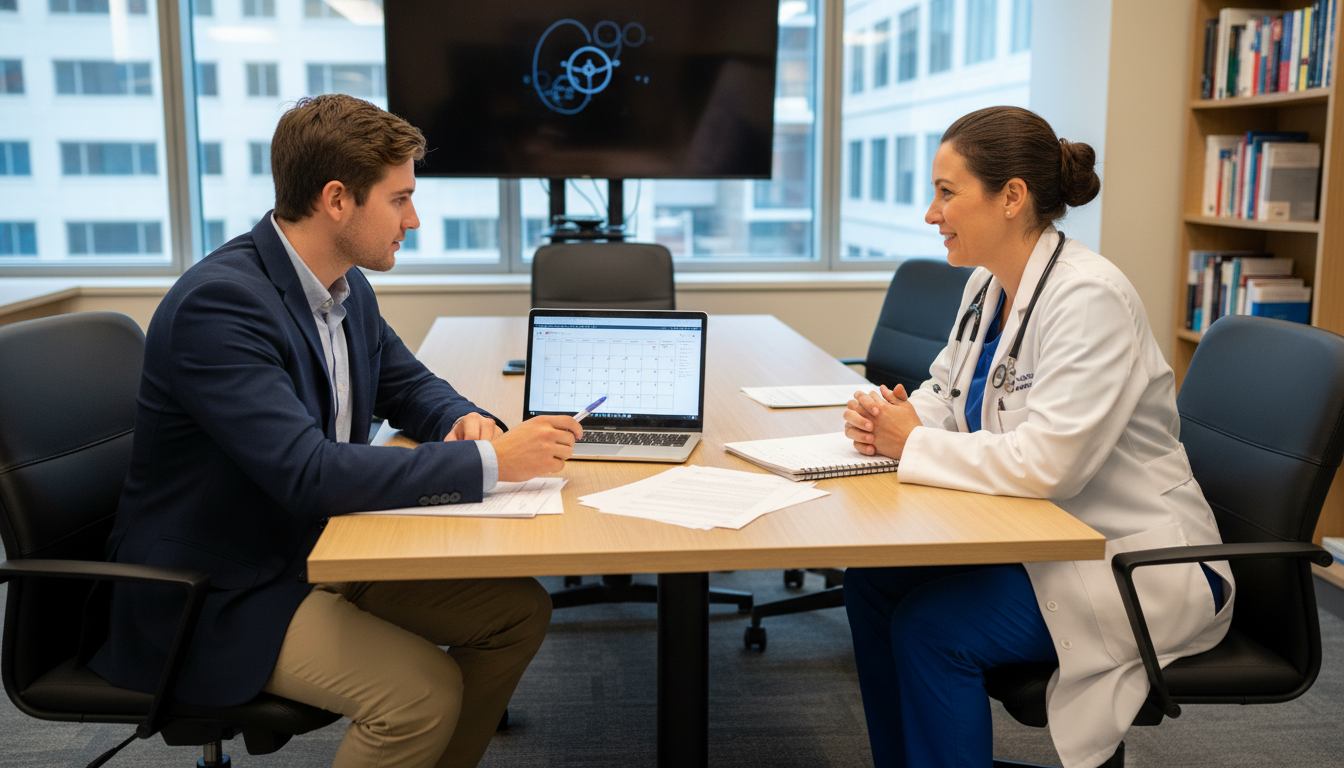
1. Start with your home institution
If you are a medical student:
Check your school’s anesthesiology department website
Look for:- “Student Opportunities” or “Medical Student Education” pages
- A director of medical student education for anesthesiology
- Student interest group (SIG) in anesthesiology
Email the department coordinator or clerkship director
Briefly introduce yourself, your year, and your interest in anesthesiology. Ask whether they offer:- Preclinical shadowing
- Half‑day OR observation experiences
- Anesthesia interest group events with OR tours
Use student interest groups
Anesthesia SIG leaders often know which attendings enjoy teaching and allow shadowing. They may have:- A list of “student‑friendly” anesthesiologists
- Scheduled “Anesthesia Day in the OR” events
If institutional policies limit shadowing for preclinical students, ask about simulation sessions, pre‑op clinic observation, or large‑group OR walkthroughs as a starting point.
2. Reach out to anesthesiologists you already know
If you know an anesthesiologist (family, family friends, alumni), they may be able to:
- Directly host you for medical shadowing if allowed by their hospital
- Introduce you to their colleagues who teach regularly
- Offer advice on shadowing hours needed and how to structure your experience
When you write, be clear and professional:
- Who you are (school, year)
- Your interest in anesthesiology
- Your availability (e.g., “Friday mornings this semester”)
- Your goal (to gain exposure, understand daily practice, explore a career decision)
3. Explore community hospitals and surgery centers
If your academic hospital has strict rules, consider:
Community hospitals
Smaller hospitals sometimes have more flexibility for local college students or pre‑meds. Start with:- Volunteer office
- Medical staff office
- Anesthesia department chair or practice group administrator
Ambulatory surgery centers
These can be ideal to observe:- Fast‑paced workflow
- Regional anesthesia (nerve blocks)
- Healthy outpatient cases
Ask specifically whether they allow shadowing in procedural areas and what immunizations, paperwork, or background checks are required.
4. For pre‑meds: use university pre‑health offices
If you’re still pre‑med and interested in anesthesiology:
- Pre‑health advising offices often have lists of physicians who accept shadowers
- Some universities have formal shadowing programs with local hospitals
- Explain that you’re particularly interested in anesthesiology shadowing and ask if that’s possible
Because anesthesiology is high‑stakes (airways, sedation, privacy), you may have more luck in pre‑op clinics or post‑anesthesia care units (PACU) than directly in the OR—especially at the start.
5. Use professional societies and interest groups
Anesthesiology organizations occasionally support student exposure:
- ASA (American Society of Anesthesiologists) – Look for student sections, mentorship programs, and local component societies
- State anesthesia societies – Some offer student networking events; you can ask about shadowing or mentorship connections
These won’t usually place you directly into a shadowing slot but can connect you to anesthesiologists who are enthusiastic about teaching.
How Many Shadowing Hours Are Needed for Anesthesiology?
There is no universal minimum number of shadowing hours needed to match into anesthesiology. The anesthesia match is influenced much more by:
- USMLE/COMLEX scores
- Clerkship and sub‑internship performance
- Letters of recommendation (often from clinical rotations, not just shadowing)
- Research, if available
However, shadowing hours serve a different purpose: clarity, credibility, and narrative.
Reasonable targets by training stage
These are approximate ranges that tend to be meaningful without being excessive:
- Pre‑med applicants
- 8–20 hours of anesthesiology shadowing across several days
- This demonstrates exposure and helps you describe anesthesiology experiences in your medical school interview
- Preclinical medical students (M1–M2)
- 10–30 hours over a semester or year
- Preferably spread out to see OR, pre‑op, and PACU environments
- Clinical students considering anesthesiology (M3–M4)
- Shadowing becomes less critical than formal anesthesiology rotations
- Still, 10–20 hours of directed, intentional shadowing before or after your rotation can help confirm your decision and provide stories for your personal statement
What matters is quality and intentionality, not sheer volume. Programs won’t be impressed by “200 hours of shadowing” if you can’t articulate what you learned.
How to make limited hours count
Even a single well‑planned day of medical shadowing can be powerful if you:
- Ask thoughtful questions during quieter moments
- Observe multiple phases of the anesthetic (pre‑op to PACU)
- Reflect afterward in a journal or notes
- Capture specific moments you can later describe in applications (“I remember a case where…” rather than “I shadowed a lot.”)
What to Expect During Anesthesiology Shadowing
Anesthesiology shadowing is different from shadowing in a clinic or on a general medicine ward. The OR is tightly choreographed and safety‑critical. Understanding the flow will help you feel more comfortable and make a better impression.

Typical day structure
Depending on the attending and the setting, your day may include:
Early morning pre‑op assessments
- Reviewing the day’s schedule
- Seeing patients in the pre‑op area
- Discussing medical history, airway evaluation, and anesthesia plans
Anesthesia induction and airway management
- Administering induction medications
- Mask ventilation, laryngoscopy, intubation, or placement of supraglottic airway devices
- You’ll typically observe only; hands‑on participation is rare and strictly supervised (and usually reserved for medical students on a formal rotation)
Intraoperative management
- Adjusting anesthetic depth
- Managing hemodynamics (blood pressure, heart rate, fluids, vasopressors)
- Monitoring ventilation, oxygenation, and temperature
- Less visually dramatic, but a good time to ask questions about physiology and pharmacology
Emergence and transfer to PACU
- Reversal or discontinuation of anesthetics
- Extubation when appropriate
- Handoff communication to PACU nurses
Break periods and case turnovers
- These are ideal times for teaching discussions:
- Why one anesthetic technique was chosen over another
- Risk assessment and preoperative optimization
- Subspecialties within anesthesiology (cardiac, peds, pain, critical care)
- These are ideal times for teaching discussions:
Professional expectations in the OR
Anesthesiology, like all OR specialties, requires strict adherence to etiquette and safety:
Dress code
- Scrubs (usually hospital‑provided)
- Closed‑toe shoes
- Surgical cap, mask, and sometimes eye protection
- No jewelry that interferes with infection control
Infection control
- Follow all instructions about where you can and cannot stand
- Do not touch sterile fields (blue drapes, instrument tables, etc.)
- Perform hand hygiene as instructed, especially when entering/exiting certain areas
Positioning and movement
- Ask where to stand for each phase of the case
- Maintain a safe distance from the sterile field and equipment cords/tubes
- Step out of the room if you feel faint or unwell—tell someone quietly first
Patient privacy and professionalism
- Introduce yourself as a student observer to patients when appropriate
- Do not discuss patient details outside the clinical environment
- Never take photos or recordings
What you will and won’t do as a shadower
You will usually:
- Observe pre‑op evaluations and consent discussions
- Watch induction, line placement, and airway management from an appropriate distance
- Listen to discussions between anesthesiologist, surgeons, and nurses
- Ask questions at suitable times
You usually will not:
- Intubate, place IVs, or administer medications (unless you’re a medical student on a formal clinical rotation under direct supervision, and even then this is limited)
- Make clinical decisions
- Be left alone with a patient during any critical phase
If you’re unsure what’s appropriate, ask the attending or resident directly. They will appreciate your caution.
How to Be an Excellent Shadower (and Future Anesthesia Applicant)
Shadowing doesn’t directly appear on your ERAS application as a scored metric, but it strongly shapes your narrative, your self‑understanding, and how attendings remember you. Aim to be memorable in a positive, low‑maintenance way.
1. Prepare before you step into the OR
Spend 1–2 hours before your first day reviewing:
- Basic OR etiquette and sterile field concepts
- Fundamental physiology: oxygenation, ventilation, blood pressure, MAC, ASA classification
- Common anesthetic drugs: propofol, sevoflurane, fentanyl, midazolam, rocuronium, phenylephrine, ephedrine
You don’t need to be an expert, but familiarity allows you to ask better questions such as:
- “Why did you choose a supraglottic airway instead of an endotracheal tube here?”
- “What factors helped you decide on general vs. regional anesthesia for this patient?”
2. Ask thoughtful, well‑timed questions
The OR has periods of intense activity and quieter stretches. Good times to ask:
- While walking to the pre‑op area
- After a case during turnover
- During stable periods of a long case
Avoid questions during:
- Induction and airway management
- Emergence and extubation
- Hemodynamic instability or acute events
You might ask:
- “How do you approach pre‑op risk stratification for someone with severe sleep apnea?”
- “What are the most challenging aspects of your day that students don’t usually see?”
- “How did you decide on your subspecialty (if any), and what would you do differently in training?”
3. Take notes and reflect
Right after your shadowing session, jot down:
- Interesting cases (without identifiable patient details)
- New concepts or drugs you learned about
- Memorable interactions or ethical dilemmas
- Feelings about what resonated—or didn’t
These reflections later become:
- Authentic content for your personal statement
- Talking points for interviews
- A way to evaluate whether anesthesiology aligns with your personality and goals
4. Show initiative without overstepping
You can stand out by:
- Arriving early and staying through an entire case rather than leaving the moment the scheduled time ends
- Asking if there are particular cases (pediatrics, regional blocks, complex airways) that would be especially educational for you
- Offering to step out if the room gets crowded or if space becomes tight
But avoid:
- Pushing to perform procedures
- Interrupting decision‑making
- Over‑talking during critical times
Your goal is to be eager but low‑friction.
5. Maintain longitudinal contact when appropriate
If you have a particularly positive experience with an attending or resident:
- Send a brief thank‑you email within 24 hours, mentioning one specific thing you learned
- Ask if you might shadow again in a few weeks or months
- For medical students seriously considering anesthesiology, you can later ask:
- “Would you be willing to discuss how to structure my fourth‑year schedule for an anesthesiology residency application?”
Over time, this can evolve into a mentoring relationship, which is invaluable for the anesthesia match.
Turning Shadowing into a Strong Anesthesiology Application
Shadowing experiences are most powerful when you deliberately connect them to your residency strategy.
1. Personal statement and interviews
Instead of saying, “I shadowed anesthesiology and liked it,” use:
Specific, narrative examples
- A challenging airway case that highlighted calm under pressure
- A regional block that transformed a patient’s post‑op pain control
- A pre‑op counseling session that showed the importance of communication and empathy
Reflections on fit
- “Shadowing multiple anesthesiologists, I realized I enjoyed thinking in real time about physiology and drug effects.”
- “Observing the anesthesiologist manage an intraoperative crisis confirmed my desire to work in high‑acuity, team‑based environments.”
Programs want to see you understand the real work and how it aligns with your values and strengths.
2. Choosing rotations and electives
Use your shadowing insights to:
- Decide whether to pursue an anesthesiology elective earlier vs. later in your third/fourth year
- Target specific subspecialty electives (cardiac anesthesia, ICU, pain) that match your interests
- Clarify whether you prefer academic vs. community settings, which may guide audition rotations or away electives
3. Networking and mentorship for the anesthesia match
Through shadowing, you might:
- Identify residents whose path you’d like to emulate—and ask how they built their CV
- Meet attendings who are involved in program leadership and can offer advice on competitiveness, research, and away rotations
- Get directed to opportunities like quality improvement projects, case reports, or departmental committees
These relationships can be as important as raw shadowing hours in shaping your match outcome.
FAQs: Medical Shadowing in Anesthesiology
1. How many shadowing hours are needed for anesthesiology residency?
There is no strict number of shadowing hours needed for anesthesia residency. Programs do not set a minimum like “50 hours required.” Instead:
- Aim for enough exposure to:
- Understand the specialty
- Speak concretely about your experiences
- Validate your interest (often 10–30 focused hours for medical students)
- Focus more on quality, reflection, and how you use those experiences in your application than on total hours logged.
2. Can pre‑med students shadow anesthesiologists in the OR?
Yes, but it depends heavily on local hospital policy:
- Some hospitals allow pre‑meds in the OR after completing:
- HIPAA training
- Immunization and health clearance
- Orientation or paperwork
- Others restrict OR access and may direct pre‑meds to:
- Pre‑op holding areas
- Post‑anesthesia care units (PACU)
- Pain clinics
Contact the hospital’s volunteer or education office and be explicit that you’re asking about anesthesiology. Be prepared for limited hands‑on involvement; your role will be observational.
3. What should I wear and bring to an anesthesiology shadowing day?
Typically:
Wear:
- Clean, closed‑toe shoes (comfortable for standing)
- Business‑casual clothes if you’ll change into hospital scrubs onsite
- Avoid heavy perfume or cologne
Bring:
- Hospital ID if you have one
- A small notebook and pen (or phone for notes, used discreetly and never for photos)
- A list of questions you’d like to explore about anesthesiology
The hospital usually provides OR scrubs, caps, and masks. When in doubt, ask your contact person ahead of time.
4. How can I talk about shadowing in my anesthesiology residency interview?
Be specific and reflective:
- Describe one or two concrete scenarios you observed and what you learned from them (clinical judgment, communication, crisis management).
- Connect those experiences to personal qualities you bring—calmness under pressure, interest in physiology, satisfaction from perioperative care.
- Demonstrate insight into the less glamorous aspects (early mornings, repetitive cases, OR politics) and why you still feel the specialty is right for you.
Avoid generic statements like “I liked anesthesiology because I enjoy procedures.” Instead, make it clear how shadowing deepened your understanding of what anesthesiologists really do and confirmed your career choice.
Thoughtful medical shadowing in anesthesiology won’t guarantee the anesthesia match on its own, but it will sharpen your vision of the specialty, help you build meaningful relationships, and give you compelling stories that set your application apart. If you approach each shadowing experience intentionally—preparing, observing, reflecting, and following up—you’ll gain far more than just hours; you’ll gain clarity about your future in the OR.