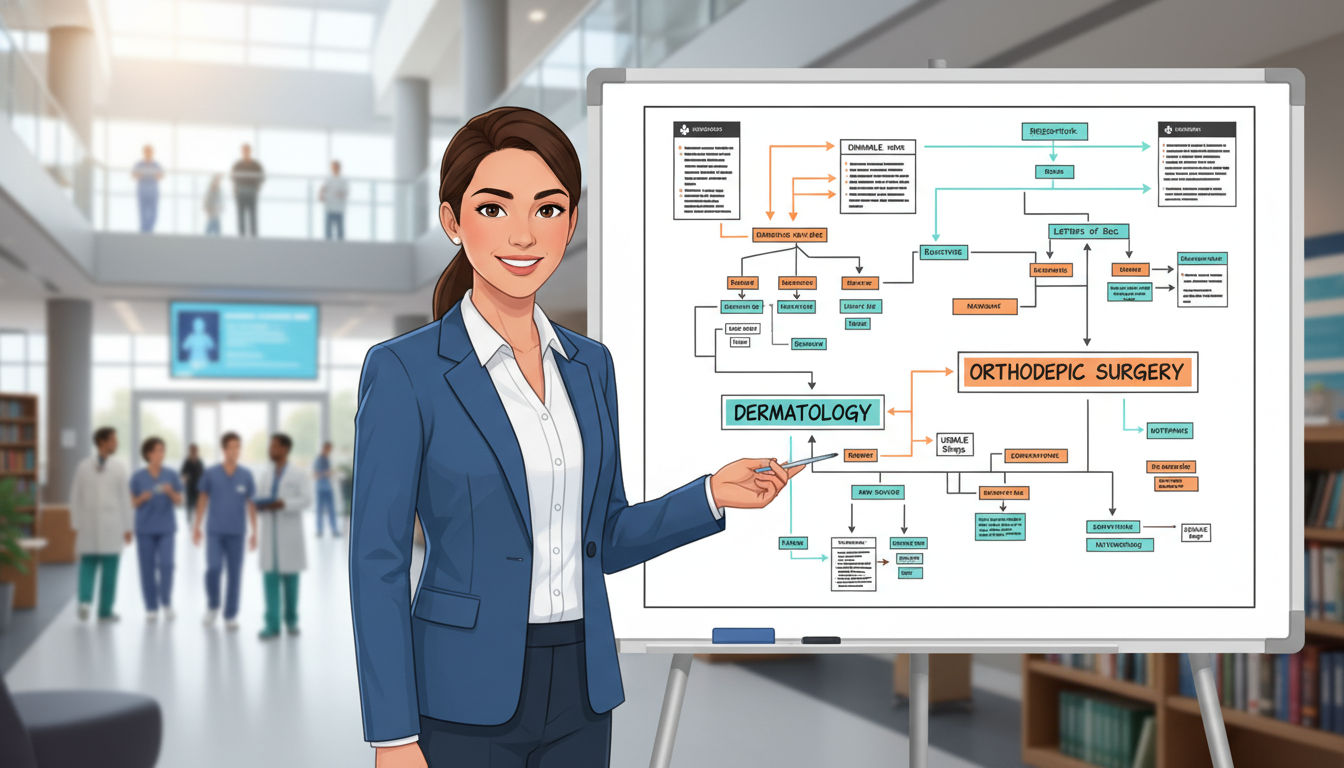
Understanding What Makes a Specialty “Ultra-Competitive”
Before building a strategy, you need a clear picture of the landscape. As an international medical graduate (IMG), you are already navigating extra hurdles in the residency match. When you add an ultra-competitive specialty on top—like dermatology, orthopedic surgery, plastic surgery, neurosurgery, ophthalmology, or radiation oncology—the bar gets even higher.
Why These Specialties Are So Competitive
Ultra-competitive specialties tend to share several characteristics:
- Fewer total residency spots
- High lifestyle satisfaction (e.g., dermatology, ophthalmology)
- High compensation (e.g., ortho, plastics)
- Prestige and subspecialty appeal
- Strong interest among top US medical graduates
For example:
- Matching derm (dermatology) frequently sees near-zero IMGs in some match cycles.
- Matching ortho (orthopedic surgery) is similarly challenging, with many programs rarely considering IMGs unless they are truly exceptional or have strong institutional ties.
IMGs and Match Statistics: A Reality Check
While exact numbers vary by year, historically:
- Dermatology & Orthopedic Surgery: IMGs match at very low rates; some cycles have only a few matched IMGs nationwide.
- Plastic Surgery, Neurosurgery, ENT: Often have years where no IMGs match or only a handful do.
- Ophthalmology (SF Match) and Urology also pose major barriers, especially for IMGs without US ties.
This doesn’t mean it is impossible—it means:
- You must be strategic, patient, and data-driven.
- You may need an alternate pathway (e.g., transitional specialties, research fellowships).
- You must be prepared for multiple cycles and contingency plans.
As an IMG residency guide, this article focuses on ultra-competitive specialty strategy with brutal honesty and practical frameworks—not empty motivation.
Step 1: Build an Honest, Data-Driven Self-Assessment
Ultra-competitive specialties are won or lost long before ERAS opens. The first step is a clear, unemotional assessment of your current profile.
Core Components of Your Competitiveness
Exams
- USMLE Step 1: Now pass/fail, but a failure is a major red flag.
- USMLE Step 2 CK: Critical differentiator.
- For derm or ortho:
- Aim for > 250 to be realistically competitive as an IMG.
- > 240 may keep some doors open if the rest of your profile is exceptional.
- For derm or ortho:
- OET/English tests: Must be strong and not raise concerns.
Medical School Background
- Is your school:
- Well-known in the US?
- Previously sent graduates to US residencies?
- Affiliated with any US institutions?
- Graduates from top-ranked universities may get a small “brand” boost but still face IMG barriers.
- Is your school:
Clinical Experience
- US clinical experience (USCE) is close to mandatory for ultra-competitive fields.
- Prioritize:
- Audition electives/Sub-I’s at target programs.
- Hands-on experiences in your specialty of interest.
- Purely observership-based profiles are weak for derm/ortho unless compensated by extraordinary research.
Research Portfolio
- For ultra-competitive specialties, research is a major lever you can control.
- Think in terms of:
- Quantity and quality: PubMed-indexed > poster-only; first-author > middle-author.
- Relevance: Dermatology research for derm; orthopedic outcomes or biomechanics research for ortho.
- Institutional connections: Research at US academic centers is especially valuable.
Time Since Graduation (YOG)
- Many ultra-competitive specialties prefer recent graduates (often ≤ 3–5 years).
- If older, you’ll need strong justifications: active clinical practice, robust research, or advanced degrees.
Creating Your Competitiveness Matrix
Create a simple table for yourself:
| Domain | Your Status | Target for Ultra-Competitive IMG | Gap |
|---|---|---|---|
| Step 1 | Pass/Fail, any attempts? | Pass on first attempt | |
| Step 2 CK | Numeric score | 245–255+ (higher is better) | |
| USCE | Number & type of rotations | 2–4 rotations, including home/audition | |
| Research | Publications, posters | 3–10+ specialty-related, with 1st authorship | |
| Letters of Rec | US academic vs. abroad | 3 strong US academic, specialty specific | |
| YOG | Year of graduation | ≤3–5 years preferred | |
| Connections | Mentors, US faculty ties | At least 1–2 strong sponsors in field |
Any cell where you see a wide gap tells you where to focus your next 12–24 months.

Step 2: Specialty Targeting and Pathway Design
Instead of vaguely “wanting derm” or “thinking about matching ortho,” you need a structured decision process and realistic pathways.
A. Classify Your Specialty Goals
Split your interests into three tiers:
- Primary Ultra-Competitive Goal
- Example: Dermatology, Orthopedic Surgery, Plastic Surgery, Neurosurgery.
- Secondary Competitive but More Open Specialty
- Example: Internal medicine with strong subspecialty goals, anesthesia, radiology, PM&R, general surgery (categorical).
- Safety/Rescue Pathway
- Example: Preliminary medicine/surgery, transitional year, or more IMG-friendly fields that keep your long-term specialty options alive.
Pathway Example: Matching Derm as an IMG
You want dermatology but currently:
- Step 2 CK: 241
- 1 derm research poster; no publications
- No US derm rotations yet
A possible staged approach:
Year 1–2 (Preparation)
- Focus: Research fellowship in dermatology at a US academic center.
- Goals:
- 3–6 publications (case reports, reviews, clinical research).
- Present at national derm meetings.
- Build strong relationships with derm faculty.
Year 3 (Application Year 1)
- Apply broadly to:
- Dermatology categorical positions (realistic long-shot).
- Preliminary medicine/surgery or transitional year.
- If you match prelim/transitional but not derm:
- Use that clinical year to enhance your application and reapply.
- Apply broadly to:
Year 4+ (Re-Application / Alternate Entry)
- Try again for derm with:
- US clinical performance
- Expanded derm research
- Strong letters from US faculty
- Alternative: Transition into another field (e.g., internal medicine + derm/immunology research career) if derm remains unreachable.
- Try again for derm with:
Pathway Example: Matching Ortho as an IMG
You want orthopedic surgery; you have:
- Step 2 CK: 252
- Good US letters in general surgery, but no ortho rotations.
- No research.
Potential strategy:
Target US Ortho Research Fellowship
- One to two years at a major ortho center: outcomes research, biomechanics, sports medicine, etc.
- Publish aggressively and attend/participate in national ortho meetings.
Stack US Clinical Exposure
- Ortho electives/away rotations during or after research.
- Aim for strong ortho-specific letters from recognized faculty.
Two-Tier Application
- Apply to:
- Orthopedic categorical positions (broad geographic spread, including smaller or newer programs).
- Prelim general surgery with strong ortho exposure.
- Apply to:
Consider Related Fields as Secondary Target
- PM&R with MSK focus, sports medicine pathways, or trauma surgery if multiple cycles fail.
Step 3: Maximizing Your “Controllable Variables”
You cannot change being an IMG, your country, or your graduation year—but you can drastically improve your signal strength.
A. Academic and Exam Strategy
Step 2 CK Excellence
- Treat Step 2 CK as your flagship metric.
- For ultra-competitive specialties, aim to score above the average US MD applicant.
- Use:
- UWorld fully completed (1–2 passes).
- NBME practice exams to benchmark and adjust.
- Avoid multiple attempts; a second attempt can severely weaken your application in derm/ortho.
Step 3 Timing (Optional but Strategic)
- For IMGs aiming for extremely competitive specialties, a strong Step 3 can:
- Reassure programs about your knowledge base.
- Help with visa concerns in some cases.
- Consider taking it before or during application season if:
- You already have a strong Step 2 CK.
- You can realistically score well (not just pass).
- For IMGs aiming for extremely competitive specialties, a strong Step 3 can:
B. Building a High-Impact Research Portfolio
Research is one of the most powerful levers for IMGs pursuing ultra-competitive specialties.
How to Secure a Research Position
- Identify academic centers with strong departments in your target specialty.
- Email faculty with:
- Concise CV (highlighting exams, prior research, and clinical experience).
- Brief, tailored statement: why their work interests you and how you can contribute.
- Be open to unpaid or stipend-based positions initially if feasible.
Make Your Research Count
- Prioritize:
- Projects that lead to PubMed-indexed publications rather than only posters.
- First-author roles where you drive the project.
- Types of work:
- Chart reviews, retrospective cohort studies.
- Case series, case reports.
- Systematic reviews or high-quality narrative reviews in your specialty.
- Always ask: “Will this realistically be publishable, and in what timeline?”
- Prioritize:
Network Through Research
- Present posters at national meetings (e.g., AAD for derm, AAOS for ortho).
- Seek introductions:
- To program directors.
- To faculty who sit on residency selection committees.
- Request mentorship and feedback on your CV and strategy.
C. Clinical Excellence and USCE
For ultra-competitive specialties, the quality and relevance of USCE matters as much as the quantity.
Strategic Selection of Rotations
- Aim for:
- Rotations at institutions where you might later apply.
- At least some time in the exact specialty you want.
- For derm and ortho specifically:
- Even a few weeks on service can be key, especially if it leads to strong letters.
- Aim for:
Behaviors That Impress Faculty
- Reliability: Always early, follow through on tasks.
- Work ethic: Volunteer for extra responsibilities.
- Curiosity: Ask thoughtful questions; read around cases.
- Team fit: Be collegial, humble, and adaptable.
- Make it easy for them to write a strong, specific letter.
Step 4: Crafting a Targeted Application Strategy
Once your profile is optimized, execution becomes critical: how you apply, where you apply, and how you present your story.
A. Program Targeting and Tiers
Ultra-competitive specialties often have:
- Elite programs with heavy bias toward US MDs from top schools.
- Mid-tier programs that may consider exceptional IMGs with strong connections.
- Newer or smaller programs sometimes more open to strong IMGs, especially with ties.
Action steps:
Study Past Match Lists
- Look at which programs have ever matched IMGs in your specialty.
- Check:
- Program websites.
- Resident rosters (look for international schools).
- Alumni bios.
Align Applications with Your Story
- If you have a heavily research-focused profile:
- Target academic centers that value publications and advanced degrees.
- If you have strong MSK clinical exposure but minimal research:
- Target community or hybrid programs where clinical performance may be more important.
- If you have a heavily research-focused profile:
Apply Broadly but Intelligently
- For derm/ortho as an IMG, expect to apply to:
- Almost every program that is not clearly closed to IMGs.
- Balance this with:
- Preliminary or backup applications in connected fields.
- For derm/ortho as an IMG, expect to apply to:
B. Personal Statement and Narrative for Ultra-Competitive Fields
Your personal statement must do more than say you “love dermatology” or “are passionate about orthopedics.”
Key elements:
- Credible origin story: When and how your interest started.
- Evidence-based commitment: Rotations, research, projects, teaching.
- Understanding of the specialty’s realities: Procedures, clinic demands, follow-up, lifestyle challenges.
- Future vision:
- Example derm: interest in complex medical dermatology, skin of color, global derm, or derm-oncology.
- Example ortho: interest in trauma, sports, or global surgery and system improvement.
For IMGs:
- Address your journey to the US in a focused, professional way.
- Avoid sounding apologetic; emphasize growth, resilience, and adaptability.
C. Letters of Recommendation (LoRs)
Ultra-competitive specialties are often letter-driven—who speaks for you matters.
What Makes a Strong Letter
- Written by:
- US academic faculty in your specialty.
- Known figures where possible (program directors, division chiefs).
- Content:
- Detailed examples of your clinical and research performance.
- Comparative statements (“among the top 5% of students I have worked with”).
- Clear endorsement for the specialty.
- Written by:
How to Secure These Letters
- Ask early and only from faculty who:
- Know you well.
- Have seen you work over time (not just 1–2 days).
- Provide:
- CV.
- Draft of your personal statement.
- Summary of your projects/rotations with them.
- Politely ask if they feel they can write a strong, supportive letter.
- Ask early and only from faculty who:
Step 5: Long-Term Perspective, Resilience, and Plan B
Even the strongest IMG applicants for ultra-competitive specialties often do not match on the first try. You must prepare psychologically, financially, and strategically.
A. Accepting the Risk Profile
For derm, ortho, plastics, neurosurgery, ENT, etc., as an IMG:
- You are competing in a zone where:
- Top US MDs sometimes go unmatched.
- Some years, no IMGs match at all.
This means:
- Your expected value of a single application cycle is low.
- You may need multiple attempts and alternate paths.
B. Designing a SMART Plan B (and Plan C)
Your Plan B should:
- Keep you in the clinical and academic ecosystem.
- Preserve or enhance your qualifications for your target field.
- Provide a viable, satisfying alternative career if the door never opens.
Examples:
Plan B: Internal Medicine → Dermatology Focus
- Match internal medicine.
- Focus on rheumatology, allergy/immunology, or oncology with skin-related interests.
- Continue derm research, possibly becoming a complex medical derm consultant or skin complications expert.
Plan B: PM&R or General Surgery → Ortho-Focused Career
- PM&R with MSK and sports medicine fellowship.
- General surgery with trauma and limb preservation focus.
- Ongoing ortho research and multidisciplinary practices.
Plan C: Pure Research/Academic Path
- PhD or long-term research role in your specialty.
- Academic career in clinical research or translational science.
C. Mental Health and Support
Pursuing an ultra-competitive specialty as an IMG is often:
- Lonely
- Stressful
- Full of repeated uncertainty
Actionable advice:
- Build a support network:
- Mentors (in and outside the specialty).
- Peers going through the same process.
- Family and friends who understand the long timeline.
- Set checkpoints:
- After each application cycle, review your outcomes and consider whether to continue or re-target.
- Stay flexible:
- Differentiate between non-negotiable values (e.g., practicing in the US, having a balanced life) and negotiable details (e.g., exact specialty, location).
Frequently Asked Questions (FAQ)
1. As an IMG, is it realistically possible to match dermatology or orthopedic surgery?
Yes, but it is rare and extremely challenging. You generally need:
- Excellent Step 2 CK (often 250+).
- Significant US-based, specialty-specific research.
- Strong US letters from recognized faculty in the field.
- US clinical experience (ideally in that specialty). Even with all of this, the probability is lower than for most other specialties, and you should have a serious backup plan.
2. Should I do a research fellowship before applying to an ultra-competitive specialty?
For most IMGs targeting derm, ortho, plastics, or neurosurgery, a dedicated research year (or two) at a US academic center is one of the most effective ways to:
- Build a stronger, specialty-aligned CV.
- Gain mentors and advocates.
- Demonstrate commitment to the field. It does not guarantee a match, but without it, your chances in ultra-competitive fields are often extremely low.
3. Is it better to apply directly to an ultra-competitive specialty or go through a more IMG-friendly specialty first?
This depends on your current profile:
- If you are still early, with potential to significantly strengthen your application (research, exams, USCE), it may be worth a direct initial attempt.
- If your profile is already set and below typical matched applicant ranges, it may be wiser to:
- Match a more achievable specialty.
- Then craft a niche within or adjacent to your dream field. In both cases, you should avoid burning years with no structured progress; always work within a clear, time-limited strategy.
4. Do visa issues severely limit my chances in ultra-competitive specialties?
Yes, visa status often matters:
- Some ultra-competitive programs do not sponsor visas at all.
- Others prefer J-1 over H-1B due to cost and logistics. If you need visa sponsorship, your effective program pool shrinks further. This makes strategic research positions and strong institutional ties even more important. Always check each program’s official stance on visas before applying.
Ultra-competitive specialty strategy for an international medical graduate is about precision, patience, and intentional design. You are not just “chasing derm” or “trying for ortho”—you are building a coherent, multi-year plan with measurable milestones, clear mentors, and realistic contingency paths. Use data, stay honest with yourself, and craft a path that maximizes both your chances of matching and your long-term satisfaction in medicine.