
Understanding Step 2 CK as an IMG in Obstetrics & Gynecology
USMLE Step 2 CK is the most important exam for most international medical graduates applying to OB GYN residency in the United States. For many programs, especially in obstetrics and gynecology, your Step 2 CK score is now weighed more heavily than Step 1, which is pass/fail. A strong Step 2 CK performance can help offset weaker areas of your application and significantly improve your chances in the obstetrics match.
As an IMG, you face specific challenges:
- Differences in medical curricula and clinical exposure
- Variable familiarity with U.S. practice guidelines and terminology
- Time gaps since graduation
- Possible language and test-taking barriers
- Limited access to U.S. clinical experience
This IMG residency guide will focus on USMLE Step 2 CK preparation tailored to international medical graduates targeting OB GYN residency, explaining not only what to study but how to build an efficient and realistic plan.
Why Step 2 CK Matters Especially for OB GYN Applicants
For obstetrics and gynecology programs, Step 2 CK is critical because:
- It heavily tests women’s health, pregnancy, gynecologic oncology, and reproductive endocrinology.
- It reflects your ability to manage acute obstetric emergencies (e.g., postpartum hemorrhage, preeclampsia, shoulder dystocia) which are central to the specialty.
- PDs (program directors) view it as a measure of how safely you can manage patients as a resident.
Common goals for competitive OB GYN applicants (these are not official cutoffs, just general targets):
- Strong: Step 2 CK score ≥ 250
- Competitive for many programs: 240–249
- Reachable but more challenging match: 230–239 (you must compensate with other strengths: research, U.S. clinical experience, strong LORs)
Your personal target will depend on:
- Time since graduation
- Strength of your CV
- Prior exam scores (Step 1, if already taken)
- Geographic preferences and program competitiveness
Building a Strategic Study Plan for IMGs Targeting OB GYN

A disciplined, structured plan is essential for an IMG, especially if you’re working, doing observerships, or managing family responsibilities.
Step 1: Define Your Timeline
Most IMGs fall into one of three groups:
- Full-time students or recent graduates (0–1 year since graduation)
- Ideal dedicated prep: 3–4 months full-time (6–8 hours/day, 6 days/week)
- Working IMGs or those with family/other responsibilities
- Realistic prep: 5–7 months part-time, then 6–8 weeks of dedicated
- Study ~2–3 hours/day on weekdays; more on weekends
- Older graduates (≥5 years since medical school)
- Plan for 6–9 months total due to knowledge decay
- Include time for content review from the ground up
Decide:
- Exam month (e.g., “I will take Step 2 CK in October”).
- Work backward to identify:
- Content review period
- Question bank completion
- At least 3 NBME practice exams and a UWorld Self-Assessment (UWSA)
Step 2: Set Clear Weekly and Monthly Targets
Instead of a vague “study every day,” use concrete metrics:
- Questions per day:
- Full-time: 60–80 questions/day
- Part-time: 30–40 questions/day
- Blocks per week:
- Aim for 10–14 blocks of 40 questions during intensive phase.
- Review time: Spend at least as long reviewing explanations as you spend doing questions.
Example weekly plan for a full-time IMG:
- Monday–Saturday:
- 2 blocks × 40 questions (80 total) timed, mixed
- 4–5 hours: review, annotate high-yield points
- 1–2 hours: dedicated reading on weak topics (e.g., preeclampsia, abnormal uterine bleeding)
- Sunday:
- Half day review of incorrects from the week
- Light reading, flashcards
Step 3: Choose High-Yield Resources (and Avoid Overload)
For an IMG residency guide in OB GYN, resource selection is critical. Too many sources will slow you down.
Core resources for USMLE Step 2 study:
UWorld Step 2 CK Qbank (non-negotiable)
- Treat as your primary learning tool.
- Do at least 1 full pass; many IMGs benefit from 1.5–2 passes.
- Start with system- or subject-based (e.g., OB GYN, medicine) if you need to build foundation; switch to mixed/timed later.
NBME Practice Exams (Online)
- Essential for score prediction and identifying weak areas.
- Take at least 3 forms (e.g., NBME 10, 11, 12) spaced out across your prep.
UWorld Self-Assessments (UWSA 1 and 2)
- Do these in the last 4–6 weeks.
- Good for simulating the real exam and fine-tuning timing.
OnlineMedEd / Boards & Beyond (for content gaps)
- Helpful for big-picture understanding, especially if you’ve been out of school.
- Watch targeted videos on weak areas rather than the entire curriculum if time is limited.
Step 2 CK Review Book (optional but useful for some IMGs)
- Example: “Master the Boards” or “Step-Up to Medicine” for IM.
- For OB GYN, many use concise OB GYN review texts to reinforce guidelines.
Avoid:
- Using more than 1–2 Qbanks (UWorld is sufficient for most).
- Trying to fully read multiple large textbooks cover to cover.
- Spending hours on social media “study tips” instead of actual studying.
Step 4: Integrate OB GYN-Specific Goals
Because you are targeting the obstetrics match, your Step 2 CK preparation should intentionally strengthen OB GYN knowledge:
- Plan to finish the OB GYN section of UWorld at least twice.
- After your first pass, re-do only OB GYN incorrect and marked questions.
- Consider creating a separate OB GYN notes document (Word/Notion/OneNote) with:
- Algorithms for antepartum, intrapartum, postpartum care
- Management of common gynecologic problems (e.g., AUB, fibroids, ovarian cysts, pelvic pain)
- Cancer screening guidelines specific to females
- Contraception and infertility workup summaries
This focused approach not only improves your Step 2 CK score, it also prepares you for OB GYN residency interviews, where programs may ask about core obstetric management.
High-Yield OB GYN Topics for Step 2 CK
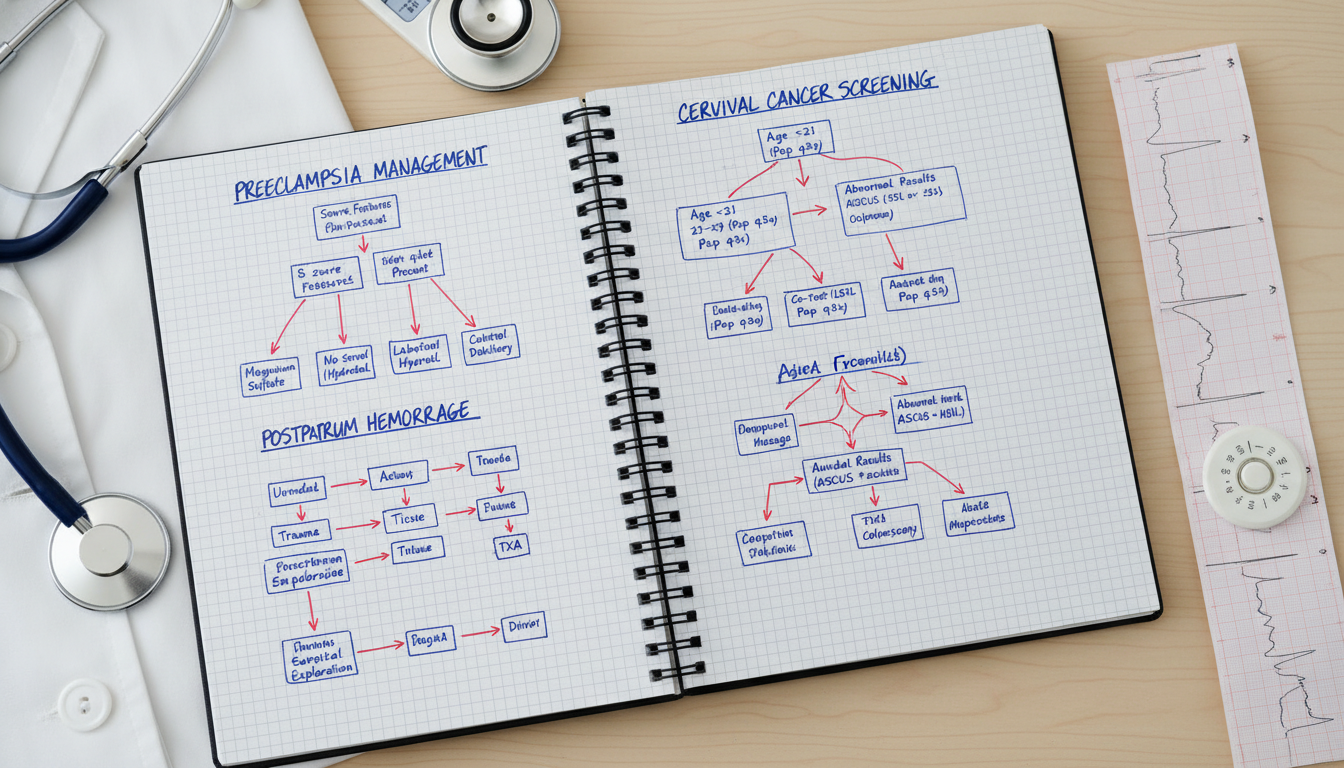
Nearly all Step 2 CK examinees see substantial OB GYN content. As an international medical graduate targeting OB GYN, you should aim to master these topics, not just pass them.
1. Obstetrics: Antenatal Care and Complications
Antenatal and routine pregnancy care
- Dating pregnancies, initial prenatal labs, routine screening.
- Vaccinations in pregnancy (influenza, Tdap, what is contraindicated).
- Weight gain recommendations by BMI.
High-yield complications:
- Hypertensive disorders of pregnancy
- Gestational hypertension vs preeclampsia ± severe features vs eclampsia.
- Management: when to deliver, when to use magnesium sulfate, antihypertensive choices.
- Gestational diabetes
- Screening (1-step vs 2-step), diagnosis, glycemic goals.
- Treatment principles and fetal monitoring.
- Intrauterine growth restriction (IUGR) and macrosomia
- Biophysical profile, Dopplers, NST interpretations.
- Infections in pregnancy
- TORCH infections, UTI/pyelo in pregnancy, asymptomatic bacteriuria management.
- Bleeding in pregnancy
- First trimester (ectopic, threatened abortion, missed abortion).
- Second/third trimester (placenta previa, abruption, uterine rupture).
- Preterm labor and PPROM
- Tocolytics, corticosteroids, magnesium sulfate for neuroprotection.
- Management by gestational age and presence of infection.
Practical tip: Make summary tables for each major condition with:
Definition – key features – diagnostics – initial management – definitive management – timing of delivery.
2. Intrapartum and Postpartum Care
Labor management
- Stages of labor; normal labor progress vs arrest disorders.
- Indications for induction, augmentation, and cesarean.
- Use of oxytocin and monitoring for tachysystole.
Intrapartum fetal monitoring
- Interpret fetal heart rate patterns: baseline, variability, accelerations, decelerations.
- Management of late decelerations, variable decelerations, bradycardia.
Obstetric emergencies
- Postpartum hemorrhage
- Causes: “4 Ts” (tone, trauma, tissue, thrombin).
- Stepwise treatment: uterotonic meds, manual maneuvers, procedures.
- Shoulder dystocia
- Maneuvers: McRoberts, suprapubic pressure, etc.
- Uterine inversion or rupture
- Risk factors and immediate management.
- Amniotic fluid embolism, cord prolapse
- Recognize rapidly and know emergent steps.
Postpartum care
- Endometritis, postpartum depression vs blues vs psychosis.
- Lactation problems (mastitis, engorgement, breastfeeding contraindications).
- Postpartum contraception options and timing.
Step 2 CK often includes multi-step questions on postpartum women with complex issues (e.g., infection plus breastfeeding, or depression with comorbidities). Practice integrating psychosocial and medical management.
3. Gynecology: Core Conditions and Office Practice
Abnormal uterine bleeding (AUB)
- PALM-COEIN classification.
- Workup in different age groups (adolescents vs reproductive vs perimenopausal).
- Indications for endometrial biopsy.
Pelvic pain and adnexal masses
- Differentiating ectopic pregnancy, ovarian torsion, ruptured cyst, PID.
- Imaging findings vs management approach.
- Cancer risk assessment for adnexal masses, especially in postmenopausal women.
Gynecologic infections
- PID: diagnosis, inpatient vs outpatient treatment, complications (TOA, infertility).
- STIs (chlamydia, gonorrhea, trichomonas, HSV, HPV) – screening and treatment protocols.
- Vaginitis (bacterial vaginosis, candidiasis, trichomoniasis).
Benign GYN conditions
- Uterine fibroids: symptoms, imaging, medical vs surgical management.
- Endometriosis and adenomyosis: classic presentations and treatment options.
- Pelvic organ prolapse and urinary incontinence: types and first-line treatments.
4. Cancer Screening and GYN Oncology
Cervical cancer screening and management
- When to start and stop screening.
- Pap smear vs HPV co-testing intervals.
- Management of abnormal cytology (ASC-US, LSIL, HSIL).
- Colposcopy indications and follow-up.
Endometrial, ovarian, and breast cancer
- Risk factors (e.g., unopposed estrogen, BRCA, nulliparity).
- Presentations and basic diagnostic approach.
- Screening guidelines (especially breast cancer screening modalities and intervals).
USMLE loves guideline-based questions. As an IMG, explicitly memorize U.S. guideline ages, intervals, and indications, since they may differ from your home country.
5. Reproductive Endocrinology and Infertility
- Evaluation of infertility: history, timed intercourse, basic hormonal and imaging workup.
- PCOS: diagnostic criteria, metabolic risks, treatment options.
- Primary vs secondary amenorrhea workups.
- Menopause: vasomotor symptoms, hormone replacement therapy indications and contraindications.
Test-Taking Strategy, Timing, and Day-of-Exam Execution
Many international medical graduates know the content but lose points due to test format, timing, or unfamiliar English phrasing. Your Step 2 CK preparation must explicitly address exam skills.
Simulate the Real Exam Early and Often
- Step 2 CK: 8 blocks, 40 questions each, 1 hour per block; total test time 8 hours.
- Use UWorld timed blocks from early on, at least by the second month of studying.
- Do full-length simulation days with:
- 6–7 blocks back-to-back initially.
- Later, work up to 8 blocks with breaks to mimic real test day.
Develop a Consistent Question Approach
For each question:
- Read the last line first
- Understand what is being asked (diagnosis? next step? best test? best initial treatment?).
- Scan key data from stem
- Age, pregnancy status, vitals, chronic conditions, medications.
- Identify red flags or “buzz” combinations
- E.g., 32-year-old G2P1 at 32 weeks with hypertension, proteinuria, headache, RUQ pain → preeclampsia with severe features.
- Eliminate clearly wrong options first
- Remove anything that contradicts guidelines or is unsafe.
- Choose guideline-consistent, least invasive, most cost-effective correct answer
- USMLE emphasizes safe, evidence-based medicine, not heroic or expensive interventions first.
Managing Time During the Exam
- Aim for ~80–85 seconds per question.
- If you are stuck for >90 seconds, mark the question, choose the best option, and move on.
- Use breaks:
- Plan 2–3 short breaks plus a lunch break.
- Practice this pattern on your self-assessments.
Common IMG Pitfalls and How to Avoid Them
- Over-reading the question
- Focus on the relevant facts; don’t invent extra details.
- Choosing what you “would do at home” vs U.S. standard of care
- Always think: “What does a U.S.-trained OB GYN do by guidelines?”
- Language and speed issues
- Read English medical texts (guidelines, UWorld explanations) daily.
- Consider reading questions out loud during practice to improve speed and comprehension.
- Panic during hard blocks
- Expect 1–2 blocks to feel brutal; this is normal.
- Stay consistent; your score comes from the entire exam, not one block.
Integrating Step 2 CK Prep With Your OB GYN Residency Strategy
Because this article is an IMG residency guide, it’s important to connect USMLE Step 2 study with your overall OB GYN residency application.
Aligning Step 2 CK Preparation with the Obstetrics Match Timeline
- If aiming for the main Match (ERAS application in September):
- Try to take Step 2 CK by June–July so scores are ready.
- This timing gives room for a retake if something goes wrong (though ideally you pass first attempt).
- If you are not ready, it is often better to delay your exam a few weeks rather than risk a low score, especially for a competitive field like OB GYN.
Showcasing Your Women’s Health Focus
Use your Step 2 CK preparation to:
- Identify OB GYN areas you genuinely enjoy (e.g., maternal-fetal medicine, minimally invasive surgery, family planning).
- Strengthen your confidence for OB GYN electives, observerships, or externships in the U.S.
- Generate ideas for personal statements or interviews (e.g., a memorable case of severe preeclampsia that you now understand in depth).
Using Practice Scores to Refine Your Strategy
Track:
- UWorld percentage (overall and OB GYN-specific).
- NBME and UWSA scores over time.
If your Step 2 CK score predictors are:
- Below 220:
- Focus on core medicine and surgery concepts; you may need to postpone the exam.
- 220–235:
- Intensive focus on OB GYN, medicine, and frequently tested topics; push for improvement before scheduling the exam.
- ≥240:
- You are in a strong position; now polish test-taking strategies and solidify weak topics.
Frequently Asked Questions (FAQ)
1. How many months should an IMG spend on USMLE Step 2 CK preparation for OB GYN residency?
Most international medical graduates need 4–6 months of serious preparation, depending on:
- Baseline knowledge and recency of graduation
- Clinical workload
- Language comfort
If you’ve been out of medical school for several years, aim closer to 6–9 months, with at least 6–8 weeks of dedicated, full-time preparation near the end.
2. How important is Step 2 CK compared to Step 1 for the obstetrics match?
With Step 1 now pass/fail, many OB GYN programs treat Step 2 CK as the primary objective academic metric. A strong Step 2 CK score can:
- Compensate for a weaker academic history or older graduation date.
- Improve your chances at interviews, especially at university programs.
For a competitive OB GYN residency, you should aim as high as possible, often targeting a Step 2 CK score of 240+ if you can.
3. Should I focus more on OB GYN questions or keep my prep broad?
You must do both:
- Step 2 CK is a general clinical exam, so you need solid performance across all specialties (internal medicine, surgery, pediatrics, psychiatry).
- As an OB GYN applicant, it is wise to over-prepare OB GYN:
- Re-do OB GYN UWorld questions.
- Create concise OB GYN notes.
- Pay special attention to pregnancy and women’s health in other systems (e.g., cardiology in pregnancy).
Your final exam score depends on broad performance, but extra strength in OB GYN helps both the exam and your residency interviews.
4. What if my practice scores are low close to my test date?
If your NBME or UWSA scores are consistently more than 10–15 points below your target, consider:
- Postponing the exam if your visa and application timeline allow.
- Intensifying:
- Review of incorrect questions.
- Focused reading of UWorld explanations and high-yield notes.
- Simulated exam days to build endurance.
A low official Step 2 CK score is difficult to offset, especially for competitive specialties like obstetrics and gynecology. It is usually safer to delay and improve than to risk a poor outcome.
By approaching USMLE Step 2 CK preparation strategically—balancing broad clinical knowledge with deep, guideline-based understanding of OB GYN—you can turn this exam into a major strength in your application as an international medical graduate. Thoughtful planning, disciplined practice, and specific attention to women’s health content will position you strongly for the obstetrics match and your future career in OB GYN residency.