
Why Step 2 CK Matters So Much for IMGs in Radiation Oncology
For an international medical graduate aiming at radiation oncology residency in the U.S., USMLE Step 2 CK is not just another exam; it is a strategic credential that can significantly influence your rad onc match prospects.
Radiation oncology is a small, competitive specialty with a limited number of residency spots. Program directors often know applicants’ profiles in great detail, and numerical metrics—especially for IMGs—are scrutinized carefully. Since Step 1 is now pass/fail, Step 2 CK has become the primary standardized numeric score in your file.
Why Step 2 CK is especially critical for an IMG in radiation oncology:
- Objective comparison tool: Programs use your Step 2 CK score to compare you with U.S. graduates and other IMGs.
- Evidence of clinical readiness: Radiation oncologists treat complex, often very sick patients. A strong Step 2 CK score demonstrates clinical reasoning strength and readiness for U.S. clinical training.
- Compensates for other barriers: If you lack U.S. clinical experience, have older graduation date, or come from a lesser-known school, a high Step 2 CK score can help balance that.
- Signals discipline and professionalism: Competitive specialties want residents who are systematic, reliable, and able to master large volumes of material—exactly what a solid Step 2 CK preparation effort shows.
For an IMG residency guide specifically targeting radiation oncology, you should think of Step 2 CK as a core pillar of your application—alongside letters of recommendation, research, and clinical exposure.
Step 2 CK Content Overview with a Radiation Oncology Lens
USMLE Step 2 CK is a broad, clinically oriented exam. It does not test radiation oncology directly in detail, but many areas overlap with the knowledge and decision-making you will use as a rad onc resident.
Core Content Domains
The exam is heavy on:
- Internal Medicine
- Obstetrics & Gynecology
- Pediatrics
- Surgery
- Psychiatry
- Emergency and critical care
- Epidemiology, ethics, and health systems
Within these, oncology and hematology appear frequently—offering opportunities to align your Step 2 CK preparation with your long-term radiation oncology residency goals.
Oncology-Related Content You Should Master
Even if the word “radiation” doesn’t appear often in the questions, the exam expects you to know:
- Cancer epidemiology and screening
- Breast, colorectal, cervical, lung, prostate cancer screening guidelines
- High-risk populations, genetic syndromes (BRCA, Lynch, FAP)
- Diagnosis and staging
- When to order CT, MRI, PET, bone scan
- TNM staging concepts (at least at a general level)
- Biopsy indications and interpretation basics
- Initial management and treatment selection
- When surgery is first-line
- When chemoradiation is standard
- Palliative vs curative intent decision-making
- Oncologic emergencies
- Spinal cord compression
- Superior vena cava syndrome
- Tumor lysis syndrome
- Hypercalcemia of malignancy
- Neutropenic fever
- Treatment toxicity and supportive care
- Common chemotherapy side effects
- Acute radiation-like toxicities (mucositis, dermatitis, pneumonitis) in a general sense
- Pain control and palliative care principles
This knowledge is central both to USMLE Step 2 study and your future practice in oncology.
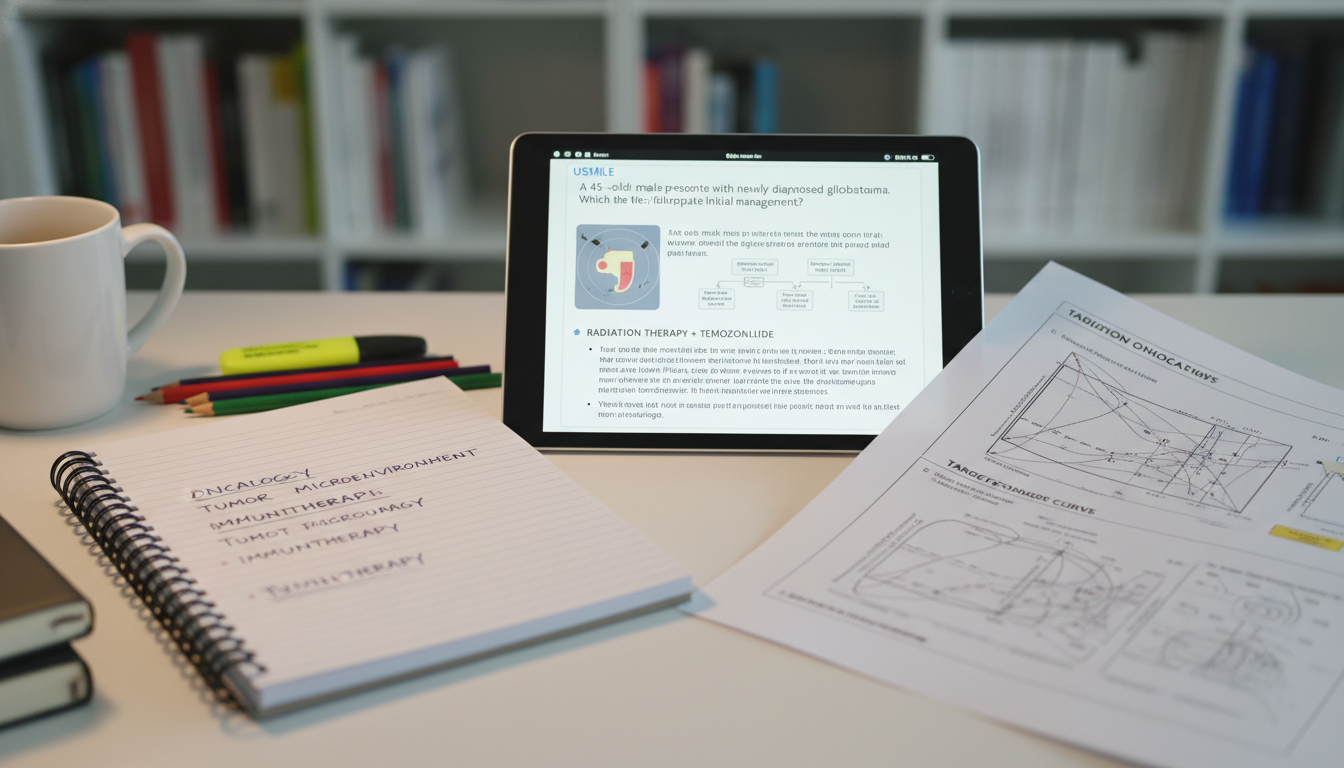
Actionable tip: While preparing for Step 2 CK, maintain a small notebook (or digital document) titled “Oncology & Rad Onc Pearls.” Populate it as you encounter oncology questions—this becomes a foundation for your future specialty interviews and clinical thinking.
Strategic Study Timeline and Score Goals for IMGs in Rad Onc
Target Step 2 CK Score for Radiation Oncology
Programs rarely publish explicit cutoffs, but for an IMG targeting radiation oncology residency:
- Highly competitive range: 255+
- Competitive range: 245–255
- Borderline but potentially workable (with strong research and letters): 235–245
A lower Step 2 CK score does not automatically rule out rad onc, especially if you have outstanding research or connections, but your rad onc match odds are clearly stronger with a high score.
When Should an IMG Take Step 2 CK?
Ideal timing for most IMGs:
- 12–18 months before the intended NRMP Match:
- Allows time to:
- Use the score in your ERAS application
- Retake if absolutely necessary (not ideal but sometimes strategic)
- Focus afterward on research and U.S. clinical experience
- Allows time to:
Approximate planning example:
- You plan to apply in September 2027:
- Take Step 2 CK between June 2026 and February 2027
- Begin dedicated preparation 6–9 months before the exam date, depending on baseline.
Building a Realistic Study Timeline
Your IMG residency guide for Step 2 CK should start with an honest self-assessment:
Baseline Evaluation
- Take an early practice exam (e.g., NBME Comprehensive Clinical Science Self-Assessment) or a free practice test from your question bank.
- If your baseline score is:
- < 210: Plan at least 6–9 months of structured prep.
- 210–230: Plan 4–6 months.
- > 230: You might need 3–4 months of intensive preparation.
General Structure of the Timeline
- Foundational Phase (30–40% of total time)
- Build core knowledge by systems (cardiology, pulm, GI, etc.).
- Do learning-mode questions and review resources.
- Question-Intensive Phase (40–50%)
- Large volume of timed, mixed questions.
- Emphasize test-taking strategy and pattern recognition.
- Refinement Phase (last 3–4 weeks)
- Focus on weaknesses and high-yield topics.
- Multiple self-assessments to confirm readiness.
- Tight simulation of actual exam conditions.
- Foundational Phase (30–40% of total time)
Resources and Study Methods: Building a High-Yield Plan
Core Resources for USMLE Step 2 CK Preparation
Most successful Step 2 CK strategies rely on a small number of high-yield, repeatedly used resources:
Question Bank (Primary Tool)
- A major commercial QBank (UWorld, Amboss, etc.) is essential.
- Strategy:
- Aim for at least one full pass of the entire bank; 1.5–2 passes is ideal if time permits.
- Begin with subject-wise blocks early, then transition to mixed, timed blocks.
- For an IMG in radiation oncology:
- Pay particular attention to oncology, hematology, palliative care, and ethics questions—these are directly relevant to your specialty.
Comprehensive Review Book/Platform
- Options like Master the Boards, Step-Up, or integrated online Step 2 reviews can work.
- Use them to:
- Build a system-based framework.
- Clarify algorithms for diagnosis and management.
Clinical Guidelines and Algorithms (High Yield for Onc)
- While you don’t need in-depth NCCN-level detail, it helps to internalize:
- Standard diagnostic sequences for common cancers.
- When radiation is part of multimodality care (e.g., chemoradiation for head and neck, cervical, rectal cancers).
- As you study, always ask: “Where does radiation fit?” even if the exam doesn’t ask explicitly. This improves your understanding and interview talking points.
- While you don’t need in-depth NCCN-level detail, it helps to internalize:
Self-Assessment Exams
- NBME self-assessments and the UWorld self-assessments (if using UWorld) are critical.
- Use them:
- At baseline (optional but helpful)
- Midway, to adjust strategy
- Near the end, to approximate your actual Step 2 CK score
Study Methods for IMGs: Overcoming Common Challenges
Many IMGs face specific barriers:
- Non-native English
- Practice gaps since graduation
- Different clinical patterns than U.S. guidelines
You can address these within your USMLE Step 2 study strategy:
1. Active Learning Over Passive Reading
- Focus on:
- Doing questions
- Explaining answers out loud (even to yourself)
- Drawing diagrams and summary tables
- Example:
- After a question on breast cancer, write a quick note:
- Screening intervals
- Imaging modality by age and risk
- Staging/management flow (lumpectomy + radiation vs mastectomy, chemo indications)
- After a question on breast cancer, write a quick note:
2. Language and Test-Taking Skill
- Practice reading questions rapidly and identifying:
- The clinical question (“What is the next best step?”, “Most likely diagnosis?”, “Most appropriate management?”).
- The key modifiers (age, comorbidities, pregnancy, acute vs chronic).
- If English is a major struggle:
- Read explanations out loud.
- Study with U.S.-based guidelines’ summaries (e.g., USPSTF, CDC) to get used to their phrasing.
3. Aligning Study with U.S. Clinical Practice
- Pay attention wherever a question explanation says:
- “In the United States, the recommended approach is…”
- Make a small list titled “U.S. vs My Country Differences” where you log:
- Differences in common screening schedules
- Preferred drugs (e.g., DOACs vs warfarin)
- Typical first-line treatments
This not only boosts your Step 2 CK score but also prepares you to speak convincingly about your understanding of U.S. medicine in interviews.

Practical Daily and Weekly Study Plans
Daily Structure for Full-Time Study (8–10 hours/day)
Morning (4 hours)
- Timed QBank blocks: 40-question block x 2
- Simulate exam: 1 hour per block + 1–1.5 hours to review both.
- During review:
- Understand why each incorrect answer is wrong.
- Add 2–3 key points per block to a running summary document.
- Timed QBank blocks: 40-question block x 2
Midday (2–3 hours)
- Focused content review:
- One major system or topic (e.g., cardiology, oncology, OB).
- Use condensed review sources.
- Integrate with high-yield tables (e.g., differentiating causes of anemia, staging of common cancers in broad strokes, etc.).
- Focused content review:
Afternoon/Evening (2–3 hours)
- Mixed QBank blocks or flashcards:
- Sustain retrieval practice.
- Revisit weak topics identified from your analytics.
- Mixed QBank blocks or flashcards:
Short Oncology-Focused Block (Optional, 30–45 minutes)
- End the day with 5–10 selected oncology-related questions.
- Summarize how the management/rationale might intersect with radiation oncology practice.
Weekly Structure
- 5–5.5 days/week of intensive work:
- Maintain consistency; avoid long gaps.
- 0.5–1 day/week of partial rest:
- Light review only (Anki/flashcards, brief reading).
- Prevent burnout.
Weekly checkpoints:
- Track:
- Number of questions completed
- Accuracy trends by subject
- Self-rated understanding of key areas (0–10 scale)
- Adjust:
- Increase time allocated to weak areas.
- If oncology/hematology is consistently weak, devote an extra 4–6 hours weekly to that.
Balancing Step 2 CK Prep with Research and Rotations
Many IMGs aiming for radiation oncology are also heavily involved in research or observerships. A realistic structure might be:
- Heavy research/clinic days:
- 2–3 hours of focused Step 2 CK prep (one timed block + review).
- Light or off days:
- 6–8 hours of study.
Integration strategies:
- Use travel/commute time (audio lectures, reviewing notes).
- Study oncology-related content that might also help your research understanding (e.g., lung cancer staging if you’re on a thoracic project).
Test Day Strategy and Post-Exam Planning for Rad Onc Applicants
Simulating the Exam Before Test Day
In the last 2–3 weeks:
- Complete at least 2–3 full-length simulations:
- 7–8 blocks, timed, minimal distractions.
- Same start time as your real exam.
- Practice:
- Nutrition/hydration routine.
- Break schedule (e.g., small snack after blocks 2, 4, and 6).
- Use the simulation to:
- Adjust pacing: watch for questions you tend to overthink.
- Experiment with reading stem first vs last (and choose what works best for you).
Optimizing Performance on Exam Day
- Arrive early; minimize logistical stress.
- Use earplugs or headphones (if allowed) to block noise.
- During each block:
- Quickly flag very tough questions; don’t get stuck for more than ~60–75 seconds on a single item.
- Plan to return to flagged questions in the last few minutes.
- Take short, regular breaks:
- Even 3–5 minutes between blocks helps reset your focus.
Interpreting Your Step 2 CK Score for Radiation Oncology
When your score arrives:
Compare to your target range:
- If your Step 2 CK score is:
- ≥ 250: Strong for rad onc, particularly for an IMG.
- 240–249: Competitive; strengthen other parts of your application.
- 230–239: Possible, but will likely require:
- Strong research output (publications, abstracts)
- Excellent letters from academic oncologists
- Possibly strong networking and away rotations (for those able to arrange them)
- < 230: Not necessarily disqualifying, but:
- Consider broadening specialty options.
- Discuss with mentors about realistic rad onc match chances.
- If your Step 2 CK score is:
Use the score strategically in your application:
- Strong score:
- Highlight in ERAS, personal statement (subtly), and CV.
- Shows your ability to handle complex material—key for an advanced specialty like radiation oncology.
- Modest score:
- Emphasize your trajectory (e.g., improvement from Step 1 or earlier tests).
- Showcase strengths in clinical performance and research instead.
- Strong score:
Deciding on a Retake (Rare and Cautious)
- Retakes are rarely recommended unless:
- A clear, atypical event affected your performance (illness, major technical issue).
- You and a trusted advisor believe you can substantially improve (e.g., from 220s to 245+).
- Programs generally see all attempts; multiple attempts can be a red flag.
- Retakes are rarely recommended unless:
Connecting Step 2 CK Prep to Your Radiation Oncology Narrative
A unique advantage of being an IMG focused on radiation oncology is that you can frame your USMLE Step 2 CK preparation as part of a broader, coherent professional story:
- Clinical Foundations: Emphasize that Step 2 CK pushed you to consolidate a robust understanding of general medicine, oncology, and acute care—crucial for safely managing cancer patients.
- Oncology Literacy: Show that while studying, you paid particular attention to:
- Cancer staging
- Multimodality treatment decisions
- Oncologic emergencies and palliation
- Discipline and Resilience: Demonstrate the persistence needed to excel as an IMG in a competitive field:
- Balancing exams, research, possibly visa issues, and adapting to a new healthcare system.
You can later reference this in your personal statement and during interviews:
“Preparing for Step 2 CK as an international medical graduate gave me a structured way to master U.S. oncology and general medicine guidelines. The process reinforced my interest in complex, multidisciplinary decision-making, which is exactly what drew me to radiation oncology.”
By treating Step 2 CK not only as an exam but as professional formation, you make your preparation more meaningful—and more impressive to program directors.
FAQs: Step 2 CK Preparation for IMGs in Radiation Oncology
1. What Step 2 CK score should an international medical graduate aim for if they want radiation oncology residency?
For an IMG, a Step 2 CK score of 255+ places you in a very strong position, 245–255 is competitive, and 235–245 may still be workable with strong research, letters of recommendation, and networking. Lower scores don’t absolutely exclude you but make the rad onc match more challenging and increase the importance of outstanding non-exam components.
2. How early should I start USMLE Step 2 CK preparation if I am also doing radiation oncology research?
If you’re combining heavy research with exam prep, plan 6–9 months of structured preparation. Start with lighter daily study (2–3 hours) during intense research phases, then ramp up to full-time study (6–8+ hours/day) in the final 2–3 months before the exam. Align your research schedule so that your heaviest lab/clinic commitments don’t coincide with your last 4–6 weeks of dedicated prep.
3. Do I need to focus on radiation oncology-specific topics for Step 2 CK?
Step 2 CK doesn’t test detailed radiation oncology techniques (e.g., dose constraints, planning), but it does heavily test oncology in general. Focus on:
- Cancer screening and prevention
- Initial workup and staging of common cancers
- Indications for surgery, chemotherapy, radiation, and palliative care Understanding where radiation fits into multimodal care helps you both on the exam and in future residency interviews.
4. Can a strong Step 2 CK score compensate for limited U.S. clinical experience as an IMG?
A high Step 2 CK score can partially offset limited U.S. clinical exposure by demonstrating strong medical knowledge and adaptability to U.S.-style exams. However, for competitive fields like radiation oncology, you typically still need:
- At least some U.S. exposure (observerships, electives, or research in U.S. institutions)
- Strong letters from U.S. or well-known academic oncologists
- Evidence of commitment to oncology (research, presentations, relevant experience)
Used strategically as part of a broader application plan, a strong Step 2 CK score makes it easier for programs to take your application seriously and invite you for interviews.