



Understanding the Ultra-Competitive Landscape in Interventional Radiology
Interventional Radiology (IR) is no longer a quiet niche; it is now recognized as a true ultra-competitive specialty—closer to matching derm or matching ortho than to traditional diagnostic radiology in terms of selectivity. For a non-US citizen IMG (foreign national medical graduate), the bar is even higher.
To build an “ultra-competitive specialty strategy,” you must understand five hard realities:
Limited Categorical IR Positions
Integrated IR (IR/DR) residency spots are relatively few. Many programs are tied to strong academic centers that are already highly cautious about sponsoring visas.Preference for US Medical Graduates
Programs often state they are “IMG-friendly,” yet may prefer US MD/DO applicants in practice. For a non-US citizen IMG, this creates a dual filter:- Not US-trained
- Requires visa (J-1 or H-1B)
Strong Applicant Pool
Many US MD students applying to IR have:- Honor society memberships (AOA/Gold Humanism)
- Strong USMLE scores
- IR research, presentations, and home IR departments pushing their applications
You must present equivalent or higher strengths in some domains to get noticed.
Radiology Culture and Risk Aversion
Academic IR groups often seek residents who:- Fit well with existing IR and DR teams
- Show strong professionalism and communication skills
- Are “low-risk” for visa, professionalism, and board pass rates
Your application must reduce perceived risk and demonstrate you are an asset from day one.
Alternative Pathways Matter
Direct IR/DR integrated residency is not the only route:- Diagnostic Radiology (DR) residency → Independent IR
- Transitional year + DR + Independent IR
For a non-US citizen IMG, securing DR at a program with an IR pathway can be an equally legitimate strategic win.
Your strategy should be deliberately multi-layered: combine academic excellence, IR exposure, targeted networking, and visa awareness with backup planning that still leads to IR.
Building the Core Competitiveness: Exams, CV, and Narrative
For an ultra-competitive specialty like interventional radiology, your baseline credentials must be strong enough to clear objective filters before softer factors have any chance to help.
1. Exam Strategy for a Foreign National Medical Graduate
USMLE Step scores will likely be used as the first screening metric, even in the era of pass/fail Step 1.
Step 1 (Pass/Fail)
- A pass on first attempt is mandatory.
- Any failure is a serious hurdle; if you have one, you must compensate with:
- Strong Step 2 CK
- Robust US clinical performance and letters
- Meaningful IR or radiology-focused research
Step 2 CK
For an ultra-competitive field like IR, aim for a score that would be competitive in derm/ortho at academic centers. While cutoffs vary year-to-year:
- Target: >245–250+ as a non-US citizen IMG
- >255 gives you a substantial boost at more selective IR programs
Step 3 (Optional but Strategic)
Step 3 can be a strategic advantage for a non-US citizen IMG, particularly for:
- Programs that sponsor H-1B visas
- PDs concerned about your ability to pass boards
If you can schedule and pass Step 3 before rank list certification, it:
- Demonstrates test-taking resilience
- Smooths visa concerns
- Adds a subtle competitive edge over other foreign national medical graduates
2. Crafting an IR-Centered CV
To compete with US MDs who grew up in IR-rich environments, your CV must highlight a clear, sustained trajectory toward IR.
Key components:
a. IR or Imaging Research
- Aim for at least one IR-focused or imaging-related publication or abstract, plus several posters or presentations.
- Ideal topics:
- Embolization outcomes (oncologic, trauma, GI bleed)
- Interventional oncology techniques
- Endovascular therapies for PAD or stroke
- Quality improvement (radiation dose, complication reduction)
If your home country lacks IR research:
- Seek remote research with US faculty (cold-email, networking, research fellowships).
- Volunteer as a data collector, chart reviewer, or image annotator to get your name on multi-author projects.
b. US Clinical Experience Tied to IR or Radiology
As a non-US citizen IMG, US clinical experience is critical. Prioritize:
- US-based radiology or IR electives
- Even 2–4 weeks can yield a strong letter if you perform exceptionally.
- Substantial time in internal medicine/surgery subspecialties that intersect with IR (hepatology, oncology, vascular surgery).
- Hands-on sub-internships where allowed, to showcase:
- Clinical judgment
- Communication with consultants (including IR teams)
- Work ethic at US pace
c. Academic Distinctions & Leadership
IR PDs value:
- Class rank or honors (if your school provides them)
- Teaching assistant roles, tutoring, OSCE examiner roles
- Leadership in radiology/IR interest groups or specialty societies
If your school has an IR interest group:
- Run a case conference, start a journal club, or organize a virtual IR lecture series with international speakers.
3. Your IR Story: From Interest to Commitment
Ultra-competitive specialties reward coherent narratives. Your personal statement and experiences should connect:
Origin of Interest
Perhaps:- Exposure to IR in complex oncologic care
- An experience seeing minimally invasive procedures transform patient outcomes in resource-limited settings
- A mentor in IR who introduced you to image-guided therapies
Exploration and Confirmation
Show that you:- Completed IR/shadowing electives
- Participated in IR research or QI projects
- Attended IR grand rounds or national meetings (SIR, CIRSE, regional meetings)
Commitment and Direction
Articulate:- The IR niches that excite you (interventional oncology, vascular, trauma, women’s health, etc.)
- What unique perspective you bring as a foreign national medical graduate (global health, resource adaptation, cross-cultural communication)
Your narrative should be as purposeful and intense as a US student matching derm or matching ortho—unambiguously dedicated to IR, yet open to DR → IR pathways.
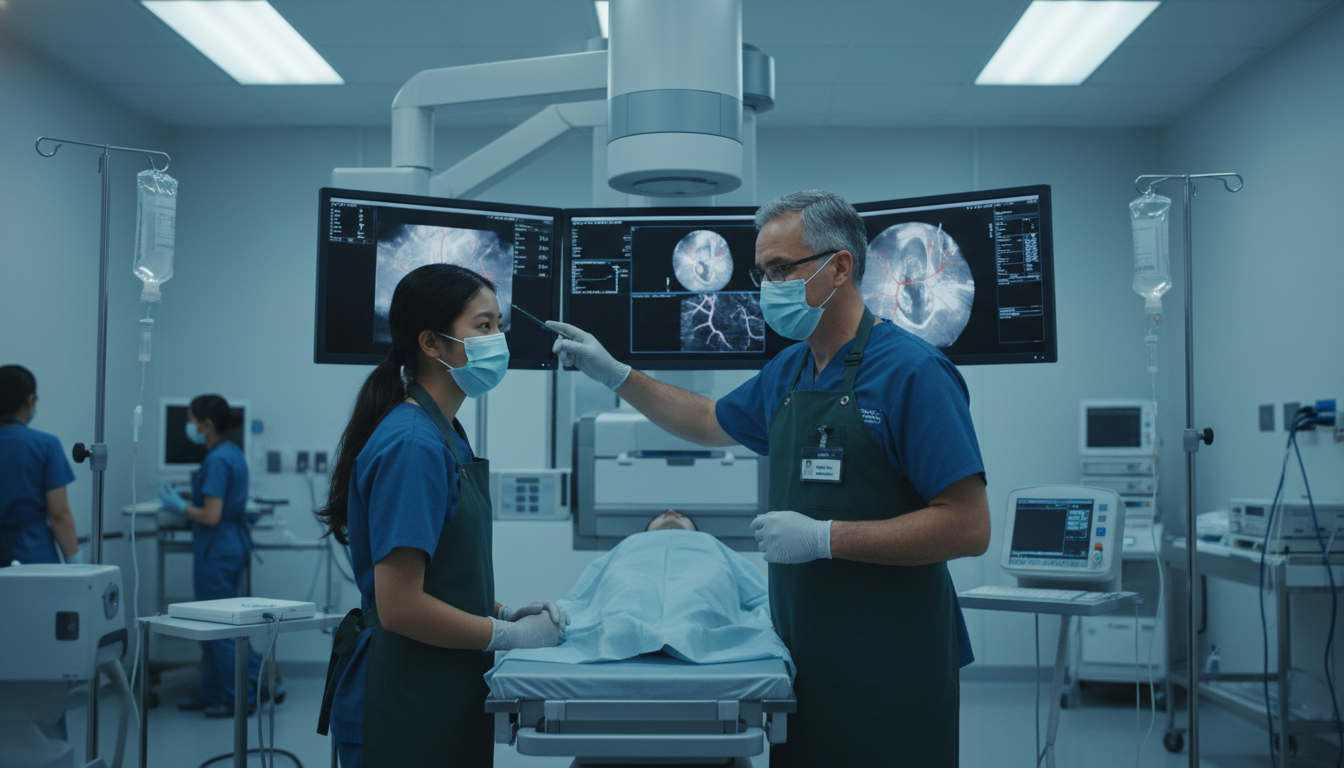
Strategic IR Exposure: Rotations, Research, and Networking
Knowing you are a non-US citizen IMG, you must treat IR exposure and networking as central pillars, not “extras.”
1. Choosing Rotations Intentionally
You have limited time in the US. Every week must serve a purpose.
Top priorities:
IR Electives at IMG-accepting Programs
- Target IR programs that:
- Have a history of matching IMGs
- Are willing to sponsor visas
- Have independent IR positions tied to DR
- Ask program coordinators specifically:
- “Do you currently have or have you recently had non-US citizen IMGs in your IR/DR or DR residency?”
- Target IR programs that:
Diagnostic Radiology Electives at IR-Strong Institutions
If IR electives aren’t available:- Do DR electives at high-volume IR centers
- Spend your free time:
- Attending IR cases
- Joining IR rounds
- Going to IR teaching conferences
Internal Medicine, Surgery, or Oncology Sub-I Rotations
These show:- You can manage sick patients
- You understand the referring side of IR
- You communicate well in high-stakes environments
On every rotation, intentionally build at least one strong letter-writer.
2. Getting Letters That Matter in the IR Match
For an IR match as a non-US citizen IMG, you will ideally have:
- At least one strong letter from an IR attending in the US
- One letter from a diagnostic radiologist who can speak to your imaging aptitude
- One letter from a core clinical specialty (IM/surgery/ICU) supporting your clinical acumen and professionalism
Elements of a strong IR letter:
- Mentions your hands-on involvement (case observation, pre/post-procedure care, patient counseling)
- Highlights:
- Work ethic
- Procedural aptitude (even if limited to simulation)
- Ability to function as part of a multidisciplinary team
- Explicitly recommends you for IR/DR residency (not just “radiology”)
Give letter writers a:
- CV
- Draft of personal statement
- List of procedures or cases you were involved in
- Summary of your research or academic contributions
3. Networking: Visibility in a US-Centric Specialty
IR is a smaller community compared to internal medicine; this makes strategic networking extremely high yield.
Ways to network:
- Join the Society of Interventional Radiology (SIR) as a medical student or international member
- Attend SIR annual meeting (in person or virtually)
- Poster presentations or e-posters are very helpful
- Introduce yourself briefly and professionally to faculty whose work you follow
- Engage on Twitter/X and LinkedIn where many IR attendings and residents are active:
- Share interesting IR articles with short summaries
- Highlight your research and tag the department (when appropriate and allowed)
- Always maintain professional tone and respect patient confidentiality
You are not trying to become “famous”; your goals are:
- Name recognition
- Demonstrating genuine, sustained interest in IR
- Creating openings for research or visiting observer opportunities
Visa, Program Targeting, and the “DR-to-IR” Back-Up Plan
Unlike US citizens, you must optimize around visa realities and program policies while still aiming at an ultra-competitive target.
1. Visa Strategy for a Non-US Citizen IMG
Common pathways:
J-1 Visa (ECFMG-sponsored)
- Most common for residency
- Easier for programs to implement
- Requires 2-year home country return or waiver later
H-1B Visa
- Some IR/DR or DR programs are willing to sponsor H-1B
- You must typically have Step 3 passed
- More paperwork and cost to the institution
Your actions:
Identify visa policies early
- Use program websites, FREIDA, and direct emails to coordinators
- Ask: “Do you sponsor J-1 and/or H-1B visas for residents?”
Tailor your program list
- Include:
- Programs known to sponsor visas
- DR programs with strong IR sections (even if integrated IR spots are limited)
- Avoid wasting applications on programs that simply do not sponsor any visas.
- Include:
Consider your long-term plan
- J-1 → waiver job in IR-friendly, often underserved areas
- H-1B → more flexibility but limited availability
2. Targeting IR vs DR Programs Intelligently
A good ultra-competitive specialty strategy for IR as a foreign national medical graduate is usually two-pronged:
Primary Aim: IR/DR Integrated Positions
- Apply to as many IR/DR programs as are reasonably IMG- and visa-friendly
- Recognize that interview rates may be low due to sheer competitiveness
Parallel Aim: DR Programs with Strong IR Pathways
- Identify DR residencies where:
- IR is a high-profile division
- There are independent IR residency spots
- DR residents regularly match into IR fellowships or independent IR
- Identify DR residencies where:
Your end goal is to become an interventional radiologist, not necessarily to hold the exact title “IR/DR integrated graduate.” Many US-trained IR physicians followed the DR → IR route and built exceptional careers.
3. Risk Management and Tiered Program List
For a non-US citizen IMG, especially without US medical school pedigree, your program list should be broad and tiered:
Tier 1: Highly Competitive Academic IR/DR and DR Programs
- Top academic centers
- Strong research environments
- Visa-friendly subset only
Tier 2: Mid-sized University Programs with Active IR Divisions
- Good balance of research and clinical volume
- Often more IMG-friendly
- Clear record of DR grads matching into IR
Tier 3: Community-based DR Programs with IR Exposure
- May have fewer IR cases but still offer rotations and letters
- Can lead to independent IR applications later
Apply broadly:
- 40–60+ DR programs is not excessive for a non-US citizen IMG aiming for IR
- IR/DR integrated programs in addition to that, depending on finances
Remember: DR acceptance with strong IR exposure is a major success, not a failure.

Application Execution: ERAS, Interviews, and Ranking Strategy
Once your strategy is in place, execution on ERAS, interviews, and rank lists determines whether your work converts into an IR match.
1. ERAS Application Optimization for Interventional Radiology
Personal Statement:
- Tailor one version to IR/DR and another to DR if applying to both.
- Emphasize:
- Your clinical foundation in medicine/surgery
- Specific IR experiences (patient cases, procedures observed)
- Research or QI contributions in IR/imaging
- Long-term vision (e.g., interventional oncology in global health, building IR programs in underserved regions)
Avoid overused clichés (“married medicine and surgery”) unless you add genuine, specific depth.
Experience Entries:
- Prioritize:
- IR/DR-relevant experience
- Research roles and outputs
- Leadership roles showing maturity and communication
- Use quantifiable details:
- “Reviewed 420 angiographic cases for outcomes project”
- “Assisted with data collection for 80 TACE procedures”
Publications & Presentations:
- List PubMed-indexed papers clearly.
- Include accepted abstracts/posters at SIR or other national meetings.
2. Interview Performance: What IR and DR Programs Look For
On interview day, PDs and faculty want to know if you will:
- Be safe with patients
- Be reliable and collegial
- Learn quickly and handle stress
- Contribute positively to the culture
As a non-US citizen IMG, additional unspoken concerns may include:
- Communication and accent clarity
- Adaptation to US healthcare system
- Visa/long-term stability
Prepare to demonstrate:
Fluent, clear English
- Practice mock interviews with native speakers or senior residents
- Focus on concise, organized answers
Situational Judgment and Maturity
Common questions:- “Tell me about a time you faced a major challenge or failure.”
- “Describe a conflict with a team member and how you handled it.”
- “Why IR instead of surgery/cardiology?”
Use specific examples; show reflection and growth.
Knowledgeable IR Interest
Be ready to discuss:- IR topics you’ve read about or researched
- How you see the future of IR (e.g., interventional oncology, value-based care, outpatient IR centers)
- Cases you found memorable and why
Comfort with DR as Part of Your Identity
For IR/DR or DR interviews, don’t appear uninterested in diagnostic radiology. Show:- Understanding that strong DR skills underpin safe IR practice
- Genuine respect for imaging interpretation
3. Ranking Strategy: Balancing Dream IR and Realistic Pathways
When building your rank list:
Rank by true preference, not speculative “where I think I’ll match,” but within rational limits.
If you truly want IR:
- Rank all IR/DR integrated programs where you would be happy first.
- Then rank DR programs with strong IR pathways.
- Finally, DR programs with moderate IR exposure, but where you still see a realistic path to independent IR.
Avoid ranking programs where:
- Visa sponsorship is uncertain or impossible for you
- IR exposure is minimal and independent IR placement is rare
- You would be deeply unhappy (burnout risk is real)
Think in terms of 10–15 year horizons:
- Where will you have the best chance to become a safe, well-trained interventional radiologist?
- Does this program’s alumni pattern show consistent access to IR fellowships or independent IR spots?
FAQs: IR Match Strategy for Non-US Citizen IMGs
1. Is it realistic for a non-US citizen IMG to match directly into an IR/DR integrated residency?
It is difficult but not impossible. Your chances improve significantly if you have:
- Step 2 CK in the high 240s or above
- Strong US-based IR or DR letters
- IR/oncology/vascular research with US collaborators
- Demonstrated fluency and professionalism on rotations
However, even top-tier non-US citizen IMGs should apply broadly to DR programs with strong IR. Treat integrated IR/DR as a high-upside target, not your only path.
2. If I match into DR only, how strong are my chances of later doing IR?
Very strong—if you choose your DR program carefully. Many US interventional radiologists completed:
- DR residency
- Independent IR residency or IR fellowship
Maximize your chances by:
- Matching to DR programs where IR is prominent, with a visible track record of graduates entering IR.
- Doing early IR rotations as a DR resident
- Building relationships with IR faculty and participating in IR research/QI projects
- Presenting at SIR meetings as a DR resident
3. Should I delay application to build more IR research and USCE?
If your profile is currently weak (e.g., Step 2 CK borderline, minimal USCE, no IR exposure), it can be wise to spend 1–2 years:
- Doing a US-based research fellowship in IR or radiology
- Gaining US clinical observation or elective experiences
- Improving your exam performance (e.g., Step 3, if applicable)
This is especially useful for a foreign national medical graduate without strong home-country IR support. Delaying for strategic strengthening is far better than applying prematurely with a low-probability profile.
4. How do I explain my interest in IR compared to other competitive specialties like derm or ortho?
Program directors want to see that IR is your primary, authentic passion, not just a “competitive specialty” you picked randomly. You can say, in substance:
- Like dermatology or orthopedics, IR is procedural and ultra-competitive, but IR uniquely combines:
- Image-guided precision
- Minimally invasive innovation
- Heavy collaboration with multiple clinical services
- Your experiences (clinical, research, shadowing) have consistently pointed you toward IR’s blend of diagnostics, procedures, and longitudinal patient care.
Connect your story to patient-centered examples, not prestige or lifestyle.
Bottom line: As a non-US citizen IMG aiming for interventional radiology, your path is steeper—but absolutely achievable with a deliberate, multi-year strategy. Anchor your plan in high exam performance, meaningful IR and DR exposure, targeted visa-aware program selection, and a flexible mindset that values both integrated IR and DR → IR routes. Over time, consistent effort and strategic positioning can transform you from an outsider into a highly competitive IR candidate.




















