
Understanding the Ultra-Competitive Landscape in Interventional Radiology
Interventional Radiology (IR) has rapidly become one of the most ultra-competitive specialties in the United States—on par with or approaching the difficulty of matching derm or matching ortho at many institutions. For a US citizen IMG (American studying abroad), the bar is even higher.
You’re navigating multiple layers of selectivity:
- IR itself is competitive: Few positions, high demand, procedure-heavy, technology-driven.
- Integrated IR residency spots are limited: Many institutions still primarily train via diagnostic radiology (DR) plus ESIR pathway.
- Program risk perception: Some programs are still cautious about IMGs in high-stakes procedural roles.
- Structural disadvantages as an American studying abroad: Less access to US-based research, weaker direct pipelines to IR departments, and limited home-program advocacy.
Yet, US citizen IMGs do match into interventional radiology residency—especially those who approach it like a multi-year campaign, not a single application season.
This article lays out a step-by-step, ultra-competitive specialty strategy tailored to the US citizen IMG aiming for IR, blending what works for interventional radiology residency with lessons from the worlds of matching derm and matching ortho.
We’ll focus on:
- Game-planning your entire timeline
- USMLE strategy and transcript “presentation”
- Building a concrete IR story with research and experiences
- Letter-of-recommendation and networking tactics
- Application and ranking strategies that maximize your IR match chances
Step 1: Strategically Map Your Path to Interventional Radiology
Think of IR as you would dermatology or orthopedic surgery: you need a multi-year runway. For a US citizen IMG, that means planning from pre-clinical through the last day before applications go in.
A. Know Your Structural Advantages and Disadvantages
Advantages as a US citizen IMG:
- No visa issues (a major plus in a competitive specialty).
- Cultural familiarity with US healthcare and training.
- Often high motivation and resilience—programs notice this in interviews.
Disadvantages:
- School name recognition may be low.
- Fewer built-in relationships with US IR faculty.
- Less formal IR exposure unless your international school has a strong radiology department.
Your strategy is to remove program doubts one by one:
- Academic ability? → Demonstrate with USMLEs and strong clerkship performance.
- Procedural aptitude and judgment? → Show IR rotations, simulation, and procedure-focused experiences.
- Commitment to IR? → Research, presentations, IR electives, longitudinal involvement.
- Fit in US system? → US clinical experience (USCE), strong letters from US faculty, preferably IR/DR.
B. Understand IR Training Pathways and Their Implications
There are several common routes:
Integrated IR/DR Residency (6 years)
- Competitiveness: Extremely high, similar to top-tier DR + fellowship.
- Difficulty for US citizen IMG: High, but not impossible.
- Strategy: Apply broadly; IR + DR combined signal; strong research and IR networking needed.
Diagnostic Radiology (DR) → ESIR → IR Fellowship
- Step 1: Match DR.
- Step 2: Earn ESIR (Early Specialization in IR) status.
- Step 3: IR fellowship (now more limited but still present).
- Often more accessible for IMGs, especially at programs with positive IMG history.
Independent IR Residency (post-DR)
- Requires DR completion.
- Competitive, but you have years to prove yourself within a US DR program.
Ultra-competitive strategy:
As a US citizen IMG, you should usually:
- Apply to both integrated IR and DR in the same cycle.
- Target DR programs with strong IR divisions and ESIR pathways.
- Treat DR as a legitimate primary target, not only a backup.
This dual-path approach resembles orthopedics applicants also applying prelim surgery, or derm applicants hedging with internal medicine. It shows realism and maturity—both valued in IR.

Step 2: USMLE and Transcript Strategy for a Competitive Specialty
For competitive specialty fields like IR, derm, and ortho, numbers won’t get you in—but a weak testing record can quietly shut doors.
A. USMLE Expectations for IR and DR
While Step 1 is now pass/fail, programs increasingly scrutinize:
- Step 2 CK
- Clerkship grades (if reported)
- Any standardized school exams included in your MSPE
Target Step 2 CK score:
For IR aspirants, it is wise to aim for a score in the top quartile of DR/IR matriculants, which often means:
- Target: 245–255+, with higher scores giving you more flexibility in program tier.
- If you’re aiming for top academic IR programs, push toward 250+ if feasible.
B. If You Have Red Flags or Lower Scores
US citizen IMGs can still succeed with below-target scores if everything else is strong and the rest of the dossier is crafted carefully.
If you have:
- Step 2 CK < 235
- Failed attempt on any Step
- Gaps in education
Then:
Compensate Upstream:
- Strong IR-focused research with publications.
- Stellar US letters, especially from IR or DR.
- Objective evidence of procedural skill (simulation courses, ultrasound courses, etc.).
Be Strategic With Program List:
- Favor programs with a track record of interviewing or matching IMGs.
- Include more community-based DR programs with an IR presence.
- Consider starting with DR and pursuing IR from within.
Address, Don’t Hide:
- Use your personal statement and potential interview opportunities to briefly, confidently explain any issues and demonstrate growth.
C. Transcript and MSPE Considerations for American Studying Abroad
As an American studying abroad, some schools have:
- Narrative-only evaluations
- Non-standard grading systems
- Delayed or minimal MSPE content
To optimize:
- Request detailed narrative evaluations from clinical supervisors when possible.
- Ask your Dean’s office how US programs typically interpret your transcript—then prepare short explanations you can use in interviews.
- If your school doesn’t automatically highlight honors/performance, attach a short, professional explanation in ERAS if appropriate (e.g., how your grading scale works).
Step 3: Building a Convincing IR Story – Research, Rotations, and Skills
IR is a field where programs want to see that you understand what you’re getting into—long days, emergent cases, radiation, procedural complications, and intense multidisciplinary work.
A. IR Research: Depth Beats Volume, But You Need Both
Like matching derm or matching ortho, interventional radiology residency applicants benefit from a clear scholarly footprint.
Aim for at least some combination of:
- IR/DR-related projects (e.g., image-guided oncology, vascular interventions, embolization therapies)
- Case reports or case series involving IR procedures
- Quality improvement (QI) projects in radiology/IR workflow, radiation safety, or procedural efficiency
- Poster or oral presentations at:
- SIR (Society of Interventional Radiology)
- RSNA (Radiological Society of North America)
- Regional radiology/IR meetings
For a US citizen IMG:
- Identify US-based mentors willing to include you on projects, even remotely.
- Use email outreach: short, specific, and professional.
- Mention you’re a US citizen IMG with a clear goal of IR.
- Attach a brief CV.
- Offer to help with data collection, literature reviews, or manuscript preparation.
If your early labs or mentors aren’t IR-specific, still prioritize imaging-heavy or procedural disciplines (e.g., vascular surgery, surgical oncology, cardiology with structural interventions). This still signals procedural interest and comfort.
B. Targeted IR and Radiology Rotations
You need US-based IR exposure documented in your application.
Strong strategy elements:
Home IR, if available:
- If your international school has an IR unit, get involved early. Even if not US-based, it shows long-term commitment to the field.
US Sub-I / Away Rotations:
- At least 1–2 IR/DR rotations in the US, ideally at places where you’d be happy to match.
- Arrange them as audition rotations during your last year before ERAS submission, or slightly earlier if your school’s schedule allows.
- Focus on:
- Showing up early, staying late.
- Volunteering for call, case discussions, and follow-ups.
- Learning IR patient management, not just images.
DR Rotations with IR Exposure:
- If you can’t secure pure IR electives, at least find diagnostic radiology rotations where you can spend designated time in the IR suite.
- Ask to attend IR clinic, pre-procedure consents, and post-procedure rounds.
C. Demonstrating Procedural Aptitude and Teamwork
IR is hands-on and team-based—programs want to see you work well in the procedural environment.
Ways to signal this:
- Procedural clerkships: Surgery, emergency medicine, anesthesiology, OB/GYN with strong narratives about your performance.
- Simulation training: Central line workshops, ultrasound-guided procedures, vascular access training—document in your CV.
- Highlight multidisciplinary comfort:
- IR talks constantly with surgery, oncology, hospitalists, nephrology, etc.
- Mention cases and examples where you coordinated between teams or helped clarify imaging findings to non-radiologists.
Use your personal statement and experiences section to connect the dots: show a pattern of thriving in high-stakes, procedure-oriented settings.
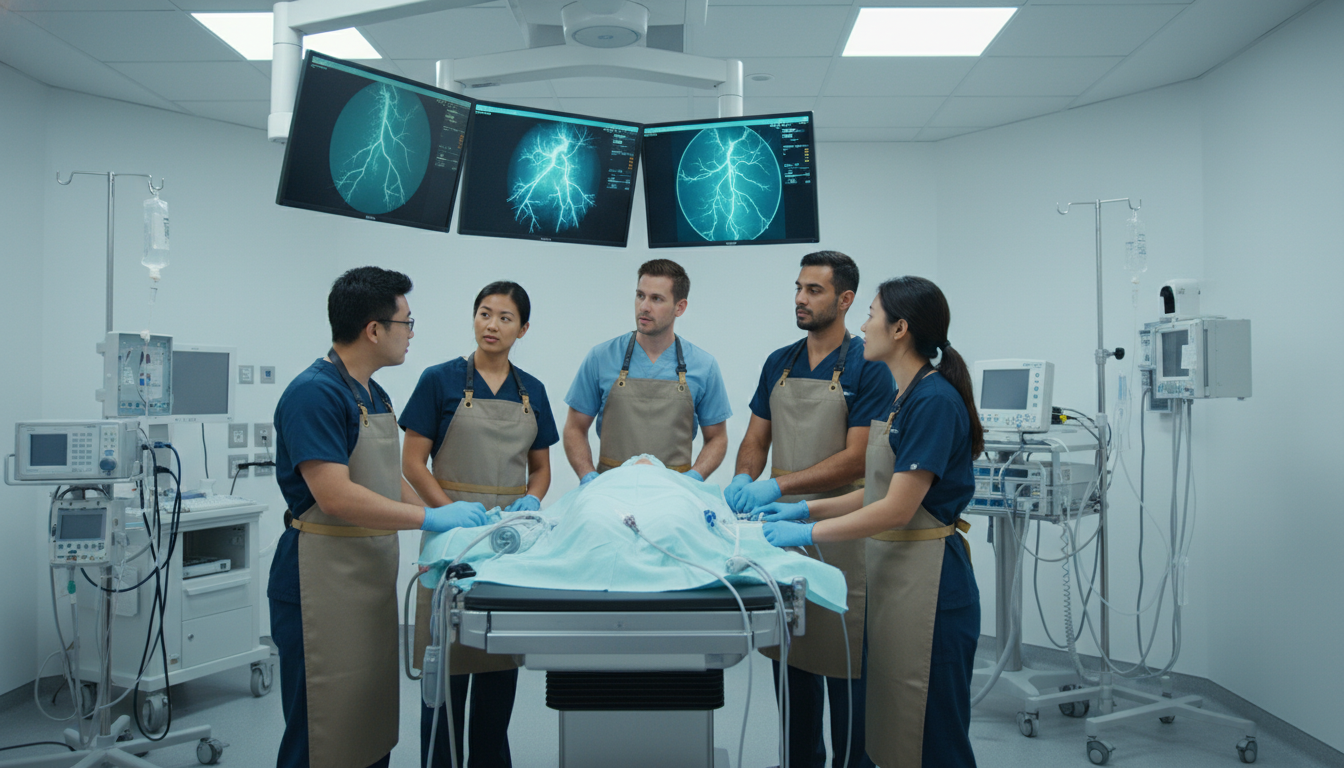
Step 4: Letters, Networking, and IR-Specific Branding
In ultra-competitive specialties, letters and relationships can matter as much as scores.
A. Priority Order for Letters of Recommendation
For an IR-focused US citizen IMG, a powerful letter set might look like:
IR Attending Letter (US-based, if possible)
- Ideally from a rotation where you were observed closely.
- Should comment on:
- Your clinical reasoning and judgment.
- Procedural potential and hands-on skill.
- Work ethic and professional behavior in the IR suite.
- This is your highest-yield letter.
Diagnostic Radiology Attending Letter
- Demonstrates you think and function like a radiologist.
- Can highlight your image-interpretation skills, communication with referring teams, and case-prep thoroughness.
Procedural or Hospital-based Specialty Letter (e.g., surgery, EM)
- Confirms your performance under pressure, your reliability on call, and patient-care skills.
Additional Letter (optional, if allowed)
- Could be research mentor (IR/DR or related field), especially if you have substantial scholarly work.
When asking:
- Request a “strong, detailed letter for competitive IR/DR programs” specifically.
- Provide your CV, personal statement draft, and bullet points of cases/projects you worked on with them.
B. Strategic Networking in IR
Networking in IR does not mean being disingenuous—it means showing up where IR people are, consistently and professionally.
Concrete strategies:
- Join SIR (Society of Interventional Radiology) as a medical student:
- Attend virtual and in-person sessions.
- Look for medical student and trainee sections, mentorship programs, or case discussion groups.
- Attend IR webinars and local academic conferences:
- Ask thoughtful questions.
- Follow up with speakers or residents via email or LinkedIn, referencing specific talks.
- Connect with IR residents and fellows:
- They are more accessible than attending physicians.
- Ask about their program’s view of US citizen IMGs, whether they take IMGs in IR/DR, and what made successful IMG applicants stand out.
Over time, your goal is that when your name and application arrive, you are not a total stranger to at least a few people in the IR/DR community.
C. Branding Yourself as a Safe, High-Yield IR Investment
Program directors are implicitly asking:
“If we invest 6 years in this trainee, will they be a reliable, skilled IR attending who enhances our program’s reputation?”
Your application should consistently answer this “risk assessment” across:
Personal statement:
- Focus on longitudinal commitment to IR.
- Include specific cases that shaped your understanding of IR’s role (e.g., trauma embolization, oncologic interventions, limb salvage).
- Show insight into IR’s clinical responsibilities—not just “cool procedures” and gadgets.
Experiences section:
- Group IR/DR-related roles near the top.
- Include measurable impact where possible (e.g., “co-authored abstract accepted to SIR 2025 annual meeting”).
Interview behavior:
- Be grounded and realistic about the lifestyle and training challenges.
- Show maturity in handling complications, uncertainty, and long hours.
Step 5: Application, Program List, and Match Tactics for IR as a US Citizen IMG
A well-crafted strategy recognizes that ultra-competitive specialties require both ambition and risk management.
A. Building Your Program List: IR + DR
For an American studying abroad targeting interventional radiology residency:
Apply to Integrated IR/DR Programs:
- Broadly, especially:
- Mid-tier academic centers with IMG presence in DR or other specialties.
- Programs in regions more historically open to IMGs (varies by year; Northeast and some Midwest programs often relatively more receptive).
- Broadly, especially:
Apply to a Larger Number of DR Programs:
- Target DR programs with:
- ESIR pathways
- A robust IR division
- Prior IMGs in DR or IR tracks
- This dual application allows:
- A direct shot at IR.
- A realistic pathway through DR → ESIR → IR if you don’t match integrated.
- Target DR programs with:
Numbers (approximate starting points, adjust by budget and competitiveness):
- Integrated IR: 25–40 programs (or more if your application is borderline).
- DR: 40–80 programs, with an emphasis on IR-strong departments and IMG-friendly environments.
B. Personal Statement Strategy: IR vs DR
If you apply to both IR and DR:
Option 1: Two Statements
- IR-focused statement emphasizing your procedural aspirations and IR experiences.
- DR-focused statement that:
- Emphasizes your love for imaging and diagnostic reasoning.
- Mentions IR interest as an extension of radiology, not the sole reason you’re applying.
Option 2: Unified but Balanced Statement
- If using one statement, avoid sounding like you only want IR and would be unhappy in DR.
- Frame IR as a natural progression of your passion for imaging-based problem solving, but make it clear you see value in strong DR training.
Programs are wary of applicants who seem like they’ll be dissatisfied if they end up practicing mostly DR.
C. Interview Season: How to Perform Like a Competitive-Specialty Applicant
Approach IR interviews like derm and ortho candidates approach theirs:
Know the Program Deeply
- IR case mix: oncologic, peripheral arterial disease, trauma, venous interventions, women’s health, etc.
- ESIR structure and how IR trainees are integrated with DR residents.
- Faculty interests and research niches.
Prepare IR-Specific Talking Points
- Case examples demonstrating:
- Team-based care (tumor boards, trauma responses, stroke teams).
- Your emotional resilience after procedural complications or high-stress events (even if from other specialties).
- Thoughts on:
- Radiation safety.
- Balancing procedural throughput with patient education and follow-up.
- The future of IR in health systems and outpatient settings.
- Case examples demonstrating:
Ask Insightful Questions
- About:
- How the program supports IR residents’ clinical experience (clinic, admissions, consults).
- Volume and diversity of procedures.
- Opportunities for research and leadership as an IR resident.
- About:
D. Ranking Strategy: Balancing Dream IR with Realistic DR
Your rank list should reflect:
Your real-world probabilities
If your IR interviews are few, DR may represent your more reliable pathway into an IR career.Your long-term goals
A strong DR program with ESIR and good IR fellowship placement can still lead you exactly where you want to go.
Sample ranking logic:
- Rank the integrated IR programs where you felt truly aligned with their culture and training.
- Then rank DR programs in order of:
- ESIR availability.
- Strong IR division with a track record of grooming DR residents for IR.
- Overall training quality and support for residents (wellness, mentorship, advocacy).
Be honest with yourself: getting into a high-quality DR program and proving yourself there can be a more reliable IR route for many US citizen IMGs than holding out solely for integrated IR.
Frequently Asked Questions (FAQ)
1. As a US citizen IMG, is integrated IR realistically attainable, or should I only focus on DR?
Integrated IR is attainable for US citizen IMGs, but it is highly competitive. Your safest strategy is not either/or but both:
- Apply to integrated IR where your profile is competitive.
- Simultaneously apply broadly to DR programs—especially those with strong IR divisions and ESIR.
- Treat DR as a legitimate, respected pathway to IR, not a consolation prize.
2. How does my strategy differ from someone trying to match dermatology or orthopedics?
The mindset is similar: IR is a competitive specialty with limited spots, high expectations for academic and clinical performance, and a strong emphasis on fit and commitment. Compared with matching derm or matching ortho:
- You need imaging and procedural branding, not purely medical or surgical.
- Research and networking are often more “niche” because IR is smaller and more interconnected—people know each other.
- Dual-application (IR + DR) is an especially powerful strategy that doesn’t have perfect analogs in derm or ortho.
3. How many IR-specific research projects do I need to be competitive?
There’s no magic number, but for an ultra-competitive specialty:
- Aim for at least 1–2 substantive IR or DR-related projects (case series, QI, retrospective studies, or meaningful case reports).
- Try to achieve at least one peer-reviewed publication or abstract in an IR/DR context.
- Quality and clear IR relevance often matter more than raw count, especially if your work shows continuity with your clinical IR experiences.
4. If I match into DR but not IR, how can I keep my IR dream alive?
Once in a DR residency:
- Seek early mentorship from IR faculty and chief residents.
- Target and secure ESIR if available.
- Join IR research projects and present at IR meetings.
- Maximize your IR elective time and call.
- When it’s time to apply for IR fellowships or independent IR residency, your US-based record will matter more than your original IMG status.
Your US citizen IMG background may have been a barrier at the IR residency level, but strong DR performance often levels the playing field for fellowship or independent IR positions.
By taking a long-view, multi-path approach and applying the same rigor that applicants use when matching derm or matching ortho, a US citizen IMG can absolutely carve a realistic and rewarding route into interventional radiology residency and, ultimately, an IR career.