


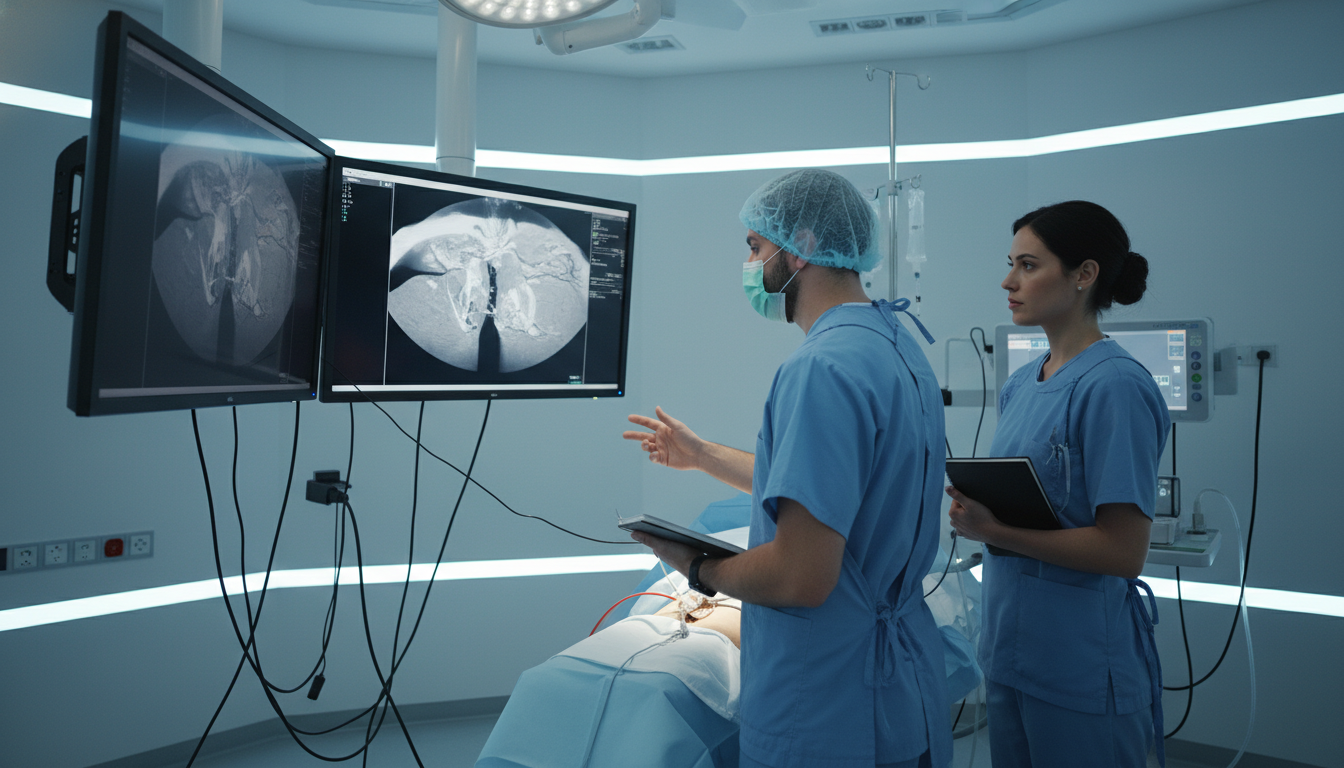
Why Interventional Radiology Shadowing Matters for Residency Applicants
Interventional Radiology (IR) has rapidly evolved into one of the most competitive and exciting fields in medicine. As a hybrid of diagnostic imaging, surgery, and clinical medicine, IR attracts students who enjoy procedures, problem-solving, and longitudinal patient care. In such a competitive environment, a strong medical shadowing experience in interventional radiology can significantly strengthen your IR match prospects.
Shadowing in IR is not just about “checking a box” or accumulating shadowing hours needed to fill a CV. Done well, it can:
- Help you decide whether IR truly fits your personality, interests, and lifestyle.
- Provide authentic material for your personal statement, interviews, and away rotation applications.
- Connect you with mentors and advocates who may later write letters of recommendation.
- Expose you to the breadth of IR, from outpatient clinic to complex inpatient and emergent procedures.
This guide will walk you through how to find shadowing opportunities in IR, how to get the most out of them, what a typical day looks like, and how to translate your experiences into a strong interventional radiology residency application.
Understanding Interventional Radiology: What You’re Signing Up to Shadow
Before you step into an IR suite, it helps to understand what you’re about to see and why shadowing here is unique compared with other specialties.
What Does an Interventional Radiologist Do?
Interventional radiologists use image guidance (fluoroscopy, CT, ultrasound, MRI) to perform minimally invasive diagnostic and therapeutic procedures. Common examples include:
- Vascular procedures: angiography, angioplasty, stent placement, embolization of bleeding vessels, treatment of peripheral arterial disease.
- Oncology interventions: transarterial chemoembolization (TACE), Y-90 radioembolization, tumor ablation (RFA, microwave), biopsy, and venous access for chemotherapy.
- Non-vascular procedures: image-guided drainage of abscesses, biliary and urinary interventions, gastrostomy tube placement, vertebroplasty/kyphoplasty.
- Dialysis and access: tunneled dialysis catheters, fistulograms, angioplasty or stenting of dialysis access.
- Women’s health and GU: uterine fibroid embolization, gonadal vein embolization for pelvic congestion syndrome, varicocele embolization.
- Emergency interventions: trauma embolization, massive GI bleed, pulmonary embolism thrombectomy (at some centers), acute ischemic stroke (at some centers, depending on structure).
Shadowing in IR allows you to see this wide clinical variety in a single day—one of the reasons many students end up choosing the specialty.
Why Shadowing in IR Is Different from Other Rotations
There are several unique aspects to IR medical shadowing:
- Imaging-centric environment: You’ll see constant use of ultrasound, fluoroscopy, CT, and advanced visualization tools, and how imaging guides real-time decision-making.
- Procedural flow: Many cases are scheduled in blocks, but add-ons (e.g., emergent bleeding, infected fluid collections) can change the day’s rhythm rapidly.
- Multidisciplinary communication: IRs collaborate closely with hospitalists, surgeons, oncologists, and emergency physicians, often acting as procedural consultants.
- Radiation and safety protocols: You’ll learn basics of radiation safety, contrast use, and sterile technique that differ from other procedural specialties.
Understanding this context will help you ask better questions and appreciate what you’re observing.
How to Find Shadowing Opportunities in Interventional Radiology
One of the most common questions is how to find shadowing in IR—especially if your school has limited or no IR presence. Below is a stepwise, practical approach.
1. Start With Your Home Institution
If your medical school has a radiology or IR department, that should be your first stop. Here’s how to proceed:
Check your school’s website
Look for:- “Interventional Radiology” under the radiology department.
- IR faculty profiles and division chief.
- Educational leads (e.g., IR clerkship director, residency program director).
Contact the right people
Send a concise, professional email to:- IR education director or clerkship coordinator.
- An IR attending with a stated interest in medical education.
- The IR residency or fellowship program coordinator.
Include:
- Who you are (year in training, school).
- Your interest in interventional radiology.
- Your goal: to arrange medical shadowing in IR, learn more about the field, and observe clinical and procedural activities.
- A few potential dates/times and your flexibility.
- Your CV attached as a PDF.
Use existing student organizations
If your campus has:- A radiology interest group.
- An interventional radiology interest group (IRIG), often affiliated with SIR (Society of Interventional Radiology).
Attend meetings, meet senior students who have already shadowed, and ask for introductions to IR faculty.
2. Leverage National Organizations
If your institution has limited IR exposure, national organizations can bridge the gap:
Society of Interventional Radiology (SIR)
- Explore SIR’s medical student resources and IRIG program.
- Many IRIG chapters partner with local hospitals to facilitate shadowing and mentorship.
- SIR’s directory may help you identify IR practices in your region.
SIR Medical Student Council (MSC)
- MSC often organizes mentorship programs, virtual shadowing, and webinars.
- Participation shows initiative and provides talking points for your IR match application.
3. Reach Out to Community and Private IR Practices
Not all educational shadowing happens in academic centers. Community and private practices can offer:
- High-volume procedural experience.
- More direct interaction with attendings.
- Insight into real-world workflow and practice management.
How to approach:
- Identify local IR practices via hospital websites, radiology group websites, or SIR’s practice directory.
- Call the main office or email the practice manager asking if they allow pre-med or medical student shadowing.
- Emphasize:
- You understand patient privacy and professional expectations.
- You are happy to complete any required training (HIPAA, hospital orientation).
Some private practices may not formally advertise shadowing, but a polite and persistent inquiry can open doors.
4. Use Your Network Strategically
Talk to upperclassmen who matched into interventional radiology residency or diagnostic radiology with IR interest. Ask:
- Where did you shadow?
- Who was particularly learner-friendly?
- Any faculty you recommend I contact?
Ask non-radiology faculty
Surgeons, hospitalists, oncologists, and emergency physicians often collaborate with IR. They may:- Introduce you to an IR colleague.
- Suggest who is most invested in teaching.
Online and social media
Many IR attendings are active on platforms like X (Twitter), LinkedIn, and Instagram, sharing cases and educational content. While you should not cold-DM asking for a rotation, you can:- Learn who is active in education.
- Attend their virtual teaching sessions.
- Use professional channels (email via institutional address) later for formal shadowing requests.
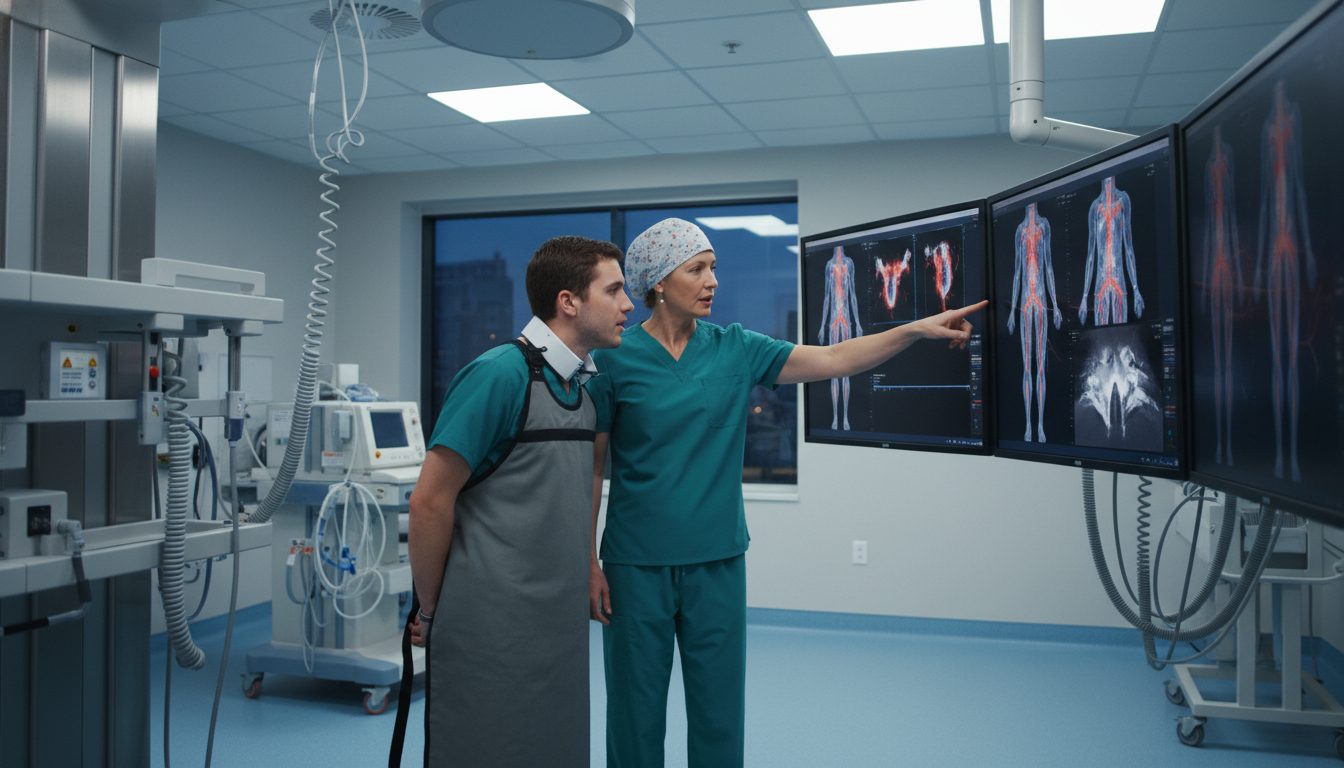
What to Expect: A Typical Day of IR Shadowing
Understanding what your shadowing day might look like will help you prepare mentally and maximize the experience.
Pre-Procedure: Rounds and Clinic
Depending on the institution, your shadowing may include:
Inpatient consults and rounds
- Reviewing overnight consults (e.g., new abscess needing drainage, failure to access a central line, GI bleed).
- Bedside evaluations, reviewing imaging, and formulating a procedural plan.
Outpatient clinic
- New patient consults for uterine fibroid embolization, venous insufficiency, PAD, oncology interventions.
- Follow-up visits assessing symptom relief or complications.
Many students associate IR only with the procedure suite. Seeing how IRs counsel patients, obtain consent, and follow outcomes will deepen your understanding of IR as a clinical specialty, not just a procedural service.
In the IR Suite: Procedures and Workflow
During procedures, expect to:
- Wear appropriate attire: scrubs, lead apron, thyroid shield, sometimes a cap and mask.
- Stand behind the sterile field, often near the monitors or at the head of the bed.
- Listen as the IR attending explains:
- Indication for the procedure.
- Imaging findings that guide planning.
- Steps of the procedure and possible complications.
A sample morning schedule could include:
- 7:00–7:30 – Brief team huddle, review of cases for the day.
- 7:30–9:00 – PTC drain placement for obstructive jaundice.
- 9:00–10:30 – Uterine fibroid embolization (UFE).
- 10:30–12:00 – Tunneled dialysis catheter placement and peripheral angioplasty.
Afternoons might include biopsies, drain checks, venograms, port placements, or emergent add-on cases.
Radiation Safety and Professionalism
As a shadower, you will:
- Receive a basic introduction to:
- ALARA principles (As Low As Reasonably Achievable).
- Distance, shielding, and time considerations around fluoroscopy.
- Be expected to:
- Follow all instructions about where to stand.
- Wear lead and safety goggles when required.
- Avoid contaminating the sterile field.
This is a good chance to ask IRs how they minimize their long-term radiation exposure—an excellent, insightful question for someone interested in an IR career.
Level of Hands-On Involvement
Shadowing is typically observational, but depending on your training level and institutional policies, you may:
- Help with:
- Transporting patients.
- Retrieving supplies.
- Minor tasks under supervision (e.g., holding ultrasound probe in non-sterile portions, if permitted).
- Observe image review and pre-/post-procedure planning.
If you are a senior medical student with proper onboarding, your experience may resemble a mini-rotation, with more formal responsibilities and opportunities to assist in non-critical tasks.
Making the Most of Your IR Shadowing: Strategy and Tactics
Shadowing alone does not automatically strengthen an interventional radiology residency application. How you engage matters. Here’s how to turn basic observation into meaningful experience.
1. Clarify Your Goals Before You Start
Ask yourself:
- Am I exploring IR vs. other procedure-based specialties?
- Am I already committed to IR and seeking deeper exposure for the IR match?
- Do I want to identify potential mentors or research opportunities?
Write down 3–5 specific goals, such as:
- Understand the day-to-day lifestyle and call responsibilities of IR.
- See at least one embolization and one non-vascular procedure.
- Ask about recommended reading or resources for students considering IR.
- Identify at least one potential mentor to maintain contact with.
2. Prepare with Targeted Background Reading
A small investment in preparation dramatically improves your ability to follow what you see:
- Review:
- Basic vascular anatomy (aorta, mesenteric, renal, iliac, major veins).
- Common IR procedures and indications (you can use SIR medical student resources or concise IR overview chapters).
- Brief radiology basics: interpreting CT and US at a very high level.
Bring a pocket notebook or tablet and jot down terms to look up later (e.g., “portal vein thrombosis,” “TIPS,” “Berenstein catheter”).
3. Ask Smart, Focused Questions
You don’t need to demonstrate encyclopedic knowledge; you do want to show genuine curiosity and engagement. Good question categories include:
Clinical reasoning
- “What alternative treatments did you consider for this patient?”
- “How did you decide embolization was appropriate in this case?”
Technical decisions
- “What factors influence your choice of access site?”
- “Why did you choose that embolic agent or catheter?”
Career and training
- “How do you describe the differences between DR->IR pathway vs. integrated interventional radiology residency?”
- “What do you enjoy most and least about IR practice here?”
Be sensitive to timing. Avoid asking questions during critical procedure moments; wait for pauses, room turnover, or post-case debriefing.
4. Demonstrate Professionalism and Reliability
Faculty often use shadowing as a low-stakes test of a student’s professionalism. To make a strong impression:
- Arrive 10–15 minutes early.
- Introduce yourself to the IR team (attendings, fellows, residents, techs, nurses).
- Offer to help with small tasks within your allowed scope.
- Avoid phone use in the suite unless absolutely necessary.
- Never discuss patient information outside of clinical spaces.
Reliability and professionalism are core attributes programs look for when selecting residents. A positive impression here can lead to stronger future support.
5. Reflect After Each Shadowing Session
After each day:
- Write a brief reflection:
- Cases you saw.
- What surprised you.
- Skills or attributes you admired in IR physicians.
- Questions you still have.
- Note patient stories that impacted you—these can become powerful anecdotes in personal statements or interviews (always remove identifiers).
Over time, these reflections form a rich narrative about why IR genuinely resonates with you, beyond generic statements like “I enjoy procedures.”

Turning Shadowing Into a Strong IR Match Application
Your shadowing experience is most valuable when it integrates with the rest of your IR residency application strategy.
Documenting and Describing Your Shadowing Hours
Many students worry about shadowing hours needed for a competitive interventional radiology residency application. There is no official minimum number, but:
- Aim for at least several half- or full-days of IR-specific shadowing, ideally spread over time.
- Deeper, ongoing involvement with one group is more impactful than many scattered, superficial hours.
In your CV and ERAS application:
- List experiences under “Medical Student Experiences” or similar.
- Include:
- Site and type of environment (academic vs. community).
- Duration (e.g., “Longitudinal IR shadowing, 8 half-days over 6 months”).
- Brief description of exposure (e.g., “Observed outpatient IR clinic, IR procedures including embolization, TACE, drainage, and venous interventions; participated in case discussions with faculty and fellows.”)
Programs care less about a numerical total and more about whether you understand the specialty and show sustained interest.
Building Mentoring Relationships
One of the greatest benefits of IR shadowing is access to mentors who can:
- Give honest guidance on your competitiveness.
- Suggest research or quality improvement projects.
- Write detailed, enthusiastic letters of recommendation (especially after they get to know you via research or sub-internships).
How to nurture mentorship:
- After a few sessions, request a brief meeting to discuss your career interests.
- Ask targeted questions:
- “What steps would you recommend I take in the next year to strengthen my IR application?”
- “Are there any ongoing projects where a medical student could help?”
- Follow up with brief updates every few months (e.g., new grades, research progress, conference presentations).
Connecting Shadowing With Research and Projects
Shadowing exposes you to real clinical problems IRs care about, which can:
- Spark ideas for retrospective chart reviews, case series, or QI projects.
- Lead to opportunities to help with:
- Data collection.
- Literature review.
- Abstracts and posters for SIR or radiology meetings.
When you see a particularly interesting case, you might ask later (not in front of the patient):
- “Has your group published on this type of case?”
- “Would it be useful to review outcomes of similar patients in your practice?”
Even small projects can be valuable, especially if they lead to tangible outputs (posters, presentations, co-authorship). Explicitly tying your research interests to your shadowing observations can be compelling in IR match interviews.
Using Shadowing Stories in Personal Statements and Interviews
Admissions committees read countless generic statements like “I love procedures and radiology.” Your shadowing gives you specific stories that set you apart. For example:
- A complex trauma embolization case where you observed rapid team decision-making and saw the impact of IR on patient outcomes.
- A clinic encounter where an IR explained long-term follow-up and you saw the longitudinal side of the field.
- A moment when an IR attending walked you through a difficult case, underscoring the importance of imaging anatomy and technical skill.
When describing these experiences:
- Focus on what you learned and how it shaped your motivations and goals.
- Highlight traits you want to develop: calmness under pressure, meticulous planning, patient-centered communication.
FAQs: Shadowing in Interventional Radiology for Residency Applicants
1. How many shadowing hours are needed for a strong interventional radiology residency application?
There is no universal required number of shadowing hours needed, but for IR:
- Aim for meaningful, longitudinal exposure rather than a specific total.
- Several full days or repeated half-days over months is usually enough to:
- Understand the field.
- Build relationships.
- Gather experiences to discuss in your application.
More important than hours is your depth of engagement—reflection, questions, mentorship, and any resulting research or projects.
2. Can pre-clinical students meaningfully shadow in IR, or should I wait until clinical years?
Pre-clinical students can absolutely benefit from IR shadowing:
- Early exposure helps you decide whether to pursue IR or focus on other specialties.
- You’ll develop foundational understanding of imaging and procedures that will help in clerkships.
- Starting early gives you more time to build mentorships and research experiences.
However, once you enter clinical years, consider transitioning from pure shadowing to formal IR electives or sub-internships, which carry more weight for an interventional radiology residency application.
3. What if my school has no interventional radiology department? How do I find shadowing?
If your school lacks a robust IR presence:
- Look for IR services at affiliated hospitals or nearby academic centers.
- Use SIR resources and IRIG networks to identify IR-friendly practices.
- Reach out to community or private IR groups in your region with a professional email.
- Consider virtual shadowing/teaching sessions offered by IR programs and national organizations as a supplement (though not a complete substitute) for in-person shadowing.
Persistence, professionalism, and clear communication go a long way.
4. How does IR shadowing compare with other experiences (e.g., surgery shadowing) for IR match?
For an IR match, IR-specific exposure is more valuable than generic procedural shadowing. That said:
- Surgery, cardiology, or anesthesia shadowing can provide useful procedural context.
- Programs will look for a pattern of interest that includes:
- IR shadowing and electives.
- Relevant research or QI projects.
- Informed, IR-specific narratives in your personal statement and interviews.
Think of non-IR shadowing as complementary; IR shadowing is the cornerstone for demonstrating authentic commitment to interventional radiology.
Shadowing in interventional radiology is a powerful way to understand this dynamic specialty from the inside, clarify your own career goals, and lay the foundation for a competitive IR residency application. With deliberate planning, active engagement, and thoughtful reflection, your time in the IR suite can become one of the most formative experiences of your medical education.




















