



Locum tenens work has traditionally been associated with filling temporary staffing gaps in hospitals and clinics within a single country. But as healthcare becomes more interconnected, locum opportunities in global health and international medicine are expanding—offering residents, new graduates, and seasoned clinicians a way to combine clinical practice with meaningful global impact, cultural immersion, and flexible careers.
This guide walks you through how locum tenens fits into global health, what roles exist, how to prepare, and how to assess whether this path aligns with your long-term career goals—especially if you’re considering a global health residency track or future travel physician jobs.
Understanding Locum Tenens in a Global Health Context
Locum tenens simply means “to hold the place of.” In most systems, a locum tenens physician temporarily covers a position—while someone is on leave, during a staffing shortage, or when an organization needs added capacity for a fixed period.
In global health settings, “locum work” can look different from the classic inpatient medicine shifts you may imagine:
- A three-month assignment as a hospitalist in a district hospital in East Africa
- Short-term coverage for a humanitarian NGO’s physician in a refugee camp
- A stint as a telemedicine consultant for a Pacific Island clinic
- Locum coverage in under-resourced rural communities in your own country that serve large migrant or refugee populations
While pure international locum systems are less formalized than domestic ones, there is a growing ecosystem of:
- Global NGOs with rotating physician posts
- Academic centers with international partner sites
- Telehealth platforms supporting cross-border care (within regulatory limits)
- Government or multilateral agencies running time-limited programs
How Global Health Locums Differ from Domestic Locums
1. Mission focus vs. market focus
Typical domestic locum roles often prioritize service coverage and income. In international medicine locum assignments, the emphasis is more often on:
- Health equity and system strengthening
- Capacity building of local staff
- Long-term partnerships, even if your own posting is short
You may still be paid competitively, but the driving priority is usually service to an underserved population and the partner institution’s goals.
2. Resource variability
Global health sites frequently operate with:
- Limited diagnostics (e.g., no CT/MRI, few labs)
- Scarce medications or supplies
- Sparse specialty support
You’ll rely more heavily on clinical skills, resource triage, and shared decision-making adapted to local realities.
3. Legal and regulatory complexity
A standard locum job in your home country is usually straightforward: one license, one malpractice policy, standard credentialing.
For international locum tenens:
- You may need temporary medical registration in the host country
- Visa and work permits vary by region
- Malpractice coverage can be fragmented or limited
- Scope of practice can differ from your home country’s norms
Because of this, many physicians use established organizations—rather than negotiating contracts directly—as an entry point into global locum work.
4. Integration into local systems
In domestic locum roles, you may be a “plug-in” clinician with minimal expectation to change systems. In global health, even short-term providers are often part of long-term capacity-building strategies—teaching, mentoring, co-developing protocols, and supporting local leadership.
Types of Global Health Locum Tenens Roles
Locum configurations in global health are diverse. Understanding the range of options will help you target opportunities that match your skill set, training phase, and risk tolerance.
1. Clinical Locum Assignments at International Partner Hospitals
Who typically offers these roles:
- Academic medical centers with a global health residency track or fellowship
- Faith-based hospitals with long-standing global partnerships
- Large NGOs operating regional hospitals in low- and middle-income countries
Typical structure:
- Duration: 1–12 months
- Settings: District hospitals, mission hospitals, referral centers
- Roles: Inpatient medicine, pediatrics, OB/GYN, anesthesia, surgery, EM/acute care
Example scenario
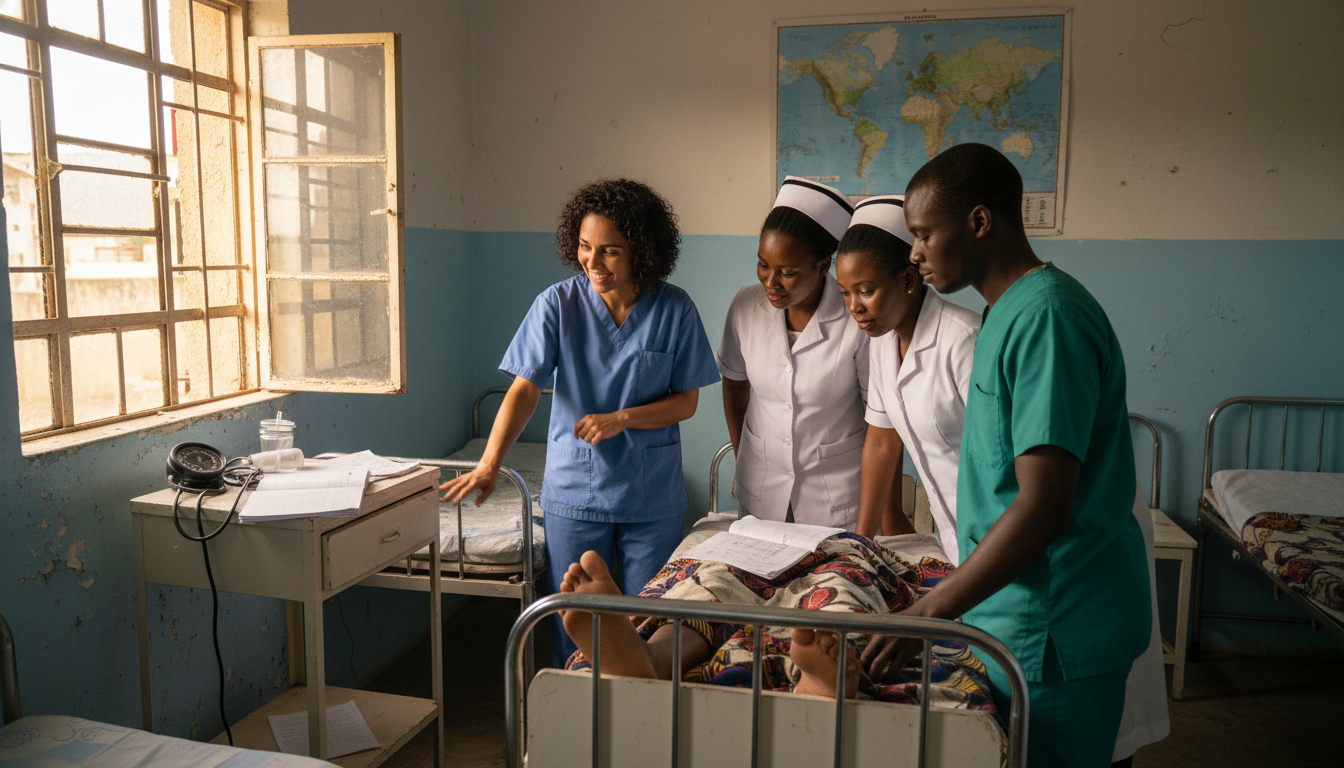
You are a family medicine physician with global health fellowship training. Your home institution partners with a district hospital in Malawi. They need a physician to cover internal medicine and general adult care while a local provider is on study leave:
- 6-month renewable assignment
- You supervise clinical officers, lead ward rounds, and co-run a weekly CME session
- Compensation is modest but includes housing and a small stipend
- You maintain a faculty appointment at your home institution
These roles are closest to traditional locum work—temporarily “holding a place” in an established clinical service.
2. Humanitarian and Emergency Response Locums
Who typically offers these roles:
- Humanitarian NGOs (e.g., MSF/Doctors Without Borders, International Medical Corps)
- Disaster response organizations
- Emergency medical teams (EMTs) accredited by WHO or national agencies
Typical structure:
- Duration: 6–12 weeks (acute emergencies) up to 6–12 months
- Settings: Conflict zones, disaster areas, refugee/IDP camps, epidemic responses
- Roles: Emergency medicine, trauma, critical care, infectious disease, primary care
Key considerations:
- Frequently high-intensity, high-risk environments
- Strong emphasis on team cohesion and strict protocols
- Often include psychosocial support and post-mission debriefing
While these roles may not always be labeled “locum tenens,” functionally you are covering needs for a defined time, similar to locum work.
3. Hybrid Academic–Locum Positions
Many universities have created positions where faculty spend part of the year at a home institution and part serving as a global health clinician at a partner site.
Structure:
- Faculty appointment (0.5–0.8 FTE)
- 2–4 months per year at an international partner hospital
- Teaching responsibilities (local trainees, residents on rotation, nursing staff)
- Capacity-building projects (protocols, QI, research)
While not classic “per-diem” locum tenens physician work, these positions often use locum-style contracts during the international component and offer a model of long-term, sustainable involvement.
4. Domestic Locums in Underserved and Immigrant Communities
A growing number of clinicians choose locum work domestically but prioritize:
- FQHCs and community health centers
- Tribal health and IHS facilities
- Clinics serving migrants, asylum seekers, or refugees
- Rural hospitals with significant global migrant populations
These roles combine:
- The flexibility and income potential of domestic locum tenens
- Daily engagement with cross-cultural care and health equity
- Opportunities to apply global health skills (trauma-informed care, language access, social determinants of health) even without crossing borders
For residents in a global health residency track, this can be a bridge between training and more formal international assignments, while still building financial stability and clinical volume.
5. Telemedicine and Remote Support Roles
Telemedicine is creating new kinds of travel physician jobs that don’t always require physical travel:
- Remote specialist consults for international clinics (e.g., radiology, ID, dermatology)
- E-consult systems between referral hospitals and rural sites
- Cross-border second opinions (subject to legal frameworks)
While licensure and regulatory barriers are very real, this is a rapidly evolving area. For global health–minded clinicians, remote locum-style consults can supplement on-the-ground work or enable ongoing mentorship after a short-term in-person deployment.
Training Pathways and How to Prepare During Residency
If you’re a resident or early-career physician interested in combining global health and locum tenens, strategically planning your training will give you more options and safer, higher-impact roles.
1. Choose a Specialty with Breadth and Flexibility
Most global health locum roles favor:
- Family Medicine / General Practice
- Internal Medicine (with broad generalist practice)
- Pediatrics
- Emergency Medicine
- Obstetrics & Gynecology
- General Surgery / Anesthesia
Subspecialists can certainly contribute, but in resource-limited settings, wide clinical scope and comfort with undifferentiated patients are invaluable.
Actionable tip:
If you’re in a subspecialty, seek out generalist experiences (e.g., internal medicine rotations, ED shifts) and build skills that translate across settings.
2. Enroll in a Global Health Residency Track (If Available)
Many programs now offer formal global health residency tracks or pathways that include:
- Longitudinal didactics on global health principles
- Language training
- Mentored international rotations with vetted partners
- Coursework in ethics, health systems, and implementation science
Participation signals serious, sustained interest and helps ensure your first forays into international medicine are supervised and ethical.
What to prioritize in a global health track:
- Programs with long-term, reciprocal partnerships (not one-off “medical missions”)
- Emphasis on capacity building, not just direct care
- Clear attention to safety, security, and clinical supervision
- Options to work in settings similar to those you might later pursue as a locum
3. Build Additional Skills Beyond Clinical Care
Global health locum tenens roles often expect you to do much more than see patients. Useful competencies include:
- Basic public health and epidemiology
- Point-of-care ultrasound (POCUS)
- Tropical and travel medicine
- Quality improvement and implementation
- Teaching and curriculum development
Consider certificates or short courses such as:
- Gorgas Course in Clinical Tropical Medicine
- ASTMH Certificate Course in Tropical Medicine and Travelers’ Health
- POCUS certifications
- Courses in humanitarian response and disaster medicine
4. Language and Cultural Competence
Language abilities dramatically increase your effectiveness and the range of viable assignments.
- Invest in at least one global language (e.g., Spanish, French, Portuguese, Arabic, Swahili, Hindi, or others relevant to your target regions).
- Seek rotations that include interpreters and diverse patient populations.
- Engage in reflective practice around culture, bias, and power dynamics.
5. Plan Financially
Residency is also the time to think through the economics of a global health career:
- Loan repayment: Investigate programs that reward service in underserved or global settings.
- Savings: International assignments can sometimes interrupt domestic income; a 3–6 month cushion helps.
- Compensation models: Some global health locum roles pay less than domestic locums but may include housing, travel, or tax considerations.

Practical Steps to Launch a Global Health Locum Career
Whether you’re just graduating or already in practice, you can structure your path intentionally rather than waiting for ad-hoc opportunities.
1. Clarify Your Goals
Before accepting any position labeled “locum” or “global health,” define what you want:
- Primarily clinical volume or primarily teaching/mentorship?
- Long assignments (6–12 months) or flexible short stints (2–8 weeks)?
- Preference for certain regions (e.g., East Africa, Latin America, South Asia, the Arctic)?
- Comfort level with security risk and isolation?
Your goals will inform which organizations and contracts are realistic and ethical.
2. Choose the Right Organizational Partners
For international medicine roles, it’s rarely ideal to go entirely solo. Look for:
- NGOs or universities with long-term, on-the-ground presence
- Clear orientation and handover processes for incoming clinicians
- Transparent policies on safety, insurance, malpractice, and evacuation
- Evidence of local leadership and co-design of services
Be wary of:
- One-off “mission trips” whose main purpose is foreign clinician experience
- Programs that do not include supervision or fail to connect you with local leadership
- Arrangements where you’re asked to work outside your competence without robust support
3. Understand the Contract and Logistics
For each locum tenens physician role—domestic or international—clarify:
- Scope of practice: What are you allowed and expected to do?
- Workload: Clinic vs. ward vs. call; average patient volume
- Compensation: Salary/stipend, per diem, travel and housing coverage
- Malpractice and liability: Who covers what? Does it extend to global work?
- Licensure/registration: What country licenses or registrations are required? Who facilitates these?
- Visas and permits: Duration, renewability, accompanying family rules
For travel physician jobs that involve multiple countries, consider:
- Tax implications
- Health insurance portability
- Credentialing timeframes (some countries require months of lead time)
4. Prepare Clinically and Logistically
Clinical preparation
- Review local epidemiology and treatment guidelines (e.g., malaria, TB, HIV, maternal emergencies).
- Brush up on essential skills: managing sepsis without ICU, obstetric emergencies, pediatric dehydration, etc.
- Learn to use and interpret limited diagnostics effectively.
Logistical preparation
- Vaccinations (including region-specific recommendations)
- Personal medications and basic supplies (where appropriate and ethically sourced)
- Emergency plans (evacuation insurance, contacts at home and host site)
- Digital tools (offline references, translated phrases, guideline apps)
5. Maintain Career Flexibility
Many physicians blend:
- Periods of domestic locum work (to stabilize income and maintain high-acuity skills)
- Periodic international assignments with trusted partners
- Academic or teaching roles that anchor them professionally
This portfolio approach can protect you from burnout, maintain licensure and board certification, and allow you to ramp global work up or down depending on family, financial, or personal needs.
Ethical Considerations and Long-Term Career Integration
Effective global health practice requires more than enthusiasm and a passport. Locum tenens opportunities—because they are by nature short-term—demand extra attention to ethics and sustainability.
1. Avoid “Volunteer Tourism” Dynamics
Ask:
- How does my presence affect local autonomy and patient care?
- Is the organization committed to strengthening local capacity, or primarily focused on foreign clinicians’ experiences?
- Who asked for this locum coverage, and why?
Ethically sound locum roles are:
- Requested by local partners
- Integrated into existing teams
- Accompanied by systems for feedback and accountability
2. Prioritize Capacity Building Over Heroics
Even if your official title is “locum” or temporary physician:
- Share protocols, build systems, and train local colleagues
- Create documentation that outlives your assignment
- Work yourself out of a job—so future locum coverage becomes a choice, not a necessity
Examples:
- Develop a simple sepsis pathway that local staff adapt and own
- Train nurses in triage and vital sign interpretation with context-sensitive tools
- Collaborate on QI projects that continue after you leave
3. Integrate Global Health Locums into a Coherent Career
Think beyond isolated stints:
- Build relationships with a small number of sites and return periodically
- Align your locum experience with research, teaching, or service projects
- Look for roles that offer progression—from “extra pair of hands” to mentor, then to program co-leader
For residents in a global health residency track, this might mean:
- International electives during residency
- A global health fellowship post-residency
- Early-career locum tenens assignments with the same partner sites
- Eventually, a hybrid academic–global role or leadership position in an NGO
4. Care for Your Own Well-Being
Global health locum work can be deeply rewarding but also emotionally demanding:
- Exposure to high mortality, systemic injustice, and personal risk
- Culture shock and reverse culture shock on return
- Isolation from familiar peers and supports
Build a support structure:
- Mentors experienced in global health
- Peer networks (global health interest groups, alumni networks)
- Regular debriefing and reflection practices
- Boundaries around assignment length and frequency
Over the long term, sustainable service depends on your ability to maintain your own mental and physical health.
Frequently Asked Questions (FAQ)
1. Can residents do global health locum tenens work during training?
Residents generally cannot practice independently abroad, but they can:
- Participate in supervised international rotations through their global health residency track or program
- Work in structured electives with academic or NGO partners
- Support telehealth or research projects under faculty supervision
Independent locum tenens physician roles typically require completion of residency, full licensure, and sometimes board certification. Use residency to build skills, networks, and ethical frameworks that prepare you for post-training locum opportunities.
2. How do locum tenens roles in global health impact my chances for fellowship or academic careers?
Thoughtful global health locum work can:
- Strengthen your CV with unique clinical and leadership experiences
- Demonstrate commitment to health equity, systems thinking, and adaptability
- Provide material for scholarly work (quality improvement, implementation research, education)
Programs evaluate whether experiences are structured, mentored, and ethically grounded. Random, unsupervised short trips are less helpful. Align your locum stints with mentors, clear objectives, and documentation (presentations, publications, curricula) whenever possible.
3. Is international locum work financially viable compared with domestic locum tenens?
Domestic locum tenens roles often pay higher daily rates and may include bonuses for hard-to-fill shifts. International medicine locum assignments:
- Sometimes provide modest stipends, housing, and travel but lower base pay
- May offer non-financial benefits (loan repayment, academic titles, research opportunities)
- Can be integrated with domestic locum work to balance mission and income
Many physicians mix higher-paying domestic locum work with periodic lower-paid global assignments, building a portfolio that is both financially sustainable and mission-aligned.
4. How do I find reputable organizations that offer global health locum opportunities?
Start with:
- Your institution’s global health office or international partnerships
- Well-established NGOs with long track records in specific regions
- Professional societies’ global health committees (e.g., in family medicine, internal medicine, EM)
- Mentors who have worked repeatedly in the same settings
Ask pointed questions about:
- Duration and continuity of the partnership
- Local leadership roles and decision-making power
- Orientation, supervision, and safety protocols
- Expectations for your role and how it fits into long-term goals
A sustainable and ethical locum tenens path in global health depends as much on choosing the right partners as on your own skills or enthusiasm.
Locum tenens opportunities in global health sit at the intersection of flexibility, service, and professional growth. With careful preparation, alignment to your values, and a commitment to ethical partnership, you can build a career that includes both temporary assignments and lasting impact—at home and around the world.




















