


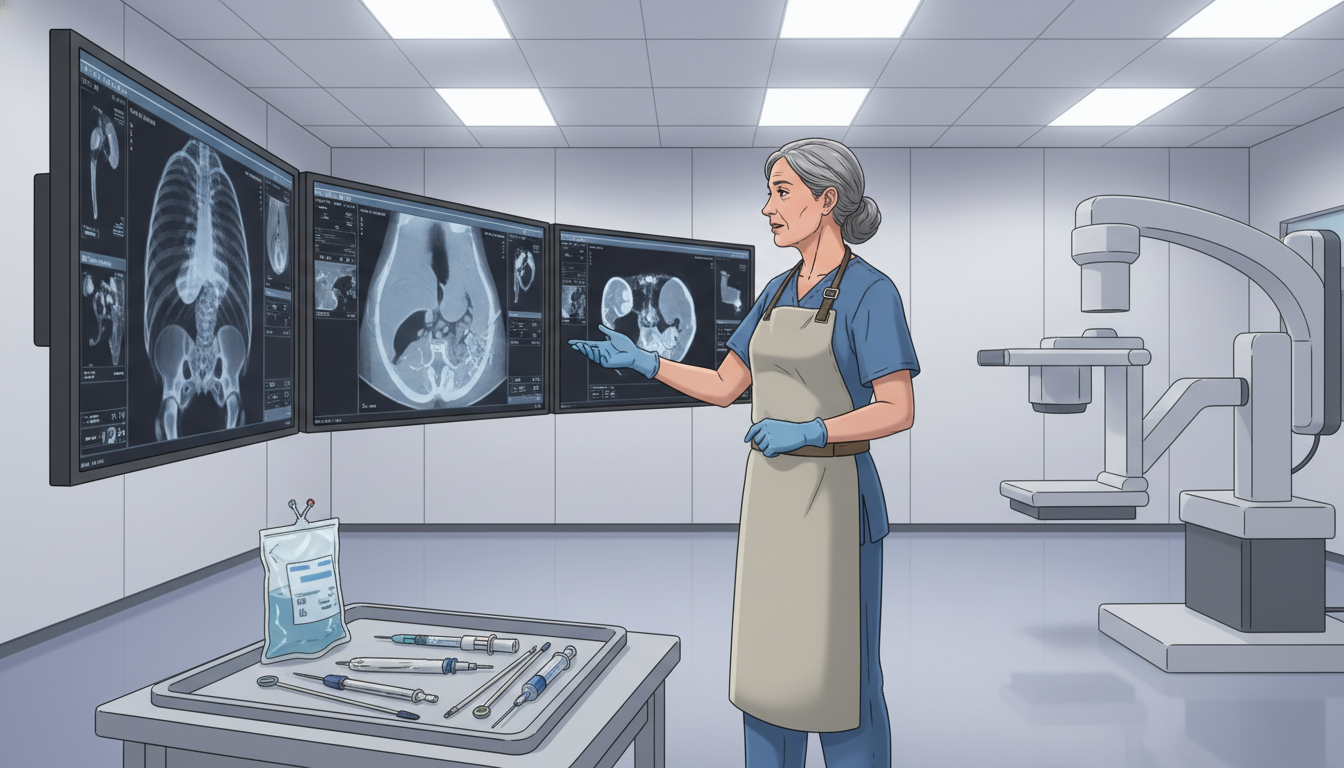
Understanding Locum Tenens in Interventional Radiology
Locum tenens work—temporary physician coverage for hospitals, clinics, and imaging centers—has become a powerful career tool for interventional radiologists. Whether you are a resident approaching the IR match, a new graduate, or a mid‑career attending, locum work can provide flexibility, financial upside, and exposure to diverse practice settings.
Interventional radiology is uniquely well-suited to locum tenens opportunities. The specialty’s procedural nature, 24/7 call needs, and expanding scope of practice (oncologic interventions, endovascular work, dialysis access, trauma, etc.) mean hospitals frequently need short-term IR coverage. This can range from filling a maternity leave in a large academic center to covering a solo IR service in a rural hospital for several months.
This guide walks through how locum tenens opportunities intersect with interventional radiology training and careers, what to expect from these positions, and how to strategically use locums to advance your professional goals.
Why Interventional Radiologists Choose Locum Tenens
Locum tenens is no longer just a “stopgap” for physicians who are between jobs. For many interventional radiologists, it is a strategic, long-term component of their career. Below are the main drivers.
1. Flexibility and Control of Schedule
IR is often associated with demanding call and high acuity. Locum work allows you to decide:
- When you work: Choose weeks or months of intensive clinical work, followed by time off for travel, research, or family.
- Where you work: Alternate between large tertiary centers and smaller community hospitals, or focus on one preferred region.
- How you work: Optimize your schedule for more procedures, less clinic, or vice versa, depending on the assignment.
Example:
A new graduate who just finished an interventional radiology residency may take 7–10 day blocks of locums at multiple hospitals, aligning these blocks so they can take 2–3 weeks off at a time to travel abroad.
2. Income Potential and Financial Strategy
Locum tenens rates in interventional radiology are often significantly higher than employed salary equivalents, particularly for:
- Nights and weekend call
- Rural and underserved locations
- Last-minute coverage needs
While you may not receive traditional benefits (health insurance, retirement match), higher hourly/daily rates can offset this. Many IR physicians use locum work to:
- Pay down medical school loans aggressively
- Build a cash cushion before entering partnership-track private practice
- Test-drive semi-retirement with fewer months of work per year
3. Exploring Different Practice Models
Locum tenens assignments expose you to a variety of environments:
- Academic centers with fellows and complex cases
- Large private practices with high-volume IR/DR mixes
- Community hospitals where you may function as the only IR physician
- Hybrid IR/vascular or IR/oncology practices with unique patient populations
This exposure is especially valuable for those planning or just finishing the interventional radiology residency. Before signing a long-term contract, you can see what day-to-day life really looks like across different systems.
4. Professional Growth and Skill Diversification
Working in multiple settings can expand your procedural and clinical skills:
- Learning how different groups manage PAD interventions, uterine fibroid embolization, or Y-90 programs
- Adapting to different workflow systems (EPIC vs. Cerner vs. paper-based combinations)
- Gaining experience in varied referral patterns (e.g., trauma-heavy centers vs. oncology-focused centers)
Over time, this can make you more marketable if you later pursue a permanent role.

Types of Locum Tenens Opportunities in Interventional Radiology
Locum tenens in IR is not one-size-fits-all. Understanding the common patterns will help you choose roles that fit your skills, lifestyle, and long-term goals.
Short-Term vs. Long-Term Assignments
Short-Term Assignments (1–14 days)
Typically used for:
- Vacation coverage
- Conference weeks
- Short-term staffing gaps or sudden emergencies (e.g., unexpected medical leave)
Characteristics:
- Intense focus on call and urgent/emergent procedures (trauma, GI bleeds, line placements)
- Less continuity of care or clinic time
- Limited time to integrate deeply with the department
Medium-Term (2–12 weeks)
Common scenarios:
- Maternity/paternity coverage
- Coverage during recruitment of a new permanent IR
- Temporary expansion of service lines (e.g., launching new IR clinic or PAD program)
Characteristics:
- More stable schedule (mix of procedures, clinic, and consults)
- Opportunity to influence workflow and collaborate on protocols
- Ability to follow patients longitudinally during your assignment
Long-Term (3–12+ months)
These can sometimes function as “try-outs” for permanent positions.
- Hospitals may use long-term locums while determining full-time staffing needs.
- Some locum tenens physicians negotiate conversion to full-time employment if both sides are satisfied.
IR-Focused vs. IR/DR Hybrid Roles
Many locum positions in IR still include a diagnostic radiology component.
IR-Focused Roles
- Majority of time in the angiography suite, IR clinic, consults, and inpatient rounds
- Minimal diagnostic radiology reading
- Often found in larger centers with separate DR staff
IR/DR Hybrid Roles
- Mix of procedural IR (lines, biliary drainage, embolization, etc.) and diagnostic reads (CT, MRI, ultrasound, fluoroscopy)
- Common in smaller or rural hospitals in need of a versatile radiologist
- Attractive for IR physicians who enjoy maintaining broad imaging skills
When evaluating an opportunity, ask specifically:
- Percentage of day in procedures vs. reading room
- Call expectations and whether call includes DR responsibilities
- Support staff available (mid-level providers, residents, fellows, IR nurses, techs)
Urban vs. Rural Locum Work
Urban/Tertiary Centers
- Complex, highly subspecialized cases
- Multidisciplinary tumor boards and stroke programs
- Multiple IR attendings sharing call
- Higher patient volume and teaching opportunities (if academic)
Rural/Community Hospitals
- Bread-and-butter IR: lines, drains, biopsies, vascular access, routine embolization
- Broader call responsibilities, sometimes including ED diagnostic reads
- High impact on community access to care, often with very appreciative patients and staff
- Often higher pay due to difficulty recruiting
For many, mixing both environments over time offers the best combination of compensation, learning, and satisfaction.
How Locum Tenens Fits Across the IR Career Timeline
Locum work interacts with different phases of the IR career in distinct ways.
During Interventional Radiology Residency and Early Training
While residents cannot practice independently as locum tenens physicians, this phase is crucial for:
- Planning ahead: Understanding how locum work might fit into your early attending years.
- Skill-building: Focusing on core IR competencies that are most marketable in locum positions—vascular access, embolization, interventional oncology basics, drainages, and biopsies.
- Networking: Building relationships with attendings who already do locums; they can provide referrals and guidance.
As you approach the IR match as a medical student or integrated IR applicant, consider:
- Whether you envision a career that might include significant travel or flexible work.
- How program case mix and procedural volume will prepare you for independent practice in varied settings.
- Seeking mentors who have experience in both traditional employment and locum pathways.
Post-Residency and Early Attending Years
The transition from training to practice is a prime time to explore travel physician jobs through locum tenens work:
- Some graduates intentionally delay signing a long-term contract and instead take 6–18 months of locums.
- This period can clarify what you value in a permanent job—call intensity, case mix, culture, compensation structures, and administrative burden.
Practical benefits:
- Rapid loan repayment via higher per diem rates
- Broad procedural exposure in varied systems
- Time to relocate thoughtfully without the pressure of a long-term contract
Mid-Career and Senior Interventional Radiologists
For more experienced IR physicians, locum tenens can serve different purposes:
- Bridge between positions after leaving a job that was not a good fit
- Stepping-stone to semi-retirement, working only part of the year
- Strategic lifestyle choice, maintaining full-time income with several months off
- Clinical “sabbatical”, focusing on pure clinical work with fewer administrative duties
Seasoned operators are particularly attractive as locum tenens physicians because of their proven independence and ability to adapt quickly.

Finding, Evaluating, and Negotiating IR Locum Tenens Assignments
Interventional radiologists interested in locum work should approach it with the same rigor as a permanent job search.
Pathways to Locum Opportunities
Locum Tenens Agencies
- Most common avenue; agencies specialize in matching physicians to openings.
- Advantages:
- Credentialing support
- Malpractice coverage (often with tail included)
- Travel and lodging coordination
- Consider working with 2–3 reputable agencies, not 10, to maintain clarity and avoid duplicate submissions.
Direct Hospital Contracts
- Some systems prefer direct engagement without agencies, which can mean:
- Higher pay (no agency margin)
- More direct communication with decision-makers
- You may need to handle your own malpractice, travel, and contracting details.
- Some systems prefer direct engagement without agencies, which can mean:
Professional Networks
- Colleagues, fellowship directors, and former co-residents often know of IR coverage gaps.
- Joining IR societies (e.g., SIR) and online professional communities can surface opportunities not publicly advertised.
Key Questions to Ask About an IR Locum Assignment
Before accepting, clarify conditions in writing. Focus on:
Clinical Scope
- Specific procedures expected: “What IR procedures are required on a routine and emergent basis?”
- Advanced interventions: “Are you expecting TIPS, complex PAD, or Y-90 on day one, or can these be referred?”
- DR responsibilities: Reading volumes per day, modality mix.
Support Structure
- Are there other IR physicians on site? How many?
- Will there be IR-trained nurses and technologists?
- Is there midlevel support (NP/PA) for clinic or inpatient rounding?
Workflow and Call
- Call frequency: weekdays vs. weekends, home vs. in-house.
- Average number of overnight consults and cases.
- “Are you the only IR coverage, or is call shared?”
Equipment and Systems
- Type and age of angiography suites (single-plane vs. biplane, hybrid OR availability).
- EMR system (EPIC, Cerner, others).
- PACS system and available 3D/advanced imaging tools.
Administrative Expectations
- Participation in tumor board, M&M, committees.
- Documentation standards and turnaround times.
- Expectations for protocol development or quality improvement.
Negotiating Rate and Terms
Compensation in IR locum work varies widely by region, urgency, and complexity. Factors you can negotiate:
- Daily rate (with separate call pay) vs. hourly rate
- Call structure: In-house vs. home call, post-call days off
- Guaranteed minimum hours or stipend, even if case volume is lower than expected
- Travel and lodging specifics: Business-class flights for long distances, rental car vs. rideshare reimbursement, hotel vs. furnished apartment
- Cancellation terms: Notice required if they cancel your assignment, protections for you if jobs fall through
Example strategy:
If a rural hospital requires 24/7 IR/DR call with frequent emergent cases, you can justify a premium rate and negotiate post-call protection to avoid unsafe fatigue.
Practical, Lifestyle, and Legal Considerations
Interventional radiology locum tenens work carries additional layers of complexity beyond other specialties due to procedures, radiation, and high-acuity cases.
Licensing and Credentialing
For multi-state locum work:
- Consider pursuing multiple state licenses proactively, especially in regions with high IR demand.
- Some states participate in the Interstate Medical Licensure Compact, which can speed new licenses.
- Agencies often cover licensing fees if you commit to assignments in that state.
Hospital credentialing for IR may require:
- Detailed case logs demonstrating procedural experience
- Verification of interventional radiology residency or fellowship
- Documentation of board certification or eligibility (ABR/CAQ where applicable)
- Evidence of up-to-date ACLS/BLS and other compliance modules
Start this process early; it can take 60–120 days.
Malpractice Coverage
Clarify all malpractice details:
- Who provides it? Agency, direct hospital, or you (via your own policy).
- Limits and coverage type: Occurrence vs. claims-made, and if claims-made, who pays for tail coverage.
- Ensure interventional procedures (not just diagnostic radiology) are explicitly covered.
For high-risk procedures (e.g., TIPS, complex arterial interventions), validate that there are no exclusions.
Taxation and Business Structure
Locum tenens physicians are often independent contractors (1099 in the U.S.), which has tax implications:
- You are responsible for estimated quarterly taxes.
- Consider working with a physician-knowledgeable CPA.
- Some choose to form an LLC or S-corporation for:
- Business expense deductions (travel, CME, equipment, home office, licensing)
- Potential retirement accounts (Solo 401(k), SEP IRA)
Document your work carefully: contracts, invoices, travel expenses, and CME for potential audits and better tax planning.
Lifestyle: Travel, Burnout, and Work–Life Fit
Advantages:
- Ability to say “no” to assignments that don’t fit your schedule or values.
- Travel opportunities built into your work (some physicians schedule assignments in locations they want to explore).
- Reduced long-term administrative burden; less time in meetings, more in clinical practice.
Challenges:
- Frequent travel and being away from home, which can strain relationships.
- Periods of intense work during assignments, especially with demanding call.
- Need to adapt quickly to new teams, workflows, and equipment.
Mitigation tactics:
- Set clear boundaries on maximum consecutive days of locum work.
- Maintain continuity at a few “anchor sites” where you return frequently.
- Build routines that travel well: exercise, sleep hygiene, and decompression strategies.
Using Locum Tenens Strategically in Your IR Career
For interventional radiologists, locum tenens is not just a flexible job option—it can be a strategic tool for long-term career design.
Scenario 1: “Try Before You Buy” After Residency
- Spend the first 1–2 years after interventional radiology residency or IR fellowship doing carefully selected locums.
- Target:
- One academic center
- One busy private practice
- One smaller community hospital
- Reflect systematically on:
- Case mix and autonomy
- Team dynamics
- Lifestyle and call
- Regional preferences
By the time you commit to a permanent position, your decision is grounded in lived experience rather than brochures and interviews.
Scenario 2: Building a Hybrid Career
Some IR physicians combine:
- A part-time permanent position (e.g., 0.6–0.8 FTE) in a home base city, plus
- Locum tenens assignments several weeks per year in high-demand markets
Benefits:
- Stable income and benefits from the permanent job
- Additional income and variety from locum work
- Professional cross-pollination—bringing best practices from one center to another
Scenario 3: Locum as Preparation for Transition
If you’re considering stepping away from full-time IR—toward administration, industry, or partial retirement—locum tenens can serve as a flexible bridge:
- Gradually reduce the number of weeks worked while exploring non-clinical roles.
- Test different levels of clinical engagement before fully committing to a new path.
- Maintain skills and licensure without long-term contractual obligations.
FAQs: Locum Tenens in Interventional Radiology
1. Can new interventional radiology graduates do locum tenens right away, or do they need prior attending experience?
Yes, new graduates can pursue locum work immediately after completing board-eligible training. However, some hospitals prefer at least 1–2 years of independent practice, especially if you will be the only IR physician on site. Early-career IR physicians may initially find more opportunities in settings with multiple IRs or robust support.
2. How does locum work affect my chances in the IR job market if I later want a permanent role?
Done strategically, locum work can strengthen your CV rather than hurt it. It shows adaptability, broad experience, and often exposes you to different EMRs and workflows. Be prepared to explain how you used locums deliberately—to refine your preferences, pay down loans, or gain experience—rather than as a last resort.
3. Is locum tenens compatible with pursuing subspecialized IR interests (e.g., interventional oncology, PAD)?
Yes, but you must choose assignments carefully. Many locum roles focus on core general IR (lines, drains, biopsies, basic embolization). If you want advanced IO or PAD work, target tertiary centers or specialized programs and clarify the procedural mix in advance. Combining roles—some general, some subspecialized—can keep both your broad and niche skills sharp.
4. How do locum tenens roles compare with permanent positions in terms of work–life balance for IR physicians?
Work–life balance in locum roles is highly individual. During assignments, your schedule may be quite intense, especially with heavy call. But between assignments, you can enjoy substantial time off. Typical permanent positions may provide steadier schedules but less extreme flexibility. Locum tenens is ideal for those who prefer blocks of intense work followed by extended periods of personal time.
Locum tenens opportunities in interventional radiology offer a versatile and powerful way to shape your career—whether you are fresh out of an interventional radiology residency, mid-career seeking change, or nearing a more flexible phase of professional life. By understanding the structures, risks, and rewards of locum work, you can intentionally design a path that aligns with your clinical interests, financial goals, and lifestyle priorities.




















