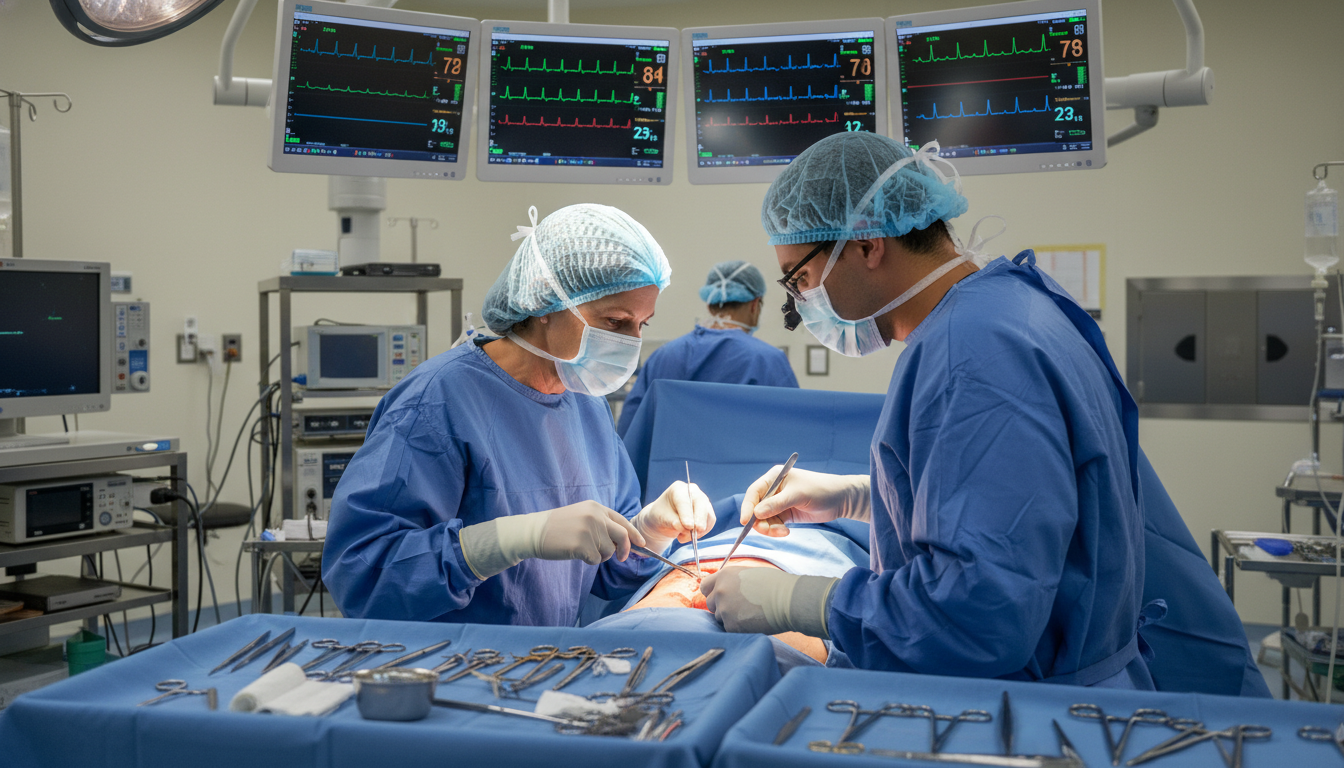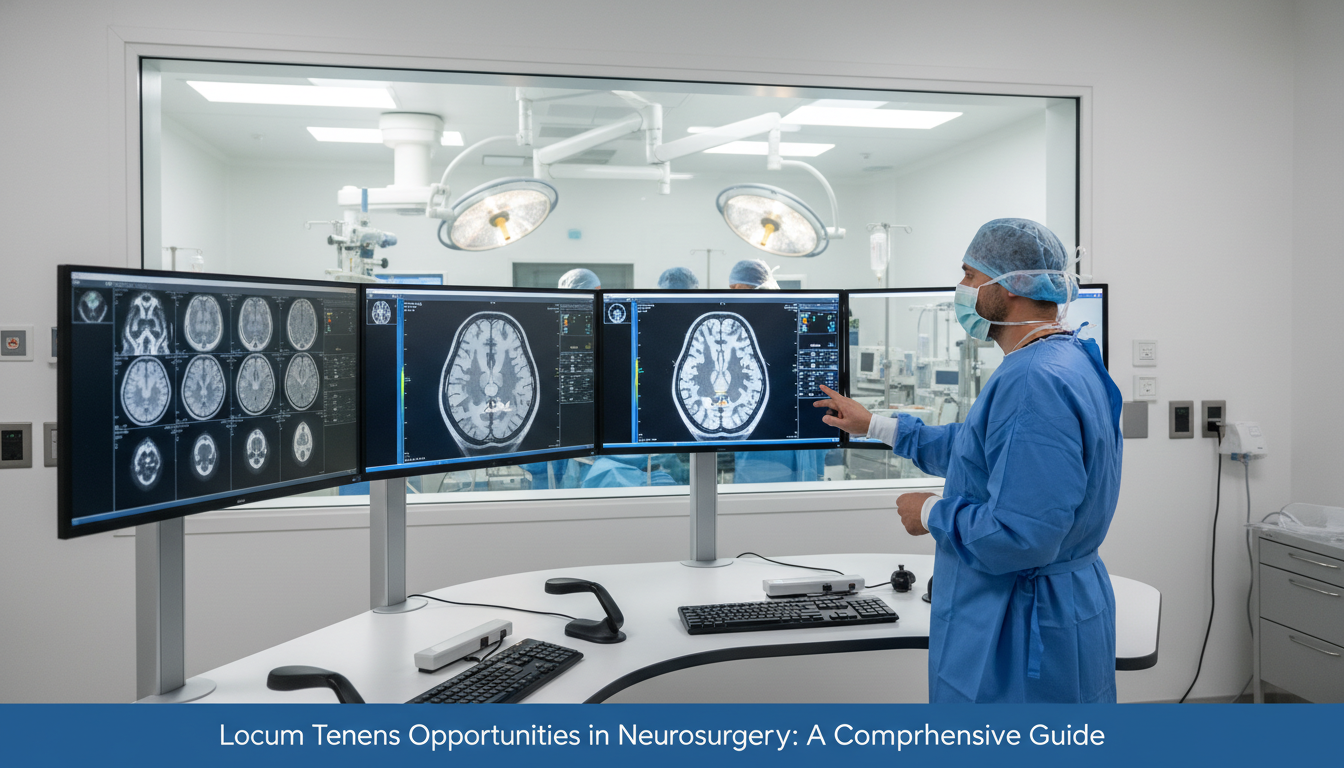
Locum tenens work has become a powerful career tool for many physicians, and neurosurgeons are no exception. As healthcare systems struggle with staffing shortages, expanding coverage needs, and increasing subspecialization, locum tenens opportunities in neurosurgery have grown steadily—both in number and in strategic importance.
For neurosurgeons at every career stage, locum work can offer flexibility, geographic variety, and financial upside, while also helping hospitals maintain 24/7 access to critical brain and spine care. This guide walks through how neurosurgeons can leverage locum tenens physician roles effectively—whether as a short-term strategy between jobs, a long-term lifestyle choice, or a bridge later in your career.
Understanding Locum Tenens in Neurosurgery
Locum tenens (Latin for “to hold the place of”) refers to temporary physician assignments designed to cover staffing gaps. In neurosurgery, these gaps are particularly consequential: patients may require emergent brain or spine surgery, and hospitals must ensure continuous coverage to maintain trauma, stroke, and comprehensive neurosurgical services.
What Locum Tenens Means for Neurosurgeons
For neurosurgeons, a brain surgery residency or neurosurgery residency prepares you for a demanding and often geographically static practice. Locum work challenges that norm by allowing you to:
- Practice at multiple institutions or in different regions
- Temporarily fill in for vacations, leaves, or vacancies
- Test-drive different practice environments before signing a permanent contract
- Maintain operative skills during career transitions
Typical neurosurgery locum roles include:
- General neurosurgery coverage (cranial + spine)
- Spine-focused positions (elective and trauma)
- Cranial/emergency call coverage (trauma centers, stroke centers)
- Subspecialty-focused roles (e.g., vascular, tumor) in large centers
Because neurosurgery is high-acuity and procedure-heavy, hospitals will usually structure locum jobs around call coverage, OR days, and inpatient consults, sometimes with outpatient clinic responsibilities.
Why Demand for Locum Neurosurgeons Is High
Several trends drive robust demand:
- National neurosurgeon shortage: Many regions, especially rural and smaller metropolitan areas, struggle to recruit permanent neurosurgeons.
- 24/7 coverage requirements: Level I/II trauma centers, comprehensive stroke centers, and major health systems must guarantee neurosurgical availability.
- Burnout and attrition: Some neurosurgeons reduce their FTE, retire early, or leave high-call positions, leaving gaps.
- Subspecialization: Centers may need temporary coverage while recruiting niche subspecialists (e.g., endovascular, skull base).
- Growth and transitions: Mergers, expansions, or new service lines often require temporary support.
As a result, travel physician jobs in neurosurgery are no longer rare exceptions—they are a structural component of how hospitals maintain coverage.
Benefits and Drawbacks of Locum Tenens Neurosurgery
Like any major career decision, committing to locum work requires weighing advantages against limitations. Understanding these trade-offs will help you decide whether locum neurosurgery aligns with your personal and professional goals.
Key Benefits
1. Flexibility and Control Over Your Schedule
Locum work allows you to choose:
- When you work (weeks, months, or blocks of shifts)
- Where you work (urban academic centers vs. community hospitals vs. rural facilities)
- How intense your schedule is (heavy call vs. primarily elective cases)
For neurosurgeons who want more time for family, research, or non-clinical ventures (consulting, startups, medical education), this control can be transformative.
2. Financial Upside
Neurosurgery is already one of the highest-compensated specialties, but locum positions often pay:
- Premium hourly or daily rates for call coverage
- Overtime for additional call or cases
- Travel and lodging expenses
- Potentially higher net income if you optimize your schedule
For early-career neurosurgeons with educational debt or mid-career surgeons seeking to boost savings or fund major investments, locum work can be a financial accelerator.
3. Geographic Variety and Lifestyle Experimentation
Locum positions expose you to different clinical environments:
- Large academic centers with complex referrals
- Busy community hospitals with broad general neurosurgery
- Critical access or regional centers with limited local subspecialists
This variety can help you:
- Identify your ideal long-term practice setting
- Experience different cities and states before settling
- Combine work with travel, especially if you enjoy exploring new regions
4. Reduced Administrative Burden
Locum neurosurgeons usually:
- Avoid long-term committee work
- Have fewer administrative and leadership obligations
- Spend less time on practice politics, long-term clinic management, and contractual disputes
While you still deal with EMRs, documentation, and local protocols, much of the non-clinical headache that comes with permanent employment is minimized.
5. Strategic Career Transitions
Locum roles are particularly helpful when:
- Finishing neurosurgery residency or fellowship and not yet ready to commit to a permanent position
- Relocating with a partner and needing bridge income while you explore options
- Leaving a job and wanting to avoid gaps on your CV while you search carefully
- Phasing into retirement while maintaining your skills and licensure
In this way, locum work can function as a career “pressure valve” at various life stages.

Potential Drawbacks and Risks
1. Variable Case Mix and Continuity
As a locum tenens neurosurgeon:
- You may not see your patients long-term
- Continuity of care can be fragmented if follow-up is handled by the local team
- Some settings may have fewer complex elective cases and more call-heavy work
This can be frustrating if you value building longitudinal patient relationships or if you’re trying to maintain a very specific subspecialty skill set.
2. Learning Curve at Each New Site
Every hospital has its own:
- EMR system
- OR workflow and staff culture
- Call expectations and inpatient protocols
- Available imaging, intraoperative technology, and specialist backup
The adjustment period can be stressful, especially for high-stakes neurosurgical emergencies under unfamiliar conditions. You must be adaptable and systematic in gathering key information quickly.
3. Variable Support and Resources
Some locum assignments may lack:
- Robust ICU staffing or neurocritical care support
- Neurosurgical physician assistants or advanced practice providers
- Certain imaging modalities or intraoperative tools you consider standard
You must be honest with yourself and the facility about what you can safely offer given the resources available.
4. Professional Isolation
Being a “visiting” surgeon can limit:
- Deep collegial relationships
- Mentoring roles with trainees
- Longitudinal research or program-building opportunities
While some locum neurosurgeons adapt by building a network across institutions, the sense of belonging is often different from being deeply rooted in a single department.
Types of Locum Tenens Opportunities in Neurosurgery
Locum neurosurgery positions vary widely in structure and expectations. Understanding the main patterns will help you identify roles that fit your goals.
1. Pure Call Coverage
Structure:
- You provide 24-hour neurosurgery call coverage for a defined period (e.g., 7–14 days at a time).
- Primary duties: emergent and urgent cranial and spine cases, ED consultations, inpatient consults.
- OR time may be entirely emergent/urgent.
Best for:
- Surgeons comfortable with high-acuity, unpredictable schedules
- Those who want to maximize income in concentrated bursts
- Physicians looking to maintain broad general neurosurgery skills
Questions to ask:
- What is the average call volume (ED consults, emergent cases per 24 hours)?
- Is there in-house backup or only home call?
- What is the ICU setup and neurosurgical PA/NP support?
2. Mixed Call and Elective Practice
Structure:
- Combination of call, scheduled OR block time, and possibly clinic
- You may manage a mix of emergent cranial, trauma, and elective spine/tumor cases
Best for:
- Neurosurgeons who want a more balanced case mix
- Those interested in building a temporary caseload during a defined stint (e.g., multi-month assignment)
Questions to ask:
- How are elective cases assigned (will you inherit cases from departing surgeons)?
- Are there limitations on case types (e.g., pediatric, vascular, complex skull base)?
- Who handles follow-up after your assignment ends?
3. Subspecialty-Focused Assignments
Structure:
- Large academic or tertiary centers may bring in locums for:
- Vascular/endovascular coverage
- Complex spine reconstruction
- Neuro-oncology/skull base
- Often designed to cover recruitment gaps or leaves of absence
Best for:
- Fellowship-trained neurosurgeons with in-demand subspecialty skills
- Surgeons wanting to maintain a focused practice portfolio
Questions to ask:
- Are there institutional case volume requirements?
- What specialized staff and equipment are available (hybrid OR, neuronavigation, neuromonitoring)?
- How does your role integrate with permanent faculty?
4. Rural and Critical Access Coverage
Structure:
- Provide essential neurosurgical coverage for regions with no permanent neurosurgeon
- May involve:
- Primarily spine and trauma
- Some cranial emergent cases
- Transfer coordination with tertiary centers
Best for:
- Surgeons comfortable with resource-limited settings
- Those interested in impactful service to underserved communities
Questions to ask:
- What cases are realistically handled locally vs. transferred?
- Is there neurology, intensivist, and anesthesia backup 24/7?
- Are there clear transfer protocols and relationships with higher-level centers?
Getting Started: Requirements, Logistics, and the Application Process
If you’re considering transitioning into locum tenens opportunities in neurosurgery, planning ahead is crucial. Licensing, credentialing, and logistics can be complex, but manageable with a structured approach.
Baseline Professional Requirements
At minimum, facilities and agencies typically expect:
- Completion of an ACGME-accredited neurosurgery residency (and fellowship if applicable)
- Board certification (or board eligibility on a defined timeline)
- Active, unrestricted medical license in the state(s) where you’ll work
- Current hospital privileges (or recent clinical activity that supports privileging)
- Up-to-date certifications (often including ACLS; some facilities may require ATLS)
- Clean or explainable malpractice and disciplinary history
If you are just finishing a brain surgery residency or fellowship, emphasize:
- Case logs illustrating breadth and volume
- Letters from program leadership attesting to your readiness for independent practice
- Any subspecialty skills that might be in demand (e.g., endovascular, complex spine)
Working with Locum Tenens Agencies
Most neurosurgeons find locum jobs through specialized staffing agencies. To work with them effectively:
- Create a detailed CV and case portfolio
- Highlight cranial vs. spine volume
- Note subspecialty training and procedures (e.g., aneurysm clipping, DBS, minimally invasive spine)
- Clarify your preferences
- Geographic regions
- Case types and call intensity you’re comfortable with
- Minimum compensation expectations
- Travel vs. driveable assignments
- Ask agencies specific questions
- What neurosurgery volume do their current clients have?
- How many active neurosurgery positions are they filling?
- How do they support credentialing and licensing?
A strong recruiter–surgeon relationship can significantly reduce friction in finding suitable roles.
Licensing and Credentialing Timelines
Because neurosurgery is high-stakes, privileging is thorough. Typical timelines:
- State medical license (if new): 2–6 months, depending on the state
- Hospital credentialing: 60–120 days (sometimes faster with “expedited” processes)
- Payer enrollment: Less critical for short-term work, but some systems may require it
To streamline:
- Maintain a well-organized digital file of all documentation (degrees, board certificates, case logs, references, CME, malpractice history).
- Consider obtaining multiple state licenses in regions with high demand for travel physician jobs (e.g., large multi-state systems, high-need rural regions).
- Respond quickly to credentialing requests to avoid delays.
Logistics: Travel, Housing, and On-Site Orientation
Typically, locum neurosurgeons receive:
- Travel arrangements (flight or mileage reimbursement)
- Housing (hotel, extended-stay suite, or apartment)
- Rental car or transportation allowance
Before arriving:
- Request an orientation agenda (EMR training, OR walkthrough, key contacts).
- Obtain call schedules, coverage expectations, and ICU/ED workflows.
- Clarify policies about:
- Block OR time
- Elective clinic
- Use of physician extenders or residents/fellows
On day one, ensure you know:
- How to contact anesthesia, ICU, ED leadership, and radiology stat lines
- How to activate stroke, trauma, or emergency OR protocols
- The chain of command for complex ethical or transfer decisions

Practical Strategies to Succeed as a Locum Neurosurgeon
Once you’ve secured a position, success hinges on clinical excellence, adaptability, and professionalism. Here are concrete strategies to thrive.
1. Establish Safety Standards from Day One
Before accepting cases:
- Clarify your scope. For example, you might state:
- “I will handle emergent decompressive craniectomies, trauma craniotomies, and most spine emergencies, but complex vascular cases (e.g., ruptured aneurysms) require transfer.”
- Confirm available technology.
- CT/MRI availability and turnaround times
- OR capabilities (microscopes, navigation, neuromonitoring)
- ICU monitoring levels
Document and communicate constraints clearly with ED, ICU, and administration to avoid unsafe expectations.
2. Build Rapid Rapport with Staff
Neurosurgery outcomes depend heavily on team coordination. To integrate quickly:
- Introduce yourself proactively to:
- Charge nurses in OR, ICU, and ED
- Anesthesia, radiology, and hospitalist leads
- Ask staff about:
- “How do things usually work here?”
- “What neurosurgical issues cause the most friction in your workflows?”
- Show respect for existing processes, suggesting changes only when patient safety is at stake.
When staff feel heard and supported, they are more likely to help you navigate the system efficiently.
3. Manage Documentation and Communication Carefully
As a locum, you may not be around for future complications or follow-ups, so meticulous documentation is essential:
- Clearly record:
- Decision-making rationale (especially for operative vs. non-operative choices)
- Discussions with patients/families about risks, benefits, and alternatives
- Transfer decisions and the reasons behind them
- Communicate handoffs thoroughly:
- To oncoming neurosurgeons (locum or permanent)
- To hospitalists and ICU teams
- To referring physicians
This protects patients, preserves continuity, and reduces medico-legal risk.
4. Monitor Your Case Mix and Skill Maintenance
If you work predominantly as a locum, periodically review:
- Cranial vs. spine case balance
- Subspecialty procedures you want to maintain
- Any skill areas that are underutilized
You may choose assignments strategically—for example:
- A call-heavy urban trauma center to maintain cranial/emergent skills
- A spine-focused site to build elective volume and complex reconstruction experience
Document these cases; they may be important for future credentialing or academic opportunities.
5. Protect Your Well-Being and Avoid Burnout
Locum work can sometimes encourage over-scheduling because each block is finite and highly compensated. Guard against:
- Chronic sleep deprivation from back-to-back call-heavy assignments
- Lack of decompression time between jobs
- Emotional fatigue from high-intensity work in unfamiliar systems
Set personal rules, such as:
- Minimum days off between multi-day call blocks
- Limits on consecutive weeks on service
- Time protected for family, exercise, and non-medical interests
Your longevity as a neurosurgeon depends on sustainable practice patterns, even in a flexible locum framework.
Is Locum Tenens Right for You? Matching Locum Work to Career Stage
The suitability of locum neurosurgery varies depending on where you are in your career trajectory.
Early Career (Immediately Post-Residency/Fellowship)
Pros:
- Explore different practice environments before committing
- Rapidly pay down loans with high-paying locum assignments
- Gain diverse case experience in various settings
Cautions:
- Ensure you have robust mentorship and peer support, especially in the first 1–2 years out
- Be cautious about taking on assignments with minimal backup if you are the sole neurosurgeon
Ideal strategy:
- Combine a stable primary position with occasional locums early on
- Or choose locums in well-supported centers (e.g., multi-surgeon groups, academic hospitals)
Mid-Career
Pros:
- Regain control over your schedule after intensive early-career years
- Use locum work as leverage in negotiating future permanent contracts
- Align work more closely with family or personal needs
Cautions:
- Consider long-term goals (academic promotion, leadership roles, research) which may be harder as a full-time locum
- Plan finances and retirement carefully, as benefits differ from traditional employment
Ideal strategy:
- Mix locum blocks with project-based academic or industry work
- Use locums to “test drive” regions and institutions before relocation
Late Career / Pre-Retirement
Pros:
- Gradually reduce clinical load while staying active
- Choose lower-intensity or part-time assignments
- Focus on mentoring and stabilization roles in smaller programs
Cautions:
- Maintain necessary case volume for hospital privileging standards
- Consider physical demands of frequent travel and call
Ideal strategy:
- Longer-term locum stints (e.g., several months per year) in one or two familiar institutions
- Emphasis on mentoring younger surgeons and stabilizing coverage rather than building a new long-term practice
FAQs: Locum Tenens in Neurosurgery
1. Can I do locum tenens work right after finishing neurosurgery residency or fellowship?
Yes, many facilities will consider board-eligible neurosurgeons who have just completed training, especially if you have strong letters and robust case logs. However, it’s wise to prioritize assignments with good support (other neurosurgeons, strong ICU and ED teams) rather than solo-coverage positions until you gain more independent experience.
2. How does malpractice coverage work for locum neurosurgery assignments?
Most locum tenens agencies or hiring hospitals provide malpractice insurance, often on a claims-made basis, sometimes with tail coverage included. Always confirm:
- Policy limits
- Whether tail coverage is included or needs to be purchased separately
- Whether you need your own supplemental policy, especially if you mix locum and permanent roles
3. Can I maintain an academic career while doing locum work?
It is possible but requires intentional planning. Some neurosurgeons hold part-time academic appointments and do locum work on the side, or alternate periods of academic practice with locum-heavy periods. To remain academically active, maintain:
- A defined research or education niche
- Ongoing collaborations
- Clear agreements with your home institution about outside clinical work
4. How do I know if a locum neurosurgery job is safe and appropriate for my skill set?
Ask detailed questions before accepting:
- Typical case mix and volume
- Available technology and subspecialty support
- ICU and ED capabilities
- Neurosurgical backup (are you the only surgeon?) Compare these with your training, experience, and comfort level. If expectations exceed what you can safely offer with available resources, it is appropriate and professional to decline or negotiate a narrower scope of practice.
Locum tenens opportunities in neurosurgery offer a unique way to practice high-impact medicine with flexibility, financial benefit, and geographic freedom. Whether you are exploring options before signing a long-term contract, seeking a more balanced lifestyle, or crafting a late-career runway, locum work can be a powerful, adaptable tool—if approached thoughtfully, with patient safety and personal sustainability at the center of your decisions.