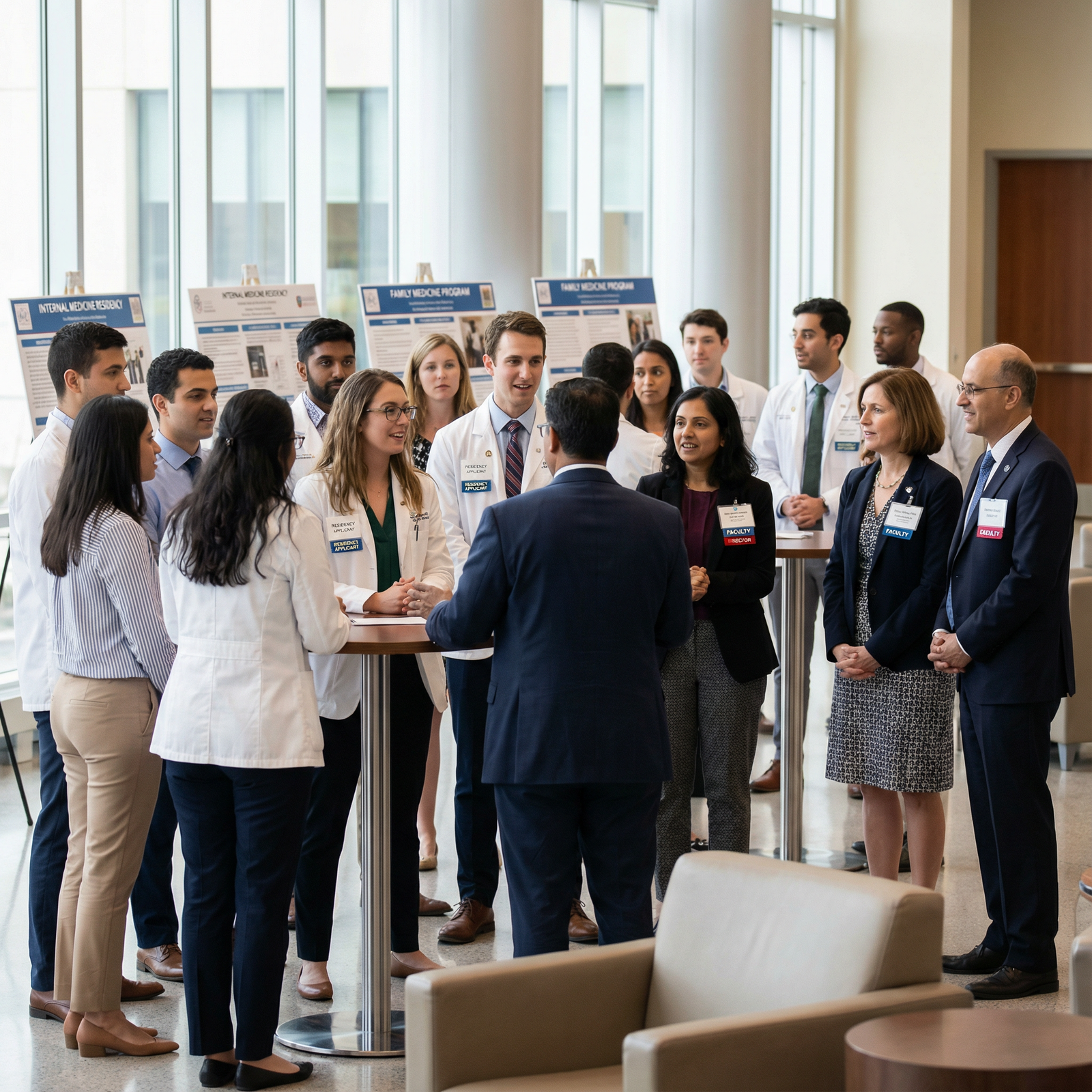
Unlock your residency potential with practical, high‑yield networking strategies designed specifically for medical students and residency applicants. Thoughtful, intentional Networking can turn a strong application into a standout one by connecting you with mentors, advocates, and opportunities that never show up on ERAS or program websites.
The Strategic Role of Networking in Medical Residency Applications
Networking in medicine is not about superficial small talk or “knowing the right people.” It is a deliberate process of building authentic, professional relationships that support your growth, learning, and career trajectory.
For residency applicants, effective networking directly supports your Professional Development and can strengthen your application across multiple dimensions.
1. Access to Insider Information About Programs
Programs’ official websites and FREIDA listings tell only part of the story. Through Networking, you can gain:
- Unwritten norms of specific programs (e.g., how much weight they place on research, sub‑internship performance, or Step scores)
- Culture and fit: how residents describe morale, workload, faculty accessibility, and teaching quality
- Recent changes: new program directors, expansions, mergers, or curriculum reforms that may not yet appear online
- Hidden opportunities: research projects, electives, or leadership roles that are filled informally through word of mouth
Example:
A student applying in internal medicine connects with a current resident on LinkedIn. During a brief video call, the resident explains that the program strongly favors applicants who have done an away rotation there and can show commitment to underserved medicine. The student then prioritizes a sub‑I at that site and tailors their personal statement and experiences accordingly.
2. Finding Mentorship and Sponsorship
Networking opens doors to both mentors and sponsors:
- Mentors provide guidance, feedback, and longitudinal support:
- Help you refine specialty choice
- Review your personal statement and ERAS application
- Offer honest feedback on competitiveness and strategy
- Sponsors actively advocate for you:
- Call or email program leadership on your behalf
- Recommend you for research, leadership roles, or away rotations
- Introduce you to others in their network
Well‑matched mentorship is one of the most valuable outcomes of networking and can be the difference between a scattered application and a focused, compelling one.
3. Increasing Your Visibility to Selection Committees
Residency programs receive hundreds to thousands of applications. Networking helps you become a recognizable, credible candidate rather than “just another ERAS file.”
Ways visibility translates into advantage:
- A faculty member who knows you personally may:
- Flag your application for review
- Serve as a strong letter writer with specific, detailed examples
- Provide context if you have red flags or non‑traditional pathways
- Program directors often weigh internal recommendations heavily—especially when they come from trusted colleagues.
This doesn’t guarantee an interview or a match, but it significantly increases your chances of being seriously considered.
4. Exploring Career Paths and Specialties
Networking broadens your awareness of what is possible:
- Traditional and non‑traditional career paths (academic medicine, global health, hospital administration, digital health, medical education)
- Differences in lifestyle, scope of practice, and training demands between specialties
- Emerging niches (e.g., point‑of‑care ultrasound educators, telemedicine, informatics)
By speaking with residents and attendings across specialties, you can:
- Validate or challenge assumptions about certain fields
- Discover subspecialties that align with your values and interests
- Make more informed decisions about your specialty choice and rank list
5. Building an Emotional and Professional Support System
The residency application process can be isolating and stressful. Networking helps you build a community:
- Peers going through the same process who can:
- Share resources
- Practice interviews
- Provide emotional support during rejections, delays, or uncertainty
- Near‑peer mentors (PGY‑1 or PGY‑2 residents) who:
- Recently navigated the Match
- Understand current realities (virtual interviews, signal preferences, supplemental applications)
- Faculty who can normalize setbacks and help you reframe them constructively
Over time, this network becomes your professional “home base,” guiding you beyond the Match and into fellowship and practice.
Core Networking Strategies for Residency Applicants
Networking doesn’t have to be awkward or forced. You can develop a sustainable approach that fits your personality and circumstances, whether you’re outgoing or introverted, at a U.S. med school or an international institution.

1. Using Social Media and Online Platforms Wisely
When used intentionally, platforms like LinkedIn, X (Twitter), and specialty‑specific online communities are powerful tools for Professional Development.
a. Optimize Your Professional Profile
- Profile photo: Clear, professional headshot (no white coat required but appropriate attire).
- Headline: “Fourth‑Year Medical Student | Aspiring Emergency Medicine Physician | Interested in Medical Education & Health Equity”
- About/summary: 3–5 sentences describing your interests, goals, and key experiences.
- Experience: Include clinical rotations, leadership roles, research, and major projects with brief, outcome‑focused bullet points.
- Featured section (LinkedIn): Link to posters, publications, blog posts, or presentations.
b. Engage Thoughtfully, Not Constantly
- Follow:
- Program accounts
- Department and division accounts
- Residents and attendings in your target specialties
- Professional societies (e.g., ACOG, AAFP, ACP, ACEP)
- Interact by:
- Commenting with thoughtful questions or reflections (avoid generic “Great post!” messages)
- Sharing relevant articles with brief commentary
- Posting about:
- Lessons from rotations (de‑identified and HIPAA‑compliant)
- Reflections on professionalism, ethics, or education
- Research milestones or conference participation
This positions you as engaged, curious, and professional—qualities residency programs value.
2. Maximizing Conferences, Workshops, and Residency Fairs
In‑person and virtual events are concentrated Networking opportunities if you prepare strategically.
a. Before the Event
- Review the attendee list and programs you’re interested in.
- Identify:
- Sessions led by faculty at your target institutions
- Events geared toward students and residents
- Prepare:
- A concise 20–30 second introduction: your name, school, year, specialty interest, and one key interest (e.g., “I’m particularly interested in quality improvement in inpatient pediatrics.”)
- A short list of people or programs you want to meet
b. During the Event
- Ask targeted questions:
- “What qualities do successful residents in your program tend to share?”
- “How does your program support resident research or teaching interests?”
- “What changes has your program made recently that you’re most excited about?”
- Collect contact info:
- Business cards
- Email addresses
- Connect on LinkedIn within 24–48 hours while the interaction is fresh
c. After the Event
- Send personalized follow‑up emails:
- Reference something specific you discussed
- Express appreciation for their time
- If appropriate, ask 1–2 follow‑up questions or ask permission to reach out again closer to application season
3. Requesting and Conducting Informational Interviews
Informational interviews are not job interviews; they are structured conversations to learn from someone’s experience.
a. How to Request an Informational Interview
Keep your message short and specific:
“Dear Dr. Lee,
I am a third‑year medical student at [School], interested in a career in general surgery with a focus on surgical education. I’ve followed your work in resident teaching and would be grateful for 15–20 minutes of your time to ask a few questions about your career path and advice for residency applicants. I’m happy to accommodate your schedule and meet virtually.
Thank you for considering this,
[Name]”
b. Prepare High‑Value Questions
Examples:
- “What factors most influenced your choice of residency program?”
- “What do you think distinguishes strong residency applicants in your specialty?”
- “What do you wish you had done differently before applying?”
- “How do residents in your program typically get involved in research or QI?”
Take brief notes, maintain eye contact, and respect the time limit unless they clearly invite more discussion.
c. Follow‑Up and Relationship Maintenance
- Send a thank‑you email highlighting:
- One or two specific insights you found helpful
- How you plan to apply their advice
- Periodically (every few months) send brief updates:
- “I wanted to let you know I took your advice and presented my QI project at [Conference]. Thank you again for your guidance.”
This turns a single conversation into an ongoing professional relationship.
4. Engaging with Faculty and Residents During Rotations
Your clinical rotations and sub‑internships are some of the most powerful Networking environments because faculty and residents see you in action.
a. Show Up as a Future Colleague
- Be prepared: read about common conditions before each rotation.
- Ask focused, thoughtful questions on rounds.
- Volunteer for tasks, follow through reliably, and close the loop.
- Show interest in feedback and demonstrate improvement over time.
Faculty are more likely to mentor, sponsor, and write strong letters for students who consistently perform and behave like junior colleagues.
b. Convert Positive Interactions into Long‑Term Connections
- After a great teaching session or case discussion:
- Thank the faculty or resident in person and/or via email.
- Mention what you learned and how it impacted your thinking.
- If you’re interested in their specialty or research:
- Ask, “Would it be alright if I emailed you with a few questions about [specialty/research area]?”
- If appropriate, inquire about ongoing projects or opportunities to help.
5. Leveraging Student Organizations and Leadership Roles
Student organizations can be rich Networking hubs:
- School‑level groups (interest groups, SNMA, LMSA, AMSA, specialty interest groups)
- National organizations (e.g., APAMSA, ACOG, ACP student sections)
a. Active Participation vs. Passive Membership
You gain the most from:
- Taking on leadership roles (president, event coordinator, conference lead)
- Organizing speaker panels, workshops, or residency Q&A sessions
- Coordinating community outreach or research activities
These roles naturally connect you with:
- Program directors and faculty invited to speak
- Residents who participate in panels or mentorship programs
- National leaders you meet at conferences and leadership summits
6. Utilizing Alumni Networks and School Resources
Most medical schools and even some hospitals maintain alumni databases, mentorship programs, or career advising services.
Useful actions:
- Ask your dean’s office or career advising office about:
- Alumni in specific specialties or geographic regions
- Formal mentorship programs
- Residency application workshops
- When contacting alumni:
- Introduce yourself, highlight your shared institution
- Ask for brief advice and perspective rather than immediate favors
- Be respectful of their time—they’re often balancing busy clinical workloads
7. Joining Online Forums and Virtual Communities
Online communities can extend your reach, especially if you’re an IMG, at a smaller school, or limited geographically.
Examples:
- Student Doctor Network
- Reddit communities (e.g., r/medicalschool, r/residency, specialty‑specific subs)
- Specialty‑oriented Discord or Slack groups
- Professional society online communities and mentorship programs
Use these spaces to:
- Ask strategic questions about the Match and application tips
- Learn from de‑identified experiences of current residents and recent applicants
- Share your own experiences and support others
Maintain professionalism; assume anything you post could be seen by a future colleague or program director.
Real‑World Networking in Action: A Residency Applicant’s Story
To see how Networking can influence the Match, consider the journey of “Sam,” a medical student aiming for a pediatrics residency.
1. Starting with Online Engagement
Early in third year, Sam:
- Created a polished LinkedIn profile and a professional X (Twitter) account.
- Followed:
- Pediatric departments at several academic centers
- National pediatrics societies
- Pediatric residents and attendings who posted about education and advocacy
He began sharing:
- Short reflections on his pediatric rotation (HIPAA‑compliant)
- Articles and commentary on child health disparities
- Updates on his small QI project in outpatient pediatrics
A pediatric attending at a major academic center noticed his repeated, thoughtful engagement and followed him back.
2. Developing Mentorship Through Conversations
Sam messaged this attending with a short, respectful request for an informational interview. During a 20‑minute Zoom call, they discussed:
- Factors that distinguish strong pediatric residency applicants
- How to frame his QI work in his personal statement
- Which conferences might be most valuable to attend
Impressed by his curiosity and follow‑through, the attending offered ongoing mentorship and later connected Sam with pediatric residents at two of Sam’s target programs.
3. Expanding Connections at Conferences and Through Alumni
At a national pediatrics conference, Sam:
- Attended sessions by faculty from his top‑choice programs
- Introduced himself afterward using his 30‑second introduction
- Collected contact information and followed up post‑conference
In parallel, Sam worked with his school’s alumni office to identify:
- Two graduates who were now pediatric residents at programs Sam planned to rank highly
- One alum who served on a residency recruitment committee
These alumni shared insider details about:
- How their programs evaluated ERAS applications
- The weight they placed on sub‑internships and away rotations
- How to express genuine program interest without overstepping
4. Strengthening Letters and Application Materials
During his pediatrics sub‑internship, Sam:
- Showed up early, volunteered for tasks, and followed through on patient care.
- Took initiative on a small teaching project for medical students.
- Asked for feedback regularly and integrated it quickly.
By the end of the rotation, two pediatric attendings and one senior resident were eager to advocate for him. The attendings wrote strong letters anchored in specific, observed behaviors and professionalism, and one personally emailed the program director of Sam’s top‑choice residency.
Sam then:
- Incorporated program‑specific details into his personal statement (without sounding generic)
- Highlighted his QI and advocacy interests in a way that aligned with the missions of his target programs
5. Match Outcome
When interview season arrived:
- Sam received interview invitations from nearly all programs where he had established prior connections.
- Several interviewers referenced:
- His social media engagement
- His conference conversations
- His strong letters and faculty endorsements
Ultimately, Sam matched at his top‑choice pediatrics residency. His academic profile was solid but not extraordinary; it was his deliberate Networking and Mentorship relationships that helped his application rise to the top of the pile.
Putting It All Together: A Practical Networking Blueprint
You don’t need to do everything at once. A structured, stepwise approach helps you build a sustainable Networking strategy.
Third Year (or Equivalent Point in Training)
- Clarify tentative specialty interests.
- Create or refine professional social media and LinkedIn profiles.
- Identify 1–2 potential mentors per specialty of interest.
- Attend at least one regional or national meeting (virtual or in‑person).
Early Fourth Year / Application Year
- Deepen relationships with 2–3 reliable mentors.
- Ask for feedback on:
- Specialty choice
- Program list
- Personal statement and ERAS content
- Do sub‑internships at your home program and, if feasible, one away rotation in your desired specialty.
- Proactively connect with residents and faculty during these rotations.
During Interview Season
- Send thank‑you messages after interviews.
- If appropriate, send one brief, sincere letter of interest to your true top‑choice program.
- Maintain contact with mentors; they may advocate for you late in the season.
After Match (Regardless of Outcome)
- Update mentors and key contacts with your result and express gratitude.
- If you did not match, your network is crucial for:
- Finding research years, prelim positions, or reapplication strategies
- Receiving honest feedback and support
FAQ: Networking and Residency Applications
1. How can I effectively follow up with someone I meet at a networking event or online?
Timing: Follow up within 24–72 hours if possible.
Format: A brief, personalized email or LinkedIn message.
Content:
- Thank them for their time.
- Mention something specific you discussed to jog their memory.
- If appropriate, ask one or two concise follow‑up questions or share a short update (“I’ve started drafting my QI abstract we discussed.”).
Example:
“Dear Dr. Patel,
It was a pleasure speaking with you after the pediatric advocacy panel yesterday. I appreciated your insights on how residents at your program get involved with community projects, especially the school‑based asthma initiative.
Thank you again for your time and advice. I hope to stay in touch as I move toward applying in pediatrics.
Best regards,
[Name]”
Avoid repeated follow‑ups if you don’t receive a response; people are often very busy. One polite reminder after 1–2 weeks is reasonable.
2. Should I network with physicians outside my desired specialty?
Yes. Cross‑specialty Networking can be very valuable:
- You may change your specialty choice as you gain more exposure.
- Non‑specialty mentors can help:
- Strengthen your application strategy
- Write impactful letters about your professionalism and work ethic
- Connect you with colleagues in your target field
- Broad networks create more opportunities in leadership, education, research, and advocacy that may transcend any single specialty.
3. Is it too late to start networking if I’m already in my final year of medical school?
No. While earlier is better, it’s never too late to start.
For late starters:
- Focus on high‑yield environments: current rotations, sub‑internships, and career advising events.
- Be intentional:
- Request feedback and brief mentorship from faculty you work closely with.
- Reach out to recent graduates and residents from your school’s alumni network.
- Attend virtual open houses and residency information sessions; introduce yourself and follow up with questions.
- Even within a few months, you can develop meaningful connections that support your application and interview season.
4. How do I approach a potential mentor without feeling like I’m bothering them?
Most physicians who agree to mentor do so because they want to support the next generation. To respect their time:
- Be clear about why you’re reaching out:
- “I admire your work in medical education and would appreciate advice as I apply in internal medicine.”
- Be specific about what you are asking for:
- A one‑time 20‑minute conversation
- Feedback on your specialty choice
- Guidance on getting involved in research
- Prepare questions in advance and keep the interaction within the agreed‑upon timeframe unless they extend it.
- Show that you value their input by following through on recommendations and occasionally updating them on your progress.
5. Can networking really influence my residency application outcome?
Yes—indirectly but meaningfully. Networking does not replace strong academic performance, clinical skills, and professionalism, but it can:
- Lead to stronger, more personalized letters of recommendation.
- Help you understand how to tailor your application to specific programs.
- Increase your chances of being noticed and invited for interviews.
- Provide advocates who may speak up for you during selection discussions.
- Connect you to opportunities (research, leadership, QI) that strengthen your CV well before you apply.
Over time, Networking and Mentorship are among the most powerful tools you have, not only for matching into residency, but for building a satisfying and sustainable career in medicine.
Thoughtful Networking is not about collecting business cards or LinkedIn connections; it’s about building real, professional relationships rooted in curiosity, respect, and mutual growth. By starting early, being intentional, and following through, you can transform your residency search from a solitary, opaque process into a guided journey supported by mentors, peers, and future colleagues.