


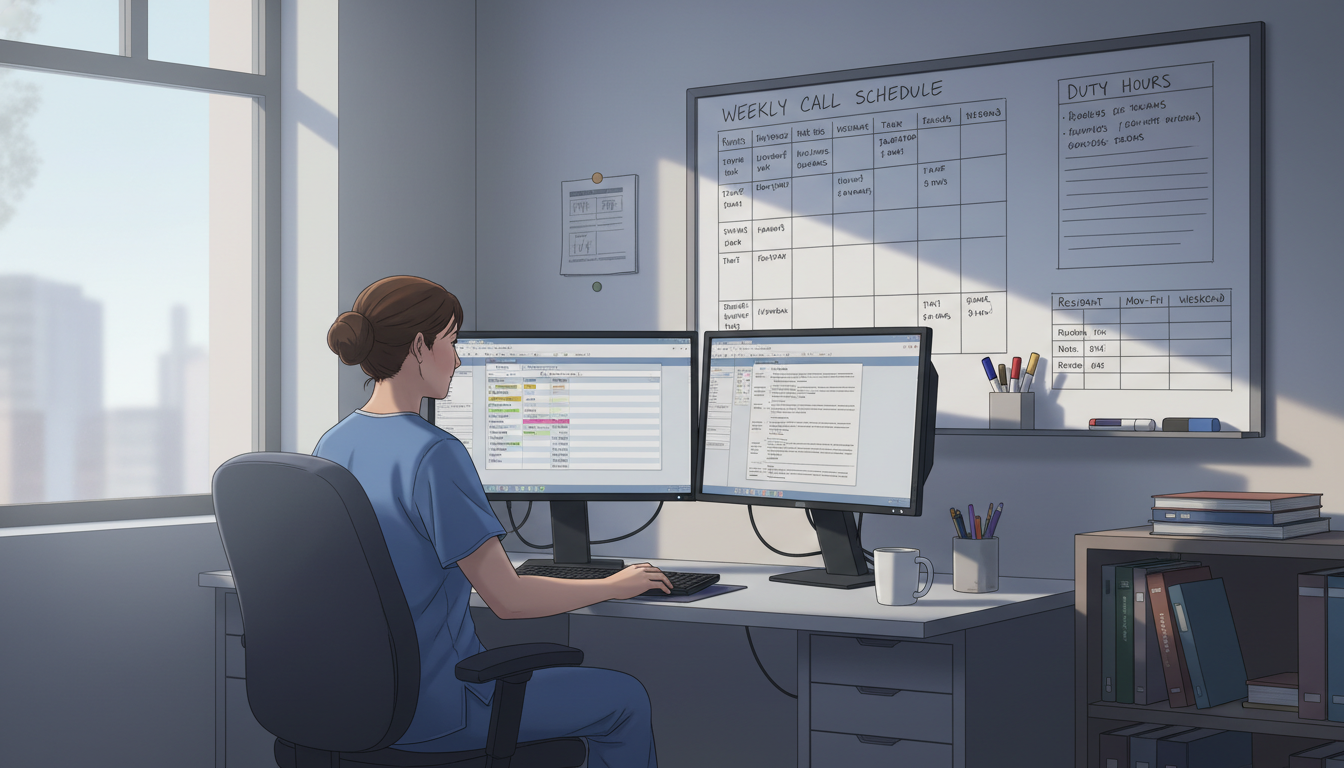
Understanding Residency Work Hours in Psychiatry
Psychiatry residency has a reputation for being more lifestyle-friendly than many other specialties—but it is still residency, with demanding duty hours, emotionally intense work, and real risks of burnout. Managing residency work hours in psychiatry is about more than just counting shifts; it’s about protecting your mental health, learning effectively, and sustaining compassion over a long career.
Before you enter a psychiatry residency or the psych match, it helps to understand what residency work hours look like, what regulations exist, and how residents actually manage their time and energy on the ground.
ACGME Duty Hour Rules: The Framework
Most U.S. psychiatry residencies are accredited by the ACGME, which sets national standards for duty hours across specialties. These are often called “duty hours” rather than “work hours,” but they mean your total clinical and education time.
Key ACGME duty hour rules (for psychiatry and most other specialties):
80-hour workweek
- Averaged over 4 weeks, not week by week
- Includes in-house call, night float, moonlighting (if allowed)
1 day off in 7
- Also averaged over 4 weeks
- One continuous 24-hour period free of clinical duties
Maximum shift length
- Up to 24 continuous hours of in-house clinical duties
- Up to 4 additional hours for transitions of care, notes, and education (no new patients)
Time between shifts
- Aim for 10 hours off between duty periods
- Must be at least 8 hours, and 14 hours after a 24-hour call
Night float systems
- Structured to comply with weekly hour limits and rest requirements
These rules shape how psychiatry residency schedules are designed, but programs differ widely in how close they push to the limits and how rigorously they protect resident work life balance.
How Psychiatry Duty Hours Compare to Other Specialties
Psychiatry residency is generally less physically punishing than surgical or procedural fields, but you should still expect periods of intense workload:
- Fewer overnight procedures and emergencies compared with surgery or OB/GYN
- More emotional and cognitive load: complex histories, risk assessments, difficult conversations
- Significant documentation time, prior authorizations, and coordination with social work, courts, and families
- On some rotations (e.g., medicine or neurology during intern year), your residency work hours may look very similar to those of internal medicine residents
Reality check: You will have rotations that feel relatively “light” and others that feel overwhelming. Success lies in developing systems and habits early so your work is sustainable.
Typical Psychiatry Residency Work Patterns by Year
While every program is unique, there are common patterns across psychiatry residencies that affect work hours and lifestyle.
PGY-1: The Foundation (and Often the Longest Hours)
Your intern year usually includes a mix of:
- Inpatient psychiatry
- Inpatient internal medicine or family medicine
- Neurology
- Emergency psychiatry or emergency medicine
- Night float or traditional call
Work hours
- Expect to be closest to the 80-hour limit on some non-psychiatry rotations (medicine, neurology, ED)
- Psychiatry inpatient months are often lighter (around 55–70 hours/week), but some programs run busy acute units that can be closer to the upper range
- Call may include:
- 24-hour Saturday/Sunday calls
- Night float blocks
- Evening admissions / “short call” shifts
Key challenges for PGY-1:
- Learning basic workflows, EHR, and documentation (which initially take much longer)
- Managing fatigue while still learning clinical reasoning and psychiatry basics
- Adjusting to shift work and unpredictability
Strategy focus in PGY-1:
- Build efficiency habits early: templates, checklists, note shortcuts
- Learn to prioritize tasks and ask for help when overwhelmed
- Develop a sleep and nutrition routine that works with your call schedule

PGY-2: Core Psychiatry, Still Busy but More Predictable
PGY-2 usually transitions to more psychiatry-focused rotations:
- Inpatient psychiatry (often more responsibility than PGY-1)
- Consultation-liaison (psych consults in the general hospital)
- Emergency psychiatry / crisis services
- Addiction psychiatry
- Geriatric psychiatry
- Continued call or night float
Work hours
- Often more in the 55–65 hours/week range, but busy services and call can push higher
- Emergency psychiatry and consult-liaison can be intense: frequent pages, rapid assessments, complex risk evaluations
- Night float rotations typically mean fewer total hours per week, but more nights and unusual sleep schedules
Key challenges for PGY-2:
- Taking more independent ownership of patient care
- Managing high patient volumes in acute settings
- Juggling inpatient duties with didactics and early outpatient responsibilities at some programs
Strategy focus in PGY-2:
- Refine triage and time-management skills (who must be seen now vs. safely later)
- Develop structured approaches to suicide risk assessment, agitation, and complex consultations
- Protect time for learning despite service demands
PGY-3: Outpatient Heavy, More Regular Hours
PGY-3 is often considered the most “predictable” and structured year in many psychiatry residencies:
- Longitudinal outpatient clinics (adult, child, subspecialty)
- Psychotherapy training (CBT, psychodynamic, other modalities)
- Fewer nights and weekends, depending on the program
- Some programs still have call, but generally less than PGY-1–2
Work hours
- Frequently in the 45–60 hours/week range, depending on:
- Clinic volume
- Documentation efficiency
- Remaining call duties
- Most work is on weekdays; nights/weekends are less frequent
Key challenges for PGY-3:
- Balancing large outpatient caseloads with high documentation requirements
- Keeping up with psychotherapy reading, supervision, and reflective work
- Managing boundaries—patients may contact you between visits, and emotional investment can be high
Strategy focus in PGY-3:
- Master outpatient efficiency: use visit templates, pre-charting, and structured sessions
- Develop psychotherapy time boundaries while remaining attuned and present
- Build habits to avoid charting late into the evening or on weekends
PGY-4: Senior Resident, Leadership, and Career Prep
PGY-4 often includes:
- Electives and subspecialty rotations
- Leadership roles (chief resident, administrative roles, quality improvement projects)
- Finishing outpatient continuity clinics
- Board study and job/fellowship applications
Work hours
- Often among the most flexible and controllable years: 40–55 hours/week is common at many programs
- Call is usually minimal or none, depending on the program and leadership role
- More autonomy over schedule selection (electives, research time, etc.)
Key challenges for PGY-4:
- Self-directed time management—no one structures your life as much as in earlier years
- Balancing leadership responsibilities with clinical and academic goals
- Preparing mentally and logistically for post-residency life
Strategy focus in PGY-4:
- Align your time use with career goals: electives, research, teaching, administration
- Practice sustainable habits you want to carry into attending life: protected days off, realistic caseloads, boundaries
- Use your relative schedule flexibility to solidify wellness routines
Resident Work Life Balance: What It Really Looks Like in Psychiatry
The phrase “good work life balance” gets thrown around a lot in psychiatry residency recruitment. But actual experiences vary widely by program, rotation, and individual resident.
What “Balanced” Can Realistically Mean
In a well-run psychiatry residency with reasonable duty hours and a resident-friendly culture, you might expect:
- Most weeks at or under 60 hours
- Some rotations closer to 70–75; very few flirting with 80
- Protected didactic time where pages are covered
- Genuine post-call days off (or at least no new patient responsibilities)
- Colleagues and attendings who support you going home once your duties are completed
- A culture where vacation time is encouraged and not stigmatized
Psychiatry’s work is emotionally heavy: suicidality, trauma, psychosis, legal and ethical complexities. Even if the clocked hours are lower than some other specialties, the emotional load can make your days feel long. Work life balance in psychiatry is as much about emotional processing and boundaries as about numeric duty hours.
Red Flags for Poor Resident Work Life Balance
During interviews and rotations, watch for warning signs that a program may push residents beyond sustainable limits:
- Residents consistently appear exhausted or demoralized
- They describe “off the record” call beyond what’s scheduled
- Vague answers to “How often do you get out on time?”
- No clear system for coverage when a resident is out sick
- Culture of heroism: residents proudly staying late “all the time”
- Significant disparity between what leadership says and what residents privately report
If you hear recurring themes like “We’re technically within ACGME rules, but…” followed by stories of regular 80-hour weeks, expect a heavier residency work hours reality.

Practical Strategies to Manage Psychiatry Residency Work Hours
You cannot control your entire schedule, but you can significantly influence how heavy it feels. Below are practical, psychiatry-specific strategies to manage your time, energy, and wellbeing.
1. Build Efficient Clinical Routines Early
A. Streamline your pre-rounding and rounding
- Use a consistent checklist for each patient:
- Overnight events
- Vital signs and restraints/seclusion
- PRN meds given (especially benzos, antipsychotics)
- New labs/imaging
- Nursing or family concerns
- Discharge planning steps
- Document as you go; take brief structured notes while talking to patients to shorten later charting
B. Use smart note templates
- Create templates for:
- Initial psychiatric evaluation
- Daily inpatient progress notes
- Risk assessments (suicide, homicide, violence)
- Capacity assessments
- Autofill standard language, but customize critical parts (MSE, risk formulation, plan) to avoid errors and maintain quality
C. Batch similar tasks
Instead of constantly switching gears:
- Respond to pages/messages in batches when possible
- Sign orders and review labs at set times unless urgent
- Finish all discharge summaries for the day before midday if you can; don’t leave them to the last hour
These habits can easily save 60–90 minutes on a busy day.
2. Protect Time Off Relentlessly
Days off and post-call time are not luxuries; they are safety measures.
- Treat your 24-hour off-duty day as sacred:
- Avoid “just catching up” on work unless absolutely necessary
- Communicate clear boundaries to co-residents if they try to involve you in non-urgent work
- For post-call days:
- Go home as soon as your obligations are truly finished
- Plan low-effort recovery activities (sleep, light exercise, simple meals)
If your program consistently violates duty hour rules or pressures you to forfeit your days off, document your experience and discuss it with:
- Your chief resident
- Program leadership
- GME office (if needed)
The duty hours rules exist to protect both patients and residents.
3. Manage Cognitive and Emotional Load
Psychiatry’s “overwork” often shows up mentally and emotionally rather than physically.
A. Use structured assessment tools
- Apply standardized frameworks (e.g., SAFE-T, Columbia-Suicide Severity Rating Scale) for suicide risk
- Create mental or written checklists for:
- Agitation management
- Psychosis workup
- Delirium assessment
- These structures reduce decision fatigue and speed up documentation.
B. Debrief difficult cases
- After major events (e.g., suicide, severe violence, intense trauma disclosures), ask for a quick debrief:
- With an attending, senior resident, or supportive colleague
- This can often be done in 5–10 minutes and helps you leave emotional weight at work rather than carrying it home.
C. Separate self from role
Develop internal language that maintains boundaries:
- “I am responsible for providing the best care possible, not for controlling all outcomes.”
- “This patient’s choices and circumstances are complex; my job is to show up fully, not to fix every variable.”
This mindset helps you “clock out” emotionally when you leave the hospital.
4. Be Strategic About Call and Rotations
You may have some control over when you do particular rotations or how you structure call.
A. Front-load or back-load intense months thoughtfully
- Some residents prefer to get the hardest rotations done early (e.g., medicine months in PGY-1):
- You gain early clinical confidence
- Later years feel progressively lighter
- Others prefer to stagger intense blocks throughout the year to prevent long stretches of high workload
Discuss with current residents what has worked for them at your program.
B. Coordinate with co-residents
- Swap call or shifts early if you know you have:
- Major life events (weddings, family obligations)
- Exam or interview dates
- Set expectations: help others when you can, and they are more likely to help you when you need it.
C. Optimize your night float schedule
If your program has night float:
- Adjust sleep in the 2–3 days leading up to the block
- Use blackout curtains, white noise, and strict phone silencing to protect daytime sleep
- Avoid stacking multiple obligations on your days off during the block—treat them as recovery days
5. Use Technology Wisely
Technology can either save you time or distract you.
A. Digital organization tools
- Use a simple note app or task manager (e.g., Todoist, Notion, OneNote) to track:
- To-do lists by patient or by day
- Follow-ups (labs to recheck, collateral to obtain)
- Project deadlines (papers, presentations, QI)
B. Email and messaging hygiene
- Set two or three times daily to check non-urgent email instead of constant monitoring
- Unsubscribe from low-value lists or batch them into a single daily digest
C. Be intentional with your phone
- During work, limit social media to brief, scheduled breaks to avoid attention fragmentation
- At home, consider app limits so screen time doesn’t cannibalize precious off-duty recovery time
Balancing Resident Work Hours with Learning and Career Goals
Managing residency work hours isn’t just about surviving; it’s also about thriving academically and professionally.
Protecting Time to Learn
- Treat didactics as non-negotiable whenever possible; your education is as important as service needs
- Use brief pockets of time for learning:
- 10 minutes between patients to read about a diagnosis you just saw
- Listen to psychiatry podcasts during commutes (e.g., psychopharmacology, psychotherapy skills)
- Maintain a running list of topics to read about when you have more time off
Making Space for Research and Projects
If you’re planning an academic or subspecialty career, you’ll likely want research, QI, or academic projects during residency.
- Start small: a case report, QI project, or presentation is often manageable in PGY-1 or PGY-2
- Choose projects that align with existing workflows:
- Studying outcomes on your inpatient unit
- QI projects around safety planning or reducing restraints
- Coordinate with mentors who understand residency work hours and can help you build realistic timelines
Avoiding Overcommitment
Enthusiastic residents often say yes to everything—committees, lectures, research, advocacy, leadership roles. To preserve work life balance:
- Use a simple rule: for every new major commitment, you must let go of or complete one existing one
- Ask before agreeing:
- “How many hours per month does this realistically require?”
- “What’s the expected time frame and endpoints?”
- Reassess your plate every 6–12 months, especially around transitions between PGY years
How to Evaluate Residency Work Hours During the Psych Match Process
As an applicant, you cannot directly see the schedule you’ll have, but you can ask targeted questions to get a realistic view.
Smart Questions to Ask Residents
Instead of: “How are the hours?”
Try:
- “On your busiest rotation, what does a typical day look like—from arrival to leaving?”
- “In the last month, how many hours per week did you work on average?”
- “How often do you leave on time on inpatient vs. outpatient rotations?”
- “How is sick coverage handled when someone is out suddenly?”
- “Are there rotations or services where residents regularly bump up against duty hour limits?”
Follow-up questions often reveal more than initial polished answers.
Signs of an Honest, Healthy Culture
- Residents freely acknowledge hard months but describe them as finite and manageable
- They can clearly identify lighter rotations and how they use that time for recovery or career development
- There is consistency across different residents’ descriptions
- Chiefs and leadership support duty hour reporting and respond to concerns with specific changes, not just reassurance
Frequently Asked Questions
1. Are psychiatry residency work hours really lighter than other specialties?
Generally, yes—psychiatry residents often work fewer hours than residents in surgical fields, OB/GYN, or some internal medicine programs. Many psychiatry residents average 50–65 hours/week, especially after PGY-1. However, certain rotations (medicine, ED, busy inpatient psych, consult-liaison) can be quite demanding and approach the 80-hour ACGME limit. The emotional intensity of psychiatric work also means that even “reasonable” hours can feel draining without good boundaries and recovery strategies.
2. Can I realistically have a life outside of a psychiatry residency?
Yes, but it requires intentional planning. On most rotations you can maintain relationships, hobbies, and self-care if you:
- Protect your days off and post-call time
- Use work hours efficiently to avoid excessive after-hours charting
- Avoid overcommitting to too many projects at once
As you progress into PGY-3 and PGY-4, schedules typically become more regular and more conducive to a sustainable resident work life balance.
3. What should I do if my program is violating duty hour rules?
First, document your hours accurately in your program’s tracking system. Then:
- Talk with peers to see if the issue is widespread or rotation-specific
- Bring concerns to your chief residents or program leadership with specific examples
- If problems persist or you feel unsafe, escalate to the institutional GME office or resident council
The ACGME takes duty hour violations seriously, and programs are expected to respond promptly by adjusting schedules, adding support, or redistributing workload.
4. How can I balance preparing for boards with clinical work hours?
Start early and integrate board prep into your existing schedule:
- Use short pockets of free time (10–20 minutes) for question banks
- Choose a structured resource and follow a manageable weekly goal rather than cramming
- Increase studying during lighter rotations (often outpatient or elective months)
- Form a small study group if that helps you stay accountable
By pacing your studying across PGY-3 and PGY-4, you can avoid intense last-minute studying that spills heavily into your off-hours.
Managing residency work hours in psychiatry is a dynamic process—part schedule design, part personal strategy, and part program culture. Understanding the structure of duty hours, the realities of each training year, and the tools available to you will help you navigate residency with more control, resilience, and room for growth—both as a psychiatrist and as a person.




















