


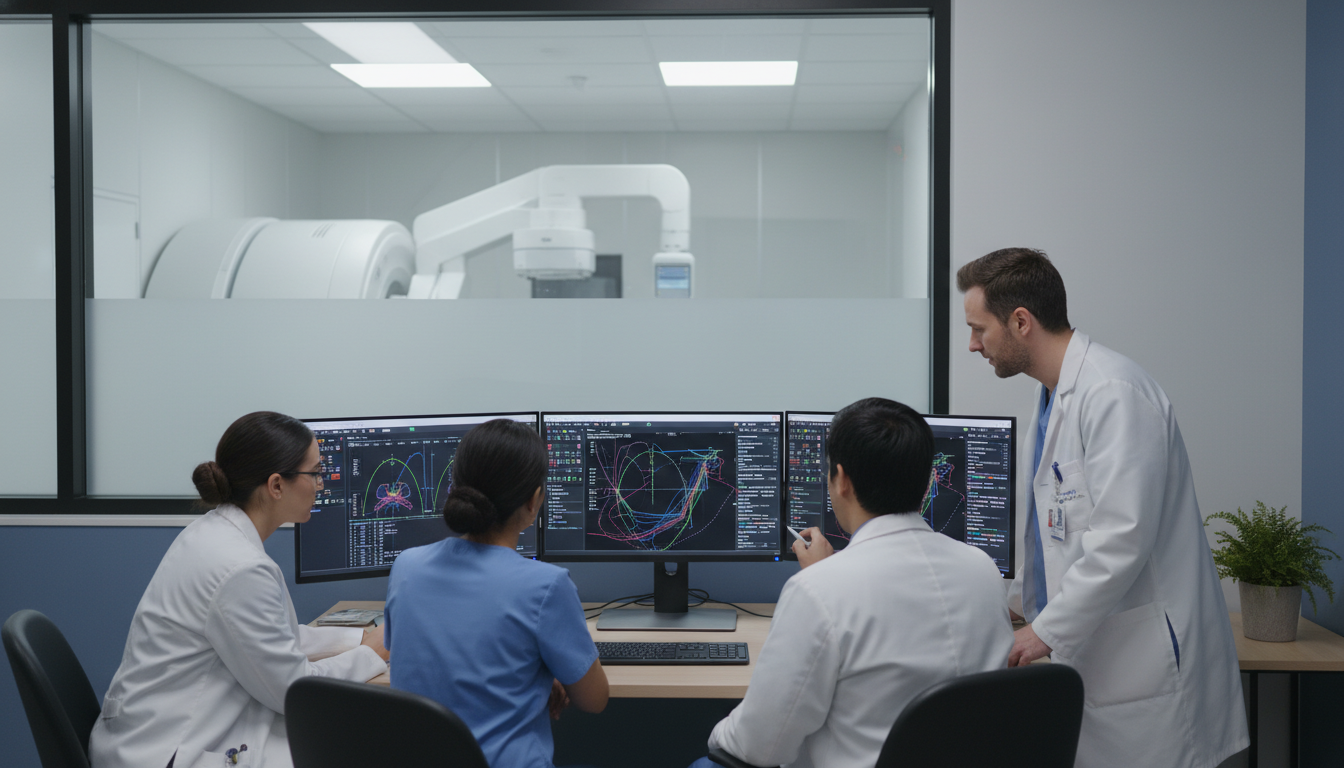
Understanding Residency Work Hours in Radiation Oncology
Radiation oncology is often viewed as one of the more “lifestyle-friendly” specialties, but that doesn’t mean residency work hours take care of themselves. How you manage your duty hours during a radiation oncology residency will shape not only your rad onc match experience and learning, but also your long-term professional habits, wellness, and satisfaction.
Radiation oncology residency work hours are generally more predictable than in many surgical or acute care specialties. Yet residents can still feel overwhelmed by clinical responsibilities, contouring and planning, consults, research, and board preparation. Many residents also find themselves navigating the gray zone between “what’s allowed,” “what’s expected,” and “what’s healthy.”
This guide walks through the structure of radiation oncology residency work hours, how to manage busy rotations and expectations, and practical strategies to build and protect a sustainable resident work–life balance.
1. The Framework: Duty Hour Rules and Radiation Oncology Culture
1.1 ACGME Duty Hour Standards
Radiation oncology residency programs in the United States must comply with ACGME duty hour requirements. Key elements include:
80-hour work week
- Averaged over 4 weeks
- Includes all clinical duties, in-house call, conferences, and moonlighting
Time off between duty periods
- 10 hours free between scheduled duty periods, recommended
- Must have 8 hours minimum between duty periods in most situations
Maximum shift length
- Typically no more than 24 continuous hours of in-house clinical duties
- Up to 4 additional hours are permitted for transitions of care and didactics, but not for new patient care responsibilities
Days off
- At least one day (24 hours) off in seven, averaged over 4 weeks
- “Off” means no clinical responsibility or mandatory education
Moonlighting
- Must be approved in advance by your program
- All moonlighting hours (internal and external) count toward the 80-hour limit
Radiation oncology rarely pushes the extremes of these rules. Still, understanding them is important both to protect yourself and to recognize when you may be drifting toward unsafe or unsustainable patterns.
1.2 Typical Radiation Oncology Residency Work Hours
Radiation oncology residency work hours vary by institution, but a common pattern might look like:
- Weekdays:
- Arrival: 6:30–8:00 AM (depending on the attending and patient load)
- Leave: 5:00–7:00 PM
- Total hours: typically 45–60 hours/week on most outpatient rotations
- Call:
- Often home call; some programs have no in-house overnight call
- Frequency and intensity vary widely by institution
Compared with many surgical and internal medicine programs, these duty hours seem appealing. But the “hidden” workload—contouring, treatment planning, chart checks, literature review, research, and preparing for tumor boards—can cause work to spill into evenings and weekends if not managed deliberately.
1.3 Culture and Expectations in Rad Onc
Radiation oncology culture tends to value:
- Careful, detail-oriented work
- Strong communication with multidisciplinary teams
- Longitudinal patient relationships
- Academic productivity (research, abstracts, publications)
- Board exam excellence
All of this is positive, but it can foster an environment where residents feel pressure to:
- Stay late to perfect every contour
- Read extensively every night
- Say “yes” to every research or QI opportunity
- Always be reachable by email or text
Being clear about your boundaries and how to manage your workload within reasonable residency work hours is essential to prevent gradual burnout.
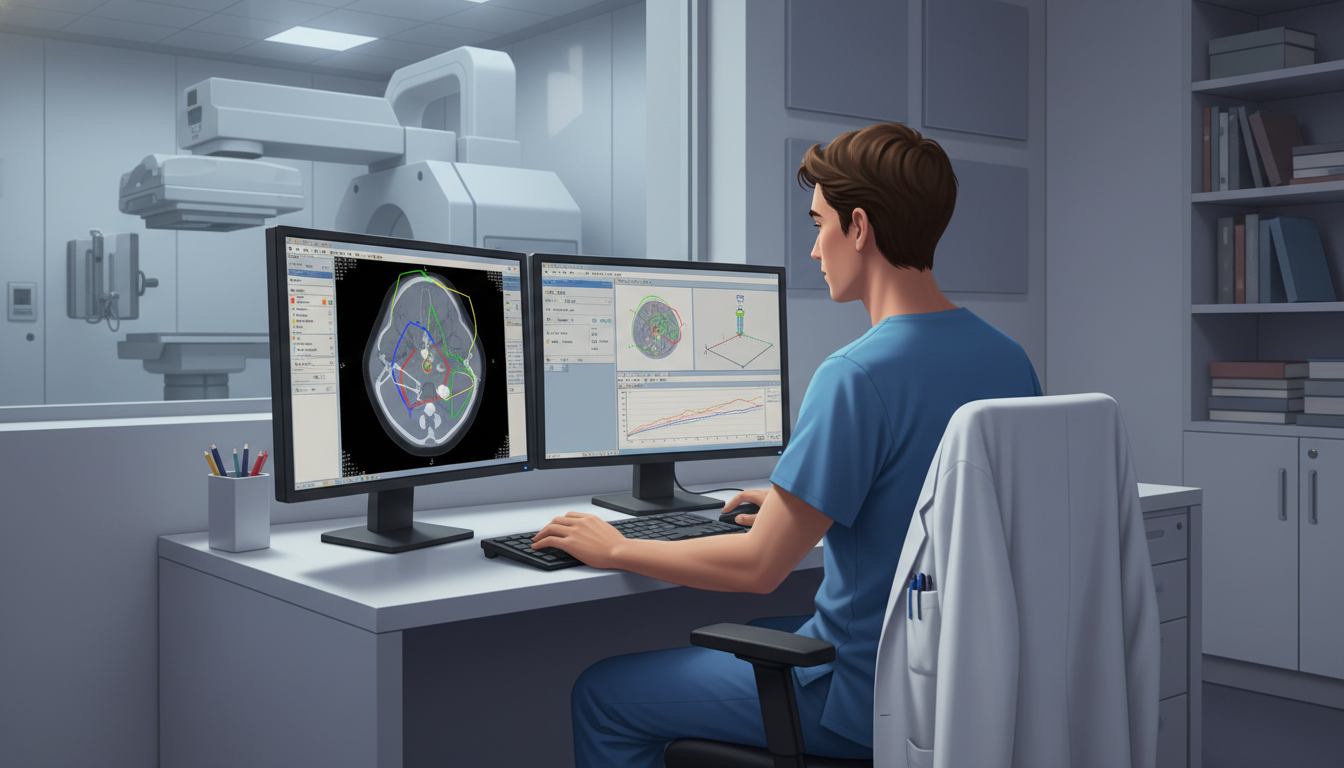
2. A Day in the Life: How Work Hours Get Used
To manage your time well, you first need to understand where it goes. Radiation oncology residency is often structured around clinics, simulations, and treatment planning.
2.1 Typical Daily Flow
While specifics differ by program, a common day might look like:
6:45–7:30 AM: Pre-clinic review
- Skim charts for new consults
- Review imaging and prior treatment history
- Check the treatment schedule for ongoing patients
8:00–12:00 PM: Clinic
- New consults: obtaining a focused history, performing a physical exam, discussing the role of radiation
- On-treatment visits (OTVs): toxicity evaluation and management
- Follow-ups: surveillance, late effect monitoring, survivorship care
12:00–1:00 PM: Didactics / Tumor Board
- Formal lectures, physics or biology conferences
- Site-specific tumor board or multidisciplinary case conference
1:00–4:00 PM: Simulations / Planning
- Supervising or performing CT simulation
- Contouring targets and organs at risk (OARs)
- Working with dosimetrists and physicists on plan generation
4:00–6:30 PM: Documentation and Follow-up
- Finishing notes
- Responding to messages from nursing and patients
- Reviewing and approving plans with attendings
- Preparing for next day’s consults
Even if your official clinic ends at 4:00 PM, it’s easy for charting, planning, and communication tasks to fill the rest of the day—and spill into your evenings.
2.2 Time-Intensive Tasks in Rad Onc
Some aspects of radiation oncology disproportionately affect your duty hours:
Contouring and Treatment Planning
- Especially for complex sites (head and neck, GYN brachytherapy, stereotactic radiosurgery/radiotherapy)
- Early in training, each plan can take hours until you develop pattern recognition and speed
- Attendings differ in how much independence they grant and how polished they expect contours to be before review
Multidisciplinary Communication
- Clarifying systemic therapy plans with medical oncology
- Discussing surgical margins and resection details with surgeons
- Coordinating with radiology and pathology
- These conversations are critical but can be time-consuming and often occur outside of structured clinic hours
Research and Scholarly Work
- Most programs expect at least some involvement in clinical trials, retrospective studies, QI projects, or education initiatives
- These often occur outside of core duty hours, unless formally scheduled
Examination and Board Preparation
- Physics, radiobiology, and clinical boards each require sustained reading
- Without a strategy, studying easily creeps into late nights and weekends
Understanding these time sinks helps you design strategies to keep your resident work–life balance sustainable.
3. Strategies to Manage Workload and Duty Hours
3.1 Establishing a Daily Workflow
A structured personal workflow can significantly reduce overtime. Consider the following framework:
Morning: Triage and Prioritize
- Make a quick list of the day’s must-do items:
- Patient care tasks (clinic visits, simulations, urgent plans)
- Time-sensitive documentation (consults and OTVs)
- Required meetings (tumor board, didactics)
- Pre-review new consults the day before when possible, to shorten morning prep
During Clinic: Work in Real Time
- Chart in the room (when feasible) as you talk with patients to reduce later documentation time
- Use note templates for:
- Site-specific consults (e.g., breast, prostate, lung)
- Standard toxicity assessments during OTVs
- Enter orders and follow-up immediately after each patient rather than batching all at the end of the clinic
Afternoon: Batch Non-urgent Tasks
- Block a specific time (e.g., 4:00–5:00 PM) for:
- Returning calls or messages
- Finishing notes
- Reviewing literature for the most complex cases you saw that day
Evening: Cutoff and Transition
- Set a personal “hard stop” time (e.g., 7:00 PM) to leave the hospital unless there is a genuine emergency
- If notes remain, decide deliberately:
- Must they be done tonight for patient safety or billing?
- Or can they be completed first thing in the morning?
Even a simple start–middle–end structure to your day can prevent aimless multitasking that lengthens residency work hours.
3.2 Making Contouring and Planning More Efficient
Some of the best time-saving strategies in radiation oncology directly address the treatment planning process:
Use standardized contouring atlases
- For common disease sites (e.g., RTOG, ESTRO, institutional handbooks)
- Reduce back-and-forth revisions with attendings by aligning your approach with known standards
Create “checklists” for each site
- For example, for a typical lung plan:
- Review diagnostic CT and PET
- Identify GTV, CTV, PTV
- Delineate key OARs: lungs, heart, esophagus, spinal cord, brachial plexus when indicated
- Checklists reduce decision fatigue and missed steps
- For example, for a typical lung plan:
Batch similar tasks
- Contour all your straightforward cases first
- Reserve your most focused time (often afternoon or early morning) for the most complex cases
Ask for targeted feedback early
- Instead of submitting a fully detailed contour for a complex case and then redoing hours of work, ask your attending to review your GTV and CTV early on
- This reduces large-scale corrections later
Leverage technology
- Use auto-segmentation tools if your institution has them, but recognize their limitations
- Consider instituting your own “contouring shortcuts” or reference libraries of OARs for common regions
These strategies can easily save 1–2 hours per day, which is a major gain in a 50-hour workweek.
3.3 Managing Email, Messages, and Paging
Unstructured communication is a major and often overlooked drain on duty hours.
Set specific times to process email and EMR messages:
- Once in the morning, once mid-afternoon, once before leaving
- Avoid constantly checking in between tasks, which fragments your attention
Use concise, structured replies
- For complex questions, suggest a quick phone call or face-to-face discussion rather than a long email chain
Clarify expectations with attendings
- Ask: “For non-urgent results or questions, do you prefer I message you in the EMR, email, or discuss in person?”
- Some attendings prefer daytime discussions rather than late-night emails
3.4 Know When and How to Say “No”
Radiation oncology attracts high-achieving residents who often overcommit. Protecting resident work–life balance requires learning to say no appropriately.
Before accepting a new responsibility (e.g., research project, committee role, teaching commitment), ask:
- Time: How many hours per week will this add, and for how long?
- Timing: Does it conflict with board preparation, a heavy rotation, or a personal life event?
- Value: Will this add meaningful skills or career steps, or is it mostly padding your CV?
If the request isn’t feasible:
- Offer a modified version: “I can help with data collection for 3 months but can’t commit to manuscript writing on this timeline.”
- Suggest an alternative: “I’m at capacity, but another resident may be interested. I’m happy to introduce you.”
Saying no thoughtfully and early is far better than overcommitting and struggling for months.

4. Protecting Resident Work–Life Balance
4.1 Recognizing Signs of Imbalance
Despite relatively favorable duty hours, radiation oncology residents are not immune to burnout. Warning signs that your resident work–life balance is slipping include:
Physical signs
- Persistent fatigue
- Frequent headaches or GI issues
- Sleep difficulty despite exhaustion
Emotional signs
- Feeling detached or cynical toward patients
- Irritability with staff, co-residents, or loved ones
- Loss of satisfaction from solving complex cases
Behavioral signs
- Chronic lateness on documentation or deadlines
- Withdrawing from social activities you used to enjoy
- Using alcohol, caffeine, or other substances to “push through”
If these are occurring regularly, it’s time to reassess your workload and coping strategies.
4.2 Building Sustainable Daily Habits
Several small, consistent practices help keep residency sustainable:
Non-negotiable sleep window
- Aim for a consistent 7–8 hours when possible
- Treat this as a standing commitment, the way you would a mandatory conference
Movement and exercise
- Even 15–20 minutes a day:
- Walks between buildings
- Bodyweight exercises at home
- Short yoga or stretching videos
- Use movement breaks between intense planning sessions
- Even 15–20 minutes a day:
Micro-breaks during the day
- Stand up and walk for 2–3 minutes every hour, especially during long contouring blocks
- Step outside for fresh air once or twice a day if possible
Boundaries on “catch-up” time
- Designate only one part of the weekend (e.g., Saturday morning) for catch-up documentation or reading
- Protect the rest for rest, personal relationships, and non-medical activities
4.3 Using Institutional and Peer Support
Your program wants you to succeed and stay healthy. Take advantage of:
Program leadership
- Program Director and Associate PDs can help adjust rotation schedules, redistribute coverage, or identify hidden workload issues
- Bring specific examples of how duty hours or tasks feel unsustainable
Chief residents
- Often the best initial resource for practical solutions
- Can mediate between residents and faculty about unrealistic expectations or documentation burdens
Formal wellness resources
- Resident wellness programs, counseling services, peer support groups
- Confidential and often underutilized
Informal networks
- Co-residents ahead of you in training can offer advice on “how to survive” specific rotations, attendings, or disease sites
- Share templates, study plans, and time-saving tricks
Creating a culture where residents openly discuss workload and wellbeing helps everyone in the program.
5. Special Situations: Call, Research, and the Rad Onc Match Perspective
5.1 Call Responsibilities in Radiation Oncology
Radiation oncology call structures vary:
Home call is most common:
- Telephone management of urgent questions from inpatients, ED, or nursing
- Arranging emergent palliative treatments (e.g., cord compression, brain mets)
- Occasionally coming in for emergent simulations or treatments
In-house call is less common but may exist:
- Typically at large academic centers with high inpatient volumes
- Usually involves backup for emergent radiotherapy and inpatient consults
To manage call without overwhelming your duty hours:
- Prepare cheat sheets for:
- Spinal cord compression
- Superior vena cava syndrome
- Malignant cord compression
- Brain metastases emergencies
- Clarify thresholds with your attendings:
- When to bring patients in emergently
- When to admit vs. manage as outpatient
- Debrief complex calls the next day
- Use them as high-yield learning opportunities
5.2 Research and Scholarly Work Within Reasonable Hours
Radiation oncology is inherently academic, and many residents want strong research portfolios. But poorly bounded research projects can encroach on nights and weekends.
Protect your duty hours and wellbeing by:
Defining scope at the outset
- Number of patients to be included
- Specific tasks you are responsible for (e.g., data collection, analysis, first draft)
- Target deadlines that are realistic alongside your clinical duties
Scheduling research time
- If your program offers protected research blocks, treat them like full-time jobs with set start/stop times
- During clinical rotations, consider:
- 1–2 evenings per week blocked for research or
- A half-day on lighter clinic days, if approved by your attending
Avoiding project overload
- Limit yourself to a small number of active projects (e.g., 1–3) at any time
- Finish or hand off older projects before starting new ones
5.3 Resident Work Hours and the Rad Onc Match: What Applicants Should Know
If you are applying for a radiation oncology residency or preparing for the rad onc match, you are probably wondering how intense the workload really is.
Key points to keep in mind:
Compared to many specialties, radiation oncology residency work hours are moderate.
- You’ll work hard, but rarely at the 80-hour limit
- Many residents report working 45–60 hours per week on average
Questions to ask on interviews and virtual visits:
- “What is a typical daily and weekly schedule for residents here?”
- “How often do residents stay after 6 PM to finish contouring or planning?”
- “What is your call schedule like, and how often do residents come in overnight?”
- “How does the program support resident work–life balance and wellness?”
Red flags:
- Programs where residents seem exhausted or evasive when asked about duty hours
- Persistent suggestions that residents routinely exceed 80 hours or skip days off
- A culture where staying late is seen as a badge of honor rather than an exception
As an applicant, you are evaluating not just prestige and case volume, but also how your future residency work hours will shape your growth and your life outside medicine.
6. Putting It All Together: A Personal System for Sustainable Training
Managing residency work hours in radiation oncology is less about rigidly clocking out at a specific time and more about designing a sustainable system that balances:
- High-quality patient care
- Robust clinical and technical learning
- Academic and research growth
- Personal health and relationships
A practical, integrated system might include:
Clear daily structure
- Morning: triage and preparing for patient care
- Clinic: real-time documentation and focused engagement
- Late afternoon: batching communication, finishing notes, planning
- Evening: defined cutoff and protected rest time
Time-saving clinical habits
- Site-specific templates and checklists
- Early feedback on complex contours
- Efficient handling of messages and pages
Intentional limits on extra obligations
- Carefully chosen research and leadership roles
- Saying “no” thoughtfully when your plate is full
- Scheduling academic work instead of leaving it to spill over randomly
Deliberate self-care and support
- Non-negotiable sleep windows
- Regular movement and genuine time off
- Use of program resources and peer support when needed
If you build these habits early in residency, you’ll not only stay within safe duty hours but also develop professional patterns that support a long, satisfying career in radiation oncology.
FAQs: Managing Work Hours in Radiation Oncology Residency
1. Are radiation oncology residency work hours really better than other specialties?
Generally, yes. Most radiation oncology residents report working fewer hours than their counterparts in surgical fields and some medical subspecialties, often around 45–60 hours per week. However, the cognitive and technical demands are high, and tasks like contouring and research can add to your load if you don’t manage them deliberately.
2. How much time should I expect to spend on contouring and planning as a junior resident?
Early in PGY-2 or PGY-3, it’s not unusual to spend several hours per day contouring and working with dosimetry, especially for complex sites. As you gain experience, you’ll become more efficient and may be able to complete many plans in under an hour. Using atlases, checklists, and early attending feedback will help keep this part of your workload manageable.
3. Can I maintain a good work–life balance and still be competitive academically in rad onc?
Yes, but it requires intentional planning. Limit yourself to a realistic number of research projects, schedule regular (but bounded) research and study time, and focus on high-quality work rather than sheer volume. Many successful, academic radiation oncologists developed strong boundaries and time-management skills during residency.
4. What should I do if my radiation oncology program consistently exceeds duty hour rules?
Start by documenting your hours and specific issues (e.g., frequent late nights due to unrealistic expectations, chronic understaffing). Discuss concerns with your chief residents and program leadership, focusing on patient safety and resident wellbeing. If problems persist, you can raise concerns confidentially through your institution’s graduate medical education (GME) office or ACGME reporting mechanisms. Your safety and training quality come first.




















