



Understanding the Unique Path Toward Med-Peds—Starting in M1
If you’re aiming for a med peds residency, your journey truly begins in the first year of medical school—even if “residency” feels light years away right now. Surviving medical school, especially that intense first year, is less about raw intelligence and more about building systems, habits, and mindsets that will last into your medicine pediatrics match and beyond.
As an aspiring Medicine-Pediatrics (Med-Peds) physician, you’re already thinking across age ranges and systems. That same ability to balance complexity will be essential to your M1 survival strategy: learning to juggle classes, exams, research, extracurriculars, and self-care without burning out.
This guide focuses on surviving first year of med school with a Med-Peds mindset—what to prioritize, how to study, and how to position yourself early for a competitive medicine pediatrics match, while still staying sane and (mostly) healthy.
What to Expect in First Year: The Reality Check
First year medical school (M1) is a shock to almost everyone. The volume of information, the pace, and the expectations can feel overwhelming—even for students who excelled in undergrad.
Academic Structure of M1
While curricula vary by school, most first year medical school programs involve:
Foundational Sciences
- Anatomy (often with dissection or prosection lab)
- Physiology
- Biochemistry
- Histology
- Genetics and molecular biology
- Sometimes integrated “organ system” blocks (e.g., cardio, respiratory)
Early Clinical Exposure
- Interviewing and physical exam skills
- Standardized patient encounters
- Basic professionalism and ethics
Intro to Population Health / Health Systems
- Health disparities, social determinants of health
- Quality improvement or public health foundations
For Med-Peds–interested students, these topics are not just hoops to jump through. You will one day care for premature newborns, complex adolescents, and older adults with multiple chronic conditions. The basic science foundations you build now underpin all of that.
Emotional and Cognitive Shift
Three realities hit most M1s:
You can’t learn everything perfectly.
You transition from “I will master 100%” to “I must prioritize what matters most.”Your identity shifts.
From top-of-class undergrad to feeling average in a room full of high-achievers.Your time is no longer your own.
Mandatory lectures, small groups, labs, and studying can swallow your days.
Recognizing this early helps you normalize the struggle instead of internalizing it as failure.
Building Your Survival Toolkit: Study Strategies That Actually Work
Your ability to study efficiently is one of the biggest predictors of success in surviving medical school, especially M1. You don’t need to reinvent the wheel, but you do need to upgrade your approach.
Core Principles of Effective M1 Studying
Active, not passive learning
- Avoid endless re-reading and highlighting.
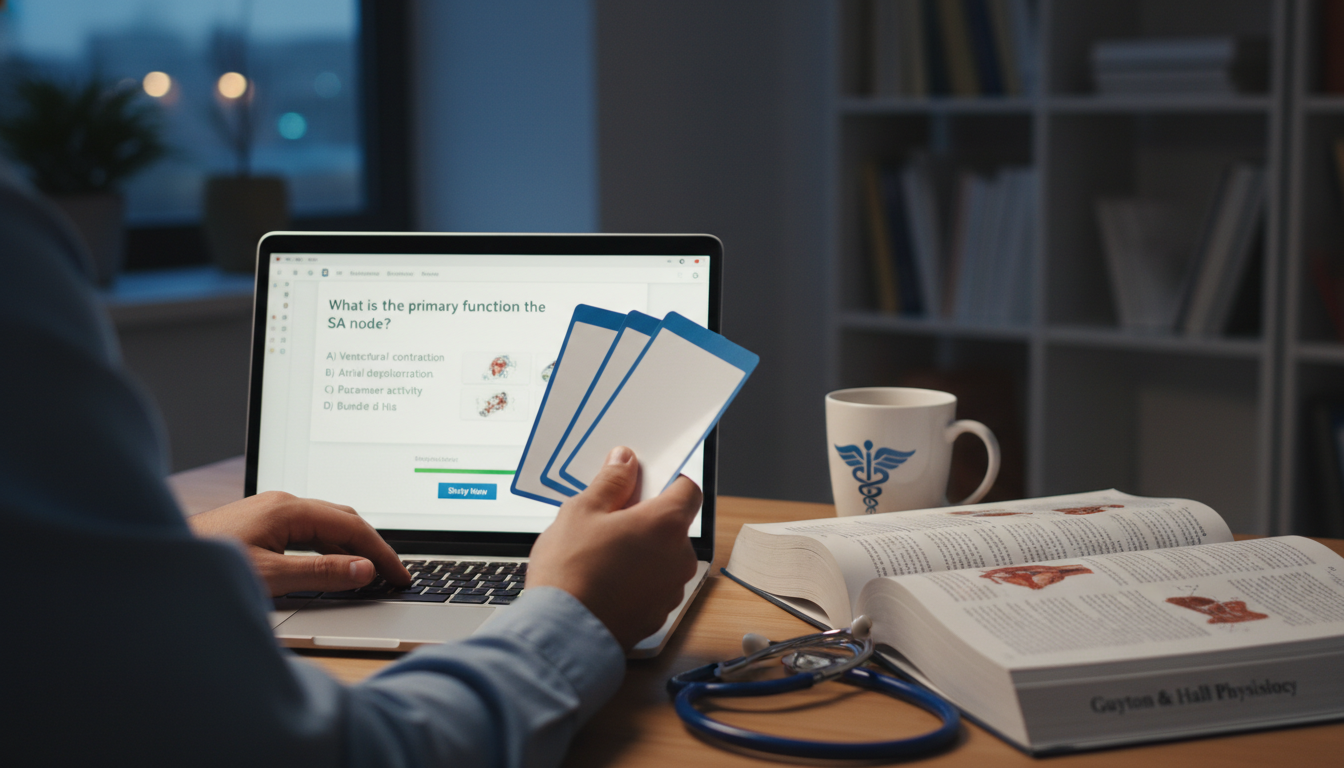
- Use flashcards, practice questions, and teaching others.
Spaced repetition and retrieval practice
- Revisit material frequently over time.
- Force yourself to recall information without looking at notes first.
Focus on understanding, then memorizing
- Understand mechanisms, not just lists.
- For Med-Peds, patterns matter: pathophysiology is similar across ages, even if presentations differ.
Practical Study System: A Sample Weekly Framework
Here is a realistic, M1-friendly structure you can adapt:
Daily Core (on class days)
- 1–2 hours: Preview upcoming lecture(s)
- Skim slides or syllabus; identify key learning objectives.
- 3–4 hours: Review same-day lectures
- Summarize key concepts.
- Make or review Anki/flashcards.
- 30–60 minutes: Question-based learning
- Block-specific question banks or school-provided questions.
Weekend Deep Dive
- 3–5 hours: Consolidation
- Review the week’s most challenging topics.
- Redo questions you missed.
- 1–2 hours: Preview next week’s content.
Using Anki and Question Banks Wisely
Many students hear “everyone uses Anki” and assume it’s mandatory. It’s a tool, not a requirement.
Anki tips:
- Use pre-made decks aligned with your curriculum or Step material, but customize or tag them to your blocks.
- Set realistic daily card limits (e.g., 150–250 reviews, not 600+).
- Don’t turn every detail into a card—focus on:
- Mechanisms and pathways
- High-yield structures and functions
- Classic clinical correlations
Question banks (even early on):
- If you have school-provided or commercially available questions tied to your courses, use them:
- After you’ve reviewed content once.
- To identify weak areas.
- To train clinical reasoning, even in basic science.
This early question-based learning aligns well with future Med-Peds thinking, where you’ll need to apply physiology and pathophysiology across age groups.
Adapting Your Approach Over Time
Your first 4–8 weeks are an experiment. After your first exam block:
Ask:
- What worked?
- Where did you run out of time?
- Which study activities translated into points on the exam?
Adjust:
- Trim low-yield tasks (rewriting notes endlessly, overly detailed outlines).
- Lean further into high-yield tools (questions, flashcards, review resources).
Time Management, Wellness, and Avoiding Burnout
Surviving first year of med school is not just about hitting exam cutoffs. It’s about arriving at your second year still functional, curious, and not completely depleted.
Designing a Realistic Weekly Schedule
You don’t have to time-block every minute, but you do need structure. Consider:
Fixed commitments first
- Class, labs, mandatory sessions
- Clinic/volunteer shifts, if any
Core study blocks next
- Morning block (often best for deep work)
- Afternoon block
- Short evening review if needed
Non-negotiable self-care time
- At least 3–4 sessions per week of physical activity (even 20–30 minutes)
- Meals you actually sit down for
- Sleep: target 7–8 hours most nights
Treat your self-care like scheduled appointments, not optional extras.
Sleep, Nutrition, and Exercise: The Unsexy Superpowers
Sleep:
- Chronic sleep deprivation worsens memory, mood, and learning.
- Try a consistent sleep and wake time, even during exam weeks.
- Avoid last-minute all-nighters; they usually trade long-term retention for short-term panic.
Nutrition:
- Prep simple, balanced meals: protein, complex carbs, healthy fats.
- Keep easy, healthy snacks: nuts, yogurt, fruits, hummus, cut veggies.
- Stay hydrated; keep a water bottle with you.
Exercise:
- You don’t need a marathon training plan.
- 20–30 minutes of walking, light jogging, cycling, or strength training can dramatically improve focus and mood.
- Use it as a mental reset between classes and evening study.
Mental Health: Normalizing Struggle and Getting Help Early
Medical school stress is real. If you’re aiming for a competitive med peds residency, you may feel pressure to be “on” all the time. That’s not sustainable.
Warning signs you may need more support:
- Constant anxiety or dread
- Inability to concentrate despite trying
- Loss of interest in things you used to enjoy
- Persistent insomnia or hypersomnia
- Thoughts of self-harm or feeling like a failure
Action steps:
- Use your school’s confidential counseling or wellness services.
- Talk to trusted upperclass students, mentors, or advisors.
- If needed, seek outside counseling/therapy to protect boundaries.
Requesting help is a professional strength, not a weakness—particularly in Med-Peds, where you’ll be caring for vulnerable populations and modeling healthy coping for families.
Shaping Your Med-Peds Identity During M1
You don’t need a polished Med-Peds application on day one. But you can lay foundations in first year medical school that will support your future medicine pediatrics match.
Explore, Don’t Overcommit (Yet)
Your main job in M1: Figure things out, not load up your CV with random activities.
A helpful framework:
Semester 1:
- Learn the curriculum and adjust study skills.
- Sample a few interest groups (including Med-Peds, if available).
- Attend occasional specialty panels or lunchtime talks.
Semester 2:
- Commit to 1–2 meaningful extracurriculars.
- Begin exploring research or longitudinal clinical experiences.
- Start talking to faculty and residents in areas you like (including Med-Peds).
Join or Start Med-Peds–Related Activities
If your school has a Med-Peds interest group, join it. If it doesn’t, consider starting one with peers and a faculty advisor. Activities may include:
- Talks by Med-Peds physicians about their career paths
- Panels comparing Med-Peds with categorical Internal Medicine and Pediatrics
- Workshops on combined care for transition-age youth
- Community service projects involving pediatric and adult populations
This gets you early exposure to the realities of Med-Peds and connects you to potential mentors.
Early Clinical and Service Experiences with a Med-Peds Lens
Look for opportunities that span age groups or focus on chronic disease management, such as:
- Free clinics that see both adult and pediatric patients
- Community health programs (e.g., vaccinations, asthma education, diabetes prevention)
- Hospital volunteer roles that cross pediatric and internal medicine floors (where allowed)
When possible, reflect on:
- How similar conditions manifest differently in children vs. adults
- How family dynamics and social determinants shape care across the lifespan
- How transitions of care (e.g., from pediatric to adult services) might affect patients
Even if your first-year clinical encounters are limited, this mindset is exactly what Med-Peds programs look for.

Positioning Yourself Early for a Future Med-Peds Residency
You don’t apply for med peds residency until your fourth year, but your choices now quietly shape that future. Think of M1 as building the foundation for a strong medicine pediatrics match.
Academic Performance: Pass/Fail and Beyond
Many medical schools have pass/fail grading in preclinical years, which can be reassuring. However:
- Passing comfortably (rather than barely) lowers stress in later years.
- Solid foundations in physiology and pathophysiology will serve you in:
- USMLE/COMLEX exams
- Internal Medicine and Pediatrics clerkships
- Med-Peds residency training
It’s not necessary to be #1, but being consistent and reliable academically matters.
Early Professionalism and Reputation
Residency programs value:
- Teamwork
- Reliability
- Communication skills
- Humility and teachability
You start building your professional reputation in M1:
- Show up on time to small groups and labs.
- Prepare adequately for sessions.
- Be respectful to staff, peers, and faculty.
- Own mistakes and respond well to feedback.
Letters of recommendation later may come from faculty you meet during first-year courses, interest groups, or early research.
Early Research and Scholarly Work
You do not need a huge research portfolio to match Med-Peds, but scholarly activity can help, especially at academic programs.
In M1, focus on:
- Finding mentors with overlapping interests:
- Chronic disease management
- Health services research
- Health disparities in children and adults
- Transition of care for adolescents with chronic illness
- Starting small:
- Case reports or case series
- Quality improvement projects
- Chart reviews with clearly defined roles
A good rule: Don’t start more projects than you can realistically finish. One or two completed, meaningful projects beat five abandoned ones.
Building Mentorship and Networking
Mentors come in different flavors:
- Near-peer mentors: M2s, M3s, or M4s headed into Med-Peds or IM/Peds individually.
- Faculty mentors: Med-Peds trained physicians, pediatricians, internists, or academic advisors.
- Resident mentors: Med-Peds residents at your affiliated hospital, if available.
How to start:
- Email briefly after a Med-Peds talk:
- Introduce yourself, share interests, ask for a short meeting.
- Come prepared with:
- Questions about training, work-life balance, and career paths.
- A sense of what you enjoy so far (communicating with families, complex pathophysiology, longitudinal care).
These relationships often become critical when you need career advice, research opportunities, and letters of recommendation.
Practical M1 Tips Specifically for Aspiring Med-Peds Students
Here are focused M1 tips that weave together surviving medical school with your Med-Peds aspirations.
M1 Tips: Early in the Year
- Prioritize adaptation over “impressing people.”
- Your first responsibility is learning how to function in medical school.
- Visit both pediatrics and internal medicine interest group events.
- Note what you like about each environment—this helps confirm your Med-Peds inclination.
- Start a simple reflection habit.
- Once a week, jot down a meaningful patient story, lecture moment, or ethical question.
- These reflections can later inform your personal statement and interviews.
M1 Tips: Mid-Year and Beyond
- Refine your study approach.
- Use your early exam performance to tweak your system.
- Find at least one longitudinal experience.
- E.g., a clinic, volunteer program, research project, or mentorship that continues into M2.
- Begin light specialty exploration.
- Shadow in both internal medicine and pediatrics settings if possible.
- If there is a Med-Peds clinic, try to arrange a brief shadowing experience.
Thinking Ahead Without Burning Out
While it’s good to be intentional about a future med peds residency, avoid obsessing over the match during your first year.
Healthy mindset shifts:
From “I must be the perfect Med-Peds applicant”
→ To “I am building the skills, habits, and relationships that will make me a strong, well-rounded physician.”From “Every decision is do-or-die for my application”
→ To “Consistent effort, reflection, and growth matter more than any single activity.”
Your M1 year is the foundation, not the finished product.
Frequently Asked Questions (FAQ)
1. Do I need to know for sure that I want Med-Peds in M1?
No. Many Med-Peds residents decided later, after clinical clerkships. However, if you’re already interested, you can:
- Join a Med-Peds interest group if available.
- Attend Med-Peds-related talks or panels.
- Seek broad experiences in both pediatrics and internal medicine.
Even if you change your mind, these experiences remain valuable.
2. How important are grades and Step scores for matching into a Med-Peds residency?
Med-Peds is moderately competitive. Programs generally look for:
- Solid academic performance (especially on core clerkships later).
- Passing preclinical coursework with good understanding of fundamentals.
- Strong USMLE/COMLEX scores, particularly Step 2/Level 2 as Step 1 becomes pass/fail.
Your M1 goal: build a strong knowledge base and healthy study habits so you’re set up for success in later years when scores and clinical evaluations play a larger role.
3. How much research do I need for a Medicine-Pediatrics match?
There is no strict requirement. Many successful applicants have:
- 1–3 scholarly experiences (research, quality improvement, case reports, or presentations).
- At least some work that touches on internal medicine, pediatrics, or transitional care.
For M1s, it’s usually enough to:
- Explore potential mentors.
- Start one manageable project rather than many.
- Aim for completion (a poster, abstract, or manuscript) over pure quantity.
4. How can I balance Med-Peds-focused extracurriculars with surviving first-year coursework?
A helpful rule:
- In the first semester, keep structured extracurriculars to 3–5 hours per week at most.
- Evaluate impact on your grades and stress.
- If you’re stable academically, you can add slightly more in second semester.
Prioritize:
- One or two meaningful activities aligned with Med-Peds (e.g., a free clinic, interest group leadership, or a small research project).
- Consistent self-care and rest—because no residency program wants a burned-out intern.
Surviving first year of med school as a future Med-Peds physician is entirely doable. By building strong study systems, prioritizing wellness, exploring your interests honestly, and nurturing early mentorship, you not only get through M1—you set yourself up for a fulfilling journey to a med peds residency and beyond.




















