


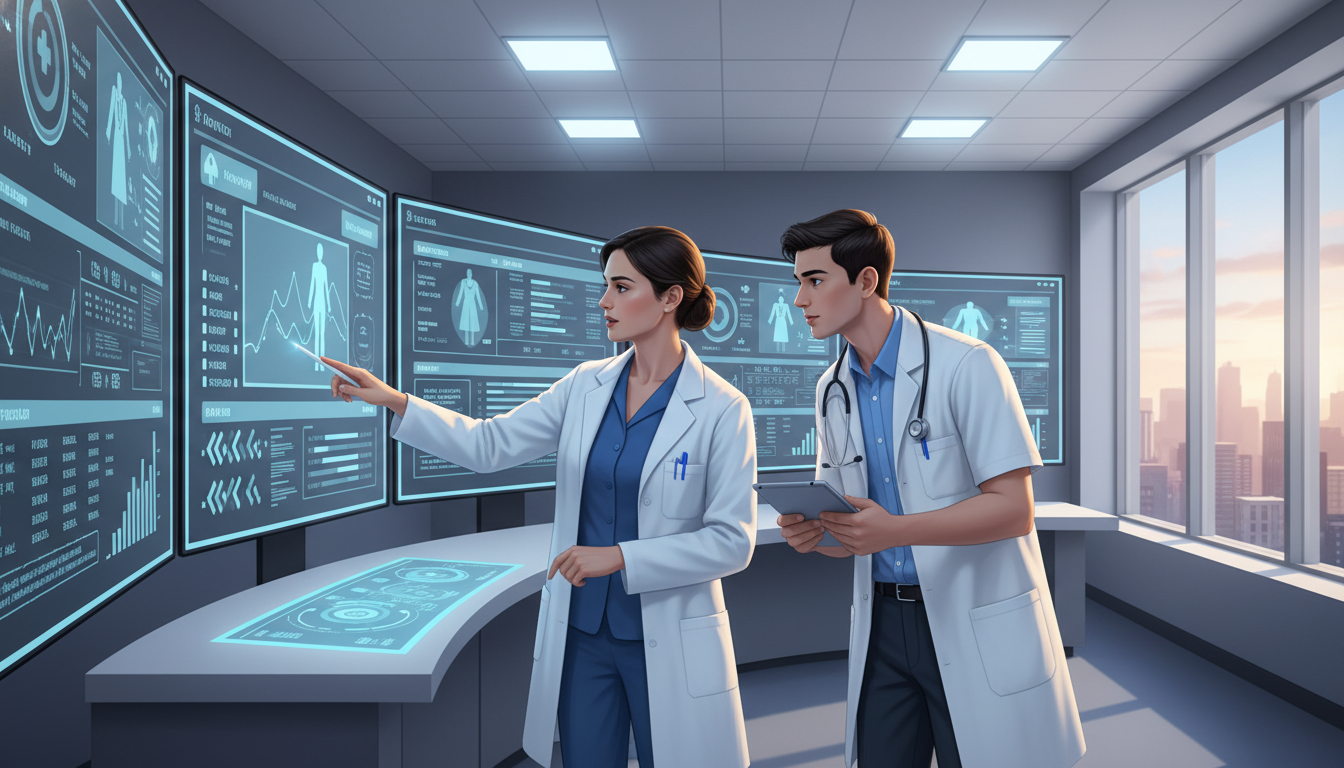
Understanding Medical Shadowing in Clinical Informatics
Medical shadowing is a time‑honored way for premeds, medical students, and residents to explore specialties and confirm career fit. In clinical informatics—a relatively new, rapidly evolving field—shadowing is especially valuable because many trainees have limited exposure during medical school or residency.
Clinical informatics sits at the intersection of medicine, data, and technology. Clinical informaticians are physicians who optimize how health information is collected, organized, and used to improve patient care and system performance. They lead projects involving electronic health records (EHRs), decision support tools, data analytics, quality improvement, and digital health solutions.
Shadowing in this space looks very different from traditional shadowing in a clinic or operating room. Instead of watching physical exams or procedures, you might see:
- EHR design meetings and workflow mapping
- Hospital “command center” operations
- Clinical decision support (CDS) build and validation
- Data governance and quality dashboards
- Vendor demos or IT implementation sessions
- Interdisciplinary meetings with clinicians, data analysts, and IT teams
Because clinical informatics is a fellowship‑level subspecialty, early exposure is both impressive on applications and genuinely useful for career decisions. It can strengthen your narrative when applying to residency programs with strong informatics tracks or to a clinical informatics fellowship later.
In this guide, you’ll learn:
- What a clinical informatics shadowing experience actually looks like
- How to find shadowing opportunities and how many shadowing hours are needed
- How to prepare, behave professionally, and get the most educational value
- How to document and leverage these experiences for residency and fellowship applications
What Clinical Informatics Shadowing Really Looks Like
The day‑to‑day work of a clinical informatician is highly variable across institutions. Shadowing will reflect that variety. Below are common elements you might encounter and what you can learn from each.
1. EHR and Workflow Optimization Sessions
You may sit in on:
- Meetings redesigning order sets for a particular service line
- Discussions about reducing alert fatigue
- Sessions mapping current vs. future workflows for a new process (e.g., sepsis screening, discharge planning)
What to look for:
- How physicians, nurses, pharmacists, and IT communicate needs and constraints
- How informaticians translate clinician pain points into structured change requests
- How trade‑offs are discussed (e.g., more clicks vs. better safety checks)
- How data is used to support design decisions (order utilization rates, error trends, etc.)
Example:
You observe a pediatric hospitalist, a clinical informatician, and an IT analyst redesigning admission order sets for febrile infants. The informatician walks through guidelines, current usage data, and safety events. You see how they balance adherence to evidence with usability and workflow.
2. Clinical Decision Support and Quality Improvement
You might shadow during:
- Building or revising CDS alerts (e.g., renal dosing alerts, sepsis alerts)
- Reviewing performance metrics on quality dashboards
- Debriefing safety events where informatics played a role (e.g., alert not triggered)
What to look for:
- How “good” CDS is defined (sensitivity/specificity vs. alert fatigue)
- How front‑line clinicians are engaged in reviewing CDS performance
- How regulatory or accreditation requirements influence build decisions
Example:
You sit in a meeting evaluating a best‑practice advisory for venous thromboembolism (VTE) prophylaxis. The informatician shares data showing high override rates. The team brainstorms how to target the alert more precisely by patient population and timing.
3. Data Analytics and Reporting
Shadowing may include:
- Reviewing dashboards related to readmissions, length of stay, or ED throughput
- Discussions about data definitions, validation, and governance
- Planning registries or data pulls for research or quality projects
What to look for:
- How questions are translated into measurable metrics
- How data quality issues are recognized and addressed
- How informaticians communicate complex data to non‑technical stakeholders
Example:
You watch a clinical informatics fellow walk a cardiology team through a new heart‑failure readmission dashboard. They explain measure definitions, limitations, and how to interpret trends to guide interventions.
4. Implementation and Change Management
Shadowing here often involves:
- Go‑live planning sessions for new EHR modules, tools, or workflows
- Training sessions for clinicians learning a new system feature
- Post‑implementation debriefs about what went well or poorly
What to look for:
- The role of super‑users and physician champions
- How resistance to change is handled
- How communication and training strategies are designed
Example:
Ahead of implementing a new e‑consult workflow, you see the informatics team collaborating with specialists and primary care clinicians to design training materials, gather feedback, and anticipate barriers.
5. Strategy, Governance, and Leadership
Senior informaticians often sit on:
- Health IT governance committees
- Quality and patient safety councils
- Digital health or telemedicine steering groups
What to look for:
- How informatics priorities are set relative to organizational goals
- Budget, regulatory, and security considerations
- How physicians advocate for clinical needs in technical and financial discussions
Example:
You observe a governance committee decide whether to prioritize oncology pathway integration or an expanded telehealth platform. You see how clinical benefit, cost, vendor relationships, and staff capacity are all weighed.
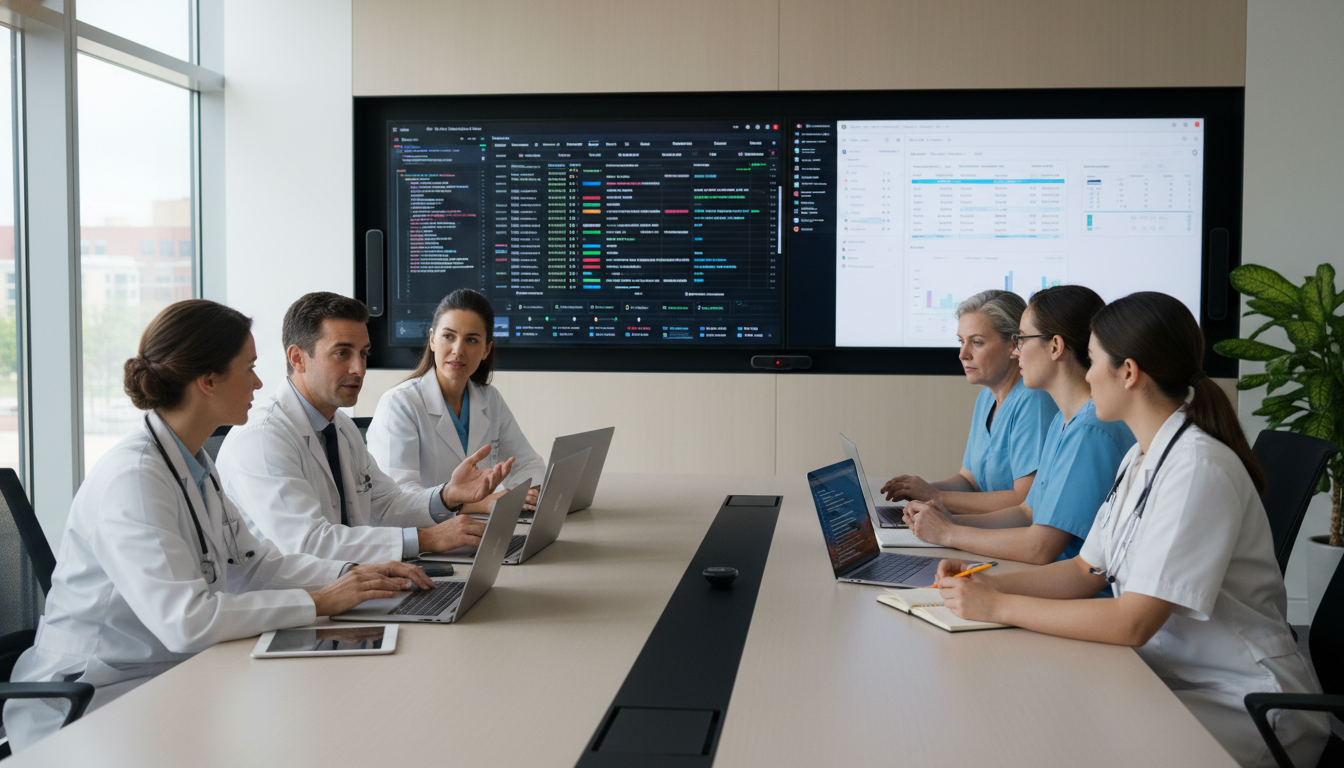
How to Find Clinical Informatics Shadowing Opportunities
Because clinical informatics is less visible than traditional specialties, many people struggle with how to find shadowing in this area. It requires more targeted networking and some creativity.
Step 1: Identify Clinical Informatics Programs and Leaders
Start close to home:
Your hospital or medical school website:
- Search for “clinical informatics,” “Chief Medical Information Officer (CMIO),” “Chief Health Information Officer (CHIO),” or “Medical Director of Informatics.”
- Identify faculty bios listing informatics roles or interests.
Accredited clinical informatics fellowship programs:
- The ACGME lists accredited clinical informatics fellowship programs.
- Program websites often list faculty and their contact information; many have educational missions and are open to trainees shadowing.
Health system IT / Digital Health pages:
- Large health systems often have “Digital Transformation,” “Health IT,” or “Innovation” divisions where physician informaticians are embedded.
Create a simple spreadsheet with:
- Name and title (e.g., “Associate CMIO,” “Clinical Informatics Fellow”)
- Institution and department
- Email/contact form
- Specific interests you share (e.g., EHR usability, telehealth, AI, quality improvement)
Step 2: Use Your Existing Networks
Leverage connections you already have:
Faculty at your school or program
- Ask your internal medicine or pediatrics attendings if they know who works on EHR optimization or informatics.
- Many informal “physician champions” aren’t formally labeled as informaticians but can introduce you to the right people.
Mentors and advisors
- Let your academic advisor know you’re interested in clinical informatics fellowship and health IT training; they may be aware of related initiatives.
Student or resident interest groups
- Digital health, AI in medicine, or quality improvement groups often have faculty sponsors with informatics connections.
When you ask for a connection, be specific:
“I’m hoping to do brief medical shadowing with a clinical informatician to learn more about the field. Is there someone in our system involved in EHR optimization, CDS, or data analytics you could introduce me to?”
Step 3: Craft a Professional Outreach Email
When contacting a potential preceptor directly, keep your message concise but targeted:
Subject line examples:
- “Medical student interested in clinical informatics shadowing”
- “Resident exploring clinical informatics—request for brief shadowing experience”
Core elements to include:
- Who you are (year, institution, specialty or intended specialty)
- Why you’re interested in clinical informatics (1–2 sentences)
- What you’re asking for (e.g., 1–2 half‑days of shadowing, virtual observation of meetings)
- Flexibility and respect for their time
- Any institutional requirements (e.g., HIPAA training, forms you must complete)
Example paragraph:
“I’m a third‑year medical student at [Institution] with a strong interest in digital health and EHR usability. I’m exploring clinical informatics as a potential career path and would be grateful for the chance to observe your work for a half‑day or attend a few informatics‑related meetings, either in person or virtually, at your convenience.”
Step 4: Consider Virtual Shadowing and Informational Interviews
Not all informatics work is easily “shadowable” in person, particularly in highly secure environments. Many physicians are open to:
- Allowing you to join governance or project meetings via video
- Walking you through anonymized dashboards or screenshots
- Describing projects and workflows in a structured discussion
- Setting up regular mentorship calls
While this isn’t traditional medical shadowing, it can provide equally rich insight into the field, especially for those at institutions without robust informatics infrastructure.
Step 5: Leverage Conferences and Professional Societies
If you’re serious about clinical informatics fellowship or health IT training:
American Medical Informatics Association (AMIA)
- Attend the Clinical Informatics Conference or the Annual Symposium.
- Engage in trainee‑oriented sessions and networking events.
Specialty societies with informatics groups
- Many specialties (e.g., cardiology, radiology) have informatics sections you can plug into.
Conversations at these events often lead to invitations to virtually observe meetings or participate in projects. Think of this as extended, relationship‑based shadowing.
Shadowing Hours: How Much Do You Need—and What Counts?
Clinical informatics shadowing often prompts questions like “How many shadowing hours are needed?” and “Does this count the same as traditional clinical shadowing?”
How Many Shadowing Hours Are Needed?
There is no universal requirement specific to clinical informatics. For residency and fellowship applications:
Premeds (for medical school):
- School expectations vary, but 40–100 hours of total clinical shadowing is common advice. A small subset of that can be informatics‑oriented, but you still need patient‑facing exposure.
Medical students (for residency):
- Programs focus more on clinical evaluations, clerkship performance, and robust extracurriculars than raw “shadowing hours.”
- Informatics shadowing is most impactful when paired with a clear interest narrative or related project.
Residents considering clinical informatics fellowship:
- More important than a specific hour count is demonstrable engagement:
- Several half‑days of shadowing
- Participation in at least one sustained project (e.g., quality improvement, CDS, dashboard development)
- A mentor who can speak to your informatics engagement
- More important than a specific hour count is demonstrable engagement:
Think about 10–20 focused hours of informatics shadowing as a strong foundation, supplemented by project work.
What “Counts” as Clinical Shadowing in Informatics?
For application purposes, you can generally include:
- Observing an informatician’s meetings, rounds, and project work
- Attending EHR design sessions, governance meetings, and analytics reviews
- Virtual observation of informatics‑related activities
- Extended mentorship interactions that are clearly observational/educational
However, this does not replace:
- Traditional medical shadowing with direct patient care
- Required clerkship experiences or patient contact hours
On most application platforms (e.g., AMCAS, ERAS), you can categorize such experiences as:
- Clinical shadowing/observation (if clearly connected to patient care systems)
- Research or quality improvement (if project‑focused)
- Other teaching/mentorship (if primarily educational meetings)
When describing them, emphasize how informatics work affects clinical care, not just tech features.

Preparing for and Maximizing Your Shadowing Experience
To get the most out of your clinical informatics shadowing, preparation and professionalism are critical.
Pre‑Shadowing Preparation
Complete required training and paperwork
- HIPAA or privacy modules
- Institutional shadowing forms
- Badges or access approvals (if needed)
Review basic concepts
You don’t need to be an expert, but understanding core terms helps you follow discussions:- EHR vs. EMR, CPOE, CDS, order set, workflow, build, go‑live
- Data governance, data dictionary, dashboard, registry
- Interoperability, interface, HL7, FHIR (at a high level)
Clarify your goals
Before starting, articulate 2–3 specific learning objectives, such as:- “Understand a typical day for a clinical informatician”
- “Learn how EHR changes are requested, designed, and implemented”
- “Explore potential projects I could contribute to as a student/resident”
Share these briefly with your preceptor; it helps them tailor what they show you.
Professionalism and Etiquette
Even though much of the work is not at the bedside, you’re still in a professional clinical environment.
Dress professionally:
Business casual or institution‑appropriate attire; ask if a white coat is expected.Protect confidentiality:
- Do not take photos or screenshots of clinical systems.
- Don’t share specifics about patient cases or sensitive institutional details.
- When in doubt, ask what you can safely discuss or include in your notes.
Be present but unobtrusive:
- Arrive early, silence your phone, avoid multitasking.
- Take notes discreetly; never on a screen that could be confused with clinical systems.
Ask thoughtful questions—at the right time:
- Save most questions for natural breaks or debriefs after meetings.
- Frame questions to show you’re processing what you see:
- “I noticed the team discussed alert fatigue a lot—how do you empirically measure that?”
- “How do you decide which clinician requests become formal projects?”
Turning Observation into Learning
To transform passive medical shadowing into active learning:
Keep a structured reflection document
After each session, jot down:- Activities you observed
- Key decisions or trade‑offs you noticed
- How patient care or clinician experience was affected
- New concepts or terms to look up
Map informatics work to the clinical environment
Ask yourself:- “If I were a resident on that service, how would this change my day?”
- “What patient outcomes are they trying to improve?”
Identify themes that resonate with you
You might discover you’re especially drawn to:- Usability and human‑computer interaction
- Data analytics and population health
- Digital health and telemedicine
- Safety and quality improvement
These themes can later anchor your personal statement, CV descriptions, or interview answers.
Leveraging Clinical Informatics Shadowing for Residency and Fellowship
Thoughtful use of your shadowing experiences can significantly strengthen your application narrative—whether for residency programs with an informatics focus or a formal clinical informatics fellowship.
Documenting Your Experience
When entering experiences into application systems or your CV:
Use precise titles
- “Medical Shadowing in Clinical Informatics”
- “Clinical Informatics Observation and Mentorship”
- “Health IT and Quality Improvement Shadowing”
Quantify your involvement
- Approximate number of hours
- Timeframe (e.g., “Jan–Mar 2025, 12 hours total over four sessions”)
Describe impact and learning, not just activities
Instead of:
“Observed EHR meetings and dashboards.”Write:
“Shadowed CMIO and clinical informatics team during EHR optimization and clinical decision support meetings. Gained insight into workflow analysis, build prioritization, and the use of performance dashboards to drive quality improvement in sepsis care.”
Crafting Your Narrative
Programs want to understand why you're drawn to clinical informatics and how that aligns with your clinical training.
Connect informatics to your clinical experiences
- Describe specific frustrations (e.g., note bloat, confusing order sets) and how shadowing showed you the “other side of the screen.”
- Share how seeing informaticians work on solutions motivated you to pursue this path.
Highlight continuity and depth
- If you also did a QI or data project, show how shadowing informed that work.
- Mention any follow‑up mentorship or roles you took on (e.g., resident champion, pilot user).
For clinical informatics fellowship applications
- Explain how shadowing helped you understand the realities of the role (trade‑offs, non‑glamorous work, bureaucracy).
- Emphasize that you are drawn not just to “tech” but to system‑level impact on patient care.
Building Toward Health IT Training and Fellowship
If your long‑term goal is a clinical informatics fellowship:
Use shadowing to identify skills gaps
- Basic data literacy or statistics
- Project management
- Human factors or UX principles
- Basic programming or database concepts (not required but helpful)
Strategically seek experiences that build those skills
- Join or initiate a quality improvement project that leverages EHR data.
- Collaborate with IT or data teams on a small, well‑scoped initiative.
- Attend internal EHR training beyond what’s mandatory for clinicians.
Cultivate a mentor relationship
- Ask your shadowing preceptor if they would be willing to:
- Review your CV or personal statement from an informatics perspective
- Suggest reading or online courses
- Introduce you to other informaticians in your area of interest
- Ask your shadowing preceptor if they would be willing to:
This combination—shadowing, project work, mentorship—creates a compelling trajectory that signals readiness for advanced health IT training.
FAQs: Clinical Informatics Shadowing for Trainees
1. Does clinical informatics shadowing “count” as clinical experience?
It depends on context. Shadowing a clinical informatician is clinically relevant because their work directly affects patient care, but it is usually indirect contact. For:
- Premedical students:
- Informatics shadowing can supplement, but not replace, traditional patient‑facing shadowing or volunteering.
- Medical students and residents:
- It’s valuable experience, especially if you’re aiming for systems‑oriented careers, but should complement robust bedside clinical training.
When documenting, be transparent about what you actually did and observed.
2. How many shadowing hours are needed specifically in clinical informatics?
There is no specific threshold for “shadowing hours needed” in clinical informatics. Most applicants benefit from:
- Around 10–20 focused hours observing informatics work
- Plus at least one substantive project or ongoing mentorship if targeting a clinical informatics fellowship
Quality and depth of engagement matter far more than a particular hour count.
3. Can I do virtual shadowing in clinical informatics?
Yes. Because much informatics work is digital and meeting‑based, virtual observation is often practical and acceptable. Examples include:
- Attending governance or optimization meetings via video
- Screen‑share walkthroughs of dashboards or workflows
- Regular mentoring sessions discussing active informatics projects
These experiences are particularly helpful for trainees at institutions without formal informatics programs.
4. How do I find shadowing opportunities if my institution has no clinical informatics department?
If you’re unsure how to find shadowing:
- Look for informal physician champions (e.g., the person everyone calls about EHR issues).
- Ask your program leadership who interfaces with IT or sits on EHR governance committees.
- Reach out to nearby institutions with clinical informatics fellowship programs; some welcome external observers with appropriate agreements.
- Network through professional societies (AMIA, specialty‑specific informatics groups) and ask directly about observational or mentorship opportunities.
Being proactive and specific in your requests often opens doors, even without a formal department.
Medical shadowing in clinical informatics offers a unique window into how modern healthcare systems actually function. By intentionally seeking out these experiences, preparing well, and reflecting deeply, you can clarify your fit with the field, build meaningful mentorships, and craft a compelling pathway toward residency programs and a possible clinical informatics fellowship.




















