


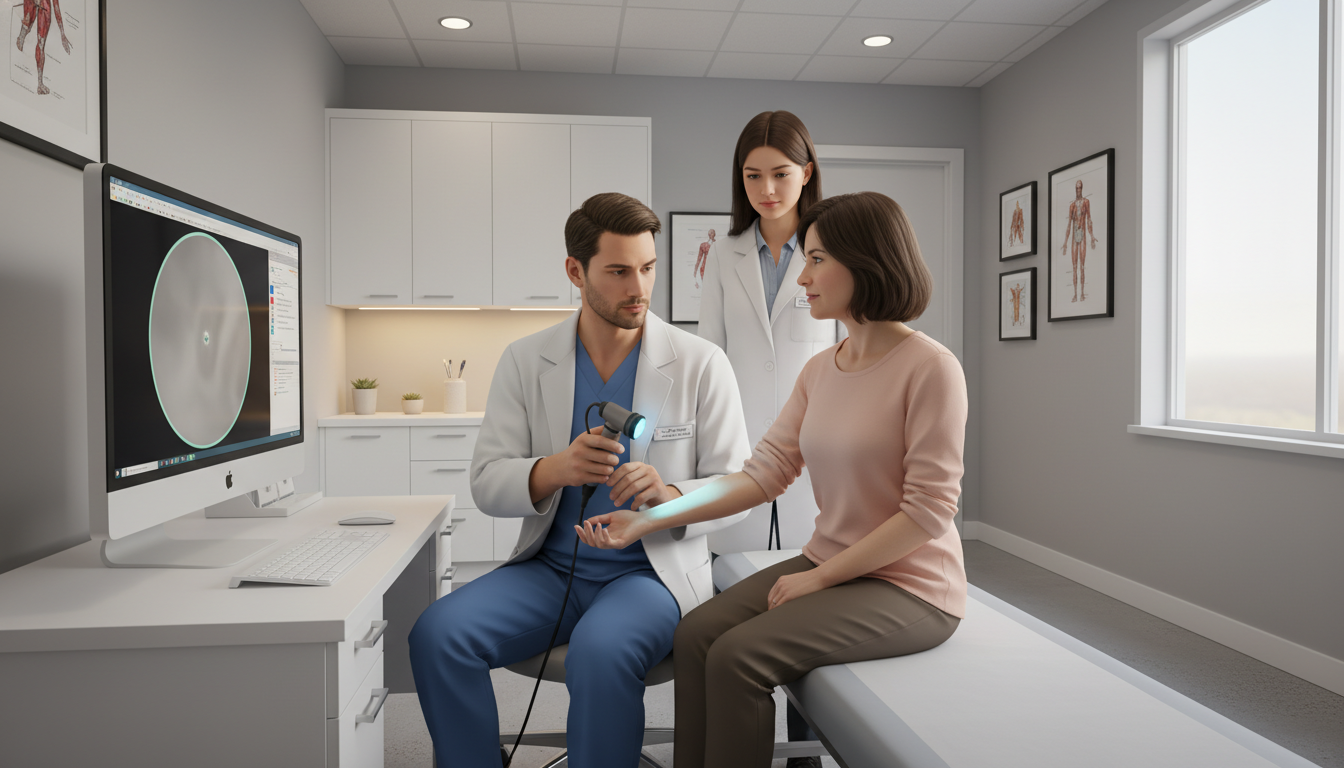
Medical shadowing in dermatology is one of the most powerful ways to explore the specialty, build a compelling application, and decide whether a dermatology residency is truly the right fit for you. Because derm is small, competitive, and often misunderstood from the outside, your shadowing experience can shape everything from your personal statement to your letters of recommendation and even influence your ultimate derm match success.
Below is a comprehensive, step-by-step guide to understanding, finding, and maximizing medical shadowing experiences in dermatology.
Why Dermatology Shadowing Matters So Much
Dermatology is one of the most competitive specialties, and meaningful clinical exposure is critical for several reasons:
1. Demonstrates Genuine Interest in Dermatology
Residency programs are wary of applicants who seem to be “chasing” competitive fields without a clear understanding of what they entail. Consistent and thoughtful medical shadowing shows:
- Long-term interest in dermatology rather than a last-minute decision
- Willingness to invest time in understanding outpatient-focused care
- Exposure to medical, surgical, and cosmetic dermatology settings
- Insight into chronic disease management and continuity of care
Program directors want residents who understand the lifestyle, patient population, and long-term demands of the field. Shadowing hours—especially when coupled with reflection and documentation—signal that you know what you’re signing up for.
2. Helps You Decide if Dermatology Is a Good Fit
On paper, dermatology can look very appealing: procedures, favorable lifestyle, strong job market. But shadowing reveals the day-to-day realities:
- A large volume of short visits (10–20 minutes)
- High cognitive load and visual pattern recognition
- Management of chronic inflammatory conditions (psoriasis, atopic dermatitis, acne)
- Emotional and psychosocial components (alopecia, pigmentary disorders, skin cancer diagnoses)
- Cosmetic expectations and patient satisfaction dynamics
Seeing how dermatologists move through a day, interact with staff, and handle emotionally complex cases will help you honestly assess if this is how you want to practice medicine.
3. Strengthens Your Dermatology Residency Application
Thoughtful dermatology shadowing can improve your derm match prospects in several concrete ways:
- Stronger personal statement – You can describe specific cases and experiences that shaped your interest.
- Targeted letters of recommendation – Faculty who observe your curiosity and professionalism in clinic can write nuanced, persuasive letters.
- Informed program selection – Shadowing in different settings (academic vs. private, medical vs. surgical heavy) helps you choose programs aligning with your interests and personality.
- Interview talking points – Real stories from shadowing make your interviews vivid and credible.
Shadowing alone won’t get you a dermatology residency, but lack of genuine clinical exposure can seriously weaken an otherwise strong application.
What Dermatology Shadowing Actually Looks Like
Understanding what to expect will help you feel more comfortable and prepared when you begin shadowing.
Typical Day in Dermatology Clinic
Most medical shadowing in dermatology occurs in outpatient settings. A typical half-day might include:
- High-volume clinic flow – 15–25 patients in a half-day is common
- Brief, focused visits – Many visits last 10–15 minutes
- Bread-and-butter conditions – Acne, eczema, psoriasis, benign nevi, seborrheic keratoses, actinic keratoses
- Procedures interspersed with visits – Biopsies, cryotherapy, intralesional injections, excisions, cosmetic procedures depending on the clinic
As a shadower, you will primarily:
- Observe full skin exams and focused lesion checks
- Watch how dermatologists use dermoscopy
- See how they explain diagnoses, treatment plans, and follow-up
- Learn the language of dermatology (morphology, distribution, primary vs. secondary lesions)
- Note practice flow, EMR use, and coordination with staff
You may spend time with residents, fellows, or the attending physician, depending on the clinic and institutional rules.
Types of Dermatology Experiences to Seek
To build a rich understanding of the field, aim to diversify your medical shadowing:
General Medical Dermatology
- Bread-and-butter diagnoses
- Chronic disease management
- Ample education about skin cancer prevention, sun protection, and topical therapies
Surgical Dermatology / Mohs Surgery
- Skin cancer excisions and reconstructions
- Mohs micrographic surgery
- Suturing, complex closures, flaps, and grafts (mostly observational at shadowing level)
Pediatric Dermatology
- Atopic dermatitis, hemangiomas, birthmarks, genetic skin disorders
- Parent-centered communication, developmental considerations
Cosmetic Dermatology (if available)
- Botox, fillers, lasers, chemical peels
- Aesthetic consultations and patient expectations
Shadowing broadly within dermatology will help you understand the full spectrum of the specialty, beyond what you see in textbooks.
Clinical Responsibilities vs. Observational Role
Most institutions limit what a shadower can do, especially preclinical students or premeds:
You typically can:
- Ask questions between patients or at appropriate times
- Observe dermatologic exams, procedures, and patient counseling (with consent)
- Help with room turnover or small organizational tasks, if offered
- Participate in didactics, journal clubs, or grand rounds if invited
You typically cannot:
- Independently examine patients
- Document in the chart
- Perform procedures
- Give medical advice
Even within these limitations, shadowing hours can be very high-yield if you show curiosity and intentionally observe patterns.

How to Find Dermatology Shadowing Opportunities
Many students struggle with how to find shadowing in dermatology, especially since there may be limited dermatologists and high demand. A strategic, organized approach makes all the difference.
Step 1: Start With Your Home Institution
If your medical school has a dermatology department, this is your primary starting point.
Actions to take:
- Check the dermatology department website for faculty profiles and educational contacts.
- Email the dermatology residency program coordinator or clerkship director asking about shadowing opportunities.
- Attend any open dermatology interest group events and introduce yourself.
- Ask senior students who matched into dermatology how they arranged shadowing.
When emailing faculty, keep it brief, specific, and professional. For example:
Subject: MS1 Interested in Dermatology Shadowing
Dear Dr. [Name],
My name is [Your Name], and I am a first-year medical student at [School]. I am very interested in exploring dermatology and hoped to arrange several half-days of medical shadowing in clinic to better understand the field.
If you are open to having a student observe, I would be grateful for the opportunity to shadow you or a resident in your clinic sometime this semester. I am happy to work around your schedule and follow all clinic policies regarding observers and patient privacy.
Thank you for your time and consideration.
Sincerely,
[Your Name]
[Class of 20XX]
Step 2: Use Structured School Programs and Offices
Many medical schools, and even some undergraduate institutions, have formal systems for arranging shadowing:
- Office of Student Affairs or Career Advising – May keep lists of faculty open to shadowers.
- Dermatology Interest Group (DIG) – Often organizes shadowing pairings or “Derm Days.”
- Prehealth/Preclinical advising office – For premeds, this is often the central hub to connect with local physicians.
Ask directly about dermatology shadowing opportunities and whether there are any restrictions on the number of shadowing hours needed or allowed per physician.
Step 3: Reach Out to Community and Private Practice Dermatologists
If your institution has limited access, community dermatologists can be invaluable:
How to identify them:
- Search for “dermatology near me” and review practice websites.
- Ask your PCP, family members, or friends if they know dermatologists willing to mentor students.
- Check your local/state dermatology society membership list.
How to approach:
- Use a concise, respectful email that acknowledges the demands on their time.
- Clarify your status (premed, MS1, etc.), your goals, and your flexibility.
- Emphasize adherence to confidentiality and office policies.
Example:
Dear Dr. [Name],
I am a [year] medical student at [Institution] with a strong interest in dermatology. I am hoping to gain more exposure to the specialty through medical shadowing and wondered if you ever allow students to observe in your clinic.
I would be grateful for the chance to learn about outpatient dermatology, observe patient care, and better understand the scope of your practice. I am fully committed to maintaining patient confidentiality and following all office rules. I am very flexible with dates and times and would be happy to adapt to your schedule.
Thank you for considering my request.
Sincerely,
[Your Name]
Be prepared that some physicians will decline due to space, time, or institutional regulations. That is normal; persistence and a broad outreach strategy are key.
Step 4: Leverage Conferences, Student Groups, and Networks
Other ways to unlock shadowing:
- National and regional dermatology meetings often have student tracks and networking events. Talking to faculty there can lead to shadowing invitations.
- American Academy of Dermatology (AAD) and other societies sometimes have mentorship programs that facilitate clinical observation.
- Alumni networks – Reach out through your school’s alumni directory for dermatologists who may welcome a student connection.
The more you’re visible in dermatology spaces, the easier it becomes to ask and secure opportunities.
How Many Shadowing Hours Are Needed for Dermatology?
There is no official number of shadowing hours needed that guarantees a dermatology residency match, but there are practical benchmarks and principles.
Minimum Exposure: Enough to Be Credible
For most applicants, you want at least:
- 20–40 hours of meaningful dermatology shadowing spread across several days or weeks
This provides enough experiences to:
- Write convincingly in your personal statement
- Answer “Why dermatology?” with specific examples
- Show you understand the specialty beyond stereotypes
Some students accumulate far more (80–100+ hours) over multiple years, often by continuing to shadow intermittently.
Quality Over Quantity
Program directors care far more about what you’ve learned and how you’ve integrated your experiences than the raw hour count.
High-quality shadowing looks like:
- Multiple sessions with the same dermatologist, allowing continuity and relationship-building
- Exposure to a variety of conditions (general derm, some procedures, maybe peds or surgical)
- Active reflection (journaling, case write-ups for yourself, discussing patterns you notice)
An applicant with 40 hours of thoughtful, engaged shadowing—combined with strong letters and academic performance—will be more compelling than someone who passively logged 150 hours without reflection or depth.
Documenting and Using Your Shadowing Hours
To maximize the benefit:
- Keep a simple log of dates, hours, site, and supervising dermatologist.
- After each session, jot down key lessons, interesting cases, and questions that arose.
- Translate those reflections into personal statement themes, interview responses, and conversation points with mentors.
Your goal is not to “hit a number” but to build a solid foundation of direct clinical experience that supports your evolving interest in dermatology.

Making the Most of Your Dermatology Shadowing Experience
Once you’ve arranged shadowing, the way you conduct yourself and engage in clinic can transform a simple observation into mentorship, letters, and long-term support.
Before You Start: Preparation
To be an effective shadower:
Review basics of skin exam and morphology
- Primary lesions: macule, papule, plaque, vesicle, pustule, nodule, bulla, wheal
- Secondary changes: scale, crust, erosion, ulcer, fissure, atrophy, lichenification
- Common derm terms: erythematous, blanching, indurated, violaceous, reticular, annular
Refresh common conditions
- Acne vulgaris, atopic dermatitis, psoriasis, seborrheic keratoses, actinic keratoses, BCC, SCC, melanoma basics
Clarify logistics
- Clinic location, dress code (usually business casual + white coat for med students), arrival time
- Whether you need a badge, HIPAA training, or paperwork
Prepare how you’ll introduce yourself to patients:
- “Hello, I’m [Name], a medical student observing Dr. [Name] today. Is it okay if I stay in the room while we talk?”
Professionalism During Shadowing
Dermatology is a small world. Your reputation from a single clinic can follow you into the derm match process.
Key behaviors:
- Be punctual – Arrive 10–15 minutes early.
- Respect patient privacy – Do not discuss cases outside of appropriate settings; never take photos or notes that include identifiers.
- Minimize disruptions – Don’t interrupt the history or exam; save most questions for between patients or at the end.
- Adapt to clinic flow – If the schedule is behind, read the room and hold questions.
Small professionalism lapses (e.g., checking your phone, looking bored, dressing sloppily) are noticed and remembered.
Asking Good Questions
High-yield, thoughtful questions set you apart and help physicians remember you positively.
Examples:
- “I noticed you chose topical [X] over [Y]. Could you explain how you decided between those options?”
- “How do you approach counseling patients who are nervous about isotretinoin?”
- “For this rash, what were the key features that made you think of psoriasis rather than eczema?”
- “What do you find most challenging about dermatology day-to-day?”
- “How did you decide between an academic vs. private practice path?”
Avoid:
- Constant questions during patient encounters
- Questions you could easily answer from a textbook or simple search
- Overly personal questions unrelated to career or clinical issues
Building Relationships and Mentorship
Your shadowing dermatologist can later become:
- A formal or informal mentor
- A letter writer for derm residency
- A connector to research or additional opportunities
To cultivate that relationship:
- Be consistent: show up prepared, engaged, and reliable.
- Express genuine appreciation at the end of each day or block of shadowing.
- After a meaningful shadowing block, send a short thank-you email mentioning specific things you learned.
- If appropriate, ask for advice on next steps in exploring dermatology.
Later, when you are preparing to apply for dermatology residency, it will feel natural to ask this physician for guidance and possibly a letter of recommendation.
Turning Shadowing into Application Content
As you get closer to application season, revisit your shadowing notes and think about:
Personal statement themes –
Example: observing the impact of biologics on psoriasis patients’ quality of life and how that shaped your view of chronic disease care.Interview anecdotes –
Be ready to describe one or two specific patients (de-identified) who taught you something about dermatology or yourself as a clinician.Demonstrating insight –
Show that you understand the range of dermatology practice: medical, procedural, cosmetic, pediatric, and oncologic.
Admissions committees can tell who has genuinely engaged with the specialty versus who has only seen it from a distance.
Common Pitfalls to Avoid in Dermatology Shadowing
Even well-intentioned students can make missteps. Watch out for:
1. Treating Shadowing as a Box to Check
Simply “being in the room” is not enough. Passive, disengaged presence makes little impression and yields minimal learning. Instead:
- Actively observe patterns: what does the dermatologist do similarly across patients?
- Note how they structure history taking, perform skin exams, and make treatment decisions.
- Reflect on what you would do differently or what surprised you.
2. Overshadowing Patient Comfort
Dermatology often involves full skin exams and sensitive areas. Some patients may not want a student observer, and that is their right.
Your role:
- Step out immediately and graciously if the patient declines your presence.
- Avoid body language that suggests disappointment or annoyance.
- Trust that there will be many other learning opportunities.
3. Violating Boundaries or Confidentiality
Absolutely avoid:
- Discussing identifiable cases with friends or on social media.
- Taking photos in clinic without explicit, formal permission (which is rare and typically research-based).
- Asking for access to the EMR beyond what is allowed.
Breaches of confidentiality are serious and can end opportunities, damage your reputation, and have institutional consequences.
4. Failing to Follow Up
Many students disappear after shadowing, missing opportunities for mentorship and future letters. Maintain a light, professional connection:
- Send a brief update once or twice a year: where you are in training and how your interests are evolving.
- If you publish something in dermatology or present at a conference, you can share that accomplishment.
- When preparing for the derm match, ask if they’re willing to advise you on programs or application strategy.
FAQs: Dermatology Shadowing and the Derm Match
1. How early should I start dermatology shadowing?
Ideally, begin in your first or early second year of medical school (or during late premed years if you’re sure about derm interest). Early exposure allows you to:
- Confirm or reevaluate your interest before heavily investing in research.
- Build longitudinal relationships with mentors.
- Accumulate shadowing hours gradually without scrambling right before applications.
If you’re starting later, shadowing is still valuable; just be more strategic and focused.
2. Is there a specific number of shadowing hours needed to match into dermatology?
There is no fixed number of shadowing hours needed for a derm match, but having 20–40+ hours of dermatology-specific exposure is a reasonable target for credibility. More hours are helpful if they:
- Lead to mentorship, letters, or research
- Reflect consistent, long-term interest
Programs are more concerned with the depth and authenticity of your engagement than with an exact hour threshold.
3. I don’t have a home dermatology program. How can I still get good derm exposure?
You can still build a strong application by:
- Shadowing community or private practice dermatologists locally
- Joining national groups (e.g., AAD, specialty interest groups) and attending virtual or in-person events
- Seeking away rotations / visiting student electives in your 4th year
- Doing remote research or case-report collaborations with dermatology faculty at other institutions
- Working closely with your school’s career office to document and frame your experiences effectively
Dermatology programs understand that some schools lack home departments; they focus on how you used the resources you did have.
4. Can premed students shadow dermatologists, or is it only for medical students?
Premedical students can often shadow dermatologists, especially in community or private practices. You may have more observational restrictions than medical students, but you can still:
- Gain exposure to the specialty
- Learn about the path through medical school and residency
- Decide if dermatology is a long-term goal
Be transparent about your status and expectations, respect office policies, and focus on learning broadly about patient care and physician life.
Thoughtfully planned, well-executed medical shadowing in dermatology will give you clarity about your career choice, strengthen your dermatology residency application, and connect you with mentors who can guide you through the competitive derm match process. Start early, approach opportunities professionally, and use every hour in clinic as fuel for your growth and future in the field.




















