Why Shadowing in PM&R Matters More Than You Think
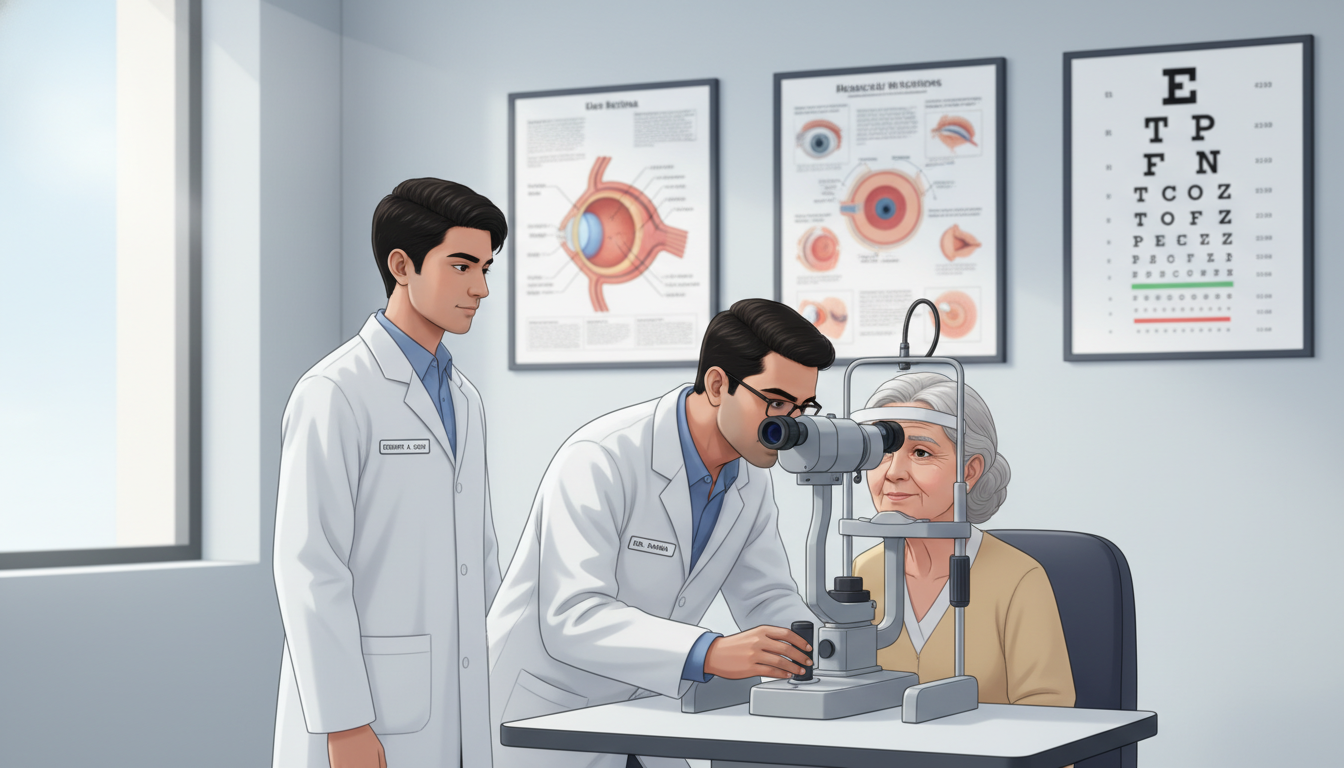
Physical Medicine & Rehabilitation (PM&R), or physiatry, is one of the specialties where seeing is truly believing. On paper, PM&R can sound vague: function, quality of life, interdisciplinary care. But the day-to-day realities—wheelchair seating clinics, EMGs, Botox for spasticity, prosthetics rounds, inpatient rehab family meetings—are difficult to grasp without direct medical shadowing.
For residency programs, your ability to clearly articulate why PM&R (beyond generic “work–life balance” or “I like procedures”) is essential. Shadowing is often the bridge between a superficial understanding and a convincing, well-developed commitment.
In this guide, we’ll cover:
- What PM&R shadowing actually looks like in multiple settings
- How to find shadowing (even if your school has no PM&R department)
- How many shadowing hours you really need for a strong physiatry match
- How to stand out professionally while shadowing
- How to transform observations into compelling application content
Throughout, you’ll see practical, step-by-step advice tailored to PM&R residency applicants.
Understanding PM&R Through Shadowing: What You’ll Actually See
PM&R is broad, and the variety of practice settings is part of its appeal. A strong medical shadowing experience in PM&R should ideally expose you to more than one of the following environments.
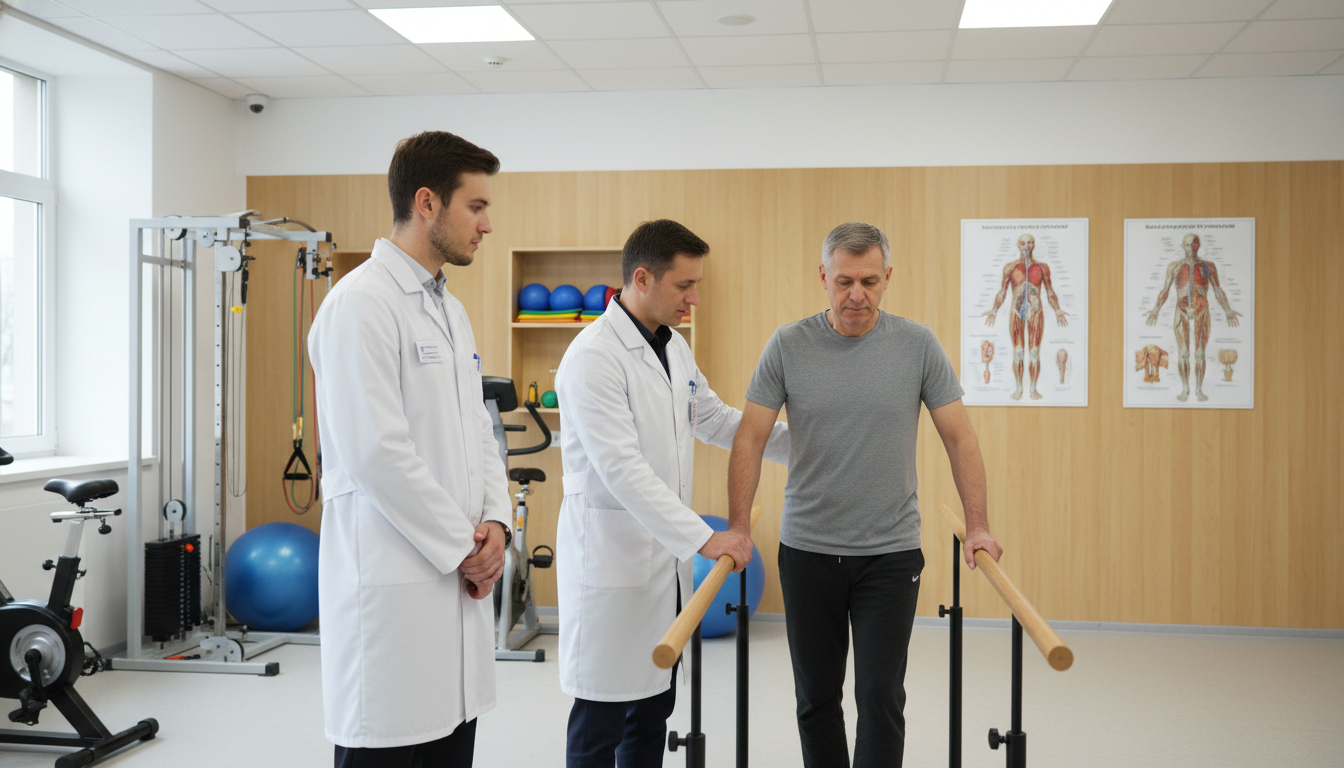
Inpatient Rehabilitation: The Core of “Team-Based” Physiatry
Inpatient rehab is where many students first see the full “rehab team” in action.
Typical shadowing day on inpatient rehab:
Morning sign-out/huddle:
Residents and attendings quickly review overnight events. You’ll hear terms like “FIM scores,” “3-hour rule,” “therapy tolerance,” “disposition barriers.”Team rounds:
The physiatrist leads rounds with PT/OT/SLP, nurses, social work, case management, and sometimes neuropsychology.- Stroke patient: discussion might include tone management (Baclofen vs Botox), cognition, family support, and discharge planning.
- Spinal cord injury patient: bowel/bladder regimen, autonomic dysreflexia prevention, pressure injury risk, mobility options.
Family meetings:
You may observe goals-of-care or expectation-setting meetings, where physiatrists explain prognosis in functional terms: “We expect him to walk household distances with a walker, but probably not safely manage stairs without support.”Procedures:
Occasionally: Botox injections for spasticity, baclofen pump refills, or ultrasound-guided joint injections done on the unit or in adjacent procedure rooms.
What to pay attention to:
- How the physiatrist integrates functional outcomes (walking, dressing, returning to work) into every decision.
- The dynamic with therapists—note the language they use and how the team negotiates goals.
- The shift from disease-based thinking (“stroke”) to impairment and function-based thinking (weakness, neglect, gait, communication).
These details can later fuel powerful, specific examples in your personal statement and interviews.
Outpatient Musculoskeletal & Sports: The “Ortho-Adjacent” Side
Another side of PM&R looks similar to orthopedics or sports medicine—but with a rehab and function focus.
What you might see:
Knee/shoulder/back pain visits:
History focused on function: “What activities can’t you do now? What are your goals?”Physical exam:
Gait assessment, posture, focused neurologic exam, manual muscle testing, special tests, sometimes ultrasound evaluation.Interventions:
- Corticosteroid or viscosupplement injections
- Ultrasound-guided tendon or bursa injections
- Trigger point injections
- Bracing/orthotics prescriptions
- Detailed PT prescriptions (not just “PT eval and treat,” but specific modalities and goals)
Sports clinics:
Sideline coverage, concussion follow-ups, return-to-play decisions, athletes with overuse injuries.
Key learning angles:
- How physiatrists balance conservative management vs procedural interventions.
- The role of rehab prescription writing—type, frequency, duration, and specific goals of PT/OT.
- The way physiatrists discuss expectations, time frames, and active patient participation.
Neurorehabilitation & Spasticity Management: Subspecialty Depth
Shadowing in neurorehab (often outpatient clinics in academic centers) reveals a different set of PM&R skills.
Clinic elements you may observe:
- Botulinum toxin injections for limb spasticity after stroke, cerebral palsy, TBI, or spinal cord injury.
- Intrathecal baclofen pump evaluations/refills:
Watch how teams assess tone, function, and side effects to adjust dosing. - Multidisciplinary clinics:
For example, ALS, MS, or post-polio clinics involving neurology, PT/OT, respiratory therapy, and social work.
What stands out educationally:
- Detailed tone assessment (Modified Ashworth Scale, focal vs generalized spasticity).
- How physiatrists frame interventions around caregiver burden, independence, and prevention (contractures, skin breakdown, falls).
- The emotional and communication skills required to work with chronic, often progressive neurological conditions.
Electrodiagnostics (EMG/NCS): The Diagnostic Side of PM&R
Many students don’t realize that PM&R physicians frequently perform and interpret EMG/NCS studies.
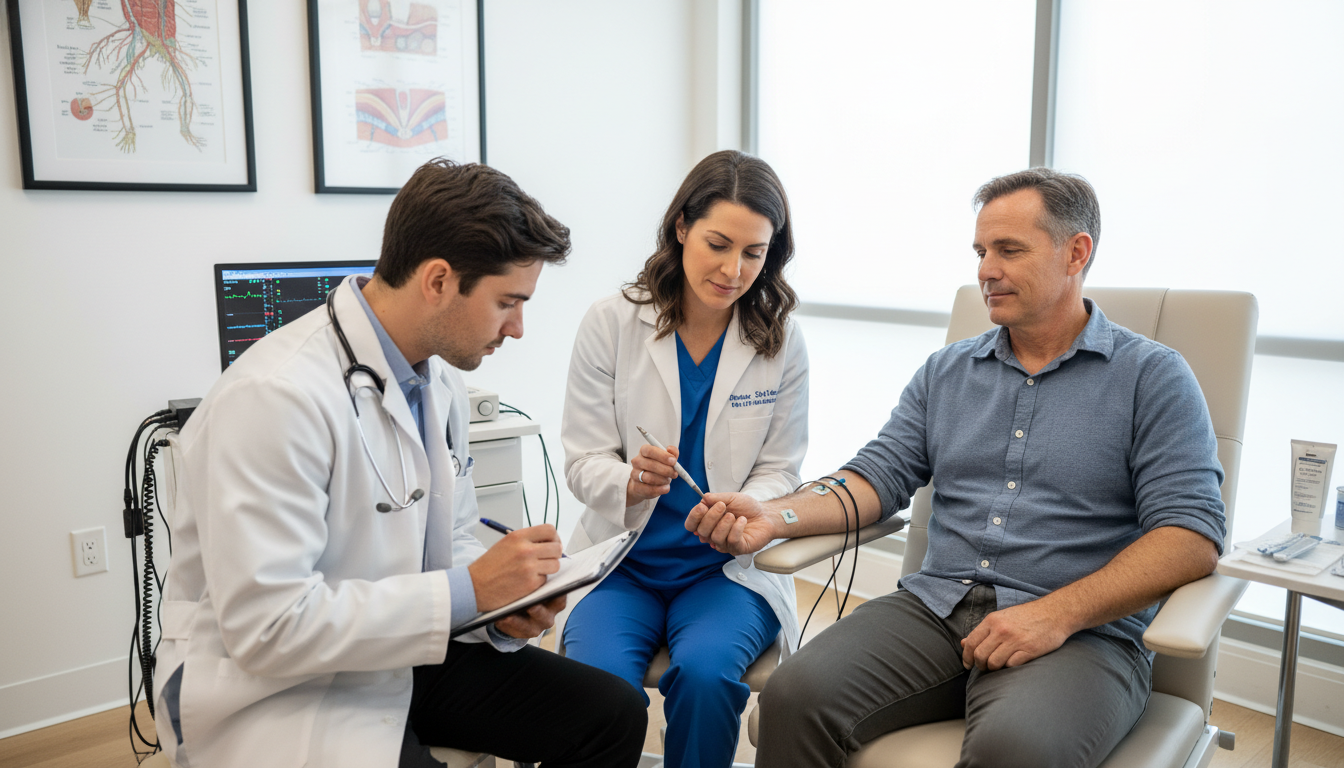
During EMG/NCS shadowing, you may see:
- Workups for carpal tunnel, radiculopathy, peripheral neuropathy, myopathy, neuromuscular junction disorders.
- Real-time diagnostic reasoning as the physiatrist chooses which nerves/muscles to test and interprets findings.
Shadowing opportunities here:
- Ask (between patients) how EMG findings changed management—surgery vs conservative treatment, prognosis, work limitations.
- Note how the physiatrist explains the procedure to patients, especially those anxious about needles.
This experience helps you articulate physiatry as a specialty that is both diagnostic and rehabilitative.
Prosthetics & Orthotics, Pain, and Other Niche Areas
Depending on the site, you might also shadow:
Amputee and prosthetics clinics:
Gait training with prostheses, socket fittings, wheelchair seating and positioning; coordination with prosthetists and PTs.Chronic pain or interventional pain clinics:
Physiatrists performing epidural steroid injections, medial branch blocks, or radiofrequency ablation; emphasis on functional restoration rather than only pain scores.
Each of these experiences can help you define which subdomain of PM&R attracts you most—and talk about that convincingly in residency applications.

How to Find PM&R Shadowing: Step-by-Step Strategies
Many students ask how to find shadowing in PM&R, especially at schools where the specialty isn’t prominent. Because PM&R is smaller than fields like internal medicine or surgery, you often need to be more proactive and creative.
Start With What You Already Have
Check your school’s department listings
- Look for “Physical Medicine & Rehabilitation,” “Rehabilitation Medicine,” or “Physical Medicine.”
- Even if there’s no full department, there may be individual physiatrists embedded in neurology, orthopedics, or sports medicine divisions.
Ask your dean’s office or clinical education coordinator
- Question to ask: “Which physicians handle inpatient rehabilitation consults or oversee the rehab unit?”
- They may know who staffs the rehab hospital or unit even if it’s off-site.
Use the rehabilitation hospital itself
- Many academic centers have a affiliated rehab hospital or unit.
- Visit or call the medical staff office and ask how students usually arrange medical shadowing with physiatrists.
Emailing Physiatrists: A Template That Works
Cold-emailing is often necessary and appropriate for PM&R. Here’s a structure that tends to get good responses:
Subject: Medical Student Interested in PM&R – Shadowing Opportunity?
Dear Dr. [Last Name],
My name is [Name], and I am a [MS2/MS3, etc.] at [School]. I am strongly interested in Physical Medicine & Rehabilitation and would be grateful for the opportunity to shadow you to better understand your practice.
I am particularly interested in [inpatient rehab / neurorehab / musculoskeletal / sports / EMG / prosthetics, etc.]. I can be flexible with dates and would be happy to comply with any institutional requirements for observers.
If you are open to it, I would appreciate the chance to spend [half-day/day/series of days] observing your work and learning more about PM&R as a career.
Thank you for considering my request.
Sincerely,
[Full Name]
[School, Class Year]
[Phone]
[Institutional Email]
Tips:
- Keep it short and specific. Mention PM&R explicitly and a focus of interest.
- Attach a brief CV if you have relevant experiences (e.g., rehab volunteering, PT/OT background).
- If you don’t get a reply in 7–10 days, a polite one-line follow-up is acceptable.
Use National and Local PM&R Networks
AAPMR (American Academy of Physical Medicine and Rehabilitation)
- Join as a student member (often free or very low cost).
- Some state PM&R societies and local chapters have student liaisons or mentorship programs.
Student Interest Groups
- If your school doesn’t have a PM&R interest group, consider starting one.
- Ask a physiatrist to serve as faculty advisor; this relationship can naturally lead to shadowing hours.
Conferences and virtual events
- Many PM&R conferences have student tracks and mentorship meetups.
- A short introductory conversation followed by a well-written email can turn a conference contact into a shadowing opportunity.
If Your Home Institution Has Limited PM&R
Students without a “home PM&R department” often match successfully—but they typically compensate with strong shadowing and away rotations elsewhere.
Options:
Affiliated rehab hospitals
- Some community rehab hospitals partner with academic centers; contact their medical director.
Regional academic centers
- Look at nearby institutions’ PM&R departments; many will allow visiting students to shadow, sometimes with simple observer paperwork.
Virtual shadowing and mentoring
- Not as valuable as in-person experience, but better than nothing if in-person is impossible.
- Ask to sit in on telemedicine follow-up visits or interdisciplinary team conferences; many programs did this during COVID and some still do.
How Many Shadowing Hours Do You Need for a Strong Physiatry Match?
There is no official number of “shadowing hours needed” to match in PM&R, but there are reasonable benchmarks and expectations.
Think in Terms of Depth, Not Just Time
Residency program directors care less about whether you logged 20 vs 50 hours and more about:
- Can you clearly articulate what physiatrists do?
- Do you understand how PM&R is distinct from neurology, orthopedics, and primary care?
- Can you discuss a few specific patient encounters that shaped your interest?
That said, you do need enough exposure to answer these convincingly.
Practical Hour Benchmarks
For a competitive PM&R application, consider aiming for:
Minimum baseline:
- About 20–30 hours of direct PM&R shadowing spread over at least 2–3 settings or physicians.
- This can often be done in 3–4 full days or several half-days.
Stronger exposure:
- 40–60 hours offers more depth: e.g., a week on inpatient rehab, a few clinic days, and an afternoon in EMG.
- This is particularly helpful if your school lacks a PM&R department or if you discovered PM&R late and need to demonstrate rapid, serious exploration.
Above and beyond:
- More than 60 hours is great if it grows naturally from ongoing mentorship or longitudinal involvement, but raw “hours” beyond this don’t automatically make you more competitive; what you learn and articulate from those hours matters more.
Remember: formal PM&R rotations (home or away) are usually more influential than shadowing alone. Shadowing is best seen as your on-ramp to rotations, mentorship, and letters of recommendation.
Combining Shadowing With Other Experiences
If your pure shadowing hours are limited, you can augment them with:
- Rehab volunteering (VA, spinal cord units, stroke support groups)
- Adaptive sports programs
- Research in neurorehab, MSK, or disability studies
- Longitudinal contact with a rehab patient or caregiver (with appropriate boundaries and professionalism)
In your application, present these together as a cohesive narrative of your journey into PM&R, not just as disconnected bullet points.
How to Be an Excellent Shadowing Student in PM&R
Your behavior while shadowing influences whether physicians will later advocate for you, suggest projects, or support you for away rotations and letters.
Before You Start: Preparation That Impresses
Complete institutional requirements
- HIPAA training
- Observer agreements
- Vaccination documentation, TB testing, or fit testing if needed
Learn the basics of PM&R
- Read the PM&R chapter(s) in a standard specialty overview book or reputable online review.
- Browse AAPMR’s “What Is PM&R?” resources.
- Familiarize yourself with basic terminology: ADLs, IADLs, spasticity, tone, gait training, FIM/IRF-PAI, interdisciplinary team.
Clarify logistics by email
- Ask about dress code (usually clinic-appropriate professional attire with white coat).
- Confirm start time, meeting location, and whether to bring a stethoscope.
Doing this prevents awkward first days and signals reliability—a major currency in medicine.
On the Day: Professionalism and Engagement
Timing and demeanor:
- Arrive 10–15 minutes early.
- Introduce yourself to staff (nurses, therapists, front desk) with your full name and role:
“Hi, I’m Alex, a medical student shadowing Dr. Lee today.”
With patients:
- Let the physiatrist introduce you; don’t walk in first or lead the interaction.
- When appropriate, say:
“I’m a medical student observing today to learn more about rehabilitation medicine. Thank you for allowing me to be here.” - Step out if a patient seems uncomfortable; debrief afterward.
With the physiatrist:
Ask 1–2 thoughtful questions per patient or cluster of patients, such as:
- “How did you decide that this patient was a good candidate for inpatient rehab rather than a SNF?”
- “What are the main functional goals you’re targeting with this Botox pattern?”
- “How do EMG findings typically change management in radiculopathy cases?”
Avoid barrage questioning during time-pressured moments. Write questions down and ask between patients or at breaks.
What to Observe and Take Notes On
Use a small notebook or secure electronic notes (no patient identifiers). Record:
- Clinical patterns: stroke, SCI, TBI, MS, amputees, chronic pain, MSK complaints.
- Functional goals discussed: walking, dressing, driving, returning to work.
- Tools and scales used: gait aids, orthotics, cognitive assessments, spasticity scales.
- Examples of strong communication: how physiatrists explain prognosis, risk, and rehabilitation timelines.
- Team dynamics: how the physiatrist interacts with PT/OT/SLP, nurses, social workers, and families.
These notes become raw material for:
- Personal statement anecdotes
- “Why PM&R?” interview answers
- Program-specific essays and secondary questions
Afterward: Following Up and Building the Relationship
Within 24–48 hours, send a concise thank-you email:
- Name one or two specific things you learned or appreciated.
- Express interest in staying in touch or shadowing again, if appropriate.
- Ask (if the rapport is good) whether they’d be open to a brief career chat at a later time or suggest potential research/quality improvement projects.
Over time, this is how brief shadowing can evolve into:
- A mentor
- A scholarly project
- Support for rotations or even a letter of recommendation
Turning PM&R Shadowing Into Application Strength
Shadowing is valuable only if you can translate it into a compelling narrative. Program directors don’t see your raw hours—they see how those hours shaped your choices and mindset.
Personal Statement: Moving Beyond “I Liked the Teamwork”
Weak personal statements rely on vague lines like: “I enjoyed the interdisciplinary nature and helping patients regain function.” Strong ones use concrete cases and clearly link experiences to your motivations.
Example transformation:
Shadowing observation:
You watched a physiatrist lead a family meeting for a 45-year-old with incomplete spinal cord injury, discussing realistic expectations for walking and bladder function, and coordinating with PT/OT and social work.Weak statement:
“I liked how physiatrists help patients and families.”Strong statement:
“On the inpatient rehabilitation unit, I observed a physiatrist guide a family through the uncertainty of their loved one’s incomplete spinal cord injury. Rather than focusing solely on imaging or motor scores, she framed the conversation around independence in transfers, bowel and bladder management, and the possibility of returning to desk work with adaptations. Watching her integrate medical knowledge with functional goals and family dynamics clarified for me that I want a career centered on translating disease into meaningful outcomes for patients’ daily lives.”
Your shadowing should supply 2–3 such anchor stories.
Interviews: High-Yield Ways to Use Your Shadowing
Common PM&R interview questions that draw directly on your shadowing experience:
- “How did you become interested in PM&R?”
- “What do you understand about what physiatrists do?”
- “Tell me about a clinical experience that confirmed your interest in rehabilitation medicine.”
Prepare brief, specific answers:
- Situation – Where you were shadowing and what general issue was at stake.
- Observation – What the physiatrist and team did.
- Reflection – What it taught you about PM&R and why it matters to you.
Example:
“While shadowing in a stroke rehabilitation unit, I watched a physiatrist reassess a patient who was frustrated with slow progress. Rather than focusing only on weakness, she reframed the discussion in terms of the small but meaningful gains he had made—going from total assistance to minimal assistance with grooming—and enlisted OT to adjust goals to what mattered most to him, returning to independent living. That experience highlighted for me how PM&R physicians anchor care in function and patient-defined goals, which is the kind of medicine I want to practice.”
ERAS and CV: Documenting Shadowing Appropriately
In ERAS, shadowing often fits under “Extracurricular” or “Work/Volunteer Experience” depending on how it’s structured.
When describing it:
List the setting and type:
- “Inpatient rehabilitation shadowing (stroke, SCI, TBI)”
- “Outpatient musculoskeletal and EMG clinic observation”
Mention approximate time frame and total hours.
Highlight what you did:
- “Observed interdisciplinary rounds and family meetings, participated in team huddles, and debriefed cases with attending physician.”
- “Observed EMG/NCS procedures and discussed impact on diagnosis and treatment of MSK and neuromuscular conditions.”
Focus less on “I was physically present” and more on how you engaged and what you learned.
FAQs About PM&R Shadowing and the Physiatry Match
1. Is PM&R shadowing required to match into a PM&R residency?
It’s not formally “required,” but it’s strongly expected that applicants demonstrate authentic exposure to PM&R. Programs want reassurance that you understand what the specialty entails.
If your school has limited PM&R, you can:
- Combine a few days of shadowing with a formal PM&R elective or away rotation.
- Highlight any rehab-related experiences (adaptive sports, TBI volunteering, spinal cord units, disability advocacy).
What matters is that you can clearly articulate your interest with concrete examples.
2. How many shadowing hours needed are considered “enough” for PM&R?
There is no universal cutoff, but a realistic target is:
- At least 20–30 hours of PM&R-focused shadowing as a bare minimum.
- Ideally 40–60 hours across multiple settings (e.g., inpatient rehab, outpatient MSK, EMG, neurorehab) for a more robust understanding.
If you also complete 1–2 PM&R clinical rotations, programs will typically consider your exposure adequate—quality and reflection matter more than raw numbers.
3. What if my school has no PM&R department—am I at a disadvantage?
You’re not doomed, but you’ll need to be intentional and proactive:
- Seek shadowing at regional rehab hospitals or nearby academic centers.
- Use AAPMR and state PM&R societies to find mentors.
- Prioritize doing at least one away rotation in PM&R at a program of interest.
- Use your personal statement and interviews to explain your path: how you discovered PM&R and the steps you took to pursue it despite limited local resources.
Programs often respect the initiative this demonstrates.
4. Can shadowing alone lead to a PM&R letter of recommendation?
Sometimes, but not usually. Most strong letters of recommendation come from:
- Formal clinical rotations where faculty can directly assess your clinical skills, reliability, and teamwork.
- Research or longitudinal clinical experiences.
However, shadowing can be the first step toward:
- Getting invited to join a small QI or research project.
- Being prioritized for an elective rotation spot.
- Building trust so that, later, a physiatrist feels comfortable writing on your behalf.
Use shadowing to open doors, then look for ways to contribute meaningfully.
Shadowing in PM&R is more than a box to check; it’s the lens through which the specialty becomes real. By thoughtfully seeking diverse experiences, engaging actively, and reflecting deeply, you can transform shadowing from passive observation into one of the strongest foundations of your physiatry match story.