
Understanding Medical Shadowing in the Context of a Preliminary Surgery Year
Medical shadowing is one of the most important—and often misunderstood—experiences for students considering a preliminary surgery year. Whether you are a medical student aiming for categorical General Surgery, another surgical specialty (e.g., ortho, ENT, urology), or even a non-surgical field that may start with a prelim surgery residency, your shadowing experiences will shape your understanding of surgical life, hospital culture, and the realities of the operating room.
Preliminary surgery programs are unique. They can serve as:
- A bridge year before re-applying to categorical surgery
- A required year before advanced programs (e.g., radiology, anesthesia, neurology, PM&R)
- A year to gain intensive clinical and procedural experience before transitioning to another path
Because of this, programs look closely at whether your experiences—especially medical shadowing—demonstrate that you understand what a surgical lifestyle and surgical training truly involve.
This guide walks you through how to design high‑yield shadowing experiences tailored to a preliminary surgery year, how to document and communicate them on your application, and how to use them to strengthen letters of recommendation, your personal statement, and interviews.
Why Shadowing Matters So Much for a Prelim Surgery Residency
1. Demonstrating Informed Commitment
Program directors worry about one thing above all in prelim applicants: Will this person show up, work hard, and not burn out or quit?
Shadowing is one of the clearest ways to show that you:
- Have seen the day-to-day life of surgeons (ward, OR, clinic, call)
- Understand the long hours and acuity of surgical patients
- Are not romanticizing the OR because of TV shows or a single cool case
In your ERAS application and interviews, you want to be able to say, with specifics:
“I shadowed Dr. X for Y months on inpatient and OR days, including q4 weekend call, and it confirmed that I can thrive in a high-intensity surgical environment.”
That kind of statement is far more credible than “I think I’ll like surgery because I enjoy working with my hands.”
2. Clarifying Your Career Narrative
For many, a preliminary surgery year is part of a complex trajectory: maybe you’re aiming for categorical surgery, maybe you’re pivoting, or maybe you’re targeting an advanced specialty that starts after a prelim year. Thoughtful shadowing helps you:
- Confirm that a surgical-heavy intern year aligns with your long‑term goals
- Clarify whether you might want to re-enter the Match for categorical General Surgery
- Build a story that explains logically:
- Why surgery exposure
- Why prelim instead of categorical (if applicable)
- How this year fits into your overall career plan
When you can say, “Shadowing in vascular, trauma, and surgical ICU helped me realize I thrive in acute care settings, which is why a prelim surgery residency is a strong fit for me,” you instantly sound more focused and mature.
3. Building Relationships That Translate Into Letters and Advocacy
Shadowing is often where the strongest letters of recommendation begin. It gives faculty extended time to observe:
- Your professionalism and reliability
- How you interact with patients and staff
- Your enthusiasm for learning and surgery
A surgeon who first met you as a dedicated shadow, then saw you work as a sub‑intern, is much more likely to:
- Write a detailed, supportive letter
- Email or call programs on your behalf if needed
- Vouch for your work ethic and character during rank meetings
In the prelim surgery world—where many applicants are trying to “prove themselves” or reposition after a setback—these advocates can be critical.
Planning Your Shadowing: Settings, Hours, and Strategy
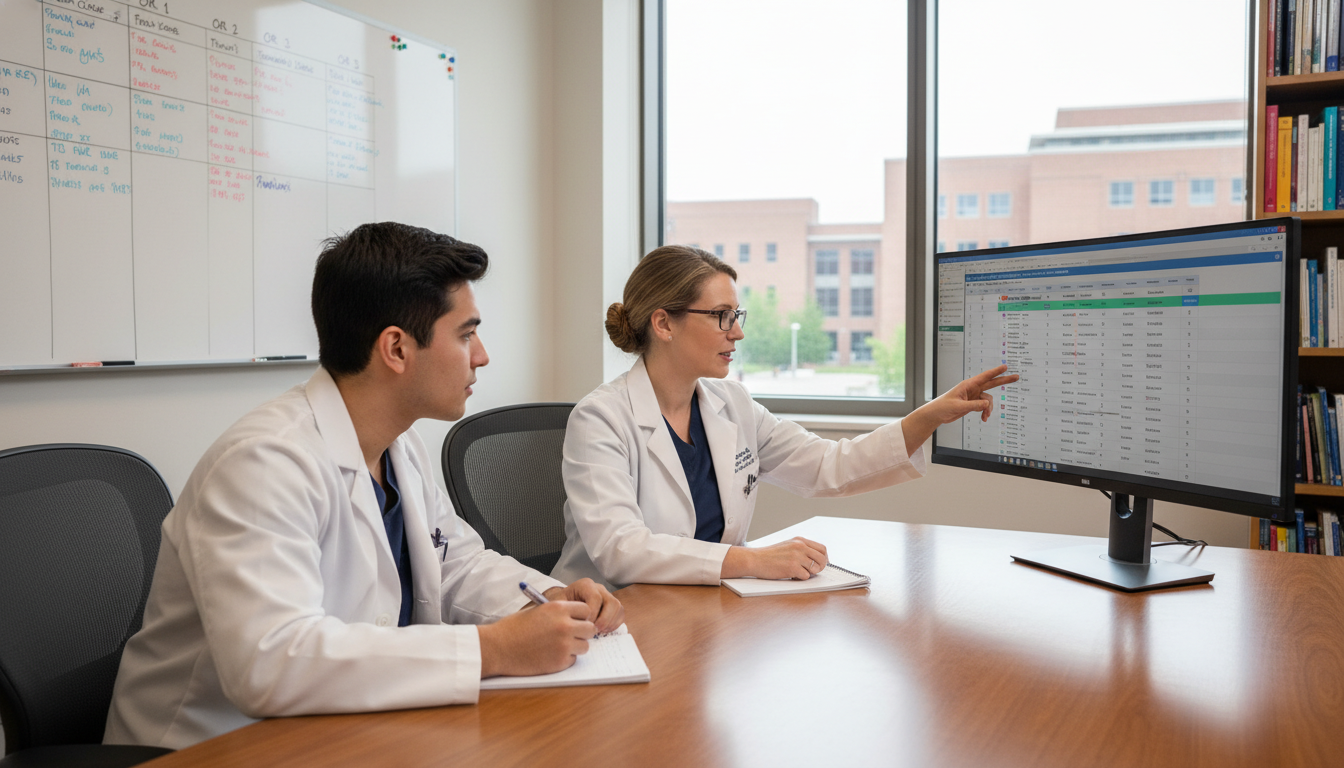
Clinical Settings That Matter Most for a Prelim Surgery Year
For a surgery-focused application, you want breadth across the full spectrum of surgical care—not just glamorous OR time.
High-yield shadowing environments include:
Operating Room (OR)
- Watch pre-op huddles, time-outs, and team dynamics
- Observe sterile technique, communication, and intraoperative decision-making
- See how residents of different levels function and learn
Surgical Ward / Inpatient Service
- Early-morning rounds and check-outs
- Discharge planning, consults, and post-op care
- Multidisciplinary communication with nursing, PT, case management
Surgical ICU (SICU) or Trauma ICU
- Management of critically ill post-op or trauma patients
- Interaction with intensivists and multi-service teams
- Exposure to ventilators, vasopressors, and resuscitation
Outpatient Surgical Clinic
- Pre-op counseling, risk discussion, informed consent
- Longitudinal relationships with elective and chronic patients
- Post-op follow-up: wound checks, complications, outcomes
Emergency Department (Consults/Trauma Activation)
- Initial surgical consults (e.g., appendicitis, SBO, cholecystitis)
- Trauma activations and resuscitations
- Rapid decision-making about operative vs non-operative management
For a prelim surgery application, highlight experiences that show you’ve seen all of these components, not just the OR.
How Many Shadowing Hours Do You Need?
There is no official rule on shadowing hours needed, but you should aim for depth over raw numbers. For a prelim surgery–oriented path, a reasonable target is:
Minimum baseline:
- 40–60 meaningful hours in surgery settings (OR + ward + clinic combined)
Competitive and convincing:
- 80–150+ hours of clearly documented, structured shadowing across different surgical environments
If you have limited formal surgery rotations (e.g., international grad, DO or MD with gaps, or switching specialties late), aim for the higher end and ensure your hours include:
- At least several full OR days
- Several inpatient/rounding days
- Clinic exposure to pre- and post-operative care
Programs are less impressed by “300 hours” if they were mostly unstructured or passive. Instead, they want experiences that led to:
- Concrete observations
- Mentor relationships
- Letters of recommendation
- Refined career goals
Structuring Your Shadowing Time
To make your hours count:
Shadow in blocks, not scattered single days
- Example: “Every Tuesday and Thursday for 2 months in Trauma Surgery”
- This consistency allows teams to actually remember you and involve you more
Mix short and long days
- Some half-days in clinic
- Some full OR or call days to see the true pace and fatigue
Build progression
- Start with pure observation
- Gradually integrate more active participation: note review, case prep discussions, presentations in informal settings (while staying within your institution’s policies)
A sample 8-week shadowing plan oriented toward prelim surgery:
- Weeks 1–2:
- 1 full OR day/week + 1 ward rounding morning/week
- Weeks 3–4:
- 1 clinic half-day/week + 1 OR/trauma call evening
- Weeks 5–6:
- 1 SICU morning/week + 1 full OR day/week
- Weeks 7–8:
- 1 ward/ED consult day/week + 1 OR or trauma activation shift/week
This kind of plan ensures you can truthfully say you observed the continuum of surgical care.
How to Find Shadowing in Surgery (Especially for Prelim-Focused Applicants)
Many students and graduates struggle with how to find shadowing reliably—especially in competitive or busy surgical departments.
Step 1: Start with Your Home Institution
If you’re currently enrolled or recently graduated from a medical school:
Clerkship or surgery course directors
- Ask: “I’m considering a preliminary surgery year and would like longitudinal shadowing with a general or trauma surgeon. Is there someone who works closely with students that I might contact?”
Program coordinator or chief residents in General Surgery
- Chiefs often know attendings who are enthusiastic teachers and may welcome a consistent shadow
Student surgery interest group or surgical societies
- They frequently have lists of “student-friendly” surgeons
When you reach out, be concise and specific:
“I’m a fourth-year medical student applying to a preliminary surgery year. I’d like to shadow on your general surgery service 1–2 days per week for the next 6–8 weeks to better understand surgical life and strengthen my preparation for residency. Is there a process I should follow to set this up?”
Step 2: Consider Off‑Cycle and Evening/Weekend Opportunities
Many faculty are more open to shadowing when:
- OR lists are lighter or more elective
- Fewer medical students are scheduled
- It’s not peak clinic time
Options include:
- Early mornings for rounds
- Post-call or weekend rounds (if your institution allows)
- Later evening cases or trauma call nights
This also gives you a more authentic sense of call schedules—vital for understanding a prelim surgery residency.
Step 3: Use Alumni, Mentors, and Networked Introductions
If you’re a non-traditional or international graduate, a lot may start with your network:
- Ask academic advisors or past attendings:
- “Do you know any surgeons at a U.S. hospital willing to host an observer?”
- Reach out to alumni from your school now in surgery, trauma, or ICU
- Connect with mentors from research who might introduce you to surgical colleagues
A warm introduction often bypasses the “cold email barrier.”
Step 4: Cold Outreach—Done Professionally
If network routes fail, targeted cold outreach can still work. Focus on:
- Academic hospitals with active surgery departments
- Community hospitals that regularly host students or observers
Key points for your email:
- Subject line: “Medical Student Seeking Surgical Shadowing (Interested in Preliminary Surgery Year)”
- 2–3 brief sentences about:
- Who you are (year, school, or graduate status)
- Why you’re interested in a surgical prelim year
- What you’re requesting (specific time frame, frequency)
Always ask about:
- Institutional requirements (HIPAA training, vaccination, paperwork)
- Any limitations (no direct contact, OR observation only, etc.)
Step 5: Formal Observerships for International Medical Graduates
If you’re an IMG, you may need a more structured observership rather than informal shadowing. Look for:
- Hospitals that advertise “clinical observerships” or “international visiting student” programs in surgery
- University-based departments with defined application processes
These may require:
- Fees
- Health clearance and immunization proof
- CV, personal statement, or recommendation letters
Even if labeled as “observership,” these experiences are functionally similar to shadowing and can be highly valuable for your prelim surgery application.
Making Your Shadowing High-Yield: Skills, Reflection, and Professionalism

Professional Conduct: How to Show You Belong in the OR
Shadowing is your preview of residency—and theirs of you. Treat it like a long interview:
Be reliable
- Arrive before the team
- Confirm schedules in advance
- Never no-call/no-show
Dress appropriately
- Business casual with white coat for clinic/rounds (if your institution uses them)
- Scrubs as instructed for OR, with name badge clearly visible
Know and respect your role
- Ask about what you are allowed to do (observe only vs hold retractors, etc.)
- Never touch equipment or patients without explicit permission
Protect patient privacy
- Do not discuss patients outside the care context
- Never share photos or identifiable details on social media
How to Learn Actively While Shadowing
Even if you’re not touching patients, you can learn a lot if you are intentional:
Prepare before each session
- Review common surgical conditions (e.g., appendicitis, cholecystitis, bowel obstruction)
- Skim the brief operative notes or indications for scheduled cases if allowed
Ask focused, timing-sensitive questions
- Avoid questions during critical moments of a case or code
- Good examples:
- “What were the main factors in deciding operative vs non-operative management for this patient?”
- “How does this operation differ in an emergent vs elective setting?”
Observe workflows and team dynamics, not just anatomy
- How do residents present on rounds?
- How do nurses and surgeons communicate concerns?
- What does a busy call night actually look like?
Debrief briefly when possible
- “If you have a minute, could you share what you think is most important for interns to learn quickly on this service?”
These behaviors mark you as someone already thinking like an intern—a strong signal for prelim surgery programs.
Reflecting and Recording Your Experience
Immediately after each shadowing session:
- Write a brief reflection (5–10 minutes):
- What did you see?
- What surprised you?
- What reinforced or challenged your interest in surgical training?
- What did you notice about surgical culture and lifestyle?
Maintain a simple log:
- Date, setting (OR, clinic, ward, ICU, ED)
- Hours
- Attending/resident names
- Key takeaways
This log will help you:
- Accurately answer questions about shadowing hours needed and what you completed
- Prepare nuanced, specific descriptions for ERAS
- Provide details to letter writers about your involvement
Translating Shadowing into a Strong Preliminary Surgery Application
Showcasing Shadowing in ERAS
In the Experiences section:
- Group related experiences logically
- “General Surgery Shadowing, University Hospital”
- “Trauma & Surgical ICU Shadowing, Regional Trauma Center”
For each entry, include:
- Total estimated hours (honest, not inflated)
- Timeframe (e.g., May–August 2024, 1–2 days/week)
- Settings: OR, ward, ICU, clinic, ED consults
- 2–3 bullet points focused on insight gained, not just activities
Example description:
- Observed full spectrum of care on a busy general surgery service, including pre-op clinic visits, inpatient rounds, OR cases, and post-op follow-up.
- Gained firsthand understanding of intern responsibilities, call schedules, and the collaborative role of residents, nurses, and advanced practice providers.
- Clarified motivation to pursue a preliminary surgery year as preparation for a career in acute care specialties.
Using Shadowing to Strengthen Your Personal Statement
For a prelim surgery–focused personal statement, shadowing often provides the anchor stories that prove you understand what you’re signing up for.
You can:
- Describe a specific moment when you saw:
- An intern manage multiple pages simultaneously
- A team handle a complication or critical patient
- An attending teach a resident through a difficult case
Then explain:
- How that shaped your respect for surgical training
- Why, despite observing the intensity, you still want a prelim surgery residency
- How that experience aligns with your long-term goals (e.g., surgical subspecialty, critical care, EM, anesthesia)
Avoid generic statements like “I loved the OR.” Instead, relate concrete observations to your characteristics:
- Your ability to handle stress
- Your endurance
- Your teamwork and communication
Supporting Letters of Recommendation Through Shadowing
Well-done shadowing can evolve into active roles (within policy) and, eventually, letters:
- Show up consistently and professionally over time.
- Ask for feedback: “Is there anything I could be doing better when I’m on service?”
- If you later rotate as a sub‑intern or in an acting internship with that team, your prior shadowing will strengthen your identity and trust.
- When requesting a letter, remind the attending of the duration and scope of your shadowing and subsequent work with them.
Tell them explicitly that you are applying to a prelim surgery residency and explain:
- Why you’re choosing prelim (if not simply because you’re aiming for categorical surgery)
- How the experiences with them confirmed or refined that path
Surgeons appreciate directness and clarity; your shadowing foundation lets them write a more persuasive and personalized letter.
Using Shadowing to Decide if a Preliminary Surgery Year Is Truly Right for You
Shadowing is not just about convincing programs—you’re also deciding whether a preliminary surgery year is the best move for you.
As you shadow, ask yourself:
Lifestyle and culture fit
- Could I handle this schedule for a year or more?
- Do I feel energized or depleted at the end of a typical day?
Clinical interest
- Am I truly engaged by surgical pathology and acute care?
- Do I find the OR environment stimulating or overwhelming?
Learning style
- Do I thrive in high-intensity, fast-feedback settings like the OR and trauma bay?
- Can I learn effectively in a hierarchical team structure?
If your honest answers repeatedly suggest misalignment, you may need to reconsider whether a prelim surgery residency is appropriate—or whether another prelim track (e.g., prelim medicine or transitional year) aligns better with your skills and well-being.
Conversely, if shadowing days fly by and you consistently want to stay longer, those experiences are strong internal evidence that you’re choosing the right path.
FAQs: Medical Shadowing for a Preliminary Surgery Year
1. How many shadowing hours do I really need for a prelim surgery residency application?
There is no universal cutoff, but for credibility and depth, aim for:
- At least 40–60 hours in surgical settings if you already have strong clinical rotations in surgery
- Ideally 80–150+ hours if you need to compensate for limited surgical exposure, are switching into surgery late, or are an IMG
Focus less on chasing a specific number and more on:
- Showing coverage of OR, ward, ICU, and clinic
- Gaining enough exposure to speak concretely about surgical life
- Building relationships that can support letters of recommendation
2. I’m an IMG or non-traditional applicant. How can I find shadowing or observerships in surgery?
Strategies include:
- Searching for hospitals that advertise clinical observerships or “international visiting physician” programs in General Surgery or trauma
- Using your school’s or country’s alumni network to identify surgeons in the U.S.
- Emailing academic departments with a clear, concise request and attaching your CV
- Being flexible with dates and willing to cover institutional fees or requirements (e.g., immunization, HIPAA training)
Consistency and professionalism in communication are critical; many applicants secure opportunities through persistent but respectful follow-up.
3. Does shadowing actually help me during intern year, or is it just for the application?
Shadowing, when done thoughtfully, prepares you for intern year by:
- Exposing you to how surgical teams run rounds, handoffs, and consults
- Helping you internalize OR norms and sterile field awareness
- Clarifying expectations for call, documentation, and communication
- Reducing the “shock” factor of your first real surgical nights on call
Many interns who had robust shadowing report feeling more mentally prepared for the pace and culture of a prelim surgery year.
4. How should I list and describe my shadowing on ERAS?
Create entries that group experiences sensibly (e.g., by institution or service) and emphasize impact and insight rather than just hours. Include:
- Approximate total hours
- Dates and frequency (e.g., “1–2 days/week”)
- Settings (OR, ward, clinic, ICU, ED consults)
- A few bullet points about what you learned about surgical practice, team roles, and how the experience informed your decision to pursue a preliminary surgery residency
Specific, reflective descriptions carry more weight than generic phrases like “observed surgeries” or “shadowed surgeons.”
Thoughtfully planned and executed medical shadowing is one of your strongest tools for deciding whether a preliminary surgery year is the right step—and for convincing programs that you are ready for the intensity, responsibility, and growth it demands. By diversifying your clinical settings, being intentional about your shadowing hours, and translating your experiences into clear narratives and relationships, you can enter the prelim Match with both confidence and credibility.