Why Vascular Surgery Shadowing Matters for Your Residency Journey
Vascular surgery sits at the intersection of medicine, surgery, critical care, and advanced imaging. For a student or pre-med considering this path, a robust medical shadowing experience can be the difference between a vague interest and a confident, well-informed commitment to an integrated vascular program.
Shadowing in vascular surgery is uniquely valuable because it lets you see:
- High-stakes decision-making (e.g., when to operate vs. manage medically)
- Complex anatomy and physiology in real time (angiography, duplex, CTAs)
- Longitudinal patient relationships (chronic limb ischemia, dialysis access)
- The lifestyle, call burden, and team dynamics of vascular surgeons
For residency applications—especially in a competitive field like vascular surgery residency—well-structured medical shadowing:
- Strengthens your personal statement and ERAS application
- Helps you confirm (or reconsider) if vascular surgery is the right fit
- Provides concrete experiences to discuss during interviews
- Can lead to mentorship, research, and letters of recommendation
This guide walks you through how to plan, execute, and leverage a vascular surgery shadowing experience—from pre-med through medical school—with actionable strategies and examples tailored to this specialty.
Understanding the Vascular Surgery Environment
Before you step into the OR or clinic, it helps to understand what you’re actually going to see and why it matters.
What Vascular Surgeons Do: Clinical Scope and Settings
Vascular surgeons manage diseases of the arteries, veins, and lymphatic system (excluding those of the heart and brain). During your shadowing experience, you may see:
Common Conditions:
- Peripheral arterial disease (PAD) and critical limb ischemia
- Aortic aneurysms (abdominal and thoracic)
- Carotid artery stenosis and stroke prevention procedures
- Dialysis access (creation and revision of AV fistulas and grafts)
- Deep vein thrombosis (DVT) and pulmonary embolism–related procedures
- Chronic venous insufficiency and varicose veins
- Acute limb ischemia and vascular trauma
Key Clinical Environments:
- Outpatient clinic:
- New consults for PAD, aneurysms, carotid disease
- Follow-up after open or endovascular surgery
- Vascular lab review (duplex scans, ABI, TBI, graft surveillance)
- Operating room (OR):
- Open bypass, endarterectomy, aneurysm repairs
- Hybrid procedures combining open and endovascular techniques
- Endovascular suite / cath lab:
- Angioplasty, stents, atherectomy, thrombolysis
- EVAR/TEVAR (endovascular aortic repair)
- Inpatient wards and ICU:
- Post-op monitoring, wound management, graft patency
- Management of critically ill vascular patients (sepsis, ischemia, multi-organ dysfunction)
Observing across these settings gives you a comprehensive view of the field—not just the “exciting” OR moments.
What Makes Vascular Surgery Distinct During Shadowing
Compared with other surgical specialties, during vascular surgery shadowing you’ll notice:
- Heavy use of imaging:
Surgeons constantly integrate duplex, CTA, MRA, and angiography into decisions. You’ll see how imaging changes operative plans, sometimes in real time. - Balancing medical and surgical management:
Many patients need optimized medical therapy (anticoagulation, statins, smoking cessation) as much as or more than surgery. You’ll see the integration of internal medicine thinking into surgical practice. - Chronic and acute care:
Vascular patients may follow with the same surgeon for years—then suddenly present with limb-threatening ischemia or a ruptured aneurysm.
When you later apply for a vascular surgery residency, demonstrating that you’ve seen these nuances—and can speak to them concretely—sets you apart from applicants whose interest is more superficial.

How to Find Shadowing Opportunities in Vascular Surgery
Many students struggle with how to find shadowing in a niche field like vascular surgery. The opportunities are there; your strategy just needs to be targeted and systematic.
Step 1: Identify Your Starting Point
Your approach depends on your current stage:
- Pre-med / college student:
- Use hospital volunteer or observer programs
- Seek alumni in vascular surgery through your college’s career office
- Look for large academic medical centers with integrated vascular programs
- Pre-clinical medical student (M1–M2):
- Ask your surgery course director or dean’s office
- Contact vascular division coordinators directly
- Use specialty interest groups (Surgery or Vascular Surgery Student Interest Group)
- Clinical medical student (M3–M4):
- Request a vascular elective
- Add informal shadowing days on call or OR days
- Coordinate with chief residents or fellows
Knowing where you are helps you frame your ask appropriately and meet institutional requirements (HIPAA training, immunization, background checks).
Step 2: Use Multiple Channels to Find Vascular Surgeons
1. Institutional Websites
Most academic centers have a “Vascular Surgery” or “Vascular and Endovascular Surgery” division page. Look for:
- Faculty profiles and emails
- Program coordinators (often the best first contact)
- Any mention of an “integrated vascular program” or residency
You can email the residency or fellowship coordinator to ask if their vascular faculty accept student observers.
2. Faculty and Mentors
If you have any connection to surgery or cardiology:
- Ask, “Is there a vascular surgeon you’d recommend I reach out to for shadowing or mentorship?”
- Attend department grand rounds and introduce yourself to vascular attendings afterward.
3. Student Interest Groups and National Societies
- Join or help start a Vascular Surgery Interest Group (VSIG) at your school.
- Explore societies like the Society for Vascular Surgery (SVS)—their websites sometimes list mentorship programs or contacts.
4. Cold Outreach (Done Professionally)
If you’re in a region with limited academic centers, you might need to email community vascular surgeons. Keep it concise and respectful of their time.
Sample Email Template:
Subject: Medical Student Interested in Vascular Surgery – Shadowing Opportunity
Dear Dr. [Last Name],
My name is [Your Name], and I am a [Year, e.g., third-year medical student at X School / pre-medical student at Y College] with a strong interest in vascular surgery. I am hoping to better understand the day-to-day work of vascular surgeons, including both clinic and operative care, as I consider future training in an integrated vascular program.
If your institution allows student observers, I would be very grateful for the opportunity to shadow you for a few days to learn more about the specialty. I am happy to comply with any institutional requirements (HIPAA training, vaccination verification, etc.) and to work around your schedule.
Thank you for considering my request, and I would appreciate any guidance or suggestions you may have.
Sincerely,
[Your Name]
[School / Institution]
[Phone] | [Email]
Follow up once after 7–10 days if you don’t hear back.
Step 3: Understand Institutional Policies
Hospitals vary widely in their rules:
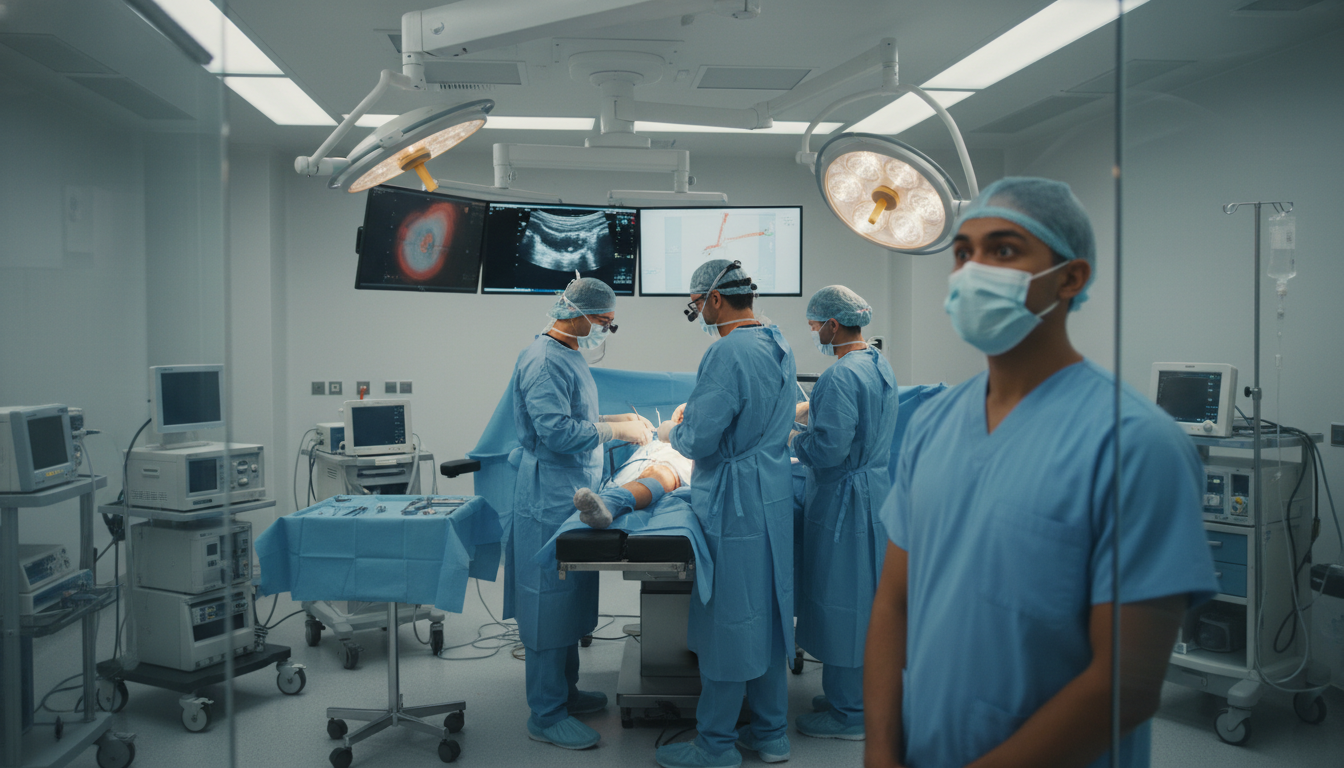
- Pre-meds or visiting students may be limited to clinic or observation behind glass in the OR.
- Medical students at that institution often have more access, including scrubbed OR participation.
- Some hospitals have formal observer programs with defined rules on shadowing hours needed, documentation, and duration.
Clarify:
- Paperwork required
- Where you can go (OR, cath lab, ICU, clinic)
- Dress code and ID badge requirements
- Any restrictions on patient interaction
Document everything early, especially if you’re planning a concentrated shadowing block (e.g., a 2–4 week experience you’ll later highlight on ERAS).
Planning Your Vascular Surgery Shadowing: Goals, Hours, and Structure
Not all shadowing experiences are equal. The more intentional you are, the more value you’ll extract—for your learning and future application.
How Many Shadowing Hours Are Needed?
There is no formal national requirement for vascular surgery–specific shadowing hours for an integrated vascular program. However, you should think strategically:
- For pre-meds:
- Aim for 20–40 hours of vascular-specific shadowing if possible, as part of a broader 100–150 hours in medicine/surgery overall.
- Enough to see both clinic and OR at least a few times.
- For medical students considering vascular surgery residency:
- Instead of counting only “shadowing hours needed,” focus on longitudinal exposure:
- 2–4 weeks of elective time
- Regular call shifts or OR days over several months
- Participation in vascular conferences, journal clubs, or research
- Depth and continuity matter more than raw hours.
- Instead of counting only “shadowing hours needed,” focus on longitudinal exposure:
Programs want to see that you understand the specialty’s realities—not that you logged a large but superficial number of hours.
Setting Clear Goals Before You Start
Before your first day, write down 4–6 concrete goals. Examples:
- Understand the typical daily schedule of a vascular surgeon (clinic vs. OR vs. inpatient rounds).
- Observe at least one open and one endovascular case and compare them.
- Learn how vascular surgeons counsel patients about major procedures (e.g., EVAR, carotid endarterectomy, bypass).
- Clarify the training pathway for vascular surgery residency (integrated vs. fellowship after general surgery).
- Identify at least one potential mentor to maintain contact with after the rotation.
Share some of these goals with the resident or attending you’re following; they can tailor your experience accordingly.
Structuring Your Shadowing Days
A typical shadowing day in vascular surgery might include:
- Early morning (6–7 AM):
- Inpatient rounding with residents/fellows
- Post-op patients, overnight admissions
- Wound checks, graft assessments, labs/imaging review
- Morning to early afternoon:
- OR or endovascular suite cases
- Open AAA repair, infra-inguinal bypass, carotid endarterectomy, AV fistula creation, limb salvage procedures
- Afternoon:
- Outpatient clinic—PAD follow-up, aneurysm surveillance, new consults
- Wound care clinic or vein clinic, depending on the practice
- Evening:
- Late cases, emergent consults (acute limb ischemia, ruptured aneurysm)
- Opportunity to stay late occasionally to observe urgent cases
You may not see all of this in a single day, but across several shadowing sessions, aim to experience each major environment at least once.
Tip: Ask in advance which days are “heavy OR” vs. “clinic-heavy” so you can plan your schedule around the types of experiences you need.

Making the Most of Your Vascular Surgery Shadowing Experience
You’ll get far more out of shadowing if you’re active (within appropriate limits) rather than a passive observer.
Before Each Day: Prepare Intentionally
- Review the basics:
- Anatomy of major arteries and veins (aorta, iliac, femoral, carotid, tibial vessels)
- Common vascular conditions: PAD, aneurysms, carotid stenosis, DVT
- Basic imaging modalities: duplex, CTA, angiography
- Glance at the schedule if allowed:
- If the team shares the OR or clinic schedule, look up unfamiliar procedures the night before (e.g., “What is a fem-pop bypass?”).
Showing that you’ve done minimal pre-reading changes how much teaching attendings and residents offer you.
During Shadowing: Be Present, Professional, and Curious
Professionalism Essentials:
- Arrive early (at least 10–15 minutes before start time).
- Dress appropriately:
- Clinic: business casual + white coat
- OR: scrubs, clean shoes, no jewelry, eye protection as required
- Never use your phone in patient areas except for clinical/research work if explicitly allowed.
- Maintain patient privacy—no photos, no details shared beyond educational settings.
In the OR:
- Learn and follow OR etiquette:
- Where to stand
- What’s sterile and what’s not
- When it’s appropriate to ask questions (often during closing, marking time-outs, or quiet periods).
- Observe:
- How the surgeon plans and adapts the procedure
- Team communication with anesthesia, nursing, techs
- Use of imaging during endovascular procedures
In Clinic:
- Pay attention to:
- How surgeons explain risks/benefits and long-term prognosis
- How they handle difficult conversations (e.g., risk of amputation, smoking cessation)
- The multi-disciplinary nature (wound care, podiatry, cardiology, nephrology)
Ask Thoughtful Questions:
Instead of “What are you doing now?” try:
- “How did you decide between an open vs. endovascular approach for this patient?”
- “What are the main risks you monitor for after this kind of bypass?”
- “How do you counsel a patient on choosing between medical therapy and surgery in borderline cases?”
These questions show genuine interest in decision-making, which is central to the specialty.
After Each Day: Reflect and Capture Details
Immediately after you leave:
- Jot down:
- Interesting cases you saw (de-identified)
- Key concepts (e.g., claudication vs. critical limb ischemia, indications for carotid endarterectomy)
- Memorable patient interactions (again, de-identified)
- Note your emotional reactions:
- Did you feel energized or drained by long, complex cases?
- How did you feel about the severity of disease and sometimes difficult outcomes?
These reflections become valuable material later for:
- Personal statement anecdotes
- “Why vascular surgery?” interview answers
- Conversations with mentors and advisors
Turning Shadowing into a Strong Vascular Surgery Residency Application
Shadowing alone won’t earn you a spot in a vascular surgery residency, but it can be the catalyst for deeper engagement that programs value highly.
Building Mentorship and Long-Term Relationships
During your experience, identify 1–2 people who might be good mentors:
- An attending you connect with over a case or patient story
- A fellow or senior resident who takes time to teach you regularly
Approach them near the end of your shadowing block:
“I’ve really appreciated your teaching and the chance to see what vascular surgery is like. I’m seriously considering applying to an integrated vascular program in a few years. Would you be open to staying in touch and possibly advising me as I explore this path?”
Once they agree:
- Send occasional updates (every 3–4 months)
- Ask specific questions: research ideas, elective recommendations, away rotation strategy
- Eventually, they may become key letter writers or advocates.
Connecting Shadowing to Research and Scholarly Work
Vascular surgery is academically active, with abundant opportunities for:
- Retrospective chart reviews (e.g., outcomes in PAD, EVAR vs. open repair)
- Quality improvement (e.g., reducing access site complications, enhancing critical limb ischemia pathways)
- Case reports and case series
Ask your mentor:
- “Are there any ongoing vascular projects where I could help with data collection or literature review?”
- “Are there small projects appropriate for a student that could lead to a poster or abstract?”
Shadowing gives you content knowledge and clinical context that will make your research more meaningful and productive.
Documenting and Presenting Your Shadowing on ERAS
When it’s time to apply:
- In your CV or ERAS application:
- List formal shadowing or observerships (with dates and locations)
- Integrate your vascular surgery shadowing under “Experiences” or “Extracurriculars,” especially if it was longitudinal or structured.
- In your personal statement:
- Avoid generic statements like “I enjoy working with my hands and helping patients.”
- Use specific, anonymized vignettes from your shadowing:
- A critical limb ischemia case where revascularization prevented amputation
- A complex aneurysm repair and the pre-op counseling involved
- Observing how the team handled a complication or poor outcome
Tie each story back to a quality or realization about yourself (resilience, tolerance for uncertainty, interest in complex decision-making, satisfaction in longitudinal care).
Demonstrating Insight into the Specialty During Interviews
Your shadowing should directly inform your interview answers:
- “Why vascular surgery?”
Reference concrete experiences:- “During my medical shadowing in vascular surgery, I was struck by how…”
- “Seeing both open and endovascular management of the same disease process showed me…”
- “How do you know what vascular surgery is really like?”
- Cite your hours, settings (clinic, OR, ICU), and what you learned about lifestyle and call.
- “What was a challenging patient you observed and what did you learn?”
- Draw from your notes and reflections; focus on professionalism, empathy, and systems-based thinking rather than just drama.
Programs want to see that you have a grounded, realistic understanding of the field—and shadowing is your primary way to demonstrate that early on.
Frequently Asked Questions (FAQ)
1. How many shadowing hours are needed to be competitive for a vascular surgery residency?
There is no fixed national requirement for shadowing hours in vascular surgery. For pre-meds, 20–40 hours focused on vascular surgery within a broader 100–150 hours of clinical experience is often sufficient to show exposure. For medical students seriously considering an integrated vascular program, depth matters more than raw hours—ideally a 2–4 week elective, regular OR or call exposure, and ongoing conference or research involvement. Programs care more about your level of understanding and engagement than about a specific number.
2. How do I find shadowing opportunities specifically in vascular surgery?
Start with your institution’s resources: surgery department, vascular surgery division, or residency program coordinator. Ask faculty mentors and attend grand rounds to meet vascular surgeons. Use your school’s surgery or vascular interest group. If you’re at a smaller institution, look up nearby hospitals that list vascular surgeons or integrated vascular programs and send concise, professional emails requesting medical shadowing. Be prepared to complete observer paperwork and comply with hospital policies.
3. I’m a pre-med, not a medical student. Can I still shadow in the OR?
Policies vary by hospital. Some institutions only allow pre-meds in clinics or to observe from outside the sterile field, while others have structured observer programs that include limited OR exposure. When you inquire about shadowing, ask specifically about pre-med eligibility and OR access. Even if you can’t scrub in, observing clinic, pre-op counseling, and post-op care still provides a strong introduction to vascular surgery.
4. How should I talk about my vascular surgery shadowing experience in my personal statement and interviews?
Use specific, de-identified stories that demonstrate what you learned about the field and about yourself. Instead of saying, “I shadowed and loved vascular surgery,” describe a carefully chosen moment: for example, observing the team save a limb in a critical ischemia case and realizing that you value complex, time-sensitive decision-making and longitudinal relationships with high-risk patients. Always connect your observations to skills, values, or motivations that align with a vascular surgery residency.
By approaching vascular surgery shadowing deliberately—choosing settings wisely, preparing thoughtfully, engaging actively, and reflecting honestly—you can transform “just shadowing” into a powerful foundation for your future vascular surgery residency application and career.