


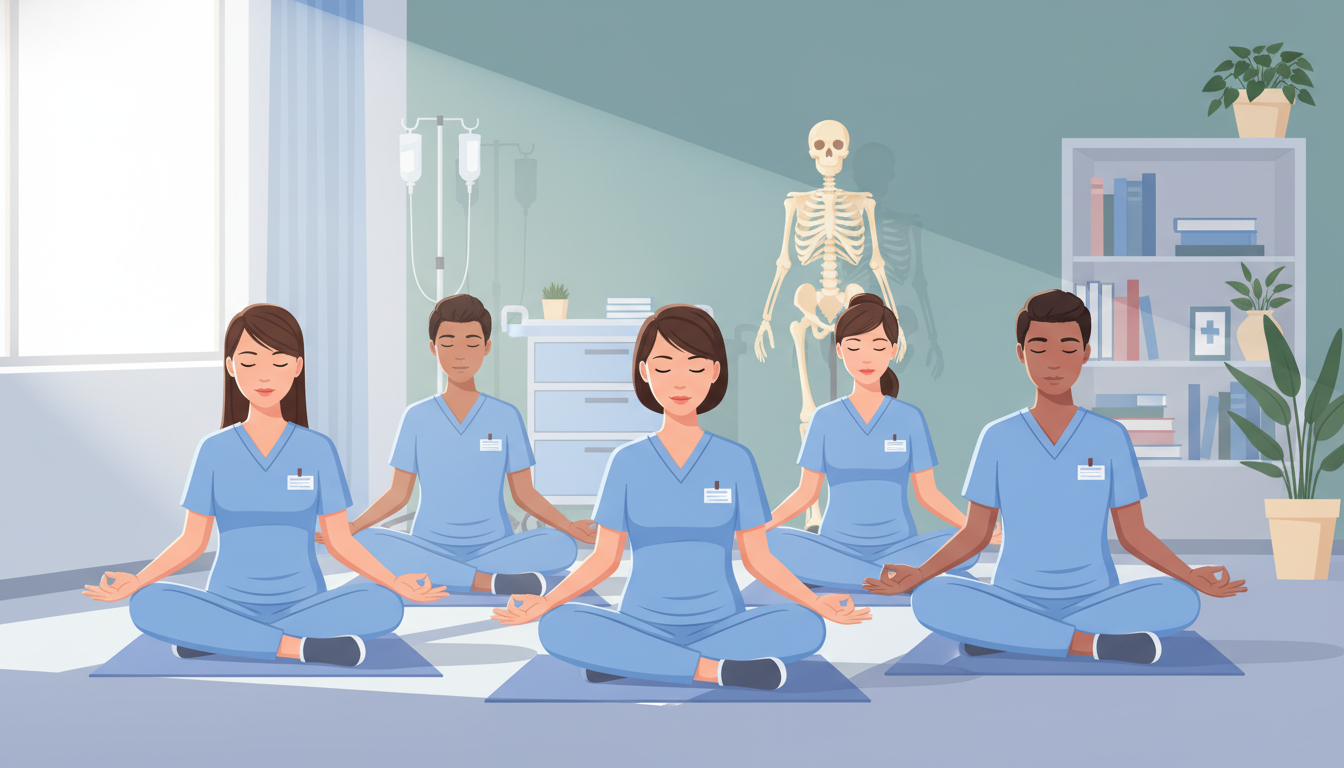
Why Mindfulness Belongs in Modern Medicine
Mindfulness has moved from the yoga studio into the hospital corridor—and for good reason. Physicians, residents, and medical students face increasing workloads, documentation demands, and emotional strain. Burnout, depression, and moral injury are now recognized as occupational hazards in medicine.
Mindfulness medicine is not about “being more positive” or “toughing it out.” It is an evidence-based set of mental skills that helps clinicians:
- Notice stress earlier and respond more skillfully
- Regulate attention in the middle of chaos
- Stay present with patients without becoming overwhelmed
- Recover more quickly after difficult encounters
For residency applicants and current trainees, learning concrete mindfulness techniques is as important as learning how to read an ECG. The earlier you build these habits, the more resilient your career—and your sense of purpose—can become.
In this guide, you’ll learn:
- What mindfulness is (and is not) in the medical context
- Practical techniques you can use on wards, in clinic, or on call
- How meditation doctors integrate practice into packed schedules
- Ways to talk about physician wellness and mindfulness in your application and interviews
- Step-by-step exercises you can start today
Understanding Mindfulness in the Medical Context
Mindfulness is often described in vague terms, but in clinical and educational settings, it has a clear, working definition:
Mindfulness is the intentional, non-judgmental awareness of the present moment, including your thoughts, emotions, bodily sensations, and surroundings.
Three core components matter for clinicians:
- Attention – the ability to focus on what matters (a patient’s words, a lab value, a safety check) and redirect when distracted.
- Awareness – noticing internal reactions (stress, fatigue, frustration) early enough to respond instead of react.
- Attitude – approaching experience with curiosity and kindness rather than harsh self-criticism or automatic avoidance.
What Mindfulness Is Not
Clarifying misperceptions is crucial when discussing mindfulness medicine with program directors or colleagues:
- It is not a religious practice (though it has roots in contemplative traditions). In healthcare, it is typically secular and evidence-informed.
- It is not about “emptying your mind.” Minds produce thoughts; mindfulness changes your relationship to them.
- It is not a cure-all for systemic problems like understaffing or inequity. It is a personal skill set that can buffer, but not replace, institutional wellness efforts.
- It is not passivity. Becoming more aware can enable more effective advocacy and boundary-setting.
The Evidence Base for Mindfulness in Medicine
Over the last two decades, research has examined mindfulness and meditation in healthcare professionals and trainees:
- Reduced burnout and emotional exhaustion in physicians and residents participating in structured mindfulness programs.
- Improved attention and working memory, important for complex clinical decision-making.
- Lower symptoms of depression and anxiety in medical students and residents.
- Enhanced empathy and patient-centered communication, linked to better patient satisfaction.
For residency applications, being conversant with this evidence—at least in broad strokes—shows that your interest in mindfulness medicine is grounded in data, not trends.

Core Mindfulness Techniques Every Trainee Can Use
Mindfulness is built through repeated, small practices, not occasional big efforts. Below are techniques specifically adapted for busy clinical environments.
1. The One-Minute Breath Reset
Purpose: Rapid stress regulation during hectic shifts.
When to use: Before entering a patient room, after a difficult conversation, while scrubbing, waiting for labs to load, or before calling a consultant.
How to do it (60 seconds):
- Pause physically. Stop typing, put down your phone, or take your hands off the keyboard.
- Feel your feet. Notice both feet on the floor; let your weight settle.
- Breathe in for 4 seconds through your nose, noticing the coolness of the air.
- Hold for 2 seconds—not straining, just pausing.
- Exhale for 6 seconds through your mouth, slightly pursing your lips.
- Repeat this cycle 4–5 times, silently counting “in-2-3-4, hold-2, out-2-3-4-5-6.”
Why it works: Lengthened exhalation stimulates the parasympathetic nervous system, lowering arousal enough for clearer thinking—critical when making time-sensitive decisions.
2. Three-Step “STOP” Practice on the Wards
This micro-practice integrates seamlessly into your workflow.
S.T.O.P.:
- S – Stop: Briefly pause whatever you are doing.
- T – Take a breath: One slow, deliberate inhalation and exhalation.
- O – Observe:
- What am I thinking? (e.g., “I’ll never finish my notes.”)
- What am I feeling? (e.g., anxious, annoyed, exhausted)
- What is happening in my body? (e.g., tight jaw, racing heart)
- P – Proceed: Choose your next action with intention, even if it’s the same action as before (e.g., “I will prioritize calling this family before finishing charting.”).
Try inserting STOP before you:
- Enter a room to deliver bad news
- Open your email after rounds
- Respond to a critical page at 3 a.m.
Regular use converts autopilot reactions into more conscious responses.
3. Mindful Charting
Documentation is often a major stressor. Mindfulness can reduce mental friction and errors.
Try this once per day:
- Before starting a note, sit upright and feel your back supported by the chair.
- Take three slow breaths, relaxing your shoulders on each exhale.
- Set an intention: “For this note, I will focus on clarity and accuracy” or “I will document in a way that serves this patient’s story.”
- As you type, notice when your mind drifts (e.g., to your to‑do list, a recent mistake, or tomorrow’s exam).
- Gently redirect attention back to the sentence at hand without self-criticism.
Even five mindful minutes of charting can reduce perceived mental clutter and improve documentation quality.
4. The Mindful Hand-Wash
Handwashing is frequent and repetitive—ideal for habit linking.
During each handwash:
- Feel the temperature of the water.
- Notice the texture of the soap.
- Watch the movement of bubbles and water.
- Listen to the sounds of running water and distant ward noise.
- Take one deliberate breath before turning off the tap and entering the room.
You’re not adding time; you’re changing the quality of attention during time you already spend.
5. Brief Body Scan for Post-Call Recovery
After a call shift, your body holds accumulated tension.
10-minute post-call body scan (in bed, on the couch, or in a quiet call room):
- Lie down or sit comfortably, eyes closed if safe.
- Bring awareness to the top of your head, noticing sensations without judgment.
- Slowly move attention down: forehead, jaw, neck, shoulders, arms, chest, abdomen, pelvis, thighs, knees, calves, feet.
- At each region, notice tightness, pulsing, pressure, or numbness. You don’t have to change anything—just notice.
- On each exhale, imagine softening that area by 5–10%.
- When the mind wanders (and it will), gently return to the next body region.
This teaches your nervous system that “off duty” is real, not just theoretical.
Formal Meditation Practices for Busy Doctors
Informal micro-practices are critical, but longer, formal meditation sessions build deeper mental fitness—similar to cardio training for the brain.
Meditation doctors who successfully maintain a practice during training typically use strategies that respect their schedules and energy levels.
Choosing a Core Practice
Three modalities are especially suited to clinicians:
Breath-Focused Mindfulness Meditation
- Anchor: Sensations of breathing at the nostrils, chest, or abdomen
- Primary skill: Attention training and redirection
- Ideal for: Overactive minds, anxiety, scattered attention
Loving-Kindness (Metta) Meditation
- Anchor: Phrases of goodwill silently repeated (e.g., “May I be safe. May I be healthy. May I live with ease.”)
- Primary skill: Cultivating compassion and positive regard
- Ideal for: Compassion fatigue, frustration with difficult patients or colleagues, harsh self-talk
Open Monitoring (Choiceless Awareness)
- Anchor: The flow of experience—thoughts, sounds, sensations—without fixating
- Primary skill: Non-reactive awareness and cognitive flexibility
- Ideal for: Advanced practice, dealing with complex emotional states
A Realistic Weekly Meditation Plan for Residents
Rather than aiming for perfection, aim for consistency. Here’s a sample structure:
On average weekdays:
- 5–10 minutes in the morning before leaving for the hospital
- 1 minute of breath reset before driving or commuting home
On lighter days or weekends:
- 15–20 minutes of seated meditation once
- Optional 10-minute body scan before bed
Total weekly goal: 60–100 minutes, broken into manageable segments.
This is comparable to fitting in two or three short workouts per week for physical health.
Step-by-Step: 10-Minute Breath Meditation
- Posture: Sit upright in a chair, feet flat, hands resting on thighs or in lap. Spine gently straight, not rigid.
- Eyes: Closed or softly focused on a spot on the floor.
- Anchor: Choose where you feel the breath most clearly (nostrils, chest, or abdomen).
- Attention: Follow the breath in and out, noticing the beginning, middle, and end of each cycle.
- When thoughts appear: Label them gently (“planning,” “remembering,” “worrying”) and then escort your attention back to the breath.
- Attitude: Be kind to yourself; the goal is not to have zero thoughts, but to notice and return—that repetition is the “repetition weight” that builds skill.
- Closing: After 10 minutes, take one deeper breath and open your eyes. Notice how your body and mind feel, without judging.
With repetition, you’ll notice increased “mental space” in clinical situations that previously triggered automatic reactions.
Overcoming Common Barriers for Trainees
“I don’t have time.”
- Start with 3 minutes daily. Link it to something inevitable (after brushing your teeth, before putting on your white coat). Micro-practices compound.
“My mind is too busy.”
- Busyness is normal, especially in training. A busy mind means you’re human, not that you’re “bad at meditation.” The busier your mind, the more beneficial the practice over time.
“I keep falling asleep.”
- Try meditating sitting up rather than lying down, and choose times when you’re not at peak sleep pressure (e.g., early evening instead of post-call collapse).
“It feels self-indulgent.”
- Reframe: mindfulness is part of professional maintenance, like infection control or continuing medical education. A regulated nervous system improves patient care and team function.
Integrating Mindfulness into Physician Wellness and Training Culture
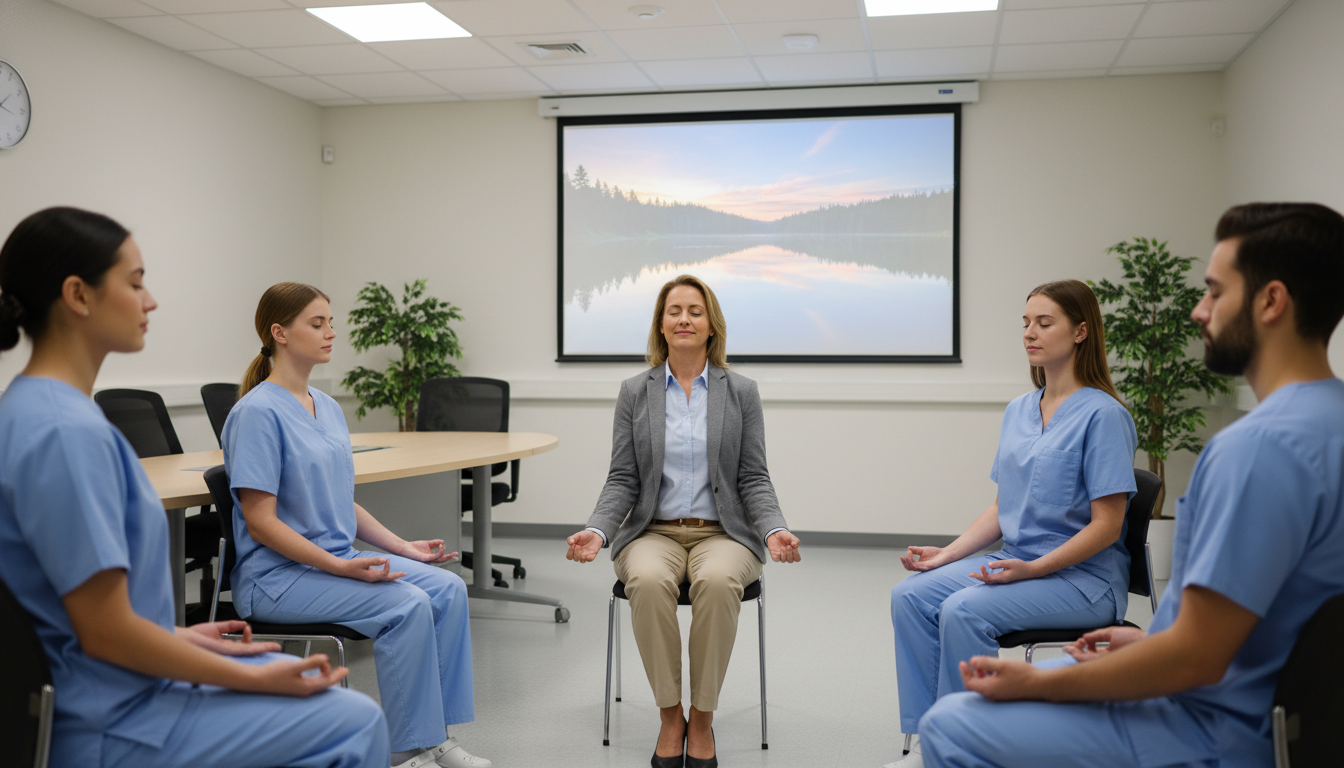
Mindfulness techniques are most sustainable when embedded in the broader culture of physician wellness within your program or institution.
Personal Strategies for Day-to-Day Integration
Micro-rituals at Transitions
- Before sign-out: 3 breaths together as a team, silently or with a simple phrase like “Arriving” on inhale, “Letting go” on exhale.
- After codes or critical events: 30 seconds of shared silent breathing before dispersing.
Mindful Handoffs
- When receiving or giving sign-out, intentionally slow down for the sickest patient.
- Briefly visualize that patient in the bed while reviewing their active issues; this supports presence and reduces “checkbox” mentality.
Mindful Commuting
- On the way home, spend the first five minutes of your commute with the radio and podcasts off.
- Notice the sensations of driving, walking, or transit: the steering wheel, footsteps, ambient sounds.
- Use this time as a decompression bridge between roles (resident → partner, parent, friend).
Emotion Naming During Difficult Cases
- Silently label internal states in real-time: “sadness,” “frustration,” “anger,” “helplessness.”
- Naming emotions recruits prefrontal regions and can decrease amygdala reactivity, allowing you to stay present without being flooded.
Team and Program-Level Approaches
If you’re applying to residency or already in training, you may have opportunities to shape culture:
- Suggest a 5-minute mindfulness warmup at the start of noon conference once a week.
- Organize a brief workshop on mindfulness medicine, possibly co-led with a faculty member or wellness champion.
- Start a peer support group where residents practice short meditations and discuss cases that challenge their emotional resilience.
- Advocate for designated quiet spaces in the hospital where meditation and decompression are explicitly encouraged.
These initiatives show leadership, emotional intelligence, and commitment to physician wellness—all qualities valued by program directors.
Using Mindfulness in Your Residency Application and Interviews
Your interest in mindfulness can be a genuine asset in the RESIDENCY_APPLICATIONS and RESIDENCY_MATCH_AND_APPLICATIONS process—if you present it thoughtfully.
Where Mindfulness Fits in Your Application
Personal Statement
- Describe a specific clinical or educational experience where mindfulness techniques changed how you showed up—for example:
- Staying grounded while disclosing a serious diagnosis
- Avoiding escalation in a tense family meeting
- Recovering from an error and learning from it instead of being paralyzed by shame
- Emphasize impact on patient care, teamwork, and your development as a physician.
- Describe a specific clinical or educational experience where mindfulness techniques changed how you showed up—for example:
Experiences Section (ERAS)
- List concrete activities:
- “Co-organized weekly 10-minute peer mindfulness sessions for MS3 clerkship cohort.”
- “Completed 8-week mindfulness-based stress reduction (MBSR) course; applied skills in clinical rotations.”
- “Developed a short mindfulness curriculum for pre-clinical students.”
- List concrete activities:
Interview Conversations
- When asked about handling stress or challenges, describe specific techniques you use (e.g., STOP practice, mindful commuting) rather than generic “self-care.”
- If you’ve done any scholarship (posters, QI, curricula) in physician wellness or meditation doctors’ outcomes, be ready to summarize your key findings in 1–2 minutes.
How to Talk About Mindfulness Professionally
Keep the tone grounded and clinical:
- Use language like “evidence-based strategies,” “attention training,” “emotion regulation,” “burnout mitigation,” “physician wellness.”
- Acknowledge limitations: mindfulness is one component within broader systemic and organizational wellness solutions.
- Connect mindfulness to ACGME core competencies:
- Professionalism: maintaining composure and ethical behavior under stress.
- Interpersonal and Communication Skills: listening fully before responding.
- Practice-Based Learning and Improvement: reflecting non-defensively on feedback and errors.
Example interview answer snippet:
“I’ve found that brief mindfulness techniques—like a 60-second breathing practice before entering a difficult family meeting—help me show up more fully for patients. It doesn’t remove the stress, but it gives me a bit of space to respond thoughtfully instead of reacting. Over time, that’s been essential for my own wellness and for the quality of care I provide.”
Practical Starter Plan: Your First 30 Days
Here’s a realistic, structured way to begin integrating mindfulness medicine into your life as a student or trainee.
Week 1: Awareness and Micro-Practices
- Daily:
- 1-minute breath reset once per day.
- Mindful hand-wash before at least one patient encounter.
- Goal: Simply notice how often your mind is on autopilot.
Week 2: Establish a Short Formal Practice
- 3–5 minutes of seated breath meditation each morning.
- Continue Week 1 micro-practices.
- End of week reflection: Write 3–4 sentences about any changes in attention, mood, or reactivity.
Week 3: Apply Mindfulness to a Specific Clinical Challenge
- Choose one trigger (e.g., pre-rounding anxiety, phone calls to consultants, family meetings).
- Commit to using STOP before or during that trigger once daily.
- Increase formal meditation to 7–10 minutes on at least 3 days.
Week 4: Integrate Reflection and Plan Next Steps
- Add a weekly 10-minute body scan (post-call or before sleep on a day off).
- Reflect on:
- What practices felt most natural?
- What situations still overwhelm you?
- How might mindfulness support your transition into residency or the next phase of training?
From there, you can deepen, modify, or maintain the plan depending on your schedule and needs.
FAQs: Mindfulness Techniques in Medicine
1. Is there evidence that mindfulness actually reduces burnout in physicians and residents?
Yes. Multiple studies have shown that structured mindfulness programs (often 6–8 weeks) reduce emotional exhaustion and burnout scores in physicians, residents, and medical students. While effect sizes vary and mindfulness is not a substitute for systemic fixes, it is one of the better-supported individual-level interventions for physician wellness.
2. How much time do I need to practice for it to be effective?
Even 10–15 minutes per day, plus a few micro-practices embedded in your workflow, can produce meaningful benefits over several weeks. The key is consistency more than duration. Many meditation doctors maintain a flexible range—some days 5 minutes, some days 20—rather than an all-or-nothing approach.
3. Can I practice mindfulness during acute emergencies or only in calm settings?
You won’t start with a full meditation session during a code, but you can use ultra-brief techniques—a single conscious breath while walking to the room, a quick mental body check before giving orders. With practice, these “in-the-moment” skills can enhance clarity and reduce panic without slowing down necessary actions.
4. How do I know if mindfulness is right for me, or if I should seek other support?
Mindfulness techniques are generally safe and can be a useful first-line strategy for stress and attention management. However, if you notice persistent depression, anxiety, suicidal thoughts, significant impairment in functioning, or unprocessed trauma, you should also seek professional support (counseling, therapy, or your institution’s wellness services). Mindfulness can complement, but not replace, appropriate mental health care.
Mindfulness medicine is not a luxury reserved for serene retreat centers; it’s a practical, evidence-informed toolkit for real clinicians working in real hospitals. By learning and applying these techniques now—during applications, medical school, or early residency—you invest in a more sustainable, compassionate, and effective career in medicine.




















