Clinical rotations in neurosurgery are some of the most challenging, high-stakes, and rewarding experiences of medical school. Whether you ultimately pursue a neurosurgery residency, another brain surgery residency–adjacent specialty, or something entirely different, how you perform during these clerkships can significantly shape your career.
This guide is designed to help you excel in neurosurgery rotations—especially during your third year rotations and sub-internships—by focusing on preparation, on-service performance, OR and inpatient skills, and strategies for clerkship success that faculty actually notice.
Understanding the Neurosurgery Rotation: Expectations and Realities
Neurosurgery rotations are unlike most other clerkships in terms of pace, expectations, and culture. Knowing what matters—both clinically and professionally—will help you align your efforts.
What Makes Neurosurgery Rotations Unique
- Intensity and hours: Early starts (often 5:30–6:00 AM), long days, and frequent call.
- High acuity patients: Brain and spine pathologies with potential for rapid deterioration.
- Technical focus: Significant emphasis on the operating room, anatomy, and procedures.
- Team hierarchy: Clear roles—attendings, fellows, residents, advanced practice providers, students.
You are evaluated on:
- Work ethic and reliability
- Team integration (“low maintenance, high impact”)
- Clinical reasoning and fund of knowledge
- OR behavior and anatomical understanding
- Professionalism and communication with patients and staff
How Neurosurgery Rotations Fit into Your Training
You may encounter neurosurgery during:
- Third year rotations as part of surgery or neurology
- Elective rotations (2–4 weeks)
- Sub-internships (acting internships) as a fourth-year, often at programs where you might apply for neurosurgery residency
Each stage demands a different performance level, but the underlying principles of clerkship success are similar: preparation, initiative, and consistency.
Preparing Before Day One: Building a Strong Foundation
Your performance on a neurosurgery rotation is heavily influenced by your preparation before you ever meet the team.
1. Solidify Core Neuroscience and Neuroanatomy
You don’t need fellowship-level knowledge, but you do need functional working knowledge.
Focus on:
- Basic neuroanatomy
- Lobes and their functions
- Motor and sensory pathways (corticospinal tract, dorsal columns, spinothalamic)
- Cranial nerves (especially II–VII)
- Blood supply (Circle of Willis, major cerebral and spinal vessels)
- Common pathologies
- Brain tumors (gliomas, meningiomas, metastases, pituitary adenomas)
- Traumatic brain injury, subdural/epidural hematomas
- Subarachnoid hemorrhage, aneurysms
- Hydrocephalus
- Degenerative spine disease and spinal cord compression
Practical approach:
In the 1–2 weeks before your rotation:
- Review neuroanatomy using a concise text or atlas (e.g., Netter or similar).
- Watch short videos on neuro exam and localizing lesions.
- Skim a neurosurgery handbook or online resource covering common conditions and procedures.
2. Learn the Essential Neurologic and Neurosurgical Exam
You will be expected to:
- Perform and present a focused neuro exam efficiently
- Interpret basic findings (e.g., localizing weakness, understanding a field cut)
Master:
- Level of consciousness and orientation
- Cranial nerve exam (especially pupils, extraocular movements, facial symmetry)
- Motor strength, tone, pronator drift
- Sensory testing (light touch, pinprick, proprioception)
- Coordination and gait (when safe)
- For spine patients: dermatomes, myotomes, reflexes, special tests like straight-leg raise
Actionable tip: Practice the full neuro exam on classmates or friends, timing yourself. Aim to perform a focused but complete exam in 5 minutes or less.
3. Understand Basic Imaging Principles
Neurosurgery is heavily imaging-driven. No one expects you to read MRIs like a neuroradiologist, but you should:
- Distinguish CT vs. MRI and why one might be ordered
- Recognize:
- Midline shift, mass effect, herniation patterns
- Acute vs. chronic blood on CT
- Ventricular enlargement suggestive of hydrocephalus
- Gross spinal stenosis on basic MRI images
Practical strategy:
- Before rotation, review a short imaging primer.
- During the rotation, ask a resident to walk you through 1–2 scans per day.
4. Prepare Logistically and Mentally
- Scrubs/access: Confirm where to get scrubs, locker access, and call room details.
- Schedule: Ask for OR schedules, clinic days, and call expectations in advance.
- Sleep and resilience: Neurosurgery days are long. Prioritize sleep and basic self-care before the rotation starts.

Thriving on the Service: Day-to-Day Success Strategies
Once the rotation starts, your goal is to become a useful, reliable member of the team as quickly as possible.
1. Master the Morning Routine
Most neurosurgery days begin early with pre-rounding and checking overnight events.
Your role usually includes:
- Pre-rounding on assigned patients
- Pulling up recent imaging, labs, and vitals
- Performing focused neuro exams
- Preparing concise updates
How to pre-round effectively: For each patient, quickly check:
- Overnight events: Any rapid responses, new imaging, nursing concerns
- Vitals and I/Os: Fever, hypotension, urine output, drain output (EVDs, lumbar drains)
- Labs: Sodium, WBC, Hgb, platelets, coagulation parameters
- Neuro exam: Any changes from prior day
Prepare a 30–60 second oral update:
- “This is Ms. X, POD 2 from right frontal meningioma resection. Overnight she was stable, no acute events. Pain controlled on oral meds. Vitals stable, afebrile. Neuro exam is unchanged: AOx3, mild left arm weakness 4+/5, otherwise full strength. CT head yesterday showed stable post-op changes with no new hemorrhage. Drain output 60 mL serosanguinous over last 24 hours. Labs this morning unremarkable. Plan from yesterday was to continue neuro checks q4h and mobilize with PT.”
Consistency with this level of detail builds trust quickly.
2. Be Proactive but Not Intrusive
Neurosurgery teams value students who:
- Anticipate needs (print lists, update sign-out, prep notes)
- Volunteer for tasks (“I can call the family,” “I’ll track down those imaging CDs”)
- Ask for feedback at appropriate times
Avoid:
- Hovering in residents’ workspaces when they are clearly busy
- Asking basic questions that you could easily look up yourself
- Disappearing without telling anyone where you are
Actionable behaviors:
- Arrive before the residents on day 1 to show commitment.
- Ask the senior resident, “How can I be most helpful on this rotation?” and adjust accordingly.
- Keep a small notebook to track tasks and to-do items; don’t rely on memory.
3. Communicating Effectively with the Team
Clear, respectful communication is central to clerkship success.
Key principles:
- Be concise: Practice short, to-the-point presentations.
- Own your patients: Know them better than anyone else on the team at your level.
- Clarify expectations: At the beginning of the rotation, ask how presentations, notes, and pre-rounding should be handled.
Example phrasing:
- “For Mrs. S, her sodium dropped from 137 to 132 overnight, but she remains asymptomatic. I flagged it in the chart and wanted to see how you’d like to approach it.”
- “I noticed Mr. T’s drain output has increased to 40 mL/hour in the last 3 hours. I came to you right away with that change.”
4. Professionalism with Patients and Families
Neurosurgical patients often face life-changing diagnoses. Your demeanor matters.
- Introduce yourself clearly as a medical student.
- Sit down when discussing serious issues when feasible.
- Listen without interrupting; acknowledge emotions.
- Never promise outcomes or timelines; defer prognostic questions to residents/attendings.
- Keep patient privacy and HIPAA in mind at all times.
This is an area where attendings frequently comment in evaluations.
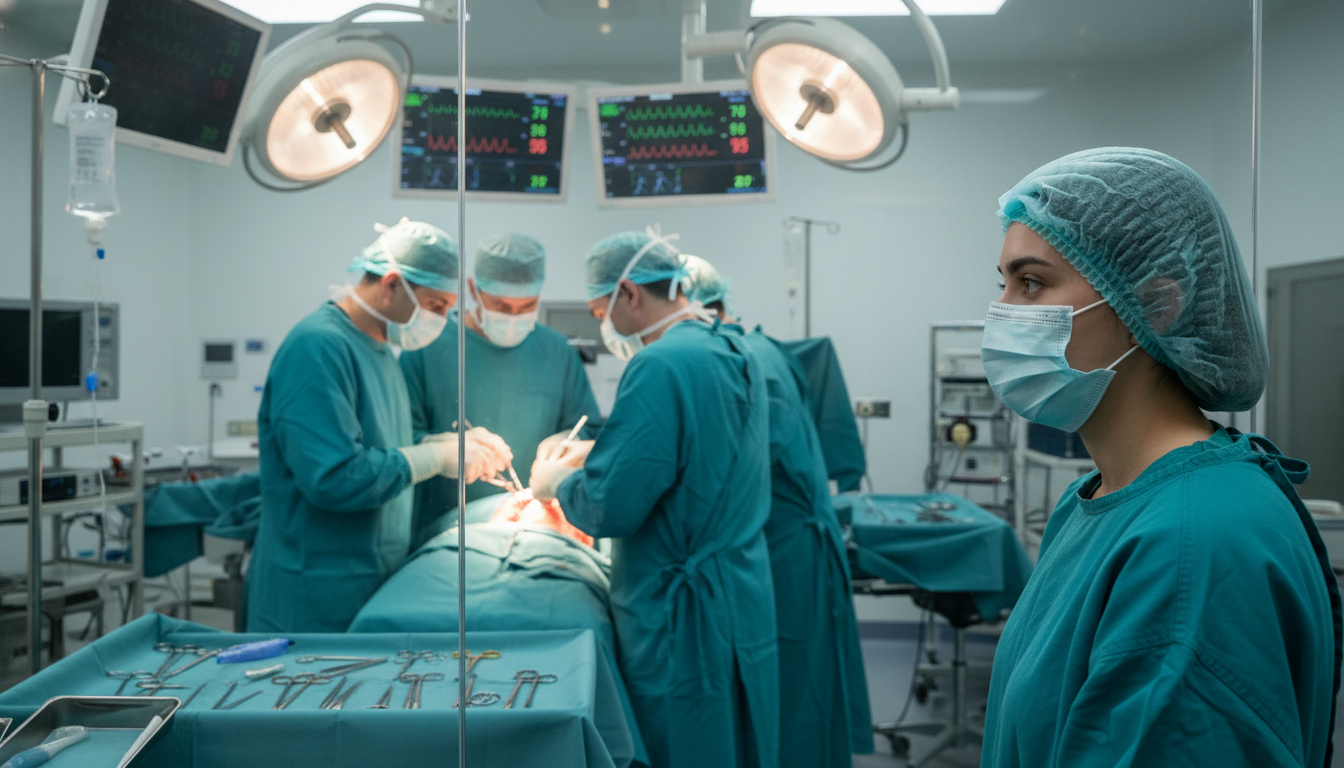
Excelling in the OR: Making the Most of Brain Surgery Exposure
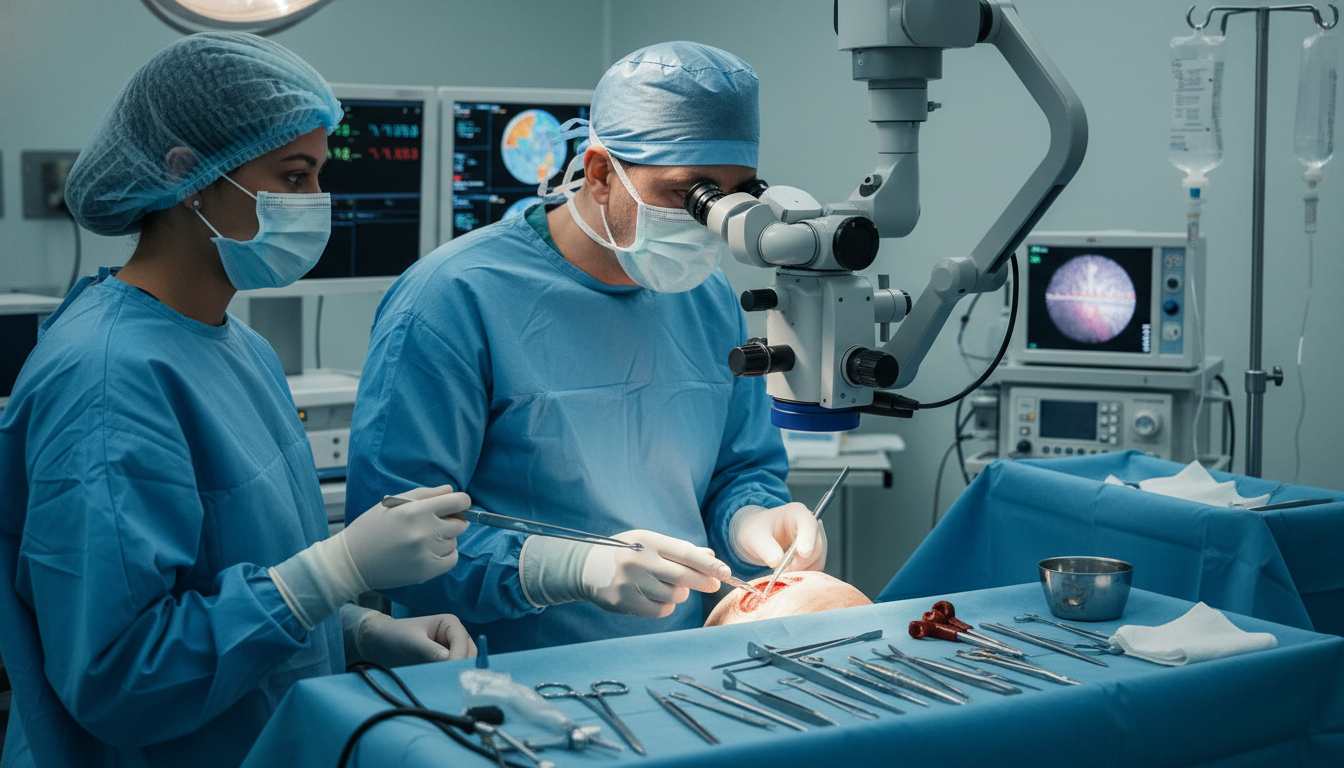
The operating room is often the centerpiece of a neurosurgery rotation. It is also where many students feel the most uncertain. Turning the OR from a source of anxiety into a learning laboratory can significantly boost your performance and satisfaction.
1. Preparing for Each Case
The night before:
- Look up the patient, indication for surgery, and key imaging.
- Identify the surgical approach (e.g., right pterional craniotomy, L4–L5 laminectomy).
- Review the relevant anatomy for that approach.
- Prepare 2–3 focused questions:
- “For a patient with this size meningioma, what factors guide your choice of surgical approach?”
- “How do you decide whether to fuse in addition to decompression for lumbar stenosis?”
Bring a small notepad to the OR to write down:
- Pearls from the attending or resident
- Questions to look up later
2. OR Etiquette and Sterile Technique
Nothing undermines a student’s performance faster than poor OR etiquette.
Essential behaviors:
- Arrive early (ideally 20–30 minutes before scheduled start).
- Introduce yourself to:
- Circulating nurse
- Scrub tech
- Anesthesia team
- Residents and attending (if appropriate timing)
- Ask the resident where to stand and how you can help.
Sterile field basics:
- Never reach over sterile fields.
- Keep hands above waist and in sight when scrubbed.
- Do not turn your back on the sterile table.
- If you think you may have contaminated yourself, speak up immediately.
You will gain more trust—and more opportunity—by being honest about a break in sterility than by hiding it.
3. Being Useful in the OR
Ways to contribute meaningfully:
- Help with positioning and prepping (under resident guidance).
- When scrubbed:
- Hold retractors steadily and attentively.
- Gently suction where directed, without obstructing the field.
- Keep the field clean but avoid being too aggressive.
- When unscrubbed:
- Watch the monitor.
- Follow along with the procedure steps.
- Manage documentation if residents request it (e.g., writing down counts, times).
Active observation strategy: Try to mentally narrate what is happening:
- “We’ve completed the craniotomy and are opening the dura.”
- “We’re debulking the tumor from the center, staying away from eloquent cortex.”
- “Now we’re closing in layers, making sure to get a watertight dural closure.”
This habit improves retention and prepares you for good post-op discussions with the team.
4. Asking High-Value Questions in the OR
Good questions:
- Show you’ve done basic reading.
- Are related to the case in front of you.
- Do not disrupt critical portions of the procedure.
Examples:
- “Why did you choose this side for the approach rather than the other?”
- “What are the key structures you are most concerned about protecting at this stage?”
- “How would the surgical plan change if this patient had significant comorbidities?”
Poor questions:
- “What is a meningioma?” during a meningioma resection
- Off-topic or personal questions during critical case moments
- Repeatedly asking the same question without incorporating prior explanations
5. Handling Long Cases and Fatigue
Neurosurgical cases can last many hours. To manage:
- Eat and hydrate before long cases when able.
- Let a resident know if you feel faint before you pass out.
- Shift your weight, flex your knees, avoid locking your legs.
- Stay mentally engaged by tracking the steps of the procedure.
Demonstrating stamina—while staying safe—is noticed and appreciated.
Building Clinical Reasoning and Knowledge: How to Stand Out Academically
Strong clinical reasoning is a cornerstone of clerkship success and a critical skill for any future neurosurgery resident. You’ll impress the team by not just memorizing facts, but showing you can apply them.
1. Presenting Consults and New Patients
Neurosurgery is a consult-heavy service: trauma alerts, strokes, spinal cord compression, etc.
When presenting a consult:
- Start with the clinical question:
- “This is a consult for acute left-sided weakness and CT head concerning for right MCA territory infarct with mass effect.”
- Give a focused history:
- Onset, progression, associated symptoms (headache, seizure, trauma, neck/back pain).
- Present a targeted neuro exam:
- Emphasize asymmetries and localizing signs.
- Summarize imaging findings briefly.
- Offer a preliminary assessment and plan (even if basic):
- “Given the acute onset, right MCA hypodensity with midline shift, and exam with left hemiplegia and neglect, I’m concerned for malignant MCA infarction. I’m not sure yet whether this patient would be a candidate for decompressive hemicraniectomy, but I think that’s the concern.”
Even a tentative, structured plan shows initiative and growth.
2. Using the “One-Pager” Strategy
Create a single-sheet summary for:
- Common neurosurgical emergencies:
- Epidural vs. subdural hematoma
- Intracerebral hemorrhage
- Cauda equina syndrome
- Spinal cord compression
- Key post-op complications:
- Worsening neuro status
- Post-op hematoma
- Hydrocephalus
- Infection, CSF leak
Keep this in your pocket or on your phone (if allowed) for quick reference. Update it as you learn.
3. Reading with Purpose
Instead of random reading:
- Each day, pick one patient or case and read 20–30 minutes specifically about:
- The disease
- Surgical indications
- Basic management principles
- Major complications
Next day, demonstrate your learning by asking a more advanced question or offering a more insightful assessment:
- “I read that tumor location in eloquent cortex changes the extent of resection you can safely achieve. For this patient’s lesion near Broca’s area, what would be the ideal extent of resection?”
4. Case-Based Learning with Residents
Many neurosurgery residents are excellent teachers—if you engage them.
Try:
- “Do you have time later today for a 10-minute teaching case about one of our patients?”
- “Could you walk me through how you think about a new consult for suspected cauda equina syndrome?”
Respect their time; ask during slower periods, not mid-chaos.
Navigating Evaluations, Letters, and Next Steps Toward Neurosurgery Residency
If you’re considering a neurosurgery residency, your neurosurgery rotations—at home and away—are critical to your application and letters of recommendation.
1. Clarify Expectations Early
Within the first few days, ask the clerkship or rotation director:
- How will I be evaluated?
- What components matter most (presentations, clinical skills, exams, professionalism)?
- Are there opportunities to give a short talk or case presentation?
This shows maturity and helps you target your effort.
2. Demonstrate Longitudinal Growth
Faculty and residents are impressed by:
- Visible improvement in your neuro exam skills
- Increasing sophistication in your questions and reasoning
- Greater independence in managing routine tasks (notes, pre-rounding, follow-up)
Make it easy for them to see your trajectory:
- Actively apply feedback.
- Let them know when you’ve worked on a skill they highlighted.
3. When and How to Ask for Letters
If neurosurgery is your intended specialty:
- Identify attendings who have:
- Seen you consistently (clinic, OR, rounds)
- Observed your clinical skills and work ethic
- Near the end of the rotation, request a meeting or catch them at an appropriate moment:
- “I’ve really appreciated the chance to work with you this month. I’m planning to apply for neurosurgery residency and would be honored if you’d consider writing a strong letter of recommendation based on my performance on this rotation.”
Provide:
- Your CV
- USMLE/COMLEX scores if appropriate
- A short paragraph about your motivations for neurosurgery
- Specific experiences on the rotation that were meaningful to you
4. Deciding if Neurosurgery Is Right for You
Your rotation is also a chance for you to evaluate the field.
Reflect on:
- How do you feel about the hours and lifestyle?
- Do the clinical problems (brain and spine disease, high acuity) excite you?
- Do you enjoy the OR environment and meticulous technical work?
- How do you feel about long-term patient relationships vs. episodic encounters?
Seek honest conversations with:
- Residents at different training levels
- Recent graduates (if accessible)
- Faculty you trust
Use this experience to inform whether to commit to a neurosurgery residency or to explore other paths (e.g., neurology, radiology, critical care, PM&R with neuro focus).
Frequently Asked Questions (FAQ)
1. How much neurosurgery knowledge do I need before starting my rotation?
You are not expected to know as much as a resident, but you are expected to understand:
- Basic neuroanatomy
- Common neurosurgical conditions and emergencies
- How to perform and present a focused neurological exam
Aim to review intro-level resources for 1–2 weeks before the rotation. What matters more than your starting point is how quickly you learn and apply feedback.
2. I’m not sure I want a neurosurgery residency. Should I still work as hard on this rotation?
Yes. Even if you never plan to enter a brain surgery residency, excelling on neurosurgery teaches:
- High-level clinical reasoning
- Managing acutely ill patients
- Teamwork in high-stress environments
- Discipline and time management
These skills translate to any specialty. Strong evaluations in a demanding clerkship also strengthen your overall residency application.
3. How can I stand out among other students on a busy neurosurgery service?
You stand out by being:
- Reliable: Do what you say you’ll do, consistently.
- Prepared: Read about your patients and their conditions.
- Engaged: Ask thoughtful, case-based questions.
- Team-oriented: Help residents and staff without needing constant direction.
- Professional: Communicate respectfully with patients and families.
You do not need to be the loudest voice or know the most facts to impress; being a dependable, teachable, and hardworking team member is far more important.
4. What’s the difference between a third-year neurosurgery experience and a sub-internship?
- Third year rotations (or early electives):
- Focus on exposure, basic skills, and broad learning.
- Expectations are high but still at a student level.
- Sub-internships (sub-I’s):
- Designed to simulate intern-level responsibilities.
- You are expected to take more ownership of patients, write notes, follow up on labs, and communicate with other services more independently.
- Performance during sub-I’s is critically important for neurosurgery residency applications and letters.
In both, the core strategies—preparation, professionalism, and proactive learning—are the same; a sub-I simply raises the bar for autonomy and consistency.
By approaching your neurosurgery rotation with intentional preparation, disciplined daily habits, and a genuine commitment to learning, you can transform a daunting experience into a defining one. Whether you ultimately pursue neurosurgery residency or another path, excelling in this clerkship will sharpen your clinical skills, clarify your career goals, and leave you with a deeper understanding of the remarkable field of brain and spine surgery.