Understanding Neurosurgery as an Ultra-Competitive Specialty
Neurosurgery is one of the most competitive specialties in medicine—often mentioned in the same breath as dermatology and orthopedic surgery when people talk about “ultra-competitive” fields. A neurosurgery residency (sometimes called “brain surgery residency” in lay terms) combines extreme intellectual demands, long training (7+ years), high stakes in patient care, and intense competition for limited spots.
Before strategizing, you need a realistic view of what makes neurosurgery so competitive:
- Limited number of positions relative to applicants
- High academic bar: strong USMLE/COMLEX scores, honors, and research
- Long, demanding training: 7 years, often with research time
- Culture of excellence: programs want residents who can handle complexity, pressure, and leadership
- Applicant self-selection: most people who apply are already high performers, making the “average” neurosurgery applicant very strong
This guide outlines a step-by-step, practical strategy to approach neurosurgery as an ultra-competitive specialty—similar to how people talk about “matching derm” or “matching ortho,” but tailored to the specific realities of brain and spine surgery.
Step 1: Early Self-Assessment and Strategic Planning
Neurosurgery cannot be an impulsive decision. A winning strategy starts with brutal honesty, early.
Clarify Your Motivation
Programs read hundreds of personal statements about “fascination with the brain.” You need a deeper internal answer than that, for yourself:
- Are you drawn to long, complex operations and intensive longitudinal care (e.g., brain tumors, aneurysms, spine deformity)?
- Can you tolerate long hours, overnight calls, and emotionally heavy outcomes?
- Do you enjoy continuous learning (new devices, techniques, and evidence) and academic inquiry?
Write down your reasons. Later, this will inform your personal statement and interviews—and help you decide if this path is truly sustainable for you.
Objective Academic Benchmarking
Be honest about where you stand. By the end of preclinical years (M2), you should know:
- USMLE Step 1 (if you have a numerical score): A high score used to be a major filter. With pass/fail, Step 2 CK has become more important.
- Step 2 CK: For neurosurgery, being well above your school’s average and comfortably in the upper percentiles of national data is usually expected.
- Class ranking / academic performance: Honors in preclinical and early clerkships signals consistency.
If you are early (M1/M2), your strategy should be to protect your academic ceiling:
- Develop strong study systems
- Avoid unnecessary extracurricular overload early on
- Treat foundational courses (neuroanatomy, physiology) as non-negotiable priorities
If you are later (M3/M4), you must play the hand you have—focusing on Step 2, clinical honors, and targeted research to compensate for any weaker spots.
Early Exposure: Confirming the Fit
Before going “all in” on an ultra-competitive specialty:
- Shadow in neurosurgery early (M1–M2)
- Attend neurosurgery conferences/lectures at your institution
- Talk to current neurosurgery residents and recent applicants
Ask them about:
- Lifestyle reality (not the Instagram version)
- Program culture differences (academic vs hybrid vs community)
- Where prior applicants with stats like yours matched (very important benchmarking)
If after this you remain genuinely drawn to the field, you’re ready for a committed strategy.
Step 2: Academics and Board Scores – Building a Non-Negotiable Foundation
In an ultra-competitive field, you’re almost never admitted because your scores are high—you’re eliminated when they aren’t. Academic excellence is the entry ticket, not the differentiator.
Step 1 and Step 2 CK Strategy
Even with Step 1 now pass/fail, programs still care deeply about objective measures of knowledge.
Step 1 (if still ahead of you)
- Treat it as foundational training for neurology and neurosurgery, not just a hurdle.
- Prioritize:
- Neuroanatomy, neurophysiology, neuropathology
- Vascular, oncologic, and spinal pathophysiology
- Use Board-style questions early and consistently.
Step 2 CK – Now often the key numerical differentiator:
- Aim for a score that is clearly competitive for an ultra-competitive specialty. Look at NRMP and specialty organization data (updated each year) for neurosurgery.
- Start prep early in M3, not 6 weeks before the exam.
- Use shelf exams as mini-boards, especially:
- Surgery
- Neurology
- Medicine
- Target a strong Step 2 CK performance before ERAS opens, so programs see your score.
Clerkship Honors: Especially Surgery and Neurology
For neurosurgery, clerkship performance is simultaneously about knowledge, work ethic, and team fit.
Prioritize honors in:
- Surgery: This is usually the most scrutinized. Attendings often commented directly in your neurosurgery letters.
- Neurology: Shows clinical reasoning around brain/spine disease.
- Medicine / ICU: Helpful, especially for neurocritical care exposure.
Actionable tips:
- Know the “hidden curriculum”: show up early, pre-round thoroughly, own your patients, and be ultra-reliable.
- Learn basic operative and perioperative principles:
- Wound care
- DVT prophylaxis
- Fluid and electrolyte management
- Post-op neuro checks
Even outside neurosurgery, showing you can function as an excellent generic team member is crucial.

Step 3: Neurosurgery Research and Scholarly Productivity
In neurosurgery, research is not optional if you aim for a strong match. Programs want future innovators, educators, and academic surgeons.
What Kind of Research Matters?
Neurosurgery programs especially value:
- Clinical neurosurgery research (brain tumors, vascular, functional, spine, trauma)
- Translational neuroscience (neuro-oncology, neuroregeneration, neural engineering)
- Neuroimaging or neuromodulation projects
- Outcomes and quality improvement in neurosurgical care
However, at the early stage, almost any serious, sustained scholarly work is better than none. You can pivot content later.
Getting Started (M1–M2)
Action plan:
Identify engaged neurosurgery faculty
- Visit your department website; note faculty interests that align with yours.
- Ask peers/residents: “Who is productive, responsive, and good with medical students?”
Cold email effectively
- 3–5 sentence email:
- Who you are (year, school)
- Your interest in neurosurgery
- Your research experience (if any)
- 1–2 specific reasons you’re interested in that faculty member’s work
- Clear ask: “Would you be open to meeting for 15–20 minutes to discuss ways I could contribute to your projects?”
- 3–5 sentence email:
Be realistic about your capacity
- Early on, choose 1–2 projects you can own, not 6 you barely touch.
- Consistent progress is more important than initial ambition.
Building a Track Record
By the time you apply, a competitive neurosurgery applicant often has:
- Multiple abstracts/posters (local, regional, or national)
- At least a few peer-reviewed publications (even if not all first-author)
- Presentations at neurosurgery or neurology conferences
If you start late (M3 or early M4), consider:
- A dedicated research year (this is increasingly common in neurosurgery)
- Joining an existing, active project where data is already collected to accelerate publications
This mirrors strategies people use for matching derm or matching ortho, but neurosurgery programs often expect these research years and see them as a positive commitment to academic development.
How to Be a High-Value Student on a Research Team
- Meet deadlines; send progress updates weekly or biweekly.
- Learn basic statistics and a common analysis tool (e.g., R, SPSS, Stata) if working on outcomes research.
- Ask for increasingly independent roles: writing sections, drafting abstracts, revising figures.
- Be professional and reliable—faculty are more likely to introduce you to collaborators and future letter writers if you are consistently dependable.
Step 4: Clinical Exposure, Away Rotations, and Letters of Recommendation
For neurosurgery, how you perform in the OR and on the service often matters as much as your CV.
Home Neurosurgery Exposure
If your school has a neurosurgery department:
- Spend time on the service before your formal sub-internship:
- Attend OR days and clinics
- Volunteer to help with call/QI projects
- Join conferences (tumor board, morbidity & mortality, spine conference)
Get to know:
- The program director and chair
- Residents across PGY levels
- Key research attendings
This early exposure helps:
- Clarify fit
- Set you up for strong letters of recommendation
- Make your later sub-internship more productive
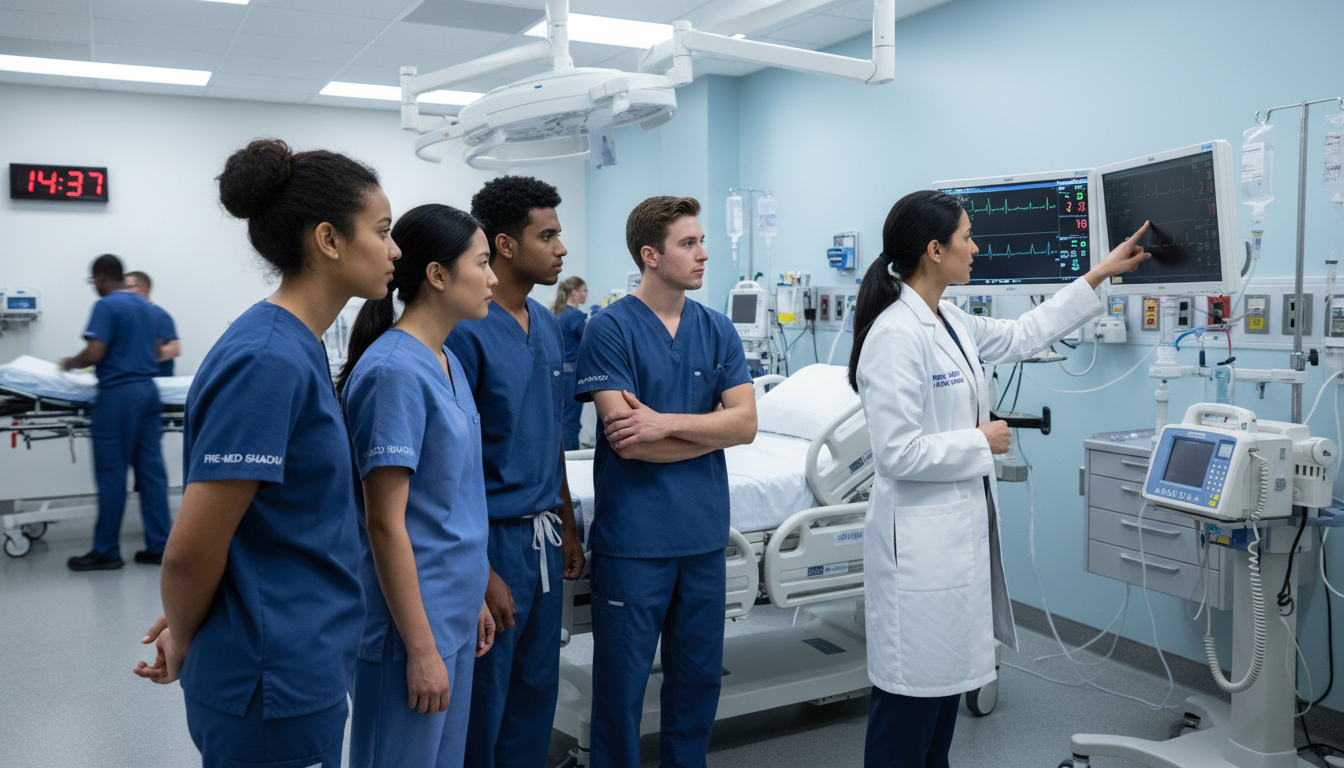
The Neurosurgery Sub-Internship (Sub-I)
Your neurosurgery sub-I is one of the single most important components of your application.
Expectations:
- Function as a near-intern:
- Pre-round independently
- Write and pre-chart notes
- Present concisely on rounds
- Follow up on labs/imaging
- Show OR readiness:
- Know the patient’s history, imaging, and operative plan
- Understand at least the basic steps of the operation
- Help with positioning, prepping, draping
- Anticipate needs (e.g., instruments, microscope, lumbar drain, etc.)
Programs evaluate:
- Work ethic and reliability
- Ability to function on a high-volume, high-acuity service
- How you integrate with the team (personality and professionalism)
- Interest in learning and teachability
A “solid but quiet” Sub-I performance may not hurt you, but an excellent, proactive sub-I can be the difference between a mid-tier and a top-tier match.
Away Rotations (Visiting Sub-Internships)
In an ultra-competitive field like neurosurgery, away rotations are often strategic necessities.
You should consider:
- 1–3 away rotations at:
- Programs you’re realistically competitive for
- Regions where you want to match
- Programs with subspecialty interests that match your goals (vascular, functional, tumor, spine, pediatrics)
Goals of an away rotation:
- Demonstrate your work ethic and OR potential
- Get to know the faculty and residents
- Obtain at least one strong neurosurgery letter from someone outside your home institution
- Signal serious interest in those programs (often helps with interview offers)
Tip: Apply early through VSLO/VSAS and have your Step 1 (and ideally Step 2 CK) ready. Popular programs fill quickly.
Letters of Recommendation
A competitive neurosurgery application usually has:
- 3–4 letters total, ideally including:
- 2–3 from neurosurgeons (home + away)
- 1 non-neurosurgery (e.g., surgery chair, medicine attending, research PI)
Strong neurosurgery letters typically:
- Describe direct clinical observation of you on a Sub-I or consistent service time
- Comment on:
- Work ethic
- Technical potential
- Teamwork
- Maturity under pressure
- Include comparative statements (“top 5% of students I have worked with in 10 years”)
When requesting a letter:
- Ask, “Do you feel you can write a strong letter in support of my neurosurgery application?”
- Provide:
- Your CV
- Personal statement draft (if available)
- Board scores
- A brief summary of your work on their service or projects

Step 5: Application Strategy, Program Selection, and Interviews
Once the foundation is built, your strategy shifts to presentation and targeting.
Crafting a Neurosurgery-Focused Application
Your ERAS components should form a coherent narrative:
Personal Statement:
- Move beyond “I love the brain.”
- Integrate:
- Concrete experiences (a longitudinal patient you followed, a defining OR moment, your research journey)
- Reflection on what you learned about yourself
- Evidence that you understand the realities of neurosurgery (call, outcomes, emotional weight)
- Show maturity and purpose—programs read many essays; authenticity stands out.
Experiences Section:
- Highlight neurosurgery research, leadership (e.g., NSIG, interest groups), and meaningful clinical work.
- Emphasize impact and responsibilities, not just titles.
Research and Publications:
- Organize clearly; be honest about authorship and status (submitted/accepted/published).
- Be prepared to discuss every project in detail in interviews.
Applying Broadly but Intelligently
Neurosurgery remains a competitive specialty with relatively fewer programs and spots. Overly narrow application lists are a common cause of failure to match.
Strategies:
- Review NRMP/Charting Outcomes data for neurosurgery, including:
- Match rates at your score range
- Typical research output
- Work with:
- Your neurosurgery advisor
- The program director or a senior faculty mentor
to stratify programs into: - Reach
- Target
- Safer (but realistic) options
Apply broadly, but avoid “fantasy-only” lists. You want a spectrum.
Signaling Serious Interest
Many specialties have moved toward explicit or informal signaling mechanisms (e.g., preference signaling tokens). For neurosurgery:
- Make pre-ERAS contact where appropriate:
- Attend virtual open houses or program webinars
- Meet residents/faculty at conferences
- Use emails strategically:
- Short, professional notes to program coordinators or faculty expressing interest and referencing a concrete connection (research, geography, subspecialty focus)
Be careful not to appear generic or mass-emailing.
Interview Preparation
Neurosurgery interviews interrogate not just your CV, but your resilience, judgment, and fit.
Common themes:
- Motivation for neurosurgery and specific subspecialty interests
- Ability to handle stress and long hours
- Teamwork and conflict resolution
- Discussion of failures or challenges (academic, personal, or clinical)
Preparation tips:
- Practice with neurosurgery residents or faculty, if possible.
- Prepare to discuss:
- Every line of your CV and research
- Ethical dilemmas
- Difficult patient encounters
- Times you made a mistake and learned from it
Programs are looking for future colleagues, not just “strong students.” Your demeanor, humility, curiosity, and interpersonal skills matter deeply.
Step 6: Risk Management, Backup Plans, and Personal Sustainability
Even with a robust strategy, neurosurgery—like matching derm or matching ortho—is high risk. A thoughtful plan includes contingencies.
Honest Risk Assessment
Discuss with advisors:
- Are your board scores competitive for neurosurgery?
- Does your research profile meet current norms for matched applicants?
- Do your letters reflect that you’re at or above the level of prior successful applicants from your school?
Neurosurgery faculty often have a clear sense of where comparable students have matched.
Thoughtful Backup Strategies
Options vary, but may include:
Dedicated research year:
- Strengthens academic profile
- Builds deeper neurosurgery connections
- Frequently used by applicants who initially look “borderline” on paper
Dual-application strategy:
- Applying to neurosurgery plus a related field (e.g., neurology, radiology, general surgery) is complex and must be discussed carefully with mentors.
- Transparency with programs can be tricky; some will view dual-application as lack of commitment.
Reapplication:
- Common pathways: research fellowship, preliminary surgical year, or other structured academic positions.
- A successful reapplication requires clear growth and improved application, not just “trying again.”
Protecting Your Personal Sustainability
Neurosurgery training is a marathon. Burnout is a real risk even before residency.
During medical school:
- Maintain non-medical anchors: family, friends, hobbies, physical health.
- Learn early:
- Time management under pressure
- Boundaries that still allow you to be high-performing
- Seek help if you experience:
- Persistent depression, anxiety, or functional decline
- Traumatic exposure in clinical settings
Programs increasingly value applicants who demonstrate insight into self-care and long-term sustainability—not just ironman toughness.
Frequently Asked Questions (FAQ)
1. How many publications do I need to be competitive for a neurosurgery residency?
There is no absolute minimum, but neurosurgery is a very research-heavy field. Many successful applicants have several abstracts, presentations, and multiple publications, often with at least one neurosurgery-related project. Quality and depth of involvement matter more than raw numbers. A single robust project where you are first author and can discuss the methods and results confidently can be more compelling than a long list of minor contributions.
2. Can I match neurosurgery if my Step 1 or Step 2 CK score is not stellar?
It is possible but more challenging. A below-average score for neurosurgery may be partly offset by:
- Exceptional clinical performance (honors in key clerkships)
- Strong neurosurgery letters from respected faculty
- A significant research portfolio
- Outstanding sub-internship performance
In some cases, a dedicated research year to strengthen your academic profile and build relationships can improve your chances. Honest conversations with neurosurgery mentors are essential to calibrate expectations.
3. Do I need to take a research year to match neurosurgery?
Not everyone needs a research year. If you already have strong scores, multiple publications, and solid neurosurgery exposure by early M4, a research year may not add much. However, if you started late, have limited scholarly productivity, or are targeting highly academic programs, a research year can be a powerful asset. Many top neurosurgery programs view formal research years very favorably, especially if they lead to meaningful output and strong new mentorship.
4. How important are away rotations for neurosurgery compared to other competitive specialties?
Away rotations in neurosurgery are often more important than in many other specialties. They serve as extended “auditions” and are one of the best ways for programs to see you in action. Strong away rotations can lead to impactful letters, higher chances of interviews, and improved match outcomes. For many applicants—especially without a home neurosurgery program—well-chosen away rotations are critical to demonstrating ability and commitment.
Approaching neurosurgery as an ultra-competitive specialty requires a combination of academic excellence, strategic research involvement, targeted clinical exposure, and realistic risk management. With early planning, honest mentorship, and sustained work, you can build a compelling application and increase your chances of matching into this demanding and extraordinary field.