


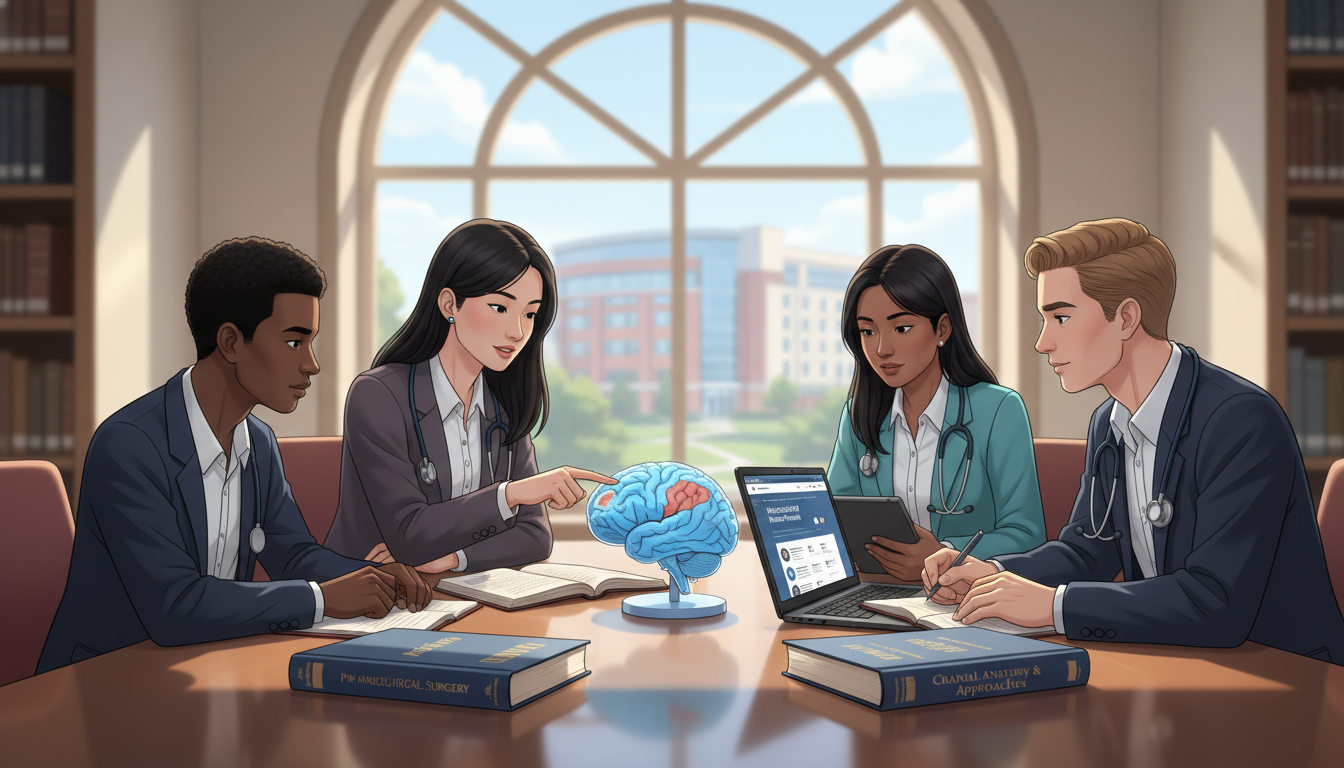
Understanding the Path: From Premed to Neurosurgery Residency
Neurosurgery is one of the most competitive and demanding specialties in medicine. If you’re thinking about a neurosurgery residency while still in high school or college, you’re already ahead of the curve—but you also face a maze of choices: which classes to take, what premed requirements matter most, when to start research, and how to become a doctor who’s actually prepared for brain surgery residency.
This guide walks you through the premed phase of the neurosurgery journey—from freshman year of college through applying to medical school—so you can build a strong, realistic foundation for a future neurosurgery residency.
We’ll cover:
- Academic planning and strategic course selection
- Research, shadowing, and clinical exposure specific to neurosurgery
- Building skills and experiences neurosurgery program directors value
- Mental, emotional, and physical preparation for a high-intensity career
- How to position yourself in medical school for neurosurgery residency later
1. The Big Picture: What Neurosurgery Expects from Future Trainees
Before diving into premed advice, it helps to understand what neurosurgery residency directors typically look for by the time you apply in medical school. Working backward from that endpoint will shape how you use your premed years.
Core traits neurosurgery programs value
By the time you apply to neurosurgery residency, program directors often emphasize:
- Academic excellence: High performance in pre-clinical coursework and on licensing exams (such as USMLE Step 2 CK), which builds on strong undergraduate fundamentals.
- Research productivity: Especially in neuroscience, neurosurgery, or related fields (e.g., neuro-oncology, neurocritical care).
- Commitment to neurosurgery: Demonstrated interest through consistent activities, shadowing, and mentorship.
- Resilience and work ethic: Neurosurgery training is long (7+ years) and demanding; early experiences that demonstrate persistence under pressure are valuable.
- Technical and spatial ability: Comfort with procedures, fine motor skills, and 3D conceptualization.
- Leadership and teamwork: The operating room and neuro-ICU are team-based environments that require clear communication and reliability.
Your premed years are not about doing brain surgery; they’re about building the raw material—knowledge, habits, and experiences—that later lets you thrive in medical school and, ultimately, in a brain surgery residency.
2. Academic Blueprint: Courses, Majors, and Premed Requirements
You do not need to major in neuroscience or biology to become a neurosurgeon. Successful neurosurgery residents come from a wide range of majors—engineering, philosophy, music, and more. What matters is meeting premed requirements, excelling academically, and building a background that supports your long-term goals.
Core premed requirements (US-focused)
Exact requirements vary by school, but most medical schools expect:
- Biology with lab (1–2 years)
- General chemistry with lab (1 year)
- Organic chemistry with lab (1 year)
- Physics with lab (1 year)
- Biochemistry (1 semester, often strongly recommended)
- Math (statistics and/or calculus, 1–2 semesters)
- English / writing-intensive coursework (1–2 semesters)
- Social sciences / humanities (for MCAT and holistic preparation)
When you plan how to become a doctor with a neurosurgery focus, start by mapping these requirements over four years so you don’t overload yourself right before the MCAT or burn out early.
Strategic course choices for aspiring neurosurgeons
Beyond the minimum, there are courses that can be particularly valuable if you’re aiming toward a neurosurgery residency:
Recommended sciences
- Neuroscience / neurobiology – Foundations in neuroanatomy, cellular neurobiology, synaptic transmission, and neurophysiology.
- Anatomy & physiology – Early exposure to human structure and systems makes medical school anatomy more manageable.
- Cell biology & molecular biology – Helpful if you plan to pursue basic science or translational research in neurosurgery.
- Genetics – Increasingly relevant for neuro-oncology and neurodevelopmental disorders.
- Advanced statistics or data science – Crucial for interpreting neurosurgical literature and doing meaningful research.
Quantitative and technical courses
Many neurosurgeons have strong quantitative backgrounds—these can sharpen the way you think:
- Physics (beyond the minimum) – Beneficial for understanding imaging, biomechanics, and medical devices.
- Engineering coursework (biomedical, mechanical, electrical) – Helps if you’re interested in device development, neuromodulation, robotics, or stereotactic systems.
- Computer science / programming – Increasingly relevant with AI in imaging, outcomes prediction, and neurosurgical planning.
Humanities and communication courses
Do not underestimate the value of:
- Ethics / bioethics – Neurosurgery often involves high-stakes decisions with complex risk–benefit tradeoffs.
- Psychology and sociology – Helpful for understanding patients’ cognitive and behavioral changes, and family dynamics.
- Public speaking / communication / writing – Critical for counseling patients, giving talks, and writing grants and papers later.
Choosing a major
There is no single “correct” major for a future neurosurgeon. Consider:
Neuroscience or biology
- Pros: Directly relevant content; easy to align with lab research.
- Cons: Heavy overlap with other premeds, potentially more competitive curve.
Engineering (biomedical, mechanical, electrical)
- Pros: Strong problem-solving skills, attractive for innovation-focused neurosurgery programs.
- Cons: Workload may be intense; requires careful planning to keep GPA high.
Humanities or social sciences (philosophy, psychology, economics, etc.)
- Pros: Distinctive perspective; can strengthen critical thinking and communication; may stand out in applications.
- Cons: You must be disciplined about completing all science prerequisites and staying strong in them.
Actionable tip: Choose the major you can excel in and genuinely enjoy, then deliberately layer in the science and neurology-related coursework you need. A 3.9 GPA in a nontraditional major is better than a 3.2 GPA in neuroscience if you’re aiming for a competitive neurosurgery residency later.
3. Building a Neurosurgery-Oriented Experience Portfolio
Your premed years are the ideal time to explore whether neurosurgery is truly the right fit. You don’t need to be 100% sure yet—but you do want exposure.
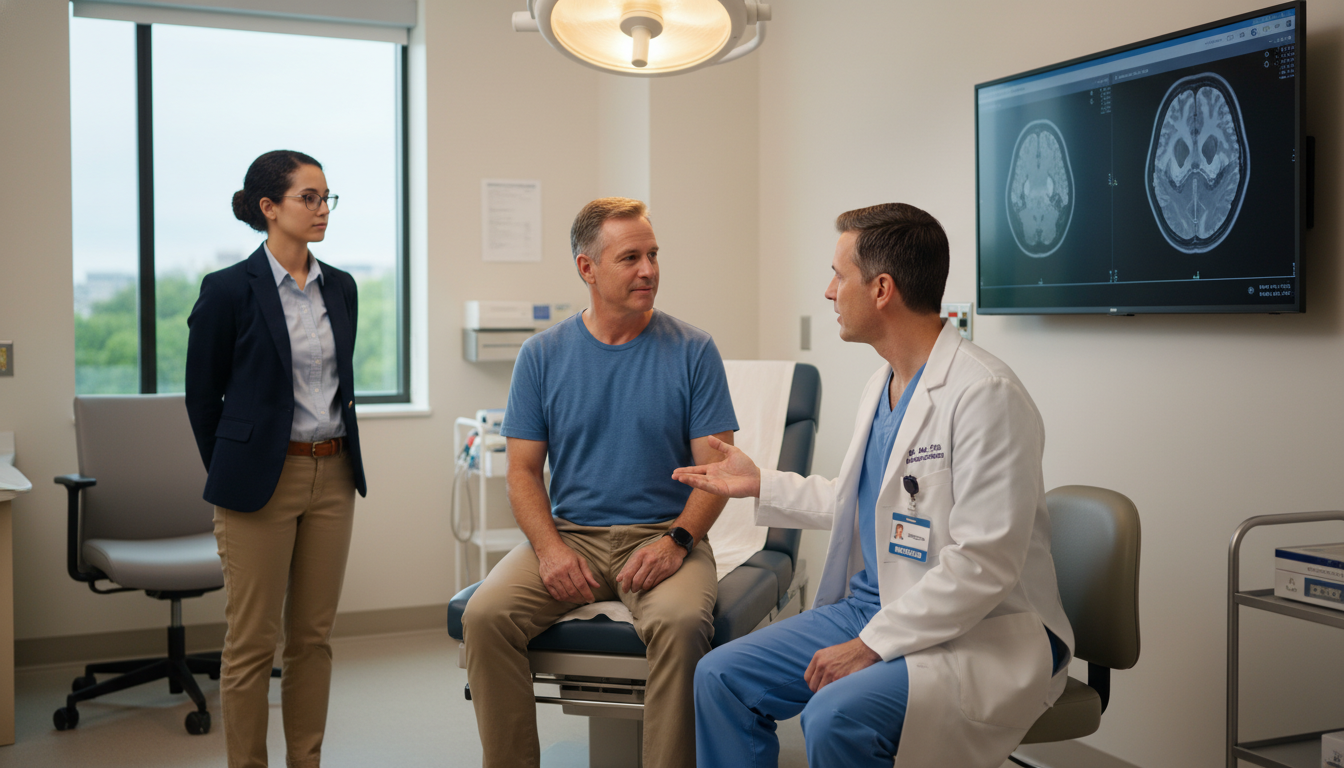
Shadowing neurosurgeons and neurologists
Directly observing neurosurgeons is one of the most powerful ways to test your interest:
How to find opportunities
- Ask your college’s pre-health advising office for local contacts.
- Cold-email neurosurgeons at nearby academic or community hospitals; personalize your email, be professional, and keep it concise.
- Leverage any family or alumni connections ethically and respectfully.
What to look for while shadowing
- The pace of the day: clinic visits, OR cases, emergencies, late hours.
- The team structure: how attendings, residents, nurses, and techs communicate.
- The nature of decisions: balancing risk of surgery vs nonoperative management.
- The emotional side: how neurosurgeons discuss prognosis, disability, and end-of-life situations.
Also consider shadowing neurology, neurocritical care, and radiology (especially neuroradiology) to get a broader view of brain and spine care.
Clinical experience
Neurosurgery is often high stakes and high acuity. Having realistic clinical experience before medical school can strengthen your conviction—and your application.
Possible roles:
- Hospital volunteer in neurology or neurosurgery units, ICUs, or ED.
- Medical assistant in neurology or neurosurgery clinic.
- Scribe for neurologists or neurosurgeons, if available.
- Emergency department tech / EMT (where feasible) to build comfort with acutely ill patients.
Emphasize experiences that bring you into contact with patients who have neurological issues—stroke, trauma, seizures, brain tumors, spinal cord injury.
Research: Laying the foundation early
For neurosurgery residency, research is often close to essential, especially at academic programs. You do not need first-author publications as a premed—but earlier exposure helps you develop skills and credibility.
Types of research valuable for aspiring neurosurgeons
- Basic science neuroscience – Synaptic physiology, neural development, neurodegeneration, brain tumors.
- Translational / neuro-oncology research – Bridging bench work to clinical care.
- Clinical neurosurgery/neurology research – Outcomes studies, imaging research, surgical technique comparisons.
- Data science in neurology/neurosurgery – Machine learning for imaging, outcomes prediction, or operative planning.
How to get started as a premed
- Identify your interests: Brain tumors? Stroke? Spine disease? Cognitive disorders?
- Search for faculty: Use your university’s neuroscience, neurology, neurosurgery, or biomedical engineering department websites. Look for labs that mention students or summer positions.
- Send tailored emails:
- Introduce yourself (year, major, genuine interest).
- Mention a specific paper or project of theirs that interests you.
- Offer to volunteer initially and emphasize your reliability and willingness to learn.
- Commit long-term: Consistency (1–2+ years) in one lab usually matters more than doing many short stints.
Over time, aim to:
- Present at a campus research symposium.
- Co-author a poster or abstract at a regional or national meeting.
- Contribute to a manuscript, even as a middle author.
These experiences will later form the backbone of your neurosurgery application narrative.
Extracurriculars that build neurosurgery-relevant skills
Neurosurgeons need leadership, teaching, and stress-management skills. Consider:
- Leadership roles in premed clubs, neuroscience societies, or engineering teams.
- Teaching / tutoring in biology, physics, or MCAT-related topics—this builds your own understanding and communication skills.
- Fine motor / hand–eye coordination activities:
- Musical instruments (especially strings, piano, guitar)
- Drawing, painting, or sculpture
- Sports requiring precise coordination (fencing, tennis, rock climbing)
- Community outreach related to brain health:
- Concussion awareness in sports
- Stroke education campaigns
- Epilepsy support groups
These don’t need to be “neurosurgery-branded” to be valuable. Their real value comes from depth, consistency, and reflection—you should be able to explain how each activity developed skills relevant to a future neurosurgeon.
4. MCAT, Study Habits, and Cognitive Preparation
A strong MCAT is critical for competitive medical schools, which in turn are a common gateway to neurosurgery residency programs.
MCAT strategy for future neurosurgeons
While neurosurgery residency isn’t directly tied to your MCAT, a solid score increases your odds of attending a medical school with robust neurosurgery research and training.
Timeline
- Most students test during spring or summer of junior year.
- Plan to have core prerequisites finished (or nearly finished) before you sit for the exam: general biology, general and organic chemistry, biochemistry, and physics, plus basic psychology and sociology.
Approach
- Use content review materials (books or online platforms) plus AAMC official practice exams.
- Treat MCAT prep like a part-time job: plan 300–400+ hours over 3–6 months, depending on your baseline.
- Focus not just on memorization but on critical reasoning and data interpretation, which parallels how neurosurgeons evaluate imaging and literature.
Developing the study skills neurosurgery demands
Neurosurgery requires rapid learning, long-term retention, and precise recall under pressure (e.g., in the OR). You can start building these habits now:
Active learning techniques
- Spaced repetition (e.g., Anki) for long-term retention of complex facts.
- Practice questions > passive rereading.
- Teaching concepts to peers or tutoring.
Time management
- Use semester calendars to map out exams, research deadlines, and MCAT prep.
- Practice focusing deeply (no phones, no social media) for set blocks—skills you’ll need for 8+ hour study days in medical school.
Cognitive endurance
- Simulate long exams and study days.
- Maintain sleep, nutrition, and exercise so your brain actually functions at a high level.
Example: If you’re taking a demanding course load (e.g., organic chemistry, physics, and advanced biology), treat it like a rehearsal for the cognitive load of medical school and neurosurgery residency. How you adapt now tells you whether you need to improve your systems.
5. Personal Health, Resilience, and Career Fit
Neurosurgery is both inspiring and intense. The premed years are a reasonable time to ask: Is this really the right path for me? Exploring that question honestly does not make you less committed; it makes you more mature.

Understanding the realities of neurosurgery
Typical neurosurgery realities (especially in training) include:
- Long hours and overnight call
- High stress and high stakes – small technical errors can have major consequences.
- Emotional burden – dealing with devastating injuries, terminal tumors, and complex family dynamics.
- Lengthy training – often 7 years of residency, plus fellowship for many subspecialties.
Use your premed experiences to observe how these aspects affect residents and attendings. Ask about:
- Work–life integration
- Burnout and coping strategies
- What they wish they had known as premeds
Building resilience early
You don’t need to become invincible, but you do need resilience. Healthy habits during premed years can carry you through medical school and beyond:
- Sleep: Aim for consistent, adequate sleep whenever possible.
- Exercise: Helps manage stress and supports cognitive performance.
- Support network: Friends, family, mentors you can talk to honestly.
- Reflective practices: Journaling, debriefing with mentors, or counseling when needed.
Being proactive about mental health does not weaken your candidacy; it improves your long-term sustainability—something more and more neurosurgery leaders openly acknowledge.
Mentorship and networking
Mentors are critical in neurosurgery given its small size and intense culture.
As a premed, seek:
- Faculty mentors in neuroscience, neurology, or neurosurgery who are willing to talk about careers and research.
- Resident or senior medical student mentors, ideally those interested in neurosurgery or other surgical fields.
- Premed advisors who understand competitive specialties and can give honest feedback.
Use mentorship to:
- Reality-check your expectations about neurosurgery.
- Get guidance on research and gap years if needed.
- Learn what makes applicants stand out for neurosurgery residency later.
6. Positioning Yourself for Medical School and Beyond
Everything in the premed phase feeds into your medical school application, which is the next major gate on the road to neurosurgery residency.
Crafting a coherent application narrative
When admissions committees review your application, they are not just checking boxes on premed requirements; they are asking, “Does this person have a thoughtful, sustained path toward medicine?”
If neurosurgery is your long-term interest:
- It’s fine to mention an early interest in neurology/neurosurgery in your personal statement or secondaries, but avoid sounding locked into a single specialty.
- Highlight:
- Intellectual fascination with the brain and nervous system
- Experiences with neurologically injured or ill patients
- Research that demonstrates curiosity and discipline
- Evidence of resilience and maturity
Your theme might be “understanding and repairing the nervous system,” rather than “I must be a neurosurgeon or nothing.”
Choosing a medical school with neurosurgery in mind
When considering acceptances:
- Look for affiliated neurosurgery departments and residency programs.
- Check whether the school has:
- Neurosurgery faculty involved in education and mentorship.
- Neuroscience research institutes or brain centers.
- Opportunities for neurological surgery interest groups, early OR exposure, or neurosurgery electives.
- Investigate match lists: Do graduates match into neurosurgery? Where?
You can match into neurosurgery from schools without their own neurosurgery residency, but having local access to neurosurgeons and research often helps.
Gap years: When they make sense
If your GPA, MCAT, or experiences are not yet aligned with the competitiveness you’ll need, a gap year or two can be a smart strategic step, not a failure.
Consider a gap year to:
- Work full-time in a neuroscience or neurosurgery research lab, aiming for publications.
- Gain deeper clinical experience in neurological care.
- Strengthen academic metrics through a post-bac or master’s program.
For future neurosurgeons, a research-focused gap year can be particularly valuable, especially if it results in tangible products (abstracts, publications) and strong letters from neurosurgery or neuroscience mentors.
FAQs: Premed Preparation for Neurosurgery
1. Do I need to decide on neurosurgery before medical school?
No. Many neurosurgeons discover their interest during medical school. However, having an early interest allows you to intentionally choose research, mentors, and experiences that keep the door to neurosurgery residency open. Think of it as a strong hypothesis, not an unbreakable contract.
2. Is a neuroscience major required—or strongly preferred—for future neurosurgeons?
Neither required nor universally preferred. Admissions committees and neurosurgery programs care much more about your academic performance, research engagement, and overall trajectory than about a specific major. Neuroscience can be helpful and interesting, but a high GPA and strong MCAT from any rigorous major will serve you better than a mediocre record in a “relevant” major.
3. How much research do I need as a premed to be competitive for neurosurgery later?
There’s no fixed number, but as a premed, aim for substantial, continuous involvement in at least one research project over 1–2+ years. Try to reach the point of presenting a poster or co-authoring an abstract. Most of your neurosurgery-relevant research will likely occur in medical school, but early exposure makes that transition much smoother.
4. What if I realize during premed that neurosurgery isn’t for me?
That’s a success, not a failure. Exploring neurosurgery as a premed gives you insight into what you value in a medical career—pace, lifestyle, patient population, cognitive versus procedural work. Many students who step away from neurosurgery find deeply satisfying careers in neurology, radiology, anesthesia, emergency medicine, internal medicine, or other surgical fields. All your premed experiences will still strengthen your overall preparation for medicine.
Bottom line: Pre-med preparation for neurosurgery is less about doing everything “neurosurgery-branded” and more about building a broad, deep, and resilient foundation—academically, clinically, and personally. Focus on mastering your premed requirements, seeking authentic exposure to brain and spine care, engaging meaningfully in research, and cultivating the habits and support systems that will sustain you through medical school and, potentially, a neurosurgery residency.




















