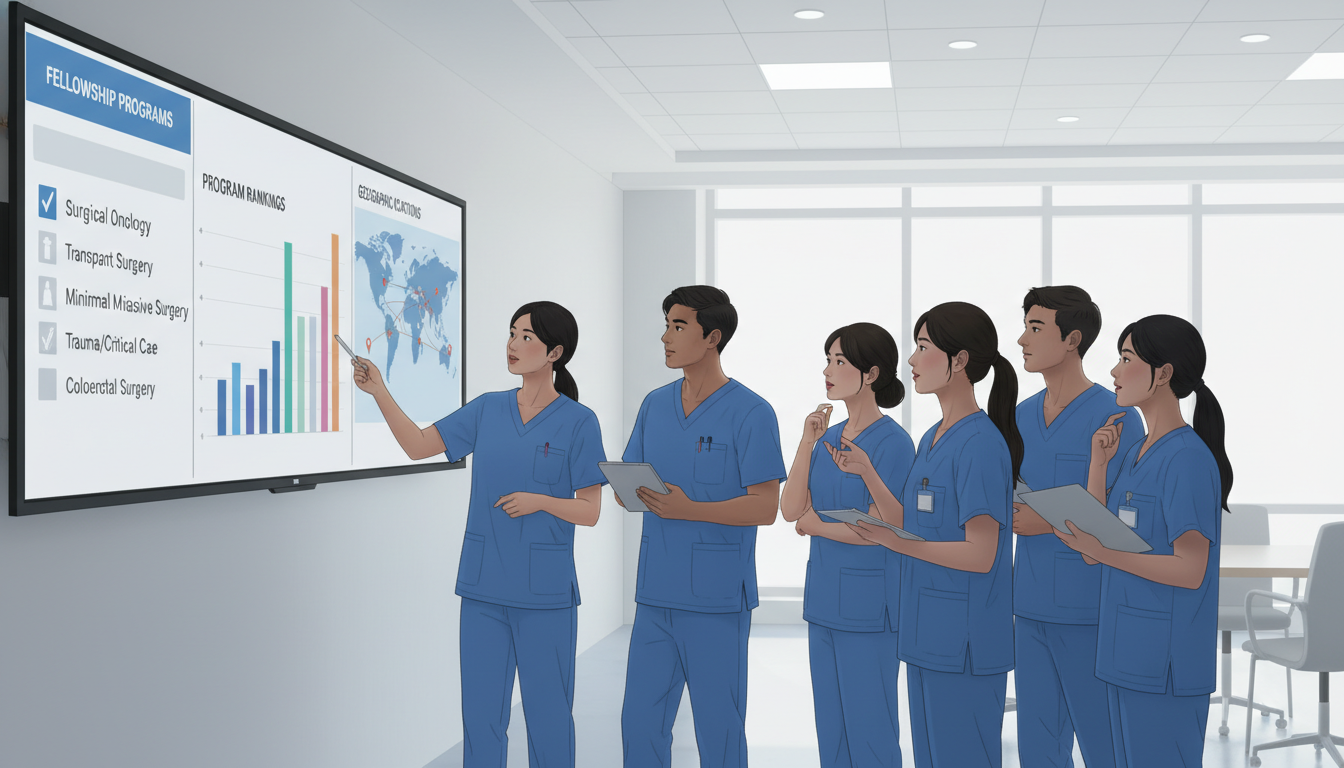
Residency in nuclear medicine offers a unique blend of imaging, physiology, and patient care—but like every residency, it comes with demanding work hours and competing responsibilities. Managing those residency work hours effectively is essential not only for success in the nuclear medicine match and fellowship opportunities, but also for your health, safety, and long-term career satisfaction.
This comprehensive guide focuses on how to understand, navigate, and optimize residency work hours in nuclear medicine. You will find practical strategies, realistic examples, and actionable tips to build a sustainable resident work life balance while still excelling clinically, academically, and personally.
Understanding Nuclear Medicine Residency Work Hours
Before you can manage your time effectively, you need a clear picture of what typical duty hours look like in nuclear medicine and what is required of you.
Typical Structure of Nuclear Medicine Residency
Nuclear medicine residency structures vary by country and institution, but in many North American programs you will see patterns like:
- Duration:
- 1–2 year nuclear medicine fellowship after diagnostic radiology, or
- 3-year dedicated nuclear medicine residency (in some pathways).
- Core Rotations:
- General nuclear medicine (planar, SPECT)
- PET/CT and sometimes PET/MR
- Nuclear cardiology
- Theranostics (e.g., I-131, Lu-177 therapies)
- Outpatient clinic and consults
- Cross-sectional imaging or radiology, depending on program
How Duty Hours Typically Look
Compared to many surgical or ICU-heavy specialties, nuclear medicine work hours are often considered more predictable. However, they are still demanding and must comply with formal duty hour regulations:
- ACGME-style duty hours (U.S. context):
- Maximum 80 hours per week, averaged over 4 weeks
- At least 1 full day off in 7, free of all clinical duties
- 10 hours between duty periods (recommended) and no more than 24 hours of continuous in-house duty, with up to 4 additional hours for transitions and education
- Usual daily schedule in nuclear medicine:
- Weekdays often start between 7:00–8:00 a.m. (prep, reviewing imaging protocols, conferences)
- Clinical work commonly ends around 5:00–6:00 p.m., depending on exam volume and reporting expectations
- Call structure:
- Many nuclear medicine programs have light in-house call or predominantly home call, especially for after-hours nuclear cardiology, urgent scans, and therapy-related issues.
- Diagnostic radiology–integrated programs may share general radiology call, which can be busier.
Factors That Influence Your Workload
Your residency work hours will vary with:
- Institution type:
- Large academic centers may have higher volume, more complex cases, and more teaching responsibilities.
- Community or hybrid programs may offer a more predictable day but with broader responsibilities.
- Case mix:
- High PET/CT volume and theranostic centers may involve more time in multidisciplinary clinics and treatment planning.
- Training level:
- Junior residents: more time spent learning protocols, reviewing with attendings, and adjusting to workflow.
- Senior residents: more autonomy, faster reporting, but also increased teaching and leadership responsibilities.
- Research and teaching:
- Scholarly work, quality improvement projects, and conference preparation often take place outside of official duty hours if not carefully integrated.
Understanding these elements sets the stage for deliberate time management and for advocating for yourself within duty hour guidelines.
Legal and Ethical Framework for Duty Hours
Managing residency work hours in nuclear medicine is not only a personal efficiency challenge—it’s also governed by formal regulations designed to protect patients and residents.
Duty Hour Rules and Why They Matter
Most accredited training programs must adhere to guidelines similar to ACGME rules, which aim to:
- Protect patient safety: Fatigued residents are more prone to interpretation errors, especially when reading complex PET/CT or SPECT studies.
- Promote resident well-being: Chronic sleep deprivation contributes to burnout, depression, and health problems.
- Ensure an educational environment: You must have time for conferences, independent study, research, and reflection.
Violations of these duty hours can lead to:
- Accreditation problems for the program
- Decreased quality of training
- Increased risk of medical error and liability
Ethical Responsibilities in Nuclear Medicine
Nuclear medicine carries unique patient safety responsibilities related to radiation exposure and radiopharmaceutical therapies. Fatigue can impair your judgment regarding:
- Appropriateness of a study or dose
- Recognition of subtle findings (e.g., small foci of FDG uptake)
- Precise localization and staging that drives oncology treatment planning
- Eligibility for radionuclide therapies and post-therapy instructions
You have an ethical obligation to:
- Recognize when fatigue is affecting your performance
- Communicate with your attending or chief resident if you feel unsafe to work or read independently
- Participate honestly in duty hour logging and report chronic overages
Documenting and Reporting Duty Hours
Accurate tracking of residency work hours is crucial:
- Use your institution’s duty hour logging system (often MedHub, New Innovations, or equivalent).
- Log time honestly and consistently; do not underreport to “protect” the program—it undermines safety and wellness efforts.
- If you repeatedly exceed 80 hours/week or lack days off:
- First, discuss with your chief residents or program director.
- Utilize anonymous feedback mechanisms if available.
- Approach your GME office if concerns persist.
This framework empowers you to set realistic boundaries and push for systemic improvements rather than “just working harder” indefinitely.
Daily and Weekly Strategies for Managing Work Hours
Once you understand your duty hour expectations, the next step is to actively manage your time and workload. In nuclear medicine, efficiency is largely about workflow design, communication, and prioritization.
Creating a Structured Daily Routine
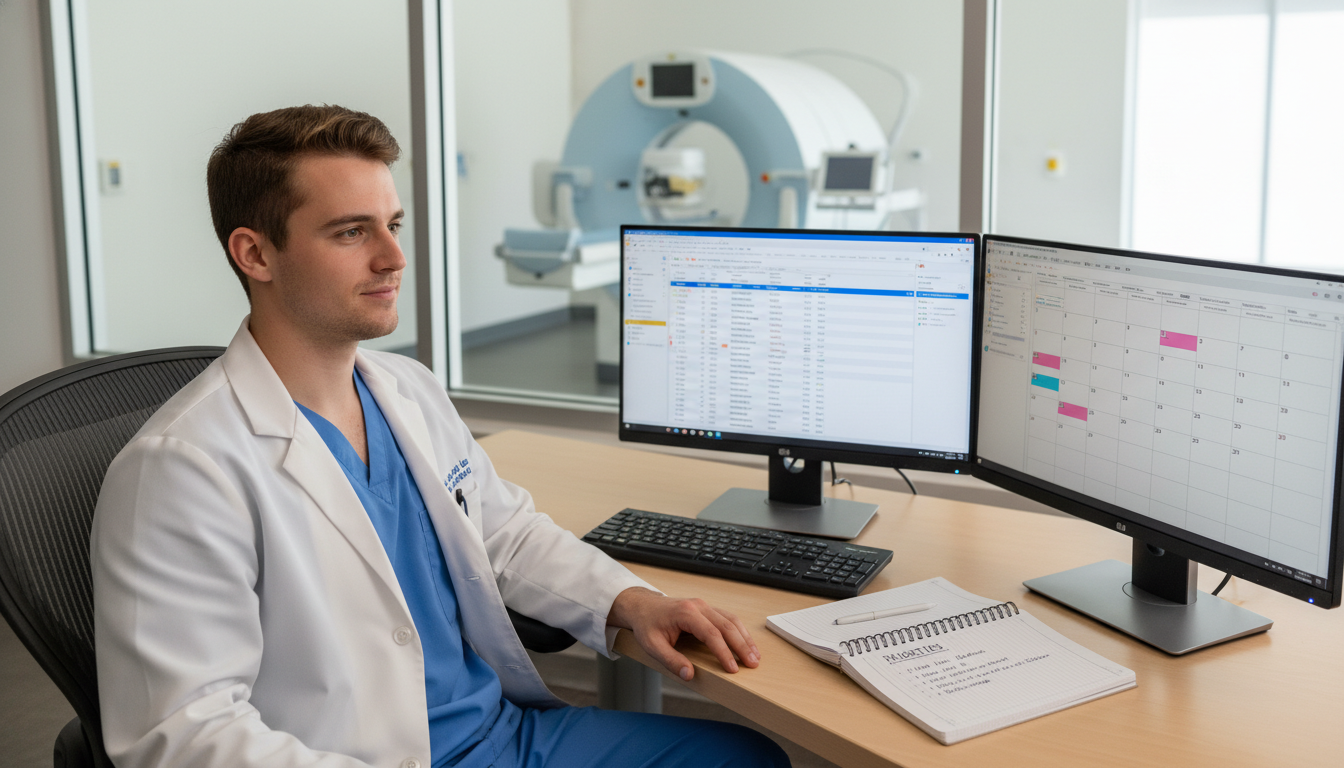
A predictable routine helps you stay ahead of the workload. Consider the following template and adapt it to your site:
Morning (7:00–9:00 a.m.)
- Quickly review the worklist:
- Identify time-sensitive studies (e.g., oncology staging before tumor board).
- Check radiopharmaceutical delivery schedules and patient arrival times.
- Confirm with technologists:
- Any problematic cases? Contrast allergies, difficult IV access, special protocols.
- Attend morning conference or didactics if scheduled.
- Set 3 clear priorities for the day (e.g., “finish all PET/CTs,” “prep slides for noon conference,” “start draft of research abstract”).
Midday (9:00 a.m.–2:00 p.m.)
- Read and report high-priority or complex studies early.
- Batch similar studies (e.g., all bone scans, all thyroid scans) to improve efficiency.
- Use brief “micro-breaks” between cases (2–3 minutes away from the screen) to reduce fatigue and maintain accuracy.
- If you cover nuclear cardiology, build protocols into a routine schedule (e.g., assign specific times to follow up cardiology requests).
Late Afternoon (2:00–5:00/6:00 p.m.)
- Tackle remaining routine studies and follow-up addenda.
- Reserve the last 30–45 minutes for closing the loop:
- Check that all critical results have been communicated.
- Respond to outstanding messages in the EMR or from technologists.
- Prepare any “to-do” items that must be passed to the on-call resident.
Time-Blocking and Task Prioritization
Nuclear medicine reports can be time-consuming, especially PET/CTs with extensive staging descriptions. Time-blocking improves your efficiency and protects your duty hours:
- Time-block strategies:
- 90-minute blocks for intensive reading (e.g., PET/CT focus) without checking email or non-urgent messages.
- 15–20-minute windows between blocks to handle calls, emails, and quick consults.
- Prioritization frameworks:
- Urgent vs. important:
- Urgent: emergent scans, therapy-related complications, pre-op imaging.
- Important: teaching files, research, lecture prep.
- Aim to do important-but-not-urgent tasks (e.g., board preparation, research) earlier in the week and earlier in the day when cognitively fresher.
- Urgent vs. important:
Example:
If your worklist shows 10 PET/CTs and 4 routine bone scans:
- Block 9:00–11:00 a.m. for PET/CTs (highest impact on patient management).
- Use 11:00–11:30 a.m. for two bone scans.
- A short after-lunch block (1:00–2:30 p.m.) for remaining PETs.
- The rest of the afternoon for routine scans, calls, and sign-offs.
Efficient Communication with the Team
Much time is lost to unclear expectations and repeated questions. Optimize communication by:
- Clarifying preferences with your attendings:
- Do they prefer drafts before discussion, or live readouts together?
- How detailed do they want impressions and staging language?
- Using standard templates:
- Adopt well-structured report templates for common exams: FDG PET/CT, bone scan, V/Q scan, cardiac perfusion, thyroid uptake.
- Templates reduce cognitive load and maintain consistency.
- Setting expectations with technologists:
- Develop a system for labeling urgent or problem cases in the worklist.
- Agree on a reliable way to reach you (pager, secure chat, or extension) with defined indications for immediate interruptions.
Handling Peak-Load Days
Some days will simply be heavy: multiple oncology PET/CTs, urgent myocardial perfusion studies, and a radionuclide therapy on the schedule. To maintain safe residency work hours:
- Triage early:
Identify which studies truly affect same-day clinical decisions. - Ask for help:
- Notify your attending if the workload threatens to push you far beyond typical hours.
- Redistribute cases among co-residents if possible.
- Realign expectations:
- It may be better to do slightly fewer cases well than race through everything unsafely.
- Document reality:
- Log accurate duty hours and note peak-load patterns in case program-level changes are needed.
These daily and weekly tactics protect not only your time, but also the quality of your patient care and your long-term learning.
Call, Weekends, and Longitudinal Work-Life Balance
On paper, nuclear medicine may appear “lifestyle friendly,” but unstructured call, teaching, and research can gradually erode your evenings and weekends. Intentionally designing your schedule is key to sustainable resident work life balance.

Understanding Nuclear Medicine Call
Depending on your program, call may include:
- Home call for urgent nuclear imaging:
- Stat V/Q scan requests for suspected PE
- Limited PET/CT or bone scans required for immediate decisions
- Therapy-related call:
- Questions after I-131 therapy or other therapeutic administrations
- Shared radiology call:
- In integrated programs, you may share call with diagnostic radiology, covering CT, MR, and plain film overnight.
To manage call-related residency work hours:
- Clarify when you must come in person versus handle by phone or remote access.
- Ask about post-call expectations:
- Do you get a post-call day off or a shortened schedule?
- How are call hours counted toward the 80-hour weekly limit?
- Review protocols and common scenarios in advance so call-time decisions are quicker and less stressful.
Protecting Weekends and Days Off
Duty hour rules guarantee days off, but it’s easy to let work “bleed” into them via:
- Research data analysis
- Lecture slide preparation
- Catching up on unread articles or delayed board prep
You can protect your off time by:
- Scheduling academic work on weekdays:
- Reserve one or two late afternoons per week for research or quality improvement activities.
- Treat these as non-negotiable appointments on your calendar.
- Using a “hard stop” time:
- Pick a realistic evening cut-off (e.g., 7:30 or 8:00 p.m. on weeknights) after which you do no clinical or academic work except during call.
- Planning true rest on one day off:
- Make at least one weekend day truly off: no email, no slides, no data unless you’re on call.
- Use that time for sleep, exercise, social connection, or hobbies—critical for preventing burnout.
Managing Longitudinal Commitments
Over a 1–3 year nuclear medicine residency you must juggle:
- Clinical responsibilities
- In-service exams and board preparation
- Research or quality projects
- Teaching medical students and junior residents
- Job or fellowship applications and the nuclear medicine match process
To keep these from exploding into evenings and weekends:
- Break long-term tasks into monthly, then weekly milestones.
- Example: “Write abstract by February” becomes:
- January Week 1: finalize project question and outline
- Week 2–3: data collection
- Week 4: first draft of abstract
- First week of February: revisions and submission
- Example: “Write abstract by February” becomes:
- Map these milestones onto a digital calendar you check daily.
- Use “protected” blocks during lighter rotations (e.g., outpatient, research-heavy months) to advance slow-burn projects so they don’t cluster during your busiest clinical months.
Negotiating Flexibility When Needed
Life events occur during residency: health issues, family emergencies, pregnancy, childcare needs. Reasonable accommodations are both humane and usually feasible.
- Discuss early with:
- Your program director
- Chief residents
- GME office
- Explore options such as:
- Modified schedules
- Temporary reduction or redistribution of call
- Leave policies and make-up time
- Keep documentation and follow institutional policies so your training remains on track for board eligibility.
Thoughtful management of call, overtime, and long-term commitments turns a demanding schedule into a sustainable one, without sacrificing training quality.
Well-Being, Performance, and Career Impact
How you manage your residency work hours in nuclear medicine directly influences your mental health, clinical performance, and future career satisfaction.
Recognizing Burnout and Fatigue
Even with relatively controlled hours, nuclear medicine residents are at risk for:
- Burnout symptoms:
- Emotional exhaustion
- Depersonalization (“patients become numbers and scans”)
- Reduced sense of accomplishment
- Fatigue-related signs:
- Difficulty focusing on subtle findings
- Increased reporting errors or addenda
- Irritability with colleagues or technologists
- Persistent insomnia or excessive daytime sleepiness
If you notice these patterns:
- Talk with a trusted attending, mentor, or chief resident.
- Use employee assistance programs, resident wellness services, or confidential counseling.
- Re-evaluate your schedule:
- Are you consistently exceeding 70–80 hours?
- Are you using days off for real rest?
- Can you delegate or delay non-essential tasks?
Building Sustainable Habits
High performance and good resident work life balance are not mutually exclusive—they reinforce each other. Consider:
1. Sleep hygiene
- Aim for 7–8 hours per night whenever not on call.
- Keep a consistent sleep/wake schedule as much as possible.
- Limit heavy screen use in the hour before bedtime to improve sleep quality.
2. Physical activity
- Even 10–20 minutes of daily movement helps: stairs, walking between buildings, or short workouts.
- Some residents schedule “non-negotiable” exercise on post-call afternoons or weekend mornings.
3. Nutrition and hydration
- Pack snacks and meals if hospital options are limited, especially for long therapy days.
- Keep water at your workstation; dehydration worsens fatigue and headaches.
4. Micro-recovery during the day
- 2–5 minute breaks every 60–90 minutes:
- Look away from screens
- Stretch
- Briefly walk to another room
- These are particularly important when reading long sequences of PET/CT or SPECT/CT studies.
How Work Hour Management Affects Your Career
Your approach to time and duty hours in residency shapes your future in several ways:
- Clinical reputation:
- Attendings notice if you consistently manage large worklists calmly and accurately, or if you appear disorganized and overwhelmed.
- Academic productivity:
- Efficient time management allows you to produce conference abstracts, publications, or QI projects without sacrificing sleep and well-being.
- Job and fellowship interviews:
- Interviewers often explore how you handle workload and stress.
- Being able to describe your system for managing residency work hours shows maturity and professionalism.
- Long-term satisfaction:
- Skills you develop now—prioritization, boundary setting, efficient communication—translate directly into your future attending life, whether you work in academics, private practice, or hybrid settings.
Your goal is not to “survive” residency, but to build a sustainable professional identity where high-quality patient care coexists with a healthy, fulfilling life.
FAQs: Managing Nuclear Medicine Residency Work Hours
1. Are nuclear medicine residency work hours really better than other specialties?
Nuclear medicine programs often have more predictable daytime hours and less intense overnight call than some surgical or ICU-based fields. However:
- Work hours still regularly approach 60–70 hours/week in busy academic centers.
- Peak workloads, call responsibilities, and research can push you close to the 80-hour limit.
- Your perception of “better” depends on local culture, case volume, and how effectively you manage your time and boundaries.
2. How can I balance research and teaching with duty hours?
- Integrate research into your week with scheduled 1–2 hour blocks during lighter clinical sessions.
- Turn teaching into part of your learning workflow—explaining cases to students or juniors can reinforce your own understanding.
- Avoid letting research slide entirely to nights and weekends; if you must work then, keep it limited and intentional, not open-ended.
3. What should I do if my program frequently violates duty hour rules?
- Document your work hours accurately in the official logging system.
- Discuss with chief residents or your program director first; sometimes it reflects temporary issues (staffing gaps, new services).
- If the pattern continues, use formal or anonymous reporting channels through your GME office or residency council.
- Remember: duty hours exist to protect both patients and residents; raising concerns is professional, not disloyal.
4. How do residency work hours affect my chances in the nuclear medicine match?
Programs look for applicants who can handle the workload responsibly, communicate effectively, and maintain professionalism under pressure. Demonstrating that you:
- Understand duty hour expectations
- Have strategies for time management and self-care
- Can remain reliable even during busy rotations
…will strengthen your application and your interviews. Directly, work hours don’t appear on your application; indirectly, how you manage them shapes your performance, letters of recommendation, and overall readiness for advanced training or practice.
By understanding the structure of nuclear medicine residency work hours, using deliberate strategies for managing daily tasks and call, and protecting your well-being, you can thrive during training rather than merely endure it. The habits you build now will support a long, satisfying career in nuclear medicine—where your time, attention, and expertise significantly impact patient care, while leaving room for a life beyond the reading room.