Medical shadowing is one of the most powerful ways to truly understand what a specialty feels like day-to-day—especially in a field as uniquely technical and visual as ophthalmology. For students aiming for ophthalmology residency and a successful ophtho match, thoughtful, well-planned medical shadowing can clarify your career decision, strengthen your application, and connect you with mentors who may advocate for you.
This guide walks through how to plan, find, and maximize a medical shadowing experience in ophthalmology, with a focus on residency applicants and preclinical students considering the field.
Why Ophthalmology Shadowing Matters for Your Career
Ophthalmology is a small, competitive specialty where early, meaningful exposure can be a game-changer. Shadowing experiences help you in several concrete ways:
1. Clarifying Whether Ophthalmology Fits You
Ophthalmology is a blend of:
- Microsurgery and fine motor skills
- High-tech imaging and diagnostics
- Brief, focused patient encounters
- Chronic disease management (e.g., glaucoma, diabetic retinopathy)
- Visual function, disability, and quality-of-life issues
Shadowing lets you ask:
- Do I enjoy working with delicate instruments and detailed anatomy?
- Am I energized by short, rapid-fire patient visits?
- How do I feel about performing procedures on eyes?
- Do I like the mix of clinic and OR that ophthalmologists have?
Students often think they want “a surgical specialty” or “a lifestyle-friendly specialty.” Shadowing ophthalmology gives you a concrete sense of what those words look like in real life.
2. Strengthening Your Ophtho Match Application
For a competitive ophthalmology residency, your application needs to show:
- Genuine interest in the field
- Understanding of what the career entails
- Early involvement and consistency over time
Shadowing can:
- Provide content and insight for your personal statement
- Give you specific stories to use in interviews
- Lead to research opportunities and letters of recommendation
- Help you talk about ophthalmology with nuance and authenticity
Program directors can tell when someone has only a superficial understanding of ophthalmology. Shadowing gives you the depth to speak like a future colleague, not just an observer.
3. Building Mentorship and Networking
Many ophthalmology careers start from a single shadowing encounter. You might:
- Meet a faculty member who becomes your long-term mentor
- Get invited to join a research project
- Be introduced to residents who can help with Step prep, schedule planning, or the ophtho match process
- Learn about local, national, or subspecialty interest groups
In a small specialty, each connection can have outsized impact across your training.
How to Find Ophthalmology Shadowing Opportunities
When students ask how to find shadowing, especially in competitive fields, they often underestimate how much initiative is required. Ophthalmology is no exception. Here’s a strategic approach.
1. Start with Your Home Institution
If your medical school has an ophthalmology department, that should be your first stop.
Where to look:
Department website – Check:
- “Education” or “Medical Students” sections
- Faculty profiles (identify areas of interest: retina, cornea, glaucoma, pediatrics, oculoplastics)
- Contact information for the education coordinator or clerkship director
Student interest groups:
- Ophthalmology interest group or surgical specialty interest group
- Ask upperclassmen which attendings are receptive to medical shadowing
How to approach:
Email a concise, professional message to a specific faculty member or the medical student education coordinator. Include:
- Who you are (name, year, school)
- Why you’re interested in ophthalmology (1–2 sentences)
- What you’re asking for (specific shadowing days/times or a general request)
- Your availability and flexibility
Example:
I am a second-year medical student interested in exploring ophthalmology. I’d be grateful for the opportunity to shadow in clinic to better understand the day-to-day practice and the patient care environment in this specialty.
Don’t overcomplicate the ask. Many attendings are happy to host motivated students if you’re respectful of their time.
2. Explore Community and Private Practice Settings
If you don’t have a home ophthalmology program—or want a broader view—community and private practices can provide outstanding exposure.
How to find them:
- Search “ophthalmologist near me” or “retina specialist [your city]”
- Look for:
- Multi-physician comprehensive ophthalmology practices
- Subspecialty clinics (retina, pediatrics, glaucoma, cornea)
- Practices affiliated with your school or teaching hospitals
How to reach out:
Reception staff may be unsure how to handle students, so emailing the physicians directly (if emails are listed) or using the practice’s contact form can be effective. Clarify:
- You are a medical student (or pre-med, if applicable)
- You are seeking unpaid medical shadowing only
- You will comply with all privacy and compliance requirements
Be prepared to submit:
- Proof of vaccination
- HIPAA/confidentiality training certificates
- School documentation or liability forms
3. Use Professional and Alumni Networks
Don’t overlook personal connections. Ask:
- Your academic advisor or dean if they know any ophthalmologists
- Alumni from your school now in ophthalmology residency or practice
- Residents at your institution who trained elsewhere (they may have mentors to connect you with)
Medical shadowing can be easier to arrange when there is a warm introduction instead of a cold email.
4. Targeted Outreach for Subspecialty Shadowing
If you’re further along in your exploration and already know you’re curious about subspecialties (e.g., retina vs. cornea vs. oculoplastics), consider targeted shadowing:
- Pediatric ophthalmology – if you enjoy working with children and families
- Retina – for a blend of systemic disease (diabetes, hypertension) and high-tech imaging
- Oculoplastics – if you’re drawn to reconstructive and cosmetic surgery
- Neuro-ophthalmology – for students who like complex, diagnostic puzzles
Spending even one or two half-days in each can shape your future training goals.

Planning Your Shadowing: Expectations and Logistics
Once you’ve secured a medical shadowing experience in ophthalmology, make sure you (and the clinic) are aligned on expectations.
1. Clarify the Setting and Schedule
Before your first day, confirm:
- Clinic location and parking/public transit details
- Start and end times (and whether you can stay for the whole session)
- Dress code (white coat, scrubs, business casual)
- Whether you’ll attend:
- Outpatient clinic only
- Minor procedure room
- OR sessions (and what is required for OR access)
Ask if it’s okay to:
- Carry a small notebook for observations (no patient identifiers)
- Ask questions between patients
2. Understand the Role of a Shadow
Medical shadowing is observational. You will not be:
- Independently examining patients
- Providing clinical advice
- Documenting in the chart (in most settings)
Your primary roles are to:
- Observe patient interactions and clinical reasoning
- Learn how the ophthalmologist uses equipment and imaging
- Reflect on the workflow and lifestyle
- Demonstrate professionalism, curiosity, and respect
If you’re a more senior medical student on a formal rotation, your responsibilities may expand, but for pure shadowing, expect to stay in observer mode.
3. What About Shadowing Hours Needed?
Unlike some pre-med pathways that track a specific number of “shadowing hours needed,” ophthalmology residency programs rarely look at a strict hour count. Instead, they care about:
- Depth and quality of your exposure
- Consistency (e.g., one afternoon vs. returning regularly over months)
- Evidence that you know what the field is really like
As a guideline:
For early exploration:
- 10–20 hours across a few half-days gives you a basic sense of the field
For committed applicants:
- Ongoing exposure over several months (e.g., regular weekly or monthly shadowing, plus a formal elective) can help solidify your narrative
Focus less on a hard number of hours and more on meaningful engagement with mentors and patients.
4. Confidentiality, Consent, and Professionalism
Before you see your first patient:
- Complete any required HIPAA or privacy training
- Sign confidentiality forms as needed
- Understand whether consent is obtained from each patient for your presence
During clinic:
- Step out if a patient appears uncomfortable with another person in the room
- Never discuss identifiable patient information outside the clinical setting
- Avoid taking photos or recording audio, even for learning
Your professionalism during shadowing will strongly influence whether attendings trust you with more opportunities later.
What to Watch, Learn, and Ask During Ophthalmology Shadowing
To get the most value from your medical shadowing experience, don’t just “stand in the corner.” Be intentional about what you are observing.
1. Observe the Flow of an Ophthalmology Clinic
Ophthalmology clinics are often high-volume and fast-paced. Pay attention to:
- How many patients are seen per half-day
- Use of technicians and scribes for history, visual acuity, refraction, and imaging
- How the ophthalmologist moves between rooms and procedures
- How urgent cases (e.g., retinal detachment, acute angle closure) are worked into the schedule
Ask yourself:
- Does this pace seem sustainable for me long-term?
- How does the team communicate and coordinate patient care?
2. Learn the Core Components of the Eye Exam
You don’t need to master the exam during shadowing, but try to understand the structure:
- Visual acuity and refraction (glasses/contact prescription)
- Pupillary exam and extraocular movements
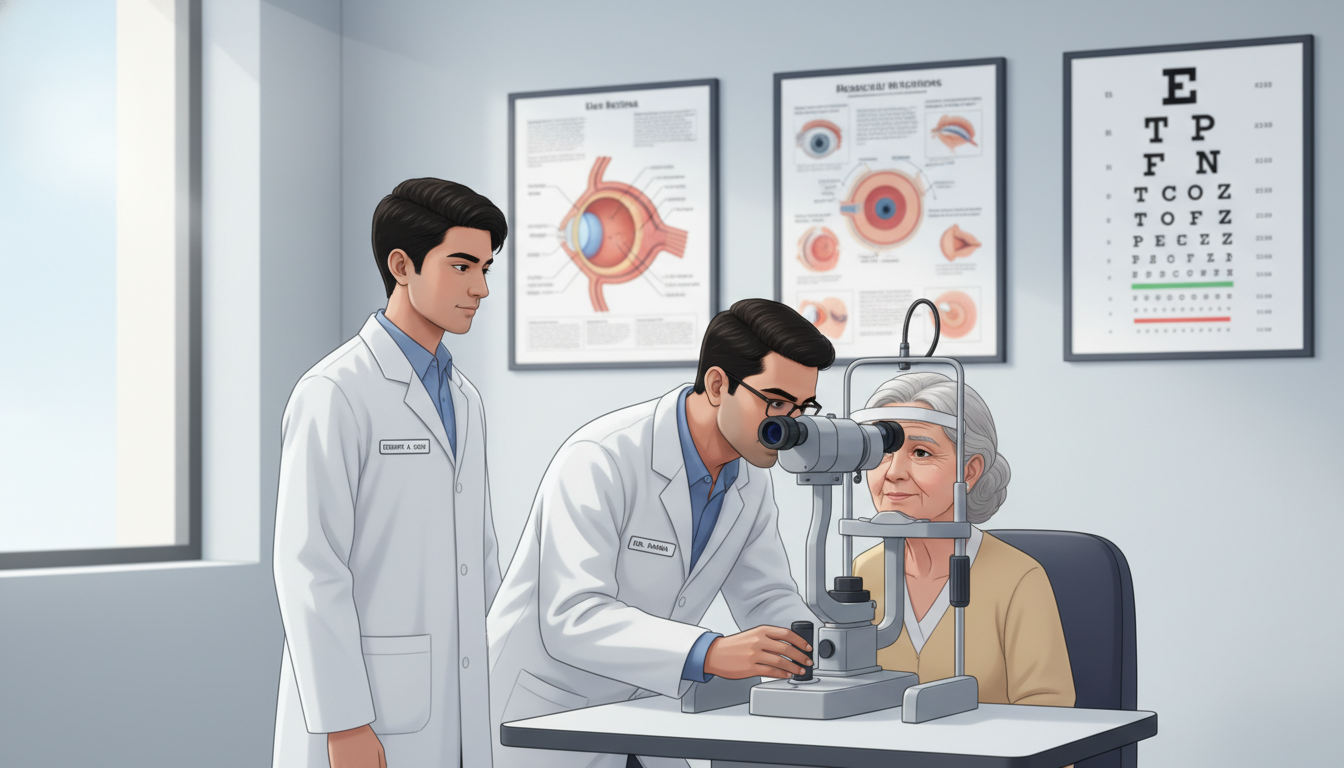
- Slit-lamp examination of the anterior segment
- Intraocular pressure measurement
- Dilated fundus exam
When appropriate, ask your preceptor to narrate what they’re doing:
- “What are you looking for when you adjust the slit beam?”
- “What distinguishes a clinically significant cataract from an incidental one?”
This understanding will help tremendously when you hit your clinical rotations.
3. Pay Attention to Communication Style
Ophthalmologists often have to explain:
- Chronic disease management (e.g., glaucoma drops, diabetic retinopathy injections)
- Surgical risks and benefits (cataract surgery, retinal surgery, corneal transplantation)
- Visual prognosis and potential disability
Notice:
- How they explain complex conditions in accessible language
- How they deliver bad news (e.g., irreversible vision loss)
- How they navigate language barriers or health literacy challenges
These experiences can become strong examples for your ophtho match personal statement and interviews.
4. Experience Procedural and Surgical Aspects
If you have the opportunity to observe procedures:
In the clinic:
- Intravitreal injections
- YAG capsulotomy or laser iridotomy
- Minor lid procedures
In the OR:
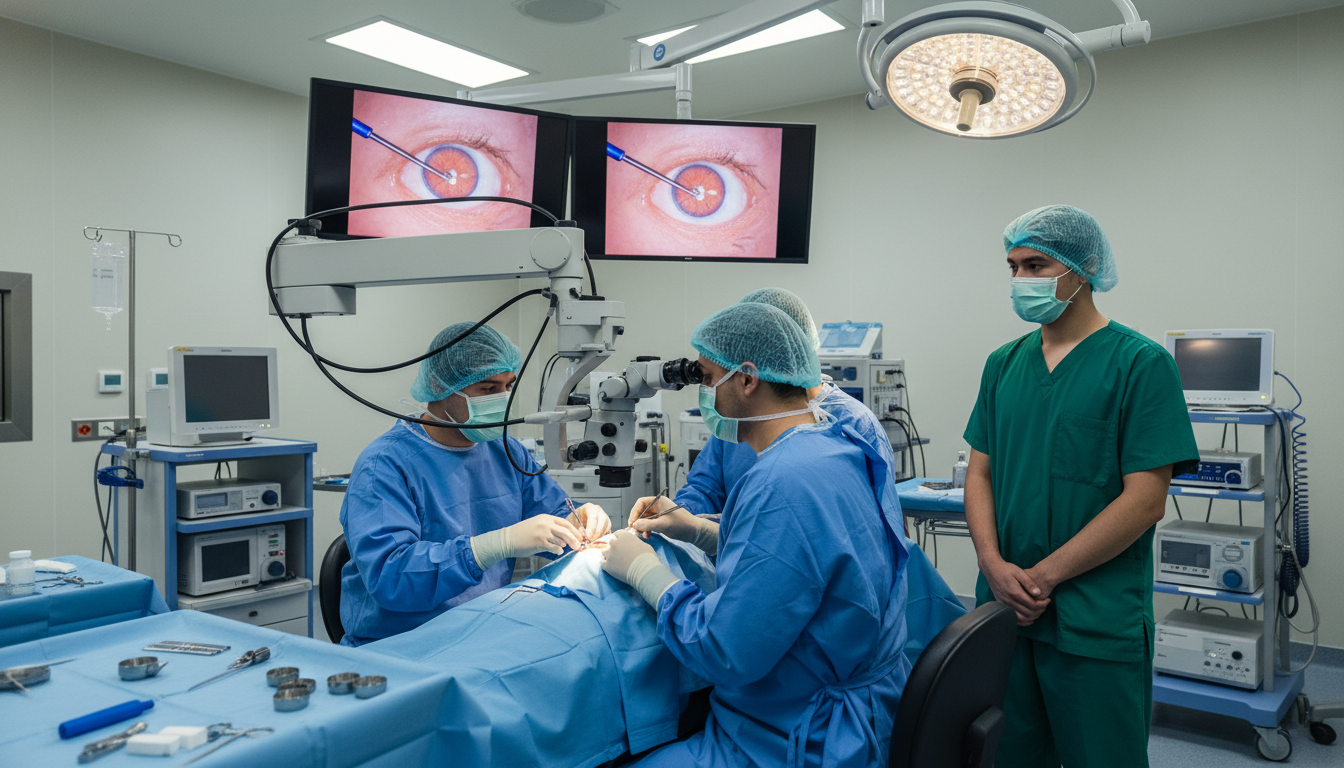
- Cataract surgery
- Vitrectomy/retinal surgery
- Corneal transplantation
- Oculoplastic repair
Focus less on memorizing each step and more on:
- The level of precision required
- The decision-making behind surgical choices
- How the surgeon interacts with staff and trainees
Ask yourself honestly:
- Do I feel drawn to this type of microsurgery?
- Can I see myself doing this for decades?
Turning Shadowing into a Strong Ophthalmology Application
Shadowing alone won’t secure an ophthalmology residency, but used well, it can anchor your narrative and open doors to next steps.
1. Reflect Intentionally After Each Session
After each shadowing day, take 10–15 minutes to jot down:
- Specific patient cases that impacted you (without identifiers)
- Procedures or exams you found fascinating
- Aspects of the lifestyle/workload that you noticed
- Any “this resonates with me” or “this gives me pause” reactions
Over time, these reflections can:
- Feed directly into your personal statement
- Provide concrete stories for interview questions like “Why ophthalmology?”
- Help you decide whether to commit fully to an ophtho match strategy
2. Transition from Shadowing to Active Involvement
Once you’ve built rapport with a mentor through shadowing, consider asking about:
- Research projects (clinical, outcomes, education, or basic science)
- Opportunities to help with chart review, data entry, or literature reviews
- Quality improvement (QI) initiatives in the clinic or operating room
- Presenting at a departmental journal club or case conference
Frame your ask around helping them move their work forward, not just “I need research for my application.”
3. Use Shadowing Experiences in Your Personal Statement
When you write about ophthalmology in your application:
Do:
- Use 1–2 specific vignettes from shadowing that show what you valued in the field
- Highlight insights that go beyond “I like surgery and clinic”
- Tie your observations to personal traits (e.g., attention to detail, patience, interest in chronic disease management)
Avoid:
- Describing shadowing as a passive experience (“I watched…” repeated endlessly)
- Overstating your role in patient care
- Using cliché statements (“I knew from that moment I was destined to be an ophthalmologist”)
Programs are looking for thoughtful reflection, not dramatization.
4. Ask for Letters of Recommendation Strategically
Shadowing alone may not be enough for a strong letter, but if you:
- Show up consistently
- Demonstrate reliability and curiosity
- Transition into research or more longitudinal involvement
Then that attending may eventually be able to write a detailed letter for your ophtho match application.
To support them:
- Provide your CV and a brief summary of your goals in ophthalmology
- Gently remind them of specific interactions (journal club, research tasks, etc.)
- Ask early enough to give them adequate time
5. Compare Ophthalmology with Other Specialties You Shadow
If you’ve shadowed in other fields (e.g., internal medicine, neurology, ENT, general surgery), actively compare:
- Patient population and relationships
- Cognitive vs. procedural balance
- Lifestyle and call structure
- Team culture and interprofessional collaboration
You’ll be better positioned to explain why ophthalmology, not just why not other fields, which is critical during interviews.
Common Pitfalls in Ophthalmology Shadowing (and How to Avoid Them)
Even highly motivated students can unintentionally miss opportunities during shadowing. Be aware of these pitfalls:
1. Being Too Passive
Solution:
Prepare 3–5 thoughtful questions before each session, such as:
- “What do you find most challenging about managing glaucoma long-term?”
- “How do you decide when to recommend cataract surgery?”
Ask questions during natural breaks, not while the physician is in the middle of procedures.
2. Focusing Only on “Cool Surgeries”
Ophthalmology is more than operating microscopes and lasers. Much of the work is:
- Chronic disease monitoring
- Counseling about expectations and prognosis
- Dealing with systemic diseases manifesting in the eye
Pay attention to the “less glamorous” aspects too—they’re often what define day-to-day reality.
3. Neglecting Professional Etiquette
Avoid:
- Using your phone in clinic (unless needed and explicitly permitted)
- Overstepping boundaries with patients
- Interrupting the physician’s workflow with non-urgent questions
Simple professionalism signals that you’re ready to be treated as a future colleague.
4. Treating Shadowing as a Checkbox
If you’re only thinking in terms of “hours” or “requirements,” you miss the deeper value. Aim for:
- Relationships (mentors, residents, staff)
- Stories and insights about the specialty
- Opportunities that arise from showing genuine engagement
Shadowing is the starting point, not the finish line.
FAQs: Ophthalmology Shadowing and the Residency Match
1. How many shadowing hours are needed for an ophthalmology residency application?
There is no official “shadowing hours needed” threshold for ophtho. Programs rarely care about a specific number. Instead, they look for evidence that you:
- Understand ophthalmology beyond a superficial level
- Have longitudinal involvement (shadowing, research, interest group work, electives)
- Can clearly articulate why the specialty fits your skills and values
Aim for enough exposure that you can convincingly answer “Why ophthalmology?” with concrete experiences rather than generic statements.
2. Is it okay if my shadowing is all in private practice rather than academic settings?
Yes. Private practice shadowing can give you valuable insight into:
- Real-world clinic workflows
- Business aspects of ophthalmology
- Patient expectations and volume
However, for the ophtho match, it’s helpful to also have exposure to academic ophthalmology—especially if you want letters of recommendation or research. Try to combine both settings if possible, even if your academic exposure is shorter.
3. Can pre-medical students shadow ophthalmologists, or is this mainly for medical students?
Both can benefit. For pre-med students, medical shadowing in ophthalmology can:
- Confirm that medicine, and particularly a procedure-heavy field, appeals to you
- Help you speak concretely about your interests in medical school applications
For medical students, especially those considering ophthalmology residency, shadowing should be more intentional, with an eye toward mentorship, research, and deep understanding of the specialty.
4. How can I turn a good shadowing experience into a research or mentorship opportunity?
After several shadowing sessions, if you’ve built rapport and demonstrated reliability, you can say something like:
“I’ve really enjoyed learning from your clinic and am increasingly interested in ophthalmology. If you’re working on any research or quality improvement projects where an extra pair of hands could help, I’d love to get involved.”
Keep expectations modest initially (data entry, chart review, literature review). Doing small tasks well builds trust and can lead to more substantial roles, authorship, and stronger letters of recommendation for the ophtho match.
Medical shadowing in ophthalmology is more than standing behind a slit lamp—it’s your first real test-drive of the specialty. If you approach it thoughtfully, ask good questions, and build lasting connections, it can become the foundation of a compelling, well-informed path to an ophthalmology residency.