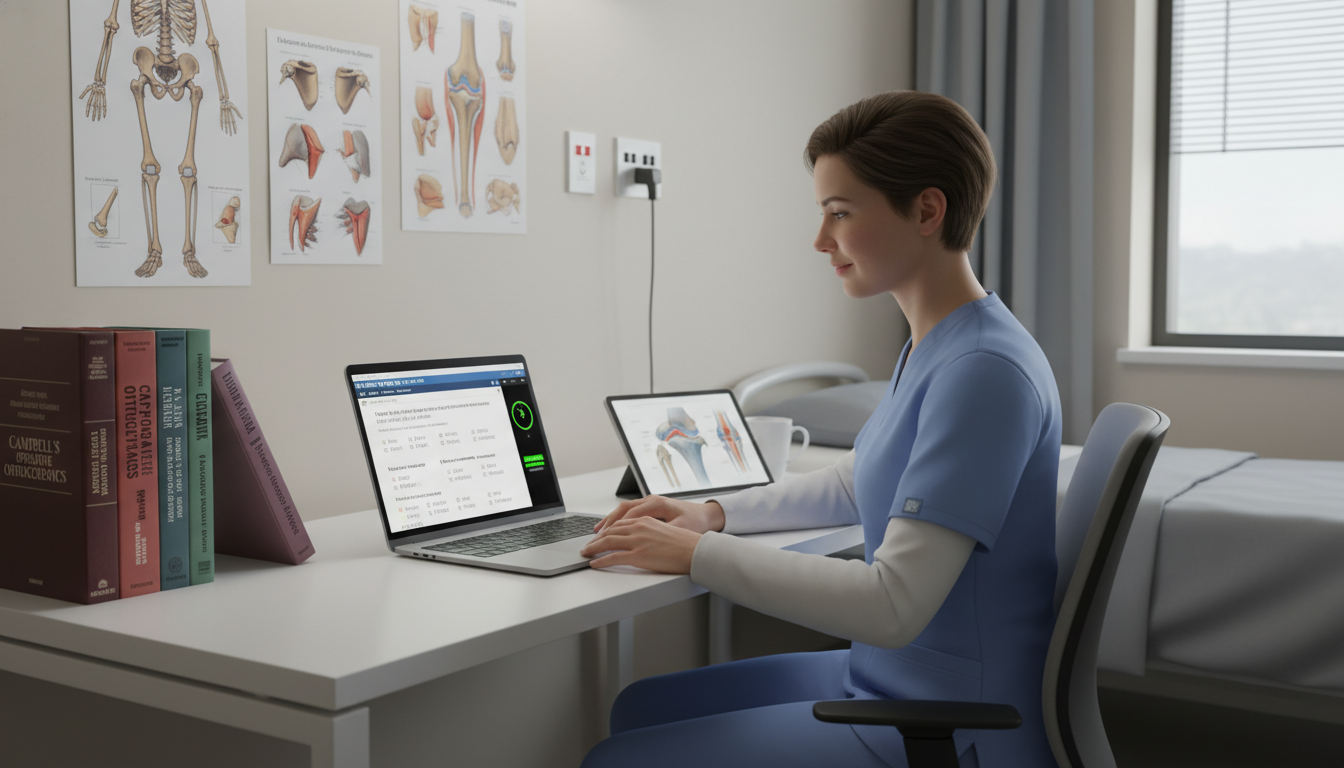
Understanding the Challenge: Ortho as an Ultra-Competitive Specialty for DOs
Orthopedic surgery sits in the top tier of competitive specialties. For a DO graduate, the bar is even higher. You’re applying in a world where:
- Program spots are limited
- Many programs historically favored MD applicants
- Metrics like board scores and research volume are rising
Yet every year, DO graduates successfully enter orthopedic surgery residency. The difference is almost never a single score or paper; it’s a deliberate, multi‑year strategy.
In this guide, we’ll focus on:
- How a DO graduate can approach the osteopathic residency match in orthopedic surgery with a realistic but ambitious strategy
- How to position yourself against applicants in other competitive specialties (like dermatology) so program directors see you as a serious contender
- Concrete tactics—step by step—for maximizing your chances of an ortho match
If you’re serious about matching ortho as a DO, you can’t rely on “typical” advice. You need an ultra‑competitive playbook.
Building the Ultra-Competitive Profile: Metrics, Rotations, and Research
1. Boards and Standardized Exams: Non-Negotiable Foundation
For a DO graduate residency applicant in orthopedic surgery, your board performance is often the first screening tool.
Take Both COMLEX and USMLE (When Possible)
Many ortho programs still prefer USMLE for comparisons across applicants. As a DO:
Ideal plan (M1–M2):
- Prepare for COMLEX and USMLE in parallel if feasible
- Sit for USMLE Step 1 and Step 2 CK, plus COMLEX Level 1 and Level 2-CE
If you did not take USMLE:
- Lean on strong COMLEX Level 2 performance
- Emphasize other objective markers (research, AOA, class rank, honors, letters)
- Target DO-friendly orthopedic surgery programs and those explicitly accepting COMLEX only
Score Targets for Ortho (General Orientation)
Exact numbers change by year, but an ultra-competitive strategy means aiming well above average:
- USMLE Step 2 CK (if taken):
- Aim: 250+ to be competitive, 240+ to remain viable (with stronger other components)
- COMLEX Level 2-CE:
- Aim: High 600s+ for a strong competitive stance, 620+ to stay realistic with robust supporting profile
If scores are below these ranges, you are not out—but you must over-compensate in other domains (rotations, letters, research, networking).
What If You Have a Lower Board Score?
If one of your scores is less competitive:
- Own it and move forward
- Don’t retake unless a serious malfunction occurred and you have faculty advising you to do so
- Double down on clinical performance
- Honor surgery, medicine, and any ortho-related rotations
- Maximize research productivity
- Show a clear upward trajectory in academic work
- Use your personal statement and interviews
- Shift the focus to resilience, insight, and demonstrated improvement
2. Clinical Excellence: Rotations, Auditions, and Letters
In orthopedic surgery, how you perform on rotations often carries as much weight as your scores—especially for DO applicants.
Core Clinical Years: Build a Surgical Reputation
On your core surgery and medicine rotations:
- Aim for Honors or top-tier evaluations
- Be known as:
- The first one in and last one out
- Relentlessly prepared (know your patients and basic ortho anatomy/pathology)
- Reliable, proactive, and teachable
Comments like “top student in several years,” “indispensable to the team,” and “exceptional work ethic” can influence both letters and internal ranking.
Targeted Orthopedic Surgery Rotations
By the end of third year (or early fourth year):
- Complete:
- A home orthopedic surgery rotation (if your school has one)
- At least 2–3 away rotations at programs where:
- DOs have historically matched
- You could realistically envision training
For DOs, these rotations are essentially month-long interviews.
Your goals:
- Demonstrate:
- Operative potential (basic hand skills, situational awareness)
- Team reliability
- Positive OR demeanor (calm, respectful, focused)
- Become the student everyone wants to work with:
- Show up early
- Pre-round on your patients
- Learn common procedures and approaches (e.g., ORIF, arthroscopy basics, fracture patterns)
Red flags to avoid:
- Appearing disinterested or overly casual
- Complaining about hours or tasks
- Being too aggressive about the OR at the expense of patient care
3. Letters of Recommendation for the Ortho Match
High-impact letters can partially offset marginal metrics, especially for DOs aiming for a competitive specialty like orthopedics.
Aim for 3–4 strong letters:
- At least 2 orthopedic surgeons who supervised you closely
- Ideally from:
- Your home institution
- A well-regarded away rotation
- Ideally from:
- One non-ortho surgeon or core faculty member
- Someone who can attest to professionalism, teamwork, and work ethic
- (Optional) Research mentor
- If they know your clinical acumen and reliability well
What makes a letter “ultra-competitive”?
Phrases such as:
- “Top 5% of students I have worked with in the last 10 years”
- “I would rank this student at the very top of my own list”
- “I trust them as I would an intern”
Be intentional:
- Politely ask potential writers:
- “Do you feel you can write a strong letter of recommendation for an orthopedic surgery residency application?”
- Provide:
- CV
- Personal statement draft
- Bullet points of cases/experiences you shared with them

4. Research and Scholarly Productivity: Playing at a Derm/Ortho Level
For ultra-competitive specialties, research volume and quality often separate interview-getters from auto-rejects. This is true for both matching derm and matching ortho—and increasingly so for DO applicants.
When to Start Research
- M1/M2 (Ideal):
- Join an orthopedic or musculoskeletal research group early
- M3 (Still useful):
- Take on at least 1–2 concrete projects with a realistic chance of completion by application time
- M4 (Fine-tuning):
- Push existing projects toward submission/presentation rather than starting brand-new projects
Types of Projects That Count
You don’t need RCTs. You need completed, presentable work:
- Retrospective chart reviews (e.g., fracture outcomes, implant comparisons)
- Case series / case reports (especially unusual or instructive cases)
- Systematic reviews or meta-analyses (if well-mentored)
- Quality improvement projects with measurable outcomes
- Anatomy-based or biomechanics projects
Look for chances to present:
- Local institutional research days
- Regional or national meetings (AAOS, AOA, specialty subsocieties)
- Posters and podium presentations
Productivity Targets for Ultra-Competitive Ortho Applicants
Aim for by ERAS submission:
- 2–3+ ortho-themed abstracts/posters/presentations
- 1–2+ manuscripts accepted, in press, or under review (even if not first author)
This is similar to what strong matching derm candidates attempt; while you don’t need derm-level volume, thinking on that scale helps.
DO-Focused Strategy for Research
As a DO graduate:
- Prioritize ortho research with MD or DO ortho faculty (ideally program-affiliated)
- If your home program is limited:
- Seek virtual or multi-institution collaborations
- Consider summer away research experiences early on
- Use research to:
- Build relationships with orthopedic faculty who can later advocate for you during selection
Strategic Application Planning: Program List, Signaling, and Ortho-Specific Tactics
An ultra-competitive strategy is not only about who you are, but also how you apply.
1. Building Your Program List: Breadth and Realism
You should craft a list that reflects both ambition and realism as a DO.
Key categories:
- Programs with a history of DO graduates
- Check: Resident rosters, alumni lists, program websites, FREIDA, and match lists
- Community or hybrid programs
- Often more open to DOs and COMLEX-only applicants
- University programs with known DO inclusion
- Some academic programs have DO faculty and residents and explicitly welcome DOs
- Osteopathic-focused orthopedic programs (DO-friendly)
- Including former AOA programs that merged post-single accreditation
Application volume:
- For a DO seeking an ortho match in an ultra-competitive environment:
- Many applicants apply to 60–80+ orthopedic programs
- Tailor based on:
- Board scores
- Research strength
- Clinical performance
- Number of strong letters
More is not always better if you cannot demonstrate genuine interest, but breadth is important.
2. Signaling, Supplements, and Program Communication
With the evolving ERAS and signaling landscape, use each tool strategically.
Preference Signaling (If Offered)
If orthopedic surgery uses preference signaling:
- Assign your highest-level signals to:
- Programs where you did an away rotation
- Programs with a known track record of DO acceptance where you are genuinely enthusiastic
- Do not waste signals on:
- Places unlikely to consider DOs
- Prestige-only choices you’re not realistically competitive for
Supplemental Applications and Essays
When asked to indicate:
- Top geographic or program preferences
- Meaningful experiences
- Diversity or adversity narratives
Use this to showcase:
- Your osteopathic background (holistic, patient-centered) in a way that aligns with ortho
- Specific reasons you fit that program:
- Trauma-heavy?
- Community-oriented?
- Sports-focused?
3. Personal Statement: Making the DO Story Work for You
Your personal statement for a DO graduate residency application to ortho should be tightly focused.
Avoid:
- Generic “I love bones and biomechanics” narratives
- Overly dramatic “hero surgeon” storylines
Emphasize instead:
- How your osteopathic training:
- Strengthened your hands-on exam skills
- Deepened your understanding of musculoskeletal function
- Enhanced your holistic view of patients recovering from injury or surgery
- Concrete experiences:
- A specific case on rotation that crystallized why ortho fits you
- Observing long-term patient relationships in fracture management or joint replacement
- Key traits:
- Work ethic
- Grit
- Team orientation
- Commitment to lifelong surgical learning
Tie your story back to what you offer a residency program, not just what you want from them.
4. Interview Season Strategy
If you are fortunate to receive interviews, you are now competing on a more level field with MD peers.
Before each interview:
- Research:
- Case volume
- Program culture
- Fellowship placements
- Presence and role of DOs in the program
- Prepare:
- A brief, compelling narrative about:
- Why ortho
- Why this program
- What you uniquely add as a DO graduate
- A brief, compelling narrative about:
During interviews:
- Be prepared to address:
- “Why DO?” if it arises
- Any gaps, step failures, or anomalies (direct, honest, and brief)
- Show:
- Coachability
- Humility
- Enthusiasm for hard work and long hours
Post-interview:
- Send thoughtful, specific thank you notes (if culturally appropriate)
- Keep a private ranking log immediately after each interview day
- Avoid over-communicating or appearing desperate; be professional and measured

Contingency Planning and Parallel Strategies
Even with ultra-competitive preparation, the orthopedic surgery match remains uncertain—especially for DOs. Intelligent backup planning does not mean you are less committed; it means you are realistic and mature.
1. Parallel Planning Within Orthopedics and Related Fields
Some applicants create a tiered preference strategy:
- Primary goal: Categorical orthopedic surgery position
- Secondary pathways:
- Preliminary general surgery year with goal of re-applying ortho
- Research year in orthopedics, then re-applying
- Strongly related fields:
- PM&R with sports/MSK focus
- Interventional pain
- Sports medicine via primary care route
If you choose a preliminary year or research year:
- Maintain strong connections with orthopedic mentors
- Seek ongoing presentations/publications
- Request updated LORs reflecting your growth and surgical abilities
2. Evaluating When to Pivot
You should periodically reassess:
- Are your:
- Scores
- Research
- Clinical evaluations
- Letters
- Interview offers
consistent with a realistic chance at an ortho match?
If, after one full cycle with few or no interviews, you might:
- Add:
- A research year or improved clinical engagement
- Or consider:
- A definitive pivot to another specialty that still offers high fulfillment (e.g., PM&R, anesthesiology, emergency medicine, sports med pathways)
Having a Plan B does not diminish Plan A; it demonstrates maturity and self-awareness—traits that impress programs in any competitive specialty.
Mindset, Wellness, and Sustainable Performance
Pursuing orthopedic surgery as a DO is demanding. Burnout or loss of perspective can derail an otherwise strong application.
1. Long-Term Mindset
Over several years of preparation:
- Recognize that:
- You control your effort and decisions, not the final outcome
- Luck and timing play real roles
- Focus on:
- Skill-building
- Character development
- Professional relationships
This mindset ensures that—even if orthopedics doesn’t work out—you still become a strong physician in another field.
2. Structured Support
Don’t do this alone:
- Seek:
- Mentors in orthopedic surgery (both DO and MD)
- Career advisors at your school
- Peer support (especially from older students who matched ortho or other competitive specialties)
- Be honest:
- About stress
- About doubts
- Use:
- Counseling services if needed
- Wellness resources from your institution
3. Identity Beyond Specialty
While you pursue an ultra-competitive path:
- Keep perspective:
- Your worth is not tied to the letters after your residency program’s name
- Orthopedic surgery is one meaningful way to practice medicine, not the only one
- Stay connected to:
- Family
- Friends
- Hobbies and physical activity
Ironically, a stable, grounded identity often makes candidates more appealing to ortho programs looking for teammates who can handle stress and work well over 5+ intense years.
FAQs: DO Graduate Strategy for Orthopedic Surgery
1. As a DO, can I realistically match into orthopedic surgery?
Yes. DOs match into orthopedic surgery every year. Your chances are highest if you:
- Perform strongly on COMLEX (and USMLE if taken)
- Excel on orthopedic and surgical rotations
- Secure strong letters from orthopedic surgeons
- Build a track record of ortho-related research
- Apply broadly, with a smart program list that includes DO-friendly residencies
You may face fewer automatic interview offers than MD peers with similar metrics, so deliberate strategy and networking are critical.
2. Do I absolutely need USMLE to match ortho as a DO?
Not absolutely—but it helps significantly.
- Strongly recommended:
- If you’re early in training and aiming for an ultra-competitive ortho match, take USMLE Step 2 CK in addition to COMLEX Level 2.
- If you didn’t take USMLE:
- Focus on excelling in COMLEX, clinical performance, and research.
- Prioritize programs that:
- Explicitly accept COMLEX-only
- Have DO residents currently in training
3. How many orthopedic surgery programs should I apply to as a DO?
Most DO applicants targeting ortho should consider:
- 60–80+ programs, depending on:
- Board scores
- Research volume
- Strength of letters
- Presence of DO representation in target programs
A smaller, more tailored list might be appropriate if you have extremely strong metrics and robust ortho research, but breadth usually improves interview chances.
4. If I don’t match ortho on my first try, what are my options?
Common and viable options include:
- Preliminary general surgery year, then re-applying ortho
- Dedicated orthopedic research year, enhancing your CV and network
- Pivoting to a related specialty:
- PM&R (with MSK or sports emphasis)
- Primary care → sports medicine fellowship
- Anesthesiology or EM with procedure-heavy practice
In each case, maintain your professionalism and keep in close contact with ortho mentors. Many residents successfully match ortho on a second attempt with a stronger application.
Pursuing orthopedic surgery as a DO graduate is absolutely possible—but it demands ultra-competitive strategy, early planning, and relentless follow-through. By aligning your board performance, clinical excellence, research productivity, and application tactics, you give yourself the best chance not only to match, but to thrive as an orthopedic surgery resident.