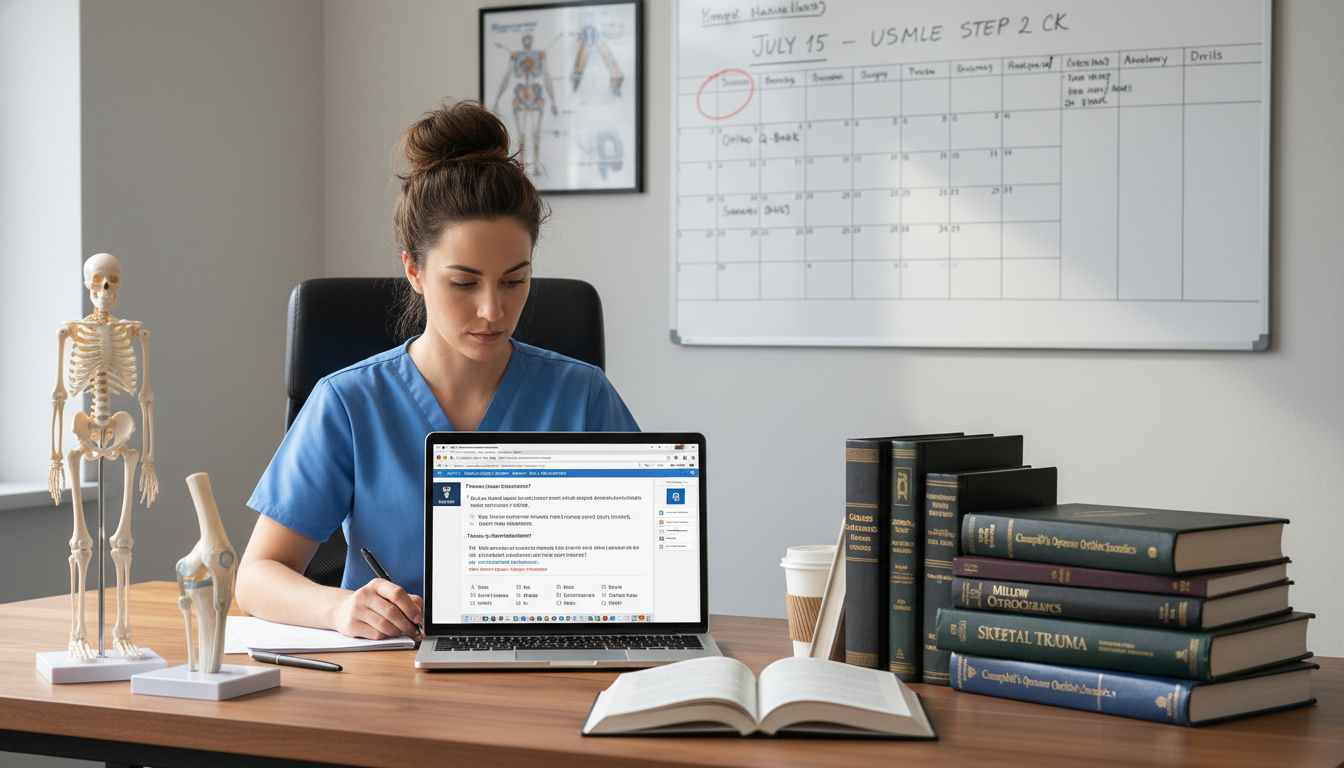
Clinical rotations in orthopedic surgery are one of the most pivotal experiences for students interested in matching into this highly competitive specialty. Your performance on these rotations—both home and away—often matters more than almost any other single component of your application. They are, in essence, an extended job interview and a live audition for the ortho match.
This guide will walk you through how to excel before, during, and after your orthopedic surgery rotations, with practical strategies to stand out for the right reasons and build a compelling residency application.
Understanding the Stakes: Why Ortho Rotations Matter So Much
Orthopedic surgery is a small, tight-knit specialty where reputation, work ethic, and “fit” are critical. Clinical rotations in orthopedics—especially sub-internships and away rotations—serve several essential functions:
1. They Showcase Your Day-to-Day Work Ethic
Faculty and residents will see:
- How early you arrive and how prepared you are
- Whether you help the team without being asked
- How you respond to feedback, stress, and long hours
- Your reliability with follow-through on tasks
In a field known for demanding schedules and physical work, consistent effort matters as much as raw intelligence.
2. They Determine Your Letters of Recommendation
Strong orthopedic surgery letters of recommendation almost always come from:
- Your home ortho department (through a sub-I or longitudinal exposure)
- Away rotations where you worked closely with attendings
Rotations are your chance to earn personalized, enthusiastic letters that mention concrete examples of your performance—an important differentiator in the ortho match.
3. They Help Programs Assess “Team Fit”
Programs are asking:
- Do we enjoy working with this person?
- Can this student function well as an intern with some supervision?
- Does their personality fit our culture and resident group?
Your behavior on the wards, in the OR, and even in the call room or elevators contributes to these impressions.
4. They Let You Test-Drive the Specialty
For you, third year rotations and fourth year ortho sub-Is are a test:
- Do you enjoy the OR and the procedural nature of care?
- Can you see yourself managing musculoskeletal disease long-term?
- Do you resonate with the culture and tempo of orthopedic surgery?
Clerkship success isn’t just about impressing others—it’s also about confirming (or questioning) your career choice with real-world exposure.
Preparing Before the Rotation: Set Yourself Up to Succeed
How you show up on day one can set the tone for your entire rotation. Thoughtful preparation is one of the clearest signals of motivation and professionalism.
Learn the Basics of Ortho Before You Start
You don’t need to be a mini-resident, but you should know:
- Core fracture patterns & nomenclature
- Colles vs Smith fractures
- Intertrochanteric vs femoral neck
- Supracondylar humerus fractures in children
- Basic anatomy
- Shoulder: rotator cuff muscles, deltoid innervation, axillary nerve course
- Hip: blood supply to the femoral head, hip abductors
- Knee: ACL/PCL/MCL/LCL, menisci, extensor mechanism
- Spine: major levels, nerve roots, red-flag symptoms
- Common conditions
- Osteoarthritis, rotator cuff tears, ACL tears, ankle fractures, hip fractures, low back pain, cauda equina
Actionable prep resources (2–4 weeks before):
- Read core chapters in a student-friendly ortho text or clerkship guide.
- Watch short videos (e.g., AO Foundation, orthopedic societies) on:
- Basic fracture fixation principles
- Principles of casting and splinting
- OR etiquette and sterile technique
- Review relevant anatomy using:
- Netter or similar atlas
- Online 3D interactive anatomy tools
You will not be quizzed on advanced biomechanics, but recognizing key diagnoses and understanding basic management will help you keep up and contribute.
Master the Orthopedic Physical Exam Fundamentals
Being able to perform a focused, efficient exam is one of the fastest ways to impress.
Focus on learning:
- Knee exam
- Inspection, effusion check, ROM
- Lachman, anterior/posterior drawer
- McMurray, valgus/varus stress
- Shoulder exam
- Active vs passive ROM
- Neer/Hawkins impingement
- Drop arm, empty can, external rotation strength
- Hip exam
- Gait assessment, Trendelenburg
- Internal/external rotation, FABER/FADIR
- Spine exam
- Straight leg raise (lumbar radiculopathy)
- Motor, sensory, reflex exam by root level
Practice these on classmates before the rotation, and memorize how to document findings succinctly.
Clarify Goals with Your Home Program
Reach out to the clerkship director or coordinator:
- Confirm:
- Start time and location for day 1
- Dress code (scrubs vs business attire for clinic)
- Call expectations
- Ask:
- Which services you’ll rotate through (trauma, joints, sports, spine, hand, peds)
- Whether there’s a rotation handbook or expectations document
- Share:
- Your interest in orthopedic surgery residency (if applicable)
- Any specific goals (e.g., improve OR skills, get a letter, explore a subspecialty)
Showing that you’ve thought about your goals beforehand reinforces your seriousness.

Excelling on Day-to-Day Clinical Rotations: Wards, Clinic, and Call
Clerkship success in orthopedic surgery is less about isolated heroics and more about consistently doing the fundamentals well. Programs remember students who make the team’s life easier.
Show Up Early and Prepared—Every Day
Aim to arrive before the residents (within reason):
- Pre-rounding
- Check vitals, lab results, overnight events
- Review imaging results and operative notes
- See your patients briefly and update their exam
- Before OR days
- Read about the cases (indications, basic steps, common implants)
- Look up significant imaging for each patient
If you know the census and key overnight events before sign-out, you’ll contribute more effectively.
Master Efficient, Ortho-Focused Presentations
When presenting in the morning or in clinic, keep it concise, structured, and ortho-relevant.
Inpatient example structure:
- “Mr. Smith is a 72-year-old male POD#2 s/p left hip hemiarthroplasty for displaced femoral neck fracture.”
- Overnight events: “No overnight events; pain controlled with PO meds; no fevers; ambulated 50 feet with PT yesterday.”
- Vitals/labs: “Afebrile, stable vitals; Hgb 9.2 from 9.5; WBC 8.3; electrolytes WNL.”
- Exam (focused): “Incision clean, dry, intact; dressing without strikethrough. Leg lengths appear symmetric; able to plantar- and dorsiflex; intact sensation in superficial peroneal, deep peroneal, tibial distributions; foot warm, good capillary refill.”
- Plan highlights: PT/OT, DVT prophylaxis, pain management, wound care, dispo planning.
Clinic example:
- “This is a 45-year-old female with 6 months of right shoulder pain, worse with overhead activity, no trauma, failed 3 months of PT and NSAIDs. Positive Neer/Hawkins, weakness with empty can, full passive ROM. X-ray with mild AC joint osteoarthritis, no glenohumeral joint space narrowing. Concern for rotator cuff tendinopathy/partial tear.”
Residents and attendings value students who can “get to the point” while including key orthopedic details.
Be Proactive but Not Overbearing
Find the balance between eager and intrusive:
- Helpful behaviors
- Offer to see add-on consults: “I can go see the ankle fracture consult in the ED and report back.”
- Volunteer for tasks: “Would it help if I updated the family after the case?”
- Help with logistics: print lists, prep consent forms, bring patients to X-ray, track down imaging.
- Behaviors to avoid
- Hovering in the workroom asking repeatedly “What can I do now?”
- Interrupting when residents are clearly busy with high-acuity tasks
- Taking initiative on orders or changes without direct supervision
Pro tip: Watch what makes residents’ days harder (pages, chasing labs, tracking down imaging, updating families) and gently step in where appropriate with their permission.
Take Consults and Notes Seriously
Consults are a high-yield opportunity to show you can think like an ortho resident in training.
For each consult:
Clarify the question.
- “Rule out septic joint?”
- “Management of distal radius fracture?”
- “Disposition for elderly patient with hip fracture?”
Get a full, focused history.
- Mechanism of injury, time of onset, weight-bearing ability, previous injuries or surgeries, anticoagulation status, comorbidities.
Perform a structured ortho exam.
- Inspect, palpate, ROM, neurovascular exam, skin integrity, compartments.
Systematically review imaging.
- Identify the key bones/joint, describe alignment, displacement, angulation, joint involvement.
Report clearly to your resident.
- Clear one-liner, key findings, and a preliminary assessment (framed humbly).
Example:
“79-year-old female with a ground-level fall, now with left hip pain, unable to bear weight. X-ray shows a displaced femoral neck fracture. She was ambulatory at baseline with a cane. No other injuries. Vitals stable, no head trauma, on apixaban for afib.”
If allowed, drafting consult notes or H&Ps can offload residents and highlight your clinical reasoning.
Standing Out in the Operating Room: Technical Skills and Professionalism
The OR is where many orthopedic surgeons truly assess whether you “fit” the specialty. OR performance is not about being the fastest knot pusher—it’s about being safe, attentive, teachable, and helpful.
Learn OR Etiquette and Sterile Technique
Before your rotation, review:
- How to scrub and gown correctly
- How to maintain sterility while moving around the table
- Where to stand relative to the surgeon, resident, and scrub tech
- How to pass instruments and use retractors without crowding the field
On day one, tell the circulating nurse: “I’m a student and want to be sure I respect all sterile fields—please let me know if I’m ever too close to breaking sterility.”
Know the Case Basics in Advance
For scheduled cases, try to know:
- Diagnosis and indication
- Why is this patient getting this operation instead of nonoperative care?
- High-level steps of the procedure
- Example: For a TKA—exposure, femoral cut, tibial cut, trialing, cementing, closure.
- Key anatomy at risk
- Nerves, vessels, tendons near the operative field.
Even 10–15 minutes of pre-reading per case can transform your learning and questions.
Be Fully Present and Anticipate Needs
While scrubbed in:
- Maintain excellent retraction:
- Hold steady, adjust only when asked or when clearly needed.
- Watch the surgeon’s line of sight—help expose what they need to see.
- Be the “eyes and ears”:
- Notice if a foot is slipping off the table, an arm is poorly padded, or a cord is in the way—and politely alert the team.
- Help with workflow:
- Place suction where needed, cut sutures at the requested length, keep the field clean.
During the case, ask brief, thoughtful questions during low-stress moments, not when the surgeon is dissecting near a nerve or troubleshooting complications.
Develop Basic Technical Skills
You are not expected to be a surgeon, but you can progress in:
- Instrument handling:
- Proper use of pickups, scissors, needle drivers
- Respecting tissues—gentle with skin, careful with tendons and nerves
- Knot tying and suturing:
- Practice two-handed and one-handed knots outside the OR.
- When invited, suture skin with attention to spacing, eversion, and tension.
- Drilling and screw placement (if permitted):
- Understand the steps: drill, measure, tap (if required), place screw.
If you’re unsure, say: “I’d like to try, but I’m inexperienced—please walk me through each step.”
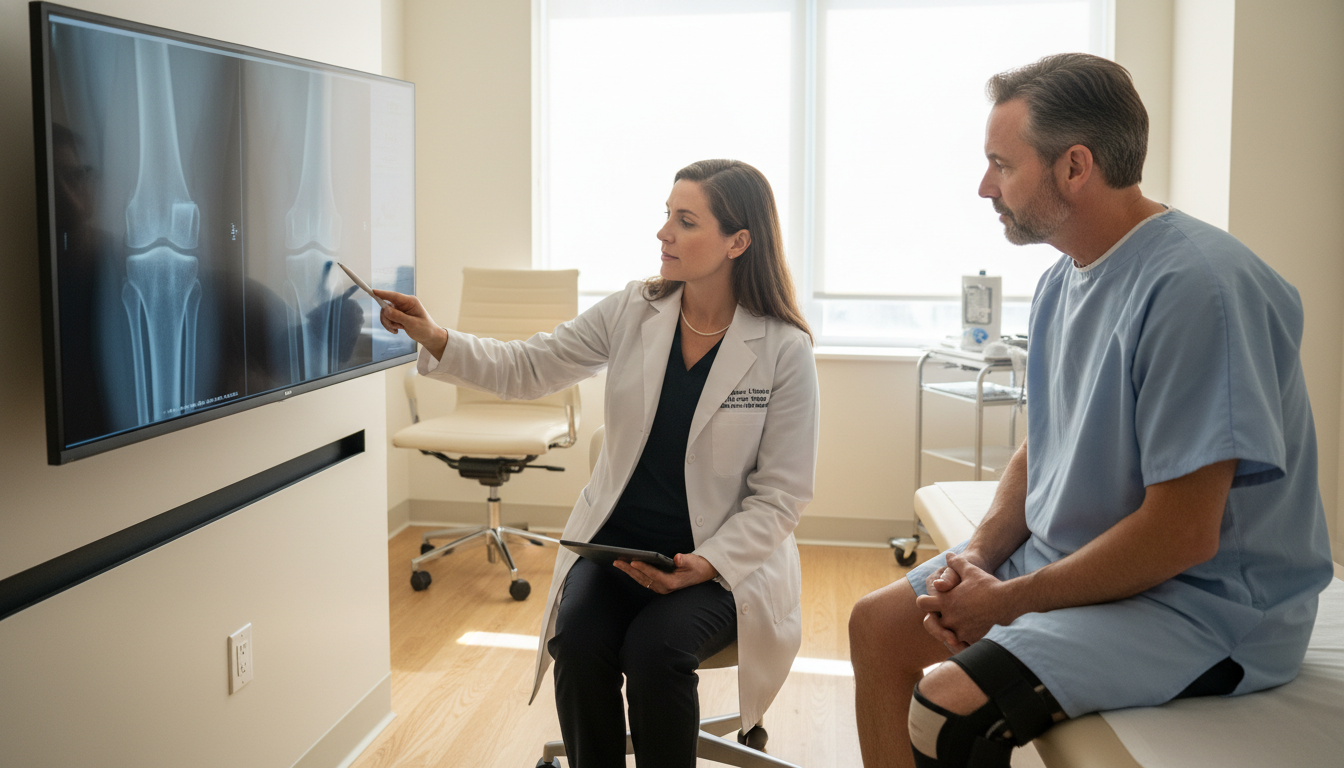
Professionalism, Communication, and Building Strong Relationships
Technical performance alone will not secure an orthopedic surgery residency spot. Professionalism and interpersonal skills are crucial signals for programs.
Be Reliable, Honest, and Low-Maintenance
Orthopedic teams prize students who:
- Do what they say they will do, on time
- Admit when they don’t know something instead of bluffing
- Accept feedback without defensiveness
- Require minimal “damage control” or supervision for basic tasks
If you make a mistake (and everyone does):
- Acknowledge it honestly and quickly
- Apologize if appropriate
- Describe what you’ve learned and how you’ll prevent it next time
Programs understand errors; they are far less tolerant of dishonesty or blame-shifting.
Communicate Well with Patients and Families
You may be the team member with the most time to talk to patients. Use that time well:
- Introduce yourself clearly as a medical student and your role.
- Check for understanding after the team’s explanations.
- Help clarify basic concepts (e.g., what a “fracture” is, what “non–weight-bearing” means).
- Always avoid overstepping—do not promise outcomes or contradict your team.
These interactions can be powerful: attendings often remember the student who helped a distressed family understand what was happening.
Work Well with the Entire Team—Not Just Surgeons
Respect and collaborate with:
- Residents at all levels
- Nurses and scrub techs
- PAs and NPs
- Physical and occupational therapists
- Radiology techs and unit coordinators
Learn names and show appreciation. Ortho is team-based; if you don’t treat nurses or techs well, attending surgeons will hear about it.
Signals of Interest in Orthopedics—Without Overdoing It
You want to be clear that you’re invested in the specialty and in clerkship success, but avoid coming across as ingratiating.
Concrete ways to show interest:
- Ask to see more complex consults or cases.
- Read the attending’s or service’s papers and ask a brief, thoughtful question.
- Follow patients longitudinally—from consult to OR to post-op to clinic follow-up.
- Offer to come in for early cases or weekend rounds when appropriate.
Balance this with self-care and honesty: nobody is impressed by performative burnout.
After the Rotation: Reflect, Consolidate, and Prepare for the Ortho Match
How you end and follow up after your orthopedic surgery rotation can strengthen your mentorship network and your application for orthopedic surgery residency.
Ask for Feedback and Act On It
Near the end of the rotation (not the final day), ask a few residents and at least one attending:
- “Do you have any feedback on how I’ve done this month?”
- “Are there 1–2 things I should focus on improving for my next orthopedic rotation?”
Listen actively, thank them, and integrate the feedback. If they see you implement their suggestions in real time, it reinforces your growth mindset.
Strategically Request Letters of Recommendation
When you’ve had a good experience with an attending who knows you well:
- Ask in person if possible.
- Use clear, respectful language:
- “I’ve really appreciated working with you this month, and I’m planning to apply for orthopedic surgery residency. Would you feel comfortable writing a strong letter of recommendation for me?”
- If they hesitate even slightly, accept that gracefully and consider asking someone else.
Provide:
- CV
- Personal statement draft (if available)
- Summary of your rotation contributions and any noteworthy cases
- ERAS letter submission details and deadlines
Strong letters often mention specific examples of your initiative, teamwork, and clinical reasoning during the rotation.
Maintain Professional Relationships
After the rotation:
- Send a brief thank-you email to key mentors and the clerkship director.
- If you publish or present anything they helped with, update them.
- Before applying, consider a short update email:
- “I wanted to share that I’ll be applying in orthopedic surgery this cycle; your rotation was formative in my decision…”
These relationships matter for advocacy, networking, and guidance in navigating the ortho match.
Reflect on Fit and Future Steps
Use your experience to think critically:
- What aspects of orthopedic surgery energized you?
- What types of cases or patient populations did you enjoy most (trauma, sports, joints, spine, hand, peds)?
- How did you feel about the schedule, call, and culture?
- If you didn’t love ortho, what did that teach you about your preferences?
Honest reflection can save you from pursuing a specialty that isn’t right for you—or confirm that this is exactly where you belong.
Practical Tips and Common Pitfalls: A Rotation Survival Checklist
Below is a consolidated set of clinical rotations tips tailored to orthopedic surgery and third year rotations in general.
Daily Habits That Signal Excellence
- Arrive 10–20 minutes before the team.
- Know every patient you’re following—diagnosis, procedure, POD, weight-bearing status.
- Carry a small notebook for:
- Consult details
- Feedback pearls
- To-do lists
- Pre-read at least one topic per day based on cases you saw.
- Leave only when the team genuinely has no further work that you can help with.
Common Mistakes to Avoid
- Vanishing student syndrome: Disappearing for long stretches without telling anyone where you are.
- Inappropriate phone use: Texting or scrolling in the OR, clinic, or workroom. If you’re using your phone to look up information, say so.
- Overstepping with patients: Delivering major news, giving precise prognoses, or contradicting your seniors.
- Complaining openly: About hours, cases, or patients—especially early in the rotation.
- Arguing when corrected: You can clarify, but avoid defensiveness or prolonged debate.
Balancing Multiple Rotations and Ortho Focus
If you’re on a general surgery or EM month but interested in orthopedics:
- Look for musculoskeletal chief complaints (fractures, joint dislocations, back pain).
- Use those encounters to refine your MSK history and exam skills.
- Seek feedback specifically on your approach to orthopedic problems.
Strong performance across all third year rotations signals reliability and well-roundedness—both highly valued in orthopedic surgery residency applications.
FAQs: Excelling in Orthopedic Surgery Clinical Rotations
1. Do I need prior orthopedic surgery experience to excel on an ortho rotation?
No. Faculty and residents expect variation in prior exposure. What matters most is:
- Preparation with basic anatomy and exam skills
- Strong work ethic and reliability
- Willingness to learn and accept feedback
Students without prior ortho experience often do very well when they show curiosity, humility, and consistent effort.
2. How many ortho sub-I or away rotations should I do for the ortho match?
This varies by applicant and year, but many successful applicants complete:
- One home orthopedic surgery sub-internship (if available)
- 1–2 away rotations at programs of strong interest
Quality is more important than quantity. Stellar performance on two rotations is usually more valuable than average performance on four.
3. How can I stand out if I’m not very technically skilled in the OR yet?
Programs know that medical students are at an early stage technically. You can stand out by:
- Knowing the patient and their imaging thoroughly
- Anticipating the next step and adjusting retraction accordingly
- Asking insightful, appropriately timed questions
- Being reliable and helpful before and after cases (pre-op, post-op, documentation)
Technical skills will come; your attitude, communication, and work habits are evaluated from day one.
4. What if my orthopedic rotation makes me unsure about pursuing ortho?
That’s valuable information. Reflect on:
- Which parts did you enjoy (clinic, OR, trauma, sports, peds, research)?
- Which aspects were deal-breakers (hours, culture, physical demands)?
- Whether your experience might have been specific to that institution or service
Discuss your concerns with trusted mentors. Sometimes a different rotation or subspecialty within ortho feels very different; other times, it’s a sign your interests may align better with another specialty. Your clerkship success includes making an informed, authentic decision about your career.
Excelling in clinical rotations in orthopedic surgery is about being prepared, present, and professional across every aspect of the rotation—wards, clinic, OR, and call. Approach each day as both a learning opportunity and an extended interview, and use the experience to grow clinically while ensuring orthopedic surgery is truly the right fit for you.