
Pathology can feel invisible during medical school—few patient encounters, little clinical “face time,” and a lot happening behind the scenes. That’s exactly why a focused medical shadowing experience in pathology can be transformative. It lets you see what pathologists actually do, understand the workflow, and decide whether this is the right specialty for you—while also strengthening your pathology residency application and your overall pathology match strategy.
This guide walks you step-by-step through planning, obtaining, and maximizing a pathology shadowing experience, whether you are a premed, medical student, or international medical graduate (IMG).
Understanding Pathology Shadowing: What It Really Involves
Many students assume pathology is “just looking at slides.” Shadowing quickly dispels that myth.
What is medical shadowing in pathology?
Medical shadowing in pathology is a structured observational experience where you follow a pathologist—or pathology team—through their day. Unlike clinical shadowing in outpatient clinics or wards, pathology shadowing is largely lab-based and image-focused, but it is every bit as central to patient care.
You may observe:
- Surgical pathology sign-out: Reviewing biopsy and surgical specimens under the microscope and dictating diagnostic reports.
- Gross room / surgical pathology lab: Observing how specimens are received, accessioned, and grossly examined.
- Cytopathology: Fine-needle aspirations, Pap smears, and fluid cytology, often with live microscopic evaluation.
- Hematopathology: Bone marrow biopsies, blood smears, and flow cytometry used to diagnose leukemias and lymphomas.
- Autopsy: When available and approved, observing the process and learning its clinical role.
- Molecular / genetic pathology: High-throughput sequencing, PCR, and other complex testing.
- Transfusion medicine / blood bank: Antibody workups, transfusion reactions, and compatibility testing.
- Clinical pathology (lab medicine): Chemistry, microbiology, and other lab disciplines that inform clinical care.
Your role will be observational, not hands-on, but if you approach it deliberately, you can gain deep insight into the specialty and its workflow.
Why pathology shadowing matters for the pathology match
For students seriously considering a pathology residency, shadowing offers multiple benefits:
Clarifies your career choice
Pathology has a distinctive work pattern: intellectually intense, visually oriented, and often less patient-facing. Shadowing shows you the day-to-day reality so you can commit confidently.Strengthens your narrative in personal statements and interviews
Program directors want to know: Why pathology? Citing specific cases, experiences, and mentors from shadowing strengthens your authenticity and credibility.Helps you understand subspecialties and career paths
From academic surgical pathology to community practice, lab directorship, or molecular diagnostics, shadowing exposes you to options early.Provides networking and mentorship opportunities
The pathologists you shadow may later write letters of recommendation, offer research opportunities, or coach you through the pathology match process.
Even if you decide not to pursue pathology residency, pathology shadowing still enhances your ability as a clinician to interpret labs, understand diagnostics, and collaborate effectively with pathologists.

How to Find Shadowing in Pathology: A Step-by-Step Strategy
Students often struggle not because opportunities don’t exist, but because they aren’t sure how to find shadowing effectively—especially in a behind-the-scenes specialty like pathology.
Step 1: Start with your home institution (if you have one)
If you attend a medical school or have an associated teaching hospital:
Search your institution’s website
Look for:- Department of Pathology
- Division of Laboratory Medicine
- Surgical Pathology, Hematopathology, Cytopathology sections
Identify key contacts
- Clerkship director or Vice Chair for Education
- Residency Program Director (PD)
- Medical student education coordinator
These roles often oversee student experiences and can facilitate shadowing.
Send a focused introductory email
Keep it professional, clear, and concise. Include:- Who you are (e.g., “MS2 at X School,” “Premed at Y College”)
- Your interest in pathology and what you hope to observe
- Your available dates/times
- Your willingness to complete any required paperwork or training
Example email:
Subject: Request for Pathology Shadowing Experience
Dear Dr. [Last Name],
I am a [MS2 / premedical student / IMG] at [Institution], and I am very interested in learning more about pathology as a potential career. I am writing to ask if there might be an opportunity to shadow in the Department of Pathology, particularly in surgical pathology or cytology, to better understand the daily work of pathologists and the role they play in patient care.
I am available [provide 2–3 specific date ranges or blocks of time], and I am happy to complete any required HIPAA training or institutional paperwork.
Thank you for considering my request.
Sincerely,
[Your Name]
[Your Status: MS2, Premed, etc.]
[Your Contact Information]Use curricular electives as a bridge
If your school has a pathology elective, consider taking it. Once you’re known in the department, informal shadowing often becomes much easier to arrange.
Step 2: For premeds and students without a home pathology department
If you’re wondering how to find shadowing without a home institution or direct connection, widen your search strategically:
Target academic medical centers
Look for “Pathology shadowing,” “premed observerships,” or “clinical observership programs” on large hospital websites. Some explicitly list pathology as an available rotation.Contact community hospitals
Many community pathologists are more accessible and may be open to limited shadowing. Search:- “Hospital name + pathology department”
- “Anatomic and clinical pathology services + your city”
Use professional organizations and networks
- College of American Pathologists (CAP) local societies
- State pathology societies
- Alumni networks (your college or med school alumni who are pathologists)
Leverage cold outreach thoughtfully
If emailing a pathologist directly:- Reference how you found them (e.g., hospital website, publication, talk)
- Be clear about your goals (career exploration vs. committed interest)
- Offer flexible timing and be realistic about duration (half-day or one day to start)
Step 3: Address institutional policies and logistics
Shadowing in pathology is often tightly regulated due to privacy and lab safety concerns.
Expect to:
- Complete HIPAA training and sign confidentiality agreements.
- Undergo occupational health clearance (up-to-date vaccines, TB screening).
- Comply with lab safety training, especially for gross room or autopsy areas.
- Follow dress code (closed-toe shoes; often business casual with white coat; sometimes additional PPE such as lab coats, eye protection).
Step 4: Virtual or “hybrid” shadowing options
When in-person shadowing isn’t feasible (distance, pandemic constraints, visa issues), ask about:
- Virtual slide review sessions via Zoom or similar platforms.
- Recorded teaching sign-outs used for residents and fellows.
- Case conferences / tumor boards accessible remotely.
Virtual experiences may not replace in-person shadowing, but they still contribute meaningfully to your understanding of pathology and your pathology residency narrative.
How Many Shadowing Hours are Needed—and How to Structure Them
Students frequently ask about shadowing hours needed for residency or for demonstrating interest in pathology. There’s no official minimum, but there are practical benchmarks and strategic considerations.
For premeds (applying to medical school)
- Target range: 20–40 hours of pathology shadowing is usually sufficient for meaningful exposure if combined with more patient-facing specialties.
- Primary goal: broaden your understanding of medicine and show you explored different fields, including less visible specialties like pathology.
For medical students considering pathology residency
- Target range: At least 20–40 hours of targeted pathology shadowing before committing to the specialty, ideally spread over:
- 2–3 half-days in surgical pathology sign-out
- 1–2 sessions in the gross room
- 1–2 sessions in cytology or hematopathology
- If your school offers a formal elective (2–4 weeks) in pathology, this often “covers” shadowing expectations, especially if you’re actively engaged.
For IMGs applying to U.S. pathology residency
- Pathology program directors value:
- Demonstrated, sustained interest in pathology.
- Understanding of U.S. clinical / lab environments.
- Many successful IMGs complete:
- 1–3 months of pathology observerships or externships, sometimes across multiple institutions.
- This can amount to 160–480 hours, but quality and continuity matter more than raw hour counts.
Quality over quantity: Making hours count
What matters more than exact shadowing hours is:
- Can you describe what you saw and learned?
- Did you observe a variety of cases and settings?
- Did you develop at least one mentor relationship in pathology?
- Can your experiences anchor your personal statement and interviews?
If 10 hours of shadowing lead to a concrete, well-articulated understanding of pathology and a strong mentorship relationship, that can be more impactful than 50 unfocused hours.
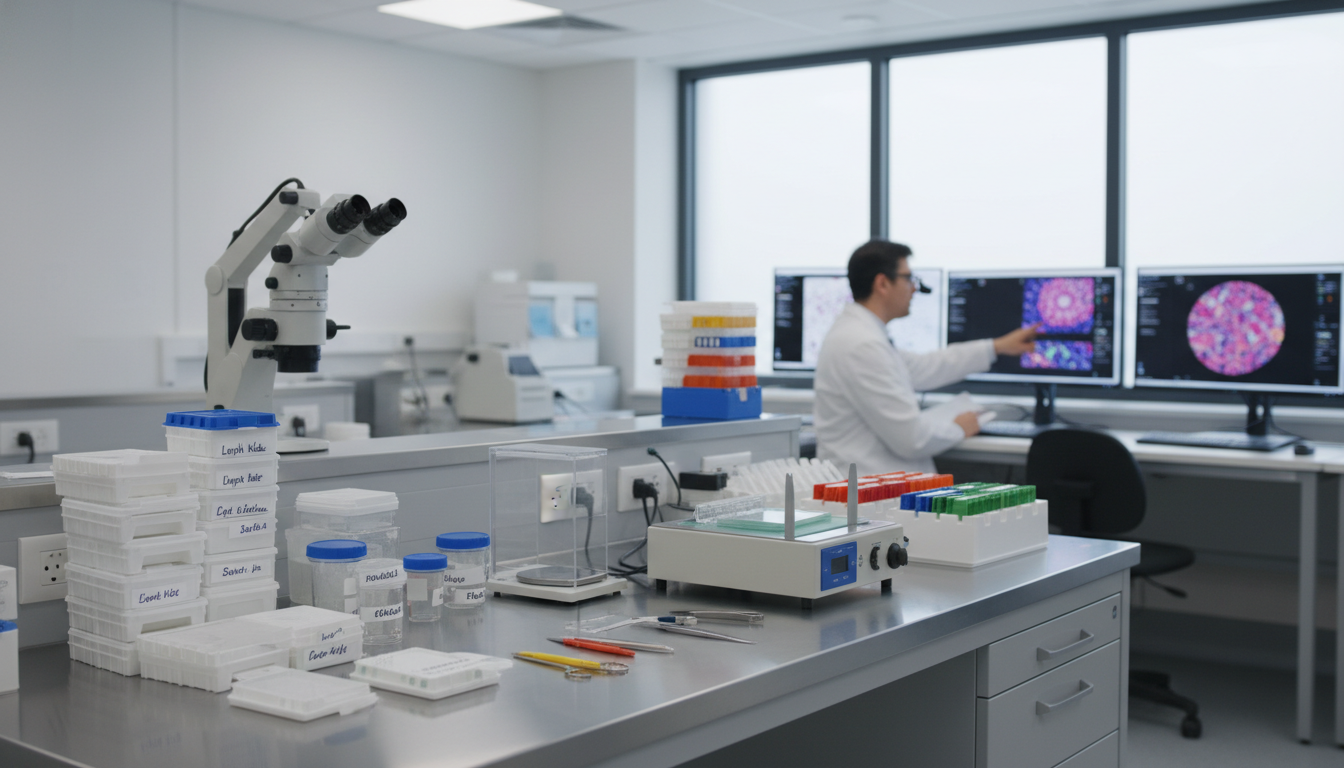
What to Expect During a Pathology Shadowing Day
Arriving prepared makes the experience more meaningful and less overwhelming. Below is a typical flow, though it will vary by institution and subspecialty.
Morning: Surgical pathology & sign-out
You might start with:
Specimen receipt and triage
- Watch how cases are accessioned and labeled.
- Learn the basics of specimen types: biopsies, resections, margins.
Gross room observation
- Observe grossing of specimens: biopsies, lumpectomies, colectomies, etc.
- See how macroscopic features guide what tissue is submitted for histology.
- Learn about inking margins, measuring lesions, and selecting sections.
Frozen section intraoperative consultation (if available)
- Observe the urgent process of providing rapid answers to surgeons.
- See the interaction between pathologist and operating room teams.
Midday: Microscopy and case review
You’ll likely spend part of the day at a multi-headed microscope:
Reviewing slides with a pathologist or resident:
- Benign vs malignant lesions.
- Basic histologic architecture (e.g., normal colonic mucosa vs adenoma vs carcinoma).
- Use of immunohistochemistry and ancillary tests.
Listening to the “thinking process”:
- How differentials are built.
- How clinical history and imaging are integrated with morphology.
- How uncertainty is handled and communicated.
Afternoon: Subspecialty exposure / conferences
Depending on the schedule, you might attend:
- Cytopathology sign-out (Pap smears, FNA smears).
- Hematopathology (peripheral smear review, bone marrow biopsies).
- Autopsy demonstrations (when available and appropriate).
- Tumor board or multidisciplinary conference:
- See how pathologists present cases and impact treatment decisions.
Professional conduct during shadowing
To make a strong, professional impression:
Confidentiality
Never take photos, videos, or identifiable data. Do not discuss cases outside the educational context.Engagement
Ask thoughtful but concise questions. Avoid interrupting during critical moments (e.g., sign-out dictation, intraoperative frozen sections).Respect for lab staff
Technologists, PAs, and support staff are critical to pathology. Learn their roles and treat them as key members of the team.Documentation
Bring a small notebook or secure digital note-taking method (no patient identifiers). Capture:- Concepts you learned
- Questions to follow up on
- Memorable cases (described in general terms)
Turning Shadowing into a Competitive Edge for Pathology Residency
Shadowing alone doesn’t guarantee a successful pathology match, but it can significantly strengthen your application when used strategically.
1. Informing and enriching your personal statement
Your personal statement for pathology residency should go beyond: “I like microscopes and solving puzzles.” Use your shadowing experience to show:
Specific moments or cases that changed your perspective.
Example: “While observing a sign-out of breast biopsies, I watched how a single diagnostic phrase in a pathology report changed a patient’s management from surveillance to surgery. It demonstrated to me how central, albeit behind-the-scenes, pathology is to clinical decision-making.”Growth in understanding the specialty
Explain how shadowing shifted your view of pathology from “lab work” to a complex, collaborative diagnostic discipline.Alignment with your strengths
Reflect on how your skills—attention to detail, patience, visual analysis, comfort with uncertainty—matched what you saw in pathologists.
2. Demonstrating consistent interest
Programs like to see continuity rather than one-off experiences:
- Multiple brief shadowing experiences across:
- Different institutions (if you’re an IMG or do away electives).
- Multiple subspecialties (e.g., surgical pathology + cytology + hematopathology).
- Integration with:
- A formal pathology elective.
- Research or case reports with pathology mentors.
- Participation in pathology interest groups or CAP medical student sections.
Mention these consistently in:
- ERAS experiences section.
- CV under “Clinical Experiences” or “Shadowing.”
- Interview answers when asked, “How did you decide on pathology?”
3. Cultivating strong letters of recommendation
Shadowing alone may or may not generate a letter of recommendation, but it can be a starting point:
- Be punctual, professional, and engaged during your time there.
- After a few sessions, ask if you could help with:
- A case report or small research project.
- Preparing a teaching presentation or journal club.
- Once you have a substantive working relationship (beyond pure observation), you can ask for a letter:
- Provide your CV, personal statement draft, and a list of programs/your goals.
- Ask if they can provide a “strong and supportive” letter for pathology residency.
4. Using shadowing to refine your program list
Through shadowing you’ll learn what environment suits you best:
- Large academic center vs community practice
- Heavy research vs mostly diagnostic work
- Emphasis on subspecialization vs general sign-out
Use this insight to:
- Tailor your program list (more academic vs community programs).
- Ask targeted interview questions:
- “How is resident exposure to the gross room and sign-out balanced here?”
- “What opportunities exist for residents to be involved in laboratory management?”
FAQs: Pathology Shadowing and Residency Applications
1. Is pathology shadowing enough to show commitment to the specialty?
Pathology shadowing is a strong starting point, but for a competitive pathology residency application, try to build a layered profile:
- At least one substantial pathology clinical experience (shadowing +/− elective).
- Academic engagement: research, case reports, or poster presentations if possible.
- Longitudinal mentorship with at least one pathologist.
Programs don’t expect every applicant to have extensive research, but a mix of clinical exposure, thoughtful reflection, and mentorship signals mature commitment.
2. How many shadowing hours do I need specifically for pathology residency?
There is no fixed number, but as a general guide:
- U.S. MD/DO students:
- A 2–4 week elective plus 20–40 hours of early shadowing is usually more than adequate.
- IMGs:
- 1–3 months (160–480 hours) of observerships or structured experiences across one or more U.S. institutions is common among successful applicants.
Focus on depth and engagement rather than chasing a target number.
3. Can premed pathology shadowing help with medical school applications?
Yes. Medical schools value applicants who understand the breadth of medicine, including “behind-the-scenes” fields. Pathology shadowing can:
- Show that you explored less obvious specialties.
- Provide unique stories for secondaries and interviews.
- Demonstrate curiosity about how diagnoses are made, not just how treatments are delivered.
Pair it with patient-facing shadowing in other specialties to show a balanced perspective.
4. What if I can’t find any in-person pathology shadowing?
If in-person opportunities are limited:
- Ask about virtual sign-out sessions or conferences.
- Attend online pathology webinars and CAP student activities.
- Read classic pathology case materials (e.g., CAP teaching cases) and discuss them with a mentor via email or video.
You can still develop a credible interest in pathology by combining these virtual experiences with self-directed learning and, when possible, later in-person observerships.
A well-planned medical shadowing experience in pathology gives you far more than a line on your CV. It reveals how central pathology is to modern medicine, helps you decide whether a pathology residency aligns with your skills and values, and gives you the stories, mentors, and insight you need to navigate the pathology match with confidence. Whether you’re a premed exploring options or an IMG assembling a U.S. application portfolio, investing in thoughtful, structured pathology shadowing is one of the most impactful steps you can take.