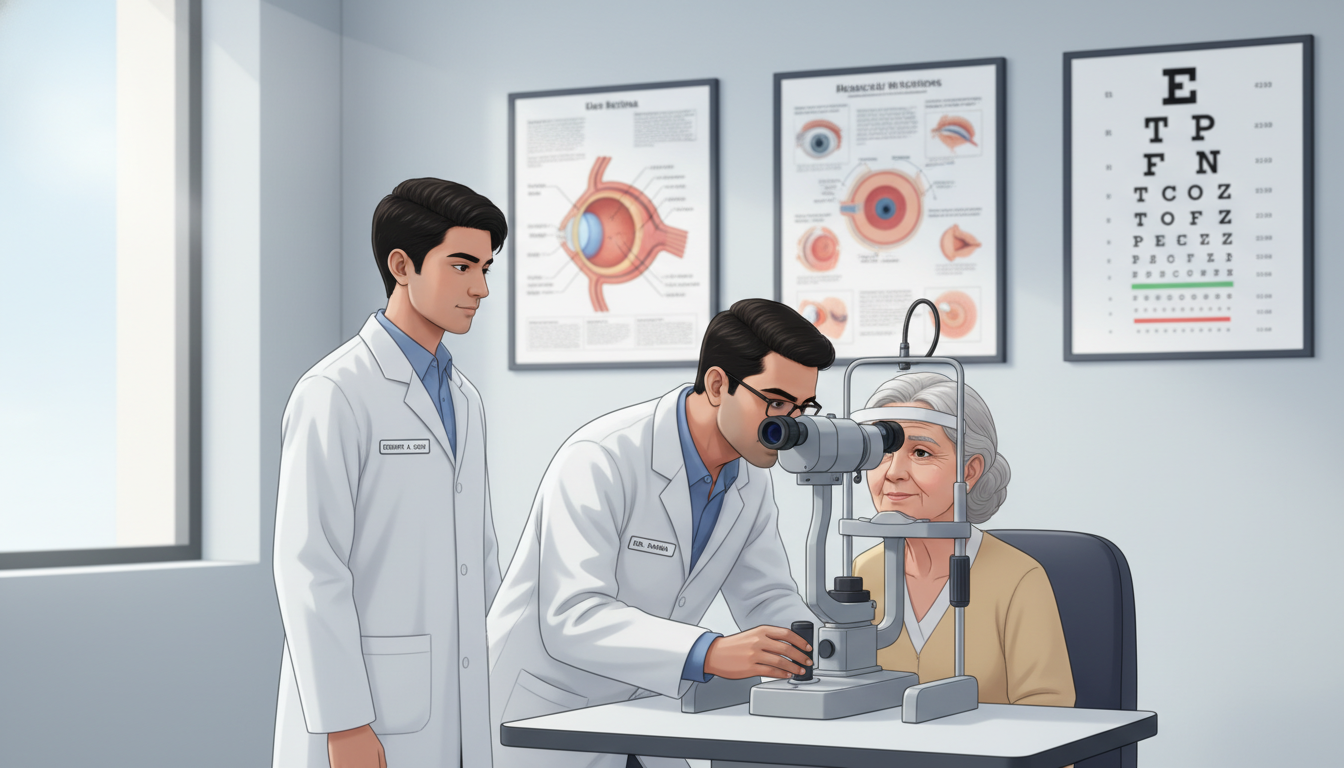
Understanding Medical Shadowing in Pediatrics-Psychiatry
Medical shadowing is often the first real-world window into a specialty—and for combined fields like Pediatrics-Psychiatry, it’s especially valuable. If you’re considering a peds psych residency or a triple board (Pediatrics–General Psychiatry–Child & Adolescent Psychiatry) program, thoughtful shadowing can help you:
- Confirm whether the field fits your personality and values
- Understand the daily realities of combined training
- Build informed, authentic narratives for your personal statement and interviews
- Meet potential mentors who understand this unique career path
Pediatrics-psychiatry blends developmental medicine with mental health, social determinants of health, and systems-based care. Shadowing allows you to see how clinicians integrate medical, psychological, and family factors in real time—something that’s hard to truly grasp from textbooks.
This guide will walk you through:
- What pediatrics-psychiatry shadowing looks like day-to-day
- How to find shadowing opportunities in this niche area
- How many shadowing hours are needed (and what type of hours actually matter)
- How to maximize the experience for future applications to peds psych or triple board programs
What Makes Shadowing in Pediatrics-Psychiatry Unique?
Pediatrics-psychiatry sits at the intersection of child development, family dynamics, and mental health. Shadowing here doesn’t look quite like typical general pediatrics or adult psychiatry experiences.
The Settings You’ll See
Depending on where you shadow, you may rotate through:
Outpatient developmental-behavioral clinics
- ADHD, autism, learning disorders, school difficulties, anxiety
- Sleep issues, behavioral dysregulation, somatic symptoms (e.g., headaches, abdominal pain with stress components)
Child & adolescent psychiatry clinics
- Depression, anxiety, OCD, PTSD, disruptive mood dysregulation disorder
- Medication management and psychotherapy integration
Integrated pediatrics-psych clinics
- Co-located behavioral health providers within pediatric practices
- Brief consults during a primary care visit, warm handoffs to psychology or psychiatry
Hospital-based consult-liaison services
- Psychiatric consultations for children admitted for medical or surgical issues
- Eating disorders, self-harm, medically unexplained symptoms, delirium
Partial hospitalization or intensive outpatient programs (IOP)
- Structured day programs for youth with significant psychiatric or behavioral needs
The mix of settings demonstrates why a triple board or peds psych clinician needs comfort in both medical and mental health environments.
Types of Encounters You Might Observe
During a typical shadowing day, you might see:
- A new patient intake for a 9-year-old with school refusal and anxiety
- A follow-up for a teen with type 1 diabetes and depression, struggling with adherence
- A family session addressing behavioral challenges in a child with autism
- A liaison consult on the pediatric floor for a child with chronic abdominal pain and suspected functional disorder
- A multidisciplinary meeting with social work, psychology, special education representatives, and pediatrics-psych
Each visit shows how medical and psychological perspectives are blended. For example:
A 12-year-old presents with headaches and abdominal pain. The pediatrician-psychiatrist explores GI and neurologic red flags, while also assessing for anxiety, bullying, sleep disruption, and family stress. They may order limited labs, provide psychoeducation about the gut–brain connection, and recommend CBT while coordinating with school and primary care.
Seeing this kind of integrative reasoning in action can be eye-opening when you’re used to more siloed views of “medical” vs “psychiatric” illness.
What You’ll Learn Beyond “Watching the Doctor”
Shadowing in this field can sharpen:
Developmental awareness
How symptoms and communication styles differ in a 4-year-old vs a 14-year-old.Interview skills with children and families
- How to build rapport quickly
- How to use age-appropriate language
- How to manage situations where parent and child stories conflict
Stigma-sensitive communication
How to talk about mental health, medications, and therapy in ways that normalize and empower, rather than label and shame.Systems thinking
Understanding how schools, child welfare, juvenile justice, and social services influence a child’s mental health care.
These are the very skills that faculty look for in peds psych residency and triple board applicants.

How to Find Shadowing Opportunities in Pediatrics-Psychiatry
Because pediatrics-psychiatry and triple board are relatively small fields, you may have to be strategic and persistent in how to find shadowing experiences. Here’s a step-by-step approach.
Step 1: Start With Your Own Institution
If your medical school or undergraduate institution has:
- A pediatrics department
- A child and adolescent psychiatry division
- A developmental-behavioral pediatrics section
You should:
Search the website for faculty who:
- Are triple-board–trained
- Hold joint appointments in pediatrics and psychiatry
- Work in developmental-behavioral pediatrics or integrated behavioral health
Email them directly. A concise email might look like:
Subject: MS2 interested in Pediatrics–Psychiatry/Triple Board – Shadowing Request
Dear Dr. [Name],
I am a [MS2/Pre-med student] at [Institution] with a strong interest in combined Pediatrics–Psychiatry training and possibly a future peds psych residency or triple board pathway.I’m hoping to gain more exposure to integrated pediatric and mental health care. If you allow medical students to shadow in your clinic or on consults, I would be grateful for the opportunity to observe and learn more about your work. I am fully vaccinated, HIPAA-trained, and happy to comply with any institutional requirements.
Thank you for considering my request,
[Name]
[School, Year]
[Contact info]
- Loop in your student affairs or clinical education office
- Some institutions require formal approval or specific onboarding modules before shadowing.
- They may also know which faculty are especially student-friendly.
Step 2: Look for Triple Board or Peds Psych Programs Nationally
If your home institution doesn’t have obvious peds psych or triple board faculty:
- Search for “triple board residency programs” and visit program websites.
- Check their faculty listings for clinician-educators with outpatient or consult-liaison roles.
- Email program coordinators or the program director asking if:
- They host visiting students for informal shadowing
- They have virtual shadowing or observation of case conferences
- There are electives open to external students (for later in medical school)
While formal visiting rotations are more structured, even one or two days of shadowing during a school break can be very instructive.
Step 3: Explore Community and Integrated Care Settings
Many combined pediatrics–behavioral health experiences occur outside large academic centers. Consider:
- Large pediatric group practices that advertise “behavioral health” or “integrated care”
- Community mental health centers with child-focused services partnered with pediatricians
- Hospital-based developmental clinics that see children for ADHD, autism, or learning concerns
Ask:
- Your primary care pediatrician or your younger siblings’ pediatrician (if appropriate) whether the clinic has integrated behavioral health.
- Local child psychiatrists if they collaborate with pediatric practices where you might observe joint work.
Because of confidentiality concerns, some smaller private practices may be hesitant, but hospital-affiliated clinics and academic-community partnerships are usually more familiar with having students shadow.
Step 4: Consider Virtual or Hybrid Shadowing
Post-pandemic, some institutions offer:
- Virtual observation of case conferences, multidisciplinary rounds, or didactics
- Limited virtual observation of patient encounters (with explicit consent and strict privacy controls)
While virtual shadowing isn’t equivalent to in-person, it can:
- Expose you to how multidisciplinary teams think and plan
- Allow you to observe a wide range of cases in a short time
- Provide networking opportunities with peds psych or triple board faculty when geography is a barrier
Emphasize your interest in pediatrics-psychiatry specifically when asking; faculty may invite you to targeted sessions that align with your goals.
Shadowing Hours Needed: Quantity vs Quality
Students frequently ask how many shadowing hours are needed for competitive residency applications, especially in niche fields like pediatrics-psychiatry. There’s no universal “magic number,” but there are principles that matter far more than raw hours.
For Pre-Meds: Building a Foundation
If you’re pre-med and thinking long-term:
- Aim for 40–80 hours of total clinical shadowing across multiple specialties.
- Within that, 10–20 hours specifically in pediatric or child mental health settings can be very helpful if you’re already leaning toward peds psych.
Focus on:
- Exposure to both medical and psychiatric aspects of child care
- Observing communication with families, children of different ages, and interdisciplinary teams
- Reflecting on what draws you to this intersection of care
Admissions committees for medical school will care more about:
- Depth of reflection and understanding
- Commitment to serving children and vulnerable populations
- Insight into mental health and social determinants of health
…than whether you logged exactly 50 vs 70 hours of shadowing.
For Medical Students: Targeted Specialty Exploration
When you’re planning for peds psych residency or triple board:
- You don’t need hundreds of shadowing hours in this exact niche.
- Instead, build a portfolio of experiences that includes:
- Pediatrics clinical rotations and/or sub-internships
- Psychiatry (especially child & adolescent if available) rotations
- Shadowing or electives that explicitly integrate both disciplines
A reasonable target:
- 1–3 weeks equivalent of exposure to integrated pediatrics-psychiatry themes before ERAS applications—this could be:
- A 2-week child psychiatry elective plus 2–3 shadowing days in a developmental-behavioral clinic
- A longitudinal half-day-per-week shadowing experience over several months
- A formal elective in developmental-behavioral pediatrics or consult-liaison child psychiatry
Programs are more impressed by:
- Concrete stories of how you saw integrated biopsychosocial care in action
- Understanding of what triple board or peds psych training actually looks like
- Evidence that you’ve thoughtfully compared general pediatrics, general psychiatry, and combined pathways
…rather than an arbitrary total of hours.
Quality Over Quantity: What Makes Hours “High-Yield”?
“High-yield” shadowing hours in pediatrics-psychiatry typically include:
Pre- and post-clinic discussions with your preceptor
- Why did they choose particular medications or therapies?
- How did they decide what was psychiatric vs medical vs social?
Variety of patient presentations
- Externalizing vs internalizing disorders
- Medically complex children with psychiatric overlays
- School and family system challenges
Opportunities to observe non-visit activities
- Team huddles or multidisciplinary meetings
- Phone calls to schools, therapists, or case managers
- Documentation approaches that integrate medical and psychiatric reasoning
One deeply engaged 4-hour session with robust debriefing is more valuable than 12 hours of silent, passive observation.

Making the Most of Your Shadowing Experience
Once you’ve secured a spot, your goal is to turn basic medical shadowing into a rich learning experience that will inform your career decisions and strengthen your application narrative.
Before You Start: Set Clear Learning Goals
Ask yourself:
- What do I want to understand by the end of this experience?
- Is triple board realistic for me?
- What does a day-in-the-life actually look like?
- How do clinicians manage emotionally intense cases?
Write down 3–5 specific goals, such as:
- Observe at least one example of managing a medically unexplained symptom in a child.
- See how a pediatrician-psychiatrist explains a new psychiatric diagnosis to a family.
- Understand how the clinician collaborates with schools or community resources.
Share one or two of these with your preceptor on the first day to help them tailor your experience.
During Shadowing: How to Be Active While Staying Appropriate
You’re primarily an observer, but you can still be intellectually active:
Bring a small notebook
- Jot down differential diagnoses (anonymized, no identifiers)
- Note questions for the debrief
- Record communication strategies that seemed effective
Watch body language and communication
- How does the clinician switch tone when addressing the child vs the parent?
- How do they handle parental disagreement or anxiety?
Pay attention to transitions
- Opening the visit: How do they build rapport quickly?
- Discussing sensitive topics: How do they ask about self-harm, trauma, or family conflict?
- Closing the visit: How do they summarize and ensure safety and understanding?
Clarify expectations about your role:
- Whether you can ask brief clarifying questions in front of the patient (often not at first, sometimes yes with older teens and if the clinician invites it)
- Whether questions should be saved for between visits
- Any special considerations for telehealth or recorded sessions
After Each Session: Debrief Thoughtfully
At natural breaks, ask 1–3 focused questions. Examples:
- “How did you decide whether that child’s headaches were more likely functional vs organic?”
- “You seemed to choose family therapy over medication for that case—can you walk me through your thinking?”
- “What parts of this case would be more in a general pediatrician’s scope vs needing a specialist like you?”
Later, reflect and write:
- A short paragraph on each day of shadowing describing:
- One case that stood out
- One thing you learned about integrating pediatrics and psychiatry
- One question that experience raised for you
These reflection notes are gold when it’s time to write your personal statement or answer “Why triple board?” during interviews.
Professionalism and Ethics in This Sensitive Space
Pediatrics-psychiatry involves especially vulnerable patients. It’s essential to:
Scrupulously respect confidentiality
- Never discuss identifiable patient details outside the clinical education context
- Don’t post about cases on social media, even if de-identified
- Follow institutional rules about notes and electronic access
Be mindful of your presence
- Some patients/families may decline having a student observe; accept this without showing disappointment.
- If a patient becomes acutely distressed, follow your preceptor’s cue about whether to remain or step out.
Take care of yourself emotionally
- Exposure to abuse, neglect, self-harm, or severe family dysfunction can be intense.
- Debrief with your preceptor or a mentor if cases are affecting you strongly.
- Recognize that processing these feelings is part of learning whether this career path fits you long term.
Using Your Shadowing to Strengthen a Peds Psych or Triple Board Application
Shadowing is only as valuable as your ability to translate it into insight and narrative for applications.
Connecting Shadowing to Your “Why”
When writing about your interest in pediatrics-psychiatry or triple board, go beyond “I like kids and I care about mental health.” Use specifics:
- Refer to a shadowing experience that:
- Highlighted the complexity of overlapping medical and psychiatric issues
- Showed the power of cross-disciplinary training
- Demonstrated the long-term impact of early intervention in child mental health
Example (for a personal statement paragraph):
During medical shadowing in a developmental-behavioral clinic, I observed a 10-year-old with poorly controlled asthma and escalating school avoidance. Watching my preceptor carefully tease apart environmental triggers, anxiety related to bullying, and gaps in school accommodations illustrated how inseparable physical and mental health are for children. That encounter crystallized my interest in combined training, where I could address both the pediatric and psychiatric dimensions of illness in a unified treatment plan.
Demonstrating Understanding of Triple Board vs Other Paths
Residency programs want evidence that you truly understand what you’re signing up for. Shadowing can help you:
- Compare the roles of:
- A general pediatrician with mental health interest
- A child and adolescent psychiatrist
- A developmental-behavioral pediatrician
- A triple board–trained physician
In interviews, you might say:
- “Through shadowing Dr. X, who is triple board trained, I saw how they moved fluidly between evaluating growth parameters, managing a complex SSRI regimen, and coordinating school-based services. It helped me see how combined training would allow me to function both as a primary pediatrician and as a mental health specialist for children whose conditions cross those boundaries.”
Securing Strong Letters of Recommendation
If your shadowing evolves into a more substantial, longitudinal experience or elective:
- Ask for feedback first: “Do you feel you know me well enough to comment on my suitability for pediatrics-psychiatry or triple board training?”
- Provide your CV, personal statement draft, and a short bullet list of experiences you shared with the faculty member (including notable cases you discussed).
Letters from faculty who:
- Understand the peds psych residency or triple board landscape
- Can attest to your empathy, maturity, and ability to handle complex family dynamics
…carry particular weight in this specialized field.
Frequently Asked Questions (FAQ)
1. Do I need shadowing specifically in pediatrics-psychiatry to match into triple board?
Not absolutely, but it’s highly beneficial. Programs don’t require a fixed number of peds psych shadowing hours, but they do expect:
- Demonstrated commitment to both pediatrics and psychiatry
- A clear, informed rationale for pursuing triple board vs separate training
If your school lacks dedicated peds psych faculty, you can approximate this exposure via:
- Pediatric rotations plus child & adolescent psychiatry electives
- Shadowing in developmental-behavioral pediatrics or pediatric consult-liaison psychiatry
- Participation in child mental health advocacy or research
Even a few well-structured shadowing sessions in integrated settings can significantly deepen your understanding.
2. How many shadowing hours are needed to show interest in pediatrics-psychiatry?
There’s no specific “cutoff.” Rather than chasing a number, aim for:
- Enough hours (often the equivalent of 1–3 weeks of clinic time) to:
- See a variety of patient presentations
- Debrief thoughtfully with your preceptor
- Form clear impressions of the field
For pre-meds, 10–20 hours in child mental health or integrated pediatric settings, as part of broader clinical exposure, is usually sufficient to speak credibly about your interests. For medical students, the combination of formal rotations plus targeted shadowing is more important than total hours.
3. Can virtual shadowing or telehealth observations “count” for pediatrics-psychiatry experience?
Virtual experiences are increasingly accepted as meaningful exposure, especially when in-person options are limited. They are most valuable when:
- You can observe real-time patient encounters (with consent) or rich case conferences
- There is structured debriefing with a faculty member
- You actively reflect on what you see and how it informs your interest in integrated care
However, when possible, try to complement virtual exposure with at least some in-person medical shadowing, as body language, clinic flow, and team interactions are best appreciated on site.
4. What if I can’t find any local pediatrics-psychiatry or triple board mentors?
You can still build a strong foundation:
- Maximize exposure in general pediatrics and child & adolescent psychiatry.
- Seek out developmental-behavioral pediatrics or pediatric psychology clinics.
- Attend national or regional conferences (e.g., child psychiatry or pediatric academic meetings) and look for sessions on integrated or collaborative care.
- Reach out to faculty at existing triple board programs for:
- Virtual mentorship
- Advice on reading, electives, and research
- Possible short-term or virtual shadowing
Programs understand that not every institution has combined training faculty. What matters is that you used available resources creatively and can articulate a well-informed, genuine interest in the field.
By approaching medical shadowing in pediatrics-psychiatry with intention—choosing settings strategically, engaging actively during visits, and reflecting afterward—you’ll gain far more than just “hours.” You’ll develop a nuanced understanding of what it means to care for the whole child, in mind and body, and you’ll be better prepared to decide whether a peds psych residency or triple board path is right for you.