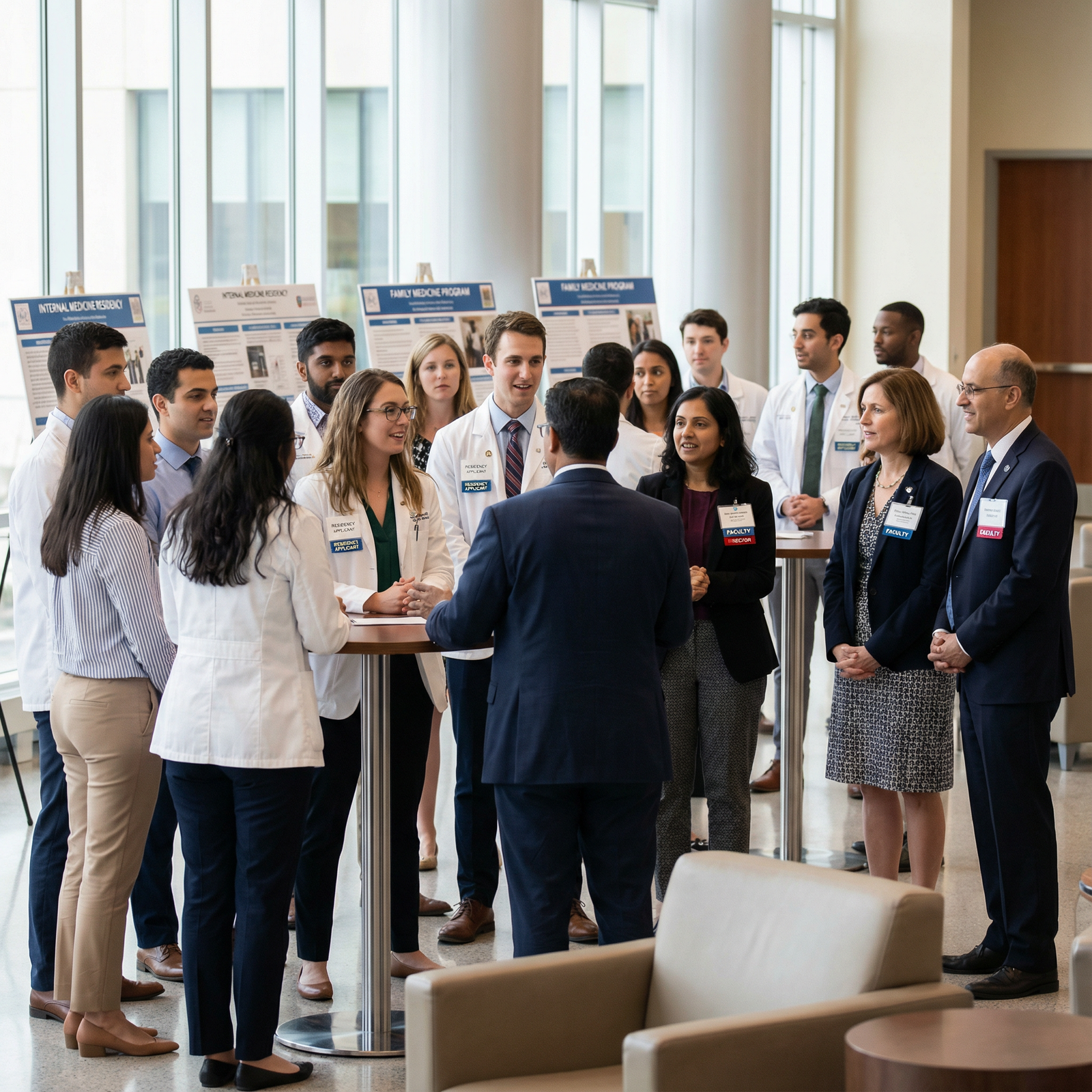
Understanding the Reality of Plastic Surgery as an Ultra-Competitive Specialty
Plastic surgery residency sits at the top tier of competitive specialties—right alongside dermatology and orthopedics. Whether you’re thinking about the integrated plastics match from day one of medical school or you’re a late convert exploring the independent pathway, you need to approach this as a multi‑year strategy, not a last‑minute push.
A few realities to anchor your planning:
- Limited spots, high demand: Integrated plastic surgery residency positions are relatively few compared with internal medicine, pediatrics, or even general surgery. That scarcity alone increases the level of competition.
- Exceptionally strong applicant pool: Many applicants are also competitive for matching derm, matching ortho, or other high‑profile fields. You are not just competing with classmates—you’re competing with the top performers nationwide (and often internationally).
- Holistic review… but with a high floor: Programs talk about holistic review, and they mean it. But the baseline for interviews usually includes strong board scores (or pass on Step/Level exams with high school performance), class rank, research, and serious commitment to the field.
- Long‑term relationships matter: Plastic surgery is a small world. Reputation, mentorship, and how you treat others matter perhaps more here than in many larger specialties.
This guide breaks down an ultra‑competitive specialty strategy tailored to plastic surgery, from M1 through application season, and highlights how that strategy differs from—or overlaps with—approaches used in matching derm or matching ortho.
Building the Foundation: Pre‑Clinical and Early Clinical Years (M1–M2)
The integrated plastics match rewards applicants who start early and are deliberate. Think of M1–M2 as your “compounding interest” years.
1. Academic Excellence: Your Non‑Negotiable Base
Even with Step 1 pass/fail, academic performance remains a key signaling factor.
Concrete goals:
- Pre‑clinical coursework
- Aim for Honors or the top quartile whenever graded.
- If your school uses P/F, focus on narrative evaluations and letters that highlight diligence, insight, and professionalism.
- Step 1 / Level 1
- Target a solid pass on the first attempt with strong performance on practice exams.
- Build your reputation as reliable and consistent—programs are wary of red flags like remediation or failures.
- Step 2 CK / Level 2 (M2–M3 planning)
- For ultra‑competitive specialties like plastic surgery, Step 2 CK often becomes the numeric differentiator.
- Use M2 to strengthen your test‑taking foundation: UWorld, NBME practice tests, and early identification of weak areas.
Action tip: Meet with your school’s academic advisor or Dean’s office early M1. Explicitly say, “I’m seriously considering plastic surgery residency. What are the academic benchmarks previous successful applicants from our school have hit?” Use their data as a benchmark.
2. Early Exposure: Confirming and Demonstrating Commitment
Showing genuine, sustained interest in plastic surgery is just as important as your GPA.
Ways to gain exposure in M1–M2:
- Join the Plastic Surgery Interest Group (PSIG) or help start one.
- Attend department conferences, grand rounds, and visiting professor lectures.
- Seek shadowing with plastic surgeons in:
- Reconstructive (cancer, trauma, burns)
- Hand surgery
- Aesthetic / cosmetic practice
- Craniofacial / pediatric plastics
Your goal: Move from being a passive observer to a known, reliable student in the department.
Email example for initial outreach:
“Dear Dr. [Name],
I’m an MS1 at [School], very interested in plastic surgery, and hoping to learn more about the field. If you have any upcoming clinic or OR days where a student observer is appropriate, I’d be grateful for the chance to shadow. I’m particularly interested in how reconstructive and aesthetic principles integrate in your practice.
Thank you for considering this,
[Your Name], MS1”
Start simple and respectful. Once you’re in the room, your punctuality, curiosity, and humility will do the rest.
3. Establishing Early Mentorship
Ultra‑competitive specialty strategy is mentorship‑driven. You need:
- At least one plastic surgeon mentor (ideally academic) who:
- Knows your work ethic
- Can involve you in projects
- Will potentially write you a strong letter
- One non‑plastic surgeon mentor (e.g., dean, IM faculty, surgeon in another field) to give broader career guidance and help you stay balanced.
How to build this:
- Follow up after early shadowing with specific questions (e.g., “What skills should I focus on during M2 to be a strong sub‑I later?”) instead of vague “any advice?” messages.
- Volunteer to help on small, low‑risk tasks first (data entry, chart review, literature search) and deliver ahead of deadlines.

Research, Publications, and Building Your Scholarly Profile
In an ultra‑competitive field like plastic surgery, research is not optional; it’s expected. Strong applicants to plastic surgery residency often look similar to those matching derm or ortho: multiple abstracts, posters, and sometimes peer‑reviewed publications.
1. What Type of Research Matters?
Not every project has to be groundbreaking. Priority order:
- Plastic surgery research at your home institution
- Clinical outcomes, case series, retrospective chart reviews
- Quality improvement projects within the plastic surgery department
- Educational research (curriculum development, simulation training)
- Plastic‑adjacent work if plastics research is not easily available
- Wound care, burn management, oncology reconstruction, orthopedics/hand, ENT/craniofacial
- Any structured scientific output if no plastics‑related work is accessible early
- Public health, basic science, other surgical subspecialties
Programs prefer plastics‑specific work, but they also appreciate productivity, persistence, and an academic mindset.
2. Getting Started: From Zero to First Project
Steps to land a plastics project:
- Survey faculty: Look up your plastic surgery department’s website. Identify faculty with active publications in the last 2–3 years.
- Targeted emails: Send a short, professional email stating:
- Your year in school
- Your interest in plastic surgery
- Any prior research experience
- A clear ask: “Do you have ongoing or upcoming projects where a medical student could contribute?”
- Be flexible:
- Accept retrospective projects.
- Be willing to do data collection, chart review, REDCap entry, or reference management at first.
Important: The value is not just the project; it’s the relationship with a research mentor in plastics.
3. Maximizing Productivity: Systems and Strategy
To be competitive in the integrated plastics match, a realistic goal is:
- 2–5 posters/abstracts
- 1–3 manuscripts (submitted, in progress, or accepted)
- Mentions in national or regional conference presentations
You do not need 20 publications. You do need:
- Demonstrated follow‑through: projects that reach completion.
- A cohesive narrative: research areas that loosely connect (e.g., breast reconstruction, hand trauma, outcomes after flap surgery).
Practical tips:
- Use a project tracker (simple spreadsheet):
- Columns: Project title, mentor, role, current stage (data collection, analysis, drafting, submission), deadlines.
- Schedule weekly research blocks:
- 2–4 hours, non‑negotiable time, just like class or rotation.
- Learn basic statistics and data handling (e.g., introductory SPSS, R, or Stata) to increase your value to a research team.
Clinical Years and Sub‑Internships: Where You Build Your Reputation
Your M3–M4 years are where you separate yourself as a serious plastic surgery residency candidate. This phase is analogous to how students committed to matching derm or matching ortho treat their home and away rotations: as extended auditions.
1. Excelling on Core Clerkships
Even though you’re targeting plastics, your core clerkships send powerful signals.
Priority rotations:
- Surgery (especially general surgery)
- Internal medicine
- Obstetrics/Gynecology
- Pediatrics and Emergency Medicine
Aim for Honors in surgery and at least high performance in others. Programs want future colleagues who function well in the OR, on the wards, and with multidisciplinary teams.
Clerkship strategies:
- Learn how to pre‑round efficiently: brief, accurate, organized.
- Always have a plan for your patients (even if it’s wrong, you’ll be coached).
- Own your knowledge gaps and follow up with reading that same day.
2. Your Plastic Surgery Rotations: Home and Away
For integrated plastics, sub‑internships (“sub‑Is”) can make or break your application.
Home institution rotation:
- Treat it as your first audition.
- Show up early, stay late when appropriate, and most importantly:
- Be teachable.
- Be a team player.
- Learn the basics:
- How to close skin properly
- Dressing and splinting techniques
- Efficient consult notes and brief H&P
Away rotations (if available):
- Typically done in late M3 or early M4.
- Strategic goals:
- Get to know a program intimately.
- Determine if you’d be happy training there.
- Earn a strong external letter of recommendation.
- Choose away rotations at:
- Programs where you are a realistic candidate (based on your metrics and your school’s track record).
- Places that genuinely interest you geographically or academically (e.g., strong in microsurgery, craniofacial, hand, or aesthetics).
On‑rotation behavior that stands out:
- Clinical initiative: Gently ask to see new consults, help with patient education, or refine dressing changes.
- Procedural enthusiasm: Be eager to suture, but never pushy; know your limits.
- Professionalism: Respect nurses, techs, and ancillary staff. They often informally share feedback with attendings and residents.

Letters, Scores, and Application Strategy: Executing for the Integrated Plastics Match
1. Standardized Exams: Step 2 CK / Level 2
With Step 1 now pass/fail, Step 2 CK has become the key numeric signal for many ultra‑competitive specialties.
Targets and timing:
- Take Step 2 CK early enough to have a score available for ERAS submission (June–August of M4).
- Competitive applicants often aim for well‑above national average.
- Build your schedule so that:
- You finish the bulk of your core clerkships before Step 2.
- You have a dedicated study period (3–6 weeks depending on your needs).
Use UWorld, NBME/NBOME assessments, and review wrong answers meticulously. Talk with prior plastics applicants from your school to understand typical scoring ranges that have matched in recent years.
2. Letters of Recommendation (LORs)
For ultra‑competitive specialties, letters are not just checkboxes—they’re differentiators.
Who should write your plastics letters:
- 2–3 plastic surgeons who:
- Have worked with you directly in clinic, OR, or research.
- Can comment on your work ethic, teachability, technical potential, and interpersonal skills.
- 1 non‑plastics surgeon/other faculty member:
- Often from general surgery, internal medicine, or a research advisor who knows you well.
What makes a strong letter:
- Concrete examples of how you performed (e.g., “Took ownership of following up on complex flap patients, improved our dressing protocol by reviewing literature”).
- Comparison to peers (“top 5% of all medical students I’ve worked with”).
- Evidence of character (reliability, integrity, humility).
How to set your letter writer up for success:
- Provide:
- Updated CV
- Brief personal statement or bullet points about your interest in plastic surgery
- Specific experiences you shared with them that you’d be grateful for them to highlight
Ask in person when possible (or via video), and give them at least 4–6 weeks notice.
3. Crafting Your Plastics‑Focused Personal Statement
Use your personal statement to pull all threads together into a cohesive story:
- Why plastic surgery?
Move beyond “I like working with my hands” and “I enjoy blending art and science” (these are overused). - Concrete experiences:
A reconstructive case that changed your perspective, longitudinal continuity with a burn or hand trauma patient, or a research project that gave you insight into patient outcomes. - Future direction:
Show that you’ve thought about academic vs. community practice, potential subspecialty interests (e.g., microsurgery, craniofacial), and how you want to contribute to the field.
Keep it clean, reflective, and sincere. Avoid bragging; the rest of your application already lists your accomplishments.
4. Selecting Programs and Application Volume
The integrated plastics match has fewer positions and many qualified applicants. Strategies:
- Apply broadly to a wide range of programs, including:
- Highly academic, research‑heavy centers
- Solid mid‑tier academic programs
- Programs with different geographic and clinical foci
- Use advice from:
- Your plastic surgery mentors
- Recent plastics graduates from your school
- Data from NRMP/ERAS about application numbers and interview yields
Expect to submit a large number of applications, similar to other ultra‑competitive fields like matching derm or matching ortho. That said, be realistic: if your metrics are modest, consider a two‑cycle strategy (e.g., research year, or applying broadly to categorical general surgery as a staged path).
Contingency Planning and Parallel Paths: Independent Pathway, Preliminary Years, and Beyond
In an ultra‑competitive field, a smart strategy always includes a Plan B (and C) that you would genuinely be satisfied with.
1. Independent Plastic Surgery Residency Pathway
Not everyone matches integrated plastics on the first try. Some pursue:
- Categorical general surgery residency, then
- Independent plastic surgery fellowship (3 years) afterward
You should consider the independent pathway if:
- You truly love general surgery and could see yourself in a general surgery career if plastics doesn’t work out.
- Your application isn’t competitive enough for integrated plastics but you are committed long term.
In that case:
- Strategize with mentors early on which general surgery programs have strong plastics departments and histories of sending residents into independent plastics.
2. Research Years and Reapplication
Some applicants take a dedicated research year (or two) in plastic surgery. This can dramatically strengthen:
- Publication count and quality
- Relationships with faculty
- Letters of recommendation
A research year makes sense if:
- You were close to competitive scores but lacked research.
- You want to pivot to a top‑tier academic plastics program.
- You did not match on the first attempt but remain committed to the field.
During a research year:
- Aim for meaningful authorship on multiple projects.
- Attend national meetings (ASPS, AAPS, etc.) and network intentionally.
- Maintain or improve clinical exposure (call, clinics, assisting in OR) where appropriate.
3. Parallel Planning with Other Competitive Specialties
Some students truthfully feel torn between plastic surgery residency and other fields like dermatology or orthopedics. If you might pivot, you need a deliberate dual‑track approach early:
- Secure mentors in both specialties.
- Get some research in each field, or at least in overlapping areas (e.g., hand/upper extremity pathology, wound healing, oncologic reconstruction).
- Be honest with yourself by M3:
- Which field’s day‑to‑day work excites you more?
- Where do you see yourself thriving over decades, not just as a resident?
By M4, attempting to fully apply to two ultra‑competitive specialties simultaneously (integrated plastics and matching derm, or plastics and matching ortho) is risky and often not recommended. Most applicants will need to choose one as their primary target and, if needed, select a more attainable parallel backup (e.g., general surgery, internal medicine, or a research year).
Frequently Asked Questions (FAQ)
1. How many publications do I need to be competitive for plastic surgery residency?
There is no magic number, but a realistic target for a strong plastics applicant might be:
- 2–5 posters/abstracts
- 1–3 manuscripts (submitted, accepted, or in revision)
More important than raw numbers is quality and relevance: plastics‑focused projects, clearly defined roles, and proof that you see projects through to completion. Depth with a cohesive research theme can sometimes outshine scattered high‑volume output.
2. Can I match integrated plastics from a lower‑ranked or newer medical school?
Yes, but the bar is higher in other areas. Programs are aware of school “tiers,” but they match applicants from a broad spectrum of schools every year. To offset school prestige:
- Excel academically (top quartile or better, strong Step 2 CK).
- Build robust plastics research and mentorship relationships.
- Use away rotations strategically to showcase yourself at programs that may not be familiar with your school.
3. Do I absolutely need a dedicated research year to match plastic surgery?
Not necessarily. Many applicants match without a dedicated research year, especially if they started early and built a strong portfolio of projects during M1–M4. A research year becomes more important if:
- You started late with plastics.
- You lack any plastics‑specific research.
- Your academic metrics are modest and you want to increase competitiveness.
Discuss this choice early with your mentors; a well‑planned research year can be transformative, but it also delays graduation and income, so it should align with your long‑term goals.
4. What happens if I don’t match plastic surgery on my first try?
Not matching is emotionally difficult but not uncommon in ultra‑competitive specialties. Constructive steps:
- Debrief with mentors to objectively analyze your application: grades, scores, research, letters, and interview performance.
- Consider options:
- Take a research year in plastics, improving your academic profile and reapplying.
- Apply to categorical general surgery with a long‑term plan toward the independent plastics pathway.
- Reassess your specialty choice and potentially pivot to another field where you could be equally fulfilled.
- Strengthen weak areas before reapplying—don’t simply re‑submit the same application.
With honest guidance, intentional planning, and perseverance, many applicants successfully match plastics or find rewarding careers in closely related fields on a second attempt.
Pursuing plastic surgery residency is undeniably a high‑stakes, ultra‑competitive path. By starting early, building genuine mentorship, committing to scholarship, and approaching each phase with a clear strategy—and a realistic backup plan—you position yourself to navigate the integrated plastics match with purpose and resilience.