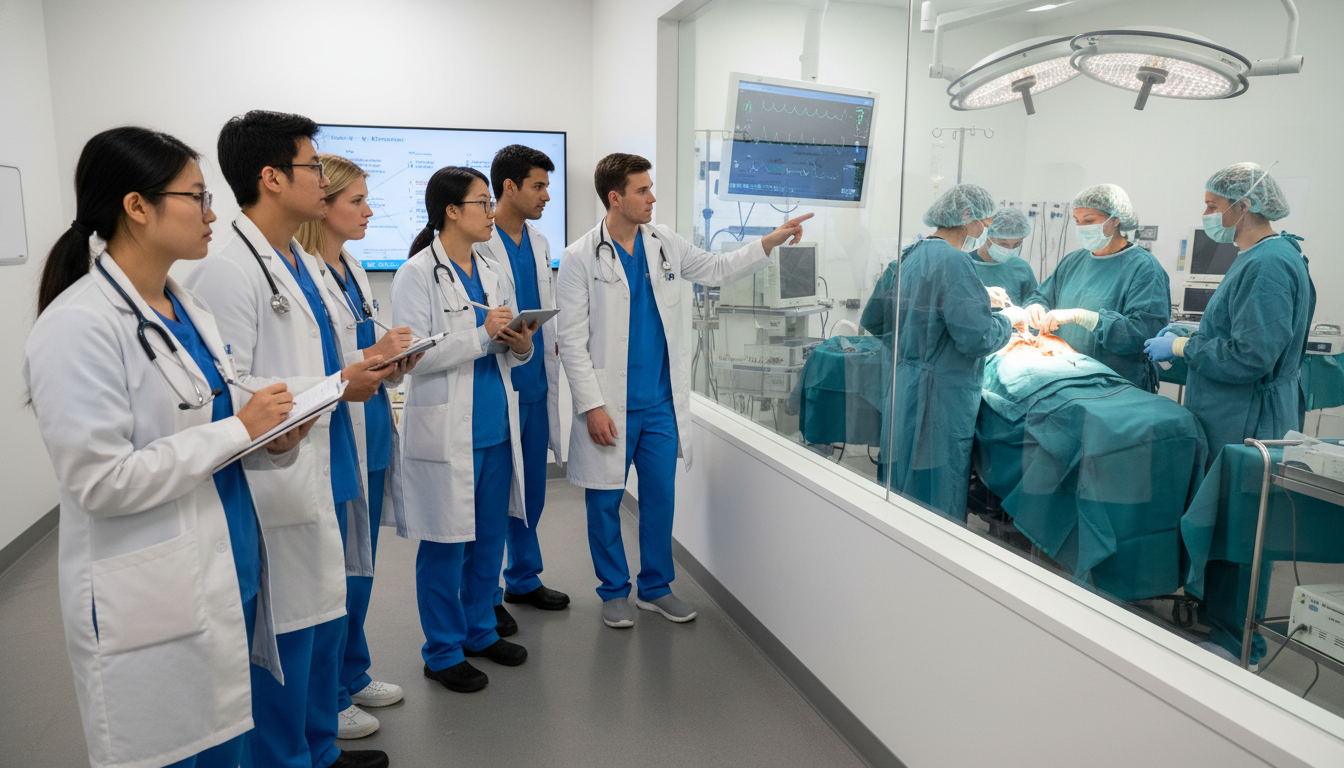
Cardiothoracic surgery is one of the most demanding and rewarding paths in medicine. While you are still years away from a cardiothoracic surgery residency or formal heart surgery training, the premed years are when you quietly build the foundation that will make—or break—your future options.
This guide walks you through what to do before medical school if you’re even considering a career in cardiothoracic surgery: academics, activities, skills, mindset, and strategy. If you’re asking yourself how to become a doctor with the goal of operating on the heart and lungs, this is the roadmap you wish you had on day one.
Understanding the Cardiothoracic Pathway: Where Premed Fits In
Before you can plan effectively, you need a realistic picture of the path from premed to cardiothoracic surgeon and where your current stage fits in.
The Long-Term Training Timeline
A typical path in the United States looks like this:
Premed (Undergraduate or Post-bac) – 4 years (typical)
- Complete premed requirements
- Take the MCAT
- Apply to medical school
Medical School – 4 years
- Pre-clinical coursework (Years 1–2)
- Clinical rotations (Years 3–4)
Residency (General Surgery or Integrated Track) – 5–7+ years
- Traditional path:
- 5 years of General Surgery residency
- 2–3 years Cardiothoracic Surgery fellowship
- Integrated path (I-6):
- 6-year integrated cardiothoracic surgery residency directly after medical school
- Traditional path:
Optional Additional Training – 1–2 years
- Subspecialty fellowships (e.g., congenital heart surgery, thoracic oncology, heart–lung transplant)
What Matters Most During the Premed Phase
As a premed, you are not expected to know how to perform heart surgery. Instead, admissions committees and future program directors will care that you:
- Built strong academic habits and science foundations
- Demonstrated sustained interest in medicine (and ideally surgery)
- Showed the capacity for hard work, resilience, and professionalism
- Developed basic research, communication, and teamwork skills
You don’t need every step perfectly mapped out. But if cardiothoracic surgery is on your radar, the earlier you align your choices, the easier later decisions become.
Academic Foundations: Coursework, Majors, and MCAT Strategy
Your academic performance in college has long-term implications. Strong habits now will help you handle the intensity of medical school and, later, heart surgery training.
Choosing a Major: Flexibility With a Surgical Lens
You do not need to major in biology or chemistry to become a cardiothoracic surgeon. Medical schools care more about:
- Whether you complete the premed requirements
- The rigor of your coursework
- Your GPA and upward trend
- Your ability to think critically and communicate
Common options:
Traditional science majors (Biology, Chemistry, Biochemistry)
- Pros: Align closely with premed requirements; helpful for MCAT and med school
- Cons: Can be crowded, competitive environments
Engineering majors (Biomedical, Mechanical, Chemical)
- Pros: Strong alignment with cardiothoracic devices, hemodynamics, and technology (e.g., heart–lung machines, ventricular assist devices)
- Cons: Heavy course loads; must protect your GPA
Non-science majors (English, Economics, Philosophy, etc.)
- Pros: Unique narratives; strong writing and critical thinking; can stand out
- Cons: You must actively build and maintain your science background through electives and labs
If cardiothoracic surgery interests you, biomedical engineering or physiology can be particularly relevant, but only if you can maintain a strong GPA.
Core Premed Requirements
Most medical schools expect the following (always verify with specific schools):
- Biology: 2 semesters with labs
- General Chemistry: 2 semesters with labs
- Organic Chemistry: 2 semesters with labs
- Physics: 2 semesters with labs
- Biochemistry: 1 semester (increasingly required)
- Math/Statistics: 1–2 semesters (calculus and/or statistics)
- English/Writing Intensive: 1–2 semesters
- Social/Behavioral Sciences (Psychology, Sociology): strongly recommended
For future cardiothoracic surgeons, consider additional upper-level courses that build relevant conceptual depth:
- Human Physiology
- Cardiovascular Physiology
- Pulmonary Physiology
- Anatomy and Embryology
- Cell Biology
- Biomedical Engineering design or biomechanics courses (if available)
These won’t replace what you’ll learn in medical school, but they’ll make complex concepts more intuitive the second time around.
GPA Strategy: Playing the Long Game
Surgical fields, including cardiothoracic surgery residency programs, tend to attract competitive applicants. While your premed GPA is not the only factor, it sets the floor for the kinds of medical schools and opportunities available later.
Practical tips:
- Aim for consistency > perfection. A steady 3.7–3.8 with a strong science GPA and upward trend is better than fluctuating extremes.
- Protect your first year. Many students underestimate the adjustment from high school to college.
- Be strategic about course load. Don’t stack all your hardest science courses in one semester if it risks burnout.
- Use office hours early. Cardiothoracic surgeons need to be comfortable asking questions and seeking mentorship. Practice that habit now with your professors.
If you had a rough start, focus on an upward trend, strategic course retakes (when appropriate), and explanations articulated clearly later in your application.
MCAT Planning for Future Surgeons
The MCAT isn’t “surgery-specific,” but performing well enhances your reach of medical schools, which in turn influences your clinical and research opportunities.
Key principles:
Timeline: Plan to take the MCAT when:
- You have completed the core prerequisites (especially Biochem, Org Chem, Physics, and basic Psych/Soc), and
- You can dedicate at least 3–4 months to focused study.
Content Strengths: As a future surgeon, your ability to master complex information efficiently will be crucial. Use the MCAT to:
- Solidify high-yield physiology and biochemistry
- Build stamina for long, intense mental tasks
- Develop disciplined study systems (Anki, spaced repetition, active recall)
Score Targets: There is no absolute “cardiothoracic MCAT score,” but competitive MD programs often admit students with strong MCATs. Use each school’s reported ranges as a guide and aim to be at or above the median for your target programs.
Building Meaningful Clinical and Surgical Exposure
Your premed years are the right time to answer: “Do I actually enjoy being in clinical and surgical environments?” The goal is not early specialization, but informed exploration.
Start Broad, Then Focus
As a premed, you don’t need exclusively cardiothoracic exposure, but you should:
Start with broad clinical experiences
- Volunteer in hospitals (transport, patient liaison)
- Work as a medical scribe or EMT
- Assist in outpatient clinics (primary care, internal medicine, cardiology)
Layer in surgical exposure
- Shadow general surgeons and anesthesiologists
- Observe in operating rooms when allowed
- Rotate across different surgical specialties if possible (orthopedics, neurosurgery, vascular)
Pursue cardiothoracic-specific experiences when available
- Shadow a cardiothoracic surgeon
- Volunteer or work in a cardiac ICU or step-down unit
- Engage in cardiac or thoracic surgery-related research projects
The message to future selection committees: you didn’t blindly chase prestige—you explored medicine deeply and made an informed, longitudinal commitment.
How to Find Cardiothoracic Shadowing Opportunities
Proactively seeking experiences is a core professional skill. Steps:
Start with your campus premed office
- Ask if they have established shadowing programs or hospital partnerships.
Reach out to local hospitals
- Look up cardiothoracic surgery departments on hospital websites.
- Email administrative assistants or department coordinators politely, including:
- Who you are (premed, institution, year)
- Your interest in medicine and specifically cardiothoracic surgery
- A brief request for any opportunities to observe or learn more
- Attach a short resume if appropriate.
Leverage existing mentors
- If you’ve shadowed other physicians, ask whether they know a cardiothoracic surgeon who mentors students.
- If you work as a scribe or volunteer, mention your interest to attendings and residents who may connect you.
Expect rejections or no response at times. Persistence and professionalism are part of the process.
Making Shadowing Count
Don’t just stand in the corner:
Prepare beforehand
- Read basic overviews of coronary artery bypass grafting (CABG), valve replacement, lung resections, and common cardiac conditions (CAD, heart failure, valvular disease).
- Understand basic OR etiquette (sterile field, hierarchy, safety).
During shadowing
- Observe communication patterns: surgeon–nurse interactions, surgeon–patient discussions about risks and benefits.
- Note the emotional and physical demands: long hours, intensive decision-making, high stakes.
- Ask questions at appropriate times (never during critical portions of surgery unless invited).
Afterward
- Reflect in a journal (never including identifiable patient information).
- Consider what resonated and what didn’t. Enjoying the OR is essential if you’ll spend your career there.
These reflections become powerful material for your personal statement and future interviews.

Research, Leadership, and Technical Skills for Future Cardiothoracic Surgeons
Cardiothoracic surgery is a deeply academic field. Many leaders are surgeon–scientists advancing innovation in devices, imaging, transplantation, and minimally invasive procedures. While you’re still premed, you can start building the toolkit that will make you a strong applicant later.
Getting Involved in Research Early
Research is not mandatory to get into medical school—but it is extremely valuable if you think you may pursue a competitive surgical field later.
What Kind of Research?
- Clinical or Outcomes Research
- Example: analyzing outcomes of different surgical techniques for valve repair, studying ICU protocols, or evaluating readmission rates after cardiac surgery.
- Basic Science / Translational Research
- Example: working in a cardiovascular physiology lab, studying myocardial regeneration, vascular biology, or biomaterials for heart valves.
- Engineering and Device Research
- Example: working with biomedical engineers on stent design, ventricular assist devices, or imaging technologies.
You don’t need to be in a “cardiothoracic lab” as a freshman. Any rigorous research where you:
- Work as part of a team
- Learn study design and data analysis
- Practice critical thinking
- Contribute meaningfully over time
…will help you later.
How to Find Research
Check your university’s departmental websites
- Look at faculty pages in Biology, Biomedical Engineering, Physiology, or affiliated medical school departments.
Send concise, professional emails
- Introduce yourself, your year, and your interest in research.
- Mention relevant coursework or skills (statistics, coding, prior lab experience).
- Attach a 1-page CV.
- Express a willingness to start with basic tasks and grow over time.
Be consistent and dependable
- Good letters of recommendation from research mentors can be decisive later when you’re applying for scholarships, specialty electives, or even cardiothoracic surgery residency programs.
Leadership and Teamwork: Surgical Personality in Training
Operating rooms depend on coordinated teams. Surgeons are often team leaders, but the best are also excellent collaborators.
As a premed, seek roles that build:
- Leadership
- Executive roles in premed clubs, service organizations, or research projects
- Founding an initiative (e.g., a heart health outreach program, CPR training on campus)
- Teamwork
- Long-term involvement in sports, performance groups, or engineering design teams
- Consistent contribution to group-based community service
Selection committees for medical school and residency want evidence that you can:
- Handle responsibility
- Communicate clearly
- Resolve conflicts professionally
- Show up reliably
Technical and Cognitive Skills
While you won’t be operating yet, several skills you can develop now will pay dividends later:
- Fine motor skills and spatial reasoning
- Hobbies such as playing an instrument, drawing, sculpting, or even certain video games can translate into better hand–eye coordination.
- Basic coding and data literacy
- Skills in Python, R, or MATLAB can distinguish you, especially in outcomes research or imaging projects.
- Stress management and focus
- Mindfulness, structured exercise routines, and time management systems are not optional luxuries; they’re survival tools in high-acuity fields like cardiothoracic surgery.

Strategically Positioning Yourself for Medical School (and Beyond)
Your premed years culminate in one big gate: medical school admission. If cardiothoracic surgery is your long-term goal, you’ll want to choose schools and opportunities that preserve and expand that option.
Framing Your Motivation: Beyond “It’s Cool Heart Surgery”
Admissions committees will be wary if you claim you’ve wanted to be a cardiothoracic surgeon since childhood without any nuanced understanding. Instead, aim to show:
- Depth of exploration
- You’ve experienced multiple sides of medicine (clinical, research, community outreach).
- Insight into the specialty
- You understand the disadvantages as well as the appeal: long training, high stress, long hours, emotional burden.
- Patient-centered reasoning
- You’re motivated by improving patient outcomes and quality of life, not just the technical thrill.
In your personal statement and secondaries, it’s fine to mention an interest in surgery or cardiothoracic surgery, but:
- Avoid overcommitting to a subspecialty too early in writing.
- Emphasize that you understand medical school will be a period of exploration.
- Highlight that your experiences so far have shown you that you enjoy challenges that involve complex problem-solving and teamwork—attributes common in surgical fields.
Choosing Medical Schools With an Eye on Cardiothoracic Surgery
No medical school guarantees a cardiothoracic surgery residency spot, but some environments are particularly supportive:
Look for schools that:
- Have strong surgery departments and affiliated teaching hospitals
- Offer cardiothoracic surgery electives or sub-internships
- Conduct active cardiac or thoracic surgery research
- Have an integrated cardiothoracic surgery (I-6) residency program if this path might interest you
- Provide robust mentorship programs connecting students with surgical faculty
When researching schools, explore:
- Department of Surgery and Division of Cardiothoracic Surgery web pages
- Faculty profiles (cardiac, thoracic, congenital)
- Ongoing clinical trials and research initiatives
Premed Advice for Nontraditional and First-Generation Students
If you’re coming from a nontraditional or first-generation background, the path might feel more opaque, but many excellent cardiothoracic surgeons started in exactly your position.
Key strategies:
- Seek structured advising early. Look for premed advising, alumni mentors, or national organizations (SNMA, LMSA, AMSA, etc.).
- Consider post-baccalaureate programs if your undergraduate GPA or coursework is not yet competitive.
- Use community and state schools strategically. Strong academic performance and initiative at any accredited institution can open doors.
- Tell your story authentically. Overcoming obstacles and demonstrating resilience are powerful signals in a field that demands both.
Frequently Asked Questions (FAQ)
1. Do I need cardiothoracic surgery experience before applying to medical school?
No. You are not expected to have in-depth, specialty-specific experience before medical school. However, having some exposure to surgery or cardiology can strengthen your understanding of what the field entails. A small amount of cardiothoracic shadowing or research is helpful, but broad clinical experiences and strong academics are more important.
2. What if my grades are not perfect—can I still become a cardiothoracic surgeon?
Yes, it is still possible. Many successful surgeons had academic setbacks at some point. The keys are:
- Demonstrating a strong upward trend
- Correcting weaknesses (e.g., retaking a few critical courses if necessary)
- Performing well on the MCAT
- Excelling once in medical school, especially during surgery rotations and exams
Your premed record influences your options but does not permanently define your ceiling.
3. What premed requirements are absolutely essential if I’m aiming for surgery?
The same core premed requirements apply regardless of specialty: biology, chemistry, organic chemistry, physics, biochemistry, math/statistics, and writing-intensive courses. For future surgeons, anatomy and physiology are especially helpful, but these are often taken during medical school. Your focus as a premed should be on mastering the basics and building strong study habits you can carry forward.
4. Should I say I want to do cardiothoracic surgery in my medical school applications?
You may mention a developing interest in surgery or cardiothoracic surgery if it reflects your true experiences. However, avoid sounding rigidly committed or naive. Admissions committees prefer students who are open to exploration, even if they have early leanings. Emphasize that your exposure so far has shown you that you enjoy certain aspects (complex problem-solving, working with your hands, high-acuity care), while acknowledging that you expect your interests to evolve in medical school.
In your premed years, your job is not to become a mini–cardiothoracic surgeon. Your job is to build academic strength, emotional resilience, and professional habits that will make every later step—from medical school through cardiothoracic surgery residency—possible. If you use this period wisely, you’ll arrive at each stage not only prepared, but with the confidence that you truly chose this path with open eyes.