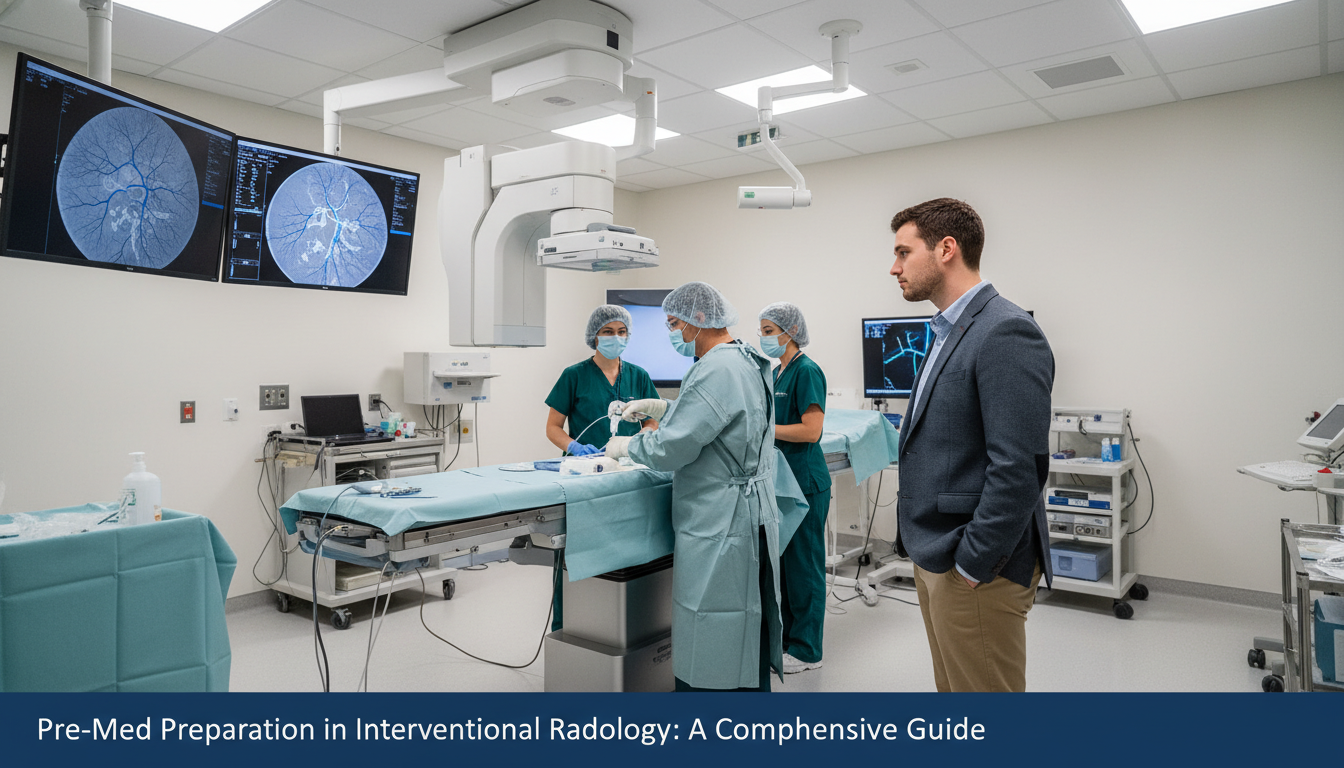
Why Pre‑Med Preparation Matters for Interventional Radiology
Interventional Radiology (IR) is one of the most competitive and rapidly evolving specialties in medicine. It blends imaging, minimally invasive procedures, and longitudinal patient care—making it highly attractive to students interested in technology, innovation, and hands-on clinical work.
If you’re thinking about how to become a doctor who specializes in IR, your planning needs to start early—sometimes as early as your first premed courses. Your choices in college and immediately afterward can meaningfully influence your chances in both medical school admissions and your eventual IR match.
This guide breaks down:
- How to build a strong premed profile tailored to interventional radiology
- Which courses, majors, and experiences matter most
- How to explore IR before medical school
- Premed requirements you must meet (and where you can differentiate)
- Actionable steps for each year from freshman to gap years
While IR-specific residency decisions come much later, your pre‑med preparation creates the academic and experiential foundation that will ultimately support a competitive interventional radiology residency application.
Understanding Interventional Radiology Early as a Premed
What Is Interventional Radiology?
Interventional Radiology is a subspecialty that uses image guidance (fluoroscopy, CT, ultrasound, MRI) to perform minimally invasive procedures for diagnosis and treatment. IRs treat conditions such as:
- Peripheral arterial disease (angioplasty, stenting)
- Liver tumors (chemoembolization, radioembolization, ablation)
- Stroke (mechanical thrombectomy – in some centers)
- Venous thromboembolism (catheter-directed thrombolysis)
- Uterine fibroids (UAE/UFE)
- Trauma bleeding control (embolization)
- Biliary and genitourinary obstruction (drainage, stenting)
Today, most aspiring IR physicians enter via an Integrated Interventional Radiology residency (6-year pathway: 1 year internship + 5 years IR/DR). Some will still go the Diagnostic Radiology (DR) → Independent IR fellowship route, but integrated IR residency is now a distinct NRMP match pathway.
Why This Matters for Premeds
Understanding IR early helps you:
Choose experiences that clearly align with IR’s core traits:
- Procedural skill
- Comfort with technology and imaging
- Problem-solving in acute, high-stakes settings
- Longitudinal patient care in oncology, vascular disease, and more
Write more focused medical school applications that show coherent interest, not just random shadowing.
Build the kind of academic and personal profile that later resonates with IR programs during the IR match.
You don’t need to lock yourself into IR as a freshman—but knowing it’s a possibility should influence how you explore medicine.
Academic Preparation: Courses, Majors, and Premed Requirements
Choosing a Major with IR in Mind
Medical schools generally don’t prefer one major over another; they care more that you meet the premed requirements and perform strongly. For future interventional radiologists, consider majors/minors that leverage or build relevant strengths:
Strong fits:
Biomedical Engineering / Engineering
- Aligns with device-based, technology-driven nature of IR
- Builds quantitative reasoning and comfort with imaging hardware concepts
Physics or Applied Physics
- Deepens understanding of imaging principles, radiation, and signal processing
Biology, Biochemistry, Neuroscience
- Traditional premed choices; strong for general medical knowledge and research
- Easier access to biomedical labs and clinical research
Computer Science / Data Science (major or minor)
- Helpful as IR moves toward AI-assisted imaging, image post-processing, and large dataset analysis
Key takeaway: Choose a major that you can excel in (GPA matters a lot), then layer on relevant technical or quantitative skills through minors, electives, or research.
Core Premed Requirements You Must Meet
Regardless of major, you’ll need to complete standard premed requirements (exact details vary slightly by school, but typically include):
- Biology with lab (1–2 years)
- General Chemistry with lab (1 year)
- Organic Chemistry with lab (1 year)
- Biochemistry (1 semester; increasingly required, almost always recommended)
- Physics with lab (1 year)
- Mathematics
- At least one semester of statistics
- Calculus recommended and often required for engineering/physics majors
- English / Writing-intensive courses (1–2 semesters)
- Social/Behavioral Sciences (e.g., psychology, sociology, public health)
These requirements form the backbone of how to become a doctor in any specialty. However, for IR, some courses carry extra value.
Courses Especially Valuable for Future Interventional Radiologists
1. Advanced Physics / Medical Physics
- Topics in electromagnetism, waves, and optics help you understand imaging systems.
- If offered: “Introduction to Medical Imaging” or “Radiation Physics” are ideal.
2. Imaging, Signal Processing, or Bioinstrumentation
- Engineering, physics, or CS departments may offer:
- Digital signal processing
- Biomedical imaging systems
- Image analysis / computer vision
- These skills intersect increasingly with radiology and IR research.
3. Anatomy and Physiology
- Deep knowledge of anatomy is essential for IR (vascular, hepatobiliary, neurovascular, musculoskeletal).
- A cadaver-based anatomy course is especially valuable if available.
4. Statistics and Research Methods
- IR is research-heavy: clinical trials, device development, and outcomes research.
- A solid statistics background will help you during med school research and later when interpreting IR literature.
5. Public Health / Health Systems / Ethics
- IR often involves procedure-based decision-making, cost-effectiveness, and sometimes complex ethical situations (e.g., high-risk oncology or palliative procedures).
- Understanding health systems and policy can be a plus, especially for applicants interested in academic IR or leadership.

Building a Competitive Premed Profile for IR
GPA and Academic Performance
Your GPA—especially in science courses—remains a central part of your path to an eventual interventional radiology residency. IR is a competitive field, and competitive fields correlate strongly with higher Step scores and strong medical school performance. That begins with:
- Targeting a 3.7+ overall and science GPA, if possible.
- Being strategic with your course load:
- Avoid overloading on ultra-difficult courses in the same semester as Organic Chemistry or Physics if it will tank your grades.
- Balance technical/quantitative courses with subjects you naturally excel in.
Actionable tip: If you must choose between a challenging major where you might get a 3.3 and a more manageable one where you can earn a 3.8–3.9, the latter is usually better for your long-term IR ambitions.
MCAT Strategy with IR in Mind
The MCAT doesn’t test IR-specific content, but strong scores open doors to more selective medical schools, which may have better-established IR exposure, research opportunities, and integrated IR residency pipelines.
- Target at least 515+ if you’re considering competitive MD programs (higher if aiming for top-tier).
- Pay attention to:
- CARS: reflects critical reasoning skills crucial for evidence-based practice.
- Chem/Phys: overlaps with physics and basic imaging concepts.
Plan MCAT timing to avoid conflict with your heaviest academic or extracurricular IR commitments.
Clinical Exposure: Beyond Generic Shadowing
You need substantial clinical exposure to demonstrate that you understand patient care and the realities of medical practice. For an aspiring interventional radiologist, try to diversify this exposure:
1. General Clinical Experience (Non-IR):
- Hospital volunteering (ED, wards, patient transport, etc.)
- Scribing for emergency medicine, cardiology, or internal medicine
- Working as an EMT, CNA, MA, or phlebotomist
These experiences help you:
- Understand inpatient vs. outpatient workflows
- See acute and chronic disease management
- Build comfort around patients and clinical teams
2. Interventional Radiology-Specific Exposure:
Even as a premed, you can often arrange:
- Shadowing IR attendings at academic or large community hospitals
- Observing procedures: angiograms, embolizations, biopsies, drains
- Watching consenting and post-procedural follow-ups
- Radiology department observation
- Time in reading rooms learning imaging basics
- Observing how IR collaborates with surgery, oncology, internal medicine
How to find IR shadowing:
- Search your local academic medical center’s IR division website; look for:
- “Medical student or premed observers” section
- Educational or outreach coordinators
- Email IR faculty or fellows politely with:
- 2–3 sentence introduction
- Your current status (premed, year in school)
- Genuine interest in IR and what you hope to observe
- Flexibility with dates/times
Even a short IR shadowing experience can:
- Help confirm if IR aligns with your interests
- Provide a powerful anecdote for your personal statement or secondary essays
- Differentiate you from applicants who only shadowed primary care or surgery
Research Experience: Building an IR‑Friendly Profile
Research is not an absolute requirement to become a doctor, but for competitive specialties like interventional radiology, it’s often a major asset—especially if you aim for an academic career.
Ideal types of research for future IRs:
Radiology / IR Clinical Research
- Outcomes of specific procedures (e.g., TACE vs. Y-90 in liver tumors)
- Complication rates, quality improvement projects
- Retrospective chart reviews on vascular or oncologic interventions
Imaging or Device-Based Research
- Novel catheters, stents, embolic agents, or ablation devices
- Image-guided navigation, 3D reconstruction, or planning tools
Quantitative / Data Science Projects
- Machine learning applied to medical imaging
- Automated segmentation or detection tools
If your institution doesn’t have IR-specific research:
- Join any radiology, cardiology, vascular surgery, oncology, or biomedical engineering lab. These fields have overlapping patient populations and research questions with IR.
- Gain generalized research skills: data collection, basic statistics, writing abstracts.
Deliverables to aim for as a premed:
- Abstracts/posters at local or national meetings
- Co-authorship on a paper (even as middle author)
- Perspective or review articles if primary research opportunities are limited
These accomplishments demonstrate curiosity, perseverance, and academic potential—traits valued later when applying for an IR residency.
Leadership, Service, and Personal Qualities
IR physicians frequently operate in high-stakes environments: ICU procedures, trauma IR, urgent oncology consults. Programs later in your career will look for:
- Calm decision-making under pressure
- Teamwork and communication skills
- Empathy and patient-centered care
Start building this foundation now through:
Leadership roles in student organizations, especially:
- Premed societies
- Engineering or robotics clubs (technical collaboration)
- Public health or community outreach groups
Sustained community service:
- Free clinics, health education, underserved community outreach
- Longitudinal involvement matters more than short-term volunteering blasts
Teaching and mentoring:
- Peer tutoring in science courses
- TA positions in anatomy, physics, or engineering
- Mentorship roles in premed organizations
These activities later make compelling stories in medical school interviews and in residency personal statements, especially when you can link them to IR-relevant themes: teamwork in the angio suite, communication with anxious patients, or leading quality improvement initiatives.
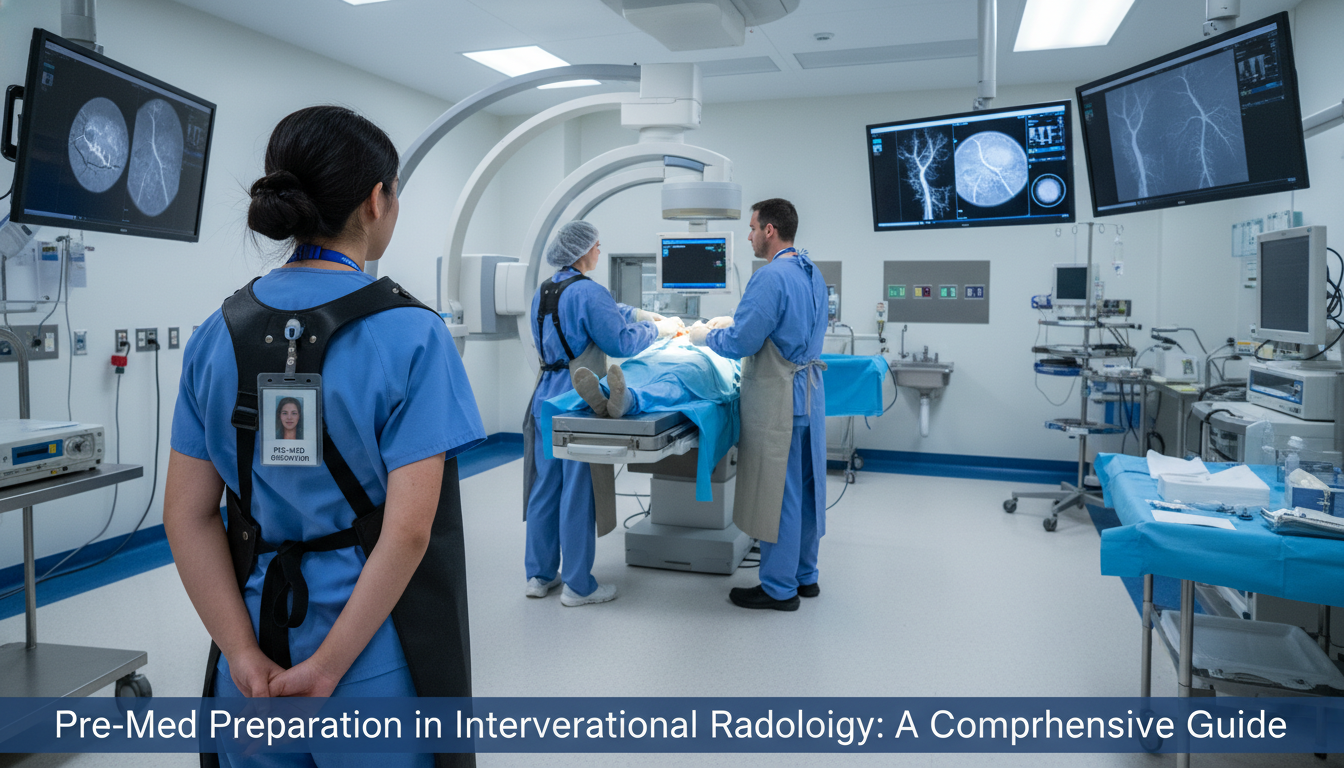
Year‑by‑Year Roadmap: From Freshman Year to Application
Freshman Year: Exploration and Foundation
Goals:
- Confirm interest in medicine broadly
- Establish strong study habits
- Begin exploring technology and imaging if interested in IR
Action Steps:
- Focus on excelling in introductory biology, chemistry, and math.
- Join 1–2 relevant clubs:
- Premed society
- Engineering/tech/robotics groups
- Start general clinical exposure:
- Volunteer in a hospital or clinic a few hours per week
- Attend any premed panels or talks where radiology or IR is mentioned; start listening for what resonates with you.
Sophomore Year: Intentional Exposure and Skills
Goals:
- Solidify academic trajectory
- Start research or deeper clinical experiences
- Begin targeted exposure to radiology/IR if possible
Action Steps:
- Complete or continue core premed requirements (Organic Chemistry, Physics).
- Seek research opportunities:
- Email potential mentors in radiology, oncology, biomedical engineering, or related fields
- Don’t worry if they are not purely IR-focused; skills are transferrable
- Increase clinical commitment:
- Consider scribing or working in a more hands-on role
- Try to arrange your first IR shadowing day:
- Even 1–2 days can orient you to the field
Junior Year: MCAT, Depth, and Clarifying Fit
Goals:
- Take the MCAT (usually spring/summer)
- Deepen research and leadership
- Gain additional IR-specific exposure if feasible
Action Steps:
- Balance MCAT prep with ongoing activities:
- It’s okay to temporarily scale down extracurricular involvement to maintain academic performance and MCAT focus.
- In research, aim for tangible outputs:
- Abstract submission, poster presentation, manuscript drafting
- Shadow more in IR or diagnostic radiology:
- Observe a mix of procedures (e.g., embolizations, drain placements, biopsies).
- Ask permission to attend IR clinic days to see how IRs counsel and follow patients longitudinally.
- Begin forming a coherent narrative:
- You don’t need to declare IR as your final destination, but you can frame your interests around:
- Technology in medicine
- Minimally invasive therapies
- Bridging imaging and direct patient care
- You don’t need to declare IR as your final destination, but you can frame your interests around:
Senior Year and Gap Years: Transition to Medical School Applicant
Goals:
- Polish medical school applications
- Strengthen IR‑aligned experiences if still interested
- Ensure strong letters of recommendation
Action Steps:
When writing your primary personal statement, you can:
- Mention exposure to IR as part of your exploration—without locking yourself in if you’re not 100% sure.
- Emphasize the themes IR values: problem-solving, innovation, and patient-centered procedures.
Secure letters from:
- A research mentor (especially in radiology/engineering/oncology)
- A clinician who knows you well (doesn’t have to be an interventional radiologist, but it’s a plus if possible)
- Science faculty member who can attest to your academic abilities
If you take a gap year:
- Consider a full-time research position in radiology, IR, vascular surgery, or biomedical engineering.
- Alternatively, work in a clinical role that emphasizes procedural medicine (e.g., surgical tech, IR tech assistant, if available).
This preparation doesn’t guarantee an IR match, but it positions you strongly for getting into medical schools that can support your IR ambitions and gives you a head start when IR interest groups and mentors appear in M1/M2.
How Premed Preparation Connects to the IR Match Later On
It may feel early to think about the IR match while you’re still taking General Chemistry, but the trajectory is continuous:
Strong premed academics → stronger med school options
- Many top IR programs are housed in academic centers that also host top-tier medical schools.
Early research and technical skills → easier entry into IR research in med school
- A student who already knows basic stats, coding, or imaging principles will be highly attractive to IR researchers.
Exposure to IR as a premed → more focused engagement once in med school
- You’ll know to join radiology and IR interest groups early, attend IR case conferences, and ask about integrated IR residencies during clerkship years.
When it’s time to apply for an interventional radiology residency, program directors will not be reading your premed transcripts. But they will be evaluating:
- Your medical school grades and board scores
- Your IR‑specific research and letters of recommendation
- Your commitment to and understanding of IR
The habits and foundation you build now—strong study skills, curiosity, professionalism, and comfort in technical environments—are exactly the traits that allow you to excel in medical school and, later, in competitive IR programs.
Frequently Asked Questions (FAQ)
1. Do I need to decide on interventional radiology as a premed?
No. You do not need to lock in IR this early, and many IRs discover the specialty during medical school. However, being aware of IR and exploring it as a premed can help you:
- Choose majors, coursework, and research that will also be useful if you pursue IR.
- Develop a coherent interest in technology, imaging, and procedures that aligns well with IR and several other specialties (e.g., cardiology, surgery).
Think of IR as one of several “possible destinations” rather than a binding commitment.
2. Are there specific premed requirements unique to interventional radiology?
There are no IR‑specific premed requirements beyond those used for medical school admissions. You must still complete the standard biology, chemistry, physics, math, and humanities courses. What you can do differently is:
- Add courses in physics, imaging, engineering, or computer science if they interest you.
- Seek IR or radiology shadowing and related research.
This will not change what medical schools require, but it can shape your profile and interests in an IR-friendly way.
3. How important is IR-related research before medical school?
Helpful, but not mandatory.
Strongly helpful if:
- You are targeting academic medical schools with IR programs.
- You already know you enjoy research and may want an academic IR career.
Not mandatory because:
- Many students discover IR later and still match successfully.
- Any rigorous research (even outside IR) teaches transferable skills.
If you have the opportunity, take it; if not, focus on excelling academically and gaining solid clinical exposure.
4. What should I say about IR in my medical school personal statement?
If you’re genuinely drawn to IR, you can:
Mention it as one of the areas that intrigues you, especially in the context of:
- Minimally invasive treatments
- Image-guided procedures
- Combining technology with direct patient care
Avoid sounding overly fixed or rigid (“I will absolutely be an interventional radiologist and nothing else”)—admissions committees know many students change their minds.
Focus on the underlying values and interests (innovation, problem-solving, patient impact), using IR as an example rather than a contract.
By approaching your premed years with IR in mind—but without locking yourself into a narrow path—you’ll create a strong, flexible foundation for medical school and keep the door wide open for a successful future in interventional radiology.