Understanding Neurology Early in Your Pre-Med Journey
Neurology is one of the most intellectually rich and rapidly evolving specialties in medicine. As a pre-med student, you may already be thinking ahead about how to become a doctor who specializes in the brain, spinal cord, and nervous system. While actual specialization happens after medical school, the pre-med years are the foundation that can set you up for a strong neurology residency application and a competitive neuro match later on.
This guide walks you step-by-step through premed requirements, strategic coursework, extracurriculars, research, and mindset—all tailored for a future in neurology residency. Even if you’re still deciding between specialties, preparing with neurology in mind will make you a more competitive medical school applicant overall.
We’ll cover:
- Core academic planning and major selection
- Neuroscience-focused coursework and skills
- Clinical, shadowing, and research experiences that matter
- How to talk about neurology in your applications without sounding “too early”
- Long-term planning for a neurology residency and the neuro match
1. Mapping the Road: From Pre-Med to Neurology Residency
Before diving into tactics, it helps to see the big picture of how pre-med preparation connects to neurology training.
The Full Training Timeline
Undergraduate (Pre-Med) – 4 years (typical)
- Complete premed requirements and major
- Take the MCAT
- Build clinical, research, and service experience
- Apply to medical school
Medical School – 4 years
- Years 1–2: Foundations in basic and clinical sciences, including neuroanatomy and neurophysiology
- Years 3–4: Clinical rotations (including neurology and possibly neurosurgery, psychiatry)
- Decide definitively on neurology and apply to neurology residency
Neurology Residency – 4 years
- Often structured as 1 year of internal medicine (preliminary or transitional) plus 3 years of neurology
- Progressive responsibility in inpatient, outpatient, and subspecialty neurology
Optional Fellowship – 1–3+ years
- Subspecialty areas include stroke, epilepsy, neurocritical care, movement disorders, neuromuscular, neuroimmunology (MS), behavioral neurology, etc.
Your pre-med phase is where you build the academic horsepower, habits, and early experiences that later translate into a strong neurology residency application. You don’t need to lock in neurology now—but being intentional early can open doors.
2. Academic Strategy: Majors, Courses, and Premed Requirements
Your first job is to meet all medical school premed requirements while positioning yourself to excel later in neurology.
Choosing a Major: Do You Need Neuroscience?
Medical schools do not require a specific major. They care more about:
- Your GPA (overall and science)
- Strength of your course rigor
- MCAT performance
- Evidence that you can handle scientific and clinical training
For a neurology-focused student, good major options include:
Neuroscience / Neurobiology
- Pros: Directly relevant; early exposure to neuroanatomy, neurophysiology, cognitive science
- Cons: Can be rigorous; don’t let ambition damage your GPA
Biology, Biochemistry, or Chemistry
- Pros: Classic pre-med paths; strong preparation for MCAT and med school
- Cons: Large competitive cohorts; may feel less neuro-focused but still very solid
Psychology (especially with a biological or cognitive emphasis)
- Pros: Strong overlap with behavioral neurology, neuropsychology, psychiatry
- Cons: You must be diligent in adding extra hard-science courses
Engineering, Computer Science, or Data Science
- Pros: Valuable for neuroimaging, neurotechnology, AI in neurology, and neurocritical care; can stand out in applications
- Cons: Heavy workload; must very carefully plan to fit all pre-med requirements
Humanities or Social Sciences (e.g., philosophy, linguistics)
- Pros: Unique perspective on consciousness, language, ethics, and patient communication
- Cons: Requires disciplined planning to complete all necessary science courses
Key rule: Choose the most rigorous major you can sustain a strong GPA in while meeting all premed requirements. A 3.8 in a slightly less “impressive” major is better than a 3.2 in an overly ambitious one.
Core Premed Requirements (Typical)
Exact requirements vary by school, but most U.S. medical schools look for:
- Biology: 1–2 years with lab
- General Chemistry: 1 year with lab
- Organic Chemistry: 1 year with lab
- Physics: 1 year with lab
- Biochemistry: 1 semester (increasingly required)
- Math/Statistics: 1–2 semesters (often calculus and/or statistics)
- English/Writing: 1–2 semesters
- Social/Behavioral Sciences: Psychology, sociology, or related courses (helpful for MCAT)
For neurology, strong performance in biology, chemistry, physics, and biochemistry especially matters; these form the foundation for later understanding of neurophysiology, synaptic transmission, membranes, and pharmacology.
3. Neuroscience-Focused Coursework and Skills
While pre-med requirements are your baseline, you can strategically build a “neuro-flavored” transcript.
Recommended Neuro-Related Courses
If your school offers them, consider:
Neuroanatomy or Functional Neuroanatomy
- Introduction to brain structure, cranial nerves, spinal tracts—directly relevant to neurology residency training.
Cellular and Molecular Neuroscience
- Mechanisms of synaptic transmission, ion channels, receptors—critical for understanding seizures, movement disorders, and neuromuscular disease.
Systems Neuroscience
- How circuits support vision, movement, sensory processing, memory, and language.
Cognitive Neuroscience
- Links between brain structures and cognitive functions like attention, executive function, memory, and language.
Psychopharmacology / Neuropharmacology
- Foundation for understanding antiepileptics, anti-Parkinsonian drugs, migraine treatments, and more.
Behavioral Neuroscience / Neuropsychology
- Relevant to dementia, stroke, brain injury, and behavioral neurology.
Computational Neuroscience / Neuroimaging (if available)
- Powerful if you’re interested in research using MRI, fMRI, EEG, MEG, or machine learning.
If your institution lacks these, you can still read textbooks, take online courses, or do independent study. Admissions committees appreciate initiative.
Building Critical Skills for Future Neurologists
Beyond content knowledge, neurology heavily relies on particular skills:
Pattern Recognition and Analytic Reasoning
Neurologists are known for detailed history-taking and careful localization—figuring out where in the nervous system a lesion might be based on symptoms.- Helpful courses: advanced biology, physics, statistics, computer science, and logic-based classes that sharpen critical thinking.
Quantitative and Data Skills
Neuro research relies on imaging, electrophysiology, and big data.- Take: statistics, data analysis, and if possible, programming (Python, R, or MATLAB).
Communication and Narrative Skills
Neurologic histories can be long, and many patients have complex, chronic conditions.- Strengthen: writing-intensive humanities courses, communication, medical humanities, or narrative medicine seminars.
Long-Term Memory and Concept Integration
Neurology builds layer upon layer of interrelated concepts.- Practice using spaced repetition tools (e.g., Anki) as a pre-med student. This habit will pay off throughout your neurology residency.
4. Clinical Exposure and Shadowing with a Neurology Focus
Medical schools expect exposure to clinical medicine; future neurologists can shape that exposure strategically.
Core Clinical Experiences for Any Pre-Med
You should aim for:
General clinical volunteering: 100–200+ hours is common
- Examples: hospital volunteer, patient transport, ED volunteering, clinic assistant, scribe
Physician shadowing: At least 20–40+ hours total, across multiple specialties if possible
Hands-on patient interaction: Hospice volunteering, rehabilitation centers, nursing homes, or patient advocacy organizations
These experiences are required regardless of specialty. But if you’re thinking about neurology residency, you can tailor your choices.
Neurology-Focused Clinical Experiences
Look for opportunities to see how neurologists actually practice:
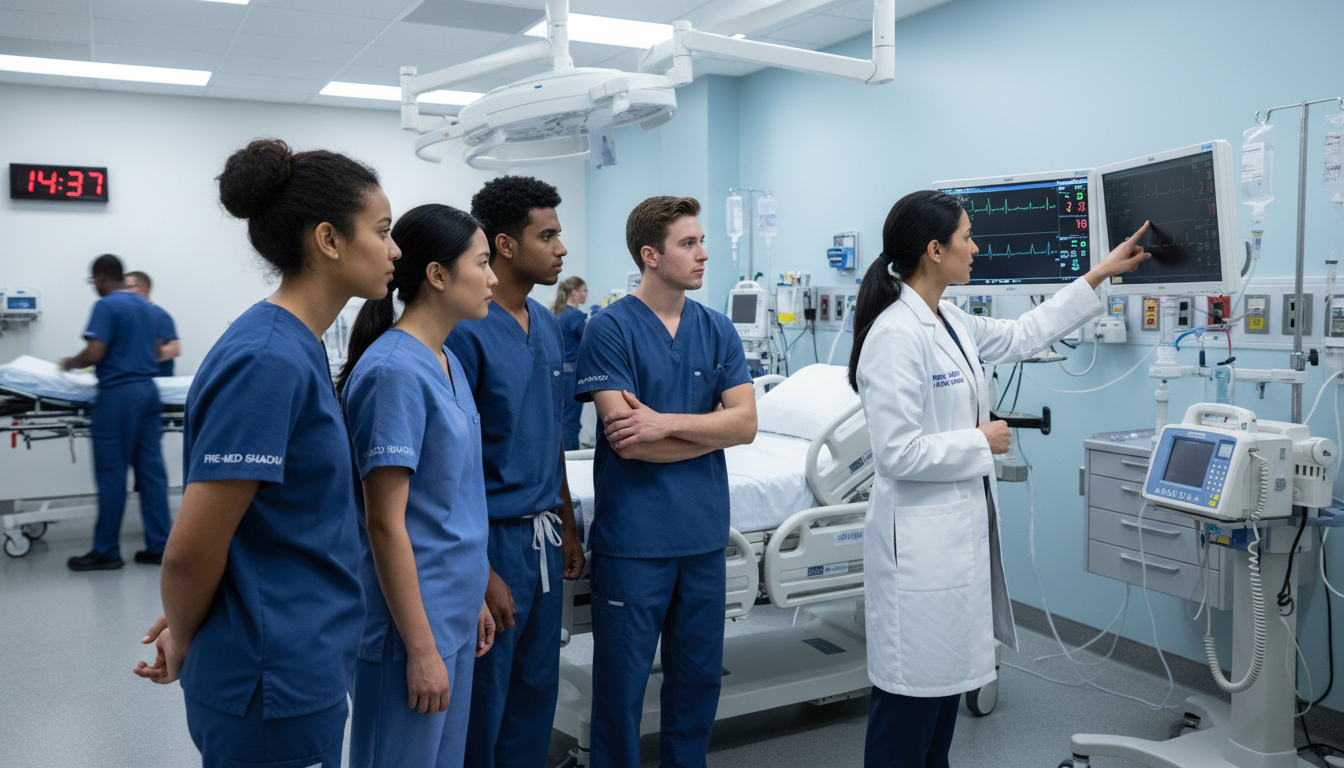
Shadowing a Neurologist
- Inpatient consults (stroke alerts, seizure workups, neuromuscular cases)
- Outpatient clinics (migraine, epilepsy, MS, movement disorders, dementia)
- Ask to observe different settings: general neurology, subspecialty clinics, EMG/nerve conduction labs, EEG readings.
Shadowing Related Specialties
- Neurosurgery: brain/spine surgery, tumor resections, aneurysm clippings
- Psychiatry: mood disorders, psychosis, and their overlap with neurology (e.g., neurocognitive disorders)
- Physical Medicine & Rehabilitation (PM&R): stroke rehab, spinal cord injury, traumatic brain injury
Working with Neurologically Impaired Populations
- Volunteering at:
- Stroke rehabilitation units
- Dementia or memory care facilities
- Epilepsy or Parkinson’s disease support groups
- Spinal cord injury centers
- These settings develop your empathy and understanding of chronic disability, which are central to neurology.
- Volunteering at:
How to Make the Most of Shadowing
Don’t just passively observe:
- Before each shadowing day, read about a relevant condition (e.g., stroke types, epilepsy, MS).
- After encounters, ask the physician:
- “How did you localize the lesion based on the exam?”
- “What other diagnoses were on your differential?”
- “What do you find most rewarding or challenging about neurology?”
Take de-identified notes on what you observe: patient stories, ethical questions, emotional moments, neurologic exams. These will be invaluable when you write your personal statement and later residency applications.
5. Research, Leadership, and Long-Term Positioning for the Neuro Match
Neurology is a rapidly advancing field. Showing that you can engage with science and innovation is highly attractive to both medical schools and, later, neurology residency programs.
Research as a Pre-Med: How Important Is It?
For medical school admissions, research is helpful but not strictly required everywhere. For a future neurology residency, however, research—especially if neurologically oriented—is a significant asset.
If possible, aim for at least one of the following:
- 1–2 years of continuous lab experience
- A summer research program (e.g., NIH, university-based, or structured fellowship)
- A poster presentation or publication (not required, but excellent if achievable)
Types of Neurology-Relevant Research
You don’t have to be in a “neurology” lab to be relevant, but neurology-adjacent work can stand out:
Basic Neuroscience Research
- Synaptic plasticity, ion channels, neurodegeneration, neural development
- Disease models of epilepsy, Parkinson’s, Alzheimer’s, ALS, MS
Neuroimaging and Cognitive Neuroscience
- fMRI studies of cognition, EEG work, structural MRI, DTI
- Projects on memory, language, attention, motor control
Clinical Neurology Research
- Stroke outcomes, epilepsy surgery outcomes, MS treatments, headache clinic research
- Quality improvement projects in neurology wards or stroke units
Interdisciplinary or Tech-Driven Work
- Brain-computer interfaces, neuromodulation (DBS, TMS), machine learning applied to EEG/MRI, neuroinformatics
If you can’t access a neurology-specific lab, don’t worry. Any rigorous research develops critical skills:
- Hypothesis generation
- Data analysis
- Scientific writing
- Perseverance and dealing with failure
Leadership, Advocacy, and Service
Neurology intersects with disability, long-term care, mental health, and end-of-life decisions. Strong extracurriculars in these areas not only help medical school admissions but also set a powerful foundation for a future neurology residency CV.
Impactful activities include:
Leadership in neuroscience or pre-med clubs
- Organize talks with neurologists, neurosurgeons, and neuroscientists
- Host brain awareness events or outreach to local schools
Advocacy and Patient Support
- Work with organizations like the Alzheimer’s Association, Epilepsy Foundation, MS Society, Parkinson’s Foundation
- Help coordinate support groups, fundraising walks, or patient education sessions
Community Outreach
- Health fairs, stroke prevention education, blood pressure checks
- Public education on smoking cessation, exercise, and diet—key for stroke risk reduction
When talking about these experiences in applications, connect them to:
- Communication with vulnerable populations
- Understanding the lived experience of neurologic disease
- Developing empathy and resilience in complex, chronic care settings

6. Application Strategy: Telling a Neurology-Oriented Story (Without Overcommitting)
Many pre-meds worry: “If I talk about neurology now, will schools think I’m too narrow?” The key is framing.
How to Frame Your Interest in Neurology in Personal Statements
You can express a strong interest in neurology while remaining open to the breadth of medicine:
Emphasize what drew you in, such as:
- The intellectual challenge of localization and diagnosis
- Experience with a family member’s stroke, dementia, epilepsy, or brain injury
- Fascination with consciousness, movement, or behavior and their biological underpinnings
Show that you understand the human side:
- Chronic disability
- Caregiver burden
- Communication with cognitively impaired patients
Balance specificity with openness:
- Example wording:
“While I’m particularly drawn to neurology because of its blend of rigorous reasoning and long-term patient relationships, I also look forward to exploring the full range of medical specialties during clinical rotations.”
- Example wording:
This tells admissions committees you are motivated and informed, but not rigidly closed off to other fields.
Using Experiences to Support Your Narrative
When describing activities:
Don’t just list tasks—highlight impact and reflection:
- Instead of “Volunteered in a stroke rehab unit,” say:
- “Volunteered weekly in a stroke rehabilitation unit, assisting with patient mobility exercises and observing the long, non-linear process of neurologic recovery. Learned how small functional gains can significantly restore patients’ independence and dignity.”
- Instead of “Volunteered in a stroke rehab unit,” say:
Connect experiences thematically:
- A research project on memory + volunteering with dementia patients + shadowing in a neurology clinic can create a cohesive “neuro” thread in your narrative.
MCAT Strategy with a Neurology Lens
The MCAT is not neurology-specific, but some sections align well:
Psychological, Social, and Biological Foundations of Behavior (Psych/Soc)
- Learn foundations of behavior, cognition, perception, and mental health—directly relevant to neuro and psych.
Biological and Biochemical Foundations of Living Systems (Bio/Biochem)
- Emphasizes molecular biology and physiology applicable to nervous system function.
Studying these sections diligently not only improves your MCAT but also strengthens neuro-relevant knowledge for later.
Use evidence-based study methods:
- Spaced repetition (e.g., Anki)
- Active recall (practice questions, teaching concepts to peers)
- Mixed practice (don’t over-isolate subjects; combine them in practice blocks)
7. Mindset, Wellness, and Long-Term Sustainability
Neurology residency and a career in neurology demand resilience. Chronic disease, progressive disorders, and cognitive decline can be emotionally taxing. It’s critical to develop sustainable habits as a pre-med.
Building Resilience Now
Time Management Systems
- Use planners or digital tools (Notion, Google Calendar) to balance courses, MCAT prep, research, and volunteering.
Burnout Awareness
- Watch for loss of motivation, emotional exhaustion, or cynicism.
- Don’t overload yourself with “neuro everything” at the expense of sleep and mental health.
Reflective Practice
- Keep a journal about patient encounters, ethical dilemmas, emotional reactions.
- These reflections deepen insight and often become powerful material for essays and interviews.
Maintaining Curiosity
Neurology evolves rapidly. As a pre-med:
Subscribe to lay-accessible neurology content:
- Blogs or podcasts from neurologists
- Popular science books about the brain and mind
Occasionally browse review articles or clinical guidelines in:
- Stroke, epilepsy, dementia, movement disorders
You don’t need to understand everything now. The goal is to nurture curiosity and confidence around reading scientific and clinical material.
Frequently Asked Questions (FAQ)
1. Do I have to major in neuroscience to match into a neurology residency later?
No. Medical schools and neurology residency programs do not require a neuroscience major. Many successful neurologists majored in biology, chemistry, psychology, engineering, or even humanities. What matters more is:
- Strong science GPA
- Solid MCAT score
- Evidence of curiosity about the nervous system (through courses, shadowing, or research)
- Overall excellence and professionalism during medical school
A neuroscience major can help if you truly enjoy it and can maintain a high GPA, but it’s not mandatory.
2. How early is “too early” to say I’m interested in neurology in my applications?
You can mention an interest in neurology even as a pre-med, as long as you:
- Show that you understand the field at a basic level
- Tie your interest to authentic experiences (shadowing, family, research, volunteering)
- Emphasize that you remain open to learning about other specialties in medical school
Admissions committees understand that students’ interests evolve. They are more concerned about intellectual curiosity and maturity than your exact specialty choice this early.
3. Is neurology a competitive residency? How does my pre-med preparation affect my chances?
Neurology residency has become moderately competitive but is generally more accessible than ultra-competitive fields like dermatology or orthopedic surgery. Your pre-med preparation helps indirectly by:
- Securing admission to a strong medical school
- Building habits (study skills, research engagement) that later help you excel on board exams and clinical rotations
- Giving you experiences and skills (research, leadership, neuro exposure) that will make your future neurology residency application stand out
You’re not “locked in” now, but building a strong foundation will give you options.
4. I’m a non-traditional or career-change student. Can I still aim for neurology?
Absolutely. Many neurologists started in different careers—engineering, education, military, business, or the arts. As a non-traditional student:
- Complete the necessary premed requirements via a post-bacc or DIY program
- Leverage your prior career skills (leadership, communication, data analysis)
- Seek targeted neurology exposure (shadowing, research if possible) to confirm your interest
Medical schools and neurology residency programs often value the maturity and perspective that non-traditional applicants bring.
Preparing for a future in neurology starts long before the neuro match or neurology residency application. As a pre-med, your focus should be on mastering core sciences, cultivating curiosity about the brain and behavior, gaining meaningful patient-centered experiences, and developing sustainable study and self-care habits. Whether you ultimately become a neurologist or choose another specialty, a neurology-oriented pre-med path will make you a thoughtful, analytical, and compassionate physician.