


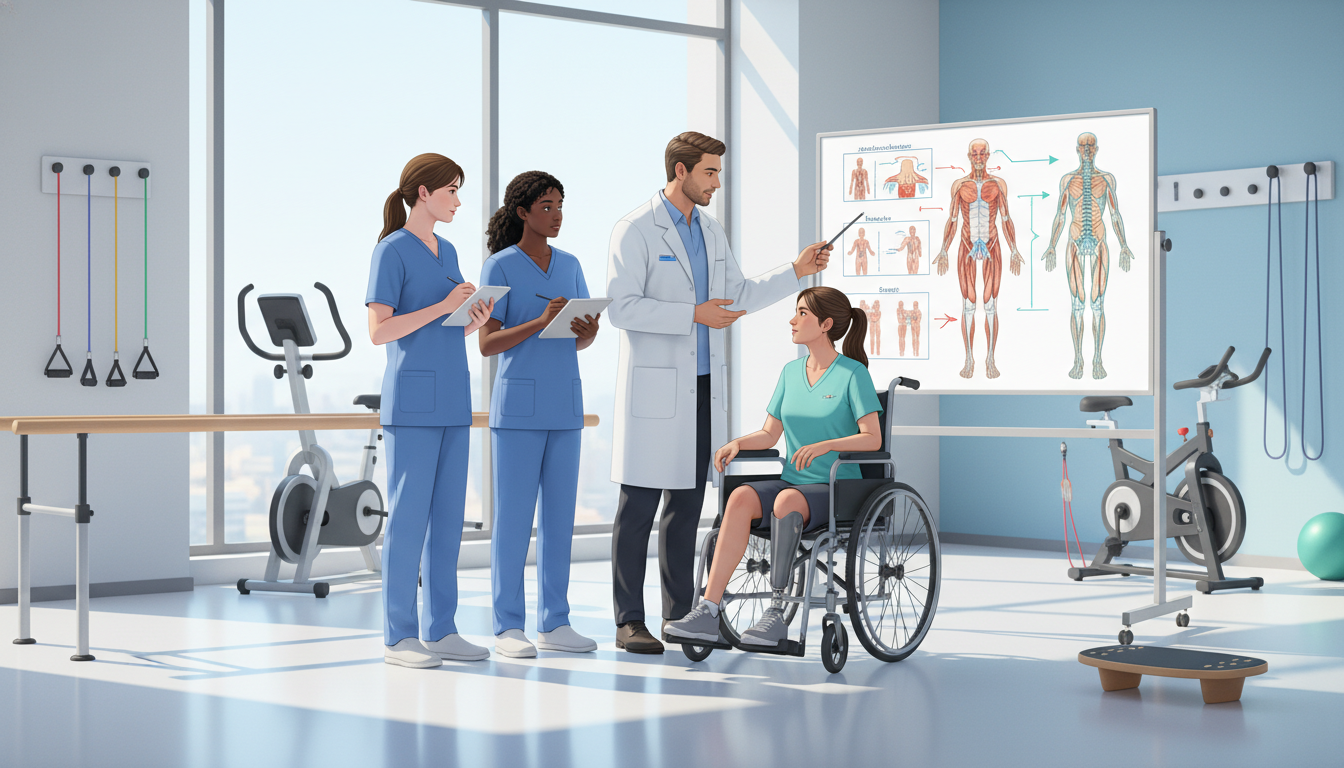
Physical Medicine & Rehabilitation (PM&R), also known as physiatry, is one of the most misunderstood yet deeply rewarding specialties in medicine. If you’re premed and already drawn to function, quality of life, sports, neuroscience, or disability advocacy, PM&R residency may be a fantastic future path—but very few undergraduates know how to prepare early.
This guide explains how to use your premed years strategically to set yourself up for a smooth path through premed requirements, medical school, and ultimately a successful physiatry match.
Understanding PM&R Early in Your Premed Journey
Most premed students can describe what a surgeon or pediatrician does; far fewer can clearly explain what a physiatrist does. That knowledge gap is your opportunity.
What is PM&R?
Physiatrists are physicians who:
- Focus on function, mobility, and quality of life
- Treat neurologic, musculoskeletal, and pain conditions
- Lead interdisciplinary rehab teams (PT, OT, SLP, psychologists, social workers)
- Care for patients with:
- Stroke, spinal cord injury, brain injury
- Amputations and prosthetics needs
- Sports injuries and chronic musculoskeletal pain
- Pediatric developmental and neuromuscular disorders
- Cancer-related disability and deconditioning
They work in settings such as:
- Inpatient rehabilitation hospitals
- Outpatient musculoskeletal, sports, and pain clinics
- Academic medical centers and VA hospitals
- Subacute/skilled nursing facilities
- Electrodiagnostic labs (EMG/NCS)
Why Identify Your Interest Early as a Premed?
Even though true specialization happens in residency, knowing you’re interested in PM&R during your premed years can help you:
- Choose impactful experiences (rehab, disability advocacy, adaptive sports)
- Build skills PM&R programs value: teamwork, communication, empathy, systems thinking
- Develop a coherent story for personal statements and interviews
- Seek mentors in PM&R earlier than most applicants
You do not need to commit 100% to PM&R this early. But orienting your exploration in this direction gives you a competitive and authentic edge later in the physiatry match.
Meeting Premed Requirements with a PM&R Mindset
You still have to complete all standard premed requirements to apply to medical school; there are no PM&R-specific prerequisites. The difference is how you integrate your PM&R interest into your academic profile.
Core Premed Coursework
Typical premed requirements (exact details vary by school):
- Biology: 2 semesters with lab
- General Chemistry: 2 semesters with lab
- Organic Chemistry: 2 semesters with lab (some schools allow 1 + biochem)
- Physics: 2 semesters with lab
- Biochemistry: 1 semester
- Math/Statistics: 1–2 semesters
- English / Writing-Intensive Courses: 1–2 semesters
- Sometimes: Psychology and Sociology
To align this with a future interest in PM&R:
Emphasize human systems and function.
- Choose upper-level electives like:
- Human physiology
- Neurobiology
- Motor control and movement science
- Exercise physiology
- Biomechanics
- Choose upper-level electives like:
Integrate rehabilitation-related topics when possible.
- For research or seminar-based classes, select paper topics related to:
- Neuroplasticity after stroke
- Spinal cord injury recovery
- Musculoskeletal injury and tendon healing
- Chronic pain mechanisms
- Assistive and adaptive technologies
- For research or seminar-based classes, select paper topics related to:
Strengthen quantitative and analytical skills.
- Rehab outcomes research is data-heavy.
- A course in statistics, epidemiology, or data analysis will be especially helpful if you later pursue physiatry research.
GPA Strategy and Academic Narrative
For PM&R residency, program directors will eventually care most about:
- Your medical school performance
- Your Step scores (or equivalent board exams)
- The quality of your clinical rotations and letters
However, to get there you must first gain admission to medical school. That means:
- Aim for a strong, upward-trending GPA.
- If you stumble early (C in Orgo, rough freshman fall), recover strongly:
- Retake strategically only when necessary and allowed.
- Show marked improvement in upper division science courses.
- Use your interest in PM&R to motivate consistent performance: connecting coursework to a future goal can make the grind more meaningful.
MCAT Prep with a Rehabilitation Lens
The MCAT won’t test PM&R directly, but it tests areas central to good physiatry practice:
- Biology/Biochemistry: neuromuscular physiology, cellular signaling, metabolism
- Psychology/Sociology: behavior, motivation, social determinants of health, disability stigma
- CARS: reading complex passages—similar to reading dense rehab research or guidelines
Tips:
- As you study, ask: “How would this concept show up in a rehab patient?”
- Neuroanatomy → stroke localization and deficits.
- Physiology → deconditioning and exercise tolerance.
- Psych/soc → how depression, trauma, or social support affect rehab progress.
- Use MCAT passages as practice for reading like a clinician—looking for cause-effect, mechanisms, and interventions.
This mindset keeps MCAT preparation directly linked to your interest in how to become a doctor who treats functional disability.

Building a PM&R-Oriented Premed Portfolio
The most important part of your premed preparation for a future PM&R residency is your experiential foundation—what you do outside the classroom.
Clinical Exposure: See Rehabilitation in Action
Premed advice often emphasizes “shadow any physician.” For PM&R, be more targeted:
Types of Clinical Experiences That Align with PM&R
Shadowing Physiatrists
- Settings: inpatient rehab units, outpatient musculoskeletal clinics, pain clinics, spinal cord injury units, VA hospitals.
- Observe:
- Functional assessments (gait, strength, range of motion)
- Goal-setting with patients and families
- Team family meetings and discharge planning
- EMG/NCS procedures (electrodiagnostic medicine)
- Afterward, keep a reflection journal:
- How did the physiatrist communicate?
- What made these encounters different from typical primary care or surgery visits?
Volunteering in Rehabilitation Settings
- Inpatient rehab hospital or unit
- Skilled nursing facility with active therapy services
- Adaptive sports programs
- Community-based stroke or brain injury support programs
Example roles:
- Transporting patients to therapy
- Assisting with recreational therapy activities
- Helping with adaptive sports events
- Serving as a visitor/companion to rehab patients
Scribing or MA roles in Musculoskeletal or Pain Clinics
- Sports medicine clinics
- Spine or pain management centers
- Orthopedic practices with a rehab focus
- PM&R outpatient clinics (if available)
You’ll see:
- Communication about chronic pain and function
- Use of imaging, injections, and conservative treatment plans
- Coordination with PT/OT and behavioral health
Non-Clinical Experiences: Show Commitment to Function and Inclusion
Residency programs in PM&R value applicants who demonstrate a genuine commitment to improving lives of people with disability and chronic illness.
Consider:
Disability Advocacy and Inclusion
- Campus disability resource center volunteer
- Accessibility audits on campus and in the community
- Volunteering with:
- Special Olympics
- Adaptive climbing/skiing/cycling programs
- Inclusive sports leagues
- Advocacy around:
- Accessible transportation
- Universal design
- Disability rights and policy
Peer Support and Counseling
- Working on hotlines (crisis, chronic illness, disability support)
- Peer mentor programs for students with chronic health conditions
- These build listening skills and emotional intelligence—critical in PM&R.
Teaching, Coaching, or Mentoring
- Coaching youth sports or adaptive sports
- Tutoring or teaching assistant roles
- These experiences highlight your ability to motivate and coach—core rehab skills.
Research Exposure Related to PM&R
You do not need PM&R research to enter the field, but exposure to research helps long-term academic and residency prospects.
Look for opportunities in:
- Neuroscience, stroke, or TBI research
- Spinal cord injury outcomes
- Prosthetics, orthotics, or assistive technology
- Musculoskeletal, sports medicine, or pain studies
- Quality-of-life or outcomes research
If your institution doesn’t have a PM&R department:
- Join labs in neurology, orthopedics, biomedical engineering, psychology, or kinesiology.
- Emphasize the functional and rehabilitative angle when you write and talk about your work.
Focus less on the “brand name” of the lab and more on:
- Learning how to ask questions, analyze data, and present findings
- Being able to explain clearly what you did and why it matters for patient function
Core Skills Premeds Should Develop for a Future in PM&R
Beyond checking premed requirements and gathering hours, think about what skills will actually make you a strong physiatry resident in the future.
Communication and Counseling Skills
PM&R physicians spend a great deal of time:
- Explaining diagnoses and realistic expectations
- Motivating patients over weeks or months of rehab
- Negotiating goals with families and interdisciplinary team members
Premed activities that build this:
- Volunteer roles involving ongoing relationships (e.g., long-term patient visitors or mentorship programs)
- Crisis lines or peer counseling (with proper training and supervision)
- Teaching roles where you explain complex concepts in accessible ways
Practice during your premed years:
- Explaining medical concepts to non-science friends in plain language
- Learning to listen more than you speak in clinical interactions
- Asking open-ended questions: “What matters most to you right now?” rather than only “What’s wrong?”
Teamwork and Leadership
Rehabilitation is inherently team-based:
- PM&R physicians coordinate PT, OT, SLP, nursing, social work, neuropsychology, and more.
- They often lead family/team conferences and complex discharge planning.
Build these skills by:
- Joining or leading student organizations, especially:
- Pre-med clubs
- Adaptive sports or disability inclusion groups
- Health outreach projects
- Participating in team sports or performing arts ensembles
- Working in jobs with real responsibility (shift supervisor, team lead, RA)
When reflecting or writing, highlight:
- Times you facilitated collaboration between people with different views
- Situations where you balanced individual goals and group objectives
Resilience and Emotional Intelligence
PM&R involves caring for:
- Patients with permanent disability
- People recovering from major trauma
- Families adjusting to “new normals”
As a premed:
- Recognize your own emotional responses to suffering, disability, and chronic illness.
- Seek reflective spaces: pre-health advising groups, ethics seminars, or narrative medicine workshops.
- Consider courses in:
- Medical humanities
- Ethics of disability and chronic illness
- Psychology of trauma and resilience
Strategically Positioning Yourself for a Future Physiatry Match
Your immediate goal as a premed is to gain admission to medical school. Your long-term goal is to position yourself for PM&R residency. The two are more connected than you might think.
Choosing a Major with PM&R in Mind
You can match into PM&R from any major, as long as you meet medical school prerequisites. Consider:
Traditional science majors (biology, neuroscience, kinesiology)
- Pros: Strong alignment with premed requirements; easier to fit everything in.
- PM&R angle: Kinesiology and exercise science are especially relevant to rehab.
Engineering or biomechanics
- Pros: Highly relevant to prosthetics, orthotics, and assistive technology.
- Cons: Can be GPA-challenging; plan carefully.
Humanities or social sciences
- Pros: Build communication, cultural competence, understanding of disability as a social concept.
- Cons: Must be intentional about fitting all sciences.
Whatever your major, you can still show commitment to PM&R through extracurriculars, research, clinical work, and narrative.
Crafting Your Personal Narrative
From premed to residency applications, you’ll be asked some version of:
- “Why medicine?”
- “Why this specialty?”
- “Why PM&R?”
Use your premed years to collect authentic stories that connect:
- Exposure to disability or functional limitations
- Personal, family, volunteer, or clinical experiences
- Observation of the rehab process
- Shadowing, inpatient rehab volunteering, adaptive sports events
- Reflection on your own strengths
- Coaching, teaching, motivating others
- Intellectual interests
- Neuroscience, movement, pain, psychology, human resilience
Start informal reflections now—short entries about meaningful interactions or patient stories. These will later become the raw material for:
- Medical school personal statements
- Secondary application essays
- Residency personal statements for PM&R
Premed Advice for Finding PM&R Mentors Early
Mentorship is crucial and often underutilized by premeds interested in niche specialties.
Steps:
Search your local academic medical center or hospital website for:
- “Physical Medicine & Rehabilitation”
- “Rehabilitation Medicine”
- “Spinal Cord Injury,” “Brain Injury,” “Stroke Rehabilitation,” “Sports & Spine”
Email politely and specifically, for example:
- Who you are (year, major, premed)
- Why PM&R interests you (2–3 sentences)
- What you’re seeking (one-time meeting, occasional career guidance, possible shadowing)
Attend relevant talks or grand rounds if allowed.
- Some PM&R departments allow undergrads to attend virtual or in-person lectures.
Use national organizations:
- American Academy of Physical Medicine & Rehabilitation (AAPM&R)
- Association of Academic Physiatrists (AAP)
- Student or trainee sections sometimes offer mentoring or virtual panels.
These mentors can:
- Help you understand the field
- Suggest courses or experiences
- Later support you in medical school and beyond
Planning Ahead: From Premed to PM&R Residency
You do not need every step planned now, but understanding the general pipeline helps you make smart decisions:
Premed phase
- Complete premed requirements and take MCAT.
- Gain clinical exposure (including rehab if possible).
- Develop core skills: communication, teamwork, resilience.
- Apply and matriculate into medical school.
Medical school phase
- Excel in core sciences and clinical rotations.
- Seek PM&R electives and interest groups early (MS1–MS2).
- Find PM&R mentors and consider related research.
- Take USMLE/COMLEX exams.
- Complete away rotations or sub-internships in PM&R in 4th year.
PM&R residency application (physiatry match)
- Use PM&R letters, research, and clinical experiences to craft a strong application.
- Apply broadly depending on competitiveness and geography.
- Interview and rank programs.
Your premed choices don’t lock you into PM&R, but they can give you a distinctive foundation and make you a better clinician regardless of specialty.
Frequently Asked Questions
1. Do I need PM&R-specific experiences as a premed to match into PM&R later?
No, you do not need PM&R-specific experiences as a premed to eventually match into PM&R. Many students discover PM&R during medical school. However, early exposure can:
- Confirm (or challenge) your interest
- Give you a head start understanding the field
- Strengthen your narrative about why you chose this specialty
If your school or region doesn’t have PM&R physicians easily available, related experiences—neurology, orthopedics, pain, physical therapy, disability advocacy—are excellent substitutes.
2. What’s the best major if I know I’m interested in PM&R?
There is no single “best” major. Choose one that:
- You genuinely enjoy and can excel in
- Allows you to complete premed requirements
- Offers opportunities to connect to human function, movement, or disability
Popular options include biology, neuroscience, kinesiology, psychology, and engineering, but humanities majors can be equally successful. PM&R residency programs care far more about your performance and your fit with the specialty than the specific major.
3. How competitive is PM&R, and does early preparation as a premed really help?
PM&R is moderately competitive and has been growing in popularity. Early preparation won’t guarantee a match, but it helps by:
- Making your interest more informed and authentic
- Helping you identify mentors and research opportunities earlier in medical school
- Clarifying your goals so you can choose relevant rotations and electives
Ultimately, your medical school performance, board scores, letters of recommendation, and fit with the field will matter most. Premed groundwork simply positions you to take full advantage of opportunities later.
4. If I’m still unsure about PM&R, should I still tailor my premed path toward it?
Yes—within reason. Many PM&R-aligned activities are broadly valuable for any physician:
- Volunteering with people with disabilities
- Shadowing in multidisciplinary clinical environments
- Taking courses in neuroscience, psychology, or biomechanics
- Building skills in communication, teamwork, and resilience
These will strengthen your profile whether you pursue PM&R, primary care, neurology, orthopedics, or another field. Think of your PM&R interest as a guiding theme, not a rigid commitment—and stay open to what you discover along the way.
By approaching your premed years with an eye toward function, disability, and rehabilitation, you’re not only preparing for a potential PM&R residency; you’re training yourself to think like a physician who sees the person behind the diagnosis and strives to restore what matters most in their daily life.




















